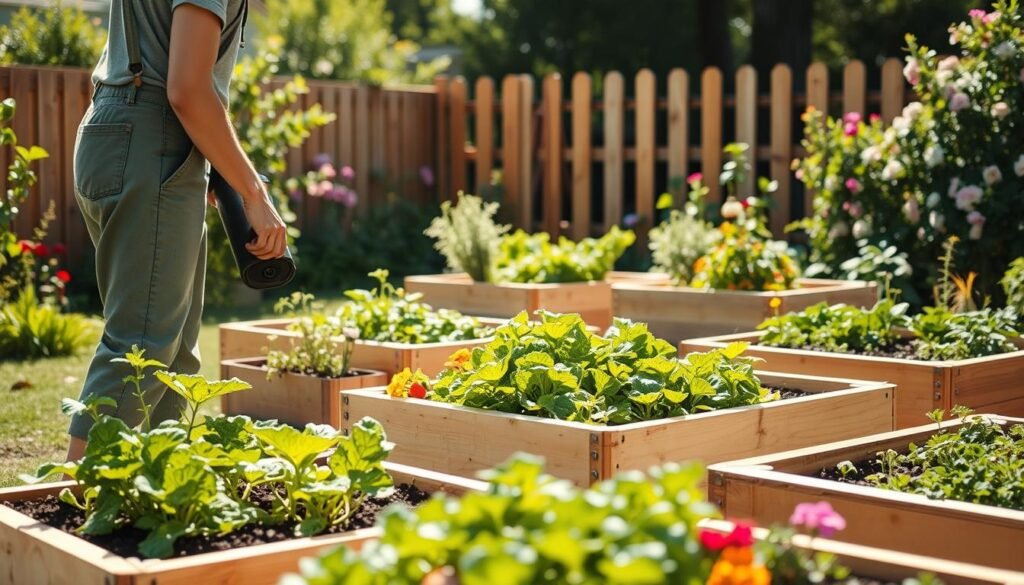
Imagine tending to your garden without back pain. Building these wooden steps makes it easier to reach your plants. It changes how you garden, keeping you safe and steady.
Proper height and footing stability are key to safety. This ensures you can garden without worry.
Creating backyard gardening tools adds beauty and function. They provide stable spots for your feet. This is important when carrying heavy pots or watering jugs.
Custom designs make gardening more convenient. Gardeners value comfort for their mental well-being. Everyone deserves a sturdy and reliable setup.
Strong materials support your weight, giving you peace of mind. Quality items withstand harsh weather and constant use all year.
Beginners enjoy simple wood projects, and your knees will thank you. This guide helps you start your gardening journey. Focus on durability for long-lasting results.
Visit The Marketplace or grab your Free Garden Starter Kit
Why Garden Step Platforms Transform Your Raised Bed Experience
Adding a garden step platform can change your raised bed experience. It makes gardening easier and more fun for everyone.
Garden step platforms lift gardeners to the level of their raised beds. This cuts down on bending and stretching. It’s great for gardeners of all ages because it eases back and knee strain.
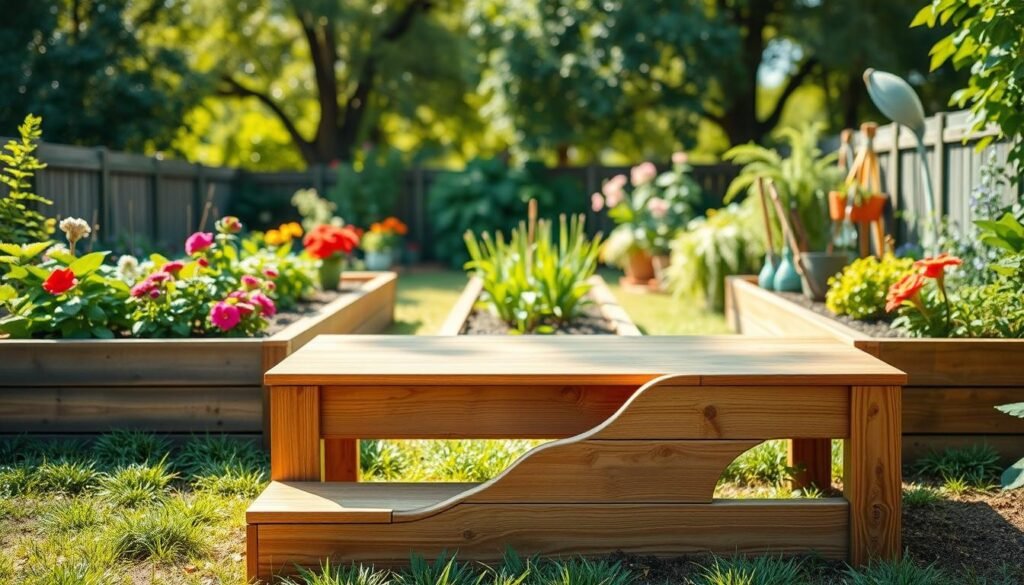
With a gardening platform, gardening becomes more comfortable. It’s a solid spot to stand. This makes planting, weeding, and harvesting easier.
The good things about garden step platforms are:
- They make raised beds easier to reach.
- They reduce back and knee pain.
- They make gardening more comfortable.
- They help you work more efficiently.
Adding a garden step platform to your garden setup can really improve your raised bed experience. It makes gardening more enjoyable and sustainable over time.
A Small Garden Step Platform Can Make Raised Beds Much Easier to Use
Gardening should be fun, not hard work. A small garden step platform makes raised beds easier to use. Raised beds are great because they help with drainage and soil quality. But, they can be hard to reach for some people.
A small garden step platform or a garden bed ladder changes everything. It gives you the height you need to garden without hurting your back or knees. This is super helpful for older gardeners or those with physical challenges.
Reducing Strain and Improving Accessibility
Using a small garden step platform reduces physical strain. It lets you garden at a comfortable height, avoiding the need to bend or stretch. This is good for your back and joints.
This elevated gardening aid makes gardening easier and more fun. You can garden better and enjoy it more, without the pain of reaching into raised beds.
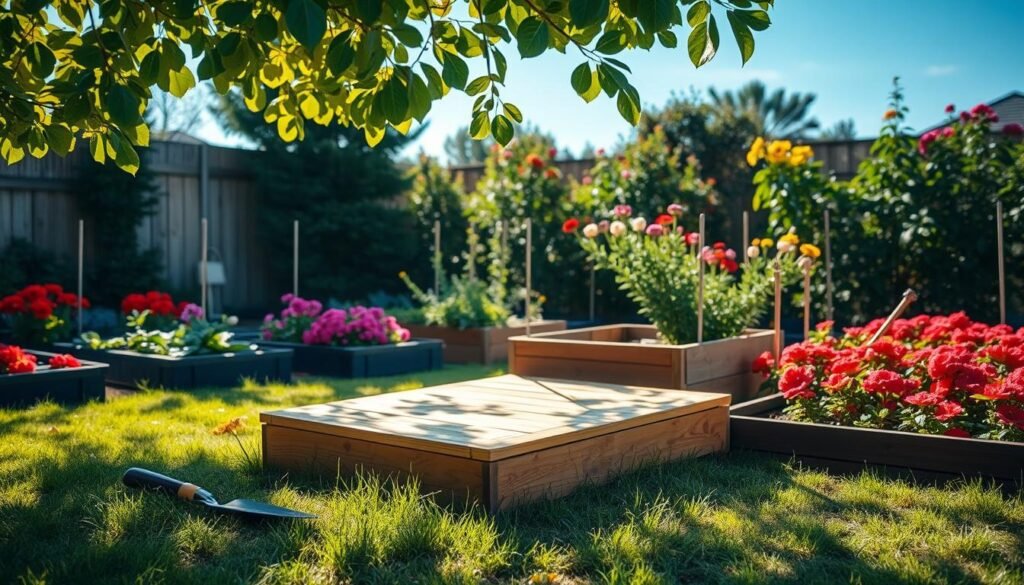
Small garden step platforms do more than just make gardening comfortable. They make it possible for people of all ages and abilities to garden. Whether you build a ladder or a simple step platform, make sure it’s strong and safe.
- Enhances accessibility for gardeners of all ages
- Reduces strain on the back and knees
- Makes gardening more enjoyable and efficient
Essential Design Considerations for Your Garden Step Platform
To make a great garden step platform, you need to think about your garden’s needs. Look at the height of your raised beds and how much space you have. A good design makes gardening easier and more comfortable.
When looking at your garden, remember a few things:
- The height and size of your raised beds
- The space around the beds for the platform
- The material and design that fits your garden’s look
- The platform’s durability and weather resistance
A garden step platform design that fits your garden well improves access and looks. For small gardens, a small garden riser works great. For bigger gardens, a raised planter step is better.
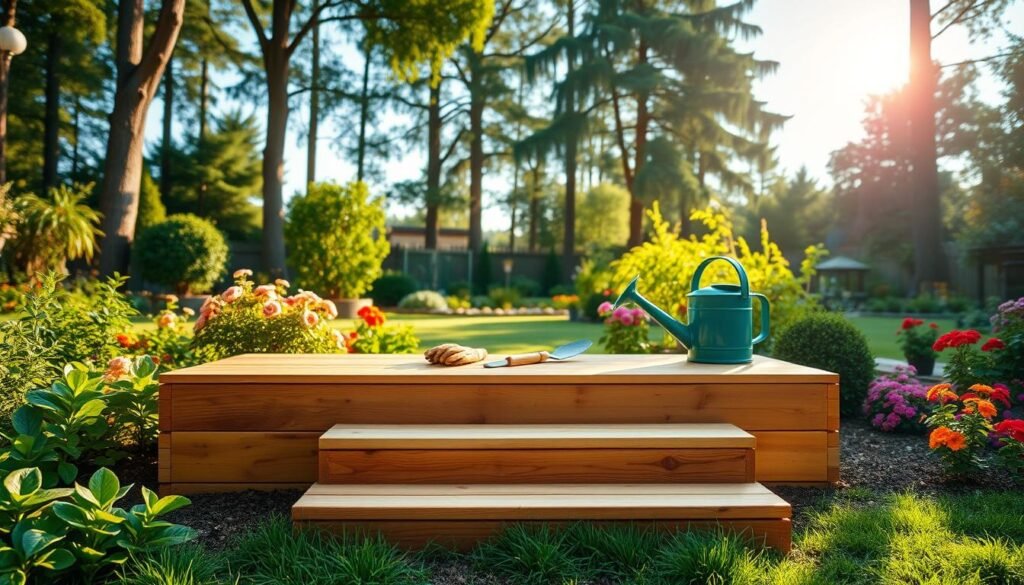
The aim is to have an outdoor gardening solution that’s both useful and looks good. By thinking about your garden’s special needs and using a well-designed platform, gardening becomes more enjoyable and productive.
Best Materials for Building a Durable Garden Step
A well-built garden step platform starts with choosing materials that can endure outdoor conditions.
When picking the best materials for your garden step, you have several options. Each has its own advantages and disadvantages. Wood, composite materials, metal, and stone are common choices. They offer different looks and levels of maintenance.
Wood: A Traditional Choice
Wood is a favorite for garden steps because of its natural beauty. You can stain or paint it to fit your garden’s style. But, wood needs regular care to avoid rot and bugs.
- Cedar and redwood are good because they resist rot and bugs naturally.
- Pressure-treated wood is another option, but it might need extra sealing.
- Staining and sealing wood regularly helps it last longer.
Composite Materials: Durability and Low Maintenance
Composite materials, a mix of wood fibers and plastic, are durable and easy to care for. They resist rot, bugs, and fading well.
- They come in many colors and textures, looking like real wood.
- Composite materials cost more than wood but save money in the long run.
- They can get hot in the sun, so pick a color that won’t show it too much.
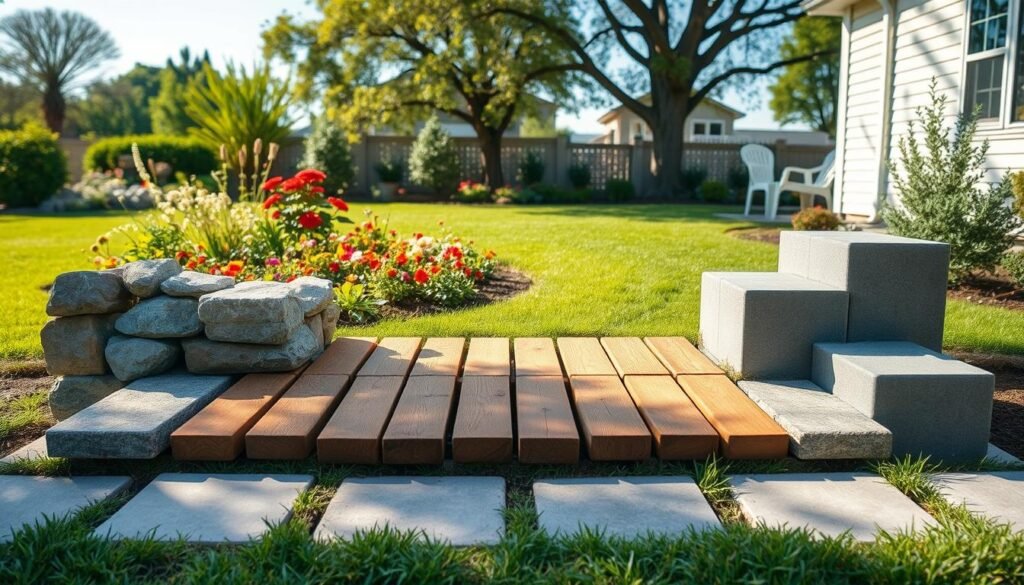
Metal and stone can give your garden a modern or elegant look. These materials are strong and can make your garden stand out.
- Metal steps, made from aluminum or steel, are sleek and modern.
- Stone steps are natural and elegant, and they last a long time.
- Both metal and stone need careful installation for safety and stability.
The right material for your garden step depends on your budget, how much you want to maintain it, and the look you want for your garden.
Tools and Supplies Checklist for This DIY Project
Having a detailed checklist of tools and supplies is key for a smooth DIY garden step platform project. It saves time and reduces stress by having everything ready before you start.
Here’s a list of essential tools and supplies you’ll need:
- Lumber (depending on the design, this could include 2×6 or 2×8 boards for the steps and platform)
- Wood screws
- Wood glue
- Weather-resistant wood finish (optional)
- Concrete mix (if you’re building a concrete step platform)
- Rebar or wire mesh (for added stability in concrete steps)
- Trowel and edging tool (for concrete work)
You’ll also need various tools to finish the project. These include:
- A circular saw or hand saw for cutting lumber
- A drill for screwing the pieces together
- A level to ensure the platform is even
- A tape measure for accurate measurements
- A safety harness (if working at heights)
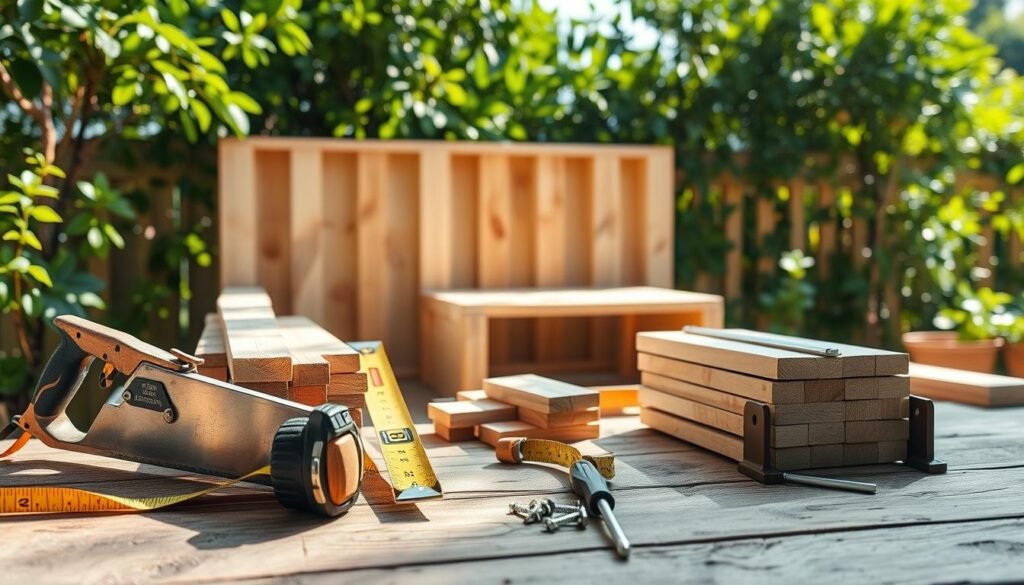
For patio steps ideas and garden steps on a slope, your materials list might change. You might need extra support or special fasteners.
With a detailed checklist, you’ll be ready to start your DIY garden step platform project confidently.
Step-by-Step Guide to Building a Wooden Garden Step Platform
A wooden garden step platform is great for gardeners with high raised beds. It’s easier to build than you might think. This guide will help you make a sturdy and attractive garden addition.
Preparing the Materials and Tools
First, gather all the needed materials and tools. You’ll need pressure-treated wood, screws, a drill, a saw, and safety gear like gloves and goggles.
- Lumber: Choose durable, weather-resistant wood.
- Screws and Nails: For assembling the platform.
- Power Tools: Drill, saw, and sander.
Assembling the Platform
Start by cutting the lumber to the right size. Build the frame with screws for a strong base. Then, add the decking boards, making sure they’re evenly spaced.
- Cut the frame components according to your design.
- Assemble the frame, using screws to secure the corners.
- Attach the decking boards to the frame.
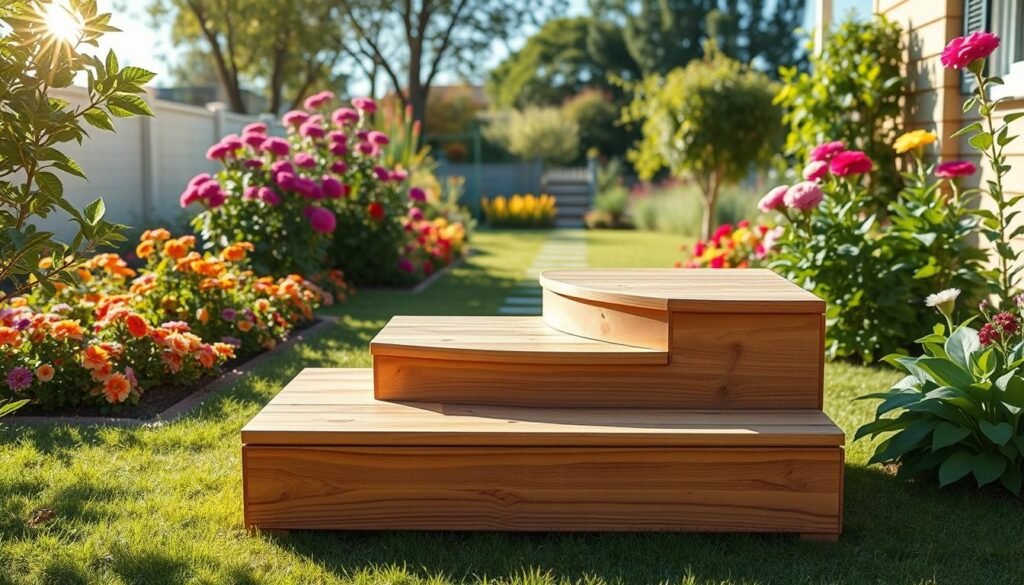
By following these steps and tips, you can build a wooden garden step platform. It will make your raised beds more accessible and add beauty to your garden.
Creating Floating Concrete Steps for Modern Garden Aesthetics
For a sleek, modern look in your garden, consider creating floating concrete steps. They elevate both the functionality and aesthetics of your outdoor space.Floating concrete stepsare a contemporary design element that can significantly enhance your garden’s visual appeal.
To achieve this modern look, it’s essential to consider the design and construction aspects carefully. First, plan the layout and ensure that the steps will be safely supported. Determine the size and number of steps needed, as well as the materials required for the project.
When constructing floating concrete steps, the choice of materials is key. You’ll need high-quality concrete, reinforcement materials like steel rebar, and a suitable formwork system to shape the concrete. Also, consider using a waterproofing treatment to protect the concrete from the elements.
Here’s a basic outline of the steps involved in creating floating concrete steps:
- Plan the design and layout of the steps, taking into account the space available and the desired aesthetic.
- Prepare the site by clearing and leveling the ground.
- Construct the formwork and reinforcement framework.
- Pour the concrete and allow it to set.
- Apply a finish and any necessary protective coatings.
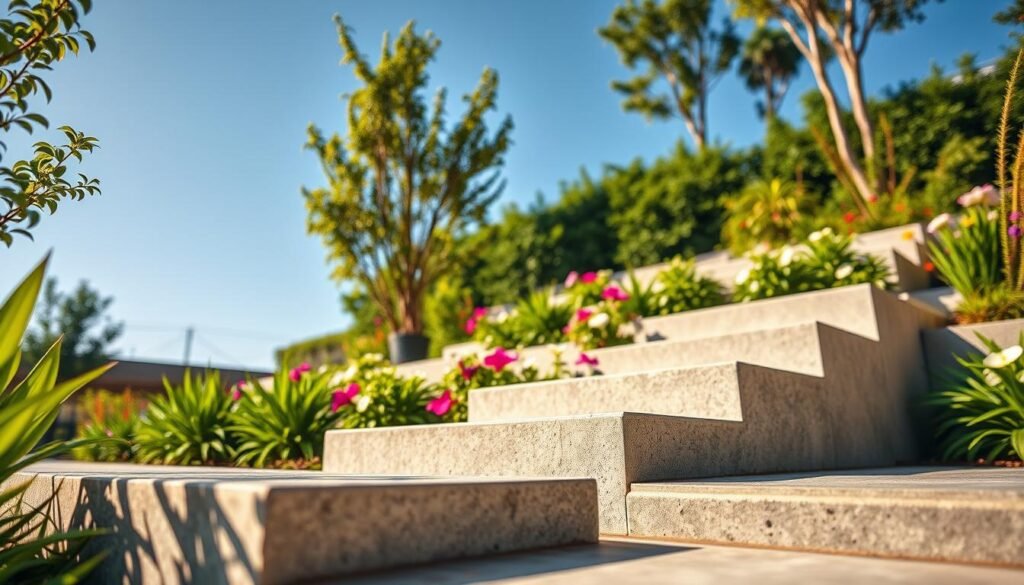
By following these steps and paying close attention to the design and construction details, you can create beautiful and functional floating concrete steps. They will enhance your garden’s modern aesthetic.
Strategic Placement and Positioning for Maximum Functionality
Choosing the right spot for your garden step platform is key. It affects both how easy it is to get around and how your garden looks. Think about your garden’s layout and where you need better access.
A garden step platform makes raised beds easier to use. This is really helpful in big gardens. Putting it near areas you visit often can make gardening easier and less tiring.
Think about how people move through your garden and where they go most. For example, a step platform near a shed or water source is super handy.
Key Considerations for Placement:
- Proximity to raised beds or other garden features you use frequently.
- The flow of traffic through your garden to minimize obstacles.
- The overall aesthetic you wish to achieve in your front yard garden bridge or backyard landscaping.
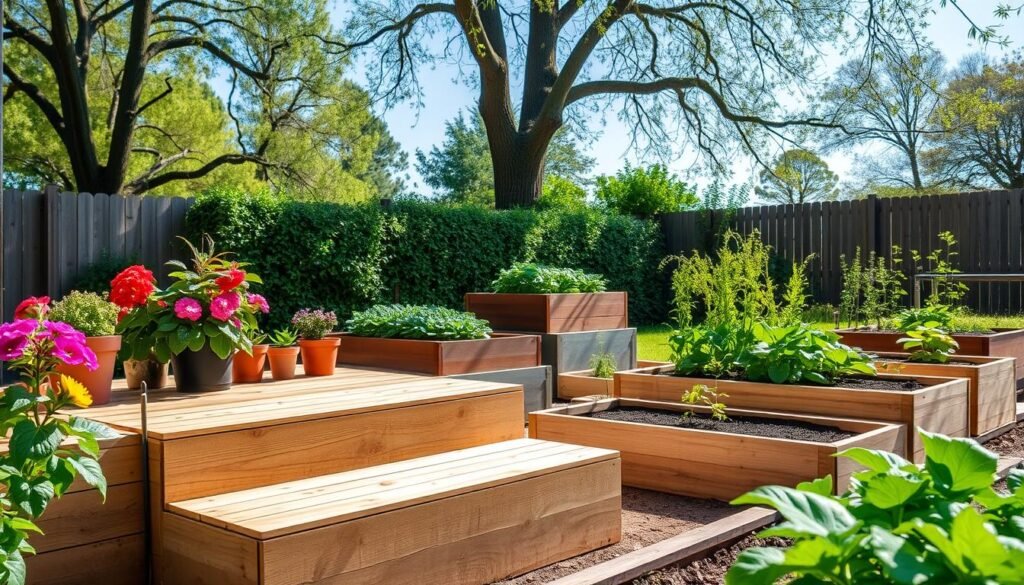
By thinking about these points, you can make your garden step platform useful and good-looking. It will make your garden time better.
Important Safety Features to Build Into Your Platform
To make a garden step platform safe and useful, you need to think about a few key things. A safe platform is vital to avoid accidents and injuries, which are more common in raised bed gardens.
Stability is a critical factor in making your garden step platform safe. You can use strong materials and a solid design. This will help support the weight of people and any extra loads.
Some important safety features to add to your garden step platform are:
- Non-slip surfaces to prevent slipping and falling
- Handrails or guardrails to provide support and prevent falls
- A sturdy and level base to ensure stability
- Proper lighting to illuminate the steps and surrounding area
It’s also key to think about accessibility enhancements to make your platform usable by all. You can design it with a gentle slope or a wide surface for comfortable standing.
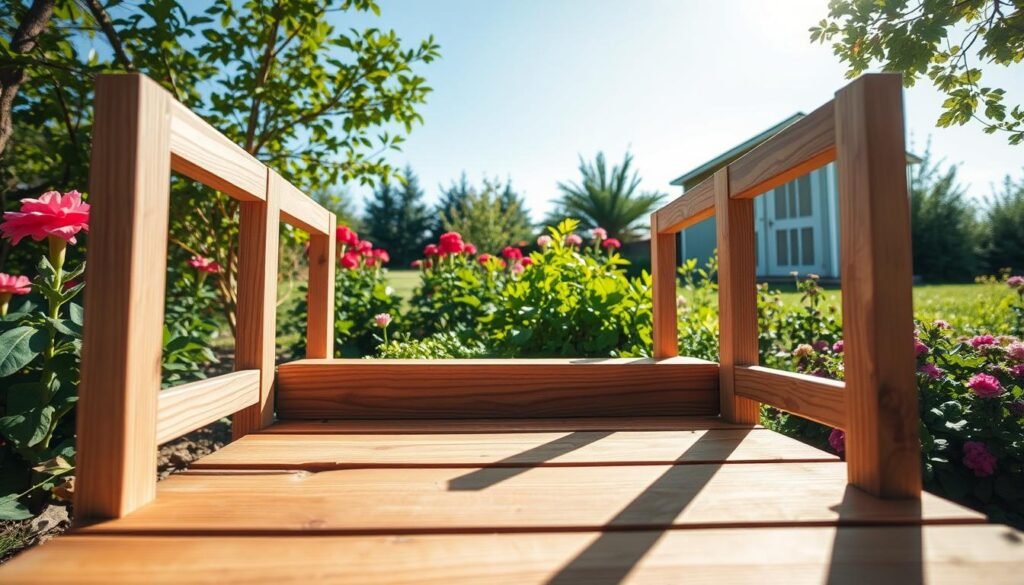
When designing your garden step platform, think about how it will fit with other backyard features. This includes a backyard deck pergola or retaining walls with steps. By adding safety features and designing with the landscape in mind, you can make gardening safe and fun.
Integrating Your Step Platform with Backyard Landscaping
Adding a step platform to your backyard birdhouse
can make your garden better in both looks and function. A well-made step platform not only helps you get to your raised beds easily. It also becomes a key part of your garden’s design.
When you design your step platform, think about what materials and style will match your garden. For example, if your garden looks natural and rustic, a wooden step platform could be perfect.
A wooden step platform fits well with nature, making your garden look more unified. But, if your garden is modern, a step platform made from materials like metal or concrete might be better.
To really make your step platform part of your garden, think about adding landscaping around it. You could plant flowers or shrubs around it or use it as a base for decorations.
For instance, you can put flowers or shrubs around the step platform. This creates a nice contrast between the hard step platform and the soft, natural plants.
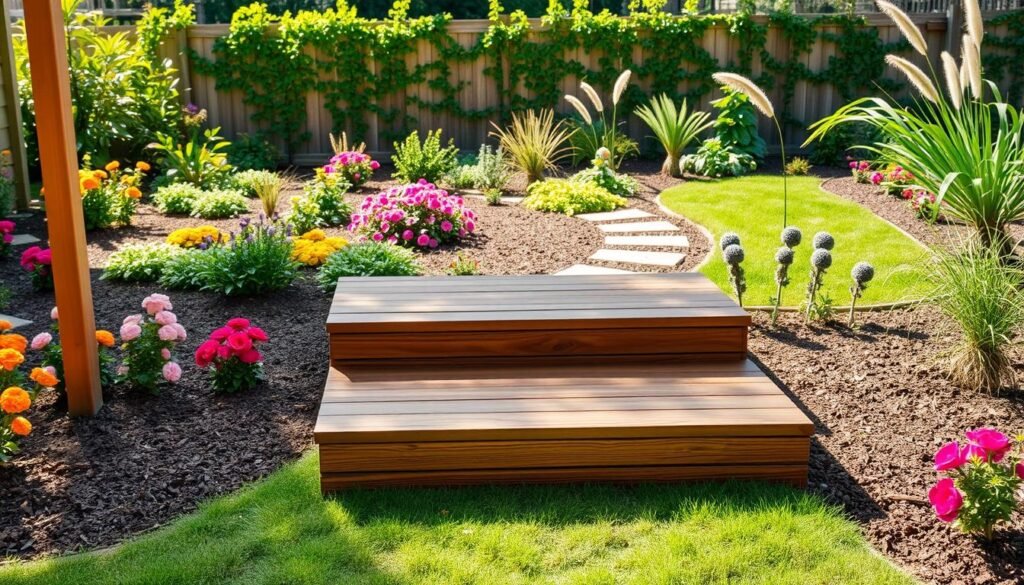
To make your step platform blend in, design it with your garden in mind. Think about the colors, materials, and style of your garden.
- Choose materials that match your garden’s features.
- Make sure your step platform is the right size for your garden.
- Use plants or decorations to connect your step platform to your garden’s design.
Maintenance Tips and Long-Term Care
Regular upkeep of your garden step platform can significantly extend its lifespan.
To maintain your garden step platform, it’s essential to inspect it regularly for any signs of wear and tear. Check for loose boards, rotting wood, or any other damage that could compromise its integrity.
Cleaning is also a key part of maintenance. Use a mild detergent and water to clean the platform, after harsh weather conditions. This prevents dirt and debris buildup that could damage it over time.
For platforms made of wood, applying a weather-resistant sealant can help protect the material from the elements. Reapply the sealant as recommended by the manufacturer to ensure continued protection. This is vital for outdoor fence decor & backyard projects, where exposure to the elements is a big concern.
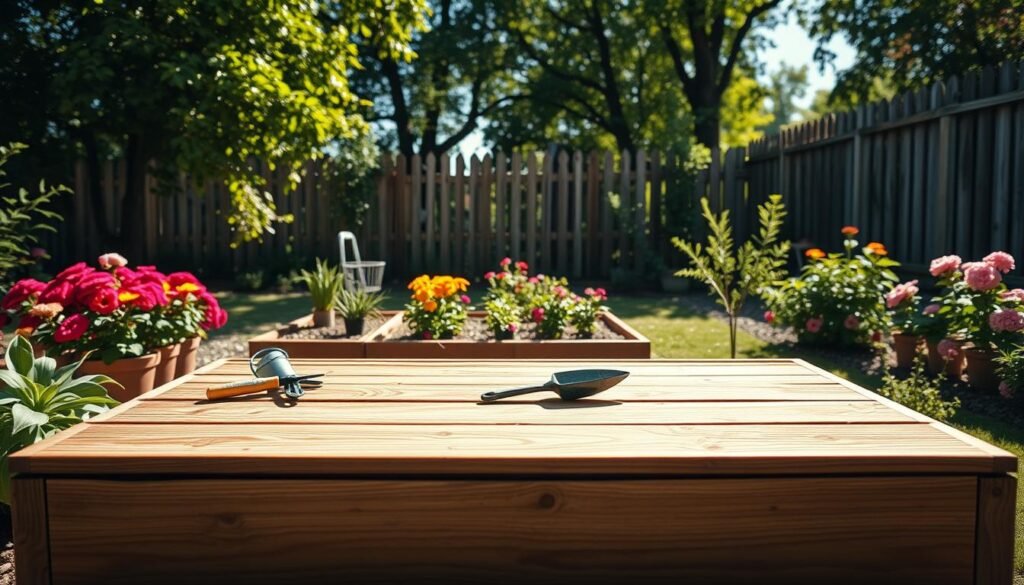
In addition to these tips, consider the surrounding area. Keeping the area around your garden step platform clear of clutter and debris can prevent accidents and make maintenance easier. For steep garden ideas, ensuring that the step platform is securely integrated into the landscape is key.
- Regularly inspect the platform for damage
- Clean the platform regularly
- Apply weather-resistant sealant to wooden platforms
By following these maintenance tips, you can enjoy your garden step platform for years to come. It can remain a beautiful and functional part of your backyard deck pergola ideas.
Conclusion
Adding a garden step platform to your garden is a smart and fulfilling DIY task. It makes your raised bed garden easier to access and more comfortable. This is great for taking care of your plants.
A garden step platform is a great addition to any backyard makeover or landscaping project. It offers a safe and steady place to step. With the right materials and design, you can make a step platform that looks good and works well.
By following the steps in this article, you can build a garden step platform that suits your needs. It will make gardening better. Whether you want to enhance your raised bed garden or add a useful feature to your yard, a garden step platform is a good choice.