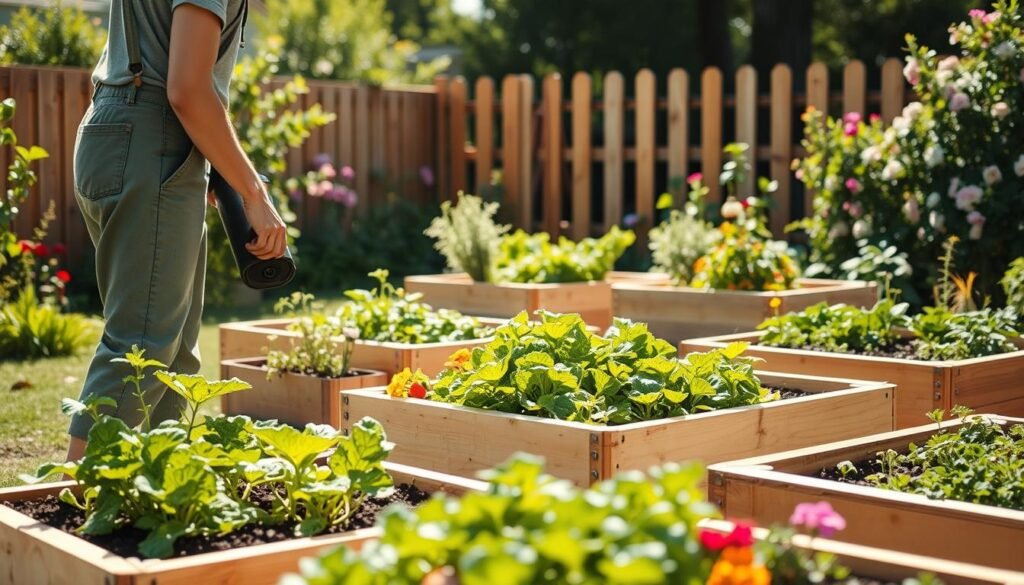
Turning kitchen scraps into black gold is like magic. If you want to start sustainable backyard practices, building your own wooden structure is a great first step. It helps reduce waste and feeds your soil rich nutrients.
These simple changes make a big difference for our planet. Every gardener knows that good dirt is key to success.
Creating a DIY compost bin outdoor area is easy. You just need some wood and a bit of time. This project makes eco-friendly composting at home easy for anyone with a green thumb.
Starting with backyard composting greatly improves your garden’s health. Custom wooden frames offer great airflow and keep things tidy.
Many homeowners find this method very satisfying. Healthy soil leads to beautiful blooms and heavy harvests.
Your garden deserves the best environment. Wood structures look natural in any landscape.
Using recycled pallets or cedar planks ensures the apparatus lasts many seasons. Let’s explore why this simple implementation is essential for every American gardener today. It’s fun to see the results.
Visit The Marketplace or grab your Free Garden Starter Kit
Why Your Garden Needs a Wooden Compost Bin
A wooden compost bin is key for any gardener wanting to cut down waste and boost soil health. Composting turns kitchen scraps and yard waste into a soil booster for your plants.
Composting is easy and effective. It turns waste into a valuable garden resource. It also reduces your carbon footprint and supports green gardening.
Reducing Waste and Creating Nutrient-Rich Soil
Composting breaks down organic waste into a soil amendment full of good microbes. These microbes enhance soil structure, improve water retention, and aid plant growth. Adding compost to your soil cuts down on synthetic fertilizers and balances your garden’s ecosystem.
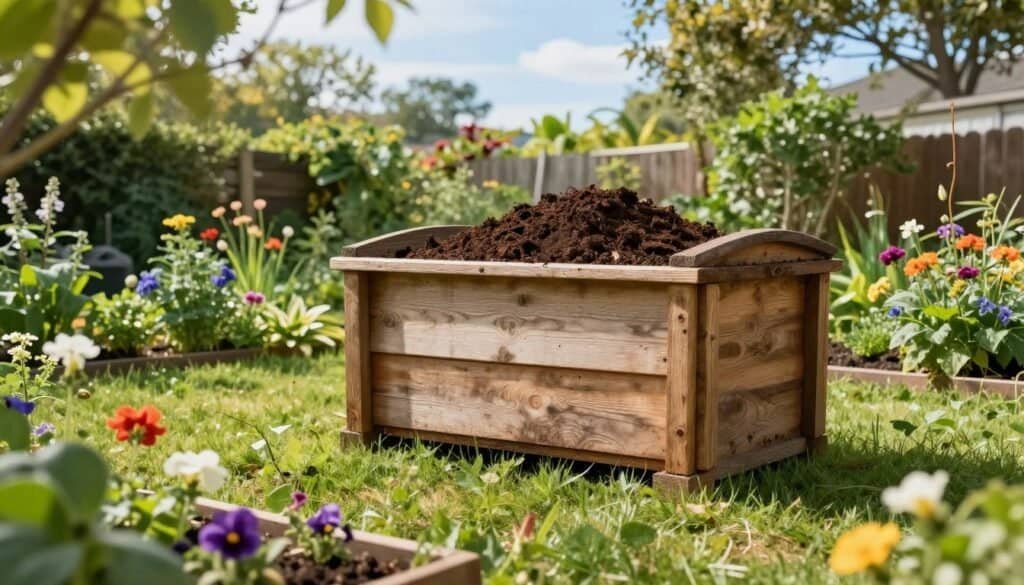
Starting a compost bin at home is easy with a wooden one. They’re sturdy, look good, and can be customized. They also ensure good airflow and moisture, key for composting.
- Reducing waste sent to landfills
- Creating a nutrient-rich soil amendment
- Supporting healthy plant growth
- Reducing the need for synthetic fertilizers
- Improving soil structure and water-holding capacity
Adding a wooden compost bin to your gardening routine brings many benefits. It’s great for both new and experienced gardeners. Composting is a simple way to better your soil and lessen your environmental impact.
Understanding Composting Basics Before You Build
Composting is key to making a good compost bin. It breaks down organic stuff into soil that’s full of nutrients. This not only cuts down on waste but also gives you something great for your garden.
For composting for beginners, it’s important to know that tiny creatures like bacteria and fungi do the work. They need the right mix of moisture, air, and different organic stuff to work well.
What to Compost and What Not to Compost
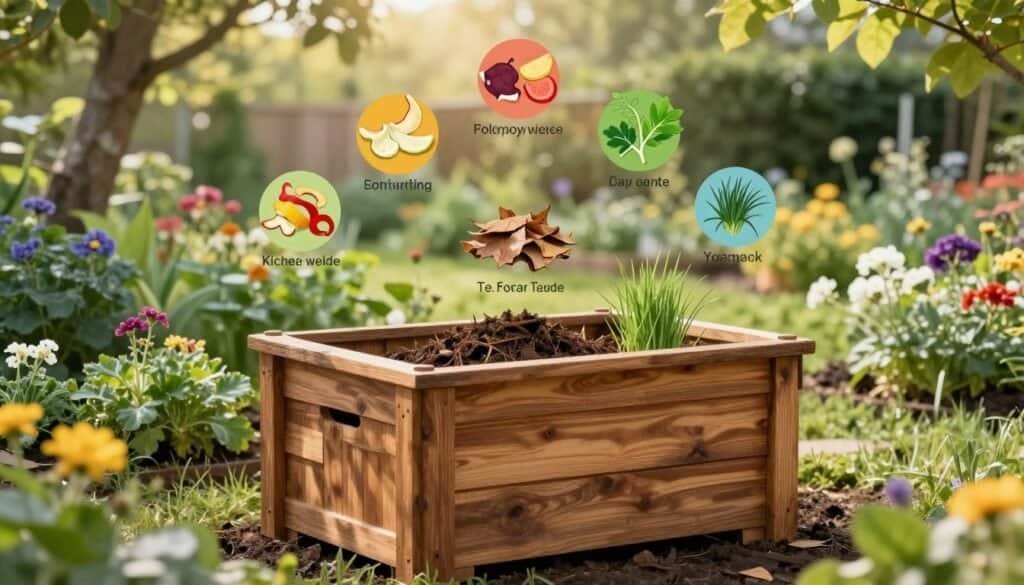
It’s important to know what you can and can’t compost for simple composting for beginners. You can compost lots of organic stuff, but you need to mix it right. You should have “green” stuff like food scraps and grass clippings, and “brown” stuff like dried leaves and straw.
- Green materials: fruit and vegetable peels, tea bags, coffee grounds, grass clippings, and manure from herbivores.
- Brown materials: dried leaves, straw, shredded newspaper, and cardboard.
Don’t compost things that are sick, moldy, or have weeds. Also, skip pet waste, meat, dairy, and oily foods. They can attract pests and smell bad.
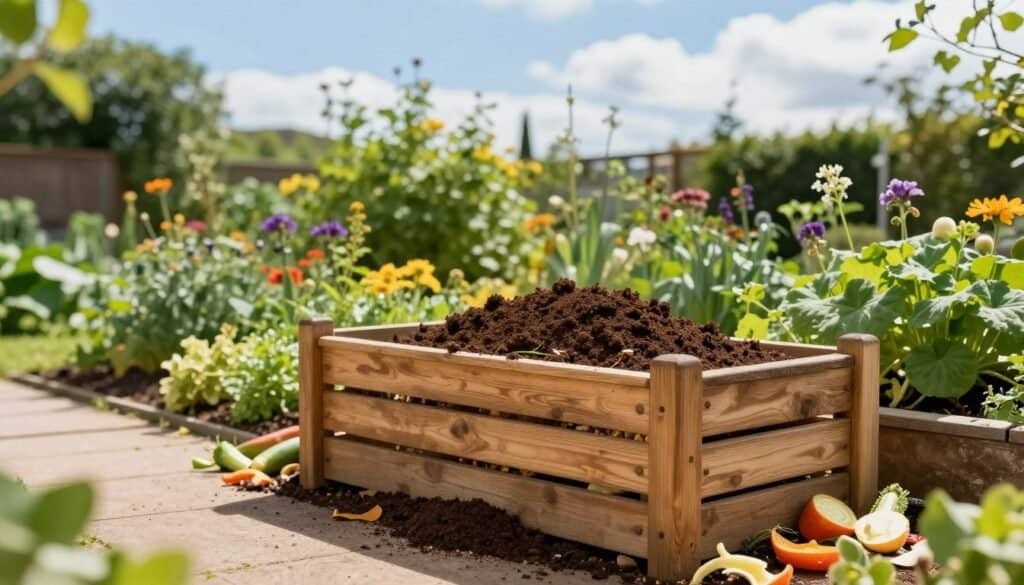
For a beginner gardening compost guide, remember composting is more than just throwing stuff in a bin. It’s about making a place where everything breaks down well. You need to mix it up and turn it regularly, and keep an eye on how wet it is.
Learning these compost for beginners basics will help you make a compost bin that’s good for your garden. The secret to success is keeping it balanced and taking care of it.
A Backyard Compost Bin Can Be Both Practical and Attractive
A well-designed compost bin can be both useful and beautiful in your garden. It can make your garden look better and work better. By picking a design that fits your garden’s style, you can have a stylish composting solution. This solution will not only help your garden but also make it look nicer.
Blending with Your Garden Aesthetic
When picking or making a compost bin, think about how it will look in your garden. A rustic outdoor composting system made from natural wood fits well in traditional or countryside gardens.
For modern gardens, a sleek and simple compost bin design is better. The goal is for the compost bin to be part of the garden, not to stand out in a bad way.
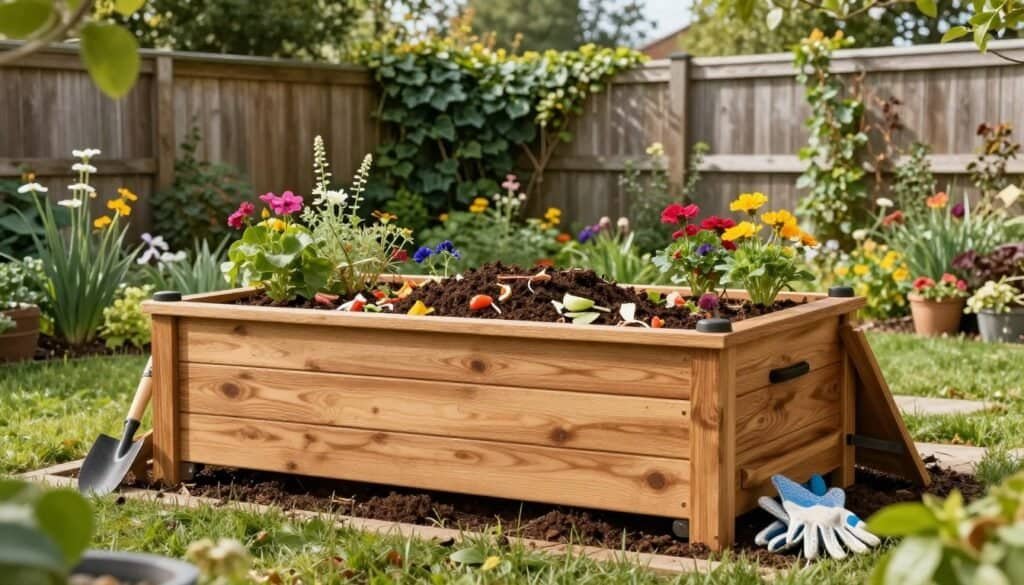
Here are some garden yard ideas easy diy to make your compost bin fit in or even be a highlight:
- Use natural materials like wood or bamboo for a more organic look.
- Paint or stain the compost bin to match the colors used in your garden or yard.
- Place the compost bin in a corner or against a fence to minimize its visibility.
- Add plants around the compost bin to camouflage it and create a lush, garden-like atmosphere.
- Consider a compost bin with a lid that can be used as a planter or a seat, adding functionality.
By using these ideas, you can make your compost bin an attractive composting option. It will help your garden and make it look better.
Essential Materials and Tools for Building Your Compost Bin
Before starting your DIY compost bin, gather all needed materials and tools. This makes your project go smoothly and well.
The wood you pick is key. You can use recycled pallets or untreated wood like cedar or pine. These are strong and won’t rot. Think about the size and how much wood you need for your design.
Necessary Tools for Assembly
To put your compost bin together, you’ll need some basic tools. These include:
- A hammer
- A saw (circular or handheld)
- Drill and drill bits
- Wood screws
- Wire mesh or hardware cloth (optional)
Having the right tools makes building easier and faster. You might also want to look at pre-made compost bin plans. They list everything you need.
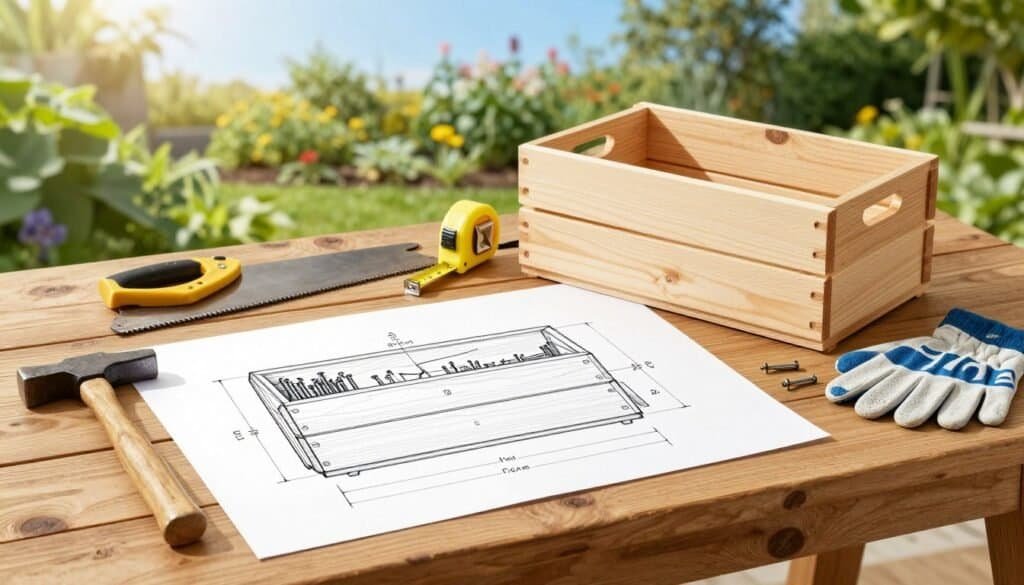
For a DIY compost bin using outdoor pallets, you’ll need pallets, screws, and a drill. It’s a cheap and simple way to make a compost bin. Make sure to take apart the pallets and clean them first.
With all materials and tools ready, you’re set to start building your compost bin. This will add a useful and nice-looking feature to your garden.
Five Attractive Wooden Compost Bin Designs to Consider
Wooden compost bins come in many styles, from modern to rustic. They can show off your taste and match your garden’s look. Think about what style and materials will fit your outdoor area best.
Here are five wooden compost bin designs to think about:
- Modern Slatted Design: This design is sleek and modern. It uses slatted wood for airflow and visibility.
- Rustic Pallet Design: It’s budget-friendly and eco-friendly. It uses reclaimed pallets.
- Lid-Top Design: This design has a lid on top. It makes adding compost materials easy.
- Corner Compost Bin: It’s perfect for small gardens or corners. It saves space.
- Decorative Screen Design: It has a decorative screen. This conceals the composting process.
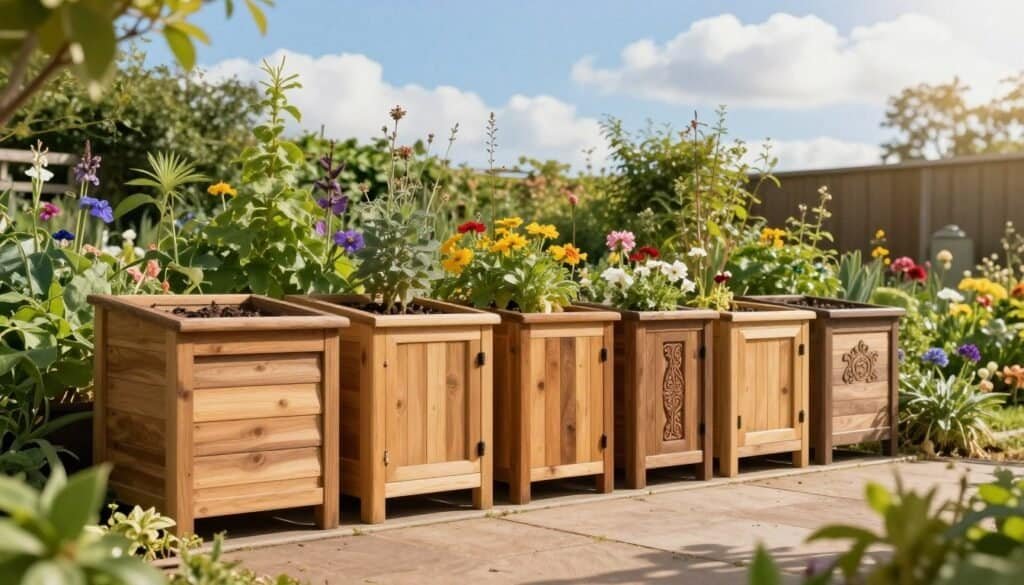
Customizing your compost bin can make it stand out in your garden. Think about adding a natural stain or paint to match your garden’s colors.
You can also add carvings or details. This gives your compost bin a personal touch.
- Choose a design that fits your garden’s style.
- Consider adding a lid or door for easy access.
- Use natural materials and finishes to blend with the surroundings.
Step-by-Step Instructions for Building a Wooden Compost Bin
Building a wooden compost bin is a fun DIY project. It helps you recycle waste and make your soil better. You’ll need to prepare the site, assemble the bin, and make sure it has good airflow.
First, prepare the site for your compost bin. Pick a spot that’s well-drained, easy to get to, and not too sunny. This keeps the compost from drying out too much.
Then, assemble the bin. Cut the wood into the right shapes for your design. For a 3-bin system, you’ll need three bins that are the same. Use screws or nails to hold the wood together. Make sure the corners are strong and the bin is stable.
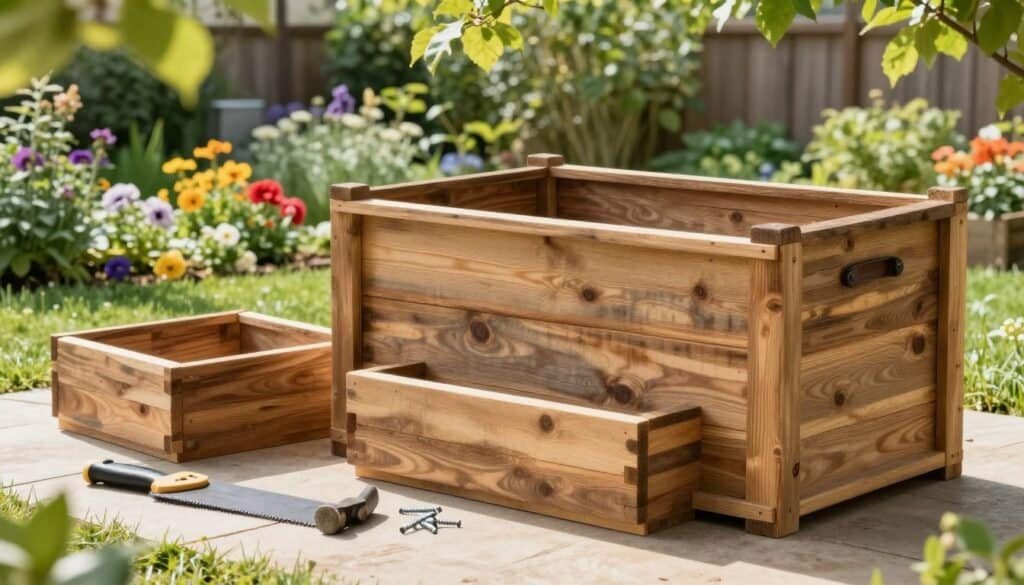
After the basic shape is set, add a lid. The lid keeps pests out and keeps the compost warm. You can make the lid simple or fancy, depending on what you like and what you have. Add hinges so you can easily open and close it.
Make sure it’s well-ventilated. Drill holes in the sides and bottom. This lets air in, which helps the compost break down faster and keeps smells away.
To sum up, here are the main steps:
- Prepare the site for your compost bin.
- Assemble the bin using wooden planks.
- Add a lid to retain heat and keep pests out.
- Ensure proper ventilation by drilling holes in the bin.
By following these steps, you can make a useful and nice-looking wooden compost bin. It will help you deal with organic waste and make compost for your garden.
Seven Tips for Making Your Compost Bin More Effective
To get the most out of your DIY wooden compost bin, consider these seven eco-friendly composting tips. Effective composting is not just about throwing waste into a bin. It’s about creating a nutrient-rich soil amendment that will benefit your garden.
The first tip is to maintain the right carbon-to-nitrogen ratio. A mix of “green” materials (like food scraps and grass clippings) and “brown” materials (like dried leaves and straw) is essential. Aim for a ratio of 2/3 “brown” materials and 1/3 “green” materials.
Secondly, ensure adequate moisture. The compost pile should be kept moist, like a damp sponge. Excessive dryness can slow down the composting process, while too much water can lead to anaerobic conditions.
Thirdly, aerate your compost regularly. This helps to speed up the decomposition process and prevent the growth of anaerobic microorganisms. You can do this by turning the compost pile every few weeks.
Fourthly, monitor the temperature of your compost pile. It should reach temperatures of at least 130°F to 140°F to kill off pathogens and weed seeds.
Fifthly, consider the size of your compost bin. A larger bin can hold more material, but it can also be more difficult to turn. A bin that is around 3x3x3 feet is a good size for most gardens.
Sixthly, be mindful of what you add to your compost bin. Avoid adding meat, dairy, and oily foods, as they can attract pests and create unpleasant odors.
Seventhly, be patient. Composting is a natural process that takes time. It can take several months for your compost to be ready, depending on the conditions.
Despite your best efforts, you may face some issues with your compost bin. Here are a few common problems and their solutions:
- Pests and odors: Check that you’re not adding too many green materials or meat/dairy products. Balance the carbon-to-nitrogen ratio and aerate the pile.
- Slow decomposition: Ensure the pile is moist and aerated. Check the carbon-to-nitrogen ratio and adjust as necessary.
- Weeds or seeds: Make sure the compost pile reaches high enough temperatures to kill them.
By following these composting for beginners diy tips and troubleshooting common issues, you can create a thriving compost bin. It will benefit your garden for years to come.
Using and Maintaining Your DIY Compost Bin
After building your DIY wooden compost bin, it’s time to learn how to use and maintain it. This is key to making quality compost for your garden.
First, know what to add to your compost bin. Mix “green” materials like kitchen scraps and grass clippings with “brown” materials like dried leaves. Keep a balance of 2/3 brown and 1/3 green materials for the best ratio.
Harvesting Your Compost
After a few months, your compost will be ready. Here’s how to harvest it:
- Look for an earthy smell and dark, crumbly texture.
- Take out the compost, breaking up any clumps.
- Sift it to remove big pieces that didn’t break down.
For a 3 bin composting system, rotate the bins as you fill them. This keeps compost flowing.
Here are some compost heap ideas to keep it healthy:
- Turn the compost pile often to aerate it.
- Check moisture levels to avoid dry or wet compost.
- Mix materials well to prevent dense layers.

Keeping your compost bin healthy is more than just compost. It’s about creating a potager garden full of life. Composting reduces waste and makes your soil better.
By following these tips, you’ll make great garden compost. This will make your garden healthier and more fertile.
Conclusion
Starting Your Composting Journey
Starting with a garden Planter divider box can improve your vegetable garden design? A wooden compost bin is key. Composting makes the soil better and helps plants grow well.
This article shows you how to make a compost bin that looks good and works well. It’s great for any garden size. Composting is good for your plants and the planet.
With your new compost bin, you’re ready to make soil that’s full of nutrients. This will make your garden grow better. So, start composting today for a greener garden!