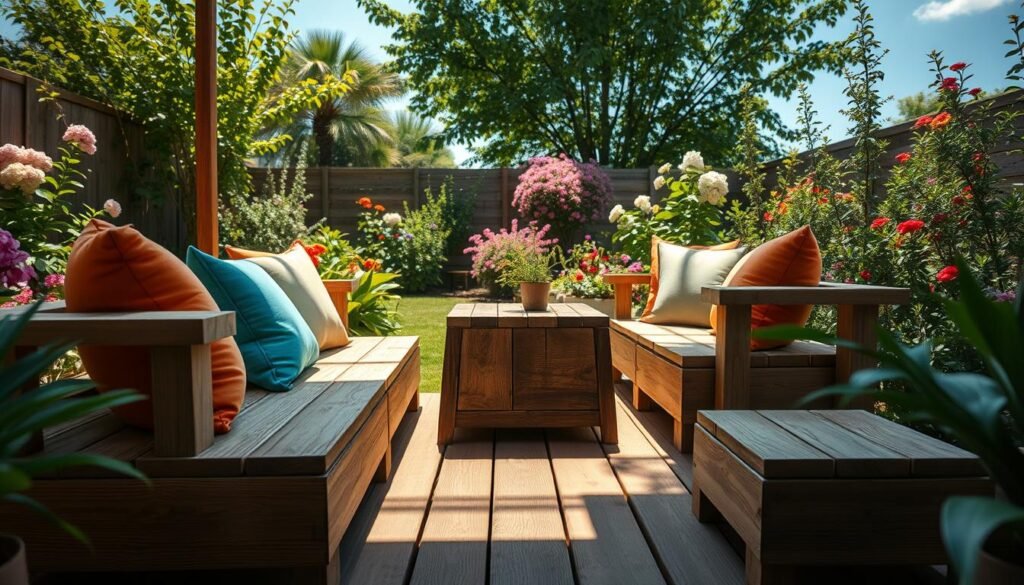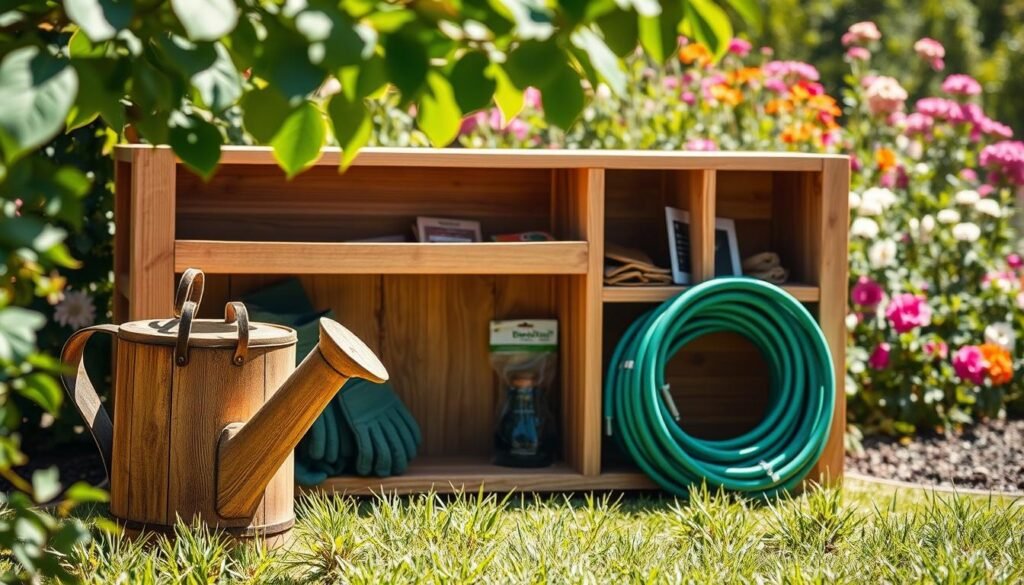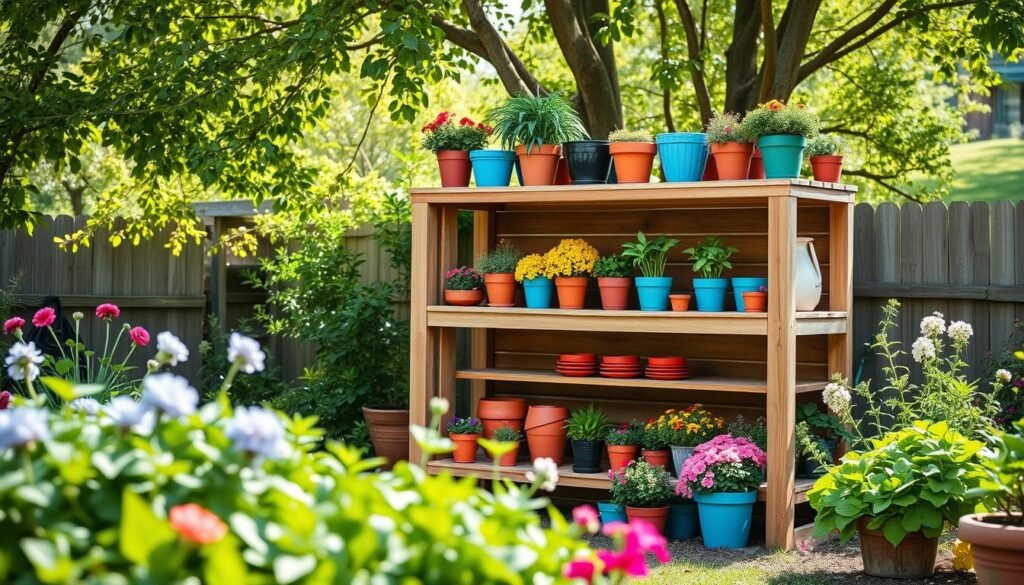
Starting with DIY wood crafts can be very rewarding. You get to make something beautiful and useful for your home.
With simple woodworking plans, you can make your ideas come true, even if you’re new to it. Easy projects need only a few tools and basic skills.
Getting into beginner wood projects lets you unleash your creativity. You can make special pieces that make your home feel more personal.
The Secret to Creating Beginner Wood Projects That Actually Look Professional
The secret to making beginner wood projects look professional is knowing your materials. Picking the right wood is key to your project’s success.
Softwoods vs. Hardwoods
The debate in woodworking often focuses on softwoods vs. hardwoods. Softwoods, like pine and cedar, are softer and cheaper than hardwoods. They’re perfect for beginners because they’re easier to work with. Hardwoods, such as oak and maple, are denser and offer a high-end finish. But, they’re harder for beginners to handle because of their hardness.
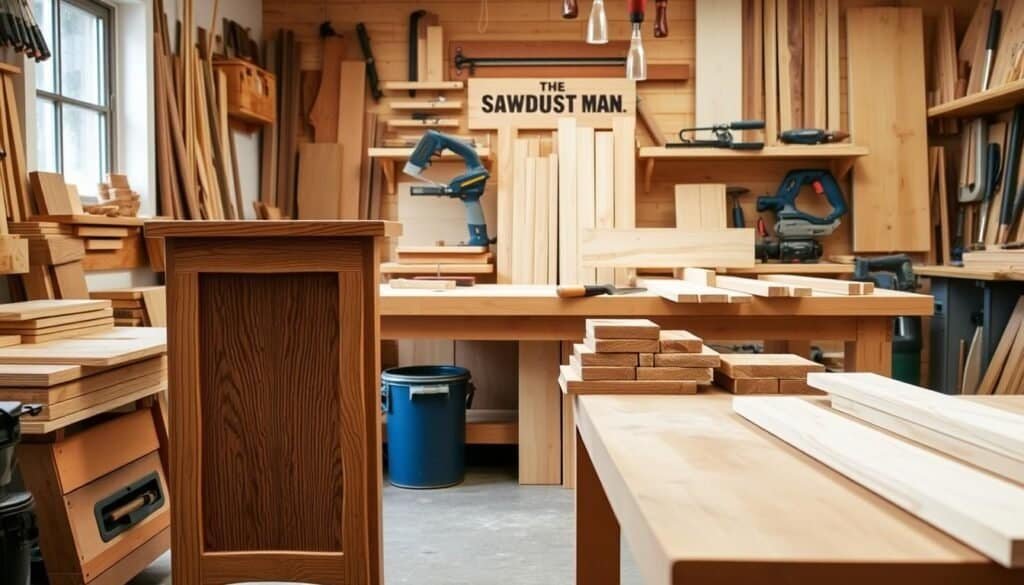
For beginner wood projects, softwoods are a good starting point. They make learning easier and are more forgiving for new woodworkers.
Budget-Friendly Options
Working on a budget doesn’t mean you have to settle for low quality. There are many budget-friendly options for beginner wood projects. Reclaimed wood, for example, can give your projects a unique, rustic look while saving money. You can also use engineered wood or look for discounted lumber at your local hardware store.
- Reclaimed wood for a unique, rustic look
- Engineered wood for stability and cost-effectiveness
- Discounted lumber for savings without sacrificing quality
By understanding the differences between softwoods and hardwoods and looking for budget-friendly options, you can make beginner wood projects that look professional. They can also show off your personal style and creativity.
Setting Up Your Workspace: Essentials for Success
Before starting woodworking projects, setting up a good workspace is key. A well-organized space is essential for success in woodworking.
Tool Storage Solutions
Keeping tools organized is vital for a clean workspace. Use toolboxes or pegboards to keep tools handy. Here’s why good tool storage matters:
- It saves time by making tools easy to find.
- It makes your workspace safer by reducing the chance of accidents.
- It helps keep tools in good shape by storing them properly.
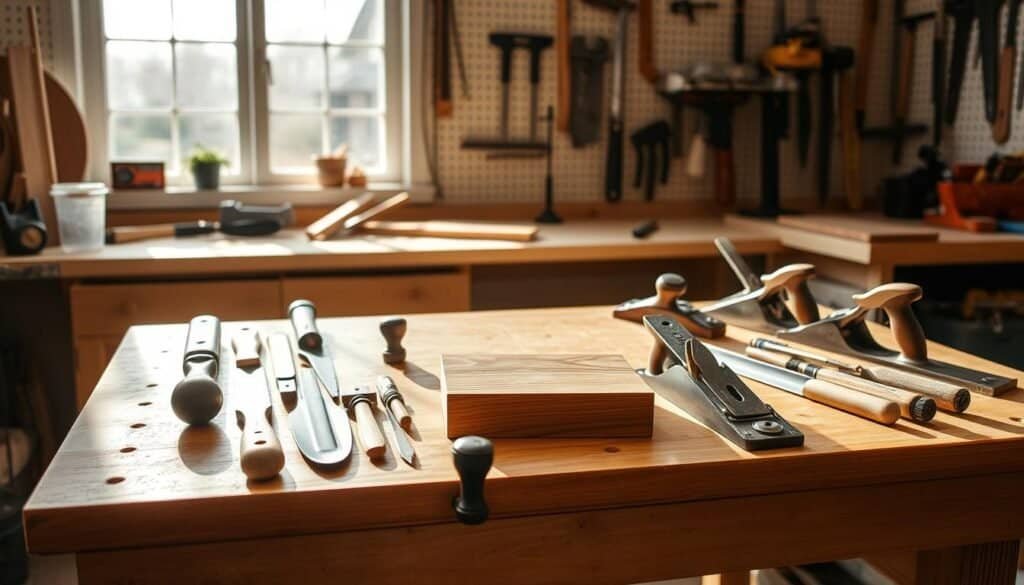
Managing your materials is just as important as tool storage. Labelled storage bins and shelving units help keep things organized. Here are some tips for managing materials:
- Sort materials by type and how often you use them.
- Put often-used materials where they’re easy to get to.
- Label all stored materials so you can find them quickly.
By using these strategies for tool storage and material management, you’ll have a productive and fun woodworking space.
Rustic Wooden Serving Tray: Elegance Made Simple
Making a rustic wooden serving tray is easy and rewarding. It’s great for adding warmth and elegance to your meals. With basic tools and some nice wood, you’ll make something impressive.
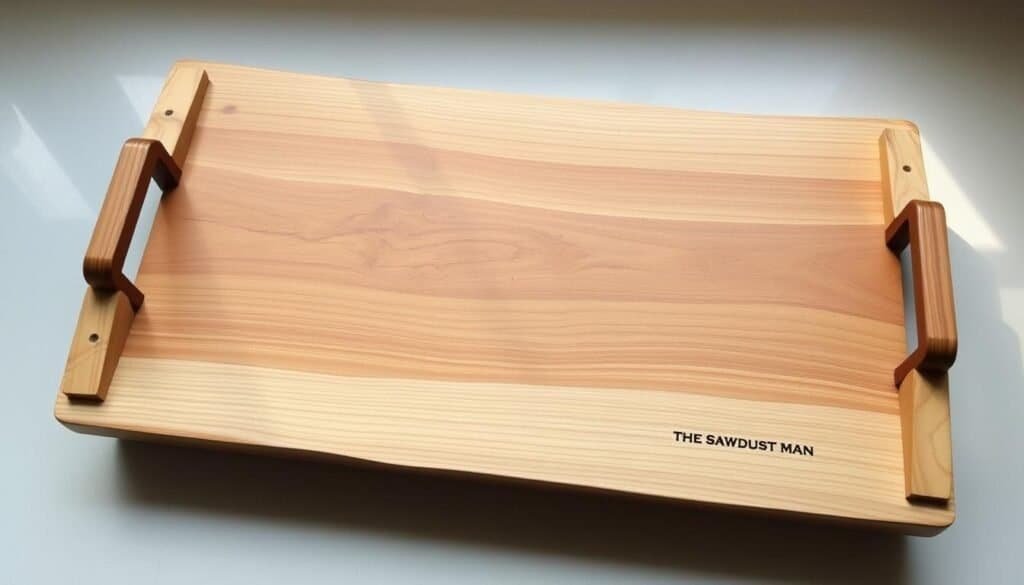
First, pick the right wood for your tray. Reclaimed or distressed wood adds a rustic charm. Cut it to the size and shape you want.
Staining Options
Staining your tray brings out its beauty. You can choose from many stains to get the look you like. For a rustic feel, pick a stain that highlights the wood’s grain and texture.
- Oil-based stains offer a deep, rich color and are simple to apply.
- Water-based stains are great for a lighter color and dry fast.
- White or gray stains give your tray a modern, worn look.
Protective Coatings
After staining, you need to protect your tray. There are many protective options, each with its own benefits.
- Polyurethane is tough and protects against scratches and spills.
- Wax is a natural, safe option that’s easy to keep up.
- Oil keeps the wood moist and healthy-looking.
By following these steps and picking the right stain and protection, you’ll make a beautiful tray. It will be the highlight of your dining table.
Floating Wall Shelves With Designer Appeal
You can make beautiful floating wall shelves with the right materials and some know-how. These shelves are stylish and practical. To get a sleek look, pick the right bracket system.
Hidden Bracket Systems
Hidden bracket systems are key for floating wall shelves. They make the shelves look like they’re floating, giving your space a clean look. There are many designs, including ones that screw into wall studs for extra stability.
When picking a hidden bracket system, think about the weight it can hold and the type of wall you have.
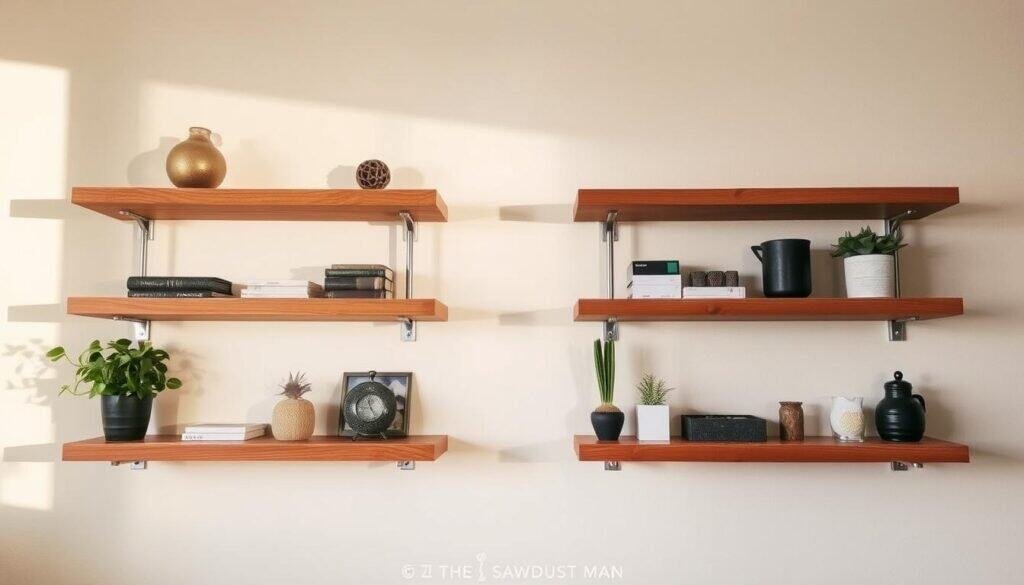
Understanding load-bearing considerations is also important. The weight your shelves can hold depends on the shelf material and the bracket system. Make sure to calculate the maximum weight to avoid accidents.
For heavier loads, use strong materials and make sure brackets are well attached to wall studs.
Looking for more DIY projects? Check out simple DIY wood projects to decorate your home. By focusing on these details, you can make shelves that look great, are safe, and work well.
Handcrafted Wooden Step Stool: Functional and Stylish
With the right materials and patience, you can make a beautiful handcrafted wooden step stool. It’s perfect for DIY fans who want something practical yet stylish for their home.
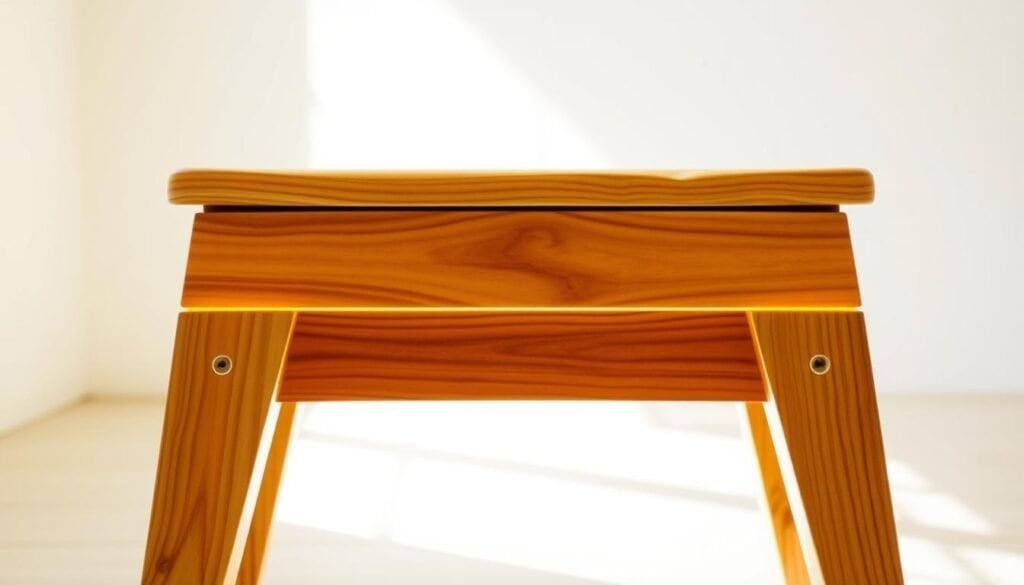
Building a sturdy and good-looking step stool requires attention to detail. Joint strength testing is key. It checks if the joints can hold the weight safely and last long.
Joint Strength Testing
Start by applying gentle pressure to the stool to test the joints. Look for any weakness. This step is important for safety and durability.
Decorative Edge Options
The edge of your DIY step stool is also important. You can pick from many designs, like rounded or beveled edges. These details make your stool look better and add class to it.
By using strong building methods and creative designs, you can make a handcrafted wooden step stool that’s both useful and stylish. It’s a great project to make your kitchen, bathroom, or any room look better with a handmade touch.
Custom Wooden Picture Frames With Professional Flair
Creating custom wooden picture frames is a fun woodworking project. They can add a personal touch to your home and make great gifts. With basic tools and skills, you can make frames that highlight your favorite memories.
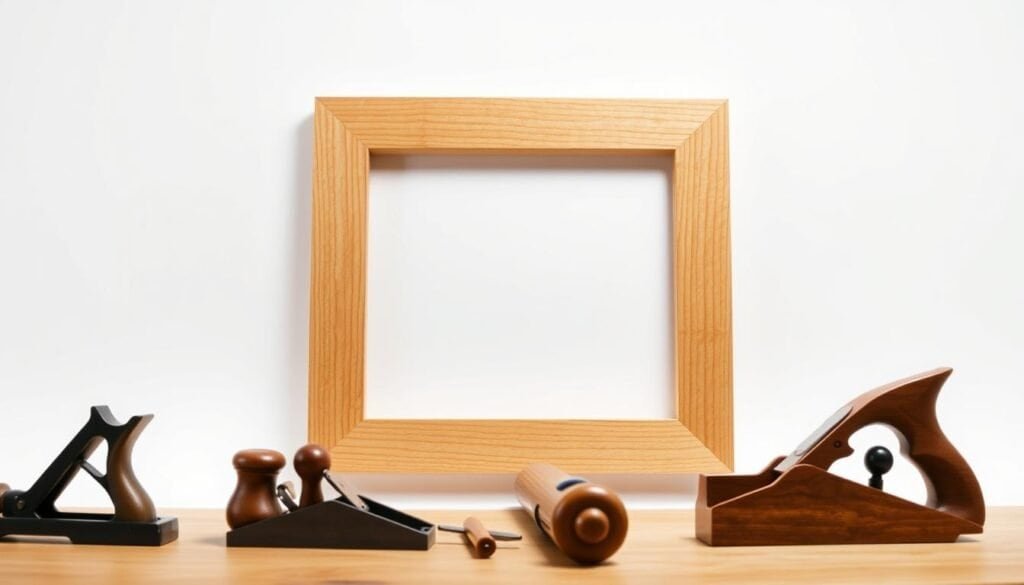
To make your frames look unique, try distressing techniques. These methods damage the wood to give it a worn, vintage look. You can sand, scrape, or use a wire brush to distress the wood.
Distressing Techniques
- Sanding: Use finer grits of sandpaper to smooth and wear the wood.
- Scraping: Remove wood with a scraper or chisel to create scratches.
- Wire brushing: Use a wire brush to distress and texture the wood.
After distressing, install the glass and backing. This step is key for a functional frame. You’ll need to cut glass and a backing material, like cardboard or foam board.
Glass and Backing Installation
- Cut the glass to fit the frame with a glass cutter or diamond blade saw.
- Cut the backing material to fit, leaving a small margin.
- Attach the glass and backing to the frame with adhesive or fasteners.
By following these steps and being creative, you can make stunning DIY picture frames. They add a personal touch to your home. Whether you’re new or experienced, making custom frames is rewarding and impressive.
Beginner-Friendly Wooden Cutting Boards
Making a wooden cutting board is a great project for beginners. It’s both useful and looks good in your kitchen. You’ll learn skills like measuring, cutting, and sanding.
Choosing the right construction method is key for a durable cutting board. Edge grain construction is favored for its durability and longevity.
Edge Grain Construction
Edge grain construction stacks wood strips on their edges. This makes the board less likely to warp and is kind to knives. You’ll need to cut and arrange the wood carefully before gluing it together.
- Cut the wood into strips of uniform thickness.
- Arrange the strips on their edges to form the cutting board surface.
- Apply glue and clamp the strips together, ensuring they are aligned properly.
You can also add decorative inlays to your cutting board. This makes it look even better and lets you put your own touch on it.
Adding Decorative Inlays
Decorative inlays can be wood, metal, or stone. To add one, cut a recess in the board and then put in the inlay material.
- Design your inlay pattern and mark it on the cutting board.
- Carefully cut out the recess using a router or chisel.
- Insert the inlay material and secure it with glue.
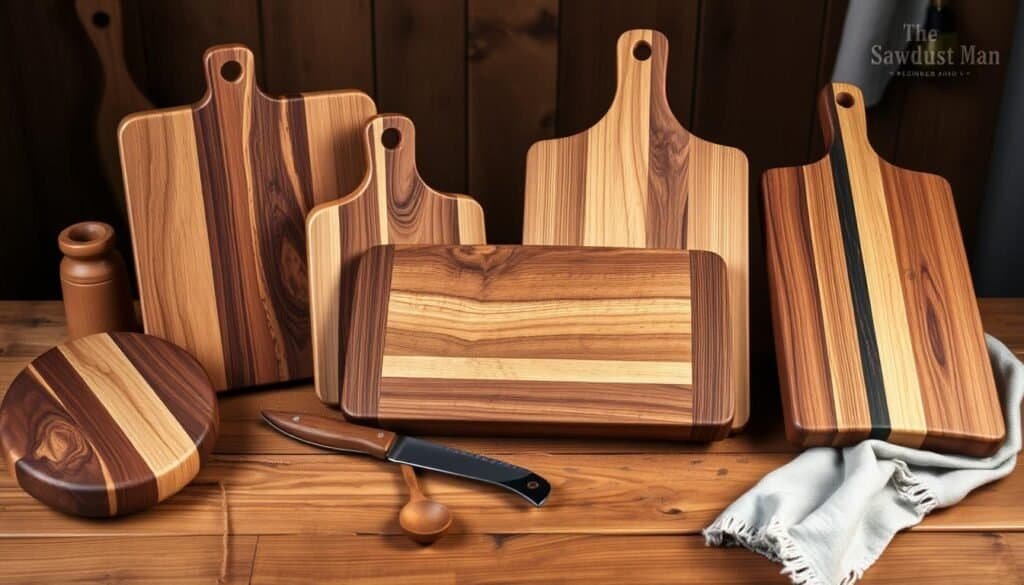
By following these steps, you can make a beautiful and useful wooden cutting board. It will be a great addition to any kitchen.
Wooden Jewelry Box: Small Project, Big Impact
Making a wooden jewelry box is a fulfilling project. It combines beauty with usefulness. It’s a chance to show off your woodworking skills.
First, pick the right wood and design. Think about the size, lid type, and look you want. For a fancy touch, add carved patterns or inlays.
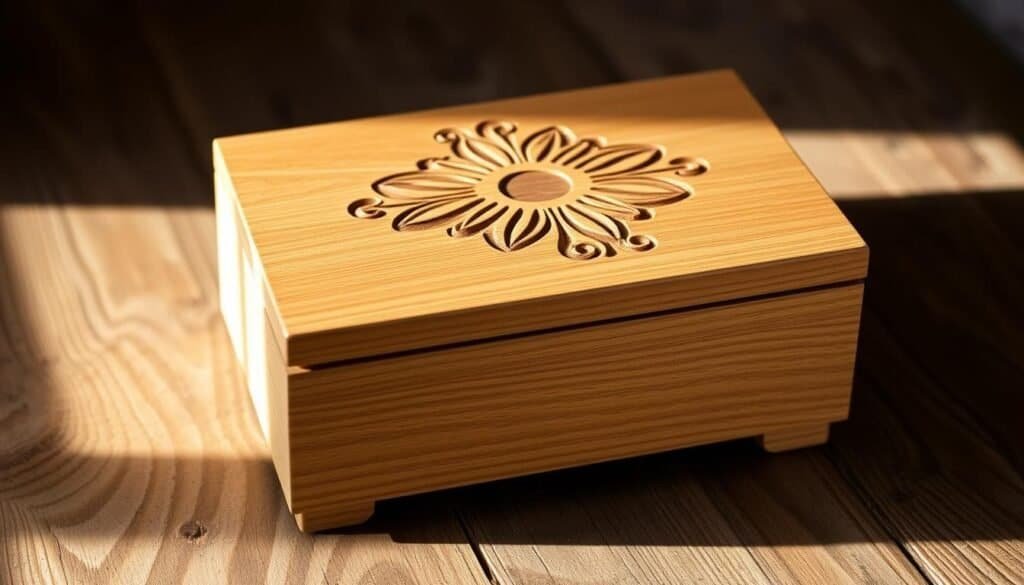
- Choose hinges that fit your box’s size and weight.
- Mark the hinge spots carefully to avoid errors.
- Use a precision drill for clean holes.
For more detailed projects, like hinge installation, check out 10 simple DIY wood projects for ideas.
Lining Options
The inside lining of your box adds luxury and protects jewelry. You can use velvet, felt, or fabric. Here are some options:
- Velvet: Adds elegance and is gentle on jewelry.
- Felt: Durable and comes in many colors.
- Fabric: A unique, personalized choice that matches your style.
By picking the right lining and ensuring smooth hinges, you’ll make a beautiful, functional wooden jewelry box.
Wooden Tic-Tac-Toe Board: Playful Yet Sophisticated
Making a wooden tic-tac-toe board is a fun DIY project. It’s great for beginners because it needs only a few materials and basic skills.
You’ll need wood for the board, small wooden pieces for tokens, and tools like a saw and drill. You can make your board any size or design you like.
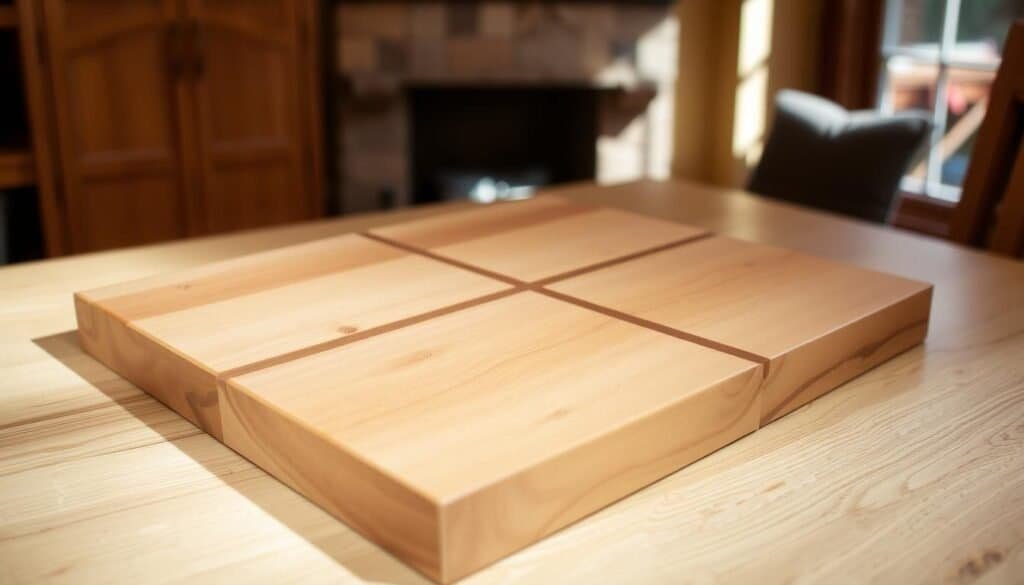
Designing a good tic-tac-toe board means thinking about where to store the game pieces. You can add a simple compartment under the board or a separate box. Here are some ideas:
- Make a hidden spot under the board for the pieces.
- Design a small box to attach to the board’s side.
- Use a small wooden crate or container for storage.
Gift Packaging Ideas
A wooden tic-tac-toe board is a wonderful gift. To make it extra special, consider nice packaging. Here are some ideas:
- Wrap the board in a decorative cloth or bag.
- Make a custom gift box with a lid for storing pieces.
- Add a personal note or message to the gift.
By following these steps and ideas, you can make a beautiful and useful DIY game board. It will be enjoyed for many years.
Small Wooden Storage Crates and Boxes
Looking to declutter and add charm to your space? Small wooden storage crates and boxes are perfect for DIY projects. They’re great for any room, from living areas to garages, and can be tailored to your needs.
Creating these crates and boxes lets you upcycle pallet wood. This gives your project a rustic and eco-friendly touch. Upcycling pallet wood not only cuts down on waste but also brings a unique charm to your storage.
Pallet Wood Upcycling
Using pallet wood for your crates and boxes adds a rustic vibe. The wood’s natural texture and weathered look enhance your DIY project. First, disassemble the pallets, clean the wood, and cut it to size.
Stackable Design Options
Designing your crates and boxes to stack can save space. This is perfect for small areas or keeping items off the floor. Make sure the corners align and use the same size for all crates and boxes.
Adding a lid or label holder can boost their functionality. These small touches can significantly improve how you use your storage.
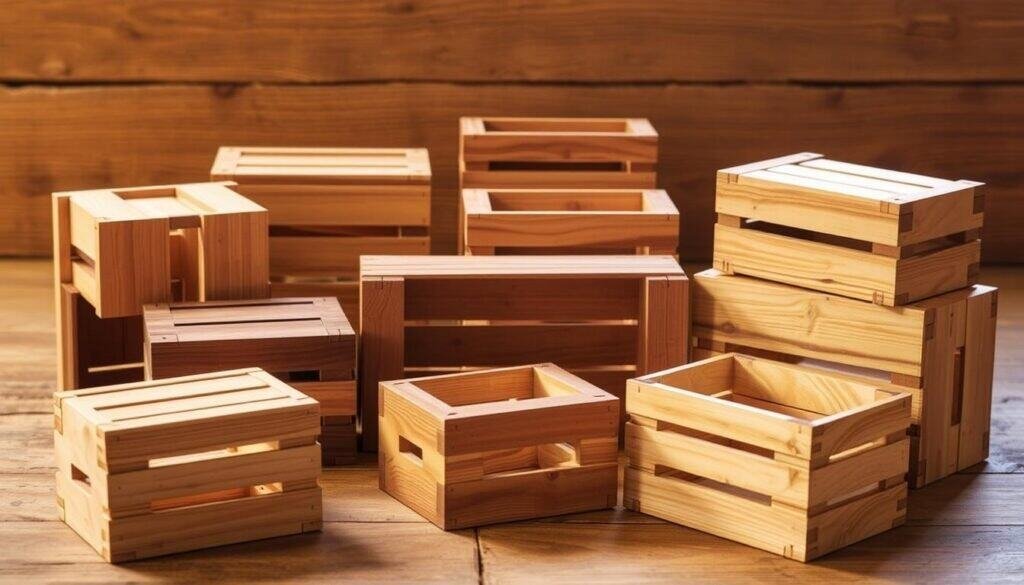
By using pallet wood upcycling and stackable designs, you create functional and stylish storage. These solutions are ideal for organizing your home office or garage. Small wooden storage crates and boxes are a fantastic DIY project.
Conclusion: Your Journey From Beginner to Skilled Woodworker
Completing these beginner wood projects will set you on the path to becoming a skilled woodworker. The journey of woodworking is rewarding. It lets you create useful and beautiful items for your home.
With each DIY project, you’ll grow more confident and learn new skills. This article has given you a strong start. You’ve learned to make a rustic wooden serving tray and small wooden storage crates.
Keep being curious and keep practicing as you move from beginner to skilled woodworker. Try new techniques, work with different materials, and tackle more challenging projects. This will help you improve your skills.
The joy of woodworking isn’t just in the finished item. It’s also in the process. Enjoy the journey. You’ll find that the sense of accomplishment and pride in your work is incredibly rewarding.