Creating a peaceful garden retreat starts with a good plan. Many look for garden furniture ideas before building. Doing a garden bench diy project brings strong satisfaction and beautifies the yard.
A successful outdoor seating project needs to be ergonomic. The right seat height and back support ensure comfort. Every outdoor seating project should focus on making visitors feel at ease.
Using liquid weather protection keeps wood safe from sun and rain. With the right tools and guidance, making custom items is easy. This spot is perfect for reading or watching birds.
Hand-made pieces are ideal for a backyard relaxation spot for families. Starting your garden bench diy project for storage is simpler than you think.
For convenience, I’ve put together a simple list of tools, materials, and items related to the topics covered here → View the List today for years of outdoor comfort.
Visit The Marketplace or grab your Free Garden Starter Kit
1. Why Building Your Own Garden Bench Creates the Perfect Backyard Retreat
A garden bench is more than furniture; it’s a path to relaxation in your backyard. By making your own, you create a calm spot to enjoy nature’s beauty.
Building your bench lets you tailor it to your taste. You can pick the design, material, and size that suits your garden. This is great for unique gardens or special needs, like extra storage or a certain color.
Customization and cost-effectiveness are two big pluses of DIY garden bench projects.
Choosing to build a simple garden bench means picking from many materials. You can use reclaimed wood, cedar, or recycled plastic to match your garden’s look. Plus, making your own bench can save money. You can buy materials cheaper and skip the store’s markup.
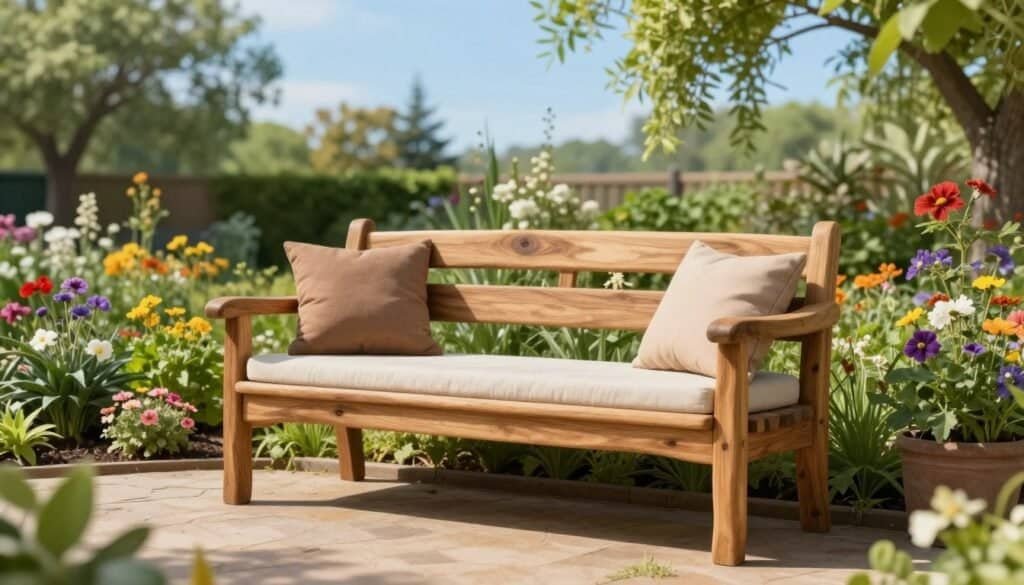
A garden bench is a special place for relaxation and thought. It’s perfect for reading, enjoying coffee, or just taking in the view. Adding a bench to your decor makes your outdoor space more welcoming.
To start, look at garden birdhouse online or in DIY books. These guides help from start to finish. With some creativity and basic skills, you can make a beautiful outdoor bench seating area that’s the garden’s centerpiece.
Building your own garden bench is a fulfilling project that improves your outdoor space. It gives you a cozy garden bench seating area and adds a personal touch. So, if you want a peaceful backyard spot, try building a simple garden bench. It’s a fun and doable project.
2. Planning Your Garden Bench: Location, Size, and Design Considerations
To make your garden bench both useful and good-looking, you need to plan well. Think about the bench’s location, size, and design.
Choosing the right location is key. Do you want it in the sun or shade? Maybe you want to see a beautiful view from it. Make sure it’s on a flat, stable spot.
The size of your bench matters a lot. You need to decide on its height, depth, and length.
Typical Bench Height: 16-18 Inches
A height of 16-18 inches is comfy for most adults. It lets you sit with your feet flat or on a footrest, if you have one.
Seat Depth: 15-20 Inches for Comfort
The depth of your bench seat is key for comfort. A depth of 15-20 inches is best. It lets you sit back and relax without feeling too tight or too loose.
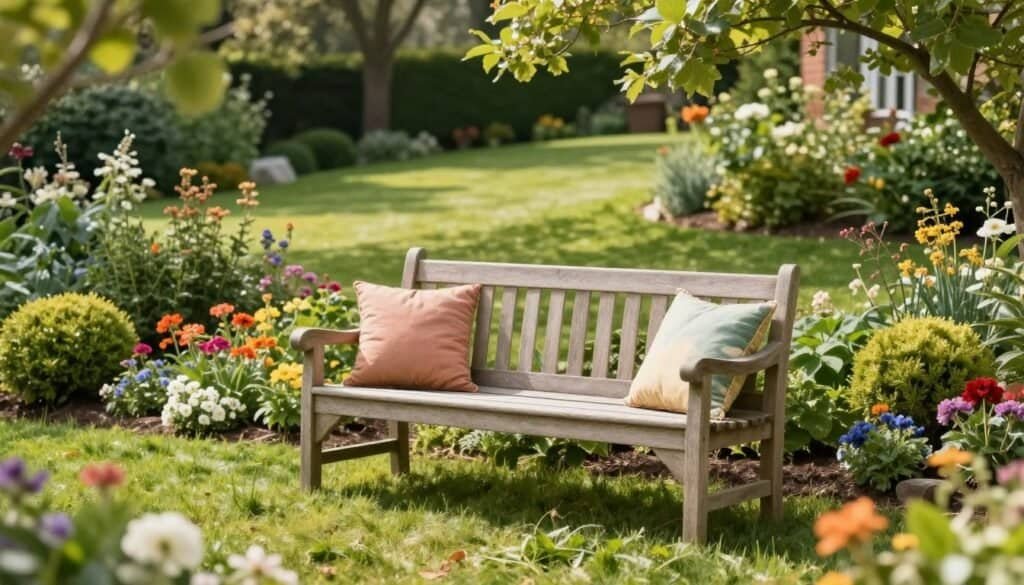
Bench Length Options: 4 to 6 Feet
The bench’s length depends on the space and how many you want to seat. A length of 4 to 6 feet is a good start. It seats two to three people well, great for a cozyoutdoor patio ideasarea.
When thinking about the design, match it to your garden or yard’s style. You might want it to blend in or be a standout. Choose materials and colors that match your garden seating ideas. A DIY garden bench lets you make it your own.
By planning well, you can make a beautiful and useful benches for outside. It will make your outdoor space even better.
3. Gathering Materials and Tools for Your DIY Bench Project
To start your outdoor bench project, you need the right materials and tools. The materials you pick will depend on your bench’s style, durability, and upkeep needs.
Cedar: Naturally Rot-Resistant and Beautiful
Cedar is a top pick for outdoor benches because it fights off rot and bugs well. It also looks great, adding a cozy feel to your patio.
Key benefits of cedar:
- Resistant to rot and insects
- Durable and long-lasting
- Aesthetically pleasing
Pressure-Treated Pine: Budget-Friendly and Durable
Pressure-treated pine is a cost-effective choice for outdoor benches. It’s tough and can handle rough weather.
Advantages of pressure-treated pine:
- Affordable
- Resistant to warping and cracking
- Can be stained or painted
Reclaimed Pallet Wood: Eco-Friendly Option
Reclaimed pallet wood is a green choice for your bench. It’s eco-friendly and brings a special touch to your outdoor area.
Cinder Blocks for Modern Industrial Style
For a modern look, cinder blocks are perfect. They can be the base or add a cool touch to your bench.
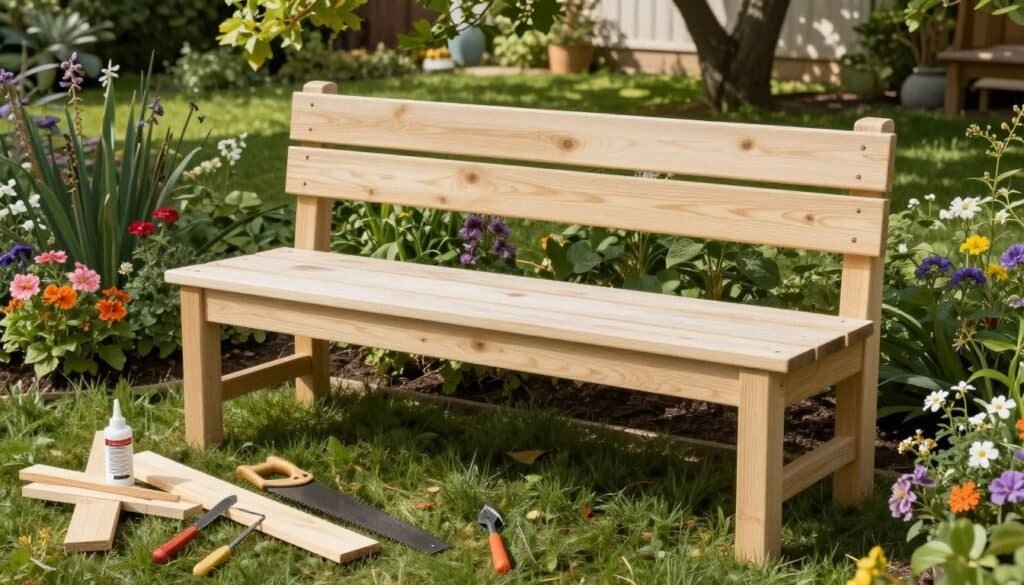
Concrete for Permanent Installations
Concrete is great for lasting benches. It’s strong and can be shaped into many designs.
Benefits of concrete:
- Highly durable
- Can be customized
- Low maintenance
Choosing the right materials and tools helps you make a beautiful, useful outdoor bench. It will match your style and needs perfectly.
4. Simple Wooden Garden Bench Plans for Beginners
Building a wooden garden fence
is a great DIY project for beginners. It lets you create a beautiful and functional outdoor space. With a simple plan, you can make a perfect spot to relax and enjoy your garden.
To start, you’ll need to gather the necessary materials and tools. For a basic wooden garden bench, you’ll need wooden planks, screws, a drill, and a saw. Choose the type of wood based on your preference and budget. Using durable and weather-resistant wood is recommended for outdoor furniture.
Here’s a simple plan to get you started:
- Cut the wooden planks into the required sizes for the legs, seat, and backrest.
- Assemble the frame using screws and a drill.
- Attach the seat and backrest to the frame.
- Sand the entire bench to smooth out any rough edges.
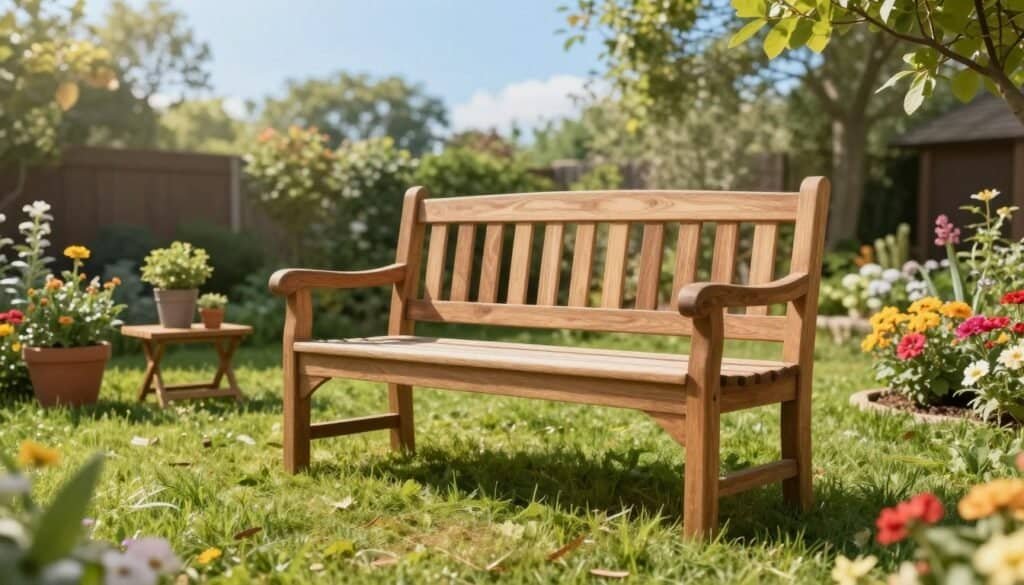
When designing your DIY wooden garden furniture, think about your garden’s style and theme. You can add a personal touch by incorporating wooden garden bench with flowers or other decorative elements.
For a more unique look, explore different wooden garden furniture ideas. You can use reclaimed wood or add a backrest with a curved design.
If you’re looking for an alternative material, consider using wood palette patio furniture. Wood pallets are often readily available and can be repurposed to create a charming and eco-friendly garden bench.
By following these simple steps and using your creativity, you can create a beautiful and functional wooden garden bench. It will complement your outdoor space perfectly.
5. Creative and Unique DIY Bench Ideas for Every Garden Style
Make your garden stand out with unique DIY benches that show off your style. Whether your garden is modern, rustic, or whimsical, there’s a bench design for you. It will perfectly match your outdoor space.
Using pallet wood garden furniture is a creative way to add a bench. Pallets are cheap and easy to find. You can make a simple bench or add features like a backrest or table.
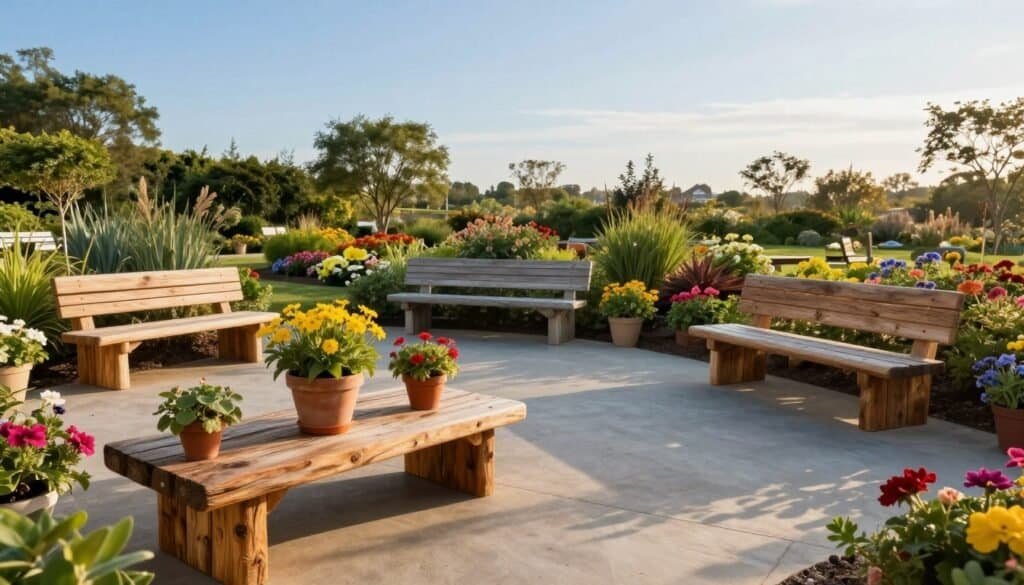
A diy garden bench with table is a great idea. It’s both functional and comfy. You can adjust its size and design to fit your garden and taste.
For outdoor bench decorating ideas, the options are endless. Add cushions and pillows for a cozy feel. Surround your bench with plants for a natural look.
For a traditional look, try an outdoor wooden bench diy. Choose from many woods and designs to match your garden. You can make a simple bench or something more elaborate.
Diy wooden benches outdoors can last for years. Use weather-resistant finishes or rot-resistant wood for durability.
- Choose a bench that fits your garden’s style.
- Think about the materials and their durability.
- Be creative and add personal touches.
- Make sure your bench is comfy and useful.
Adding a creative DIY bench to your garden makes it welcoming and relaxing. It shows off your personality and style.
6. Want a Quiet Place to Sit in Your Garden? Build a Simple Garden Bench: Complete Step-by-Step Instructions
Turn your backyard into a peaceful spot by following our guide to making a garden bench. A simple bench is more than furniture; it makes your outdoor area welcoming. It’s where you can relax and enjoy nature.
To begin, gather the needed materials and tools. For a basic bench, you’ll need wooden planks, screws, a drill, and a saw. Make sure your wood can handle the outdoors.
Creating Sturdy Support Legs
The legs of your bench are its base. Sturdy support legs are key for stability and lasting use. Here’s how to make them:
- Cut four legs from your wooden planks to the right height.
- Drill screw holes at the top and bottom of each leg.
- Use screws to put the legs together, making sure they’re even and strong.
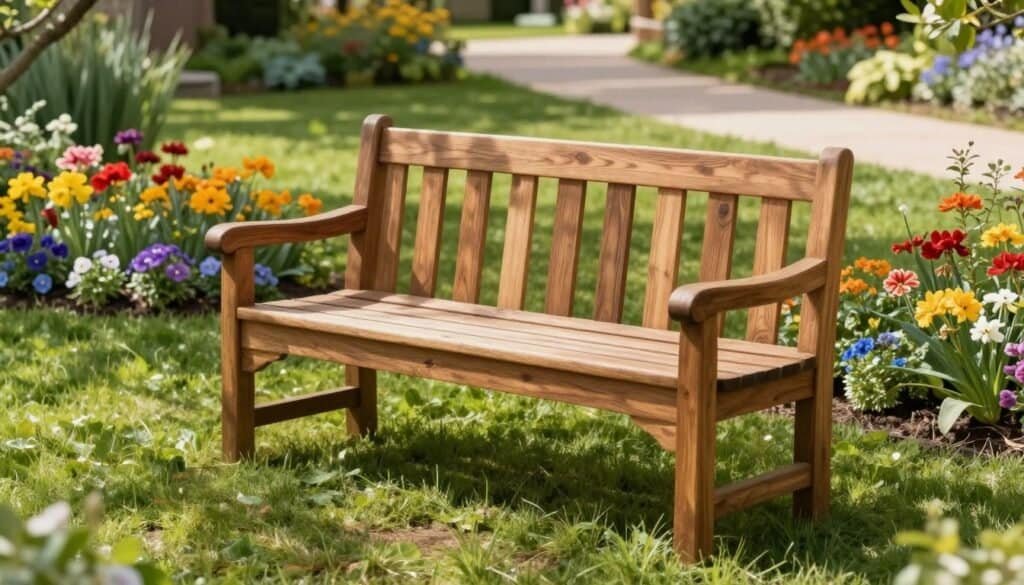
After your legs are set, add cross braces for more stability. This step is important for keeping your bench steady under weight.
- Measure the gap between the legs to figure out your cross braces’ length.
- Cut the planks to match your measurements.
- Attach the cross braces between the legs with screws, making sure they’re tight.
By following these steps, you can make a simple yet strong garden bench. This DIY wood bench outdoor simple project is great for beginners. You can also make it fit your garden’s style.
Now that your bench’s frame is done, add the seat and backrest. Use wood that won’t rot and space the slats right for comfort and looks.
Building a garden bench is a fulfilling DIY task that improves your outdoor area. With these easy plans, you can make a cozy spot to relax in your garden.
7. Finishing, Decorating, and Weatherproofing Your Outdoor Bench
Now that your simple outdoor wooden bench plans are done, it’s time to make it last longer and look better. Finishing and decorating your bench will protect it from the weather and add beauty to your garden.
The first thing to do is sand your DIY garden bench with back well. This gets rid of splinters and rough spots, making it smooth for staining or painting. Use a fine-grit sandpaper for the best results.
After sanding, you can stain or paint your bench. Staining brings out the wood’s natural beauty, while painting adds a bold color. Make sure to use outdoor-grade stain or paint to handle the weather.
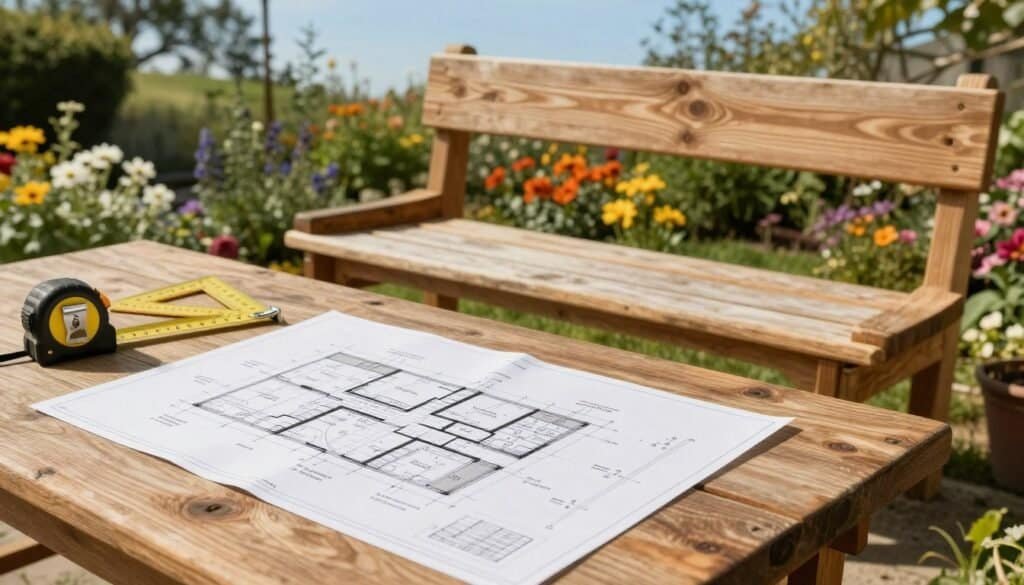
Let the finish dry completely as the instructions say. This is key for your bench’s long life.
Weatherproofing Your Bench
To keep your outdoor wooden bench plans safe from rain and sun, apply a weatherproof sealant. This clear coat protects the wood from moisture and UV rays, making your bench last longer.
- Choose a sealant made for outdoor use.
- Follow the manufacturer’s instructions for applying.
- Put on new sealant every now and then to keep it protected.
Decorating your bench is easy with cushions or pillows. Pick outdoor fabrics that don’t fade or get wet. You can also add carvings or metal accents for a special look.
By following these bench instructions, you’ll make a beautiful and lasting garden bench. With the right care, your DIY garden bench with back will be a cozy spot for years.
8. Maintaining Your DIY Garden Bench Throughout the Seasons
To keep your DIY garden bench comfy and welcoming all year, regular upkeep is key.
Cleaning your outdoor wood bench regularly is a must. Dirt, leaves, and other stuff can harm it over time. Use a soft-bristled brush or cloth to gently sweep away any loose stuff.
For a deeper clean, mix mild soap with water. Then, use it to wipe down the bench. Stay away from harsh chemicals or rough cleaners that can hurt the wood.
Protecting your garden bench from seasonal weather is vital. Snow and ice in winter can really damage the wood. Think about using a waterproof sealant to keep it dry.
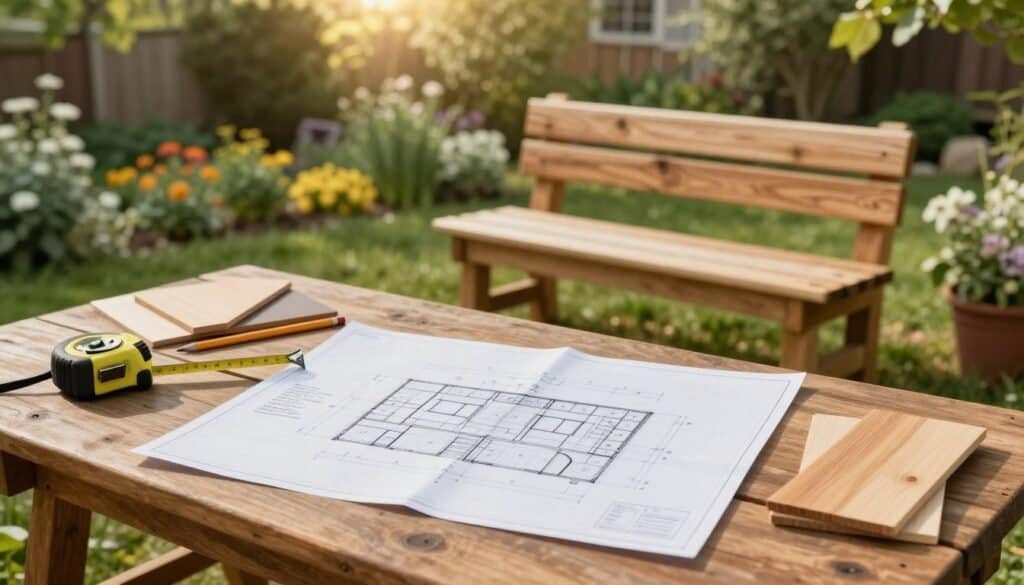
In summer, the sun’s strong rays can make the wood fade or crack. A UV-resistant finish can help prevent this.
Checking your bench often for wear and tear is also important. Look for cracks, splits, or loose parts. Fix these problems right away.
For small fixes, wood glue or new boards might do the trick. But for bigger issues, you might need a pro’s help.
Here are some extra tips to keep your bench in top shape:
- Regularly check the bench for damage or wear.
- Keep the area around the bench clean and free of debris.
- Use a protective finish on the wood to shield it from the weather.
- Avoid putting hot or wet things directly on the bench.
By sticking to these easy maintenance tips, you can enjoy your DIY garden bench for many years, no matter the season.
9. Conclusion
Building a garden bench is a fun DIY project. It can make your outdoor space better and create a cozy backyard retreat. With free plans and some creativity, you can make a beautiful bench that fits your yard.
Do you like simple wooden benches or fancy cement ones with planters? There are many options. A bench with planters can make your garden look elegant.
By following the steps in this article, you can make a lovely bench for outdoor seating. It will be a place to relax and enjoy. So, start your DIY garden bench project now. It will be a great addition to your outdoor space.