Growing your own food or flowers often means you need more space. Many people use vertical gardening to make the most of their soil. DIY garden trellis ideas are a clever way to let plants climb up towards the sun.
Plants love to grow up towards the light. Because climbing plants need support, building strong trellises is key. These garden trellis structures hold up heavy veggies like tomatoes or beans.
Creating a trellis frame keeps veggies off the wet ground. This stops rot and makes picking easier for everyone. These designs turn any outdoor area into a lush, green wall that’s also pretty.
Key Takeaways:
- Vertical growth saves space and improves air circulation for healthier crops.
- Sturdy structures protect vines from pests and soil-borne diseases.
- Upright designs make harvesting easier and increase total yields significantly.
Starting with DIY projects can be very rewarding. Every piece of wood or wire mesh opens up new ideas. For convenience, I’ve put together a simple list of tools, materials, and items related to the topics covered here → View the List
You might find that growing plants upwards changes your hobby forever.
Visit The Marketplace or grab your Free Garden Starter Kit
1. Climbing Plants Need Support — A Simple Trellis Frame Can Help
Climbing plants need a little help to reach their full height. A simple trellis is perfect for this. These plants naturally want to climb up, using their surroundings for support. Without support, they can get tangled, damaged, or not grow well.
A simple trellis gives climbing plants the structure they need to grow up. This maximizes space and helps plants grow healthier. Trellises provide a strong base for plants to cling to or wrap around. This prevents damage from wind or their own weight.
Benefits of Using a Trellis for Climbing Plants
Using a trellis for climbing plants has many benefits. Some key advantages include:
- Improved Plant Health: Trellises keep plants off the ground, reducing disease and pest risks.
- Enhanced Garden Aesthetics: Trellises add visual interest, making gardens more attractive and inviting.
- Maximized Space: Climbing plants on trellises use garden space efficiently, allowing for more plants in smaller areas.
- Easier Maintenance: Elevated plants are easier to inspect for pests, prune, and harvest.
When climbing plants get the support they need, they can turn any garden into a lush oasis. A well-designed trellis supports plant growth and becomes part of the garden’s beauty.
2. Planning Your DIY Trellis Project: What to Consider Before Building
Planning is key to creating a beautiful and functional DIY trellis for your garden. Before you start building, it’s essential to assess your garden space and determine the purpose of your trellis.
Think about the type of climbing plants you want to support. Different plants have different needs. For example, heavier plants like climbing roses need sturdier trellises. Lighter plants like clematis can thrive on simpler structures.
Choosing the Right Materials for Your Trellis
The materials you choose for your trellis will significantly impact its durability and aesthetic appeal. Common materials include wood, metal, and recycled materials. Wooden trellises are popular for their natural look and can be made from cedar, pine, or reclaimed wood.
Metal trellises, on the other hand, offer durability and can be made from materials like aluminum or steel. Consider using a lattice trellis for a more detailed design that provides excellent support for climbing plants.
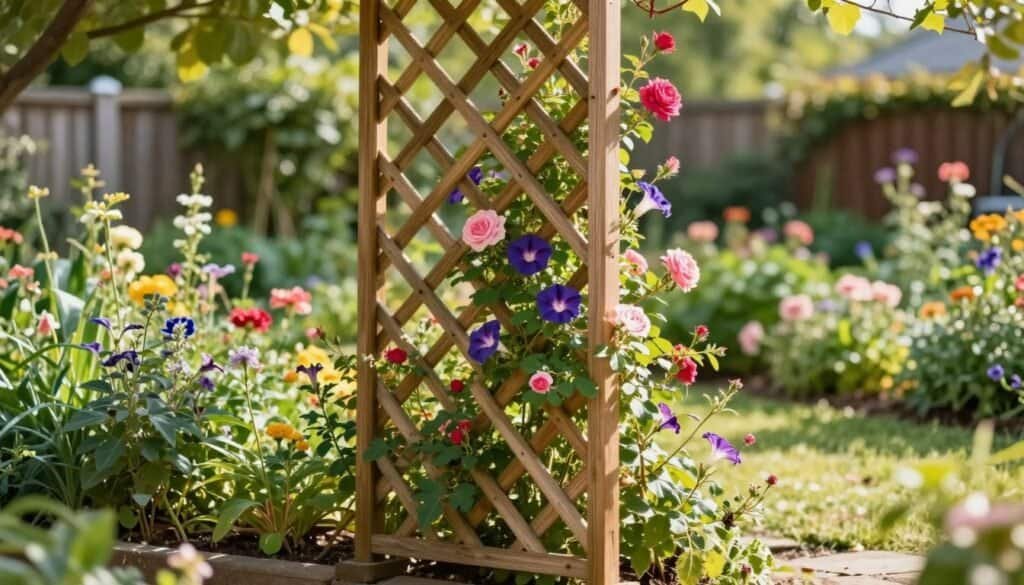
When selecting materials, also think about the style of your garden and the overall aesthetic you want to achieve. A patio trellis can be a great addition to outdoor living spaces, providing both functionality and visual appeal.
- Consider the durability and maintenance requirements of the materials.
- Think about the color and texture of the materials and how they will blend with your garden.
- Assess the weight and structural integrity needed for the trellis based on the plants it will support.
By carefully planning your DIY trellis project and choosing the right materials, you can create a beautiful and functional addition to your garden. This will support your trellis plants and enhance your outdoor space.
3. Gathering Materials for Your Garden Trellis Frame
The materials you pick will affect your trellis’s strength and look. When making a garden trellis, think about the plants, the weather, and the design you want.
Each material has its own perks. Wooden trellises fit well with nature, while metal ones look modern. Here are some common materials for trellis designs:
- Wood (cedar, pine, or reclaimed wood)
- Metal (aluminum, steel, or wrought iron)
- Recycled materials (old pallets or fencing)
- Bamboo or other sustainable resources
Tools Needed for Building a Trellis
Choosing the right tools is as key as picking materials. Here are the must-haves for most DIY trellis ideas:
- Hammer or mallet
- Tape measure
- Saw (circular or hand saw)
- Drill and bits
- Nails or screws
- Wire or twine for plant support
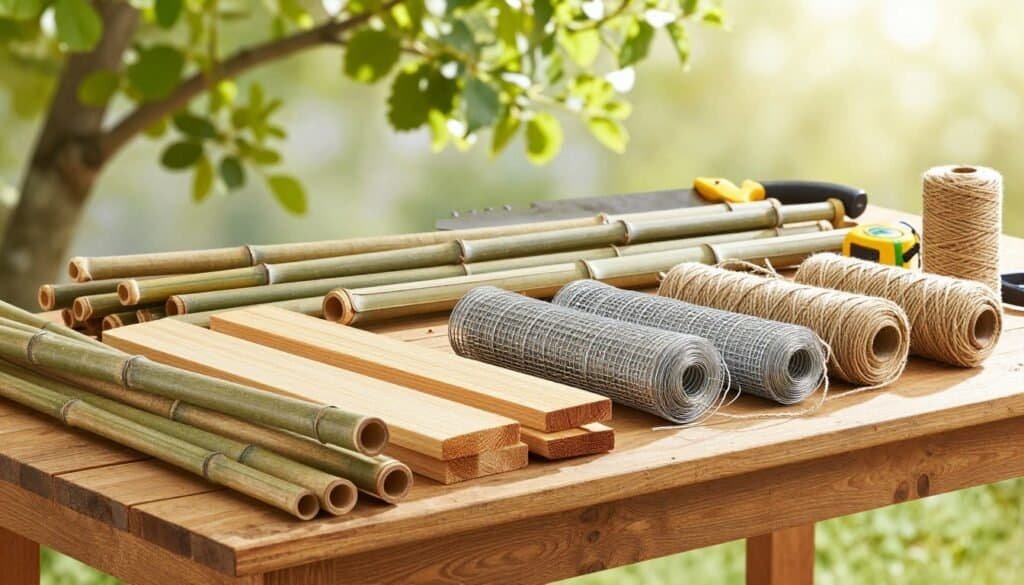
For outdoor trellis ideas, use weather-proof stuff like cedar or recycled plastic. For cheap trellis ideas, try using old or recycled stuff. It’s good for your wallet and the planet.
With the right materials and tools, you can make a strong and pretty trellis. It will make your garden look better and help your plants grow.
4. Building a Simple Wooden Lattice Trellis
You can make a strong wooden lattice trellis with basic tools and materials. It’s not just useful but also makes your garden look better.
You’ll need wooden strips, a saw, a drill, and wire or nails to begin. The size of your trellis depends on the space and the plants you’re growing.
Key Steps in Building Your Lattice Trellis:
- Cut the wooden strips to the right length for your trellis frame and lattice pieces.
- Put the frame together by nailing or screwing the corners.
- Make the lattice pattern by weaving or nailing the strips into the frame.
- Make sure the trellis is stable by securing it to a wall or the ground.
Tips for Ensuring Stability and Durability
To keep your trellis stable and long-lasting, follow these tips:
- Choose treated wood or naturally rot-resistant types to make your trellis last longer.
- Make sure the trellis is well-anchored to avoid it falling over, even in windy weather.
- Check the trellis often for damage or wear and fix it right away.
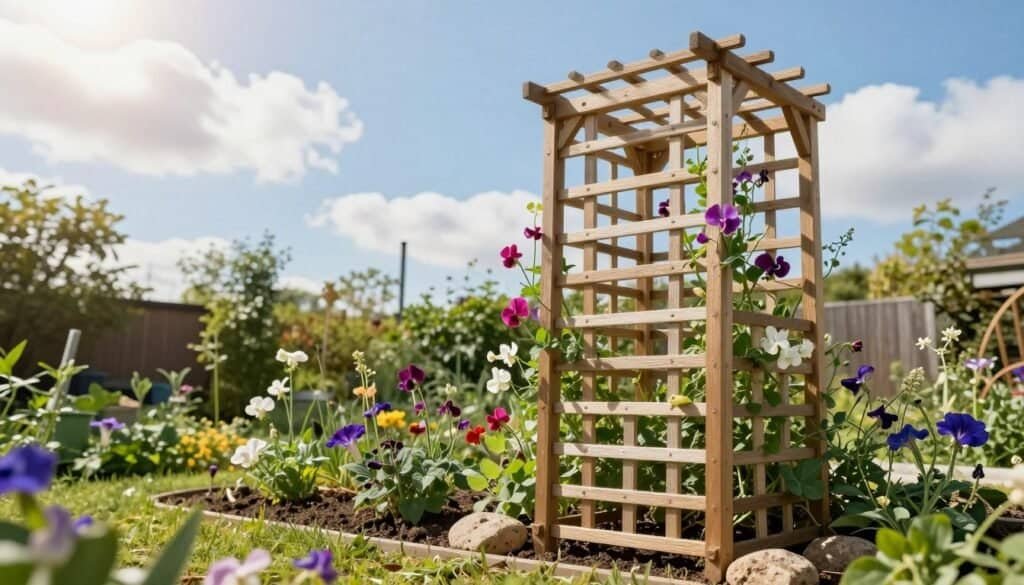
By following these steps and tips, you can make a beautiful wooden lattice trellis. It will support your climbing plants and make your garden look great.
5. Constructing a Rustic Stick Trellis with Natural Materials
Building a rustic stick trellis is a great way to add charm to your garden. You can use natural materials from your yard. This approach is eco-friendly and gives your garden a unique look.
Benefits of a Rustic Stick Trellis:
- Environmentally friendly
- Unique and charming appearance
- Can be made from materials found in your yard
Assembling the Rustic Stick Trellis
To start, gather sturdy sticks and branches from your yard. Choose ones that are straight and have the same thickness for stability.
Here’s how to build it:
- Collect and clean the sticks and branches.
- Cut the sticks to the right length for your trellis.
- Use twine or wire to tie the sticks together.
- Put the trellis in your garden and train your plants to climb it.
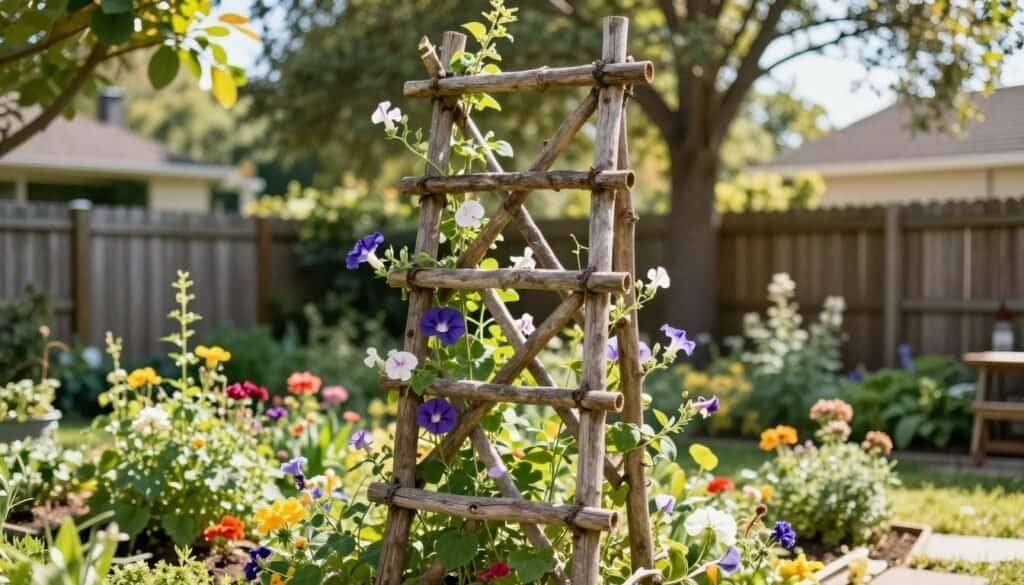
When picking sticks, think about the plants you’ll support. Thicker sticks work best for heavy plants, while thinner ones are good for lighter climbers.
Tips for a Sturdy Trellis:
- Choose sturdy sticks that can hold the plant’s weight.
- Make sure the trellis is well anchored in the ground.
- Check the trellis often for damage or wear.
6. DIY Metal Obelisk and Black Obelisk Trellis Designs
Take your garden to the next level with a DIY metal or black obelisk trellis. These structures support climbing plants and bring modern elegance to your outdoor space.
Benefits of Metal Obelisk Trellises: Metal obelisk trellises are durable and versatile. They fit any garden size or style. They’re great for plants that need strong support as they grow.
Building a Black Obelisk Trellis for Climbing Plants
Creating a black obelisk trellis is easy and requires little. You’ll need metal rods, a base plate, and wire or twine for plant support.
- Begin by making the metal rods into an obelisk shape, securing them at the top.
- Attach the base plate for stability and to prevent the trellis from falling.
- Wrap wire or twine around the rods to support your climbing plants.
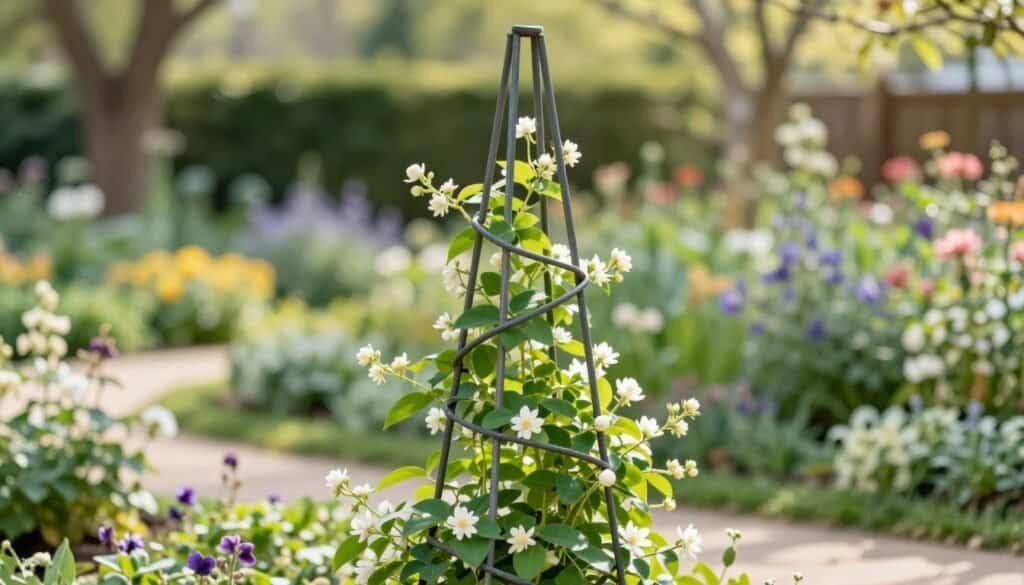
Choose materials that are durable and weather-resistant. A black obelisk trellis adds a sleek, modern look to your garden. It fits well with many landscaping styles.
To make it your own, customize your metal obelisk trellis with paint or decorations. This improves its look and lets it match your garden’s theme.
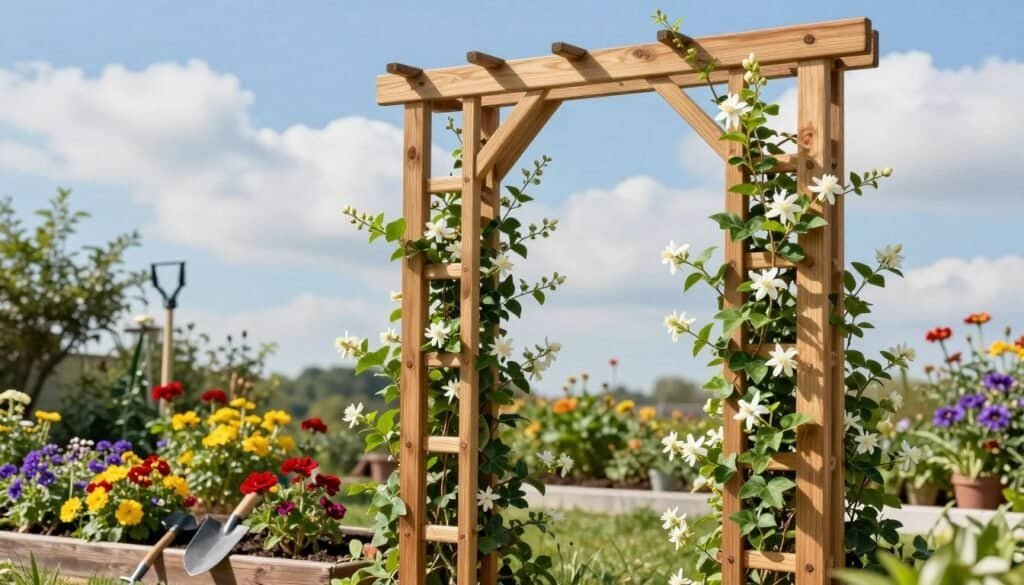
7. Garden Arbors and Trellises: Building Larger Support Structures
Garden arbors and trellises are key to a stunning garden. They support climbing plants and add beauty and depth. These structures make your garden stand out.
Arbors and trellises bring grandeur and elegance to your garden. They match your home or garden’s style perfectly.
Integrating Trellises into Garden Arbors
Adding trellises to garden arbors makes them more beautiful and useful. You can include trellis panels in the arbor design or attach separate trellises.
Benefits of Integrating Trellises into Garden Arbors:
- Enhanced visual appeal
- Increased support for climbing plants
- Creation of a sense of continuity and cohesion in the garden design
A grape or vegetable arbor adds shade and supports plants. Use natural materials like wood or metal for a rustic charm.
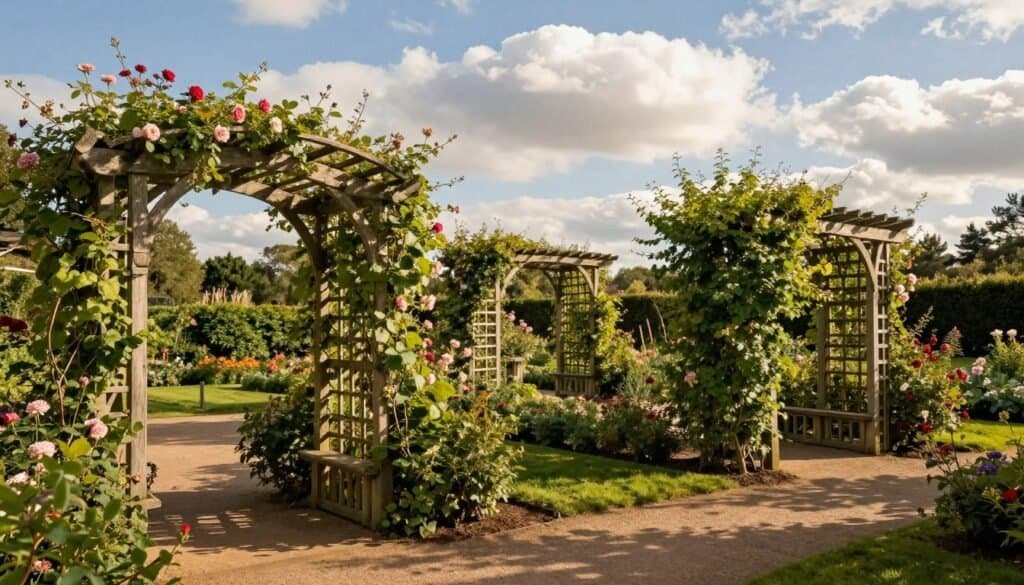
Think about your garden’s style when designing an arbor or trellis. Choose from wood, metal, or vinyl to match your garden’s look.
8. Vegetable-Specific Trellis Ideas for Your Garden
Trellises are not just for flowers; they can change your vegetable garden. They provide the support climbing plants need.
Different vegetables need different trellises. Tomatoes, for example, need strong support as they grow and produce fruit. A tomato trellis can be simple, like a cage, or more complex, like a multi-post structure.
Supporting Other Climbing Vegetables
Cucumbers also benefit from trellises. A cucumber trellis can save space and keep fruit off the ground. This reduces rot and makes picking easier.
Peas, beans, and squash also need trellises. A simple veggie garden arbor can support these plants. It also adds beauty to your garden.
When picking a trellis, think about the plants’ mature size and growth habits. Also, choose a material that can hold their weight. Wood, metal, and recycled materials are good options.
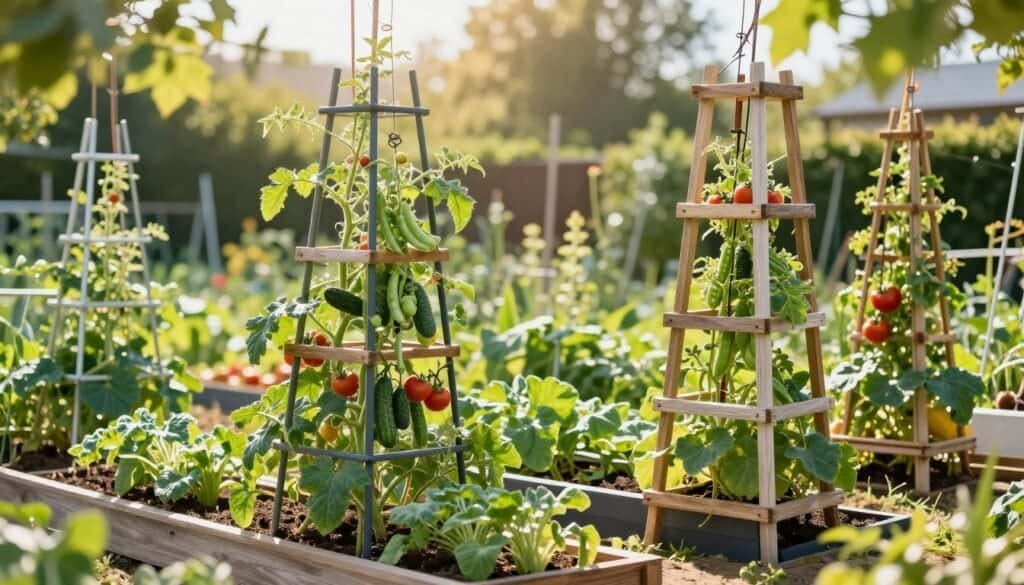
- Tomatoes: Use a sturdy cage or multi-post trellis.
- Cucumbers: Train them to climb up a trellis to save space.
- Peas and Beans: Simple arbors or trellises work well.
- Squash: Larger, sturdier trellises are necessary.
Choosing the right trellis for your vegetables can help them grow better. It can also increase your harvest and make your garden more efficient.
9. Creating Privacy with Trellis Walls and Garden Dividers
Turning your garden into a private oasis is simpler than you might think. The right trellis walls and garden dividers can do the trick. They help you create a cozy, private area that keeps the outside world at bay.
Trellis walls are not just useful; they also add beauty to your garden. They support climbing plants, making a natural barrier. Think about the plants you’ll use and how much privacy you want when designing your trellis wall.
Using Trellises as Garden Dividers
Trellises make great garden dividers. They help separate different parts of your garden. This can make each area special for different activities or just add beauty to your garden’s layout.
There are many materials and designs for trellises. Wooden ones give a rustic feel, while metal ones offer a modern look. Pick what fits your garden’s style and the plants you’ll use.
- Choose plants that are dense and grow fast for better privacy.
- Decide on the trellis’s height based on how much privacy you need.
- Use trellises with other garden features like arbors or pergolas for more interest.
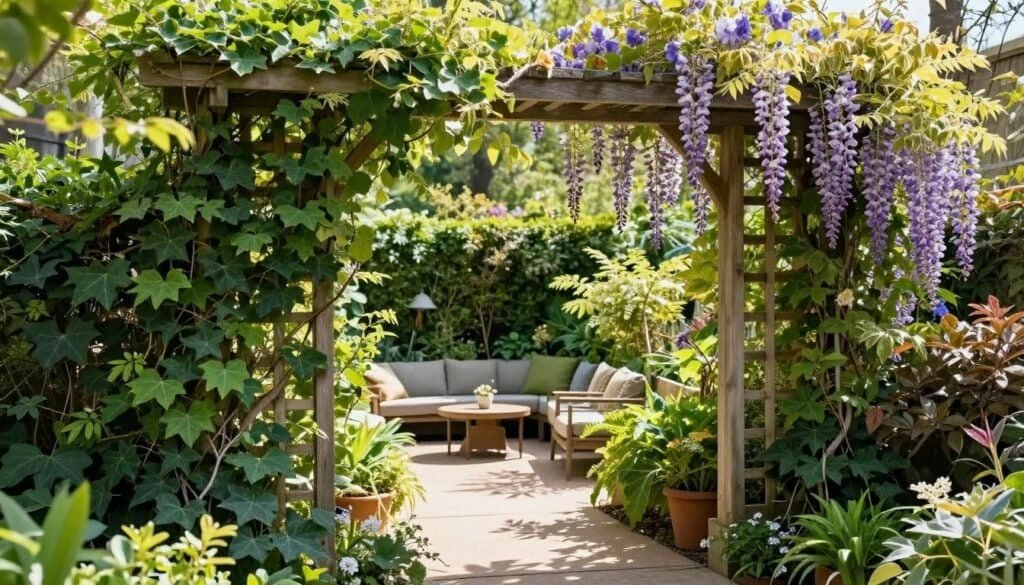
Adding trellis privacy wall ideas to your garden design makes it more secluded and peaceful. Whether you want to hide views from neighbors or just create a private spot in your garden, trellis walls and dividers are great choices.
10. Unique and Cheap Trellis Ideas on a Budget
You don’t have to spend a lot to add a beautiful trellis to your garden. Here are some unique and affordable ideas.
To make a trellis on a budget, think creatively and use what you already have. Repurposing materials is a great way to save money.
Affordable Trellis Designs
Here are some affordable trellis designs that are easy on your wallet:
- Use old pallets to create a rustic trellis.
- Repurpose an old ladder into a vertical garden trellis.
- Create a trellis using bamboo stakes and twine.
- Utilize old metal grids or wire mesh for a modern look.
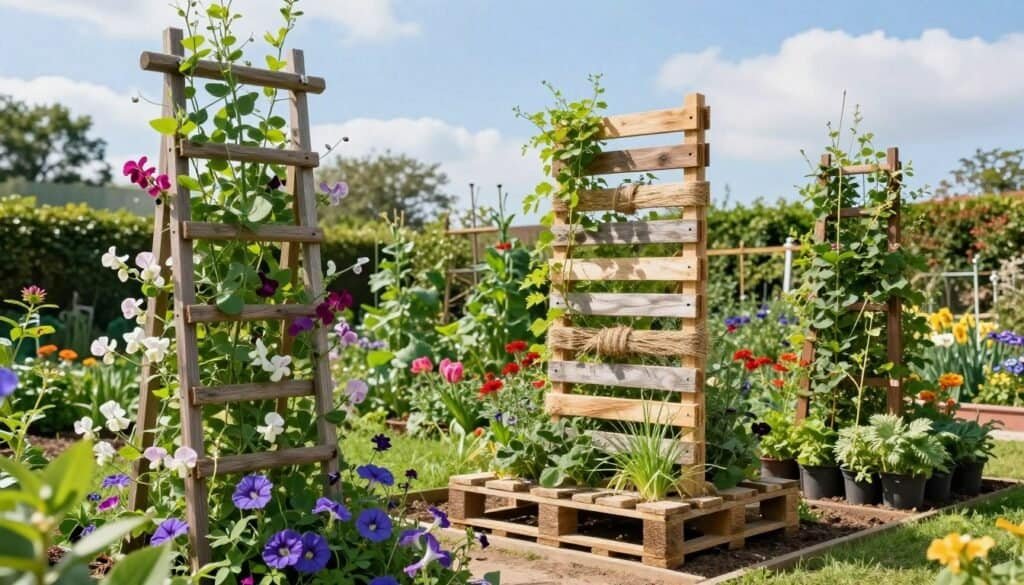
These DIY raised garden beds save you money and add a personal touch. For example, an old wooden fence can be turned into a unique trellis. You can also use reclaimed wood for a rustic look.
When searching for unique trellis ideas, think about the look you want for your garden. Whether it’s modern, rustic, or a mix, there’s a design that fits your style without costing too much.
11. Incorporating Your Trellis into Overall Landscape Design
A well-designed trellis can blend into your garden, adding both function and beauty. When planning your garden, think about how a trellis can improve its look.
Choosing a Complementary Trellis is key to matching your garden’s style. Look at your furniture, pathways, and decorations to pick the right trellis.
Integrating Trellises into Existing Garden Features
To make your garden look cohesive, tie your trellis to existing features. Here are some tips:
- Put a trellis near a water feature or pond for harmony.
- Use a trellis to frame a garden pathway or entrance.
- Include a trellis in a garden room or outdoor living area.
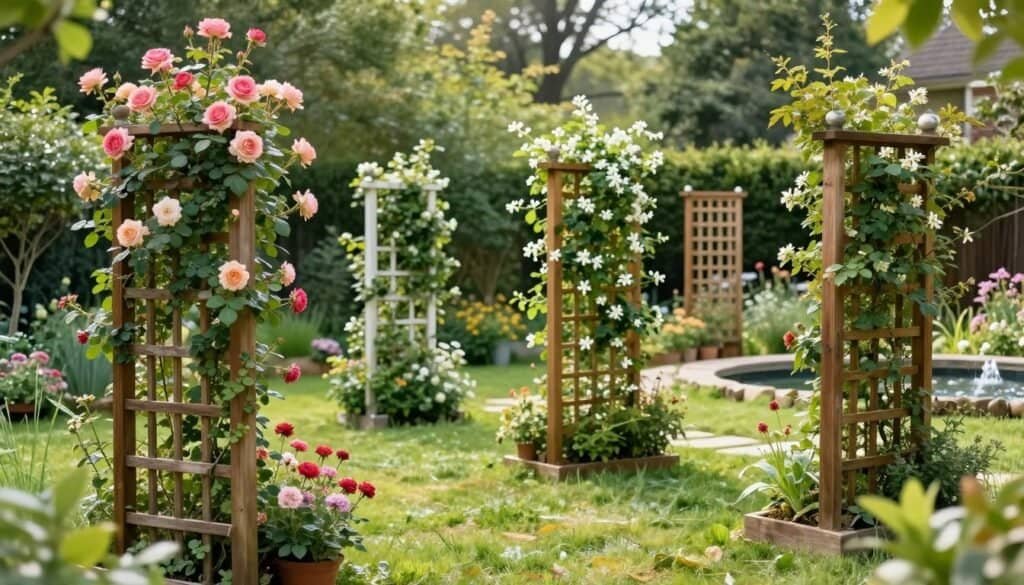
When adding a trellis to your patio trellis ideas, think about its size and how it fits with your furniture and decor. A trellis can also divide your garden into different areas.
For garden trellis ideas diy, try using reclaimed wood, metal, or bamboo. You can also use old garden gates, fences, or materials for a unique trellis.
Adding a trellis to your backyard trellis design brings depth, texture, and interest. With creativity, a trellis can become a beautiful part of your garden’s design.
12. Conclusion
Throughout this article, we’ve looked at many DIY trellis ideas. A well-made garden trellis can really improve your outdoor area. Climbing plants need a place to grow, and a trellis is perfect for them.
Adding a trellis to your garden does more than just help your plants. It also makes your garden look better. Whether you want a vertical garden or just some extra beauty, making a trellis is a great first step.
Start Your Trellis Project Today
There are many materials and designs to choose from for your trellis. You can make a trellis that fits your style. So, why not start your DIY trellis project? It’s a fun way to enjoy gardening with a beautiful trellis.