Transforming your outdoor space starts with smart planning. If you struggle with clutter, exploring fresh garden organization ideas can turn a messy patio into a peaceful retreat. A dedicated DIY garden pot storage shelf provides the perfect foundation for keeping your supplies tidy and accessible.
Effective backyard storage ideas do more than just clear floor space. They protect your equipment from the elements while adding a touch of personal style to your landscape. By building your own structure, you gain full control over the size and layout of your equipment area.
This guide covers essential outdoor storage ideas diy enthusiasts will love. We will walk you through the steps to build a sturdy unit that maximizes your vertical space. Get ready to reclaim your yard and enjoy a more functional gardening experience all season long.
Stacking Pots in a Corner? A Storage Shelf Works Much Better
Stacking garden pots in a corner might seem handy, but it can cause more issues than it solves.
Stacked pots can be dangerous, mainly if they’re tall and unstable. This can lead to accidents, like pots falling and breaking, or even hurting someone.
Safety Concerns with Unstable Stacks
One big worry with stacking pots is they might fall over. This can happen for many reasons, like:
- Uneven surfaces
- Poorly balanced stacks
- External factors like strong winds or accidental knocks
A storage shelf offers a safe and stable way to store your pots, lowering the chance of accidents and breakages.
Stacking pots in a corner also wastes space. It makes it hard to get to the pots you need. This can take up room that could be used for other gardening tasks or storage.
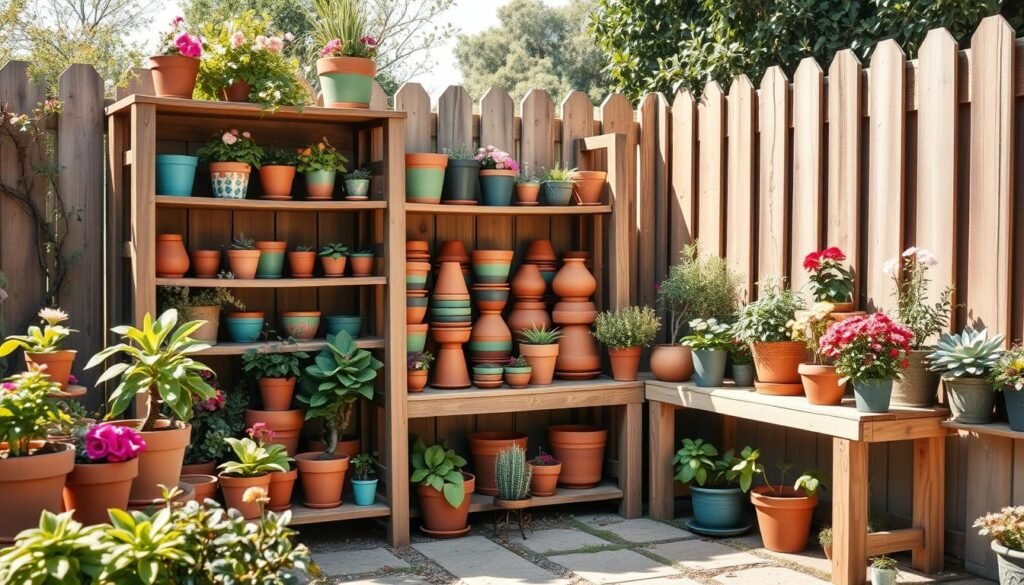
A storage shelf, on the other hand, is an organizational solution that keeps your pots neat and within reach. This is super helpful for small space organization, where every inch matters.
Using a storage shelf lets you:
- Make the most of your storage space
- Keep your pots organized and easy to find
- Lessen the risk of accidents and breakages
Assessing Your Backyard Space for Optimal Storage
First, you need to look at your backyard’s layout for the best storage. It’s important to know how much space you have and how to use it well.
Measuring your yard is key. Note down your backyard’s size and any spots that are hard to reach. This info helps pick the best spots for your storage.
Identifying Underutilized Areas
Many backyards have spots that aren’t used much. Look for corners, walls, or areas under decks for storage. These can hold garden tools, pots, and more.
Think about how to use your backyard for more storage. Consider what you need, like shelves for pots or hooks for tools. Finding unused areas helps make your storage better.
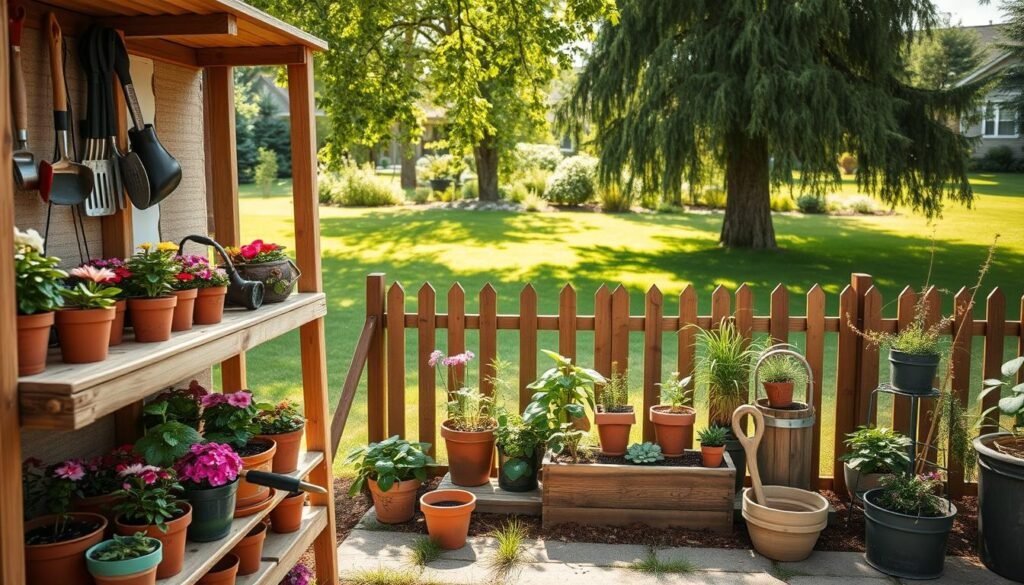
Good backyard storage ideas include using walls, old furniture, and shelving. By looking at your space and finding ways to improve, you can make your outdoor area more organized and useful.
If your yard is small, think about small shed storage ideas or yard tool organization that save space. A bit of creativity can turn your backyard into a tidy paradise.
Essential Materials for Durable Outdoor Shelving
Choosing the right materials is key to making outdoor shelving that lasts. The durability and life of your garden storage depend on what you pick.
When picking outdoor shelving, think about the weather. Weather-resistant materials are essential to keep your shelving strong and useful for years.
Weather-Resistant Options
Many materials are great for outdoor shelving because they can handle the weather. Here are some top picks:
- Recycled plastic, which is tough and won’t rot, rust, or get damaged by insects.
- Pressure-treated wood, great for fighting off moisture and bugs.
- Synthetic wood materials, like composite decking, are durable and easy to care for.
- Powder-coated metal, which has a strong, rust-free finish.
Each material has its own benefits. You can pick one based on what you need, your budget, and the look you want for your garden.
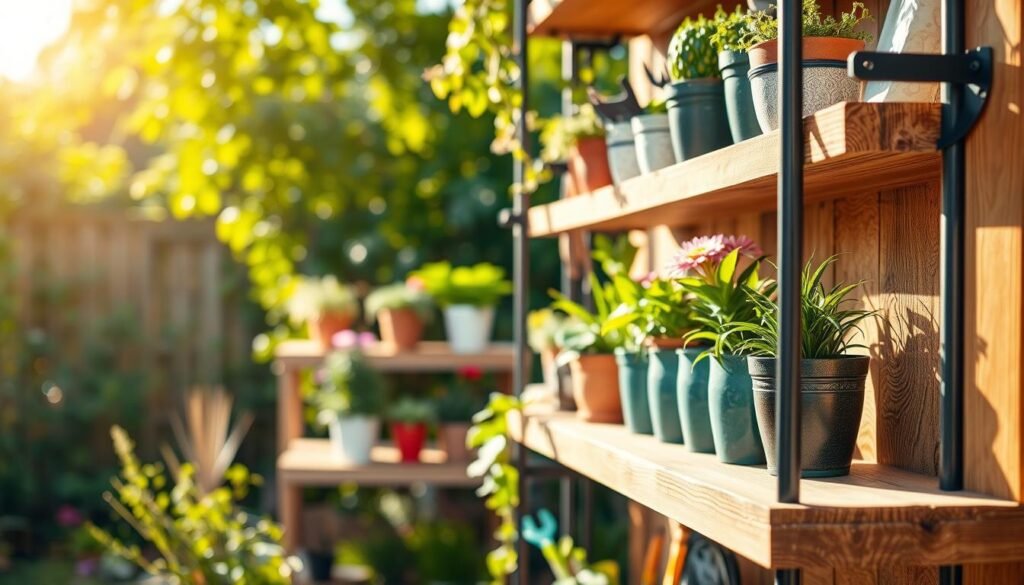
Think about the environment and how the materials will fit with your garden. For a natural look, wood or composite might be best. Metal or recycled plastic could add a modern touch.
The secret to long-lasting outdoor shelving is not just the material. It’s also about keeping it clean and checking it often. Regular care can make your outdoor storage last longer.
Vertical Tiered Shelving for Maximum Capacity
Vertical tiered shelving changes the game for backyard organization. It offers a lot of storage without taking up too much floor space. It’s perfect for gardeners who need to keep many pots, tools, and supplies close by.
Using vertical space boosts your storage without losing floor space. This is great for small backyards where every inch matters.
Implementing Tiered Shelving
To set up tiered shelving, first measure the area for the shelving. Think about the ceiling height and the space’s width.
Key considerations include:
- Measuring the space accurately to find the right shelving size
- Picking materials that last and can handle the weather
- Making sure the shelving can hold the weight of your gardening stuff
After planning your shelving, start organizing your garden tools and supplies. Sort items by type, how often you use them, or size.
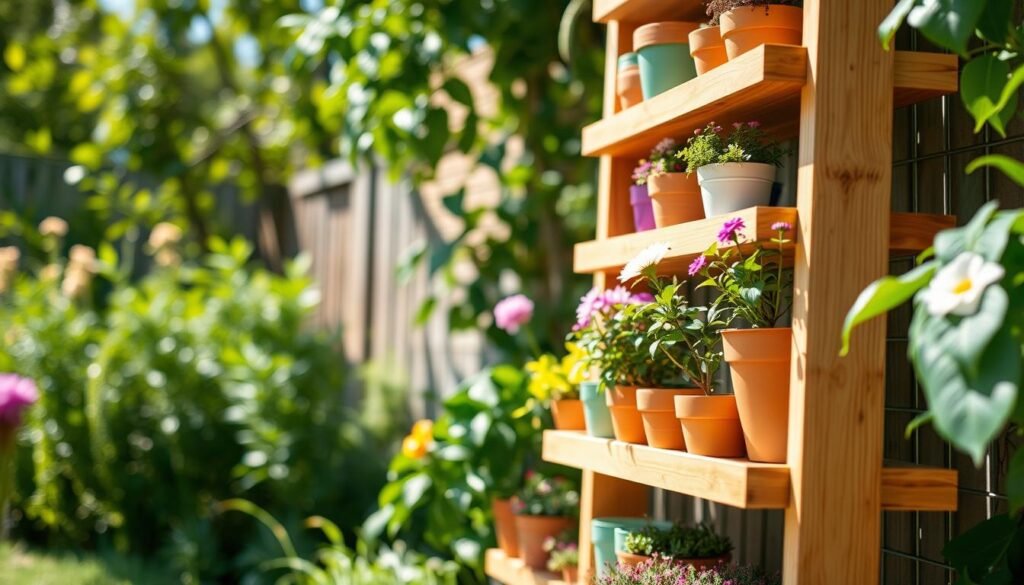
Vertical tiered shelving makes gardening more organized and efficient. It’s a smart way to keep your garden tools in order, making it simpler to care for your outdoor space.
Also, tiered shelving fits many backyard styles and sizes. It’s a flexible solution for gardeners, whether you have a small urban garden or a big backyard. It helps you make the most of your storage space.
Repurposed Furniture Ideas for Garden Storage
Using old furniture for garden storage is a smart move. It cuts down on waste and makes your outdoor area look great. You can turn old pieces into useful and stylish spots for storing things.
Upcycling Old Furniture
Upcycling furniture is a fun way to meet your storage needs. You can turn old pallets into shelves or use an old dresser for tools. This not only saves money but also helps the planet.
Here are some cool ways to reuse furniture:
- Turn an old ladder into a place to store pots and tools.
- Make a storage chest from a vintage bench for cushions and toys.
- Change an old bookshelf into a potting bench or a place for gardening books.
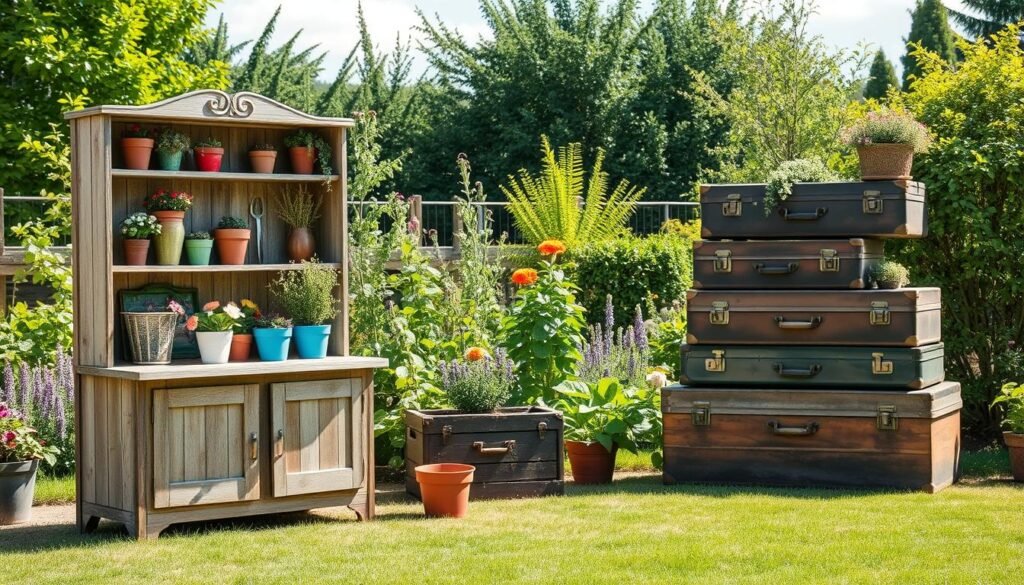
When you upcycle furniture, think about how well it will last outside. A protective coat or sealant can make it last longer and keep it looking good.
Choosing repurposed furniture for storage makes your garden better. It’s organized, eco-friendly, and shows off your creativity and care for the planet.
Corner Storage Ideas to Reclaim Lost Space
Reclaiming lost space in your garden or backyard is easy. Focus on corner storage solutions. Corners are often wasted areas that can become useful storage spaces. This improves your outdoor area’s organization.
Corners can collect clutter, like gardening tools and pots. Effective corner storage ideas can organize these items. Custom corner shelves are great for using these areas well.
Custom Corner Shelves
Custom corner shelves fit perfectly into your garden or backyard corners. They offer a tailored storage solution. You can choose from wood, metal, or recycled plastic for durability and weather resistance.
Custom corner shelves maximize storage without taking much space. They’re perfect for gardening tools, equipment, decorative pots, and plants. Keeping these items organized makes your outdoor space look better and work better.
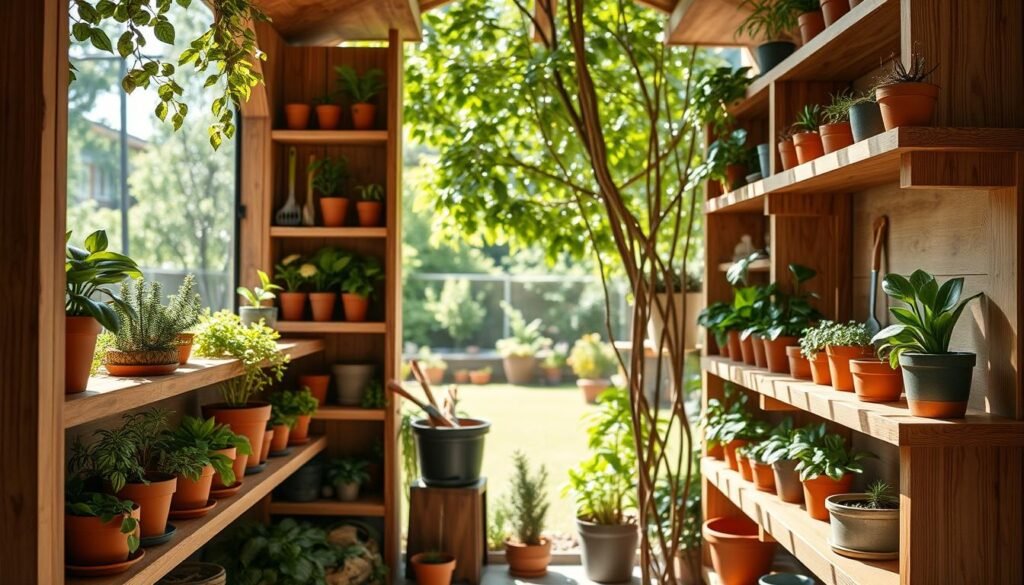
Adding corner storage ideas, like custom corner shelves, to your backyard plan boosts its function and look. By using lost space and organizing your gardening tools, you’ll have a more efficient and fun gardening experience.
Integrating Potting Bench Functionality
Adding a potting bench to your garden can make gardening better. It’s a special place for planting, repotting, and organizing your gardening tasks.
A good potting bench offers more storage and makes your work easier. It keeps your tools and supplies close by.
DIY Potting Bench Ideas
Building a DIY potting bench is easy and can be tailored to your needs. Here are some ideas:
- Turn an old table or workbench into a potting bench with storage bins and hooks.
- Make a potting bench from reclaimed wood to match your garden’s look.
- Add a sink for easy watering and cleaning.
- Put shelving under the bench for pots, soil, and gardening supplies.
When making your potting bench, think about these garden potting area ideas:
- Put the bench near a water source for convenience.
- Make sure it has good lighting for your workspace.
- Choose materials that can handle the weather.
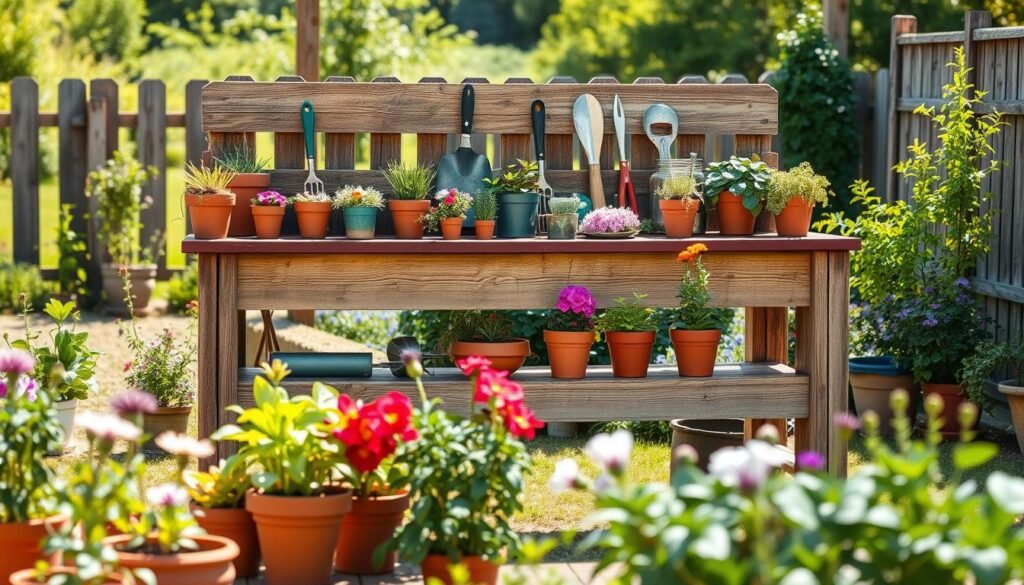
An outdoor potting shed is also great for your garden. It’s perfect for bigger gardening projects. Organize it with shelving, cabinets, and a workbench to use it well.
Good potting shed organization means sorting your tools and supplies. Use storage containers and keep your space tidy.
Weatherproofing Your DIY Storage Solutions
Keeping your DIY storage solutions weatherproof is key to their lasting quality. The elements can harm the materials, leading to expensive fixes or new purchases.
Protecting your storage solutions means choosing the right materials and methods. For example, waterproof sealants on wood prevent rot. A rust-inhibiting coating on metal stops corrosion.
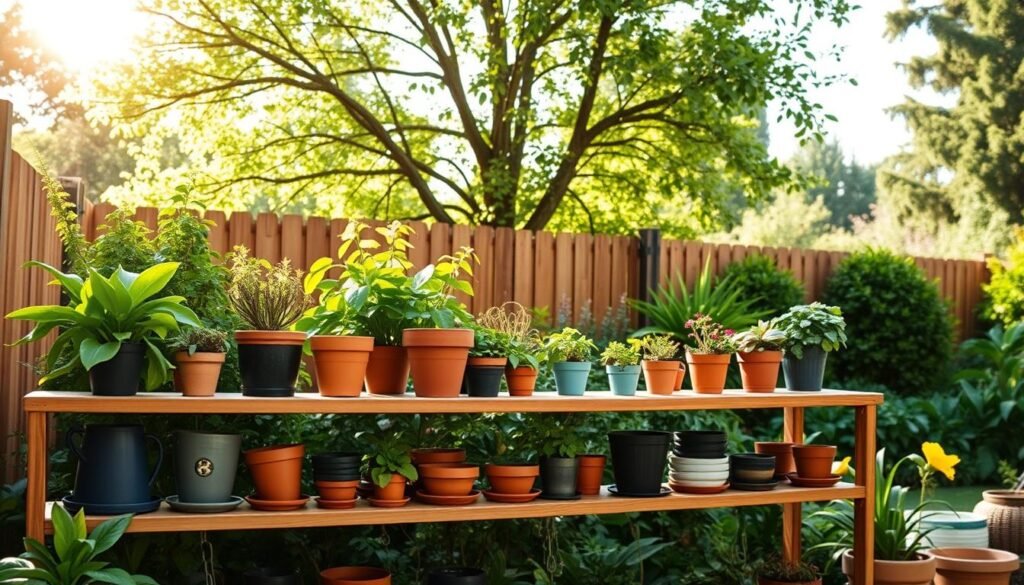
There are many ways to make your DIY storage weatherproof. You can pick from UV-resistant plastics, treated wood, or metal with a protective layer. Each option has its benefits, depending on your storage needs.
Maintenance Tips
- Regularly check your storage for damage.
- Apply protective coatings when needed.
- Keep the area clean and free of debris.
By following these tips and selecting the right materials, you can make your DIY storage last longer. This keeps your garden tidy and functional.
Creative Organization for Small Garden Tools
A clutter-free garden starts with organizing your small garden tools. There are many creative ways to do this. Organizing your tools saves time and makes gardening more enjoyable.
Utilizing Storage Containers is a practical way to organize your tools. Containers help categorize and store tools, keeping them accessible when needed.
Utilizing Storage Containers
Storage containers come in different sizes and materials. This gives you flexibility in organizing your tools. Plastic bins are great for wet conditions because they’re waterproof and easy to clean.
- Use small bins for tiny items like seeds, labels, and gloves.
- Label each container so you can easily identify what’s inside.
- Consider stackable containers to maximize storage space.
Tool organizers or holders are another good option. They can be attached to walls or placed on shelves. This keeps tools within easy reach, reducing clutter and improving efficiency.
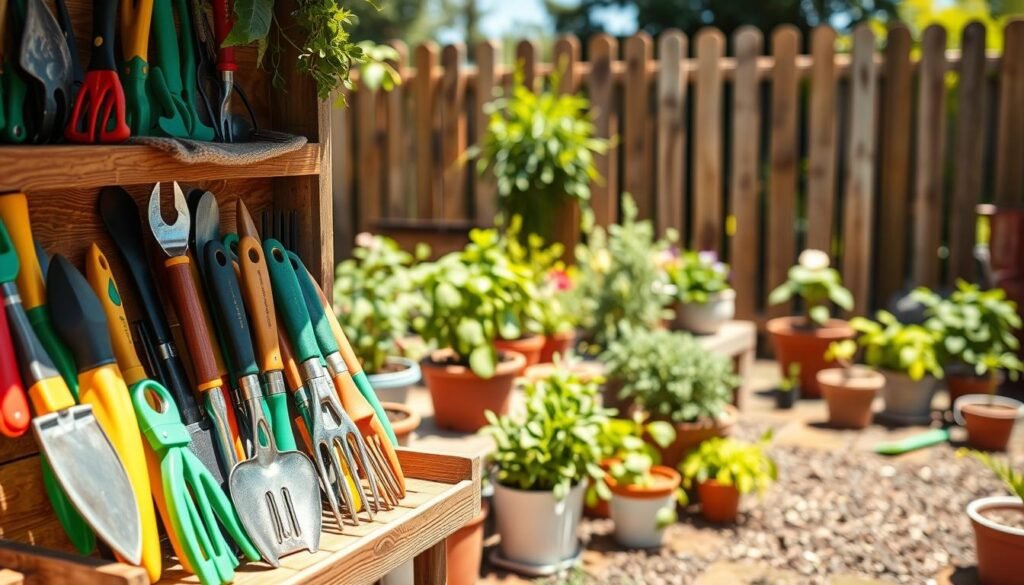
Consider a pegboard system for your gardening tools. Pegboards let you hang tools, keeping them off the ground and organized. You can customize it by adding or removing hooks and holders as needed.
By using these strategies, you can keep your garden workspace tidy and functional. Organizing your tools improves your gardening experience and makes your garden more enjoyable and productive.
Safety Considerations for Backyard Structures
Keeping your backyard storage safe is key to avoiding accidents.
When you build a DIY garden pot storage shelf, think about safety first. This ensures your outdoor space is both safe and fun.
Preventing Accidents
It’s important to think about the dangers of backyard structures.
- Ensure Stability: Your shelf must be stable and well-attached to the ground or wall. This stops it from falling over.
- Use Proper Materials: Pick materials that last and can handle different weather.
- Avoid Overloading: Don’t put too much weight on your shelf. This includes too many pots or heavy tools.
Also, think about where you put your shelf. It should not block paths or cause people to trip.
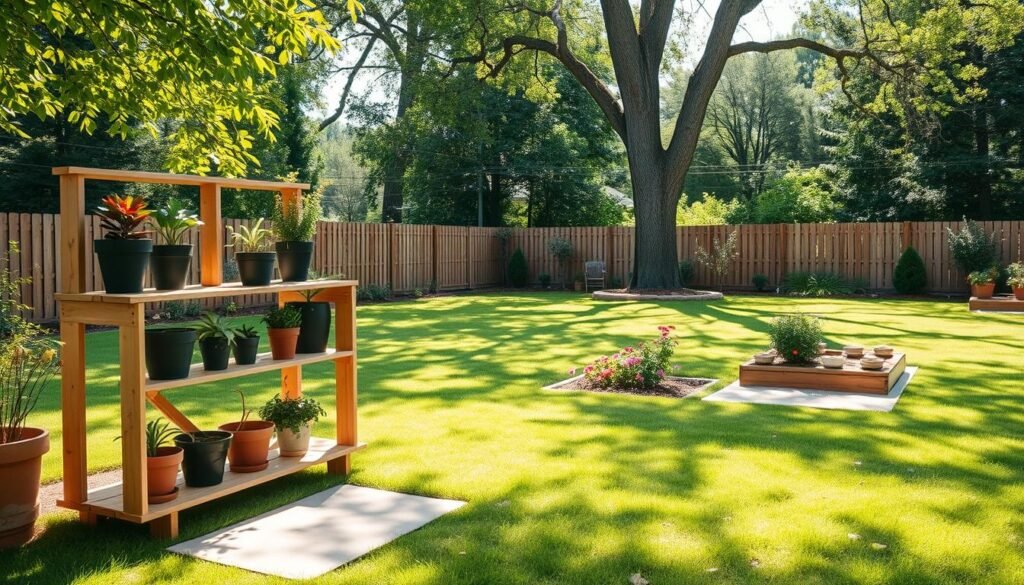
By focusing on safety, you can make a useful and safe DIY garden pot storage shelf. It will help organize your backyard better.
Maintaining Your Garden Organization System
Keeping your garden organized is key to enjoying your outdoor space. Regular upkeep is vital for a well-organized and healthy garden.
Regular Maintenance Tasks include checking your storage shelves and making sure all tools are clean and in place. Also, inspect the structure for any damage or wear.
Seasonal Adjustments
Seasonal changes may require adjustments to your garden setup. For instance, in winter, you might need to store sensitive plants and tools in a safe spot.
- Review your garden storage needs seasonally
- Adjust your storage solutions as necessary
- Keep frequently used items accessible
By focusing on maintenance and making seasonal changes, your garden will stay beautiful and useful.
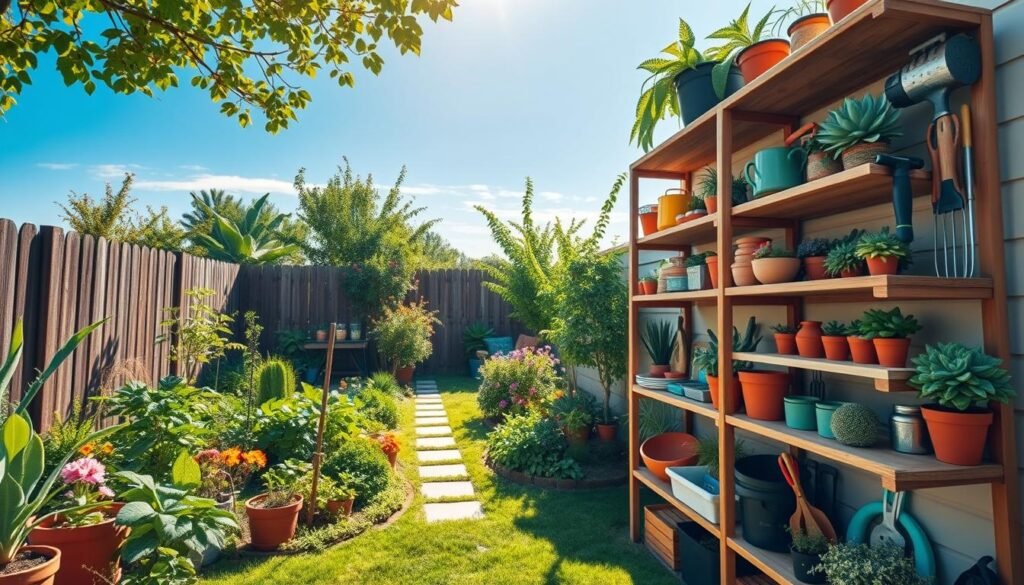
Conclusion
A well-organized garden is not just pretty; it also makes your outdoor time better. By using a DIY garden pot storage shelf and other ideas, you can make your outdoor space more useful.
The DIY projects we talked about, like vertical shelves and repurposed furniture, have many solutions. They fit different backyard setups and needs. Making your storage weatherproof helps it last longer and need less care.
Encouraging DIY Projects
Doing a DIY watering station improves your backyard and gives you a feeling of pride. Whether you’re experienced or new to gardening, a DIY garden pot storage shelf is a good place to start. So, be creative and start organizing your backyard today!