Do you feel limited by your outdoor space? Many homeowners think they need a big lawn for growing food or flowers. But, you can make a small area into a lush oasis with the right approach to small backyard gardening.
Creating your dream backyard garden is possible with efficiency. Use vertical space and clever containers to make the most of your area. This shows you don’t need lots of land for a fruitful garden.
We’ve gathered the best tips for you. You’ll learn about Simple Raised Garden Beds That Work in Any Small Backyard to arrange your plants well. These strategies work for both beginners and experts, helping you create stunning small backyard gardens. Let’s dive into making your home a green sanctuary today.
Simple Raised Garden Beds That Work in Any Small Backyard
Simple raised garden beds are great for small outdoor spaces. They let you grow fresh food even with a tiny yard. These beds help control soil quality and drainage, which is key for plants.
Starting with easy raised garden beds is a smart move. A well-made backyard raised garden fits well in tight spots or along fences. It makes the most of your space.
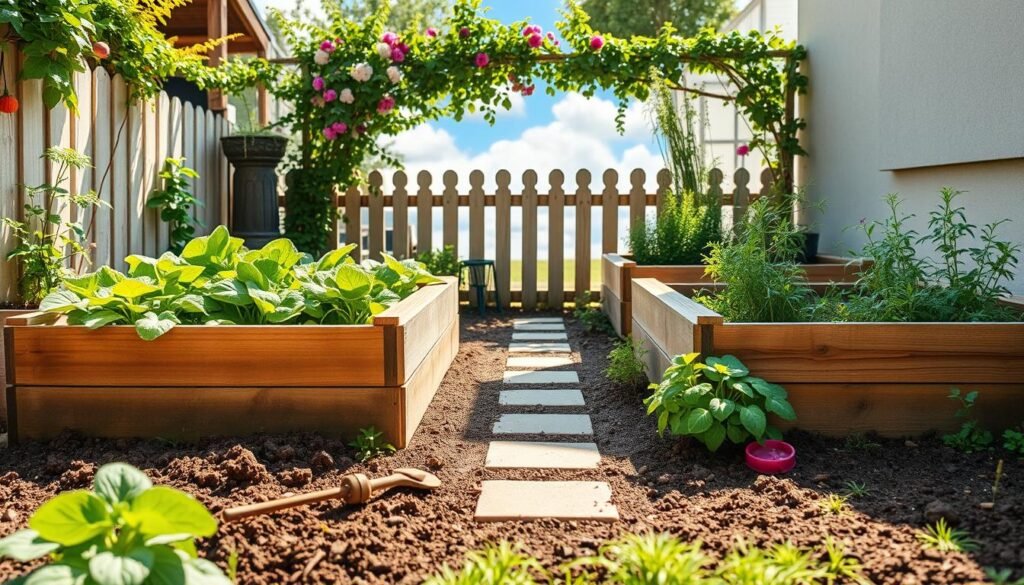
Cedar garden wood is a top pick for durability. It fights off rot and pests, making your garden beds vegetable system last long. Choosing quality materials saves you time and money later.
There are many raised vegetable garden ideas that look good and work well. You can stack beds for height or use modular designs that fit your space. These ideas keep your small garden both productive and pretty.
The Benefits of Raised Bed Gardening in Limited Spaces
If you have a small yard, raised garden beds are a great solution. They let you grow your own food, even with little space. By lifting your plants, you control their environment better.
One big plus is managing your soil. With garden beds vegetable areas, you can use special potting mix. This mix gives your plants the nutrients they need, without the bad soil.
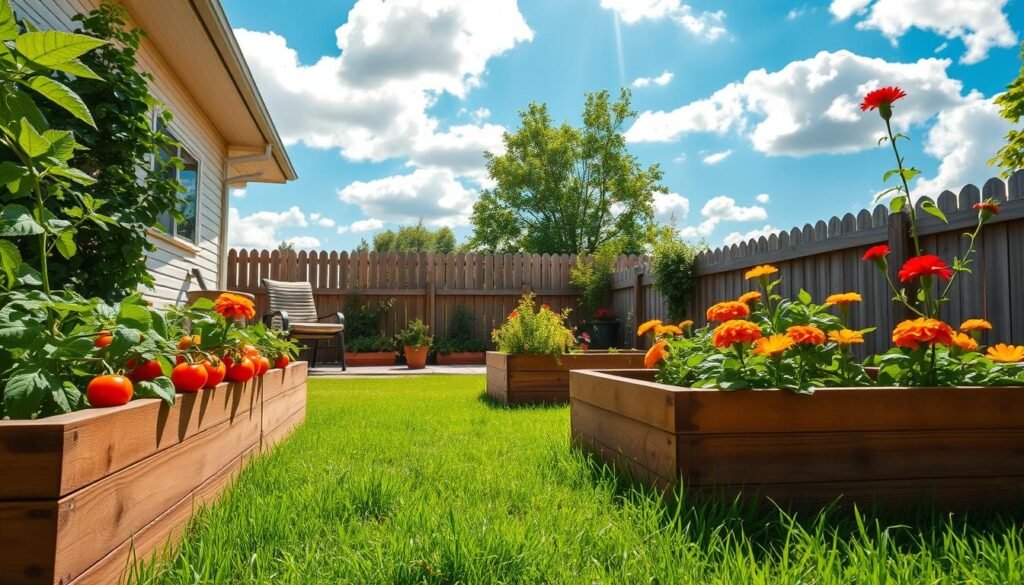
These elevated beds make gardening in small spaces easier. They offer many benefits for today’s gardeners:
- Improved Drainage: Water flows away from roots, stopping rot and disease.
- Ergonomic Comfort: You can care for your plants without bending or kneeling.
- Soil Health: Stepping out of the beds prevents soil compaction. This keeps the soil loose and full of oxygen.
These structures create a perfect environment for plants to grow fast and well. With raised garden beds, you can get more from a small area. Whether it’s herbs or garden beds vegetable, this method works well for any garden beds small space.
In the end, raised garden beds make your home look neat and tidy. They keep your plants in one place and make caring for them easy for anyone.
Planning Your Small Vegetable Garden Layout
A successful home vegetable garden starts with a good layout. This layout should use every square foot wisely. Planning well is key, even with a small space.
For beginners, a simple layout can avoid common errors. Garden boxes help keep soil in place and organized.
Start with a clear plan for your raised garden bed. Visualizing your space before you build ensures enough room for paths and plants.
Your garden should be both useful and pretty. A good design lets you easily move plants around.
There are many ideas for small gardens that save space. A professional design can make even the smallest area productive.
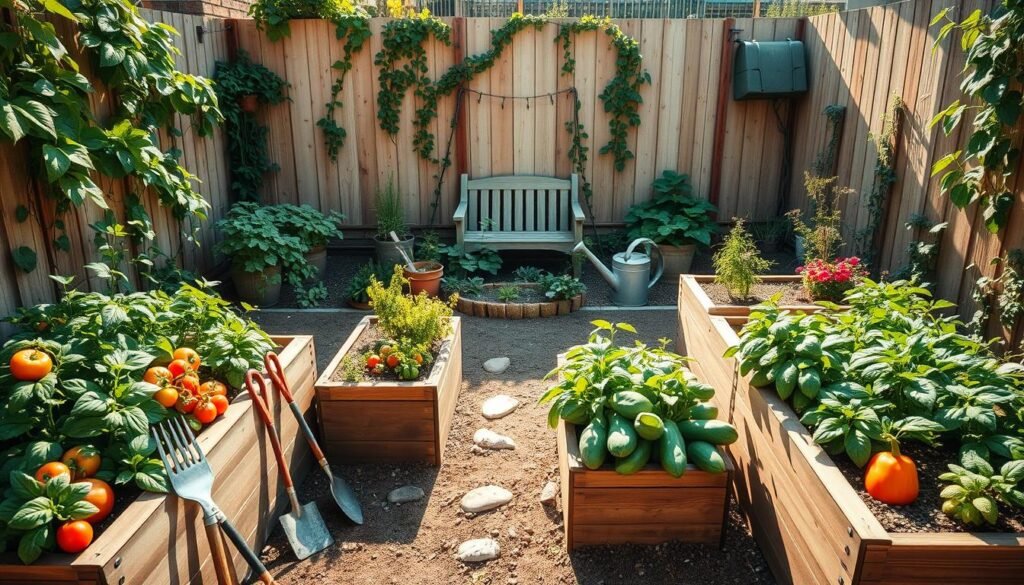
Look at different garden designs to find what works for your sunlight. A good layout is key for healthy plants.
For very small spaces, consider a 3×3 garden. It’s easy to reach the center without stepping on the soil.
If your backyard is too shady, try a front yard garden. Proper planning makes your garden blend into your yard.
Designing a small garden needs careful planning. Group plants by their needs for water and light to help them grow well.
Using detailed blueprints helps plan your planting. A well-organized garden is easier to care for in summer.
Your garden’s success depends on your layout choices. Regular planning ensures plants get enough air and sunlight.
Creative L-Shaped Raised Garden Bed Designs
L-shaped raised garden beds are a smart way to make corners green again. They turn unused spots into vibrant vegetable gardens. This design hugs fences or patios, adding space without blocking paths.
Think about organizing your L-shaped bed for different plants. Use one side for leafy greens and the other for tall veggies like tomatoes. This makes caring for your garden easier.
Using geometric shapes, like L-shaped beds, adds beauty to your garden. They draw attention to your yard’s corners. This design also keeps the middle area open for other uses.
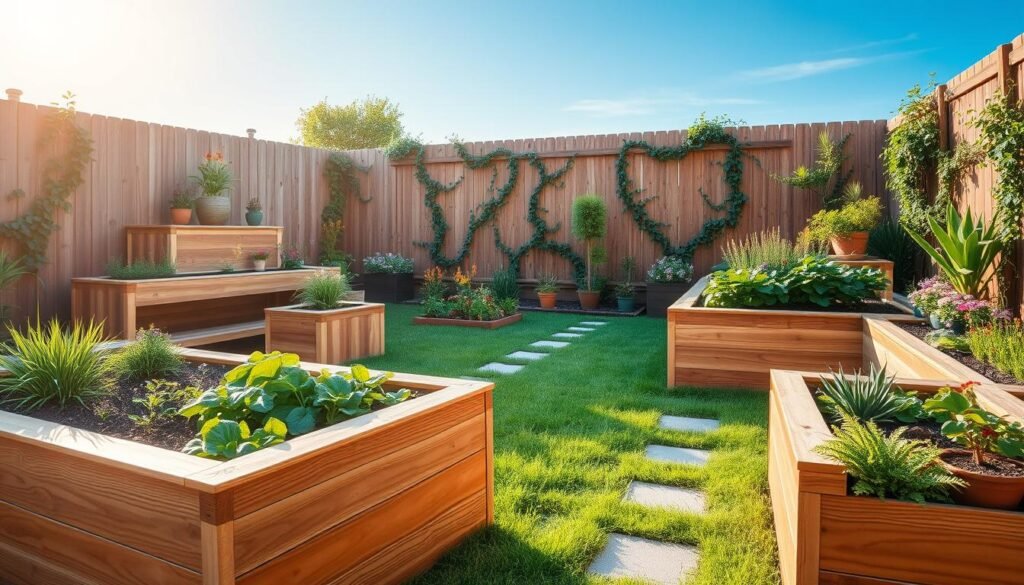
There are many ways to design your L-shaped garden beds. You can go for symmetry or an asymmetrical look. These choices make your garden look planned, not random.
Building an L-shaped raised bed is easy. Just make two rectangular frames and connect them at a right angle. Make sure the corners are strong to keep the bed stable.
A well-designed garden bed can make your home look better. Use the same materials for a unified look. This makes your garden look like a pro did it.
Your raised bed garden should match your style and needs. Remember these benefits when planning:
- Maximizes corner space that would be wasted.
- Improves accessibility by letting you reach plants from all sides.
- Enhances visual flow with clean lines in your yard.
DIY Raised Garden Planters for Beginners
Building your own garden structures is a great way to start a beginner vegetable garden without spending a lot. When you build garden boxes yourself, you control the size and quality. These raised garden planters diy projects are perfect for adding a personal touch to your backyard.
A successful beginner garden layout needs good planning and simple construction. By planning a raised garden beds diy layout, you make sure each plant has enough space. You can use basic tools like a drill, a saw, and a measuring tape to build your frames in just a few hours.
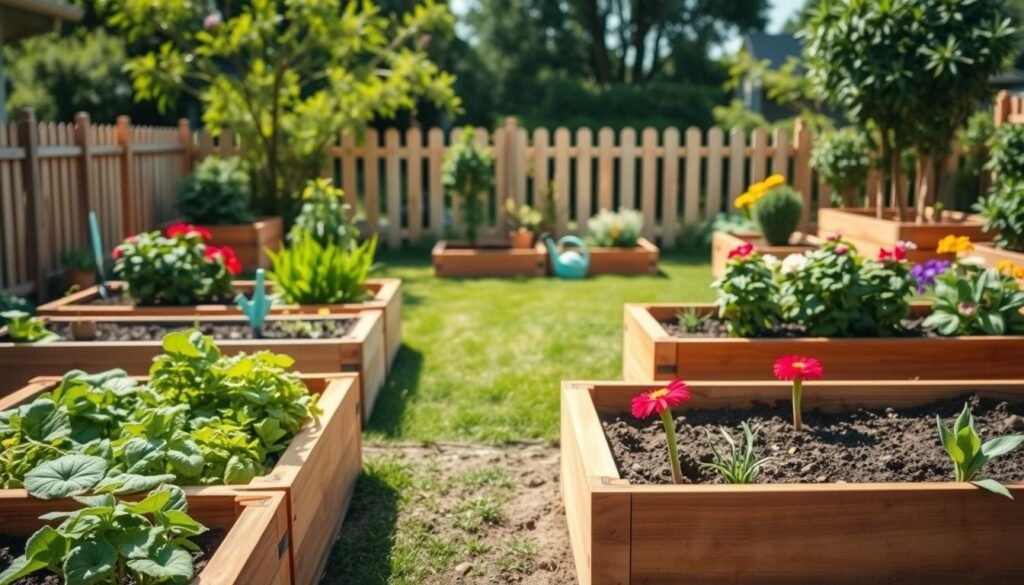
If you want easy raised garden beds, use cedar or untreated pine boards. These materials are durable and weather-resistant, making them great for raised planters diy projects. Here’s how to get started:
- Measure your available space to determine the best dimensions for your boxes.
- Select rot-resistant wood to ensure your garden lasts for many seasons.
- Use galvanized screws to prevent rust and keep the structure secure.
- Level the ground before placing your frames to ensure proper drainage.
Creating raised garden boxes diy improves soil quality and manages weeds well. Many people find that gardening boxes raised above the ground make maintenance easier. This vegetable garden diy approach lets you customize your soil mix for better harvests.
Whether you like small containers or large beds, there are many vegetable planter ideas to explore. These diy garden beds raised designs can fit any corner of your yard. With a little creativity, you can make your outdoor space productive and beautiful.
Space-Saving Garden Bed Ideas for Patios and Balconies
Living in the city doesn’t mean you can’t garden. With smart urban gardening solutions, even tiny balconies can become green spaces. You can grow your own herbs and veggies, no matter how small your area is.
Looking for backyard inspo? Vertical planters are a great idea. They let you grow food in small spaces. Plus, they keep your plants tidy and easy to reach.
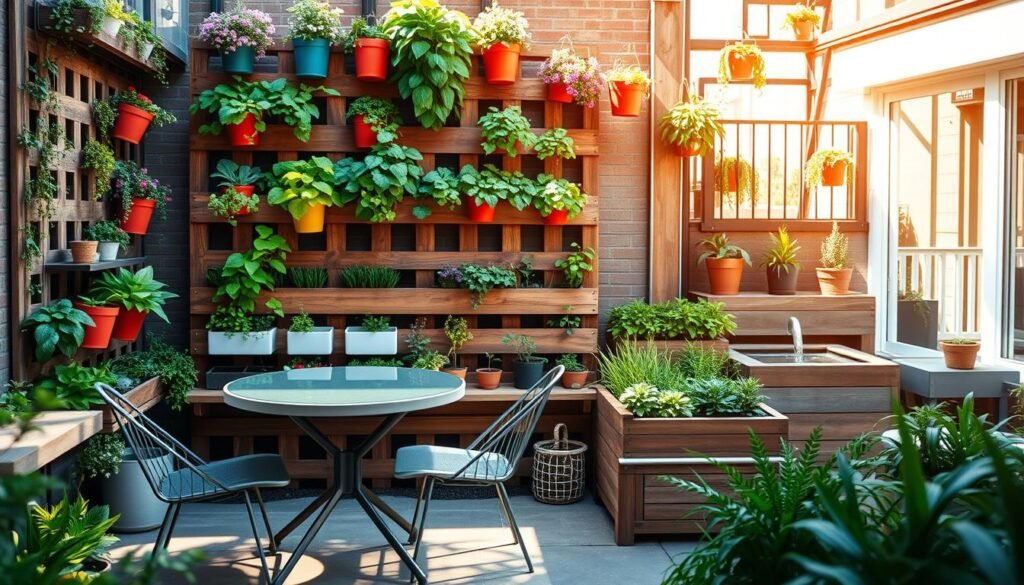
Creating a garden cottage look is easy with raised garden beds off the ground. These beds protect your plants and make caring for them easier. They add a natural touch to your balcony.
An above ground vegetable garden lets you control the soil and water. Box garden ideas raised beds small spaces ensure your plants get the right amount of sunlight and nutrients. It’s perfect for growing fresh food right outside your door.
There are many small veggie garden ideas for different plants. You can find the perfect setup for your space with small veggie garden ideas raised beds. Start small and expand your garden as you get better at gardening in the city.
Integrating Kitchen Garden Beds into Your Landscape
A well-planned kitchen garden layout raised beds can turn any yard into a chef’s paradise. By focusing on backyard vegetable gardening, you create a space that is both functional and visually appealing. This approach ensures that your home landscape serves a dual purpose of beauty and food production.
When you install raised kitchen garden beds, consider the proximity to your kitchen door. Having a raised bed kitchen garden just steps away makes harvesting fresh herbs and vegetables incredibly convenient during meal preparation. Accessibility is the key to maintaining a consistent gardening habit throughout the growing season.
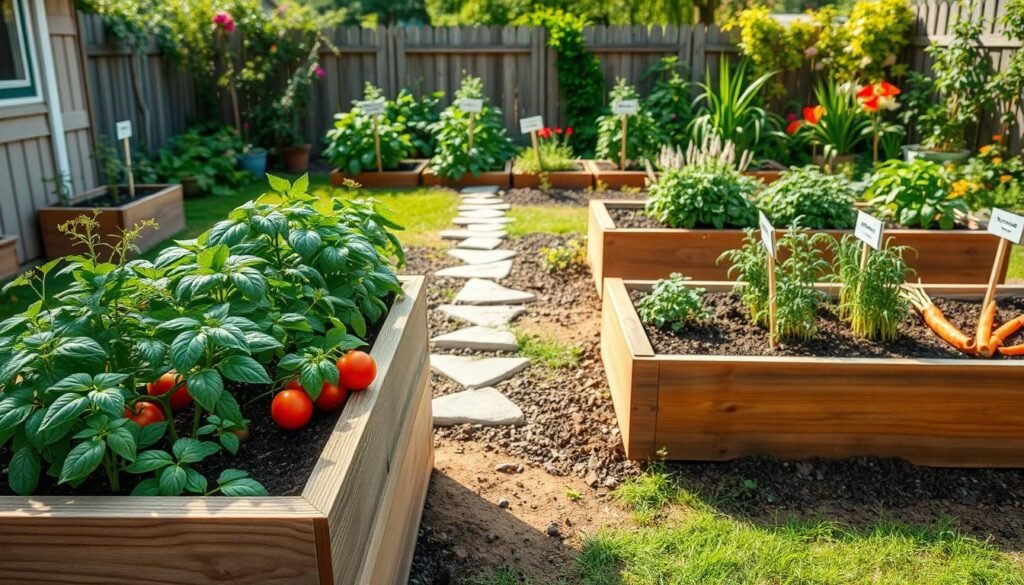
You should organize your kitchen garden raised beds to flow naturally with your existing backyard garden landscape. Think about how the sunlight hits different areas of your yard throughout the day. Placing your beds in a sunny spot will help your plants thrive while enriching your overall backyard garden design.
Dividing your space into distinct garden sections allows you to manage different plant varieties with ease. You might dedicate one area to leafy greens and another to aromatic herbs. Using these garden sections keeps your planting organized and makes maintenance much simpler for beginners and experts alike.
Ultimately, incorporating these structures into your home creates a harmonious environment. Well-designed backyard vegetable gardens provide a rewarding experience that connects you to your food source. You will love the convenience of stepping outside to gather fresh ingredients for your favorite family recipes.
Common Mistakes to Avoid in Small Backyard Gardening
Even experienced gardeners can make mistakes when starting a small backyard garden. It’s important to pay close attention to every detail. This way, your plants will do well all season long.
One common error is not checking soil drainage in your garden beds. If water stays around the roots, your plants might rot. Use high-quality soil mixes to keep air and moisture right.
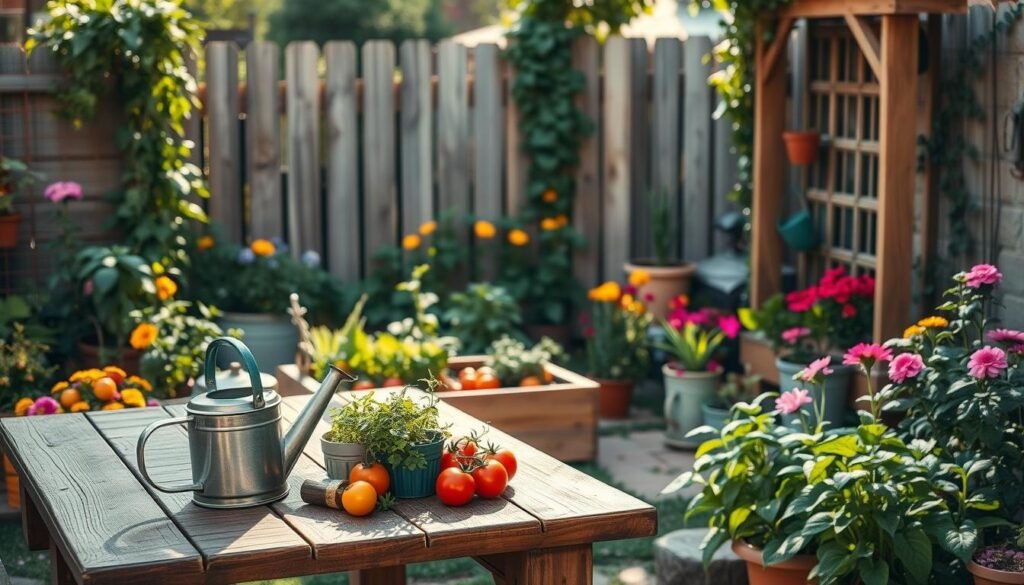
Another mistake is not leaving enough space between plants. It’s easy to want to pack them in for more food, but this can cause disease. Each plant needs room to grow well in a small garden.
To keep your garden project going well, remember these tips:
- Prioritize sunlight: Make sure your spot gets at least six hours of sun a day.
- Start small: A smaller garden is easier to care for and more rewarding.
- Monitor water needs: Container plants dry out quicker, so check them every day.
Lastly, don’t plan poorly. Many gardeners build without thinking about how big their plants will get. Look into good small garden ideas to plan a space that’s both productive and pretty all year.
Conclusion
Creating a lush sanctuary is simple with a clear vision and some soil. You can turn a small yard into a vibrant, living space that meets your needs every day.
Good raised bed garden design changes how you see your home. It turns unused spots into places for fresh herbs and veggies. Your hard work brings you closer to the dream backyard garden you’ve always wanted.
Every plant you care for adds value and joy to your life. A well-planned garden is a peaceful escape from today’s fast pace. Start small by choosing one corner of your patio or lawn to begin.
Share your garden’s progress with neighbors or local gardening groups. Your success will inspire others to improve their outdoor spaces. Grab your shovel and start planting your future harvest today.