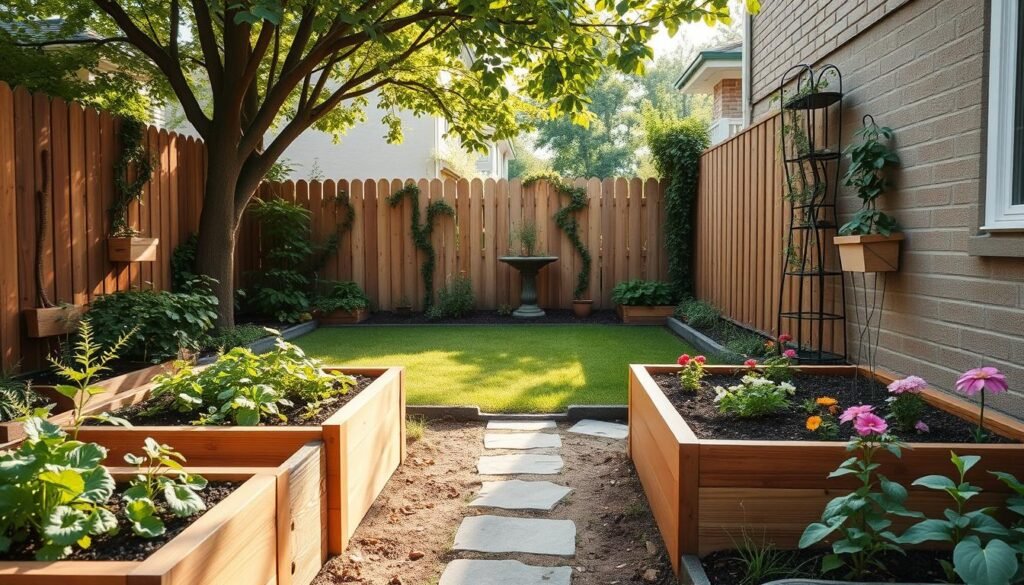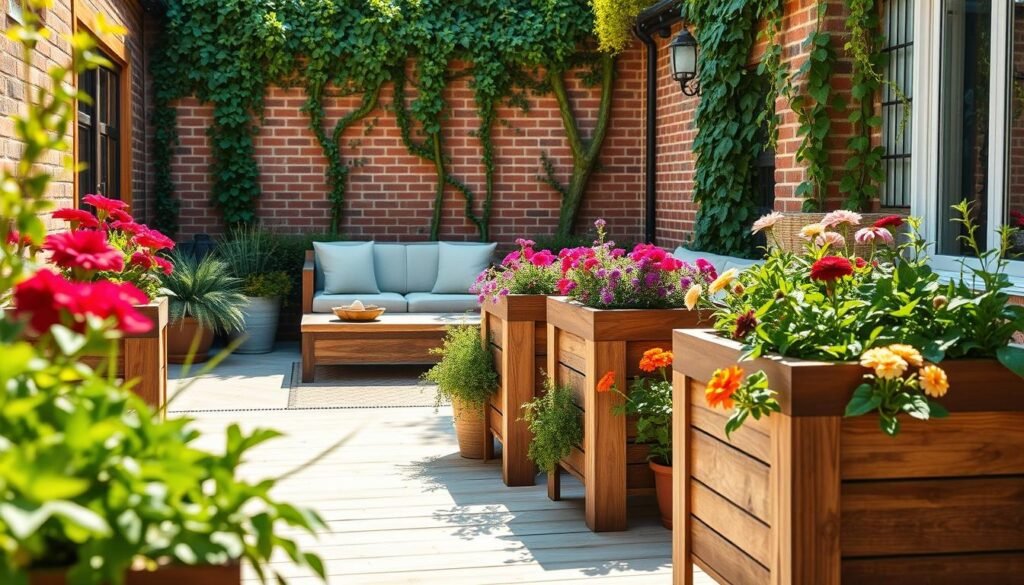
Building a raised planter box turns your backyard into a kitchen garden. Many people love making their own garden structures. These boxes are great for any size of outdoor space, helping plants grow well.
Our beginner herb growing guide makes diy herb gardening easy. You’ll learn about sunlight and drainage for healthy plants. Knowing these basics keeps your garden lively all season.
Using simple herb planting techniques helps your plants do well. These designs are both beautiful and practical for all gardeners. Begin today to grow your own food and enjoy the satisfaction of a home garden.
Fresh Herbs Are Easier With This Simple Setup
If you want to enjoy homegrown flavors, remember that fresh herbs are easier with this simple setup. Many people feel intimidated by gardening. But, the secret lies in mastering a few fundamental requirements.
By focusing on the right balance of light, soil, and water, you can create a thriving environment for your plants. This will help your herbs grow well.
Successfully growing herbs at home requires a consistent approach to your herb garden setup. Most culinary herbs, such as basil, parsley, and cilantro, crave at least six hours of direct sunlight each day. Make sure your soil is well-draining to prevent root rot, a common mistake for new gardeners.
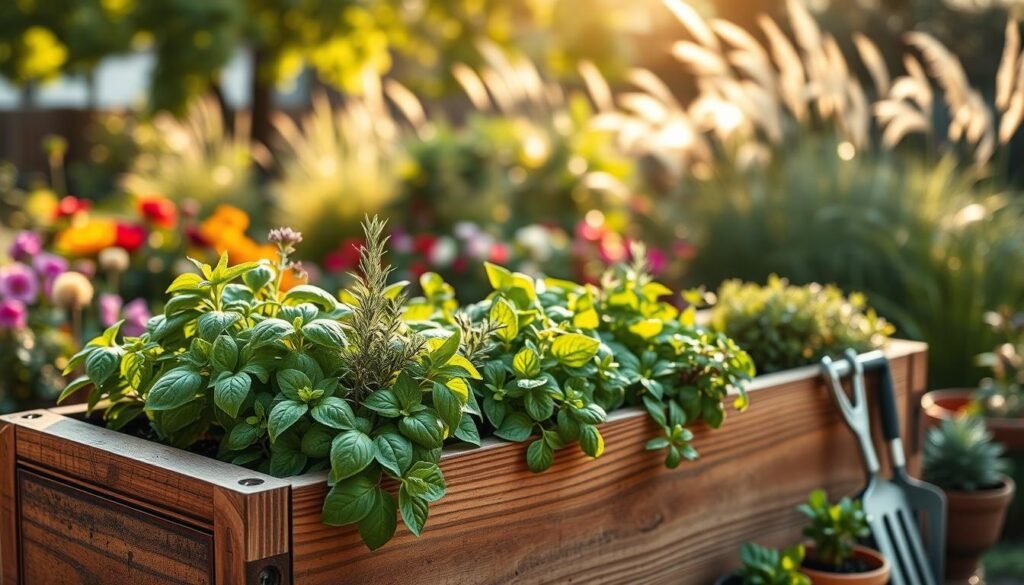
When starting your journey, keep a few indoor herb growing tips in mind. Start your seeds or young plants indoors during the late winter. This gives them a head start.
Once the danger of frost passes, you can safely move them outside to your raised planter box.
Prioritizing easy herb cultivation ensures your plants remain healthy and productive with minimal daily effort. Check the moisture levels of your soil regularly. Container-grown herbs often dry out faster than those in the ground.
With this straightforward method, you will enjoy a bountiful harvest throughout the entire growing season.
Essential Materials and Tools for Your Herb Garden Project
Your journey into diy herb gardening starts with the right tools and materials. Choosing the right wood is key to making your planter box last. Look for woods like cedar or redwood, which resist rot and don’t need harsh chemicals.
Remember, safety is as important as durability. If you paint or stain, pick non-toxic, food-safe options. These finishes protect the wood and keep your soil and herbs safe.
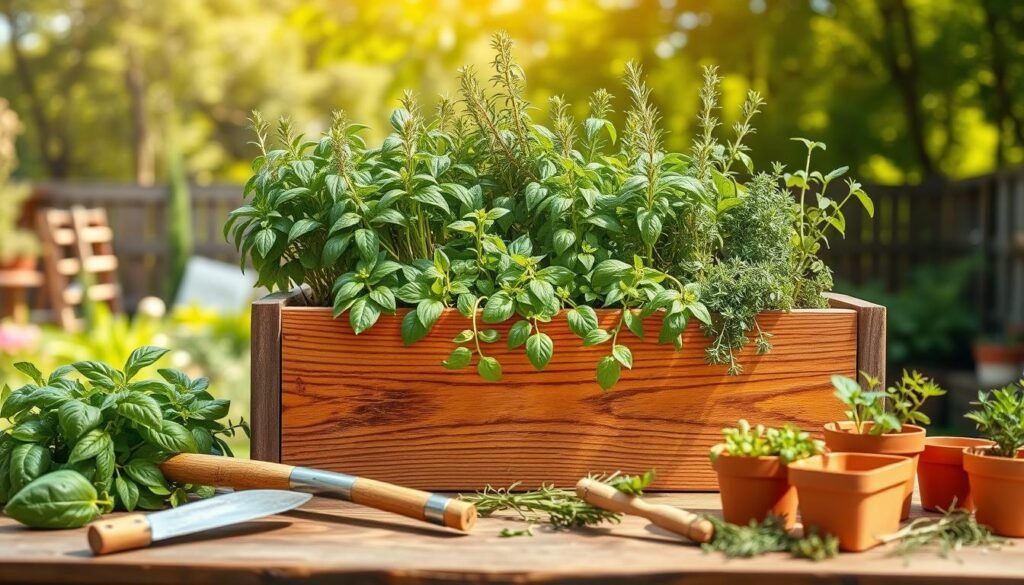
Having the right tools makes building easier and more fun. You don’t need a big workshop to create a beautiful planter. Here are the basic tools you’ll need:
- Power drill for quick and accurate screw driving.
- Circular saw or hand saw for cutting lumber.
- Measuring tape to fit your box in your backyard.
- Level for balance on uneven ground.
- Safety glasses for eye protection when cutting.
Learning these simple herb planting techniques will help you build a strong planter. A well-made box gives your herbs the drainage and space they need. With your materials and tools ready, you’re set to create a garden that adds fresh flavors to your kitchen all year.
Creative Pallet Garden Planters for Small Spaces
Turning old wood pallets into beautiful herb boxes is simple. These pallet garden planters are a green way to grow your favorite greens. They use reclaimed wood, making your project eco-friendly and stylish.
Pallets are great for garden ideas simple enough for a weekend. They fit well in small house yard ideas or tight deck corners. These back patio garden ideas let you try out different herb garden ideas diy to use your space well.
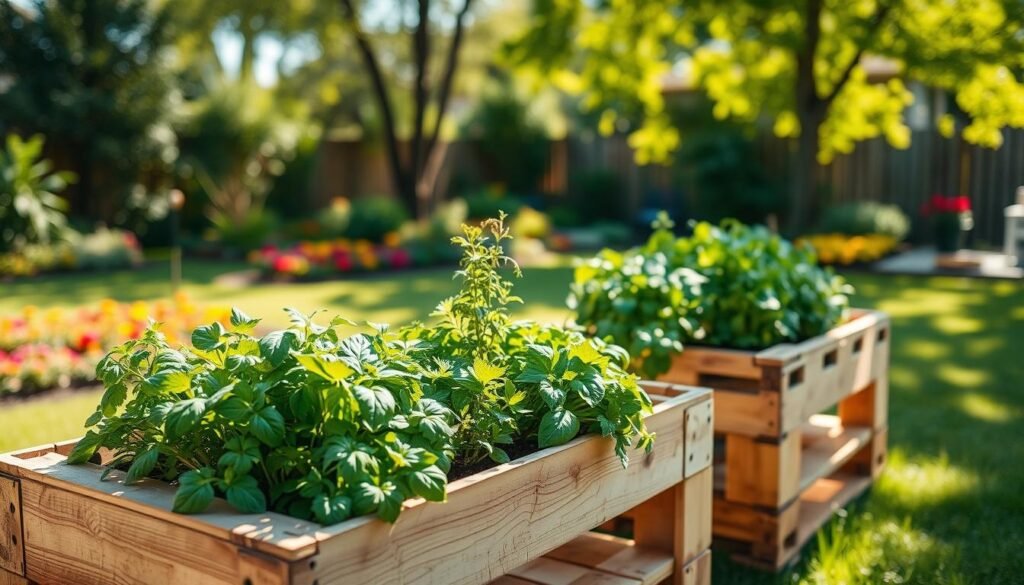
For bigger large pallet projects, stack or mount them for a multi-level display. A wood pallet projects outdoor garden setup is a fulfilling way to organize your herbs. It’s an easy diy herb garden outdoor solution that keeps plants off the ground and pest-free.
Here are some cute herb garden ideas to improve your outdoor look:
- Use landscape fabric to make pockets for your pallet plants.
- Stain the wood to match your plants ideas outdoor decor.
- Add small chalkboard labels to identify each herb.
- Install casters on the bottom for easy moving.
- Group herbs by sunlight needs.
Gardening pallet ideas are flexible for any home gardener. They work for tiny balconies or big yards. Start your project today and enjoy growing your own fresh herbs in a custom-built container.
Tiered Planter Boxes for Maximum Yield
Tiered planter boxes are a smart way to grow more herbs in a small space. These herb planter boxes stack your plants, saving space. They ensure each plant gets the right amount of sunlight.
If you like wooden projects diy, building tiered planters is a fun project. These outdoor garden design ideas organize your plants and add beauty to your backyard. You can adjust the size to fit your needs.
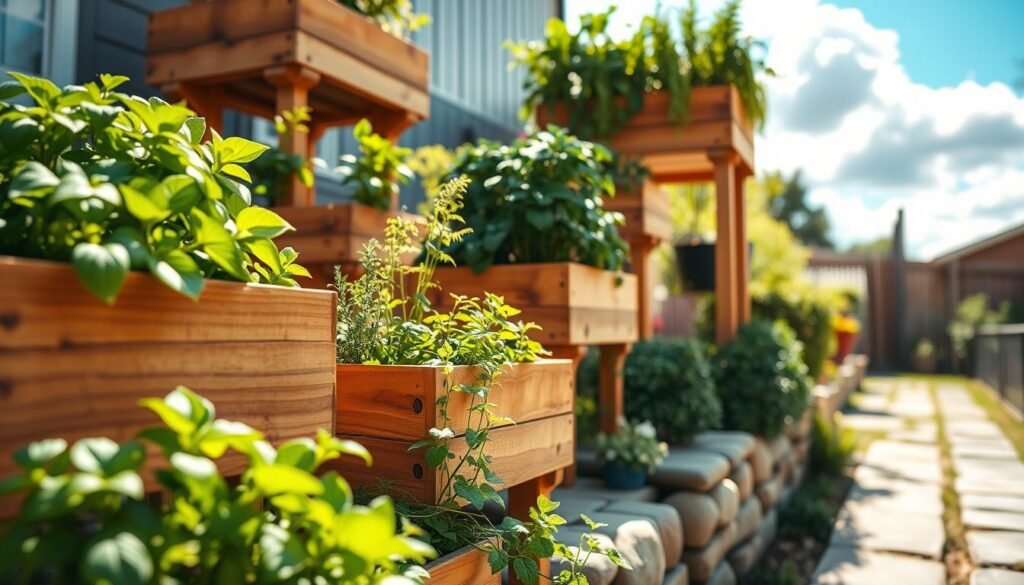
You don’t need a big lawn for an outside herb garden. A small outdoor herb garden in tiers works well. It keeps plants off the ground, preventing pests and improving air.
Looking for diy herb planter ideas? Think about how it looks. You can find herb garden inspo online to match your home. A good design makes your garden beautiful.
Choosing the right herb garden planter ideas is key to a good harvest. A cute herb garden can be made by painting or adding labels. These details make gardening fun.
For those with a herb garden small patio, vertical is best. Stacked flower beds let you grow many plants without taking up space. This keeps your herbs close while cooking.
Here are some tier planter ideas to try:
- A three-level pyramid design for corners.
- A wide, rectangular tiered garden planters diy setup for walls.
- A corner-fitting unit for unused space.
You can also use these designs for tiered vegetable garden boxes. Simple tiered planter boxes diy plans help your structure last. Start building today for a season of fresh harvests.
Cedar Garden Box Plans for Long-Lasting Results
Building a lasting garden begins with the right materials. Cedar is the best choice for raised garden planter plans. It naturally fights off rot and insects. With cedar garden box plans, your garden stays strong and looks good for seasons.
Design matters as much as the wood. Raised planter bed plans improve soil drainage and root health. This is key for a healthy wooden herb garden. These elevated garden box plans also make gardening easier by reducing bending.
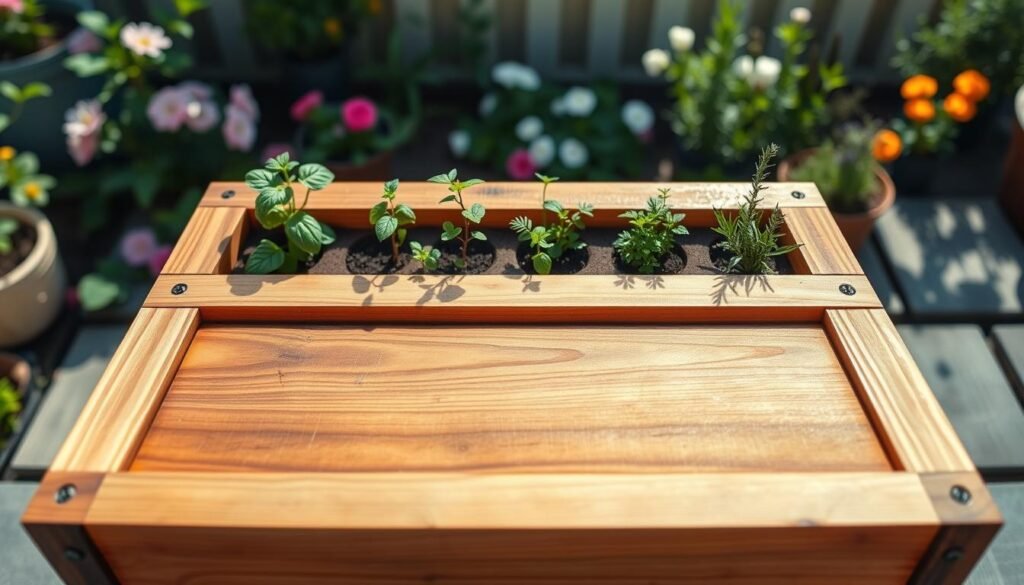
Looking for simple or complex plans? Focus on building strong. A sturdy box stops soil erosion and keeps herbs tidy. This makes your wood herb garden look professional and boost your backyard’s look.
You don’t need to spend a lot to get great results. Even with scrap wood raised garden bed projects, proper plans can make it sturdy. Spending time on raised planter box plans now means a beautiful, productive garden for years.
Vertical Herb Garden Designs for Apartment Living
Living in an apartment doesn’t mean you can’t garden. You can grow a home vegetable garden on your balcony or patio. A vertical herb garden lets you have fresh ingredients without taking up too much space.
Small herb gardens are great for tiny spaces. You can set up a herb garden wall with pots or fabric pockets. This keeps your plants safe from pests and off the ground.
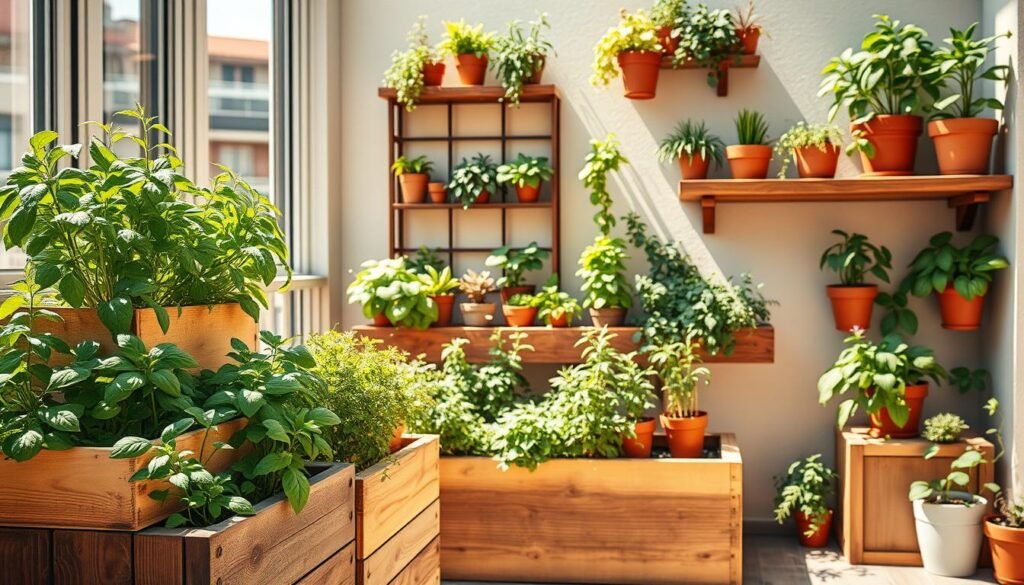
Choosing the right herb garden design is key in small areas. You can make a diy herb garden with wooden pallets or metal organizers. Strong vertical structures make sure your plants get enough sunlight and air.
For indoor gardening, an indoor herb garden near a sunny window works well. It turns your kitchen wall into a veg garden for fresh flavors. Vertical gardening maximizes your harvest and brings nature indoors.
- Use wall-mounted planters to save floor space.
- Ensure your vertical setup has proper drainage.
- Select herbs that thrive in containers for the best results.
Small Backyard Herb Garden Layouts on a Budget
Turning your backyard into a green oasis doesn’t need a big budget or lots of space. By using smart layout strategies, you can make a space for your favorite greens. Whether you have a small patio or a narrow side yard, these ideas will help you use every inch.
One smart way to save space is by putting garden boxes along fences. This keeps paths clear and gives your herbs plenty of room. Using fence garden boxes lets you grow plants up, which is great for small spaces.
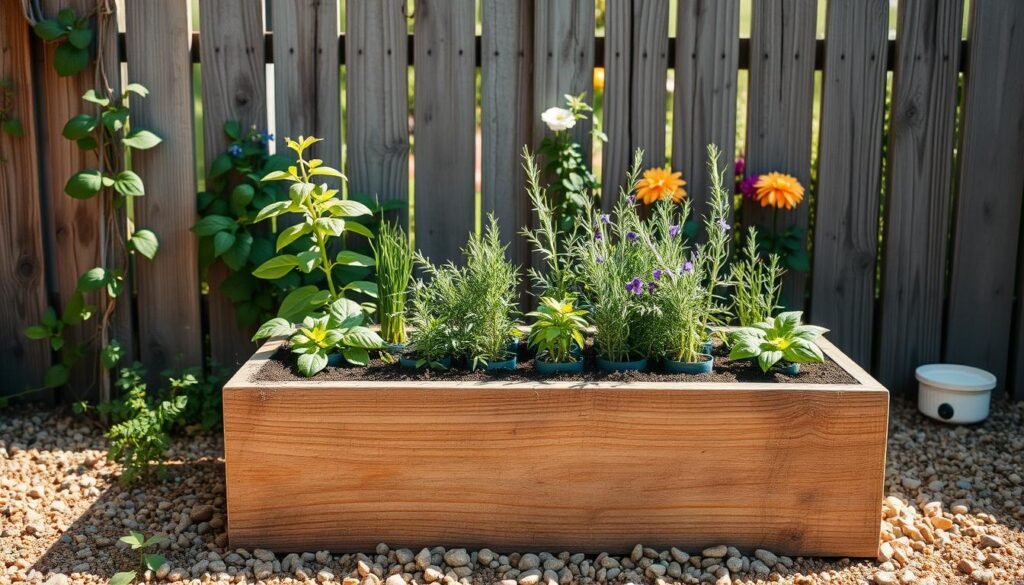
For a modular look, try garden shelves for your plants. A sturdy shelf can hold many planters, keeping them off the ground and safe from pests. These shelves make your garden look neat and organized.
Here are some budget-friendly tips for small spaces:
- Use cheap raised garden beds to mark your growing areas.
- Put garden boxes on fences to use wall space.
- Use light herb planters for small deck gardens.
- Combine veggie boxes with flowers for a pretty look.
- Choose small containers for tiny spaces or balconies.
Strategic placement is important for deck gardens. Place your herb planters near sunny walls for warmth. These ideas show you can have a lot of plants without needing a big area.
Best Practices for Cultivating Fresh Herbs Efficiently
Once your planter box is ready, the real fun of nurturing your plants begins. The secret to cultivating fresh herbs efficiently lies in consistent moisture management and proper feeding. Most herbs prefer soil that is damp but well-drained, so check the top inch of soil daily during hot summer months.
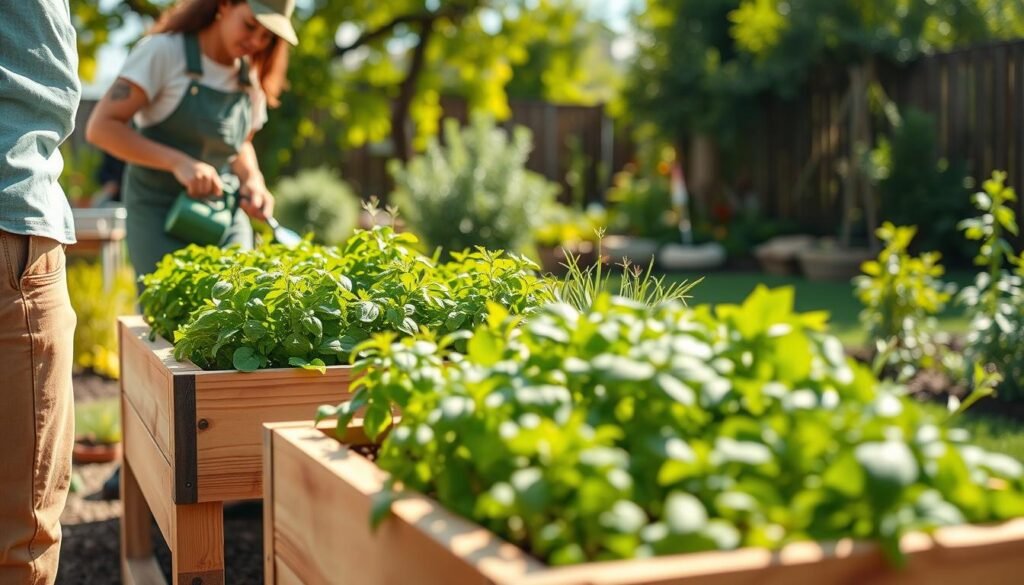
Feeding your plants is just as important as watering them. Use a high-quality organic liquid fertilizer every few weeks. This provides essential nutrients without harsh chemicals. It keeps your soil healthy and ensures your herbs remain safe for culinary use.
Regular pruning is the best way to encourage lush, bushier growth. By pinching off the top sets of leaves, you prevent the stems from becoming woody. This simple habit significantly increases your total harvest throughout the growing season.
Adopting these hassle-free herb gardening techniques will transform your backyard into a reliable source of flavor. Follow these core maintenance steps to keep your garden thriving:
- Water early in the morning to reduce evaporation.
- Apply organic compost to enrich the soil naturally.
- Prune regularly to stimulate new leaf production.
- Remove dead or yellowing leaves to prevent disease.
Conclusion
Building a custom planter box turns your outdoor area into a productive haven. You know how to pick strong materials like cedar or old pallets for your backyard.
Choosing the right design makes gardening fun. By watering regularly and placing plants in the sun, you’ll get amazing results all season.
This project is easy and lets you grow herbs without stress. Fresh herbs like basil, rosemary, and mint are even tastier when you pick them yourself.
Show off your gardening skills to friends and neighbors. Your garden might encourage others to start their own projects this weekend.
Grab your tools and start building your dream garden today. The journey to a delicious harvest begins with a simple board and some creativity.