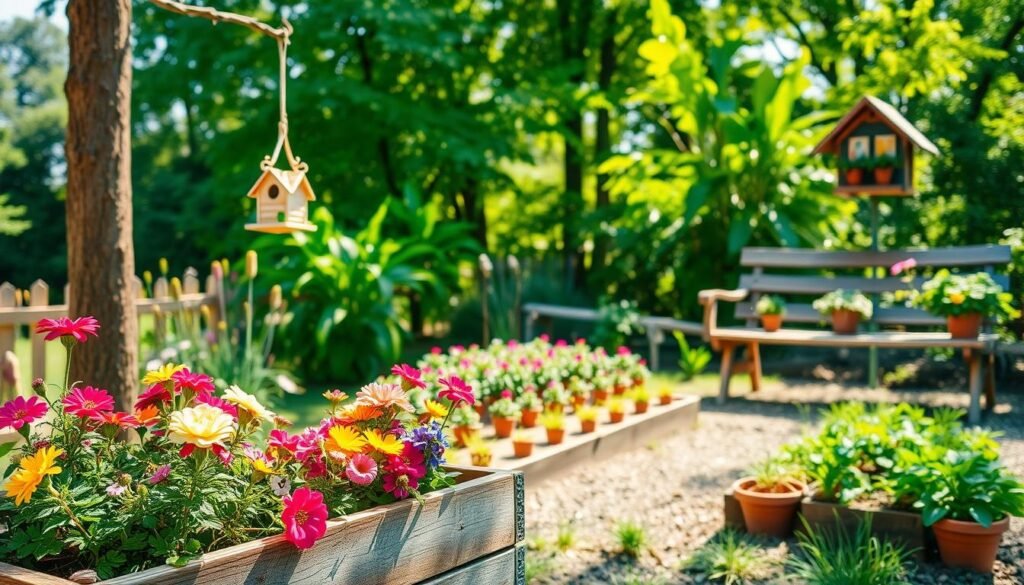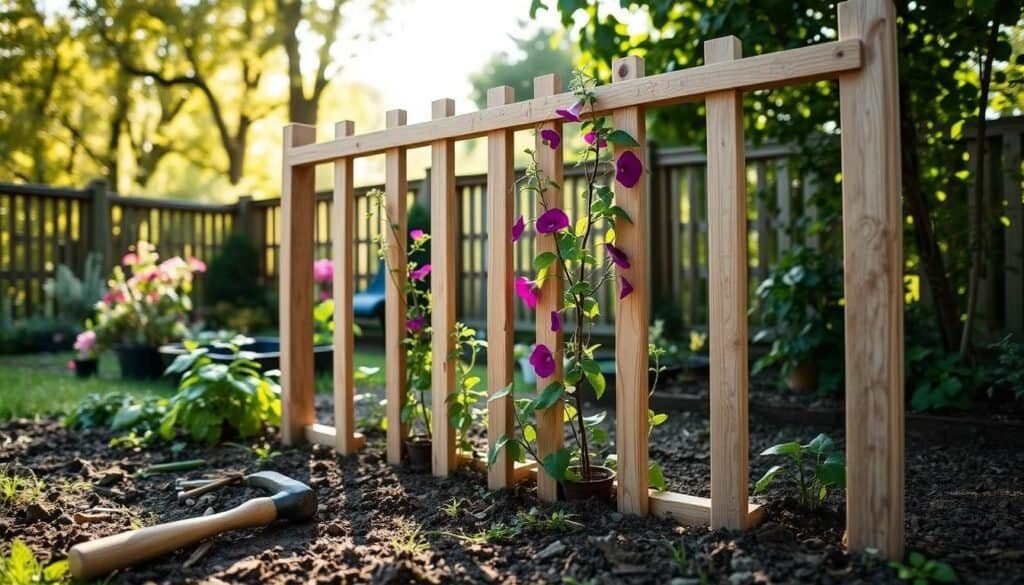
Welcome to the rewarding journey of growing your own food right in your backyard. Whether you have a big lawn or just a few pots, you can grow fresh produce. It’s achievable for everyone.
You don’t need a green thumb or years of experience to succeed. With a few seeds or baby plants, you can make delicious salads quickly and easily.
This beginner’s guide to vegetable gardening will show you how to turn a simple patch of dirt into a thriving garden. We’ll go through every step together.
You’ll learn from planning to harvesting. By following these steps, you’ll feel confident and prepared to enjoy your home harvest.
Planning Your Garden Space
A successful garden starts long before you plant your first seed. You must carefully evaluate your yard to find the perfect spot for your new project. Proper planning prevents common pitfalls and sets the foundation for a productive growing season.
The most critical factor to consider is sunlight. Most vegetables need at least six to eight hours of direct sunlight every day to thrive. If your chosen area stays in the shade for most of the afternoon, your plants will likely struggle to produce a healthy harvest.
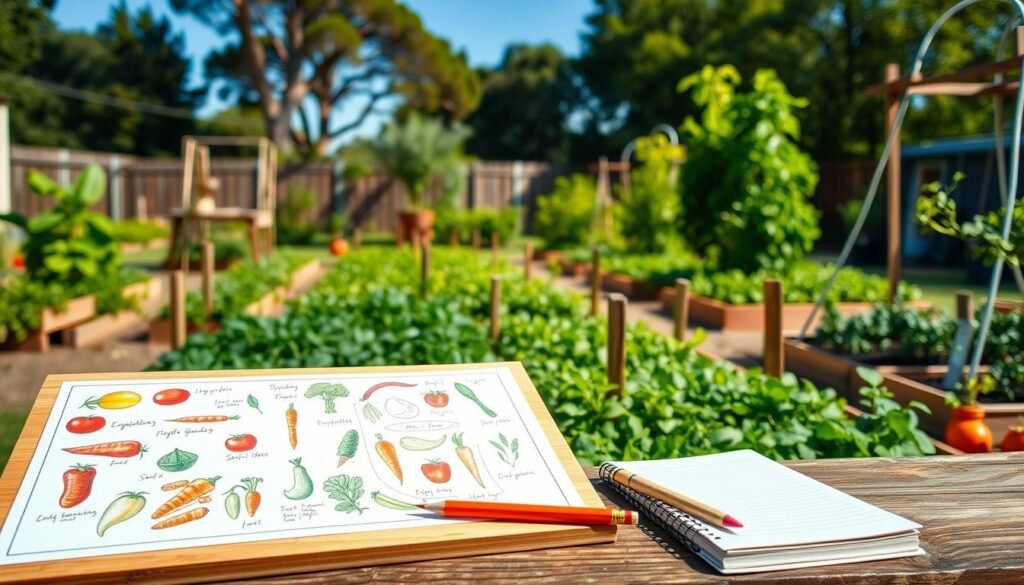
When you map out your beds, keep these essential vegetable gardening tips in mind to ensure efficiency:
- Place your garden near a reliable water source to make irrigation easy.
- Ensure the soil quality is rich and drains well to support root growth.
- Design paths between your beds so you can reach every plant without stepping on the soil.
- Orient your rows to maximize exposure to the sun throughout the day.
By following these simple vegetable gardening tips, you create a space that is both beautiful and functional. A well-thought-out layout saves you time and energy during the busy summer months. Taking the time to plan now will pay off when you are harvesting your own fresh produce.
Essential Tools for Every Beginner
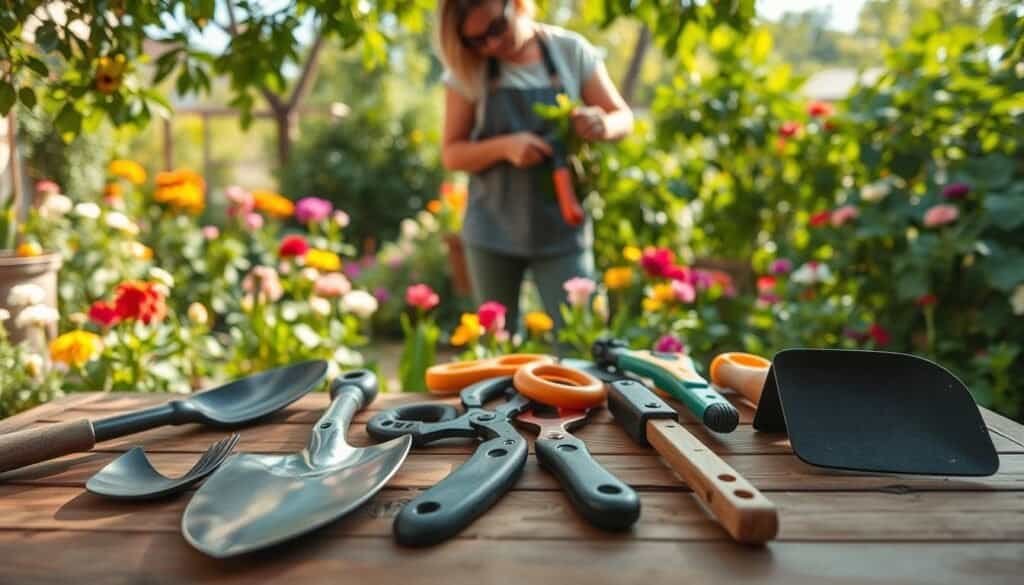
Getting the right tools is key in your journey to vegetable gardening. You don’t need a lot of expensive stuff to start your garden. A few good tools will cover most of your needs.
Choosing quality over quantity helps you stay organized and saves money. Durable tools mean less hassle with broken parts. These simple choices make gardening easier and more enjoyable.
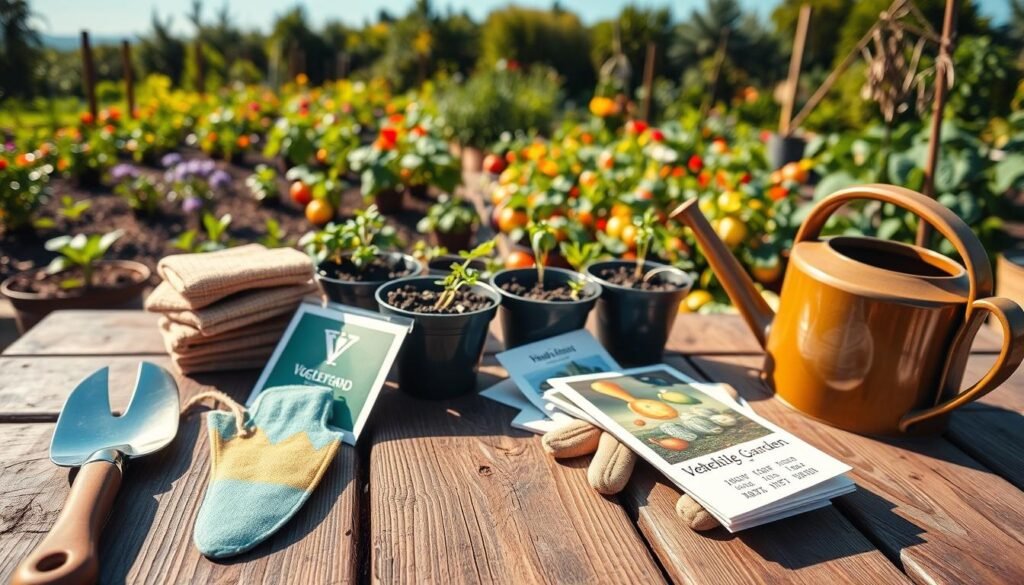
- Sturdy Trowel: Great for digging small holes and moving seedlings.
- Hand Rake: Best for removing debris and loosening soil.
- Reliable Watering Can: Keeps your plants well-watered and healthy.
- Gardening Gloves: Protects your hands from thorns, blisters, and dirt.
Choosing ergonomic tools also helps prevent strain. Tools with comfortable grips let you work longer without getting tired. This beginner’s guide helps you start off right with the tools you need.
Preparing the Soil for Success
Starting a backyard garden is more than just digging. Healthy soil is key for your plants to grow well. By following the right steps, you give your vegetables a strong start.
First, test your soil pH. Most veggies do best in slightly acidic to neutral soil. This lets them grab nutrients easily. You can buy a simple test kit at a garden center. Knowing your soil’s pH is a critical advantage for making smart choices about what to add.
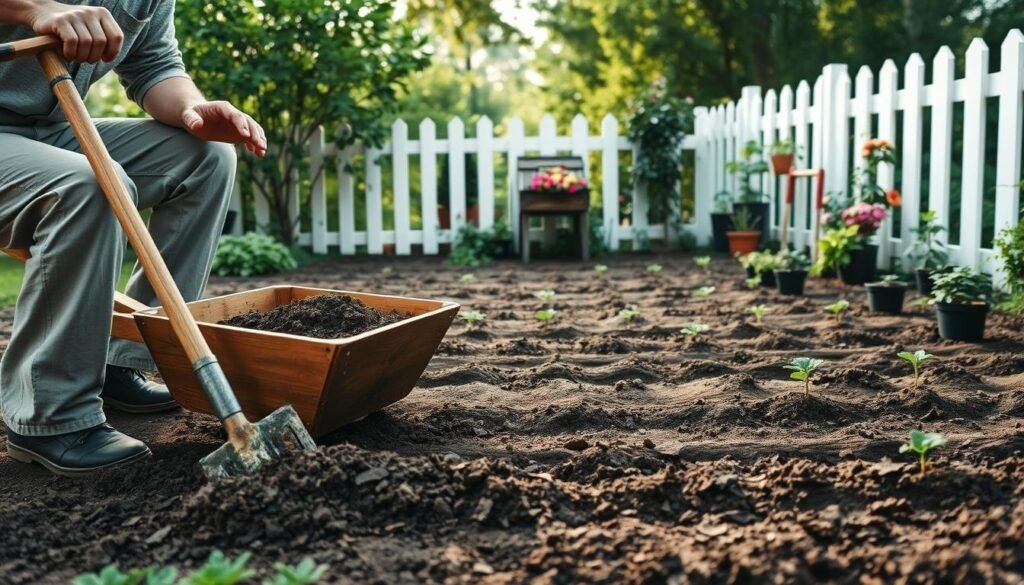
After figuring out your soil’s needs, it’s time to make it better. Adding organic stuff is the best way to improve it. Here are some good things to add:
- Well-rotted compost to boost nutrient density.
- Aged manure for long-term soil health.
- Leaf mold to improve moisture retention.
- Coconut coir to help with soil aeration.
Good soil prep means your plants will have strong roots. When you take these steps, your veggies will fight off pests and weather better. Investing time in your soil now will lead to significantly higher yields all season long.
How to Start a Vegetable Garden From Scratch
Starting a vegetable garden from scratch is a rewarding project. It turns your backyard into a productive oasis. Breaking the process into manageable phases helps avoid feeling overwhelmed.
The first phase is clearing the site of grass, weeds, or debris. You want a clean slate for your vegetables. Removing sod and clearing the ground thoroughly is key for soil health.
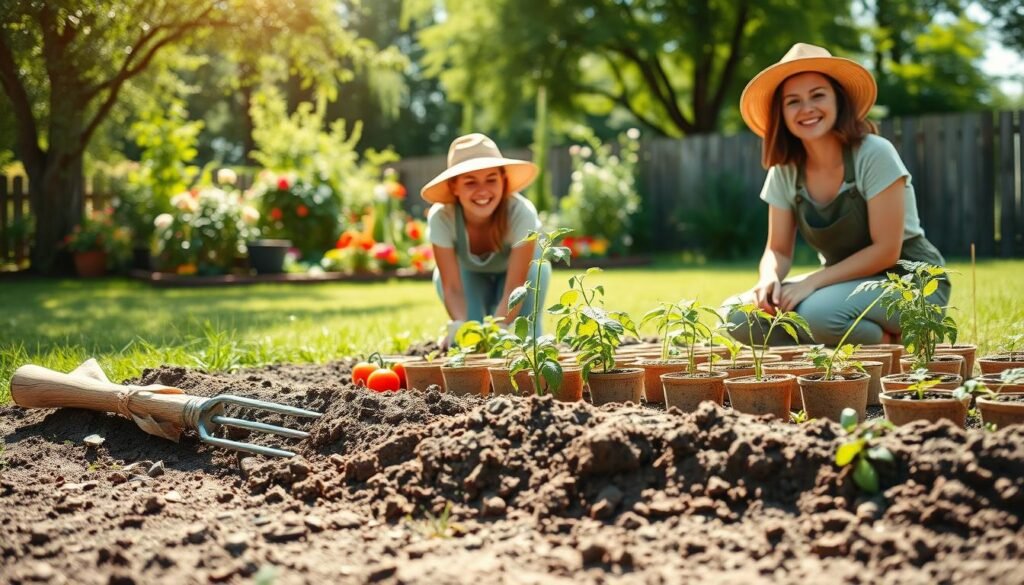
After clearing, define your garden beds. You can choose raised beds or traditional rows. Clear boundaries help organize your planting space. When you start a vegetable garden, you learn that proper layout planning prevents soil compaction and makes maintenance easier.
Next, install an efficient irrigation system. Consistent moisture is vital for healthy growth, even in hot summer months. Here are essential steps for your setup:
- Clear the site of all weeds and rocks.
- Mark your bed dimensions with stakes and string.
- Install drip irrigation or soaker hoses for deep watering.
- Add a layer of organic mulch to retain moisture.
Following these phases helps build a thriving garden. Knowing how to start a vegetable garden from scratch is key. Consistency and preparation are the keys to becoming a confident home gardener.
Choosing the Right Vegetables for Your Climate
Choosing the right vegetables for your climate is key to a great harvest. Each area has its own weather that affects plant growth. Knowing your local weather helps you pick the best plants.
The first step is to find your USDA hardiness zone. This map shows zones based on winter temperatures. It helps you pick plants that can handle your winters and grow well in your season.
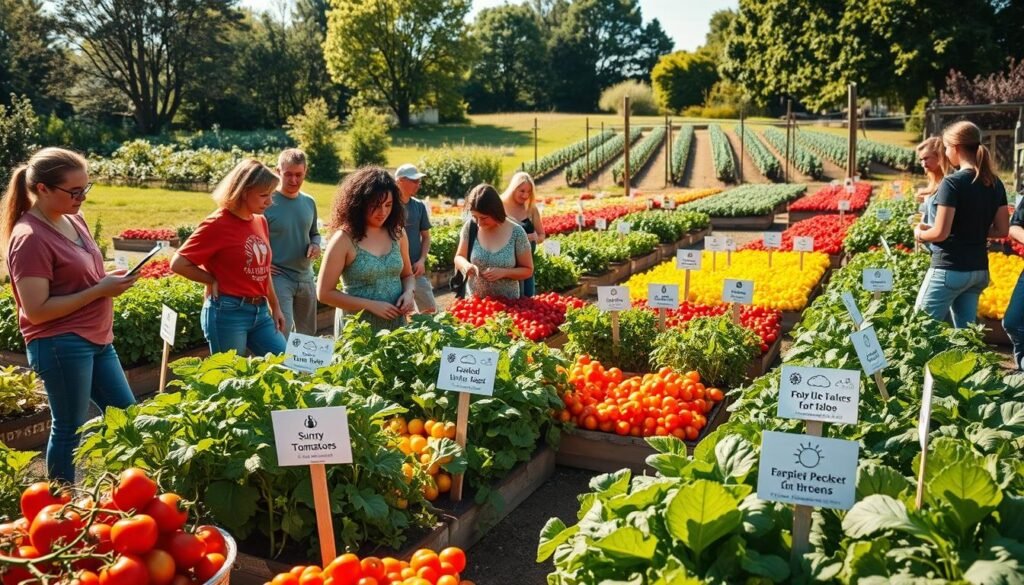
It’s also important to know the difference between cool-season and warm-season crops. Cool-season veggies like lettuce and spinach do well in spring and fall. But warm-season crops like tomatoes need the heat of summer to grow.
Finding your local frost dates is key for planting. These dates tell you when the last frost is in spring and the first frost in fall. Planting too early or late can harm your plants.
Choosing plants that match your climate helps avoid pests and diseases. Plants stressed by extreme weather are more vulnerable. Growing plants suited to your area makes your garden strong and productive.
Starting Your Garden From Seed vs. Transplants
Deciding between seeds and transplants is key to a great growing season. Many new gardeners enjoy the challenge of starting a garden from seed. It lets you grow unique heirloom varieties not found in local nurseries.
Seeds are also cheaper, making them a budget-friendly choice. A packet of seeds can cost less than one plant, giving you dozens of vegetables. This is perfect for a big garden on a small budget.
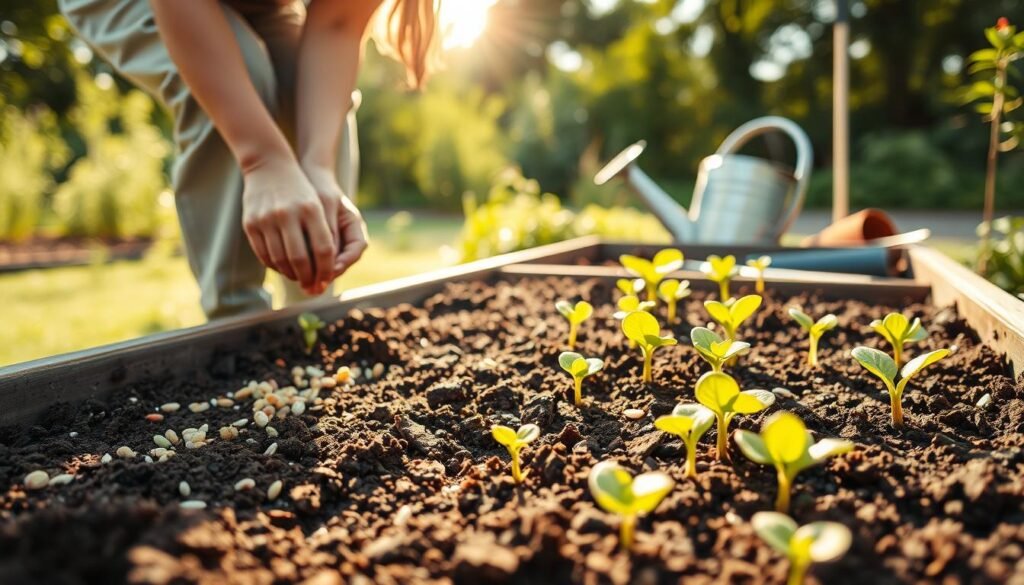
On the other hand, transplants are better for slow-growing plants. They give you a valuable head start in the growing season. This is great for heat-loving veggies like tomatoes and peppers, ensuring a harvest before frost.
Starting with seeds requires a lot of care. Seeds need the right light and constant attention during germination. If you want an easier start, buying transplants can save you time and effort.
Often, the best plan is to use both seeds and transplants. Direct-sow quick-growing crops like radishes and beans. Use transplants for slower-growing favorites. This way, you can enjoy a full garden without too much work.
Creative Herb Garden Ideas for Small Spaces
You don’t need a big backyard to grow your own herbs. Many people find that herbs in pots outdoors are perfect for small areas. These plants do well in containers, making them great for unique outdoor herb gardens.
If you have a small deck or balcony, think about patio herb garden ideas that use vertical space. Hanging baskets or tiered shelves are great for saving space. These ideas let you have your favorite herbs close by while you grill or relax outside.
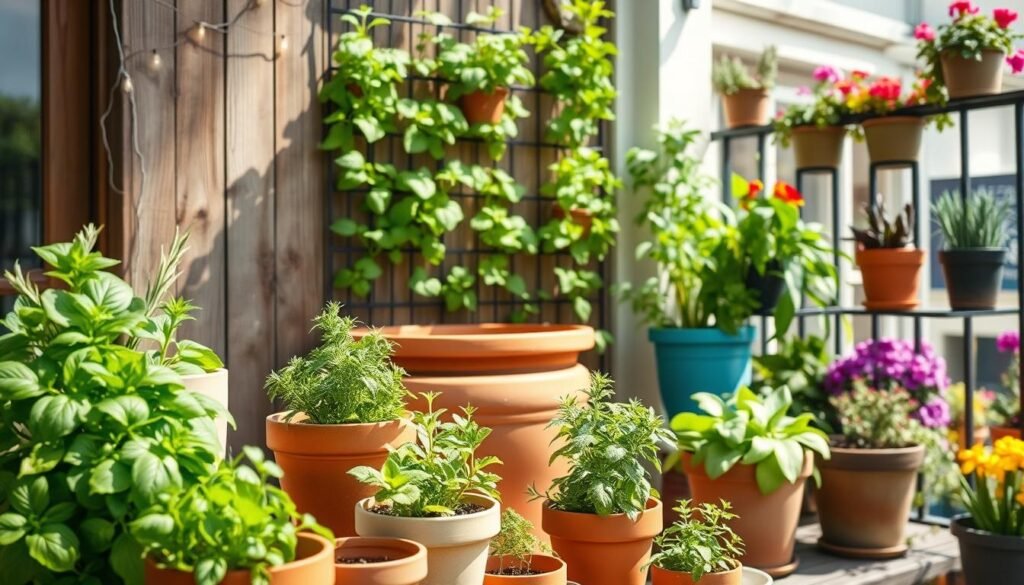
For apartment dwellers, herb planter ideas indoor work well too. A sunny windowsill can support plants like basil, mint, or chives. You can find potted herb garden ideas that fit your home’s style and ensure your plants get enough light.
Being creative with your setup is fun. You can make a diy herb planter from items like wooden crates, mason jars, or old colanders. Try these simple projects to make your space unique:
- Use a hanging shoe organizer for a vertical herb wall.
- Paint terracotta pots to add color to your kitchen counter.
- Build a small wooden trough for a rustic porch look.
- Group herbs in a wide container for a lush display.
While containers are flexible, a small herb garden bed might work if you have a tiny soil area. Raised beds help organize your space. Growing your own herbs means you always have fresh ingredients for your favorite dishes.
Vertical Gardening and Balcony Solutions
You can turn a tiny apartment balcony into a lush green space. A small herb garden is great for growing more in less space. It’s ideal for those wanting a green oasis without a big yard.
When designing your herb garden, think about using your walls. A herb garden vertical setup saves floor space and keeps plants easy to reach. Look online for herb garden inspo to find the best setup for your space.
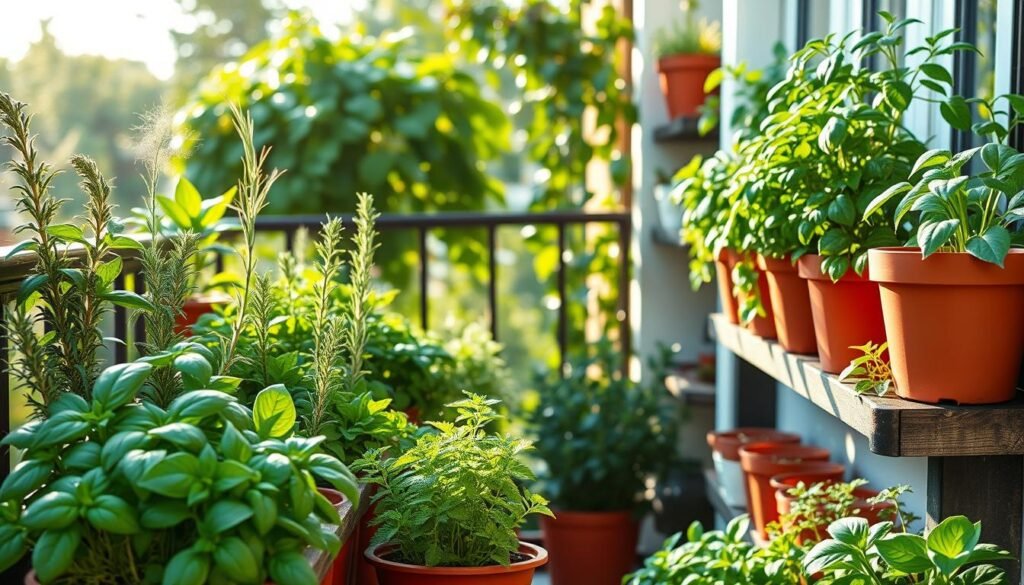
City living doesn’t mean you can’t have fresh greens. Start an herb garden in apartment settings with tiered shelving or hanging baskets. A well-planned herb garden apartment can make a dull corner beautiful and productive.
Here are some top picks for your herb garden small space:
- Wall-mounted planters for a vertical herb garden on balcony.
- Tiered plant stands for a herb garden small patio area.
- Rail-mounted pots for a herb balcony garden.
Vertical gardening is the best way to grow more in small spaces. Choose the right containers and spots for fresh herbs all season.
Watering and Maintenance Best Practices
Learning to water your garden right is key for a healthy vegetable patch. One top vegetable gardening tip is to water deeply but not often. This helps roots grow deep, making plants stronger when it’s dry.
Deep watering makes sure moisture gets to all the roots. Shallow watering can evaporate quickly, leaving roots exposed to heat. Soak the soil well to keep leaves dry and avoid fungal problems.
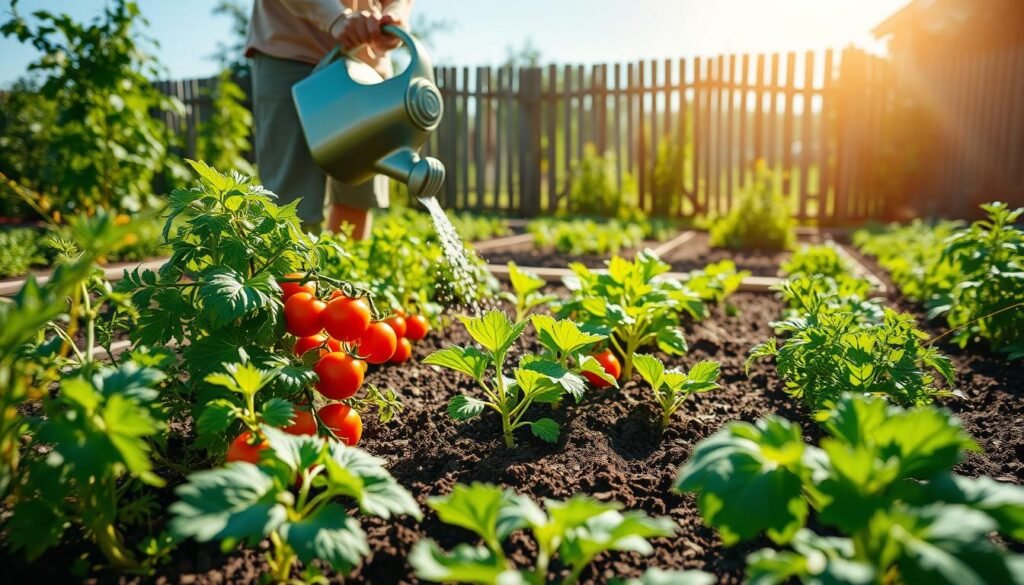
Using mulch is also important for a healthy garden. Organic materials like straw or shredded leaves protect the soil. They keep moisture in, control soil temperature, and stop weeds.
Regular care keeps your garden looking good and your crops growing well. Here are some key habits to follow:
- Check soil moisture daily by feeling it an inch deep.
- Water in the morning to reduce evaporation and let leaves dry.
- Put a two-inch layer of mulch around your vegetables.
- Remove weeds often to stop them from taking water and nutrients.
By following these vegetable gardening tips, you help your plants grow strong. Regular care means a better harvest when the season ends.
Managing Pests and Organic Disease Control
Organic vegetable gardening lets you work with nature, not against it. Seeing bugs on your leaves might stress you out, but it’s part of the ecosystem. You can keep your garden thriving by focusing on prevention and natural solutions, not harsh chemicals.
Integrated pest management is a smart strategy for keeping your plants safe and healthy. By regularly observing your garden, you can catch small issues before they become big problems. Healthy soil and strong plants are your first defense against unwanted visitors.
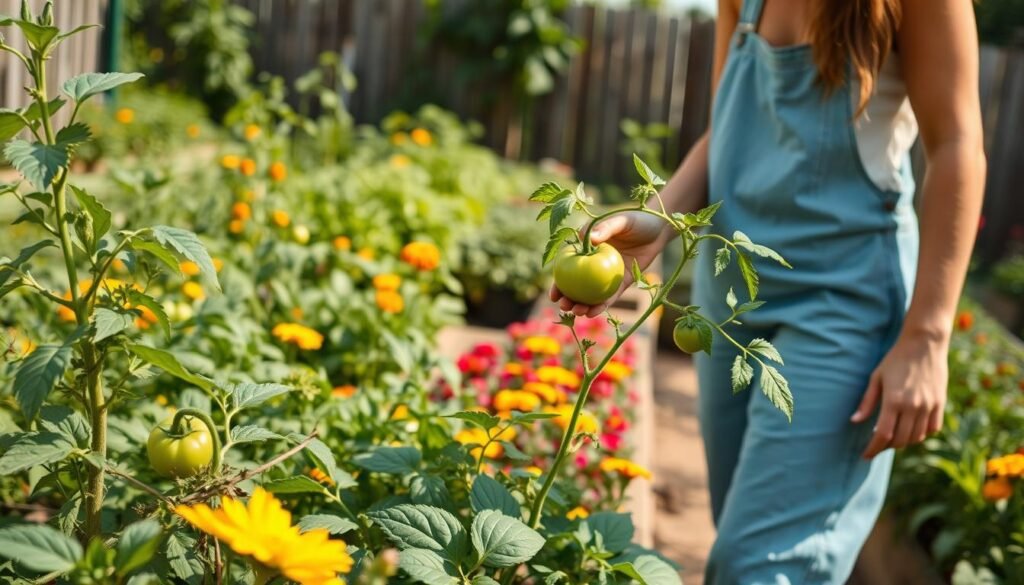
Encouraging beneficial insects is key to successful organic vegetable gardening. Ladybugs, lacewings, and parasitic wasps are natural predators that control harmful pests. To attract these helpers, plant diverse flowers like marigolds, dill, and yarrow in your beds.
Good garden hygiene is also important for disease prevention. Follow these simple steps to keep your garden thriving:
- Remove and dispose of any diseased plant material immediately.
- Water at the base of the plants to keep foliage dry and prevent fungal growth.
- Rotate your crops each season to break the life cycles of soil-borne pests.
- Use physical barriers like row covers to protect young seedlings from hungry insects.
Managing your garden with these environmentally friendly methods gives you peace of mind. You’ll feel more confident knowing your produce is clean and safe to eat. These practices make organic vegetable gardening a rewarding and sustainable hobby for any home grower.
Harvesting and Enjoying Your Homegrown Produce
Growing vegetables at home gives you a taste that store-bought can’t beat. Store-bought veggies often travel far, picked early and losing nutrients. Your backyard harvest lets you enjoy peak freshness and taste.
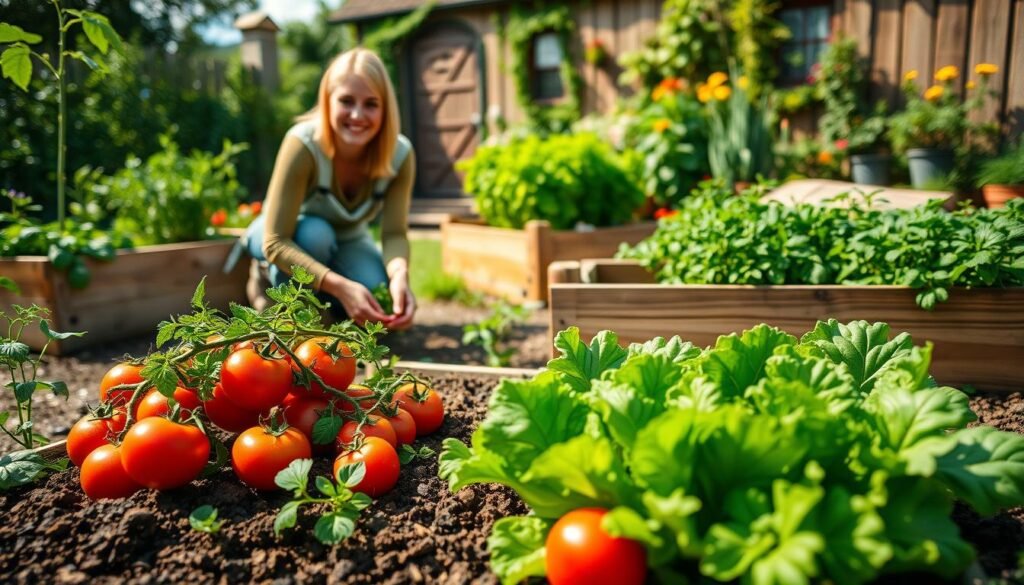
Knowing when to pick is key. Each veggie has signs to show it’s ready. Growing at home means picking at the best time for taste and texture.
Here’s how to get the most from your garden:
- Tomatoes: Pick when fully colored and slightly soft.
- Leafy Greens: Choose outer leaves in the morning for crispness.
- Peppers: Wait for full color for sweetness.
- Root Vegetables: Pull when tops are lush and shoulders show.
There’s joy in cooking with your own grown food. Whether it’s a salad or roasted veggies, your produce makes a difference. Enjoy your harvest and share it with loved ones.
Conclusion
Starting your own vegetable garden is a journey full of learning and tasty rewards. You now have the knowledge to create a productive garden in your backyard.
Every garden is special to its owner. Try different heirloom seeds from Burpee or organic fertilizers from Espoma. See what works best in your area. This way, your plants will stay healthy all season.
Small changes can make a big difference in your harvest. Watch how your plants react to sunlight and water every day. This hands-on approach makes gardening a rewarding hobby.
Share your garden journey with others in your community. Talking to fellow gardeners can teach you new ways to deal with pests or find the best vegetables for your area. Your journey to a bountiful harvest begins with the next seed you plant.