Do you dream of a lush garden but lack a big backyard? Many urban dwellers face challenges in finding space for greenery in small apartments or narrow balconies. You can turn your home into a vibrant oasis by using vertical space and smart design.
Vertical gardening is a great solution for tight spaces. The right containers can help you grow herbs or flowers without taking up too much floor space. Our guide will help you pick durable materials and designs for a long-lasting setup.
We’ll share essential tips for all skill levels. You’ll learn about the importance of drainage and soil depth for your garden boxes. Whether you’re new to gardening or experienced, these tips will help you create a beautiful and functional space. Let’s explore how to make the most of your living area with style and ease.
Visit The Marketplace or grab your Free Garden Starter Kit
Why Wooden Planters are Perfect for Small Spaces
Wooden planters add a natural, warm feel to small areas. They also help your plants grow well. These containers fit well with both indoor and outdoor designs, making them great for city gardeners.
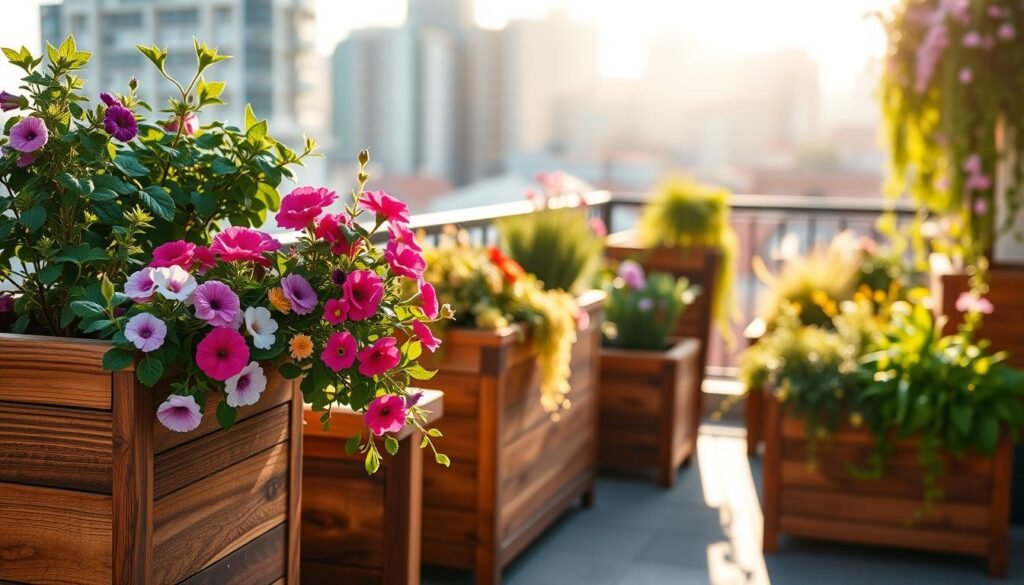
Small space gardening gets easier with modular wooden boxes. You can adjust these boxes to fit your space perfectly. This way, you make the most of your balcony or patio.
Wood is better than plastic or metal for plants because it insulates well. This is key for keeping roots healthy when the weather changes. Your plants will grow strong and healthy all year round.
Wooden planters are not just tough but also good for the planet. They come from sustainable cedar or reclaimed wood. By picking wooden planters, you help your plants and add a rustic charm to your home.
Easy Wooden Planters That Make Small Spaces Feel Bigger
Creating a beautiful plant corner adds depth to small rooms. Space-enhancing planters draw the eye upward, making your home feel open. These ideas help define a plant corner without overwhelming the floor.
Adopting a minimalist with plants approach keeps your home intentional and airy. You can make your own diy planters for unique spaces. This creates a minimalist home with plants that feels curated, not cluttered.
Building a custom diy planter box lets you control size and style. Wood adds a warm, organic texture, perfect for indoor or outdoor spaces. Consider these benefits for your plant corner decor in an indoor plant corner:
- Custom sizing to fit tight corners perfectly.
- Natural wood tones that complement any color palette.
- Lightweight construction for easy movement.
- Affordable materials that look high-end.
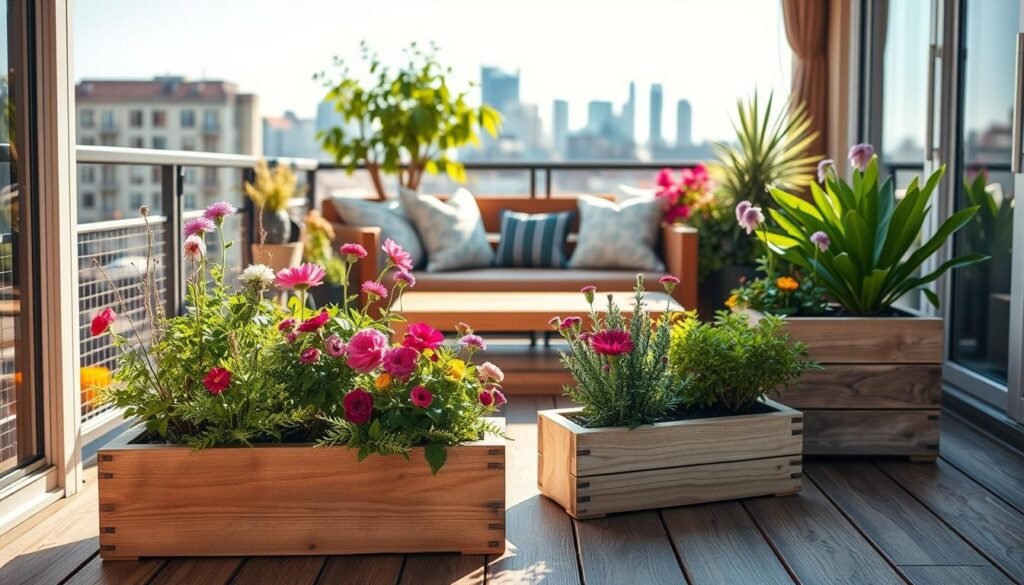
Creating a cohesive plant corner aesthetic is key for a polished look. A well-placed plant interior design living room setup ties furniture together. Arrange your plants corner indoor with varying heights for visual interest.
For plant corner ideas, consider how your greenery interacts with light. A plant corner living room display looks best when balanced with furniture. These plants in living room aesthetic choices keep your space functional and stylish.
Wood planters add warmth to dark rooms, creating a moody, sophisticated vibe. This dark aesthetic plant decor is great living room inspiration plants. Wood softens dark corners, making them cozy.
Remember, greenery home decor should be easy to maintain and refresh. Use plant living room decor that’s modular for seasonal swaps. Adding greenery in living room spaces brings life to small apartments.
Vertical Gardening Solutions for Tight Corners
Turning tight corners into green spaces is simpler than you think. Vertical gardening is the key when you’re short on floor space. It lets you grow a lot of plants without taking up too much room.
Installing a corner planter outdoor is a great way to use those hard-to-reach spots. Or, try planters on wall outdoor to keep your floor free. Many people use urban gardening containers or corrugated boxes to create tiered gardens that fit snugly against walls.
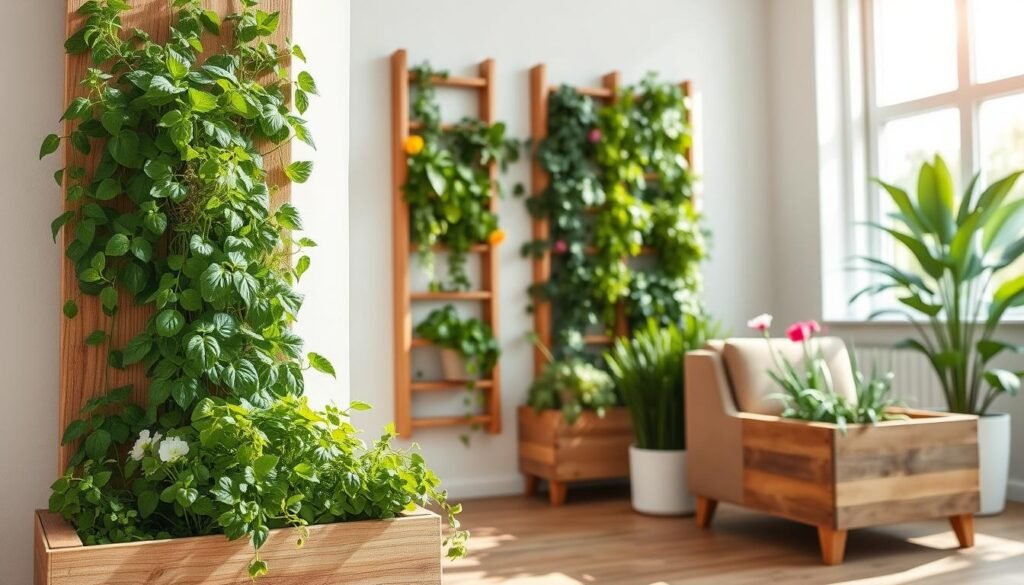
Vertical setups are perfect for privacy plants that block your view from neighbors. Choose tall, leafy plants for a natural screen. You can also add a covered herb garden to your wall for easy access to your favorite herbs.
For growing your own food, vertical outdoor vegetable gardens are a great choice. They’re space-saving and simple to care for. With smart covered garden ideas, you can protect your plants from wind and sun, ensuring a bountiful harvest.
Elevated Planter Designs to Maximize Floor Space
Elevated planters are a smart choice for saving floor space. They lift your plants off the ground, making areas look bigger. These space-enhancing planters are great for anyone wanting to enhance their outdoor space without losing square footage.
Using a diy elevated garden bed or a standing planter makes gardening easier. You don’t have to bend or kneel as much. Whether you pick composite planters for durability or wood for a natural look, they add beauty to your home.
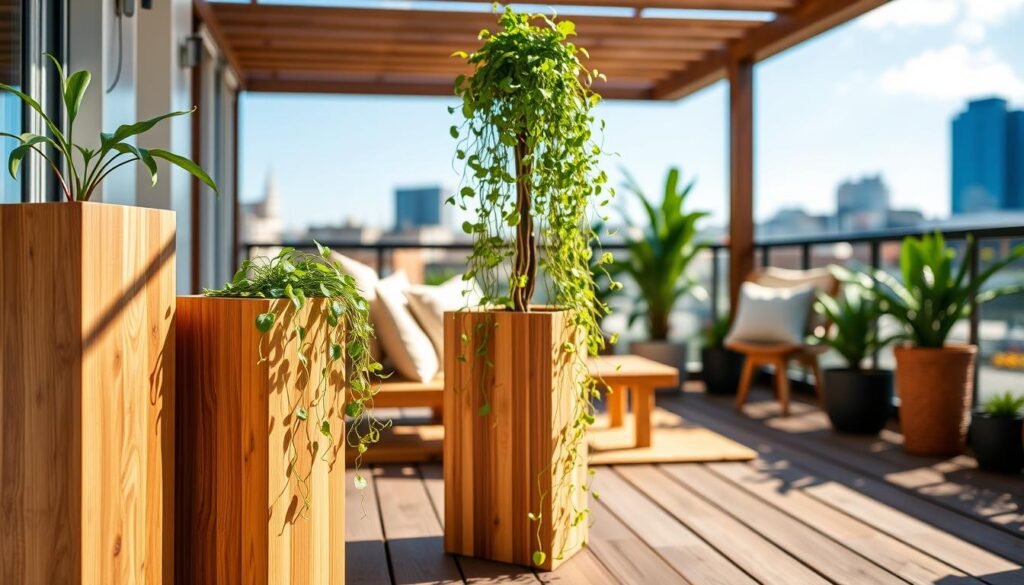
Many wooden planter box designs are perfect for decks or patios. They help create different areas in your outdoor space. Here are some popular styles to consider:
- Modern planter box styles for a sleek, minimalist look.
- White planter boxes to brighten up dark corners or shaded porches.
- Succulent planter box arrangements for low-maintenance greenery.
- Boxwood in rectangular planter displays for a formal, structured feel.
Patio planter boxes are great for adding height and interest to your backyard. You can place a planter on deck surfaces to add greenery without cluttering the floor. From porch planter boxes to planter boxes front yard displays, there are endless options for your outdoor planter box inspiration.
Whether you like low planter ideas or tall stands, these flower planter boxes can give you a professional look. Look at different outside planter ideas to find the right one for your space. With the right decorative planters outdoor, even small areas can become vibrant garden retreats.
Creative Hanging and Above-Doorway Planter Ideas
The area above your doorway is a hidden gem for greenery home decor. Many people forget that vertical wall space offers some of the best small space décor ideas. By installing a sturdy plant shelf above doorway, you can draw the eye upward and make your ceilings feel much higher.
This approach is perfect for those who want to embrace a minimalist home with plants aesthetic without sacrificing precious floor area. It turns an unused architectural feature into a vibrant focal point. Whether you live in a house or an apartment, these creative planting solutions help you maximize every inch of your home.
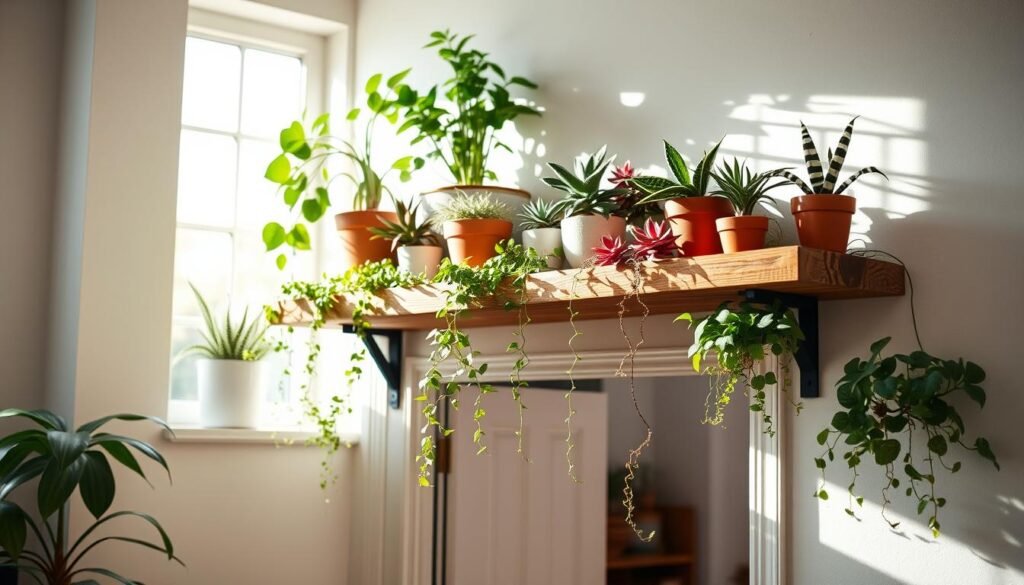
When setting up your display, consider these essential tips for a successful installation:
- Choose lightweight materials: Use wood or metal brackets that are easy to mount and remove, making them ideal as hanging plants indoor renter friendly options.
- Select the right greenery: Trailing plants like Pothos or Philodendron work best because they naturally cascade downward, softening the look of the shelf.
- Ensure safety: Always use wall anchors or studs to secure your shelf, specially if you plan to hold multiple potted plants indoor.
- Balance the aesthetic: Keep your plant interior design living room cohesive by matching the wood finish of your shelf to your existing furniture.
Adding a plant shelf over door allows you to experiment with different heights and textures. You can mix trailing vines with small, hardy succulents to create a layered look. This method keeps your surfaces clear while ensuring your favorite greenery remains a central part of your home decor.
Mobile Planters for Flexible Layouts
Flexibility is key for urban gardening in tight spaces. Planters for patios that move give you full control. They let you move plants to catch the sun’s rays.
Adding heavy-duty casters to wooden planters makes them roll. This change lets you clear space for parties or cleaning. Mobility is a big plus for small gardens.
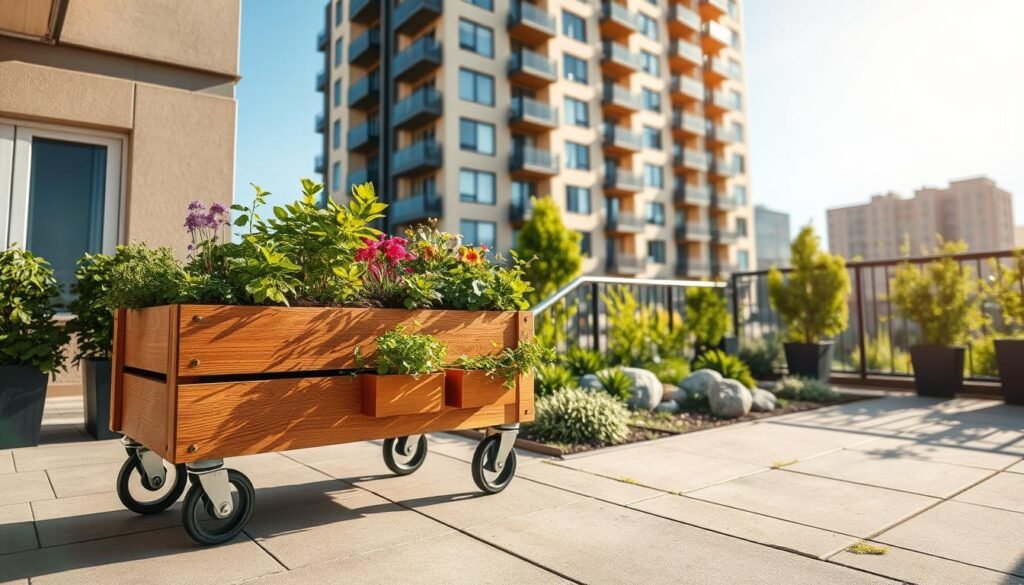
Think about using a strong plant stand for big containers. This way, you can move patio planter boxes when guests arrive. It’s perfect for small homes or apartments.
When making a diy elevated garden bed, pick good locking wheels. These raised garden beds off the ground save your back. Looking at patio planter ideas helps you find the right mix of style and function.
Mobile planters can also act as privacy plants. They’re better than planters on wall outdoor for changing views. Customizing your layout keeps your outdoor space lively all year.
Tiered and Stacked Wooden Planter Concepts
Tiered planter boxes are a smart way to grow more in a small backyard. They let you use vertical space, making a potager garden that’s efficient. This is great for gardeners who want to grow many plants without a big area.
You can set up your planter to fit different plants. For example, use the bottom for deep-rooted veggies and the top for raised strawberry beds. A tomato border along the back helps vines grow, keeping your garden tidy.
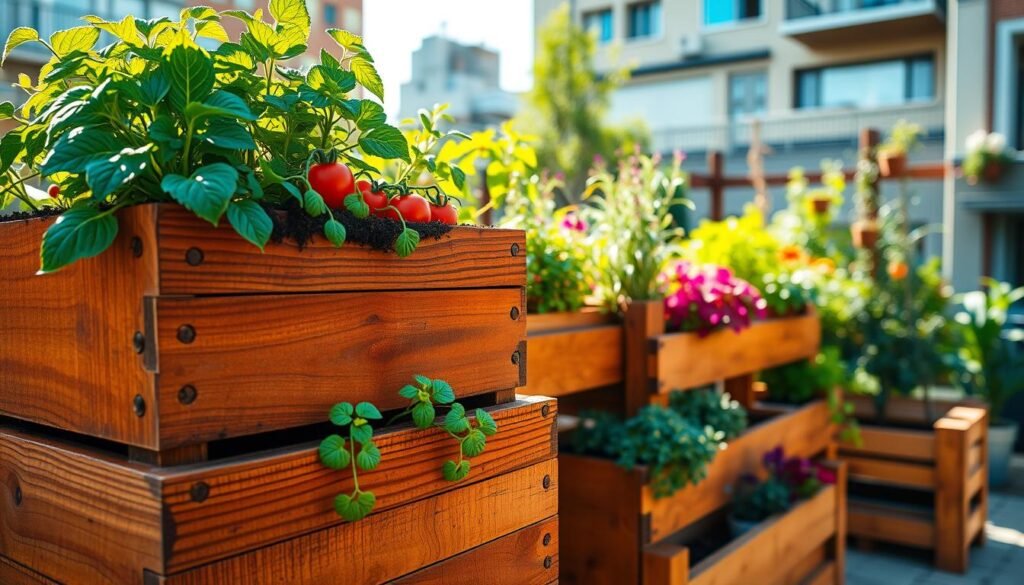
Choosing the right material is key for a lasting garden. A diy cedar raised garden bed is a top pick because it resists rot and bugs. A detailed diy garden bed tutorial helps build a strong, safe bed. These systems are great for drainage and soil control, whether you’re looking for cheap raised garden beds or something custom.
Here are some benefits of tiered gardens:
- Increased Yield: Stacking levels means more plants in less space.
- Better Ergonomics: Raised beds make gardening easier on your back.
- Improved Soil Quality: Each box can have its own soil, tailored to your veggies.
- Visual Appeal: Tiered designs make your backyard look great, turning it into a beautiful spot.
Planning your raised garden bed vegetable layout is the last step to a great season. Grouping plants by their needs creates a healthy garden. These easy raised garden beds are not just useful; they also bring fresh food to your table all year.
Choosing the Right Wood and Finishes for Longevity
Choosing the right materials is key to making your wooden planters last. When you’re planning a backyard makeover, durability is important. Use rot-resistant woods like cedar or redwood to fight off the elements.
These woods have natural oils that keep moisture and pests away. This makes them great for diy planter box projects. They’re safe and sustainable, perfect for tiered planter boxes or simple low planter ideas.
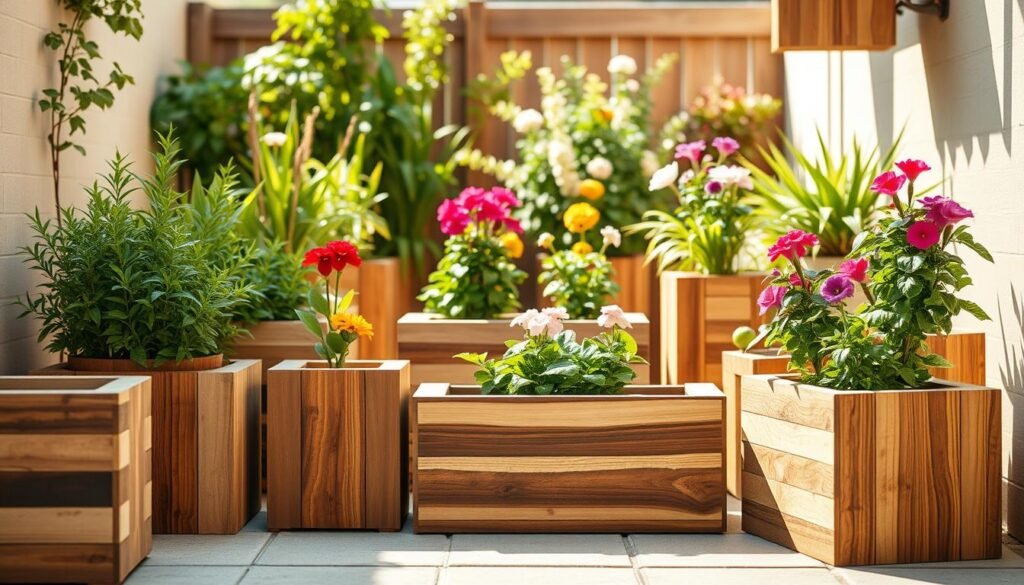
Think about how your planters fit with your home landscaping. Pair modern planter box designs with concrete slab edging or a cylinder block retaining wall for a polished look. These elements enhance your yard design and support your outside planter ideas.
Finishing your garden planter boxes right is key to protecting them. Use a high-quality, non-toxic stain or sealer. This keeps your decorative planters outdoor looking good all year.
Here are some tips for keeping your outdoor plant box ideas in top shape:
- Use breathable, water-based sealers to prevent wood rot.
- Check your succulent planter box for drainage issues every spring.
- Refresh the finish on your white planter boxes every two years.
- Ensure your boxwood in rectangular planter arrangements have adequate airflow.
- Inspect flower boxes outside for loose joints after heavy storms.
By paying attention to these details, your backyard patio designs will stay beautiful and useful. Whether you choose composite planters or natural wood, regular care keeps your outdoor planter box inspiration alive. With the right care, your planter boxes front yard will be a stunning highlight of your home.
Conclusion
Starting a lush garden in a small home is all about smart planning. You can pick a rolling planter for flexibility or build garden boxes for a lasting look. Your backyard makeover will flourish with the right plan.
Think about raised strawberry beds or a classic potager garden to boost your harvest. Use a plant shelf above door frames or over doorway spaces to make the most of vertical areas. These ideas keep your indoor plants looking good and working well.
For a clear garden layout, try concrete slab edging or a cylinder block retaining wall. Or, go for a rustic look with a pallet raised garden bed. These projects show that anyone can do home landscaping.
Begin your garden journey by picking a design that suits you. From hanging plants for renters to sturdy cedar raised garden beds, your dream garden is close. Enjoy watching your plants grow and thrive in your home.