For years, my backyard was a fight against weeds and hard soil. Every season was more trouble than it was worth. That’s why I decided to switch to raised beds for gardening.
Changing to raised beds changed everything. It made my garden better at draining water and easier to manage. Plus, it’s kinder on my joints, turning gardening into a fun hobby.
If you’re tired of the hard work in your garden, you’re not alone. Many want an easier way to grow food without all the upkeep. I hope these tips will inspire you to start your own garden project this year.
Visit The Marketplace or grab your Free Garden Starter Kit
Why I Switched to Raised Beds — And Never Looked Back
Switching to raised beds was a game-changer for my garden. For years, my backyard’s dense clay soil was a challenge. I spent hours trying to improve it, but my plants didn’t do well. That’s why I chose raised beds and never regretted it.
The benefits of raised beds are obvious when you fill them with good soil. Unlike regular plots, you can control everything in raised beds. You don’t have to deal with compacted soil or bad drainage.
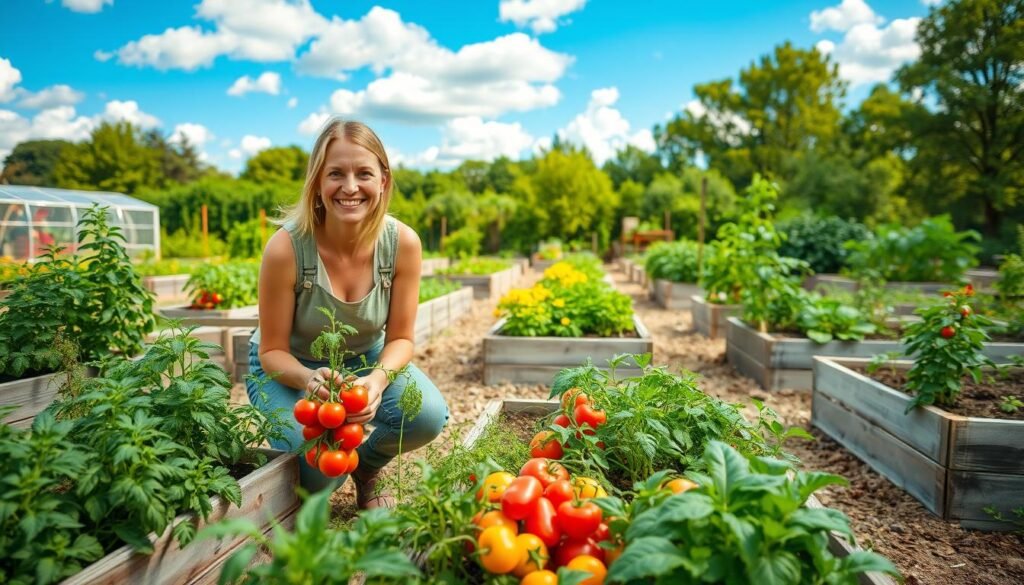
Compared to traditional gardens, raised beds need much less upkeep. Regular plots need constant weeding and tilling. Raised beds, on the other hand, keep weeds out and your soil in place.
Raised beds are great for beginners who want to see results fast. They make it easier to reach your plants and reduce the strain of bending. It’s a simpler way to start gardening.
Creating a home vegetable garden should be fun, not a hassle. Raised beds are perfect for growing herbs or tomatoes. Your plants will grow faster, healthier, and with less effort.
The Ergonomic Advantage of Elevated Gardening
Bringing your garden up to a comfortable height changes everything about how you grow food. Traditional gardening often requires hours of kneeling, bending, and reaching. This can lead to significant physical discomfort. One of the primary benefits of raised beds is that they eliminate the need to work directly on the ground.
When you use structures that sit higher, you protect your joints from unnecessary stress. These raised garden beds advantages allow you to tend to your plants while standing or sitting on a stool. This simple shift in height makes gardening a relaxing hobby instead of a strenuous chore.
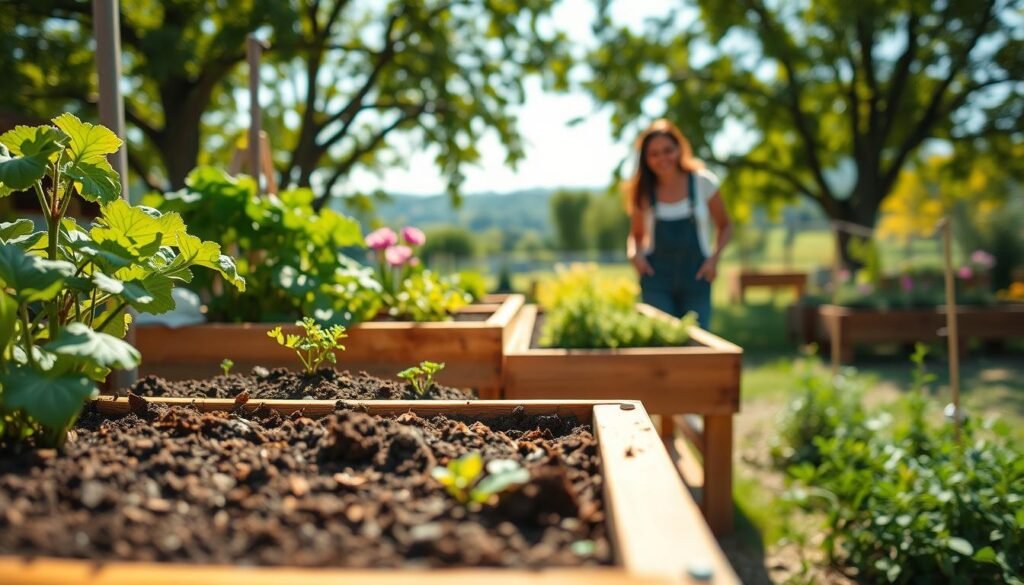
Gardening should be an activity that people of all ages can enjoy without worry. By keeping raised garden beds off the ground, you create an accessible space that accommodates limited mobility. You no longer have to struggle to reach the center of a wide plot or worry about getting back up after weeding.
An above ground vegetable garden offers a customized experience tailored to your specific height. Whether you are a senior gardener or simply want to avoid back pain, these beds provide the perfect solution. Consider these key ergonomic improvements:
- Reduced back strain by eliminating the need to bend over constantly.
- Less knee pressure because you don’t have to kneel on hard soil.
- Improved reach, making it easier to prune and harvest your crops.
- Better posture while you work, which keeps you energized for longer sessions.
Superior Soil Control and Drainage
When you compare raised beds vs. traditional gardening, the ability to tailor your soil is a big plus. Many people face challenges with their native soil, like it being too hard or lacking nutrients. Raised garden beds let you avoid these problems and create a perfect spot for your plants.
The key to success is your raised beds soil mix. You can mix high-quality compost, peat moss, and vermiculite to make a nutrient-rich base. This mix ensures your plants get the right mix of minerals and organic matter to grow well all season.
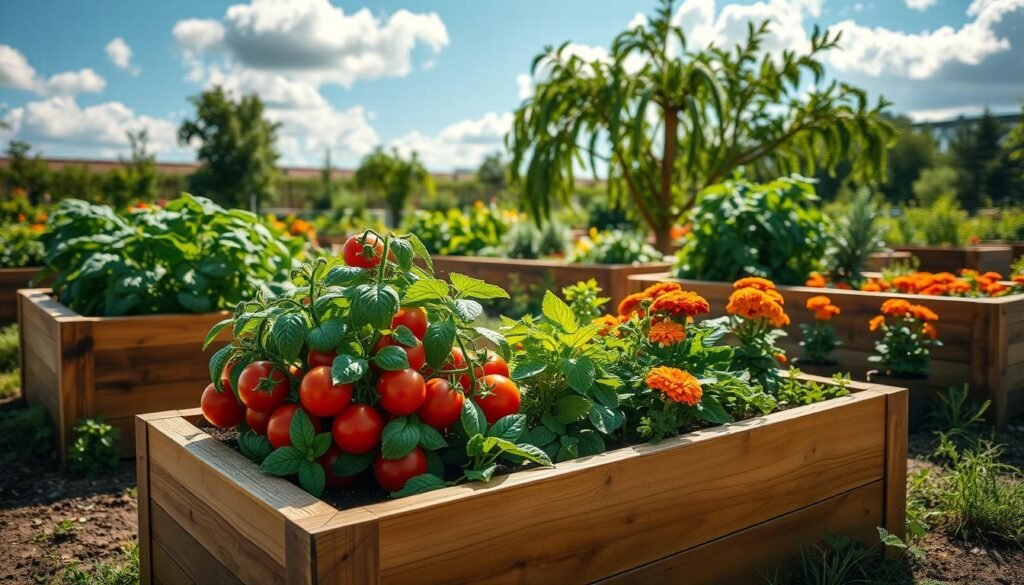
Good drainage is another big plus of raised beds. The soil drains better because it’s higher up, which helps prevent root rot. This is great for a garden beds vegetable area, as it keeps the roots healthy and full of oxygen.
Here are some main benefits of having better soil and drainage in your garden:
- Enhanced aeration lets roots grow deeper and stronger without getting stuck in hard earth.
- Consistent moisture levels stop the soil from getting too wet during heavy rain.
- Nutrient retention gets better with a high-quality, organic soil mix.
- Faster soil warming in spring helps your veggies start growing sooner.
By controlling your soil, you cut down on the uncertainty of traditional gardening. Your plants will be more resilient, productive, and easier to care for in a well-drained, custom soil mix.
Maximizing Yields in Small Backyard Spaces
Turning a tiny backyard into a food source is simpler than you might think. Even the smallest outdoor area can become a green, edible paradise with the right small garden plans. By focusing on efficiency, you can grow a lot of food in a tiny space.
Using raised beds for small spaces is a great way to optimize your land. These beds let you control soil quality and plant density better than traditional rows. A simple 3×3 garden layout can give a small family enough fresh produce all season.
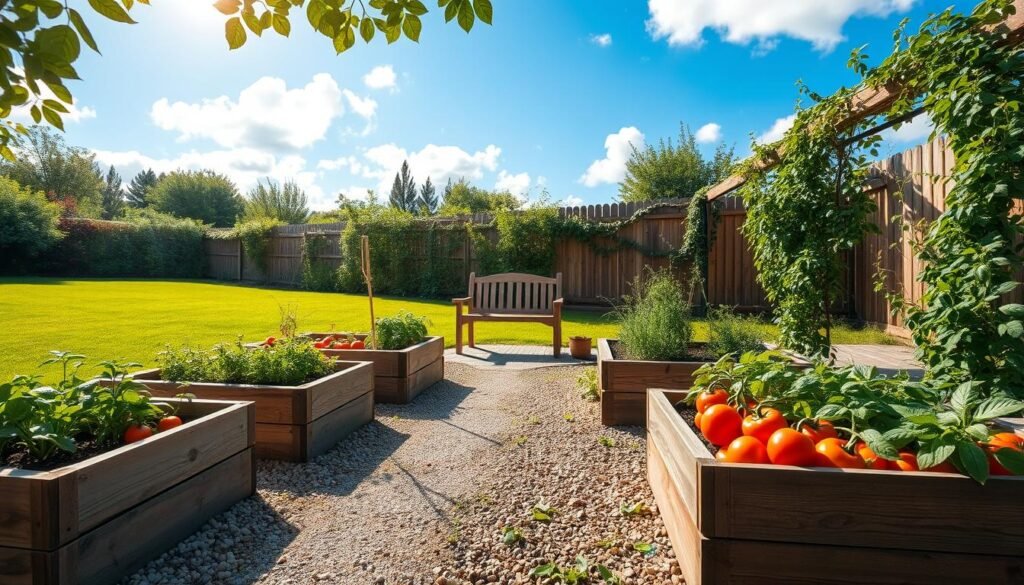
When planning your small vegetable garden design, think about vertical growth to save space. Trellises and stakes are key small veggie garden ideas for climbing plants like cucumbers and peas. This method keeps your small backyard vegetable garden neat and improves air flow between plants.
To get the most from your small vegetable garden ideas, try these planting strategies:
- Succession planting: Replace harvested crops with new seedlings to keep the soil productive.
- Square foot gardening: Use a grid system to fit more plants in your garden beds small space.
- Companion planting: Pair tall plants with shade-tolerant ones to use every inch of your small veg patch ideas.
A well-planned small backyard vegetable garden design layout ensures plants get sunlight and nutrients. By choosing compact varieties, you can create box garden ideas raised beds small spaces that are both beautiful and functional. Your small veggie garden will soon be the most productive part of your home.
Extending the Growing Season with Raised Planters
Want to start your spring planting early? Look no further than raised garden beds off the ground. These beds warm up faster than the earth because they absorb more sun. This means your soil will be ready for seeds weeks before spring.
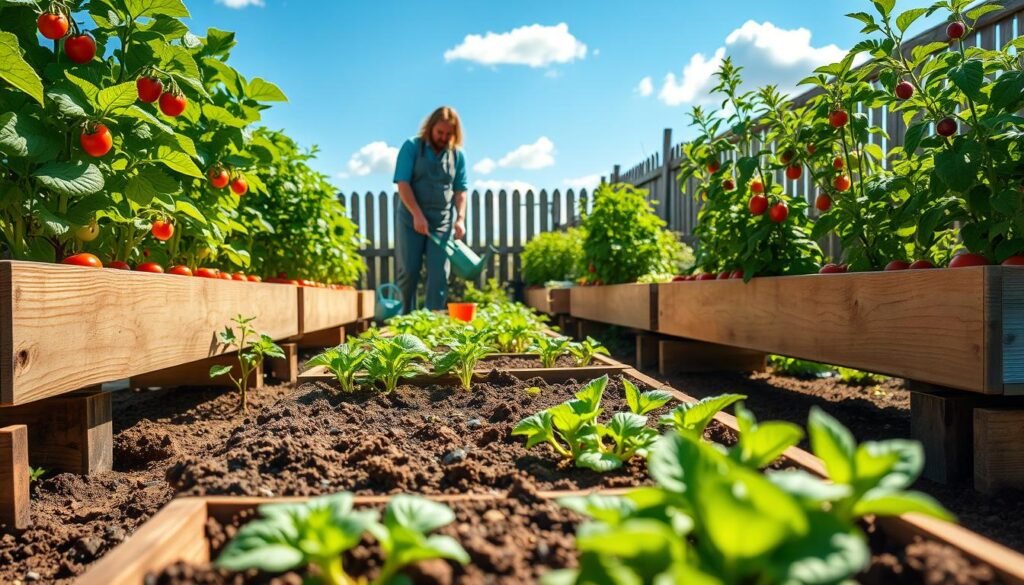
An above ground vegetable garden is like a radiator for your plants. It keeps the soil warm, protecting roots from cold. This is great for gardeners who want to grow plants longer into autumn.
In small backyard gardens, every inch matters. Raised planters help you grow more by letting you plant and harvest all year. Whether you have a small veg garden or a bigger one, you’ll get more from your garden.
- Faster soil warming in early spring.
- Protection from late-season frost damage.
- Extended harvest windows for leafy greens.
- Improved root health due to consistent soil temperatures.
Aesthetic Appeal and Backyard Landscape Design
Raised beds are more than just useful; they’re beautiful additions to your outdoor space. By picking the right materials and where to place them, you can make a simple area into a dream backyard garden that shows off your taste. Whether you like a cozy garden cottage feel or something modern, these structures bring charm to any yard.
Adding raised vegetable garden ideas to your yard needs careful planning. A well-thought-out backyard garden design makes your garden feel like a part of your home, not an add-on. Paths made of gravel or stone can link your raised kitchen garden beds, making your outdoor space inviting.
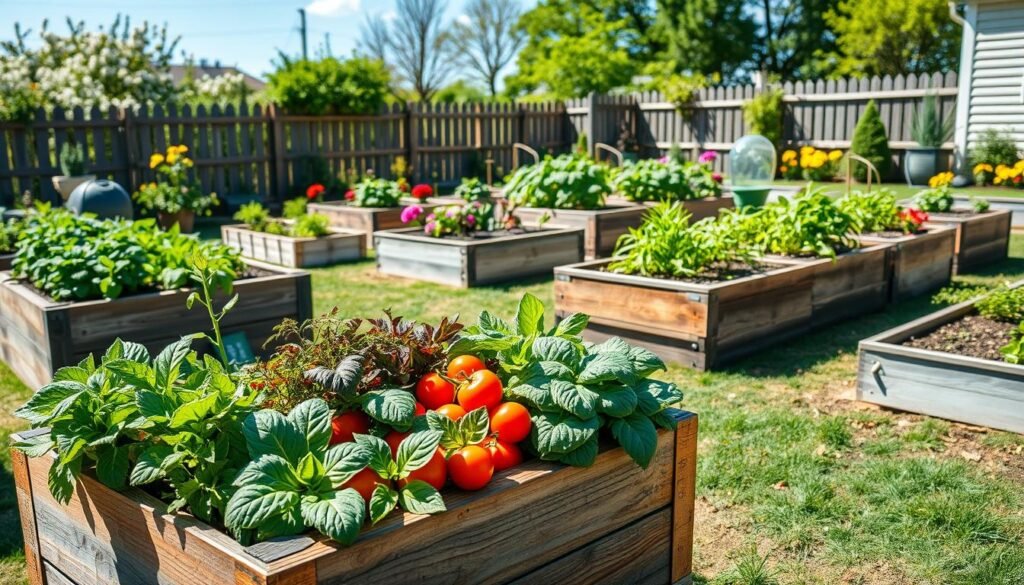
When planning your raised garden beds layout design landscaping ideas, think about how they fit with your lawn. Using shapes or levels can turn simple vegetable planter ideas into a stunning centerpiece. Here are some design tips for a neat look:
- Choose cedar or stone to match your home’s exterior for a unified backyard garden landscape.
- Have a front yard vegetable garden layout to make your home look better and give you fresh veggies.
- Vary the heights and widths of your raised bed kitchen garden to add interest.
- Put up vertical trellises in your vegetable garden design raised beds to make your garden feel taller.
The best backyard vegetable gardens are both beautiful and useful. By trying out different raised garden beds ideas layout, you can make a garden that’s both productive and eye-catching. Finding the right backyard inspo is the first step to creating a garden raised beds design you’ll love for years.
Planning Your Dream Vegetable Garden Layout
Starting a garden is all about planning. First, think about where the sun hits your yard. Most veggies love full sun, so pick a spot that gets lots of sunlight.
For beginners, keep things simple. Make sure you can reach all parts of your garden without stepping in the beds. This keeps the soil healthy and your plants happy. A small garden is a great place to start, helping you manage your space easily.
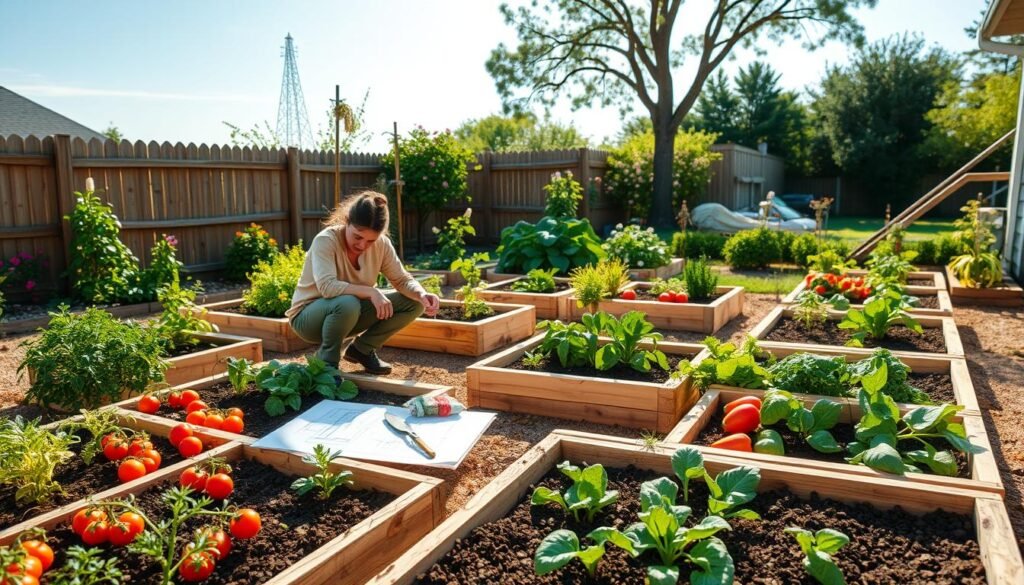
Here are some key steps for a successful garden:
- Plan your space with wide paths for easy walking.
- Group plants by how much water they need to make watering easier.
- Use a plan to see how different plants will fit together.
- Place trellises on the north side to support tall plants.
There are many ways to design your garden. You can choose a neat layout or something more free-form. Remember, start small, with beds that are about four feet wide.
Be ready to change your garden as you learn. Start small and grow your garden over time. With a good plan, you’ll have a beautiful garden that gives you fresh food all year.
Essential Maintenance Tips for Long-Lasting Beds
Keeping your vegetable patch in top shape is key to its longevity. Simple raised bed gardening tips can make a big difference. Regular care stops problems and keeps your garden looking great.
For raised garden beds maintenance, check the frames before planting. Tighten loose screws or boards to avoid collapse. This is critical in harsh weather or heavy rain.
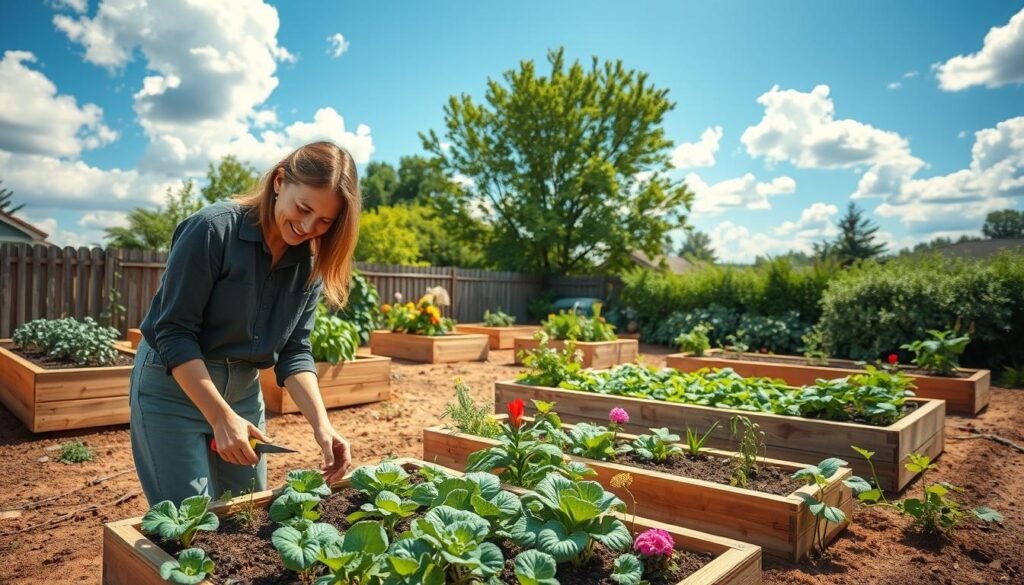
Soil health is vital for your garden beds vegetable crops. Plants use up nutrients, so add compost or fertilizer in spring. This boosts your garden’s productivity.
Organizing your garden sections makes crop rotation and soil care easier. Use a logbook or digital calendar for reminders. This saves time and reduces stress during the growing season.
If you have a cedar garden, you’re off to a good start. Cedar resists rot, but you can make it last longer. Here’s how:
- Remove dead plant debris to prevent pests.
- Use a natural wood sealer if the cedar looks dry or gray.
- Check corners for moisture or rot.
- Keep drainage holes clear to avoid water pooling.
Budget-Friendly DIY Raised Bed Construction
Building your own raised garden planters diy is a fun project that saves money. You don’t need a lot of cash to make a sturdy garden bed. Choose affordable, rot-resistant woods like cedar or pine to keep costs down and ensure your bed lasts long.
When planning your small vegetable garden layout, think about the space you have. Easy raised garden beds are often simple shapes, but you can get creative. A raised garden beds diy layout helps organize your crops better. If you want to use a corner, learning how to build an l-shaped raised garden bed can change your garden.
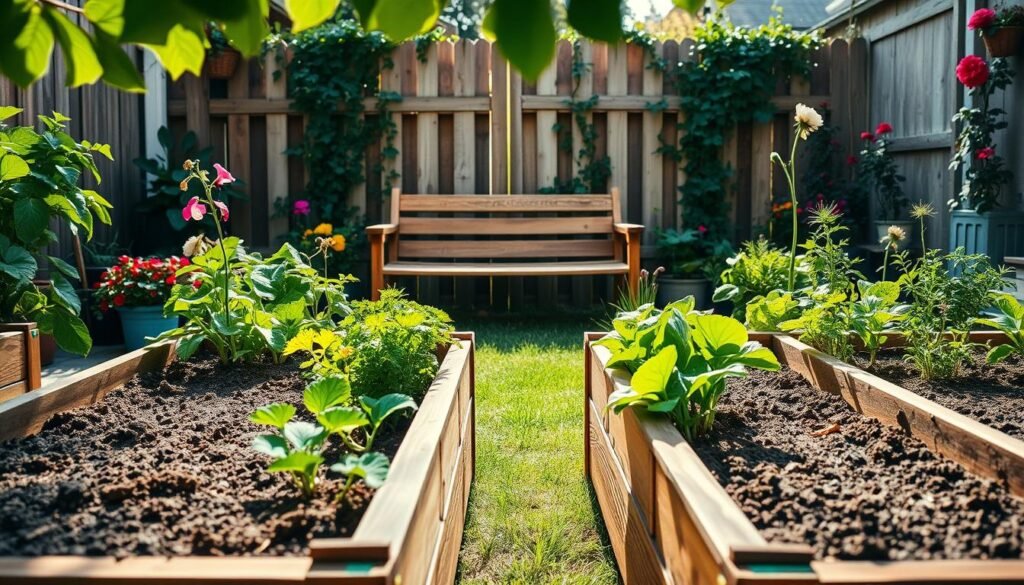
To build garden boxes, you just need basic tools like a drill, saw, and screws. These raised garden boxes diy projects are great for beginners. You can make diy garden beds raised to fit any area, making them perfect raised beds for small spaces.
Here are some easy tips for your vegetable garden diy project:
- Measure your space carefully before buying materials to avoid waste.
- Use corner posts for extra stability in your gardening boxes raised.
- Line the bottom with hardware cloth to keep pests out of your raised planters diy.
- Make sure the ground is level before placing your frames for good drainage.
Building your own structures lets you tailor the size to fit your needs. With a bit of effort, you can make a beautiful, productive garden that lasts many seasons. This shows that quality gardening is possible for everyone, no matter their budget.
Conclusion
Building your own planting space changes how you interact with nature every day. You now have the knowledge to create a thriving environment. This environment yields fresh vegetables and beautiful flowers with ease.
Applying these raised bed gardening tips helps you overcome common soil issues and physical strain. You can now enjoy watching your plants grow in a controlled, healthy space.
Your backyard is ready for a complete transformation. You have inspiration to start digging, building, and planting your favorite crops right now. A productive garden brings immense satisfaction to any home grower.
Take the first step toward your new project this weekend. Grab your tools and begin constructing the perfect setup for your lifestyle. Your journey toward a bountiful harvest starts with a single frame.