Are you longing for a creative escape? DIY projects can be just what you need to refresh your mind and surroundings.
Engaging in outdoor woodworking not only allows you to tap into your creativity but also provides an opportunity to connect with nature. Even beginner woodworking projects can be incredibly fulfilling.
By stepping outside and working with wood, you can experience a sense of calm and accomplishment. So, why not give it a try? Start with a simple project, and you’ll be surprised at how therapeutic it can be.
The Therapeutic Benefits of Outdoor Woodworking
Outdoor woodworking is a great way to escape daily stress. It combines nature and hands-on creation, improving mental health. It helps people disconnect from screens and connect with nature, leading to calm and well-being.

Woodworking outdoors can be calming, a healthy break from worries. The physical work in woodworking also helps with stress relief. Plus, finishing a project boosts self-esteem and confidence.
Outdoor woodworking offers many benefits:
- Reduced stress levels
- Improved mental health
- Increased creativity
- A sense of accomplishment
Adding easy wood crafts to your outdoor time brings more joy. You get to enjoy woodworking’s benefits while making something beautiful and useful.
Essential Tools and Materials for Beginner Woodworkers
Starting woodworking can be thrilling and a bit scary. But, having the right tools makes a big difference. As a beginner, knowing the basic tools and materials is key for various projects.
The essential tools for beginners include a tape measure, square, pencil, hammer, and basic hand saws. Power tools like a circular saw and drill are also important. They help make precise cuts and drive screws well.
- Tape measure
- Square
- Pencil
- Hammer
- Basic hand saws
- Circular saw
- Drill
For materials needed, beginners often start with pine or cedar wood. These woods are easy to find and affordable. They’re great for simple projects like garden planters or DIY garden decorations.

For backyard woodworking ideas, think about projects that are both useful and look good. With the right tools and materials, you can make beautiful pieces that improve your outdoor area.
Simple Garden Planters and Boxes
Want to make your garden look better? Try making simple planters and boxes. It’s great for beginners because it needs only a few tools and materials.
Materials and Measurements
You’ll need wood planks, a saw, a hammer, and nails. Measure and cut the wood for your planter size. Sizes are usually 12 inches wide and 6 inches deep.
Step-by-Step Assembly
Start by building the sides of the planter box. Use nails to hold the corners together. Next, add the bottom plank, making sure it’s strong. For more ideas, look at easy wood projects online.
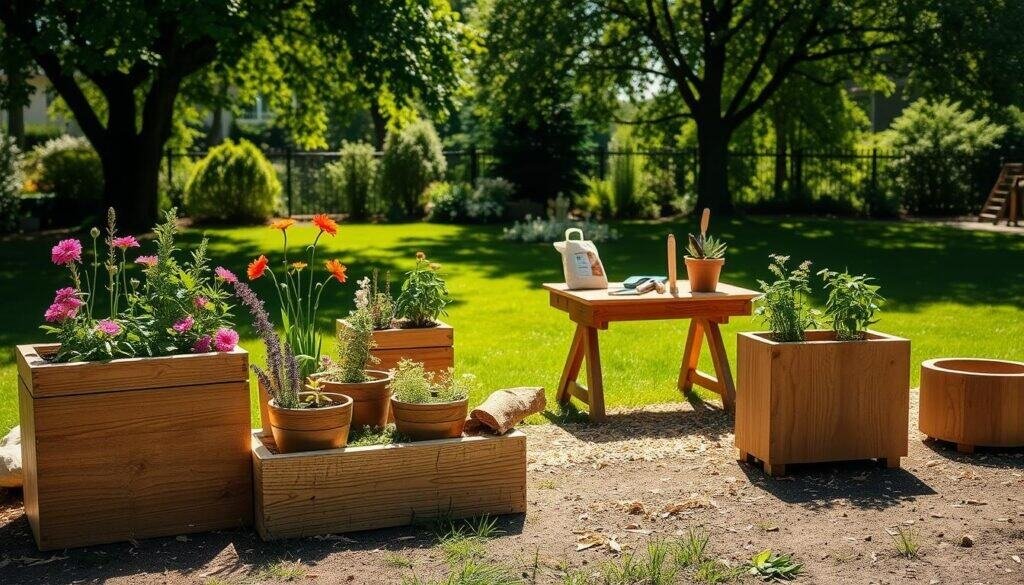
You can make your planters unique by adding a trellis or painting them bright colors. This way, they’ll fit right in with your garden’s look.
Construction Tips
Use weather-resistant wood to make them last longer. Seal any gaps with waterproof glue. Also, check your planters often and fix any damage quickly.
By following these steps, you can make beautiful and useful garden planters and boxes. They’ll make your outdoor space even better. For more diy garden decor ideas, check out other simple wood projects.
Feeling a Bit Stuck Indoors? Step Outside and Create Something Simple With Wood
Feeling stuck inside? A simple wood project can help you get outside and create. Working with wood is calming and fulfilling. Plus, there are many beginner-friendly projects to try.
Wooden Plant Markers
Creating wooden plant markers is a great idea. You can use small wood pieces and add personal touches with paint or engravings. They make your garden look special.
Simple Bird Feeder
Building a simple bird feeder is also fun. You’ll need wood, nails, and some creativity. It’s a lovely way to watch birds from home.
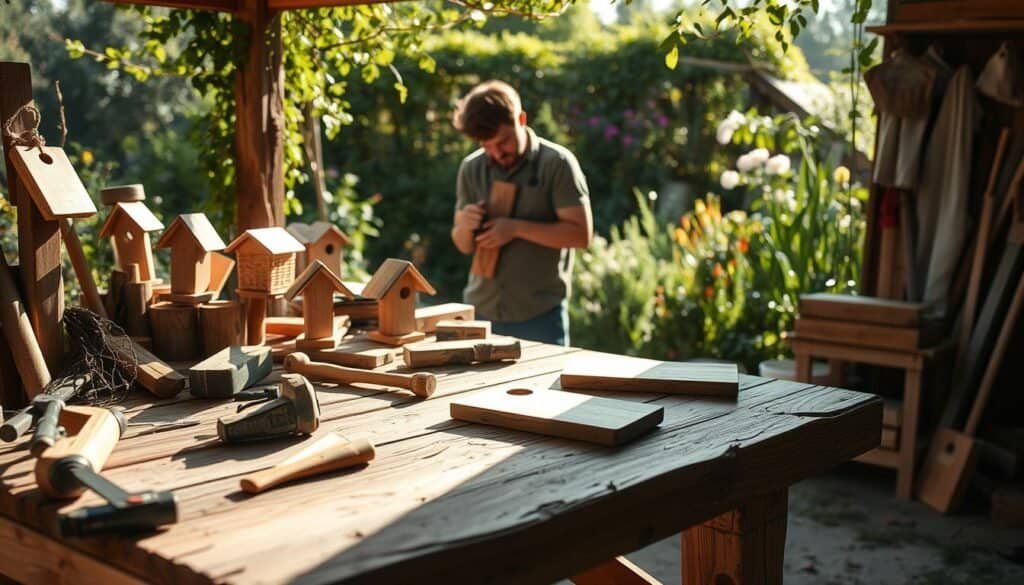
When working with kids or teaching beginners, safety is key. Make sure everyone wears protective gear and follows safety rules. This makes the experience fun and safe for all.
Safety Tips for All Ages
Wear safety glasses and keep loose clothes tied back. Avoid jewelry that could get caught in tools. Always supervise children and teach them how to use tools safely.
Projects That Build Skills
Start with easy projects like bird feeders or plant markers. As you get better, try more challenging skill-building projects. You might build a small table or bench next.
For more DIY ideas, check out this resource.
Pallet Transformation Projects
Pallet transformation projects are a fun way for DIY fans to improve their outdoor spaces. You can turn old pallets into useful and pretty items for your garden or workshop.
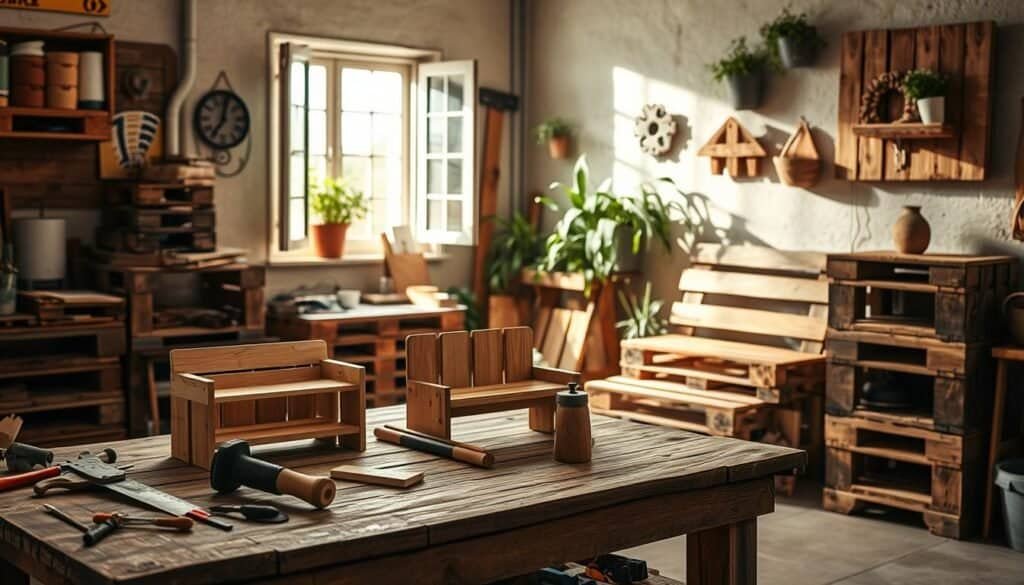
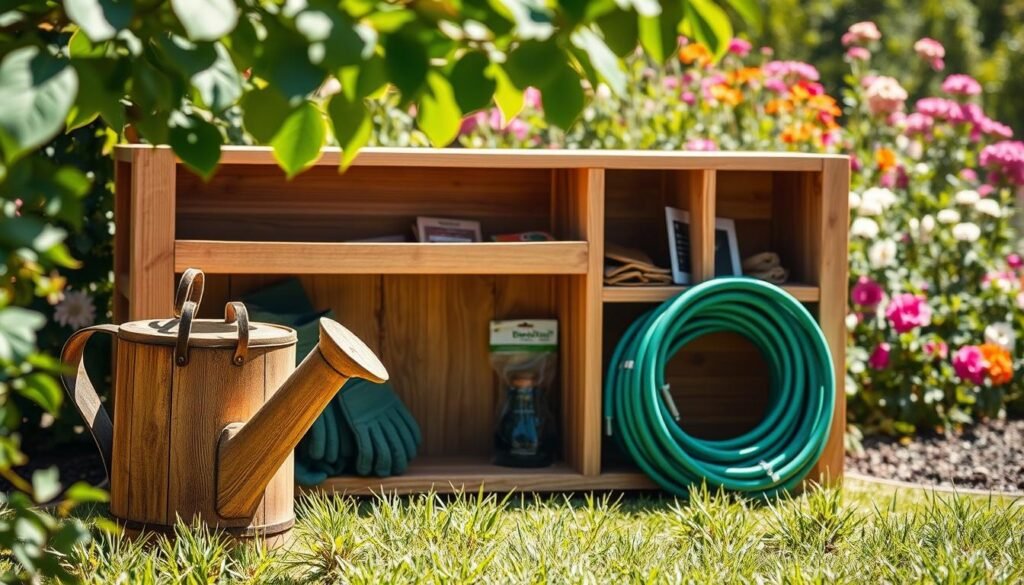
Building a tool organization rack is a great project for keeping your workshop neat. You can make a rack with different sections to hold all your tools, making them easy to find.
Potting Station
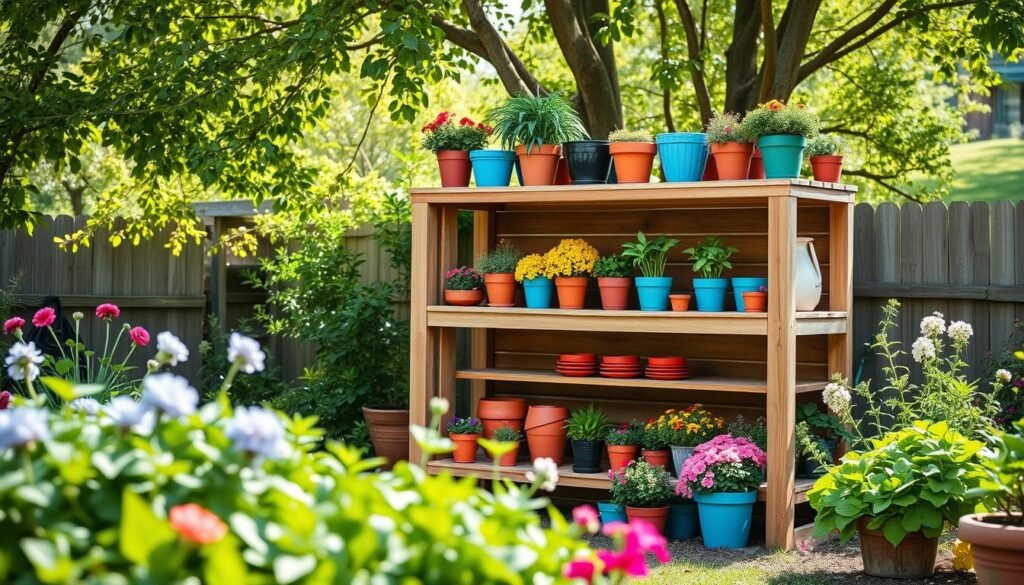
A pallet potting station is ideal for garden lovers. It gives you a special place for planting, storing gardening tools, and organizing supplies.
Preparing Pallet Wood
Before you start, you need to get the pallet wood ready. This means cleaning it, taking out any nails, and sanding it smooth.
Assembly Instructions
To put your pallet project together, first cut the wood into the right sizes. Then, use a hammer and nails to build it. For a tool rack, use a simple frame with compartments. For a potting station, add a work surface on top and storage bins below.
Some important tips for making your pallet project a success include:
- Plan your project well before you start.
- Always wear the right safety gear when using power tools.
- Be creative with your design to make it both useful and nice to look at.
By following these steps and tips, you can make beautiful and useful items from pallets. They will make your outdoor and workshop areas better.
Whimsical Garden Decorations
Make your garden a magical place with whimsical wooden designs. These designs can show off your personality and style. Your outdoor space will become a perfect spot for both relaxation and fun.
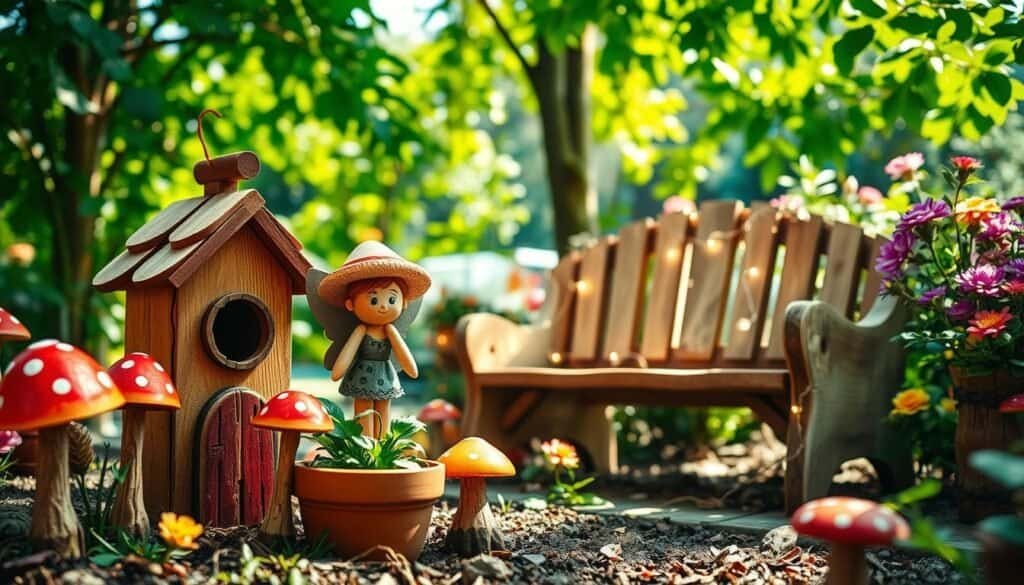
Make your garden decorations truly yours with unique designs. Add your name, a special message, or a symbol that means something to you. For more ideas, check out The Sawdust Man for inspiration.
Weather-Proofing Techniques
To keep your decorations safe from the weather, use weather-proofing techniques. Apply a waterproof sealant or varnish to protect them from rain and sun. This will help them last longer and stay beautiful.
Finding the Right Stump
Finding the right stump is the first step for garden stump decor. Look for stumps with interesting shapes or textures. Think about the size and where it will go to fit your garden well.
Carving and Decorating
After finding your stump, it’s time to get creative. Use tools and techniques to carve designs into the wood. You can also add paint, metalwork, or other decorations to make it stand out.
By adding these touches, you can make your garden whimsical and welcoming. It will show off your creativity and personal style.
Functional Outdoor Furniture
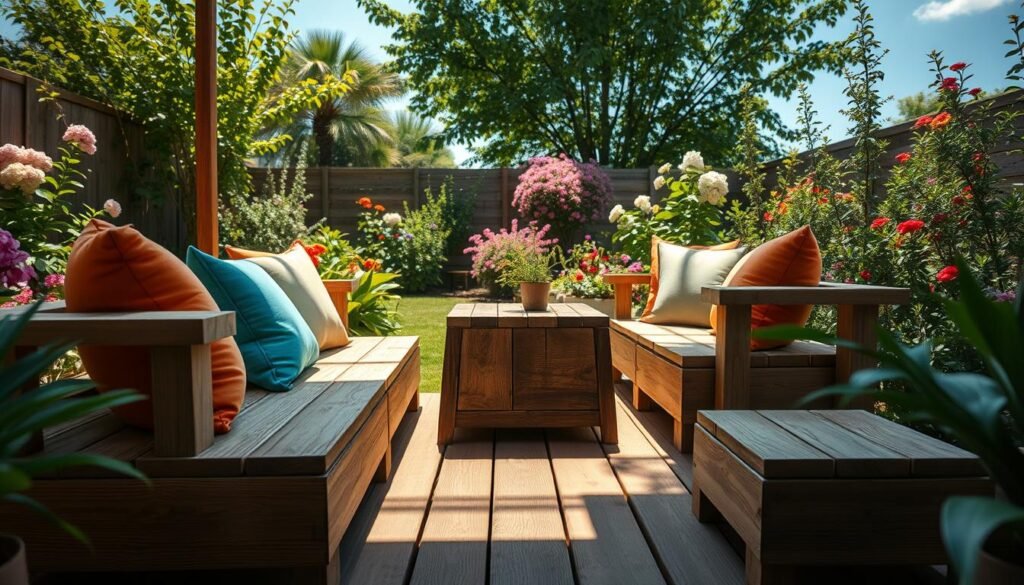
Creating functional outdoor furniture can make your garden look and feel better. With a few simple projects, you can make your outdoor space more inviting and comfy.
Outdoor furniture is more than just pretty. It’s about making a space that everyone can enjoy. Whether it’s a wooden bench or a dining table, picking the right materials and techniques is key.
Materials List
For a basic outdoor furniture project, you’ll need materials that can handle the weather. This includes:
- Weather-resistant wood like cedar or teak
- Waterproof screws and bolts
- Weather-resistant finishes
Picking the right wood is important for your furniture’s life span.
Construction Process
The construction process has several steps, from designing to finishing. Start with a detailed plan, including measurements and a materials list. Then, cut your wood and assemble it using waterproof screws and bolts.
Building and finishing techniques are key for your furniture’s durability and look. Make sure all joints are tight, and apply a weather-resistant finish to protect the wood.
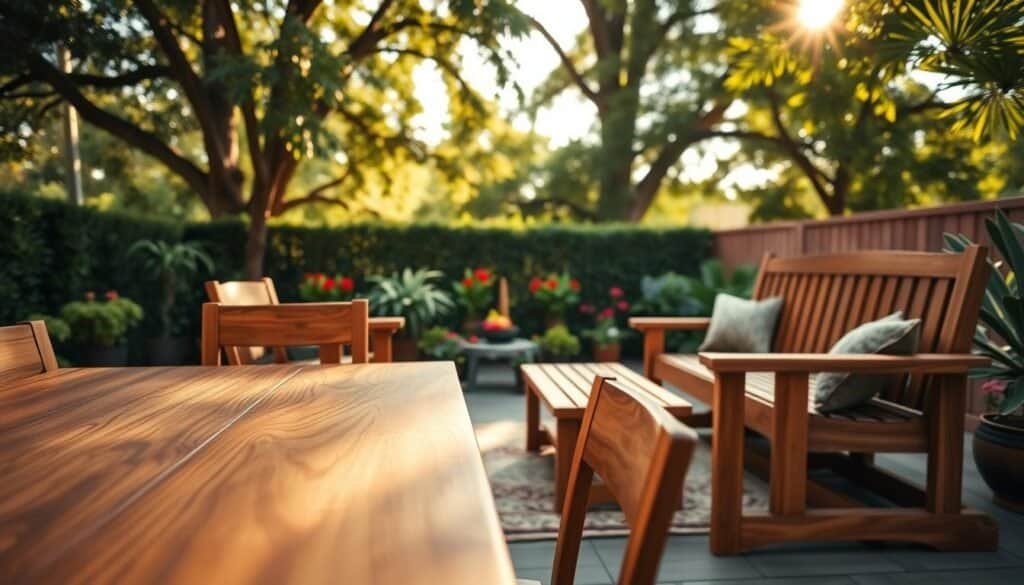
Finding the right materials is vital for your project. Look for weather-resistant wood and durable hardware at your local hardware store or online.
Building and Finishing
With your materials ready, you can start building. Follow your plan closely, and be ready to make changes if needed. Finishing techniques, like applying a sealant or stain, will protect your furniture and make it look great.
By following these steps and using the right materials, you can make beautiful and functional outdoor furniture that will last for years.
Kid-Friendly Woodworking Projects
Introducing kids to woodworking is rewarding. It boosts their creativity and practical skills. Woodworking lets children explore their imagination and improve their fine motor skills.
Musical Fence Posts
Making musical fence posts is a fun project. Kids can design and decorate the posts. These posts can play different notes, making the garden or backyard musical.
Textured Exploration Path
A textured exploration path is a great project for kids. Using different woods and textures, they can make a path that encourages exploration and interaction with nature.
Age-Appropriate Tasks
It’s important to give kids tasks that fit their age. Younger kids can sand or paint, while older kids can measure and cut wood.
Decorating and Installing
After finishing the projects, kids can decorate and install them. They can paint, add decorative nails, or arrange the pieces in the garden or yard. Encouraging kids to take ownership of their projects makes it more rewarding.
Some key benefits of kid-friendly woodworking projects include:
- Developing fine motor skills through sanding and cutting
- Enhancing creativity through design and decoration
- Learning about measurements and geometry

By doing these projects, kids learn new skills and create something they can be proud of. It’s a great way to spend quality time together as a family, making memories that last a lifetime.
Combining Wood with Other Materials
Mixing wood with materials like rock and stone can turn your garden into a peaceful oasis. By blending different textures, you can make outdoor features that are both unique and useful.

One easy way to mix wood and other materials is by making rock-bordered planter boxes. Build the box with wooden planks and surround it with rocks or pebbles for a nice contrast.
Stone and Wood Garden Path
A path made from stone and wood can add elegance to your outdoor area. Alternate wooden planks with stone slabs to make a path that’s both unique and welcoming.
Modern Design Ideas
For a modern look, try mixing wood with metal or glass. Here are some ideas:
- Use metal wire mesh for a modern planter box
- Add glass tiles to your wooden garden bench
- Make a wooden trellis with metal accents
Assembly Techniques
When mixing wood with other materials, use the right assembly methods. Use weather-resistant screws and adhesives to make sure your outdoor features last.
By trying out different materials and techniques, you can create a unique outdoor space that shows off your style.
Budget-Friendly Garden Makeovers with Wood
Turning your garden into a beautiful space doesn’t have to cost a lot. A few wooden projects can make a big difference. With creativity and basic woodworking skills, you can get a stunning garden makeover without spending much.
Prioritizing High-Impact Projects
When your budget is tight, focus on projects that make a big impact. Think about making a wooden planter or a simple bench. These can add beauty and function to your garden without spending a lot.
- Identify the areas of your garden that need the most attention.
- Choose projects that are feasible with your skill level and budget.
- Start with small, manageable projects that can make a big difference.
Sourcing Free or Low-Cost Materials
Getting materials for a budget-friendly garden makeover is key. Look for these options:
- Reclaimed wood from old pallets or fencing.
- Discounted or clearance lumber from local hardware stores.
- Wood scraps from previous projects or DIY endeavors.
From Old Furniture to Garden Art
Repurposing old furniture adds unique touches to your garden. An old ladder can become a vertical planter, or a wooden chair can turn into a garden seat. For more ideas, check out The Sawdust Man for inspiration.
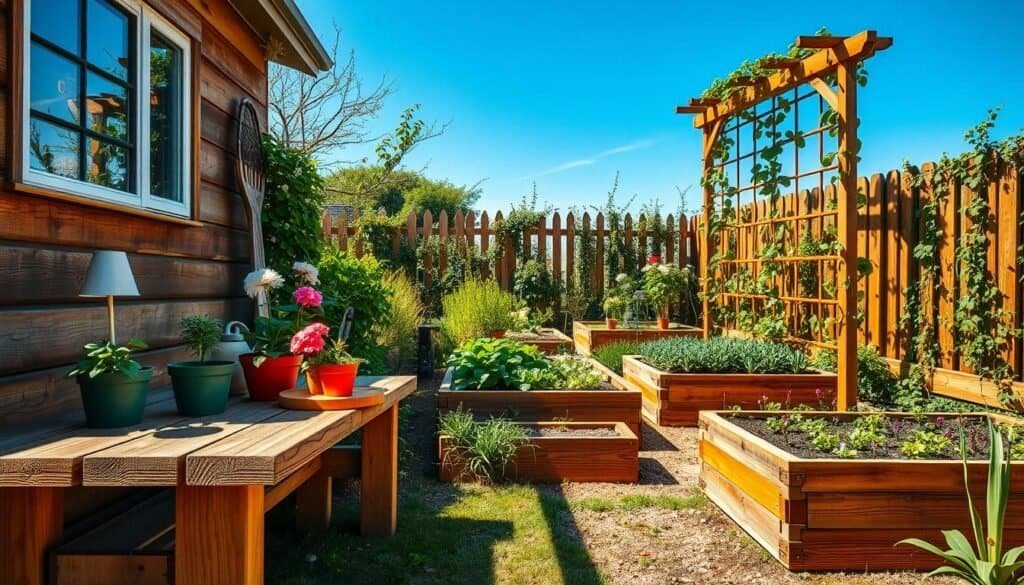
Be creative with repurposing materials for your garden makeover. Here are a few ideas to get you started:
- Use old wooden crates as planters or storage containers.
- Transform an old wooden door into a garden bench or table.
- Create a garden border using reclaimed wood.
Conclusion: Embracing Creativity Outdoors
Outdoor woodworking and gardening projects are full of creative chances. They let people enjoy the calm of nature and the joy of making things. Working with wood and plants outdoors is good for the soul.
Projects like making garden planters and outdoor furniture make spaces look better. They also make you feel proud of what you’ve done. No matter if you’re experienced or just starting, you can always find new ideas.
So, go outside and let the fresh air spark your next project. With a bit of creativity and some simple tools, you can make your outdoor area special. Enjoy the fun and benefits of being creative outside.