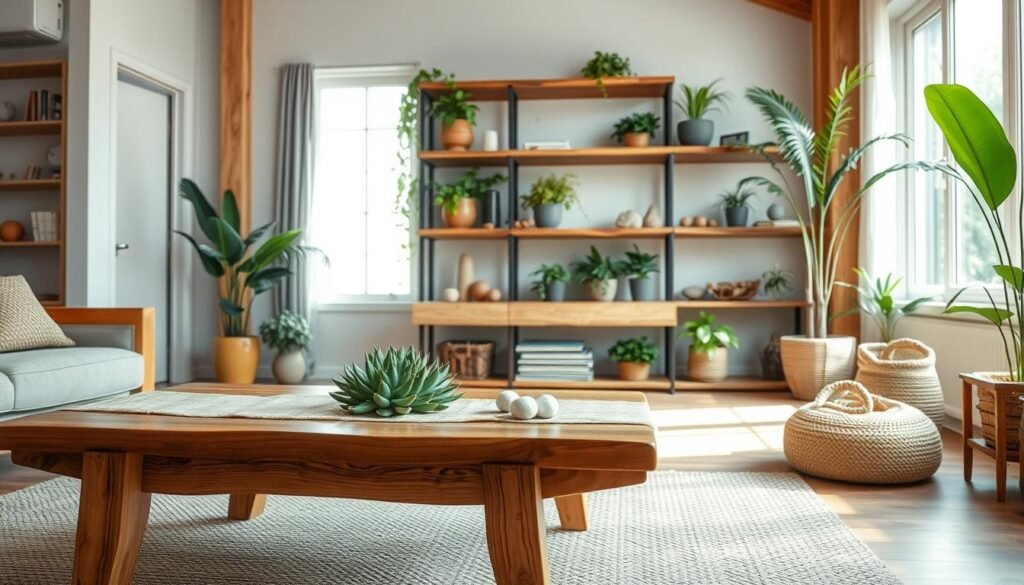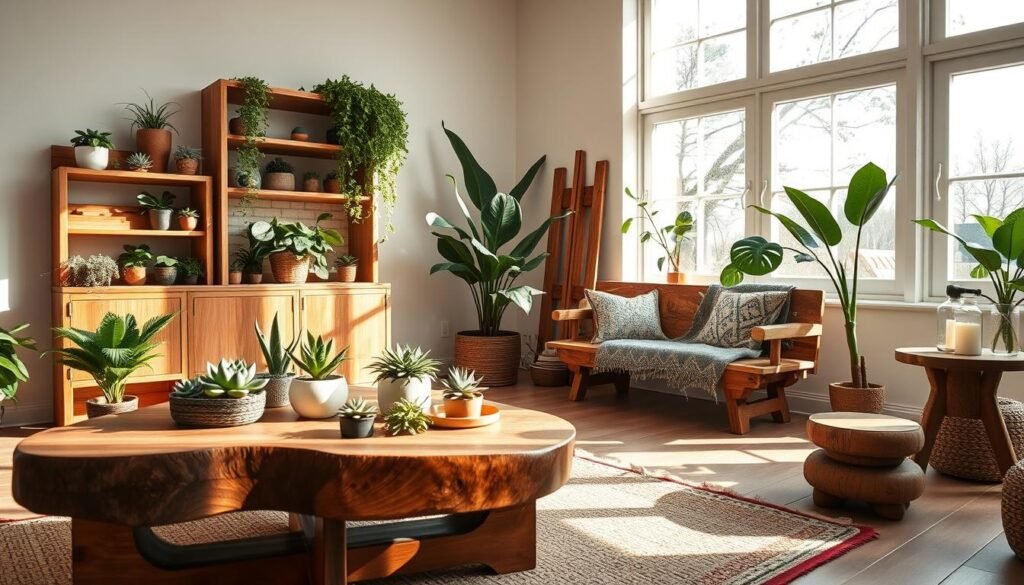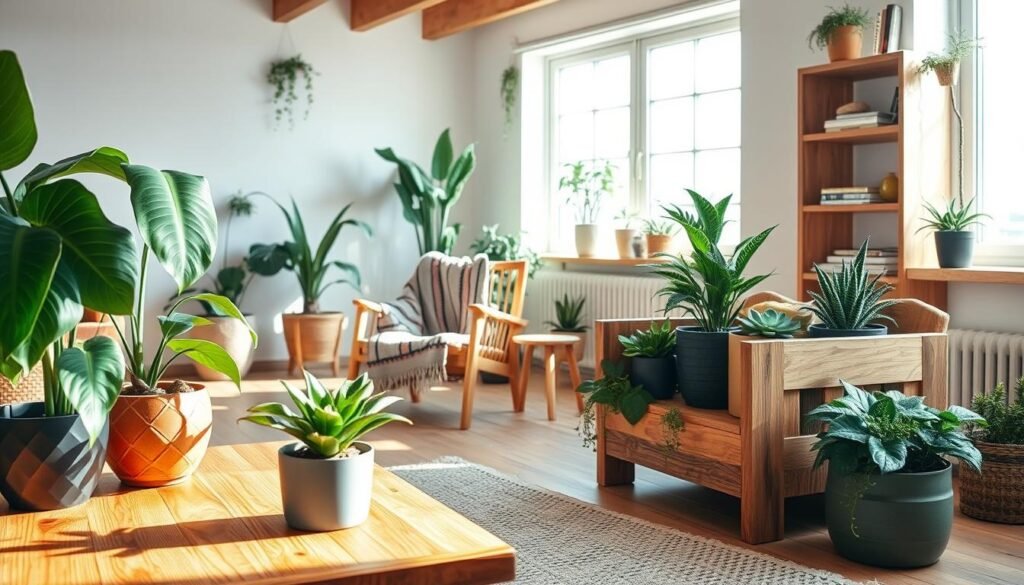
A stagnant living area can really affect your well-being. Cluttered or stagnant places make us feel uninspired and disconnected. Revitalizing your living space can be as easy as adding some greenery to your home.
Plants can make spaces that feel paused or unfinished feel more welcoming. Adding plants to your decor can make your home more inviting. This simple step can be a powerful space transformation tip, refreshing your home and improving its energy.
Using feng shui for stagnant rooms and decluttering for good energy can also boost your home’s ambiance. This approach can make your living space more balanced and harmonious.
The Silent Struggle of Stagnant Living Spaces
A stagnant living space isn’t just ugly; it can harm our well-being. When our homes feel stuck, it might mean our living space is affecting our health.
Stagnant spaces can make us feel overwhelmed and stressed, try adding a few plants to liven things up a little. The idea of energy flow, or “chi,” in homes says our space layout affects our health. Cluttered homes can block this flow, making us feel stuck.
- Rearrange your furniture to create a more flowing layout, making it easier to move around.
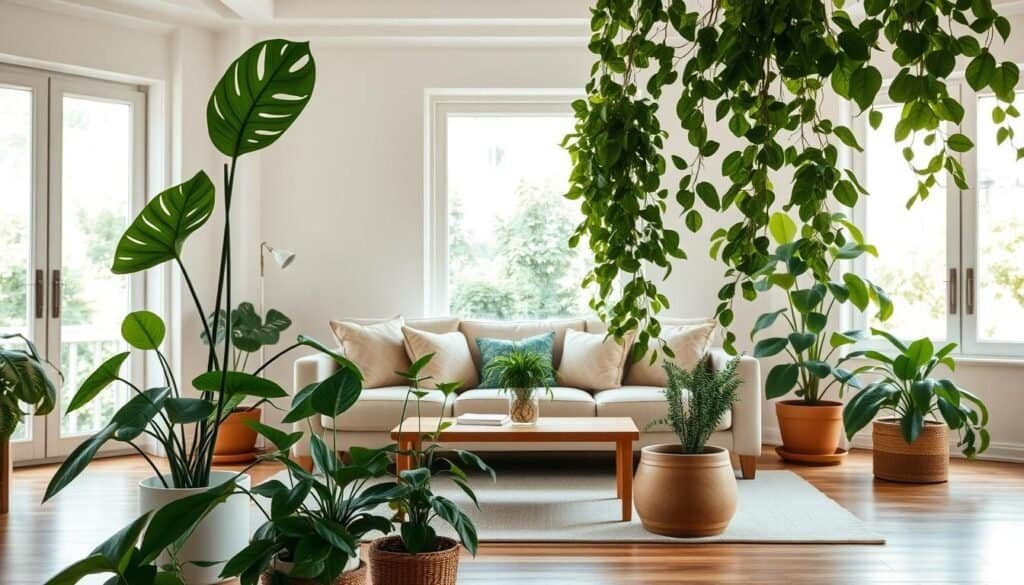
- Add indoor plants design to clean the air and beautify your space.
- Try stuck energy release methods, like decluttering and organizing your living areas.
In smaller spaces, small living room decor can really help. Simple changes, like using mirrors or multi-functional furniture, can create flow at home. This makes your space feel bigger and more welcoming.
By tackling stagnant living spaces and using stuck space solutions, we can enhance our life quality. We can make our homes more harmonious and inviting.
When Your Space Feels Stuck: Breaking Through the Design Rut
Feeling stuck in your design? Adding plants can change everything. They bring nature indoors and make your space look better.
Plants are good for your health too. They make your living room not just look good but also healthier. Adding greenery to your space is a smart choice for your health.
The Science of Biophilia and Human Well-being
The idea of loving nature, or biophilia, is old but new in design. It shows that plants can make us feel better. They can lower stress, improve mood, and even help us work better.
Science supports the benefits of biophilia. Being near nature is good for us. This can be as simple as having plants at home. It makes our living spaces better and healthier.
Start by picking plants that are easy to care for and match your style. You can choose from many plants, like succulents or big fiddle leaf figs. The goal is to find plants that look good with your decor and make your space better.
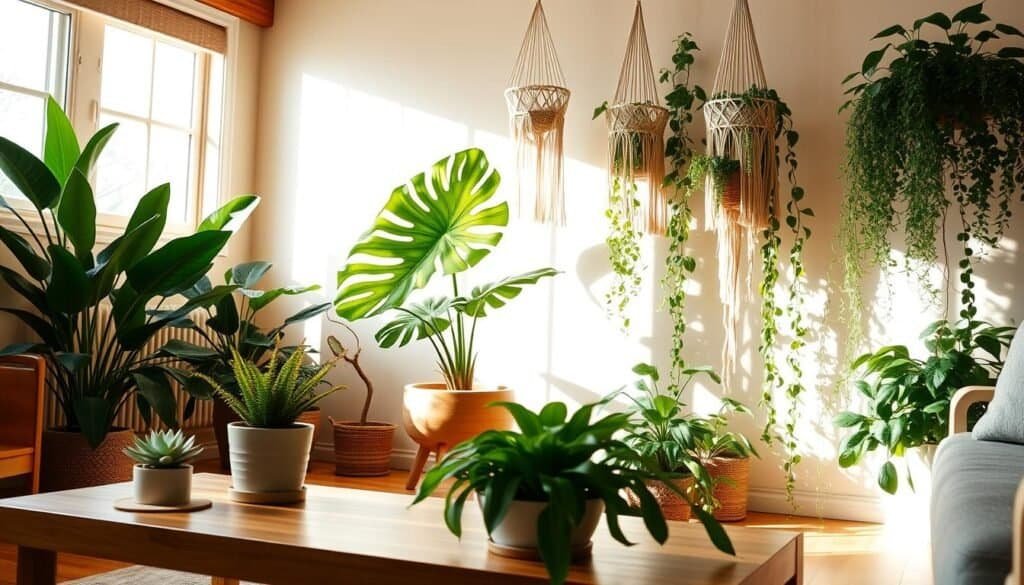
Using plants in your design is more than just decorating. It’s about creating a peaceful and healthy space. Plants can make any room, from cozy to minimalist, feel fresh and welcoming.
5 Powerful Ways Plants Can Transform Your Stuck Space
Feeling stuck in your design? Plants can help bring new life to your space. With the right plants and creativity, you can turn a dull area into a lively oasis.
Best Locations and Plant Varieties for Maximum Impact
Choosing the right spot for your plants is key. Place them where they get lots of natural light, like near windows. For darker spots, choose plants like Chinese Evergreen or Pothos.
For a big impact, use tall plants like Dracaena or Philodendron in corners. Mixing different plant sizes and textures adds interest. Grouping plants together makes a lush display.
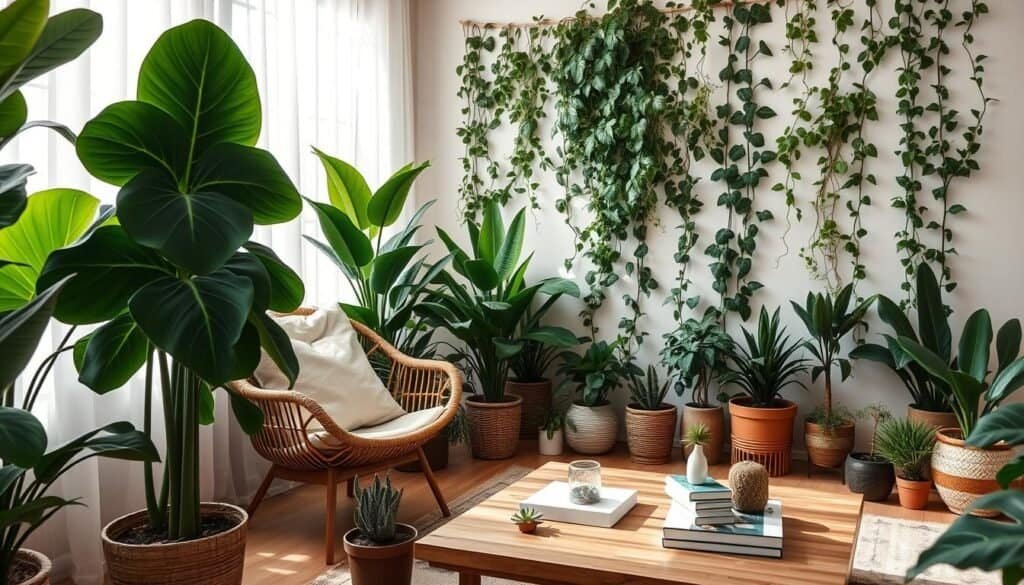
Try making a DIY macramé hanger for a bohemian look. You’ll need cotton rope, wooden dowels, and basic knots. Start by folding the rope and tying a knot at the top. Then, follow a macramé pattern down the rope. For more ideas, check out The Sawdust Man.
Make sure your macramé hanger is strong enough to hold the plant’s weight. Attach it to a sturdy beam or hook.
Styling Small Plants on Coffee Tables, Shelves, and Desks
Small plants can brighten any room without taking up too much space. Use them in small pots on coffee tables, shelves, or desks. Succulents, cacti, and mini herb gardens are great choices.
- Succulents are easy to care for and come in many shapes and sizes.
- Cacti add a unique texture and love bright, sunny spots.
- Mini herb gardens are perfect for kitchens and give you fresh herbs.
Creating Living Curtains with Trailing Varieties
Trailing plants like Pothos or English Ivy make great living curtains. Train the vines to cascade down windows or room dividers. This adds greenery and purifies the air.
For a unique look, mix different trailing plants. This creates a stunning display.
Principles of Plant Grouping for Visual Interest
Grouping plants adds depth and interest to your space. Follow these tips:
- Vary plant heights and sizes for a layered look.
- Mix textures and colors for visual appeal.
- Group plants based on their growth habits.
By following these principles, you can create a beautiful deco floral display. It will enhance your living area.
Adding plants to your decor is a simple way to refresh your space. With these tips, you can turn your home into a vibrant oasis.
Room-by-Room Plant Strategies for Revitalization
To give your living space a fresh look, try a room-by-room approach to plant decor. Each room has its own purpose and feel. The right plants can make these spaces even better.
In the living room, pick plants that are both pretty and low-maintenance. Living room plants like snake plants or spider plants work well. They do well in various light and need little care. Place them on a house plant stand for a nice touch.
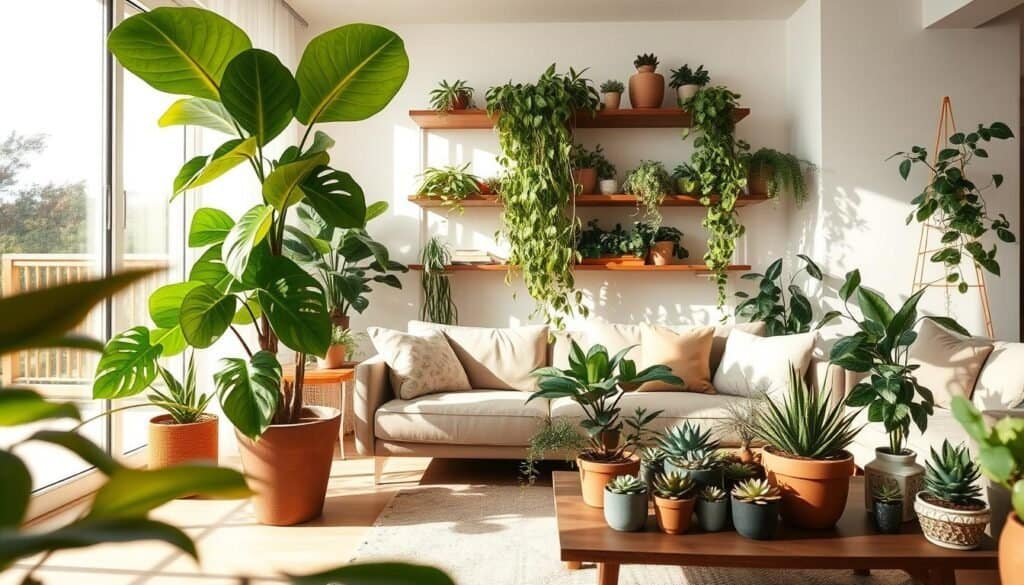
In the kitchen, herbs are a smart choice. They’re good for cooking and add a green touch to your home living room or kitchen. Basil, rosemary, and thyme are favorites that love sunlight.
In bedrooms, go for plants that help you relax and clean the air. Lavender and peace lilies are great for a calm vibe. For flowers for home decor, pick seasonal ones to keep things fresh.
A warm wood accent can also enhance your plants’ look. This design shows how natural elements can refresh your space.
By choosing the right plant decor for each room, you make your decor home living room more welcoming. Your whole home will feel more harmonious and inviting.
Choosing the Right Plants for Your Space and Lifestyle
Finding the perfect plants for your space starts with knowing your environment and needs. Assessing your space’s lighting conditions is key. Different plants need different amounts of light. For example, bright rooms are great for succulents, while low-light areas suit plants like Chinese Evergreen or Pothos.
When thinking about indoor garden decor ideas, mix beauty with function. Try adding greenery with soft wood for a calming feel. For a farmhouse look, add rustic touches and lots of plants.
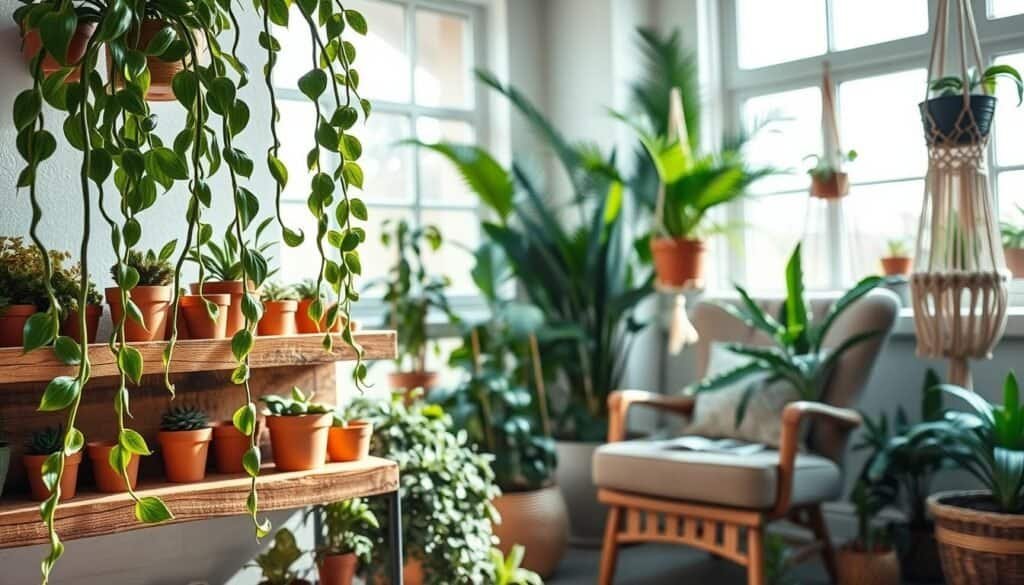
Plant organization ideas help keep your space clean and pretty. Use shelves, hanging baskets, or stands to organize your plants. In a home office, choose small plants like Snake Plants or ZZ Plants that need little care and fit small spaces.
If you’re always on the go, pick low-maintenance plants. Spider Plants or Peace Lilies are both beautiful and easy to care for. Think about your plants organization outdoor space too, for a smooth indoor-outdoor transition.
In summary, picking the right plants means thinking about your lifestyle, your space’s conditions, and what you like. This way, you can make a beautiful and lively indoor garden that improves your home or office.
Creative Display Ideas That Elevate Your Plant Decor
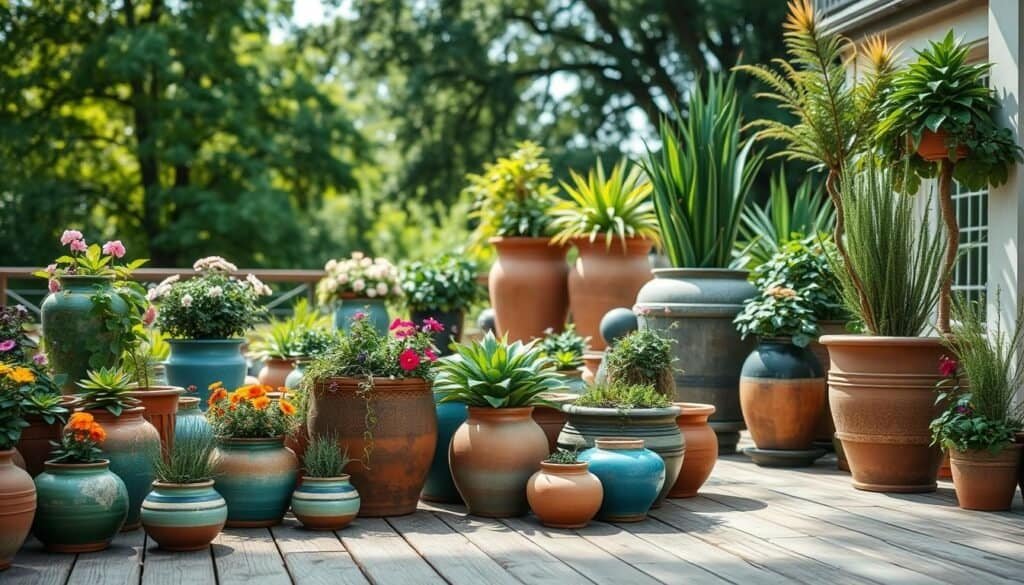
Creative plant display ideas can make your home or garden look new. Choosing the right pots and planters is a simple way to improve your plant decor. Outdoor pots and planters come in many materials, like terracotta and metal, each with its own look.
When picking outside plants in pots, think about the pot’s size and material. Big pots can stand out, while small ones can be grouped for a full look. Pick pots that match your plants’ colors and textures for a unified look.
- Hang planters near windows or from ceilings to save space.
- Use tiered plant stands for a layered look.
- Group plants of different textures and heights for interest.
- Add decorations like pebbles or moss to your planters.
For outdoor plant ideas, pick planters that can handle the weather. Materials like recycled plastic or durable ceramics work well. You can also decorate your pots with paint or decoupage for a personal touch.
Try using old boots, wooden crates, or vintage containers as planters. The most important thing is to have fun and be creative.
By using these creative ideas, you can make your plants a beautiful centerpiece in your home or garden. This will enhance the beauty and feel of your space.
Seasonal Refresh: Maintaining Plant Vitality Year-Round
To keep your home thriving all year, it’s key to refresh and care for your plants seasonally. You need to know what your plants need at different times and adjust your care plan.
Spring Refresh: When winter ends, your plants need a boost to start growing. Start by repotting plants that have grown too big and refresh the soil with a balanced fertilizer. For potted flowers for patio areas, add colorful annuals like petunias or geraniums to brighten up your garden decor.
- Prune dead or damaged branches to encourage new growth.
- Increase watering as temperatures rise and plants become more active.
- Consider rearranging your patio potted plant ideas to take advantage of spring sunlight.
Summer Care: In the hot summer, make sure your plants get enough water but don’t overdo it. Use garden planters with good drainage to prevent root rot. For patio plants in pots, provide shade during the hottest part of the day to prevent scorching.
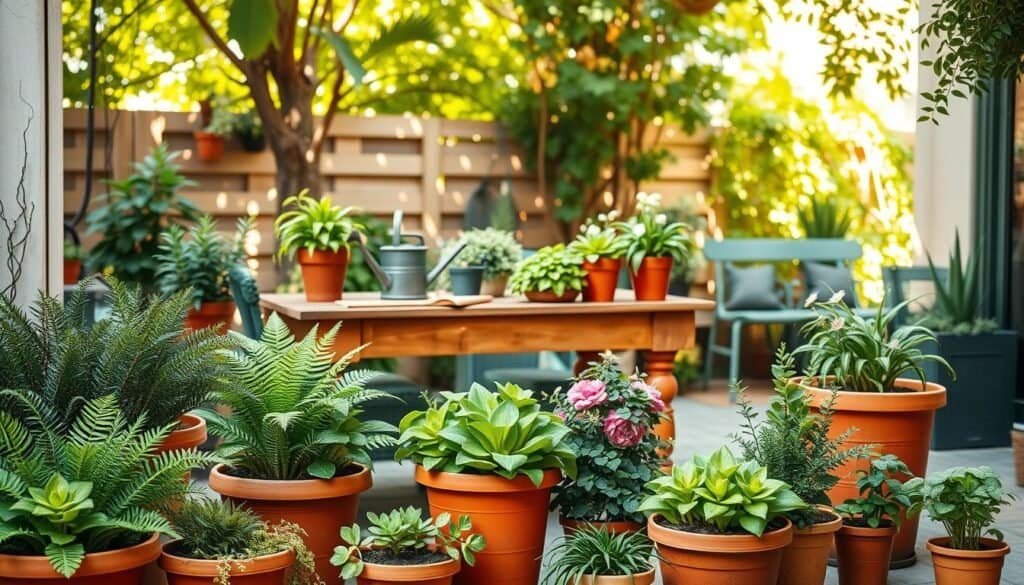
Autumn Adjustments: As the weather cools, cut back on watering and fertilizing. Prune perennials back to prepare them for winter. Add garden decor elements like fall-themed planters or outdoor decor to reflect the seasonal change.
Winter Protection: Protect your plants from harsh winter conditions by moving sensitive species indoors or to a sheltered area. Use mulch or covers to insulate roots and protect from frost.
By following these seasonal tips, you can keep your plants healthy and your living space vibrant all year. Regular care and attention to your plants’ changing needs will ensure they continue to enhance your home’s beauty and atmosphere.
Extending the Green Touch to Outdoor Living Areas
Outdoor living areas can greatly benefit from plants. They enhance both looks and feel. Just like indoor plants, outdoor ones can turn patios, decks, and gardens into cozy spots.
When picking plants for outside, think about your local weather and your area’s conditions. Mix flowering plants like petunias with green ones like ferns. This mix adds beauty and makes your outdoor space lively.
Container Gardening Tips:
- Choose containers that match your outdoor style and have good drainage.
- Use a mix of plants with different textures and heights to add depth.
- Consider the mature size of plants when selecting them for containers.
For outdoor spaces, pick plants that do well indoors and outdoors, like snake plants. For a lasting touch, try plants like azaleas or rhododendrons for their blooms.
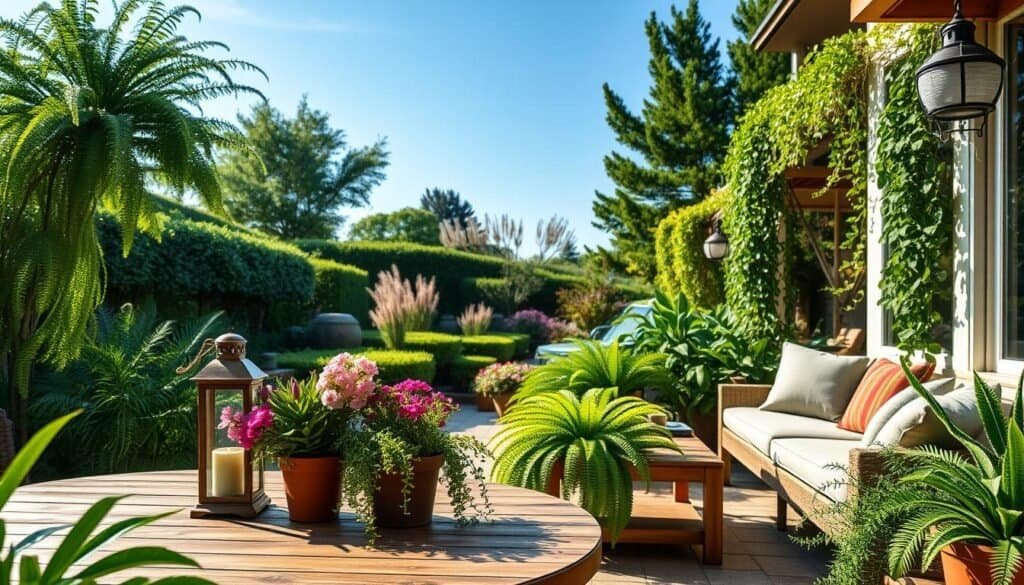
Try plant ideas like tiered planters or hanging baskets to use space well. For gardening pots, choose terracotta or wood to blend with nature.
By adding plants to your outdoor areas, you make a space that feels welcoming. It connects your indoors with the outdoors, making your home feel more complete.
Conclusion: Breathing New Life Into Your Home with Nature’s Touch
Adding plants to your home can change everything. It brings life to dull spots and makes your home lively. You can use indoor potted plants to brighten up your indoors or add plants outside to connect your home with nature.
Think about adding plants outside to link your indoor and outdoor spaces. For tall areas, plants in tall pots can make a big impact. Also, choose plants that do well next to your patio to make your garden pop.
Using these tips, you can make your home feel new and full of life. So, start exploring plants and see how they can change your space.