
The natural beauty of wood grain can be elevated with the right finishing techniques. By applying the right methods, you can bring out the unique texture and pattern of the wood.
With the right techniques, you can enhance the natural beauty of the wood grain, creating a stunning finish.
The Beauty of Natural Wood Grain
Every piece of wood tells a story through its grain. It’s a tale of nature’s artistry. The natural wood grain is more than a pattern; it’s what makes each wooden piece unique.
Wood’s beauty comes from its varied grain patterns and textures. Oak has fine, straight grains, while walnut has coarse, irregular ones. Each wood type has its own look. Features like knots, swirls, and waves make every piece special.

For craftsmen and designers, understanding wood’s beauty is key. By showing off the natural grain, they make pieces that are both useful and beautiful. Whether it’s a simple oil finish or a complex stain, highlighting the grain is essential for stunning woodwork.
The charm of natural wood grain is its ability to warm up any space. It’s a favorite in interior design and woodworking for adding character.
Essential Preparation Before Applying Finishes
The secret to a beautiful wood finish is in the preparation of the surface. Before you start applying finishes, make sure the wood is ready. This means sanding and smoothing it for a top-notch finish.
Sanding is a key step. It gets rid of scratches and dents, leaving the surface smooth. Use coarse-grit sandpaper first, then move to finer grits for the best look. For tips on improving your DIY projects, check out this resource.
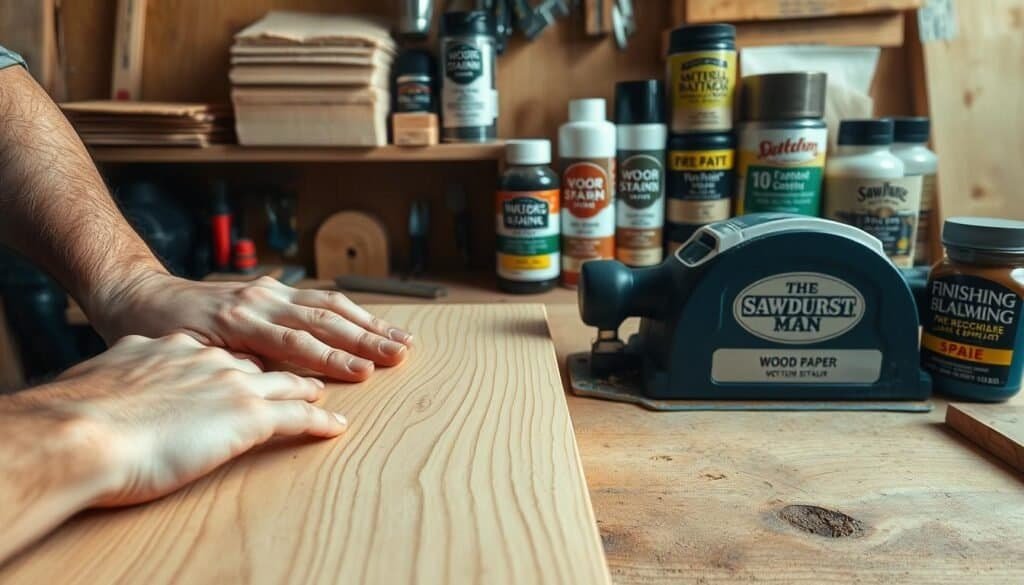
Smoothing the surface is also important. You can do this by hand or with a sanding block. The aim is to have a surface that’s even and perfect, so the finish looks great and shows off the wood grain.
By focusing on preparation and using the right finishing techniques, you can make your woodwork look amazing. Whether it’s furniture or a decorative item, spending time on surface preparation will make a big difference in the final look.
Technique 1 – Oil Finishes
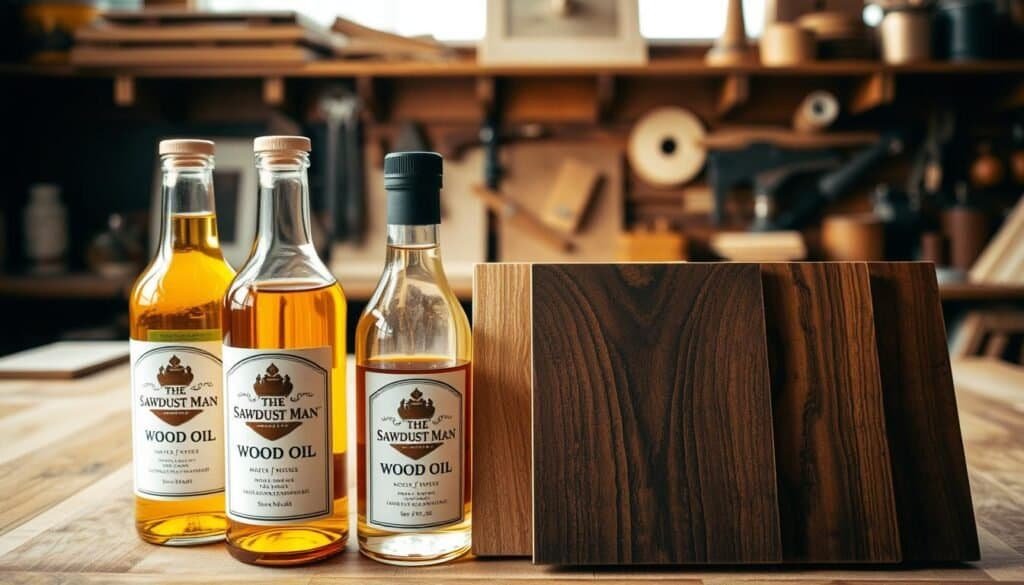
Oil finishes are a top choice for highlighting wood’s beauty. They penetrate deep into the wood, making the grain stand out. This technique is loved for its ability to enhance wood without hiding it.
Enhancing Wood Grain: Oil finishes are great at making wood’s natural patterns pop. They add warmth and richness, making the wood look even more beautiful.
Benefits of Oil Finishes
Oil finishes have many advantages:
- They are easy to apply and don’t need much equipment.
- You can apply them again if you want to change the look.
- They create a strong finish that lasts a long time.
- There are different types, like tung oil and linseed oil, each with its own special qualities.
For more woodworking tips, check out The Sawdust Man. They offer expert advice.
Technique 2 – Grain Filling
Grain filling makes wood grain look better. It fills wood pores for a smoother surface. Then, you can finish it in many ways to show off the grain.
When to Use Grain Filling
Grain filling works best on open-grain woods like oak or ash. These woods have big pores that can be filled. This makes the wood ready for a shiny finish or a special stain.
Key scenarios for using grain filling include:
- When a high-gloss finish is desired
- To enhance the grain pattern of open-grain woods
- Before applying certain types of stains or dyes
How to Apply Grain Filling
Grain filler is easy to apply with some prep and the right tools. Here’s how to do it:
- Prepare the surface by sanding it to a smooth finish.
- Choose a grain filler that matches the color of your wood or the intended stain.
- Apply the grain filler using a palette knife or a cloth, pressing it into the pores.
- Wipe away excess filler from the surface.
- Allow the filler to dry according to the manufacturer’s instructions.
- Sand the surface again to a smooth finish before proceeding with the chosen finish.
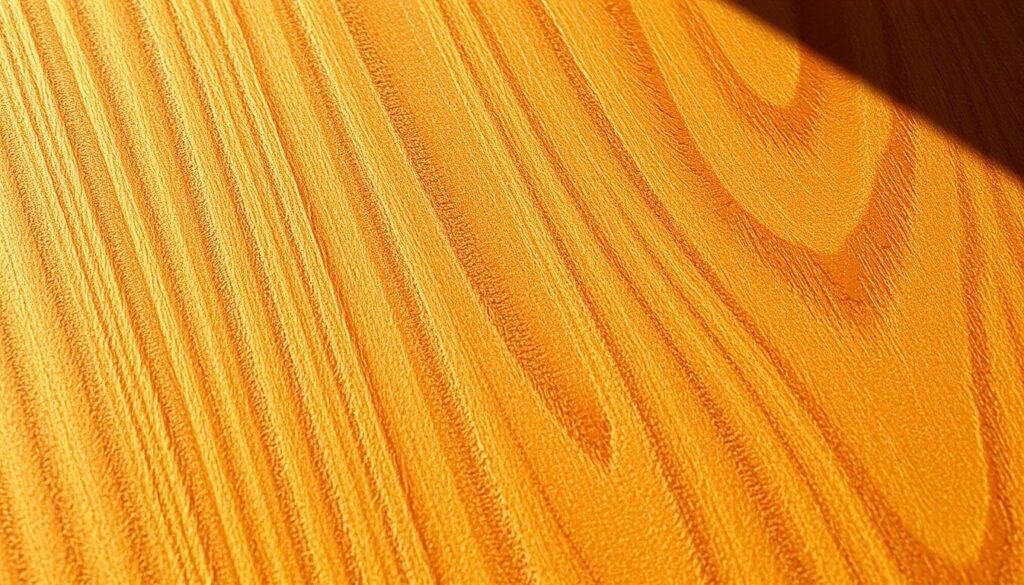
Grain filling is a great way to improve wood grain’s look. Knowing when and how to use grain filler can make wood look professional. It brings out the wood’s natural beauty.
Technique 3 – Staining and Dyeing
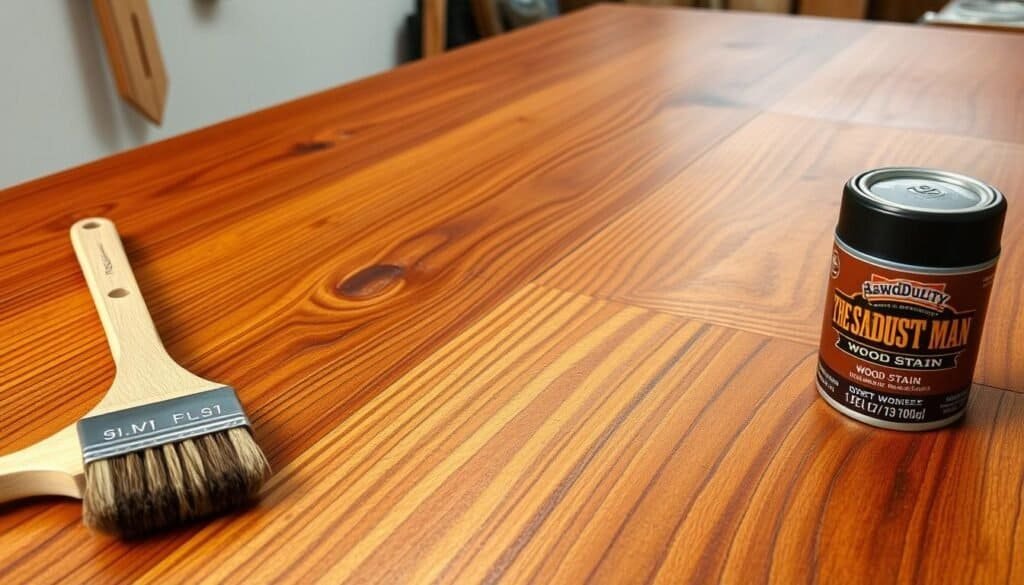
Staining and dyeing are key steps to make wood look better. First, pick the right stain or dye. Think about the wood type and the color you want.
There are many stains out there, like oil-based and water-based ones. Oil-based stains last longer and give deep colors. Water-based stains are easier to clean up and dry quicker.
Before staining, make sure the wood is ready. Sand it smooth and clean it well to remove dust and dirt.
Getting the finish you want might take more than one coat. Always follow the instructions for applying and drying times. This will help you get a professional finish.
Technique 4 – Cerusing and Liming
Cerusing and liming highlight wood grain’s natural beauty. They involve applying a substance into the wood’s pores. This creates a striking contrast that makes the grain pattern stand out.
Cerusing uses a white or light-colored filler, like wax or paste, rubbed into the wood’s pores. Then, the excess is wiped away, leaving the filler in the grain. Liming, traditionally, uses a liming wax or a white pigment-based product for a similar effect. It can also use lime or other chemicals to bleach the wood.

Benefits of Cerusing and Liming
The benefits of cerusing and liming include:
- Enhanced Visual Appeal: These techniques highlight the grain, adding a unique and attractive visual element to the wood.
- Versatility: Cerusing and liming work well on various types of wood, but they’re most effective on woods with pronounced grain patterns, like oak.
- Protection: The process can protect the wood by filling the pores, potentially reducing damage risk.
To apply cerusing or liming, start by preparing the wood surface as the product’s instructions say. This usually means sanding the wood to a smooth finish. Then, apply the cerusing or liming product into the grain with a cloth or applicator. Wipe away any excess, and let the product dry as the manufacturer says.
By adding cerusing or liming to your wood finishing, you get a beautiful, distinctive look. It showcases the wood’s natural grain.
Technique 5 – Burnishing and Polishing
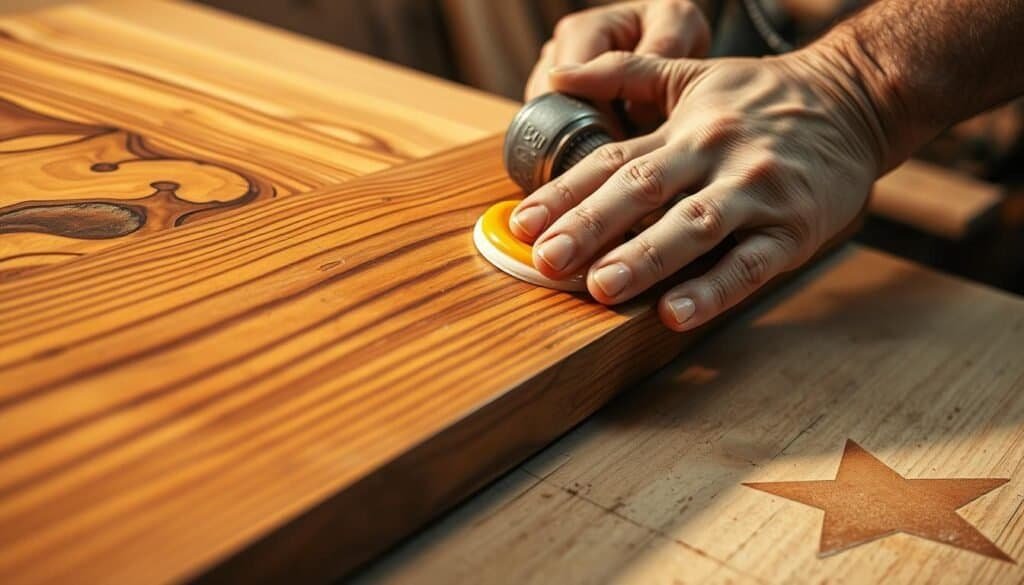
Burnishing and polishing are the last steps to make wood look better. They make the wood look more refined and sophisticated. These steps are key in the wood finishing process. They not only make the wood look good but also protect it.
Benefits of Burnishing and Polishing
The benefits are many:
- Improves the appearance by creating a high-gloss finish.
- Protects the wood surface from wear and tear.
- Enhances the overall value of the woodwork.
Comparing Results
Choosing the right wood finishing technique is key to a great finish. In this section, we look at different techniques. We highlight what makes each one good and what might not work as well.

Each method has its own strengths. Oil finishes bring out the wood’s natural beauty. Grain filling makes the surface smooth. Staining changes the wood’s color, and burnishing adds shine.
Knowing the pros and cons of each helps you pick the right one for your project. The best choice depends on what you want, the wood type, and how much protection it needs. By considering these, you can make a choice that fits your project perfectly.
Tips for Choosing the Right Technique
Choosing the right technique for your woodworking project can be tough. But, by thinking about a few key things, you can make a good choice. The type of wood, the finish you want, and your skill level are all important.
Start by looking at the wood you’re using. Different woods work better with certain finishes. For example, woods like oak need a filler for a smooth finish. But, woods like maple can usually be finished without one.
- Examine the type of wood you’re working with.
- Consider the desired appearance of your project.
- Assess your level of expertise.
- Plan the time you’re willing to dedicate to the project.
By carefully thinking about these points, you can pick the right technique. This will help you get professional-looking results.
Common Mistakes to Avoid
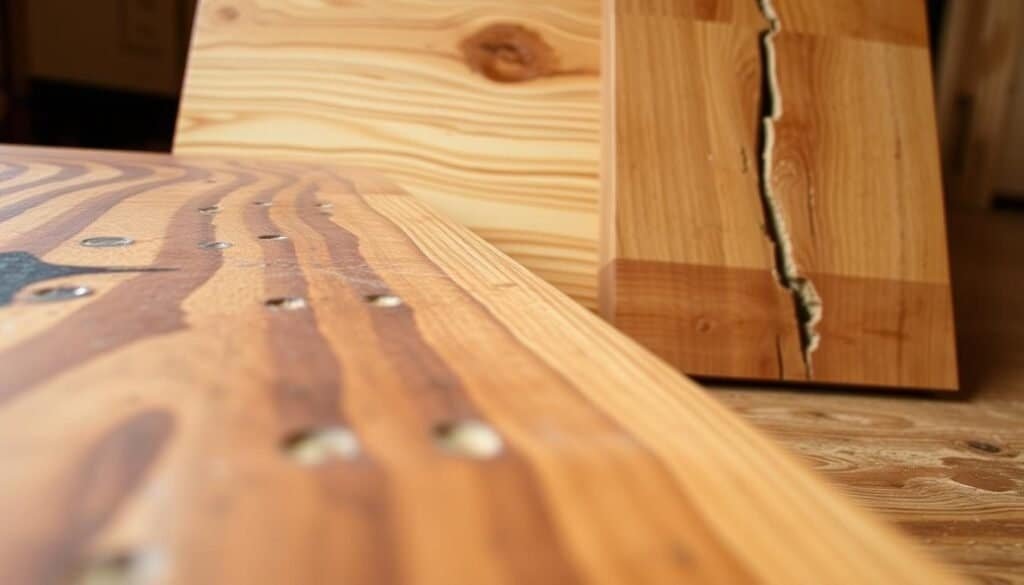
To avoid common wood finishing mistakes, it’s important to know the most frequent errors. These mistakes can ruin your project.
- Not using the correct finish for your wood type
- Failing to properly prepare the surface
- Ignoring safety precautions
Safety Precautions
When working with wood finishes, safety is key. Chemicals and materials can be harmful if not used right.
Good air flow is important. Products like stains and polyurethane give off dangerous fumes. Make sure your area has enough air by opening windows or using fans.
Key Safety Precautions:
- Wear protective gear, including gloves and safety glasses.
- Read and follow the instructions on the product label.
- Ensure good ventilation in your workspace.
By taking these steps, you can stay safe while working with wood finishes. This keeps your work area safe and healthy.

Conclusion
Learning wood finishing techniques can unlock your woodwork’s full beauty. With the right methods and a bit of practice, you can make stunning pieces. These pieces will last a long time and look amazing.
Whether you’re new to woodworking or have been doing it for years, knowing the basics is key. Understanding different methods and materials is essential. This knowledge lets you create pieces that highlight the wood’s natural beauty.