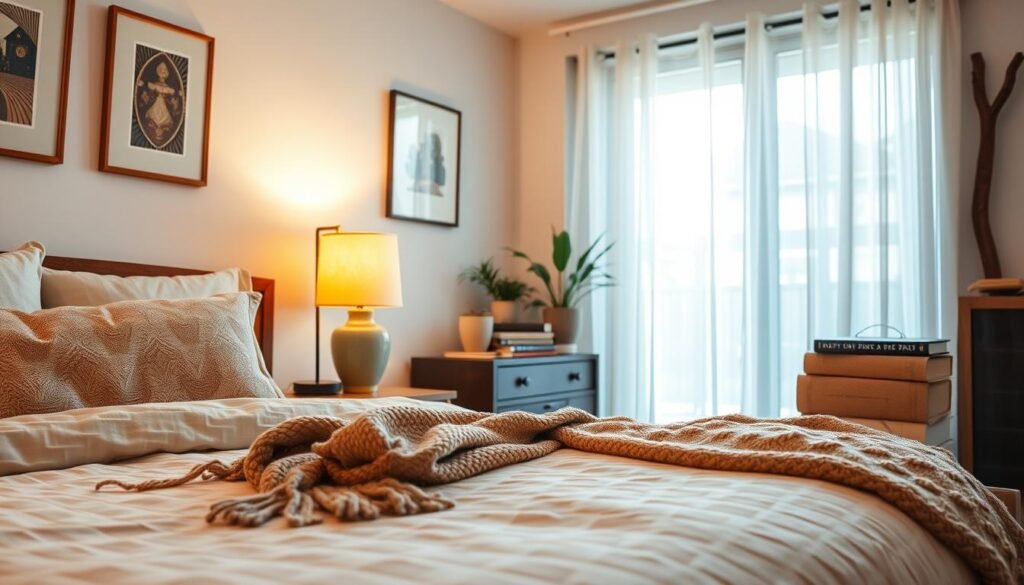
Creating a peaceful sleep environment is key for a good night’s sleep. A quieter bedroom can greatly improve your sleep quality. This leads to better health and well-being.
To make your bedroom more serene, focus on noise reduction and ambiance. You don’t need to redecorate to achieve this. Small changes can make a big difference in making your bedroom quieter.
This article will share practical tips to make your bedroom more peaceful. These changes will improve your sleep and overall life quality.
The Impact of Noise on Sleep Quality
Noise greatly affects our sleep quality. It’s important to know how it impacts us. A quiet sleep space is vital for our health, and noise disrupts this peace.
The Science Behind Noise and Sleep
Studies show that noise can mess with our natural sleep cycle. Noise-disrupted sleep results in lighter, less restful sleep. Even when we’re asleep, our brains keep processing noise, making deep sleep hard to reach.
The effects of noise-disrupted sleep aren’t just short-term. They can cause long-term mental effects like more stress and anxiety. Physically, it can lead to heart disease. To better sleep, looking into soundproofing tips or ways to reduce noise at night can help.
Creating a peaceful sleep environment is essential for better sleep quality. By understanding noise’s impact and taking steps to lessen it, we can greatly improve our sleep.
Understanding Your Bedroom’s Noise Profile
Your bedroom’s noise level comes from many sources, inside and outside your home. To make your space quieter, it’s key to know where these noises come from.
Traffic, Neighbors, and Environmental Sounds
Outside noises like traffic, neighbors, and nature can really affect your bedroom’s quietness. Traffic noise is a big issue for those near busy streets. Neighbors’ noise, whether it’s loud talking or music, can also be a problem. And, sounds from rain, wind, or wildlife add to the noise too.
Inside your home, appliances and HVAC systems can also make noise. The hum of a fridge or the sound of a fan can be annoying. Plus, household sounds like footsteps or creaking floors can disturb the peace.
Knowing where these noises come from helps you find ways to make your bedroom quieter. This is the first step in using noise reduction strategies.
Creating A Quieter Bedroom At Night: Simple Principles
Making your bedroom quieter is easy with simple steps. These tips can greatly lower noise and improve your sleep.
Blocking, Absorbing, and Masking Sound
To cut down on noise, block, absorb, or mask it. Blocking sound means stopping noise from getting in. You can do this by sealing gaps under doors or using weatherstripping around windows.
Absorbing sound reduces echo and reverberation. Adding thick curtains, rugs, and upholstered furniture can soak up sound, making your room quieter.
Masking sound covers up unwanted noise with nicer sounds. A white noise machine or a fan can mask background noises, making your space more peaceful.
Repositioning and Repurposing What You Already Have
You don’t have to buy new things to quiet your bedroom. Moving your furniture around can help a lot. For example, putting a bookshelf against a shared wall can absorb sound.

By following these simple steps, you can make a tranquil sleeping space. This will help you sleep better and feel better overall.
- Identify and address the main sources of noise.
- Use soft furnishings to absorb sound.
- Repurpose existing items to block or mask noise.
Strategic Furniture Placement for Noise Reduction
Creating a quieter bedroom starts with smart furniture placement. This makes your space more peaceful. By carefully arranging your furniture, you can block out outside noise and make your room quieter.
Bookshelves and Dressers as Sound Blockers
Big, solid pieces like bookshelves and dressers can block sound well. Putting them against noisy walls helps absorb some of that noise. Positioning a bookshelf or dresser between your bedroom and a noisy area, such as a living room or kitchen, can significantly reduce the noise that enters your bedroom.
- Place a tall bookshelf against a shared wall to block noise from adjacent rooms.
- Use a dresser or wardrobe to create a barrier between your bed and a noisy window.
- Consider rearranging your furniture seasonally if external noise varies with the season (e.g., more noise from open windows in summer).
Finding the Quietest Spot in Your Room
Finding the quietest spot in your bedroom is key. Listen carefully to the sounds around your room to determine where the noise is coming from and position your bed and other furniture correspondingly.
- Check for noise levels near windows, doors, and shared walls.
- Move your bed to the quietest spot you’ve identified.
- Use the quietest area for relaxation and sleep.

Soft Furnishings: Your Secret Weapon Against Noise
The right soft furnishings can make your bedroom quieter. They help absorb sound, making your space more peaceful.
Rugs, Tapestries, and Wall Hangings
Adding rugs, tapestries, and wall hangings can help. Thick, plush rugs can quiet footsteps. Tapestries and wall hangings can cut down echo and look good too.

You can make simple sound traps with everyday items. For example, a thick blanket or a quilt over a door or wall can soak up sound. You can also use furniture and decorative items to block sound. Here are some ideas:
- Place a tall bookshelf or a storage unit against a shared wall to absorb sound.
- Hang a thick, heavy curtain or a tapestry on a wall to reduce echo.
- Use area rugs to cover hardwood or tile floors, reducing footstep noise.
By adding these soft furnishings and DIY sound traps, you can greatly lower noise in your bedroom. This makes it a more peaceful and restful place.
Window Treatments That Block Sound
To make your bedroom quieter, think about using window treatments designed to block sound. Windows can let in a lot of noise. But, there are ways to cut down on this.
Layering and Positioning Techniques
One good way to block noise is through layering and positioning. Use curtains, drapes, or shades together to block sound. For the best results, go for thick, heavy drapes that soak up sound waves.
Place these treatments right, like closing them tight and lining them up with the window. This makes them work better at keeping out noise.

Also, weather stripping and window plugs can seal gaps around windows. Weather stripping fits around the window frame to make a tighter seal. Window plugs fill gaps to block sound.
These are great for master bedrooms with high ceilings. They help cut down on echo and outside noise. For more cozy bedroom ideas, check out this page for wood decor inspiration.
By using these methods together, you can greatly reduce noise coming in through windows. This makes your bedroom quieter and more peaceful.
Door and Wall Solutions Without Renovation
Turning your bedroom into a peaceful space doesn’t need a big renovation. Simple changes to doors and walls can make a big difference. A few smart moves can cut down noise and make your bedroom more calm.
DIY Door Sweeps and Gap Fillers
Sealing gaps under and around your bedroom door is a simple way to block noise. DIY door sweeps are a great and easy fix. You can make them from rubber or felt and attach them to the door bottom to stop sound leaks. Also, gap fillers can seal gaps between the door and frame, helping to keep noise out.
Bookcases, Tapestries, and Acoustic Panels
Your walls are also key in fighting noise. Placing bookcases against shared walls can block sound. Hanging tapestries or adding acoustic panels on walls can soak up sound, cutting down echo and outside noise. These not only make your bedroom look better but also make it quieter.
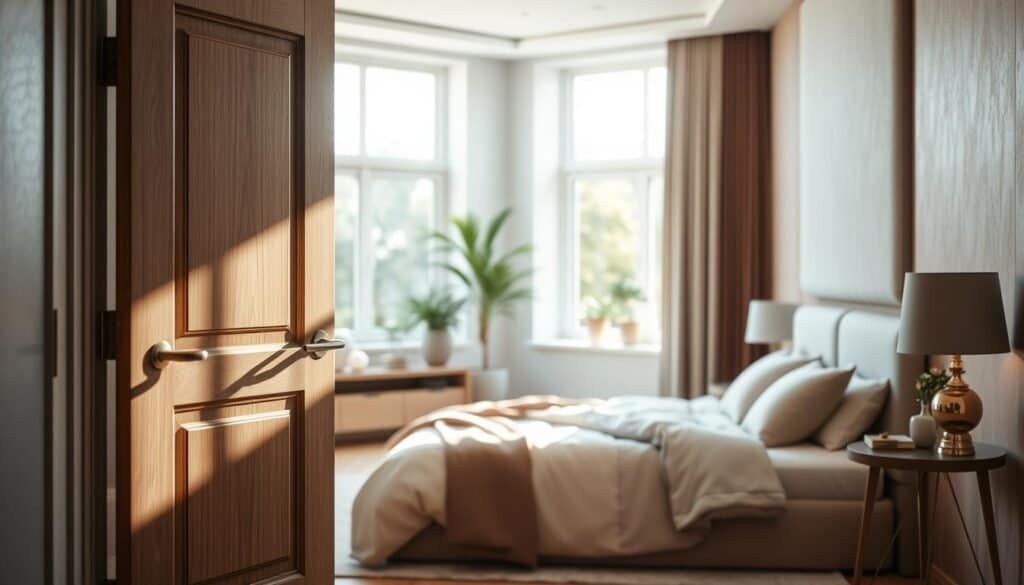
With these door and wall fixes, you can make your bedroom quieter without a big renovation. These easy steps can greatly improve your sleep by reducing noise.
Technology and Gadgets for a Peaceful Sleep Environment
The right technology and gadgets can turn your bedroom into a peaceful place for sleep. By using new devices and apps, you can improve your sleep a lot.
Choosing the Right Sound Profile for Your Needs
Choosing the right sound is key for a peaceful sleep space. White noise machines are great at blocking out noises that can keep you awake. They can make sounds like rain or a fan, helping you sleep better.
- Consider apps that offer customizable sound profiles.
- Look for devices with multiple sound options.
- Some machines come with additional features like Bluetooth connectivity and alarm clocks.
Budget-Friendly Tech Options for Better Sleep
Improving your sleep space doesn’t have to cost a lot. There are many budget-friendly tech options out there. For example, sleep apps can guide you to relax and track your sleep. For a deeper experience, try a smart speaker with sleep content.
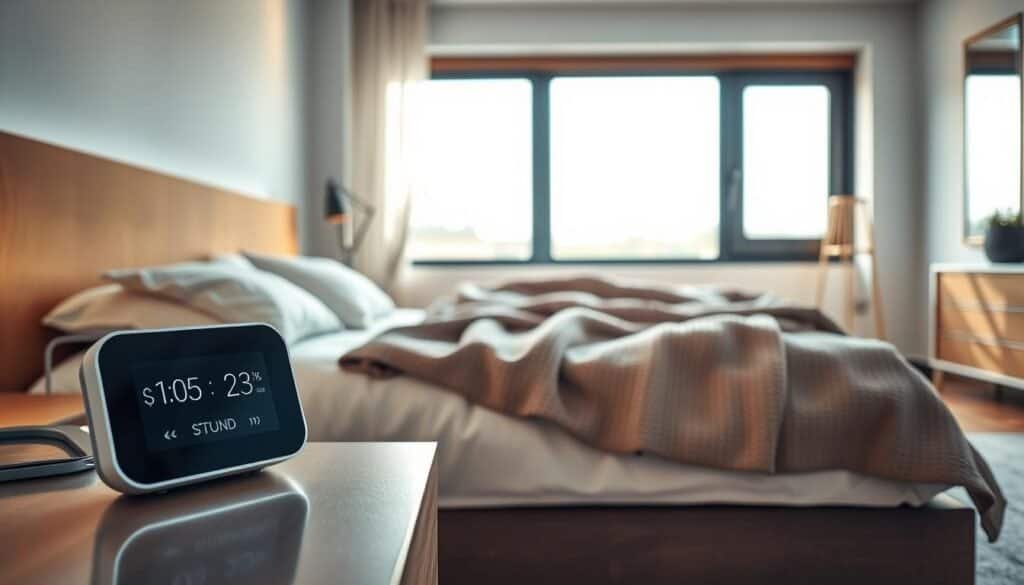
Using these technologies and gadgets can make your sleep space better for rest. Whether it’s through sound or smart lights, tech is key to better sleep.
Natural Sound Masking Techniques
To get a good night’s sleep, try natural sound masking in your bedroom. This method uses calming sounds to block out loud noises. It helps make your sleep space peaceful.
Water Features and Natural Sound Generators
Using a small fountain is a great idea. It makes soothing sounds. You can also try natural sound generators. They can play sounds like rain or waves, making your room relaxing.
Creating Your Own Ambient Sound Environment
Make your own calm sounds with music or nature sounds. This is good for places like log homes or tiny houses. It helps block out outside noise.

Nighttime Routines That Promote Sound Sleep in Any Environment
Developing nighttime routines is key to better sleep. A regular bedtime routine can greatly improve sleep quality. This is true even in noisy environments.
Relaxation Techniques and Sleep Hygiene
Relaxation techniques calm the mind and body before sleep. Meditation, deep breathing, or progressive muscle relaxation can reduce stress. They help prepare your body for a good night’s sleep. Good sleep hygiene is also important.
This includes a regular sleep schedule, avoiding caffeine and electronics before bed, and creating a sleep-friendly environment.
- Avoid screens for at least an hour before bedtime to minimize blue light exposure.
- Keep your bedroom cool, dark, and quiet to promote better sleep.
- Invest in a comfortable mattress and pillows to enhance sleep quality.
Training Your Brain to Filter Unwanted Noise
Teaching your brain to ignore unwanted noise is possible. Using white noise machines or nature sounds can help block out background noises. This makes it easier to fall asleep. Over time, your brain learns to tell the difference between important and unimportant sounds.

By adding these nighttime routines to your daily life, you can greatly improve your sleep. This is true no matter how noisy your environment is.
Conclusion: Creating Your Personal Oasis of Calm
Turning your bedroom into a peaceful place is easy. By using the tips shared, you can make a quieter space for rest. A calm bedroom is key for a good night’s sleep.
To make your own oasis, try the simple tips from this article. Think about where to put furniture, soft items, and curtains. Also, modern lights can make your room feel like a retreat.
When making your dream house, remember your master room is a special place. Use calming colors, like a soothing wall, to make it even more peaceful. A few changes can help you sleep better and wake up feeling great.
Begin your journey to a peaceful bedroom today. Enjoy the calm and comfort of a relaxing space.