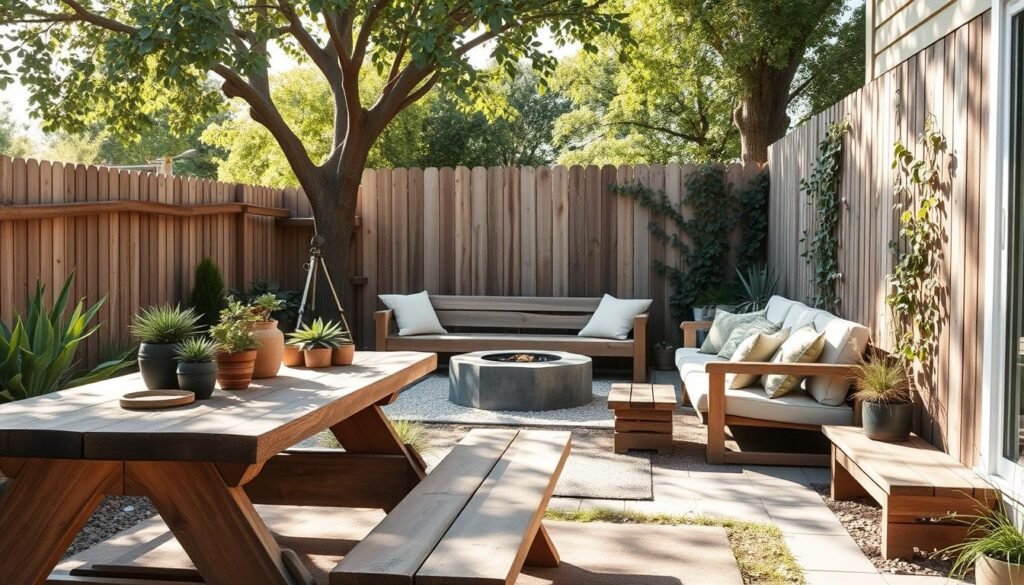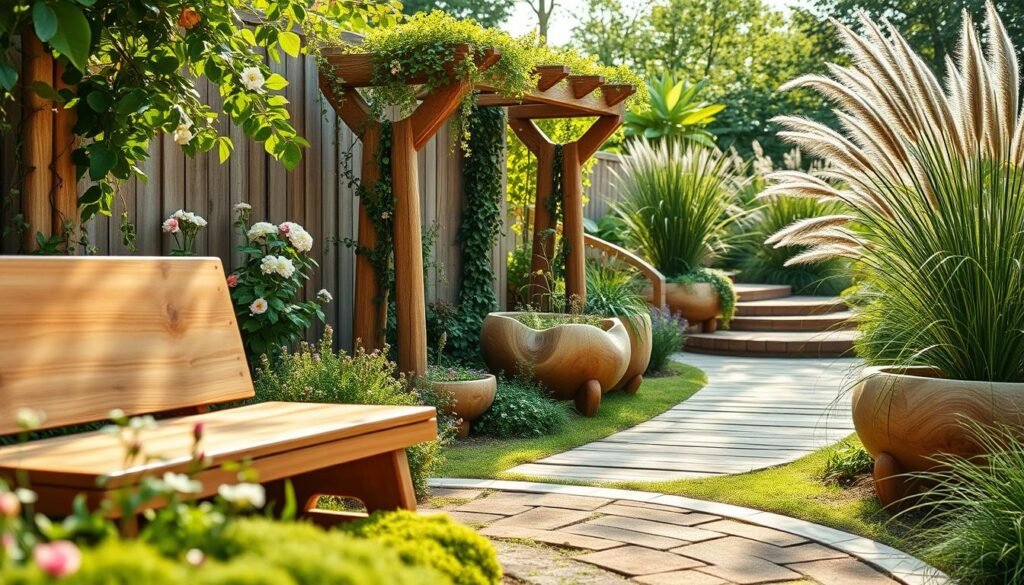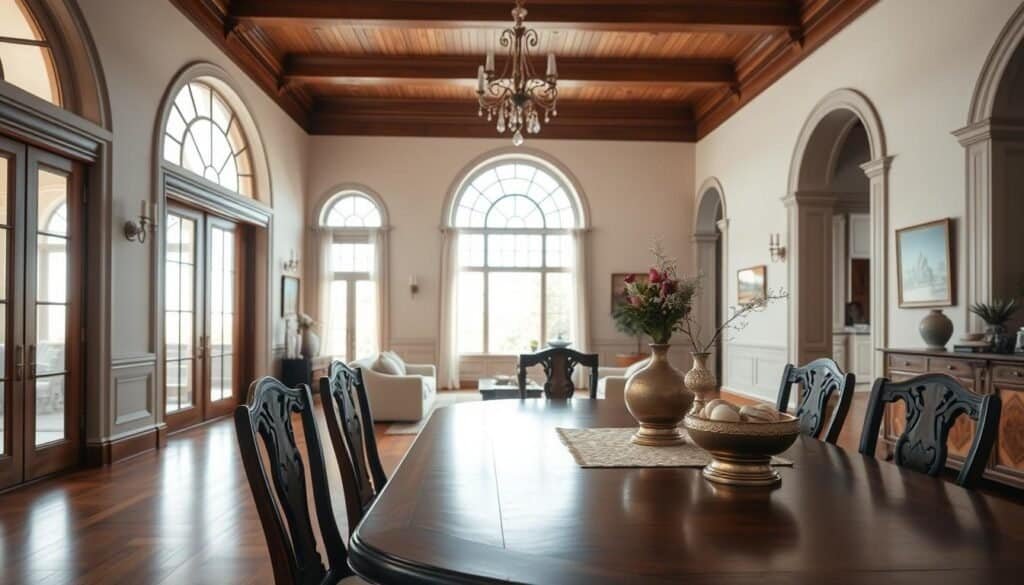
A space that feels overwhelming or draining can really affect our mood and productivity. Creating a balanced environment is key for a welcoming and uplifting atmosphere.
The feel of a room is shaped by many things. These include clutter, furniture placement, and color palette. Understanding how these elements work together helps us start making a more balanced space. Feng shui offers great tips for space clearing and boosting room energy.
With a few changes, we can turn a heavy-feeling room into a harmonious and inviting space.
Understanding Why a Room Feels Heavy: Signs and Causes
Many signs show when a room feels heavy. These include cluttered spaces and the wrong color schemes. Knowing these signs helps fix the problem.
Clutter is a big reason a room feels heavy. Too many items make a space feel chaotic. Decluttering helps a lot. It makes the room feel lighter and more organized.
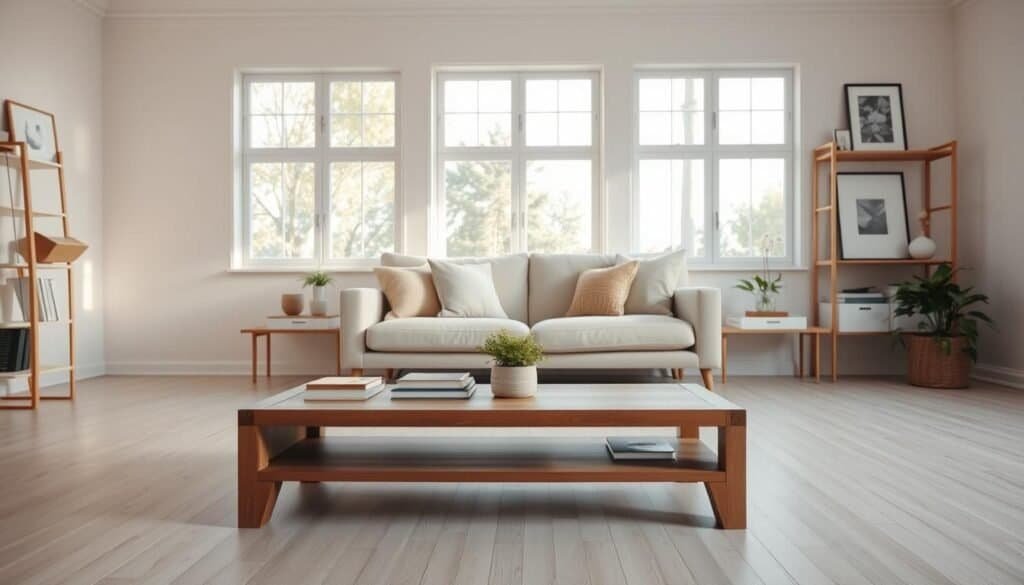
Poor lighting also makes a room feel heavy. Not enough light can make a space feel dark and unwelcoming. Better lighting, natural or artificial, can greatly improve the room’s feel.
The colors in a room affect its mood. Some colors calm us, while others can feel heavy. Choosing colors that relax and uplift can help create a better atmosphere.
To make a room feel lighter, try these steps:
- Declutter the space to remove things you don’t need.
- Improve the lighting to brighten the room.
- Choose colors that relax and uplift.
- Organize what’s left to improve the room’s feel and flow.
For more ideas on making your living room happier, check out this article.
The Science Behind Structural Balance in Interior Spaces
Creating a balanced interior space is more than just looks. It’s about making an uplifting environment through smart design. The science of balance in design is based on several key principles. These principles help make rooms that are both harmonious and welcoming.
Symmetry is a key element. It means arranging objects and furniture in a way that looks orderly and stable. Symmetry can be achieved by using identical or similar elements on both sides of a central axis, creating a mirror-like effect.
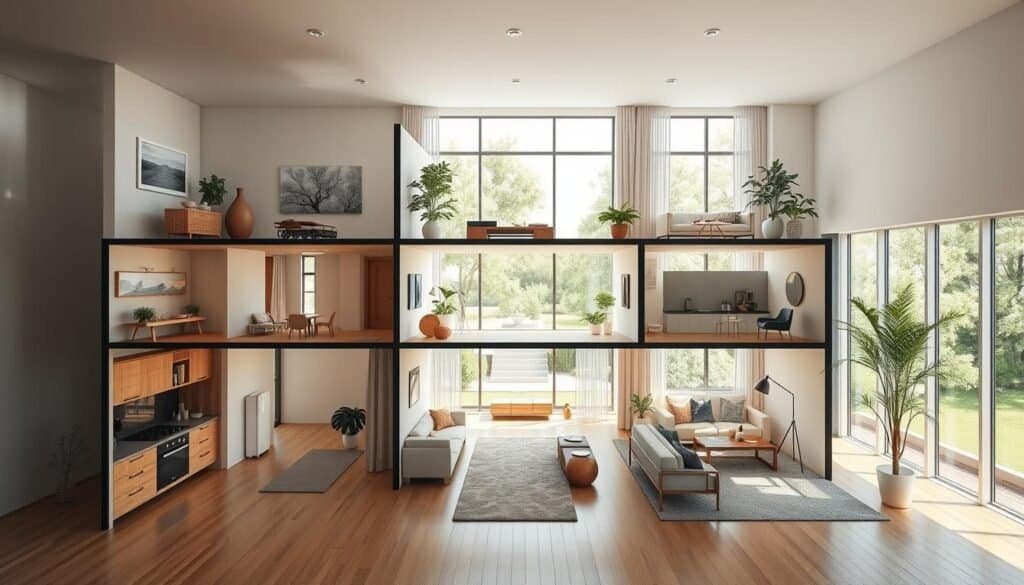
Proportion is also important. It means furniture and decorations should match the room and each other well. Good proportion helps avoid a space feeling too big or too small.
Balance is essential too. It can be achieved by distributing visual weight in the room. There are three types of balance: symmetrical, asymmetrical, and radial. Asymmetrical balance, for example, means arranging objects so their visual weight is balanced, even if they’re not the same or symmetrical.
Design philosophies like feng shui also help in creating balanced spaces. Feng shui focuses on arranging your house layout ideas and house design floor plans to improve the flow of positive energy, or “chi,” in your home.
- Think about how traffic flows and how it affects your home’s energy.
- Use furniture and decorations to create harmony and balance.
- Focus on the scale and proportion of elements in the room.
By understanding and using these principles, homeowners can make better choices when designing or rearranging their spaces. This leads to a more uplifting and harmonious home environment.
Decluttering: The First Step to Lightening a Heavy Room
Decluttering is often the first step to lighten a heavy room. Clutter can make a room feel cramped and heavy. By removing unwanted items and organizing what’s left, you can improve the energy flow and create a positive atmosphere.
Sorting and Purging Unwanted Items
To start decluttering, sort items into categories. This includes items to keep, donate, sell, and discard. Be ruthless when deciding what to keep and what to let go of. Items that are broken, outdated, or no longer serve a purpose should be considered for removal.
Once sorted, it’s time to purge unwanted items. Here are some steps to follow:
- Donate gently used items to local charities or thrift stores.
- Sell items of value through online marketplaces or garage sales.
- Discard items that are beyond repair or have no resale value.
After getting rid of unwanted items, organize what’s left. Use storage solutions like bins, baskets, and shelves. This keeps items out of sight and maintains a clutter-free space.
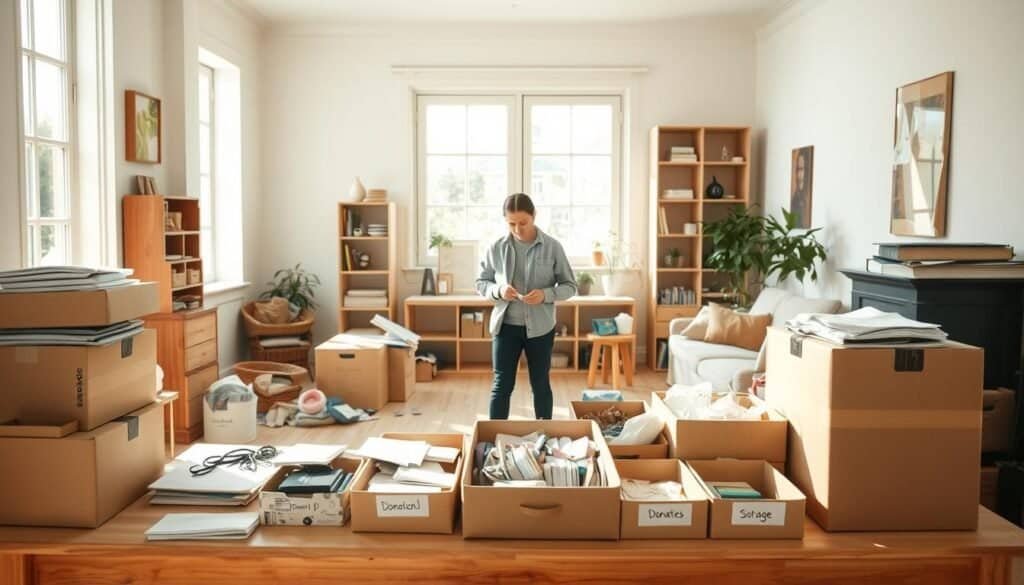
Keeping a clutter-free space takes ongoing effort. Set aside time each week to tidy up. This way, you can keep a lighter, more uplifting environment that promotes positive vibes and energy flow.
Furniture Placement Strategies for Improved Energy Flow
Getting your furniture right is key to a peaceful home. By using feng shui tips, you can make your living space feel better. This improves the energy flow, or “chi,” in your room.
One main rule of feng shui is to arrange furniture for smooth energy flow. Here’s how:
- Move furniture away from paths and doors to improve flow and avoid blocking.
- Don’t put furniture in a straight line to the door to avoid feeling vulnerable.
- Use furniture to make cozy spots for talking and feeling close.
For the best room energy, try these layout ideas:
- Put the sofa in a commanding spot, where you see the door but aren’t right in line with it.
- Use a rug to mark the seating area and add warmth.
- Balance the room with big and small furniture for a nice look.
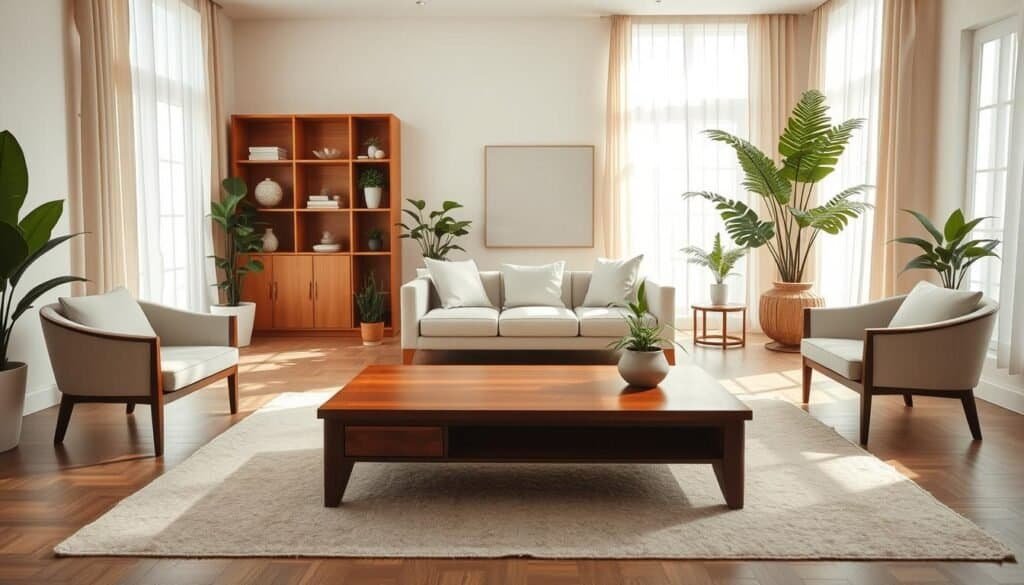
Clearing space is also key for good energy at home. Get rid of clutter and smudge with sage or incense. This helps get rid of old energy and brings in fresh vibes.
For more tips on a happy living room, see this article on designing uplifting living spaces. By using these house layout ideas and feng shui, your home will look and feel welcoming and full of energy.
When a Room Feels Heavy, Consider Your Color Palette
A room’s color scheme is more than just looks. It shapes the atmosphere, making it feel either welcoming or heavy. The colors you pick greatly affect the room’s energy.
Understanding Color Psychology is essential for the right palette. Cool tones like blues and greens calm us. Warm tones like oranges and reds energize us.
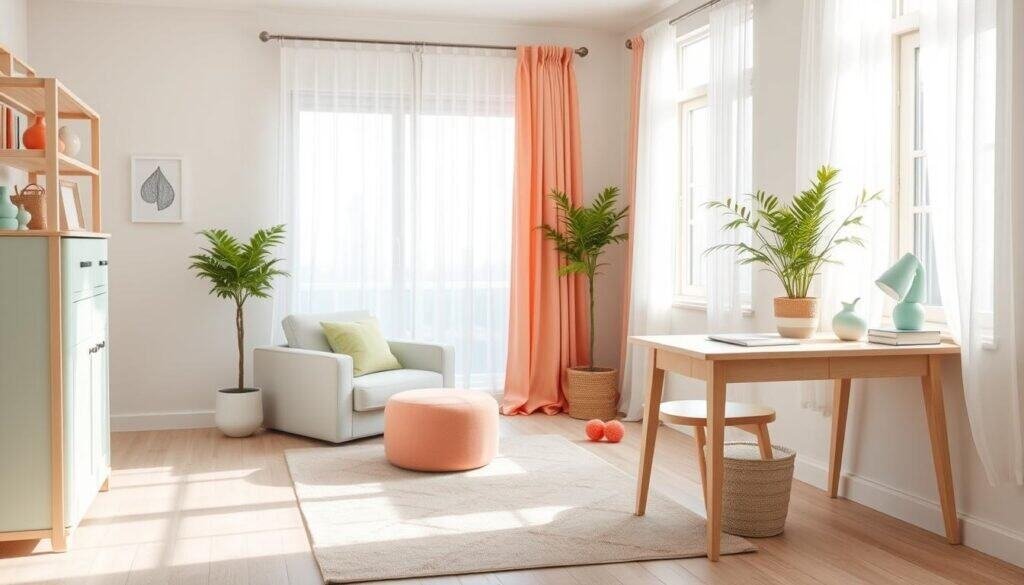
To make a room feel uplifting, mix colors that boost positivity. Use neutral tones like beige, cream, or soft gray for a clean feel. Add vibrant colors that show your personality or cultural roots, like those from Mexican kitchen decor ideas inspiration.
Here are some tips for choosing the right color palette:
- Start with a neutral base to keep the room feeling open and airy.
- Add accent colors through furniture, rugs, or decorative items to introduce personality and vibrancy.
- Consider the natural lighting in the room and how it affects the color palette throughout the day.
- Don’t be afraid to experiment with different shades and combinations to find what works best for you.
By carefully picking your color palette, you can greatly enhance the room energy. This creates a space that feels uplifting and inviting.
Lighting Solutions to Transform Heavy Spaces
To brighten a heavy room, exploring different lighting options is key. Lighting greatly affects a space’s feel and energy.
Enhancing Natural Light is a top way to lighten a room. Use sheer curtains, mirrors, or reflective surfaces to let in more natural light.
- Install skylights or larger windows to increase natural light intake.
- Use light-colored finishes on walls and floors to reflect natural light.
- Minimize window treatments to allow more natural light into the room.
Artificial lighting also plays a big role in making a room welcoming. Mixing different lighting types can achieve the perfect look.
- Ambient lighting provides overall illumination and sets the tone for the room.
- Task lighting is used to focus on specific areas, such as a home office or reading nook.
- Accent lighting highlights decorative elements or creates visual interest.
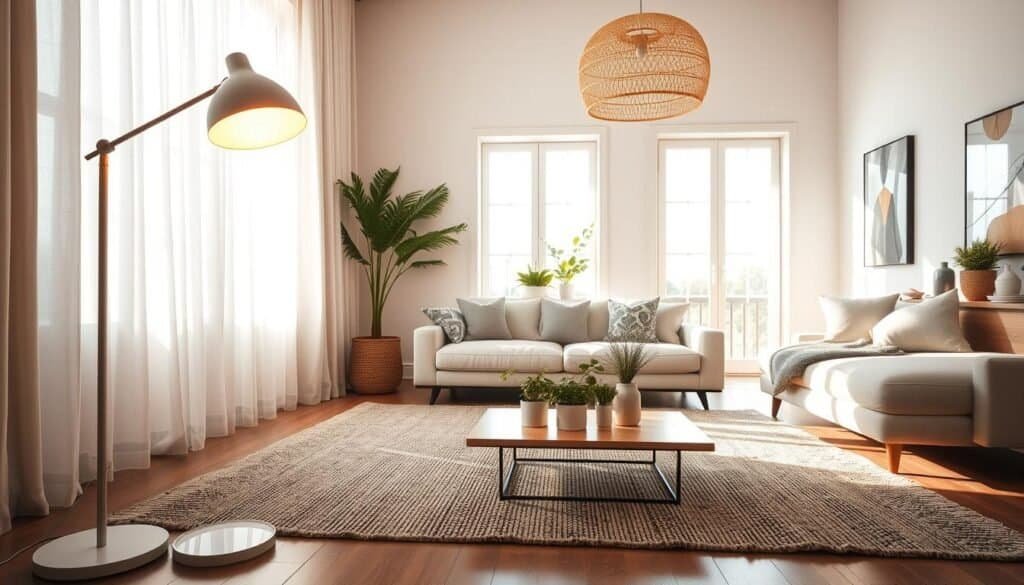
Combining natural and artificial lighting can greatly enhance a heavy room. It makes the space more inviting and productive.
For an elegant home office, use layered lighting. This includes ambient, task, and accent lighting. It improves the room’s functionality and makes it more organized and inspiring.
Balancing Visual Elements Through Texture and Pattern
To make a heavy room feel welcoming, it’s key to balance texture and pattern well. A balanced room has various visual elements that blend together. This creates a peaceful atmosphere.
Different textures add depth to a room. For example, smooth surfaces like glass or metal paired with rough textures like wood or woven fibers make a room interesting. Use furniture, rugs, and decor to mix textures.
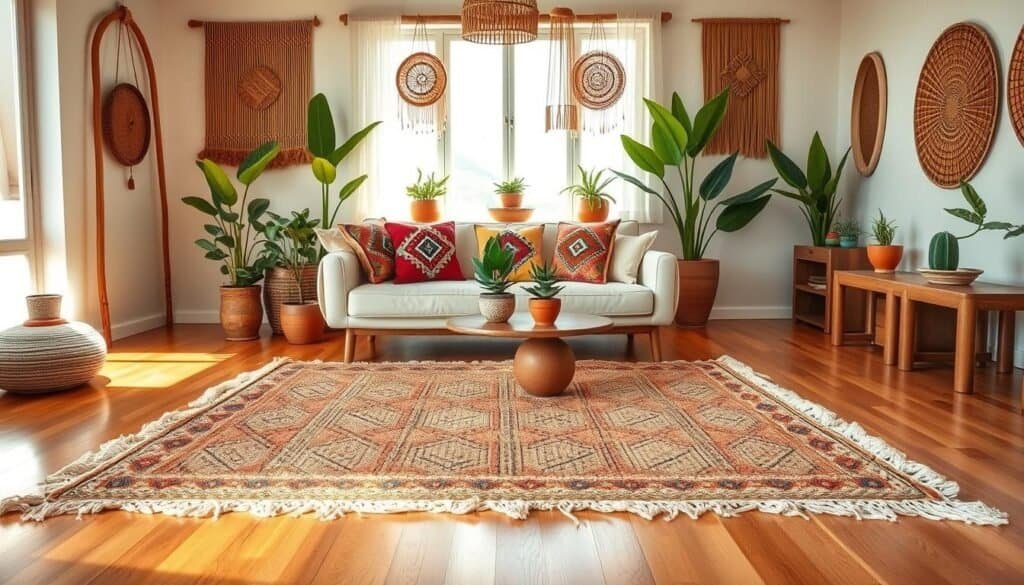
Patterns also play a big role in balancing a room. It’s important to mix bold and subtle designs. For instance, a bold rug can be balanced by simpler patterns on furniture or wallpaper.
Here are some tips for balancing texture and pattern in your room:
- Start with a neutral base and add textures and patterns through accessories.
- Mix different textures, such as smooth, rough, and soft, to add depth.
- Balance bold patterns with simpler designs to avoid overwhelming the space.
- Consider the 60-30-10 rule: 60% neutral, 30% secondary texture or pattern, and 10% bold statement piece.
In a modern Mexican living room, you might use terracotta tiles for warmth. Add metallic accents for coolness and colorful textiles for vibrancy. This mix creates a rich, inviting space.
By balancing texture and pattern thoughtfully, you can make a space that’s both lively and peaceful. It shows off your style and makes your home feel more welcoming.
Vertical Space Utilization for a Lighter Feel
Using vertical space can turn cluttered or small rooms into airy, welcoming places. This is very helpful in loft style cabins or tiny house cabin interiors. Here, every inch counts.
Installing floor-to-ceiling curtains or shelves is a simple way to use vertical space. They make the room feel taller and add storage or display areas. This keeps the floor clear and makes the room feel lighter.
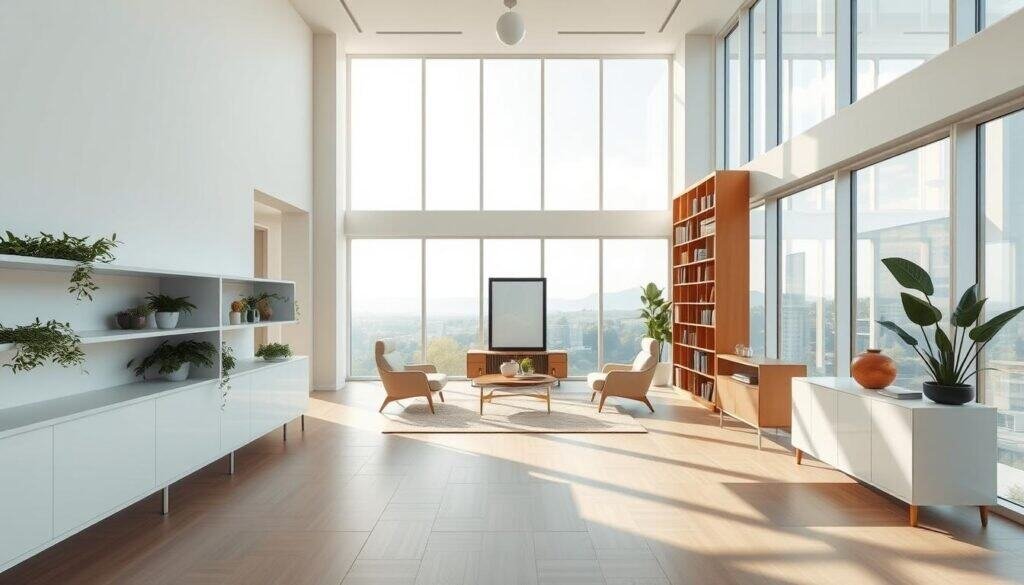
Adding vertical elements to your decor can also make a room feel taller. Tall vases, floor lamps, or vertical artwork can make a room feel more balanced and airy. Using vertical storage solutions like wall-mounted cabinets or pegboards also helps keep clutter away. This makes the room feel more open.
- Use floor-to-ceiling curtains to create a sense of height.
- Incorporate tall, slender furniture pieces to draw the eye upwards.
- Install wall-mounted storage to keep floors and surfaces clear.
By using these strategies, homeowners can make their living spaces feel more spacious and welcoming. Whether it’s a cozy tiny house cabin interior or a larger loft, using vertical space is key. It helps create a lighter, more enjoyable living environment.
Incorporating Biophilic Design to Refresh Heavy Rooms
Biophilic design brings nature indoors, making heavy spaces feel lighter. It uses elements of nature to improve our well-being and refresh our surroundings.
To use biophilic design, start with natural elements like plants, wood, and stone. For example, combining plants with warm wood creates a cozy, natural feel. For more ideas, check out this page.
Effective ways to add biophilic design include:
- Adding plants that purify the air and lift our mood.
- Using natural materials for furniture and decor, like reclaimed wood or bamboo.
- Installing larger windows or skylights to let in more natural light.
- Displaying nature-inspired artwork or adding natural elements like branches or stones.
For Sims house build ideas, biophilic design is a standout feature. Modern Sims house layouts with lots of greenery, natural light, and organic materials feel welcoming and connected to nature.
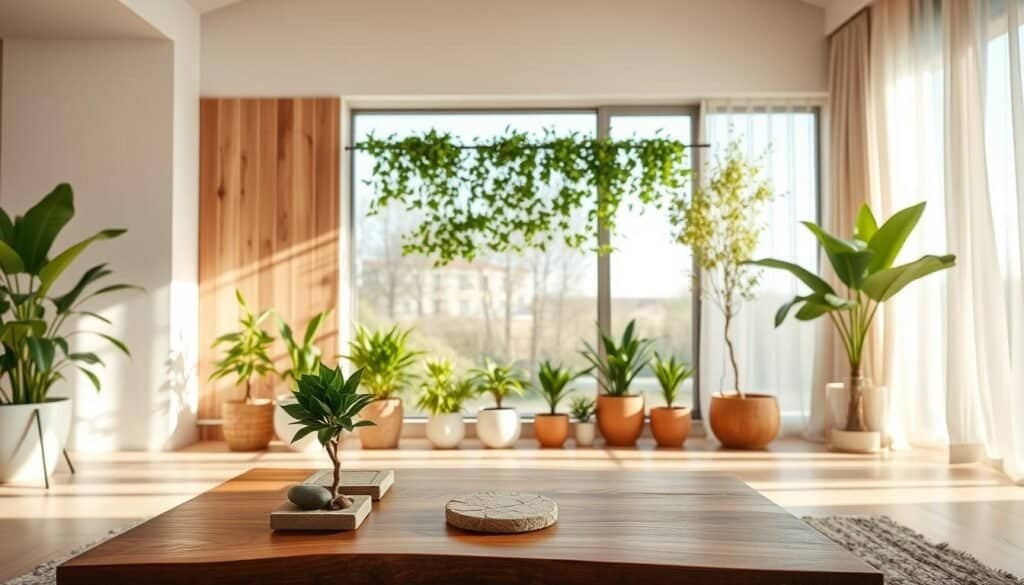
By embracing biophilic design, homeowners can refresh heavy rooms and create a healthier, more sustainable home. This design approach promotes a connection to nature, vital for our well-being.
Conclusion: Creating and Maintaining a Balanced, Uplifting Space
Turning a heavy room into a welcoming space takes focus on design. By using the tips from this article, you can make a balanced space that boosts well-being and calm.
A good home design decor greatly changes a room’s feel. Adding modern decor ideas and keeping it tidy creates an uplifting environment.
To keep a balanced space, it’s key to keep up with changes. This means checking the room’s layout, lighting, and colors often and tweaking them as needed.
This way, homeowners can have a more positive and uplifting home. It improves their life quality greatly.