Adding elegance to your garden is easy as building a trellis for climbing plants. Trellises support plants like roses, clematis, and grapevines. They also make your outdoor space more interesting.
Building a DIY garden trellis is simple and can match your garden’s style. With wooden plant support ideas, you can make your garden more beautiful. Plus, keep your climbing plants organized and healthy.
Looking for easy backyard trellis designs or something more complex? Building a trellis is a rewarding project. It can make your garden look better and feel more welcoming.
The Benefits of Wood Trellises in Your Garden
Adding a wood trellis to your garden can make a big difference. It supports climbing plants and adds beauty. Wood trellises are not just useful; they also make your garden look better.
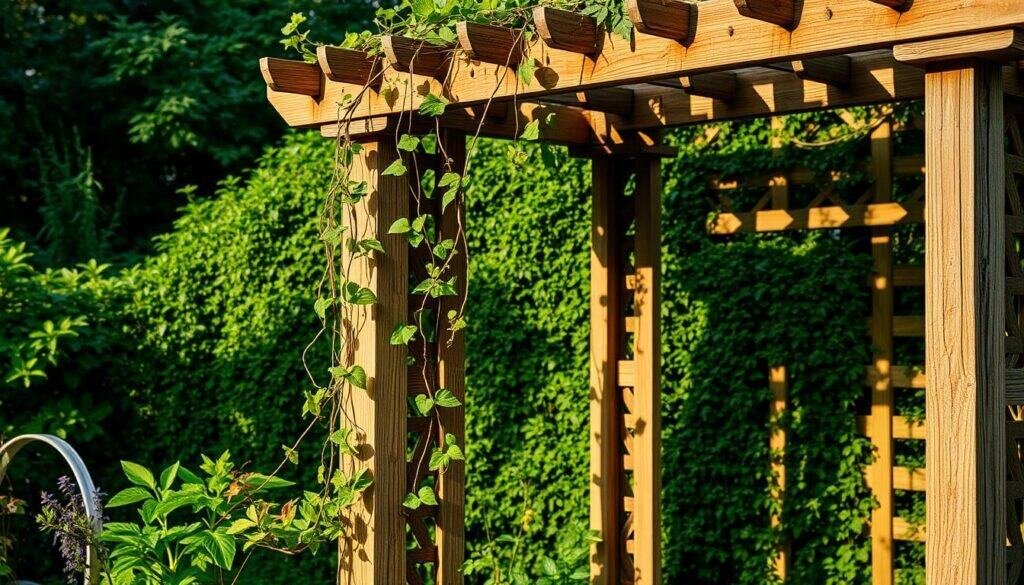
Adding Vertical Elements to Garden Design is key for a full garden. Wood trellises help by supporting plants like roses and ivy. They also add height to your garden.
Adding Vertical Elements to Garden Design
- Enhance garden aesthetics with natural wood finishes
- Support climbing plants, promoting healthy growth
- Create a sense of height, making small gardens appear larger
Using a wood trellis in your yard can create a beautiful focal point. It draws the eye and adds depth. Plus, wood trellises fit many garden styles, from rustic to modern.
If you want to improve your outdoor space, think about wood trellis ideas. Or, if you’re into vertical gardening tips, a trellis is a great choice. It’s a simple way to make your garden more beautiful and useful.
Essential Tools and Materials for DIY Trellis Projects
For a successful DIY trellis project, knowing the right tools and materials is key. Building a DIY wood trellis or a cedar trellis needs careful picking. This ensures it lasts long and looks good.
First, you need to get the essential tools. These are a saw, drill, hammer, and measuring tape. The quality of these tools really matters for your project’s success.

When thinking about wooden trellis ideas, the wood type is very important. Cedar, redwood, and cypress are top picks for outdoor projects. They resist rot and insects well.
- Cedar is a strong and fragrant choice, perfect for a rustic trellis.
- Redwood has natural beauty and lasts long, great for wood garden projects.
- Cypress is also durable and can handle different weather.
Picking the right wood and tools makes your trellis both useful and beautiful. It will improve your garden’s look.
Simple Wood Trellis Projects for Climbing Plants
Looking to add vertical interest to your garden? Building a simple wood trellis is a great idea. These projects are not only useful but also make your garden look better.
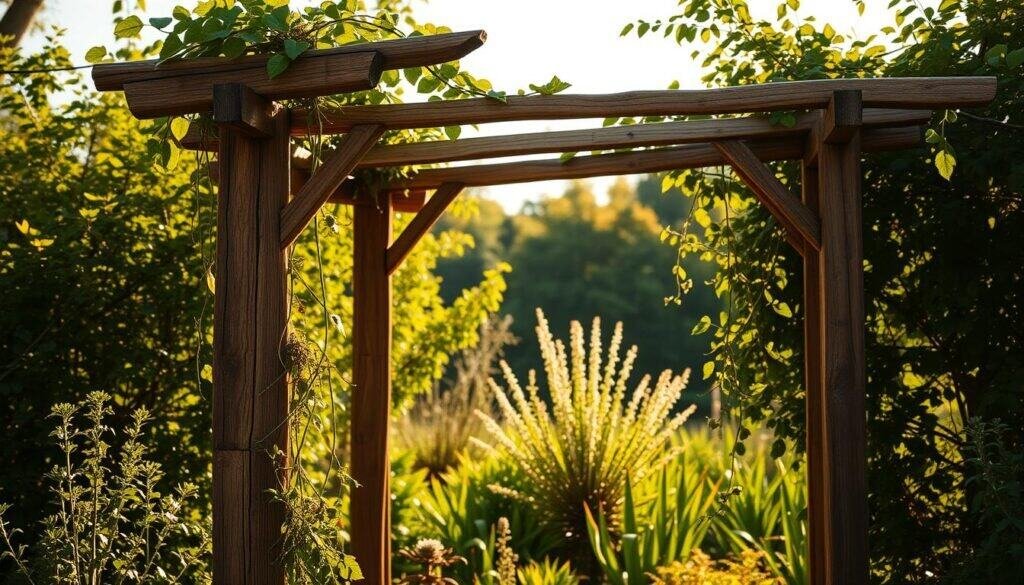
These easy backyard trellis designs can match any garden size or style. To make a homemade plant trellis, you’ll need wood, wire, and some tools.
Step-by-Step Instructions for a Basic Trellis
Here’s how to make a simple yet effective trellis for your climbing plants:
- Cut four wooden posts to the height you want for your trellis.
- Put the posts together in a rectangular shape using wire or nails.
- Attach a grid of wire or twine between the posts for plant support.
- Put the trellis in your garden and train your climbing plants to grow up it.
For more creative ideas and inspiration, check out this page for 10 creative DIY garden trellis ideas.
Building a trellis is a rewarding project. It supports your plants and makes your garden look better. With these simple steps, you can make a beautiful and useful trellis.
Wall-Mounted Trellis Ideas for Small Spaces
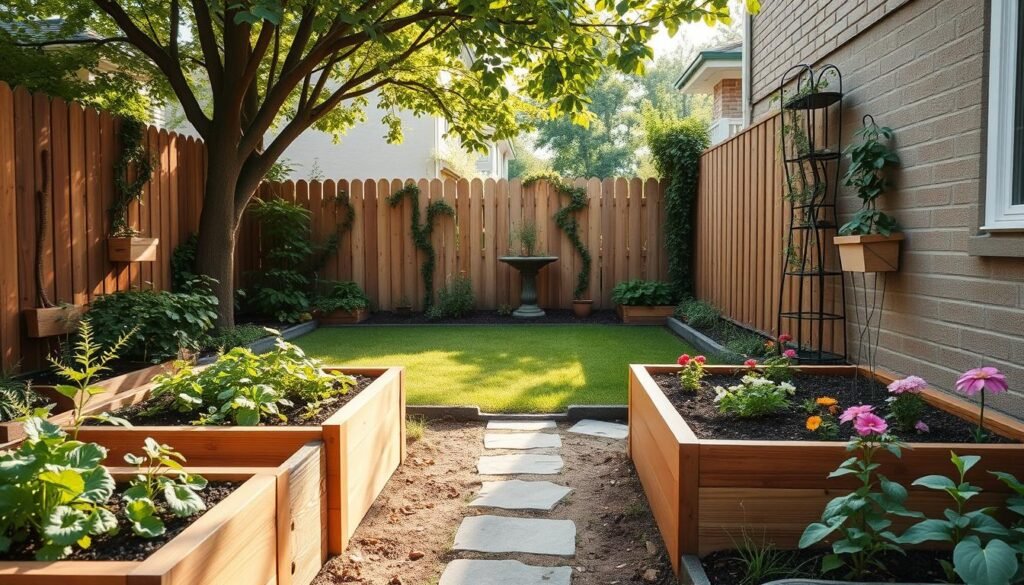
Small gardens can greatly benefit from vertical trellis ideas. By using wall space, gardeners can support climbing plants. This keeps the garden area tidy and organized.
Maximizing Space with Wall-Mounted Trellises is a smart move for small gardens. These trellises can be mounted on walls or fences. They provide a structure for climbing plants to grow upwards, saving ground space.
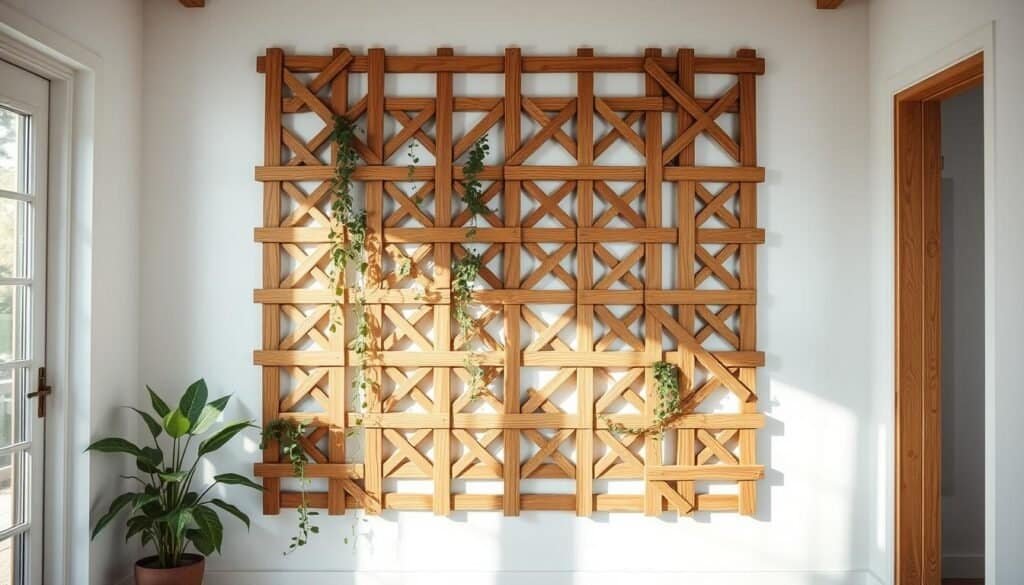
When adding trellises to small garden designs, think about the style and material. Wooden trellises, for example, can bring a natural and rustic feel.
- Choose a trellis that fits the scale of your garden.
- Consider the type of climbing plants you wish to support.
- Ensure the trellis is sturdy enough to support the weight of the plants.
By using wall-mounted trellis ideas in your garden design, you can create a beautiful and functional outdoor space. These trellises not only support climbing plants but also add to the garden’s beauty.
For small patios or balconies, patio trellis ideas are very helpful. A well-placed trellis can turn a compact outdoor area into a lush and welcoming space.
Freestanding Trellis Structures for Garden Focal Points
A well-designed freestanding trellis can become the centerpiece of your garden. It adds depth and visual interest. These structures support climbing plants and serve as striking garden focal points. By adding a freestanding trellis to your garden, you create a beautiful and functional outdoor space.Designing Trellises that Stand Out
Designing Trellises that Stand Out
To make your freestanding trellis special, think about its design and placement. You can choose a simple, rustic design or something more elaborate. For a modern look, pick a trellis with clean lines and minimal ornamentation. For a traditional or whimsical garden, a trellis with detailed designs or a unique shape is better.
Some ideas for designing standout trellises include:
- Using durable, weather-resistant materials like cedar or recycled metal
- Incorporating lighting to highlight the trellis at night
- Selecting climbing plants with varying bloom times to ensure year-round interest
For more creative DIY garden trellis ideas, you can visitthis pagefor inspiration.
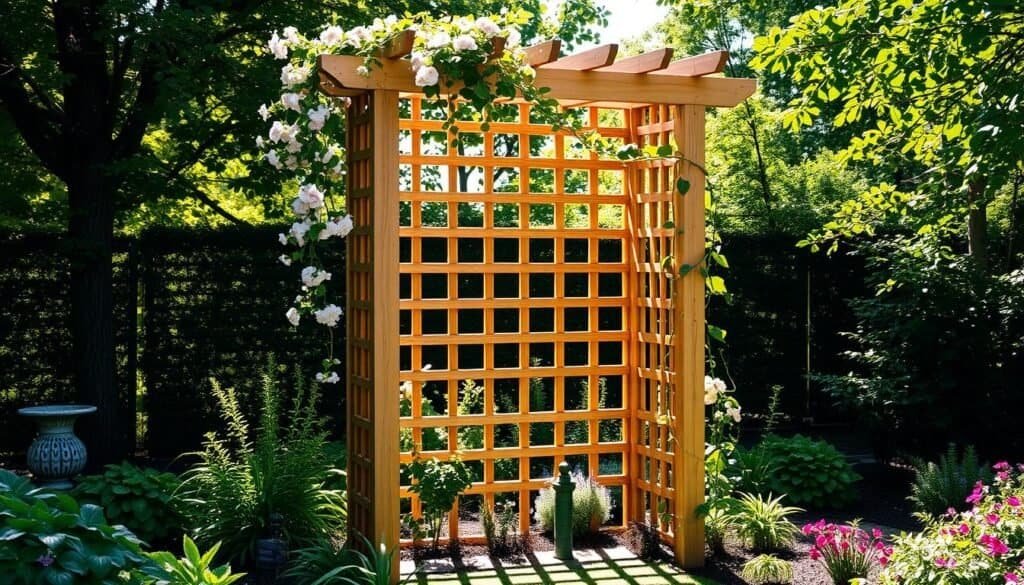
By thoughtfully designing and placing your freestanding trellis, you can create a stunning garden focal point. It enhances your outdoor space and supports your climbing plants.
Japanese-Inspired Wood Trellis Designs
Looking to add calm to your garden? Japanese-inspired wood trellis designs are perfect. They support climbing plants and boost your garden’s look.

Japanese gardens are known for their natural beauty and peace. Adding traditional Japanese touches to your trellis can make your garden a place of calm.
Creating Serene Garden Spaces with Japanese-Inspired Trellises
To make a peaceful garden, consider these design tips:
- Natural Materials: Choose wood and other natural materials that fit right into your garden.
- Simple Designs: Go for simple, clean lines that show off Japanese design’s minimalist style.
- Integration with Nature: Make sure your trellis looks good with the plants and animals around it.
Popular features of Japanese wood trellis designs include Moss and Ferns at the base. They add a lush feel. Adding water features or stone lanterns nearby also makes your garden more peaceful.
By adding Japanese-inspired wood trellis designs to your garden, you can make a peaceful spot. It’s a place to escape the daily hustle and bustle.
Rustic and Natural Trellis Projects
Rustic trellises add natural elegance to gardens. They support climbing plants and decorate outdoor spaces.
Creating Rustic Charm with Trellises
To make a rustic trellis, use natural materials like reclaimed wood, branches, or dowels. Keep the look natural and unfinished to blend with the garden.
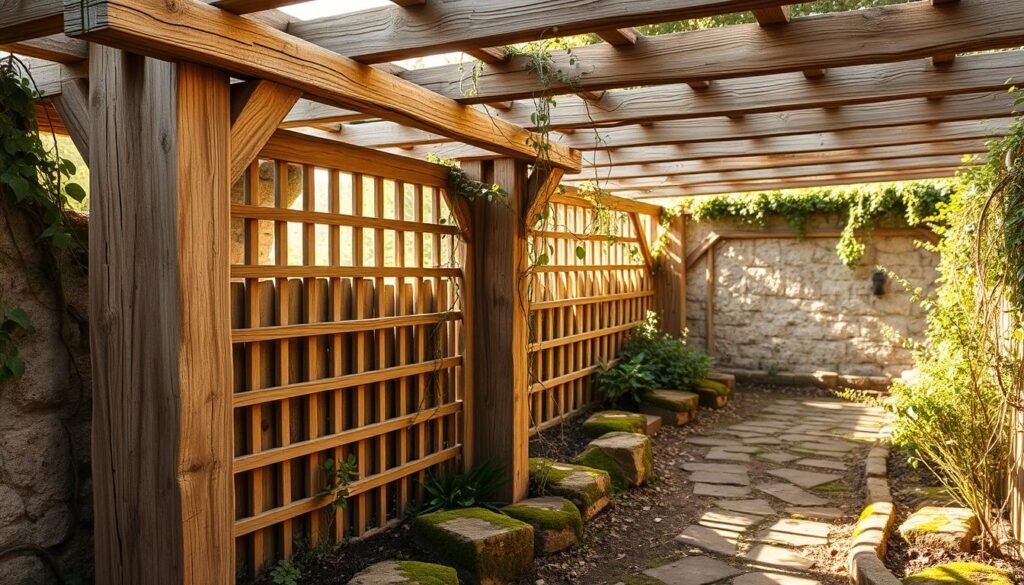
A natural trellis can be simple, like a wooden lattice, or complex, like a multi-tiered arbor. Wood and vines help it blend with the garden.
- Use reclaimed wood for a unique, eco-friendly trellis.
- Add branches and leaves to your trellis design.
- Try a wooden garden lattice for garden decor.
Adding DIY wooden garden decor like a rustic trellis beautifies your garden. It shows off your creativity. Rustic trellises are perfect for any garden, simple or complex.
Functional Trellis Projects for Edible Gardens
Trellises are great for boosting yields and making garden care easier. They give climbing plants the support they need to grow well and stay productive.
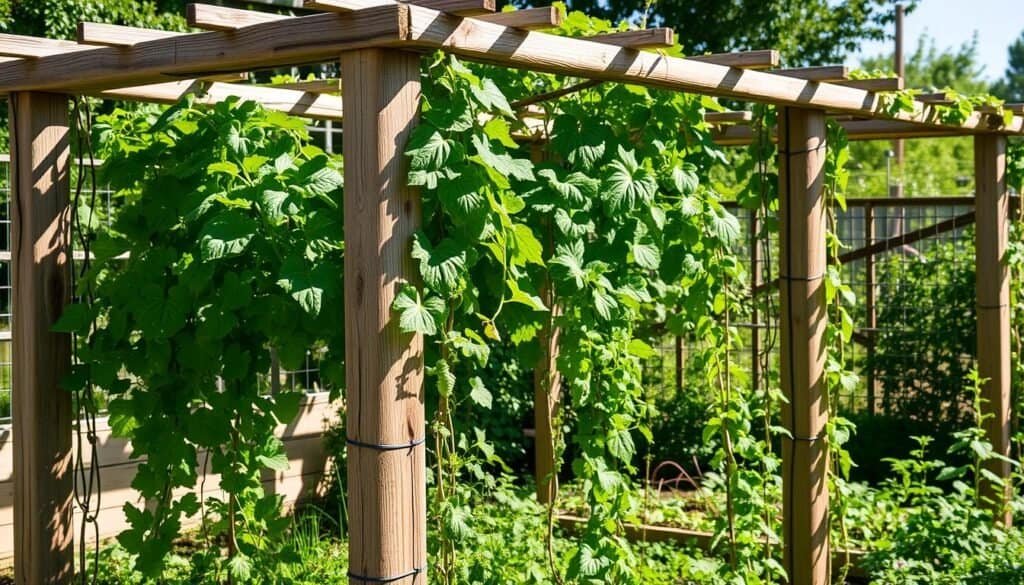
Vine vegetables like cucumbers and squash do well with a strong trellis. It keeps them from getting tangled. You can choose from simple A-frames or more complex designs with many levels.
Fruit-bearing plants such as peas and beans also love trellises. They help these plants grow upwards, saving space in your garden.
- Use DIY berry trellises to keep your berry bushes organized and productive.
- Consider a fruit trellis that is specially made for heavy fruiting plants.
- For vine vegetables, make sure your trellis can hold the weight of the plants when they’re fully grown.
Adding trellis projects to your edible garden makes it more efficient and beautiful. Whether you’re growing veggies, fruits, or both, a good trellis can greatly improve your garden’s health and output.
Creative Trellis Ideas for Privacy and Garden Division
Creating private spaces in your garden is easy with creative trellis designs. Trellises are not just for climbing plants. They also work as dividers or privacy screens.
Trellis Ideas for Creating Private Garden Spaces
Homeowners wanting to improve their outdoor areas can use trellis fence ideas. A trellis along a fence or around a patio makes a secluded spot. It feels safe from the outside.
For a privacy trellis on deck, design a tall trellis. It should block views but let air flow.
- Use climbing plants like clematis or wisteria for privacy and beauty.
- Choose a freestanding trellis for easy placement.
- Integrate trellises into fences for a smooth look.
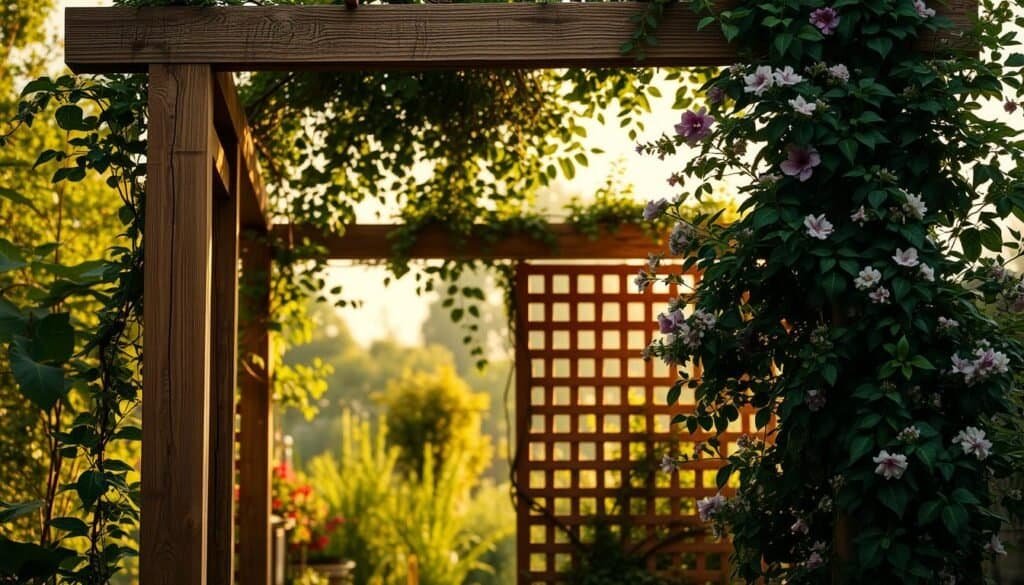
Trellises also help divide a garden into different areas. For example, a garden separation ideas fence can use trellises. This creates zones like a dining area or a quiet spot.
Using creative trellis ideas and garden division ideas can change your outdoor space. It becomes a functional and lovely area for privacy and division.
Best Climbing Plants for Wood Trellises
The right climbing plants can make your wood trellis come alive. Think about your climate, how much work you want to do, and what you want it to look like.
Popular Climbing Plants for Trellises
For wood trellises, top picks include flowering vines like wisteria and clematis. Also, fruit-bearing plants like blackberry and grapevines are great.
- Wisteria: A stunning, fragrant flowering vine that thrives on a sturdy trellis.
- Clematis: A versatile, flowering vine that comes in a variety of colors and bloom times.
- Blackberry: A fruit-bearing vine that’s perfect for edible gardens and can be trained on a trellis.
- Grapevines: Another popular choice for edible gardens, grapevines can be trained to climb a trellis.
- Roses: Many varieties of climbing roses are well-suited for wood trellises, adding beauty and fragrance to your garden.
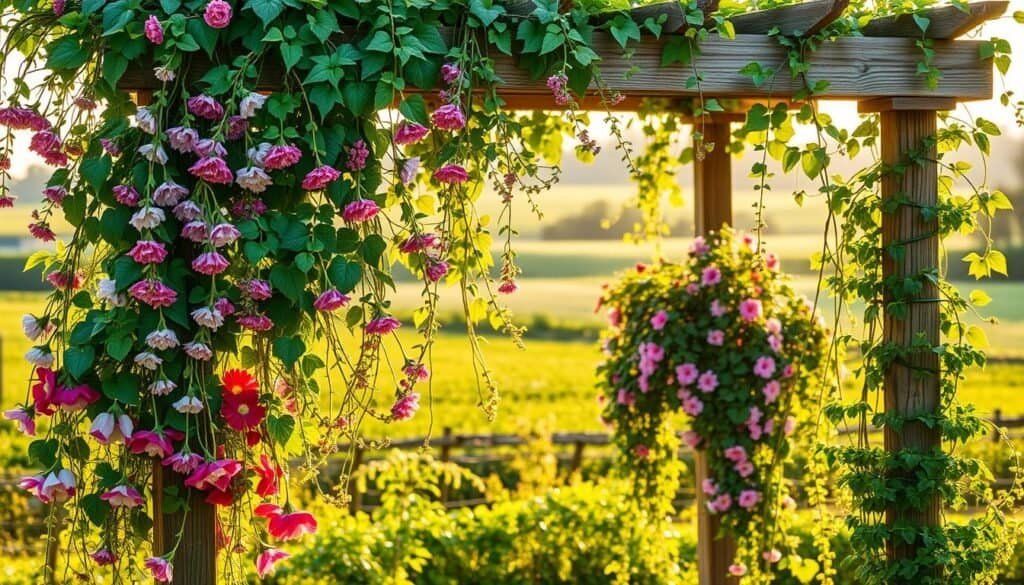
When picking plants that vine trellis, think about how they grow. Make sure your trellis can hold them up. Prune and train them regularly to keep them healthy.
Choosing the right climbing plants for trellises can turn your garden into a stunning feature. It will make your outdoor space even better.
Conclusion
Simple wood trellis projects can really make your garden look better and work better. A DIY garden trellis can be a stunning centerpiece. It also helps climbing plants grow, making your garden more interesting.
A good trellis can change a plain area into a lively spot. It’s perfect for adding beauty to your garden. Whether you want to match your garden or start fresh, there are many ideas to try.
With the tips from this article, you can make a trellis that’s both useful and beautiful. It will support your plants and make your garden more charming. So, start your trellis project now and see the difference it makes!