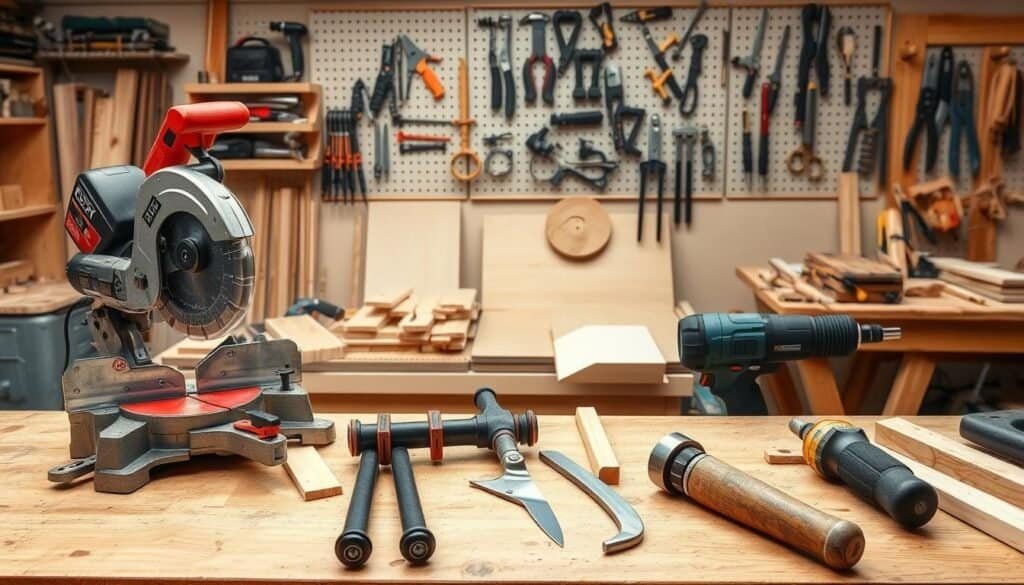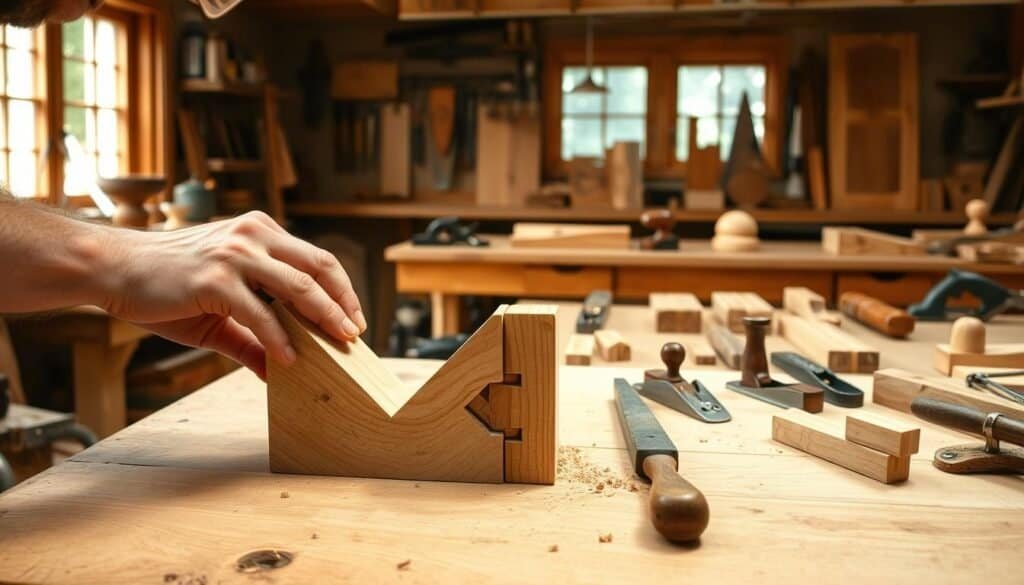
Keeping your blades, bits, and tools sharp is key for top-notch results in any project. Dull tools slow you down, cause more wear and tear, and can lead to accidents. They also waste time and resources.
Using good tool maintenance tips can make your tools last longer. Sharp tools make work easier, cut down on fatigue, and boost the quality of your work. This article will show you how to sharpen your blades and keep your tools in great shape.
Find out why maintaining sharp tools is so important. Learn how to keep your tools sharp for years to come.
Understanding Tool Sharpness: Why It Matters
Knowing how important tool sharpness is can really boost your work speed and quality. It’s not just about how well your tools work. It also affects your safety and the success of your projects.
Sharp tools make a big difference in many areas, like woodworking and kitchen tasks. Sharp tools need less effort to use. This means less strain for you and less chance of accidents.
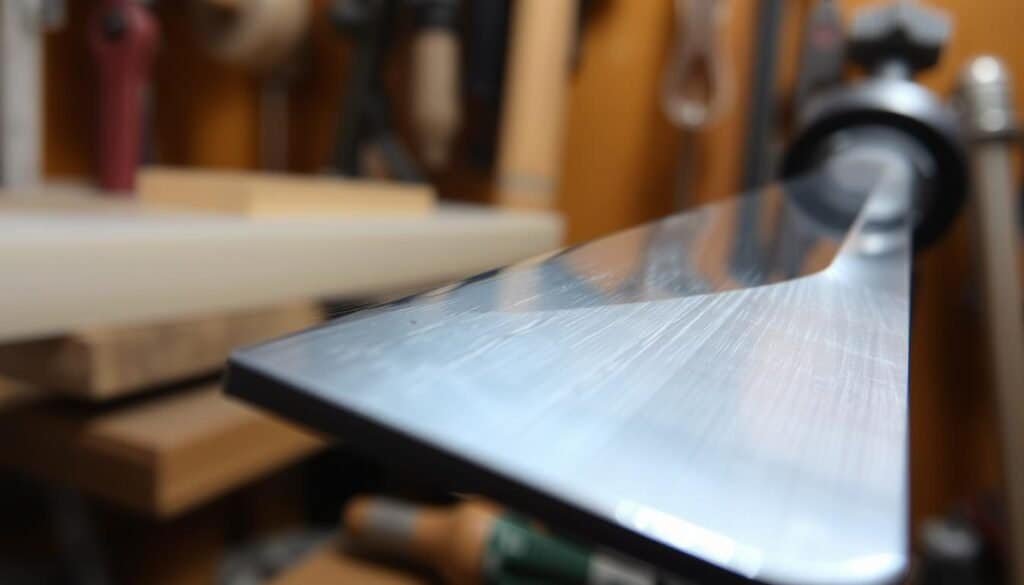
Dull tools, on the other hand, can cause many problems. They lead to poor work, more tiredness, and a higher injury risk. For example, a dull saw blade can get stuck in wood. This can make the saw kick back or force you to use too much strength, which can be dangerous.
- Sharp tools help you make precise cuts and avoid damaging materials.
- They make your work safer by needing less force and preventing tools from slipping.
- Sharp tools also last longer because they don’t wear out as fast as dull ones.
Keeping your tools sharp is key to good tool care. Regular sharpening keeps tools working well and makes your work area safer. By focusing on tool sharpness, you can make your work better and safer.
Signs Your Tools Need Sharpening
Dull tools can really slow down your work. It’s key to know when they need sharpening. Sharp tools work better, cut cleaner, and need less effort. But, as they dull, you’ll see their performance drop.
Indicators of Dull Tools: A big sign is when tools start to tear instead of cut cleanly. For example, a dull saw blade will leave a rough edge on wood. A sharp one will leave a smooth finish.
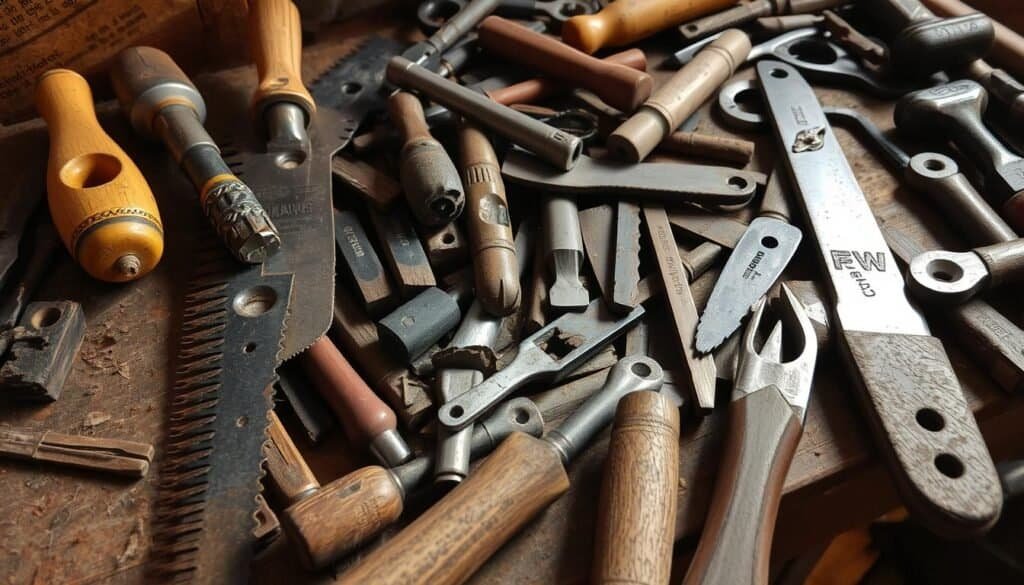
- Increased effort required to make cuts
- Burn marks or tears on the material being cut
- Rough finishes or edges
- Visible nicks or chips on the tool’s edge
Regularly check your tools and spot these signs early. This helps keep them sharp and extends their life. Using sharpening hacks, like a sharpening stone or file, keeps your tools in great shape.
Knowing about types of saws for woodworking and their sharpening needs is important. Each saw and tool has its own needs for sharpening. A good tool care guide helps keep your tools sharp and effective for years.
Essential Sharpening Equipment for Your Workshop
A good workshop needs the right sharpening tools. These tools keep your tools sharp and ready. The right tools also make your equipment last longer.
Sharpening Stones are key for sharpening. They come in different grits for various tools. For more sharpening tips, check The Woodworker’s Playbook.
- Coarse grit stones for fixing damaged edges
- Fine grit stones for polishing
- Combination stones with both coarse and fine grits
Sharpening Jigs are also vital. They help keep angles consistent and sharpen more accurately. A jig for saw blades is very helpful.
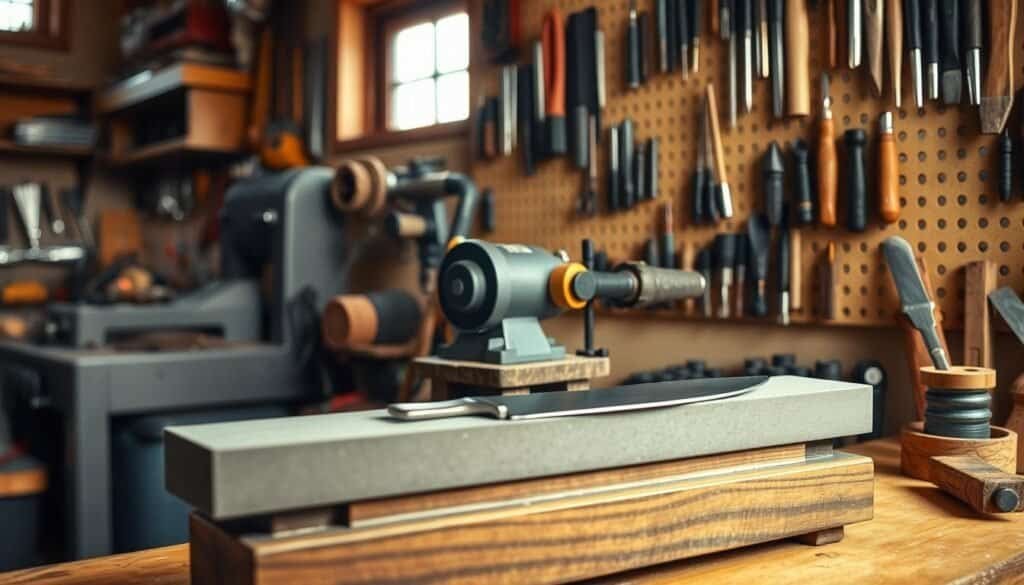
Sharpening Steels and Files are also must-haves. Steels realign blade edges. Files are for coarser sharpening and shaping.
- Round files for sharpening saw chains
- Flat files for sharpening flat edges
- Diamond files for sharpening hard materials
Adding these tools to your workshop helps keep your tools in top shape. This ensures they work well and last longer.
How to Keep Your Blades, Bits, and Tools Sharp for Years: Core Principles
To keep your tools sharp, you need to understand the basics of sharpening. It’s not just about sharpening. It’s also about knowing the key principles that make your tools last longer.
Regular Maintenance is a key principle. Regular checks and care for your tools can spot problems early. This means cleaning them after use, storing them right, and looking for signs of wear.
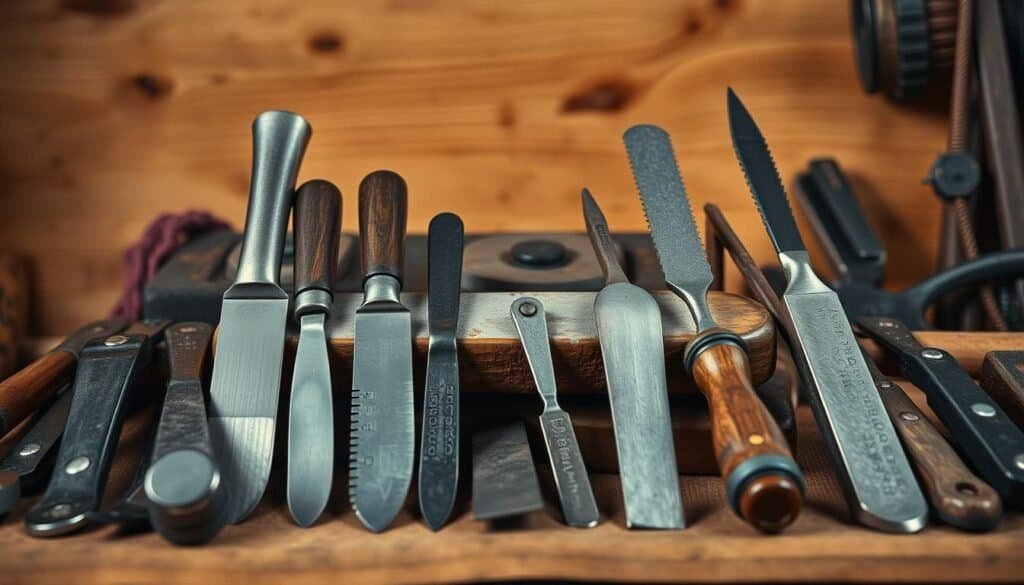
Proper Sharpening Techniques are also vital. Knowing how to sharpen various tools, like knives and chisels, is essential. You need the right sharpening tools and techniques to get the best edge.
The Installation of Saw Blades is another important part. Learning how to put saw blades in correctly is key. This includes aligning the blade right, tightening it as the maker says, and making sure it’s not damaged.
To wrap it up, the main principles for sharp tools are:
- Regular inspection and maintenance
- Proper sharpening techniques
- Correct installation of blades and bits
- Proper storage to avoid damage
By sticking to these principles, you can make your tools last longer. They’ll stay sharp and work well for years to come.
Preventing Damage That Leads to Dullness
To keep your tools sharp, it’s important to prevent damage. Proper handling and storage are key. They help keep your tools sharp.
Handling Tools with Care
Mishandling is a big cause of tool dullness. Dropping tools or using them wrong can damage them. For example, using a chisel as a screwdriver can chip or bend the edge.
- Always handle tools with care, avoiding drops and misuse.
- Use tools for their intended purpose to prevent unnecessary wear.
- Clean tools regularly to prevent debris from causing damage.
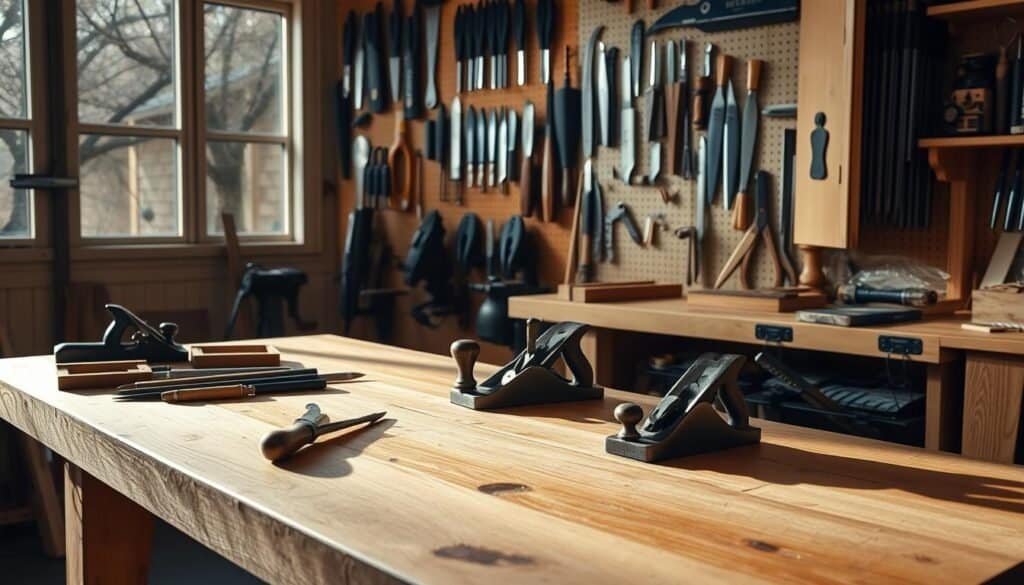
Proper Storage Techniques
Storage is also very important for tool care. Tools should be kept in a dry, safe place. They should not be damaged or damage other tools.
- Store tools in a designated area, such as a toolbox or on a pegboard.
- Keep tools organized to prevent them from coming into contact with each other.
- Use protective covers or cases for tools when not in use.
By following these best practices, you can greatly reduce damage. This extends your tools’ life and keeps them working well.
Sharpening Woodworking Blades: Saws, Chisels, and Planes
Sharpening your woodworking tools is key to keeping them sharp and long-lasting. It also ensures your work is precise. Whether you’re using saws, chisels, or planes, sharp blades are essential for quality projects.
Understanding the Basics of Sharpening
First, let’s cover the basics of sharpening. Sharpening means removing metal to create a sharp edge. The sharpening angle is important and changes with each tool type.
- Saws need a sharp angle for rip cuts and a bit less for cross-cuts.
- Chisels are sharpened at a steady angle, usually 25-30 degrees.
- Planes need a sharp edge to smooth wood surfaces well.
Sharpening Saws
Sharpening saw blades is a detailed task. For table saw blades and radial arm saws, keeping the original angle is key. Even sharpening all teeth is important. A saw sharpening kit or machine can make this easier.
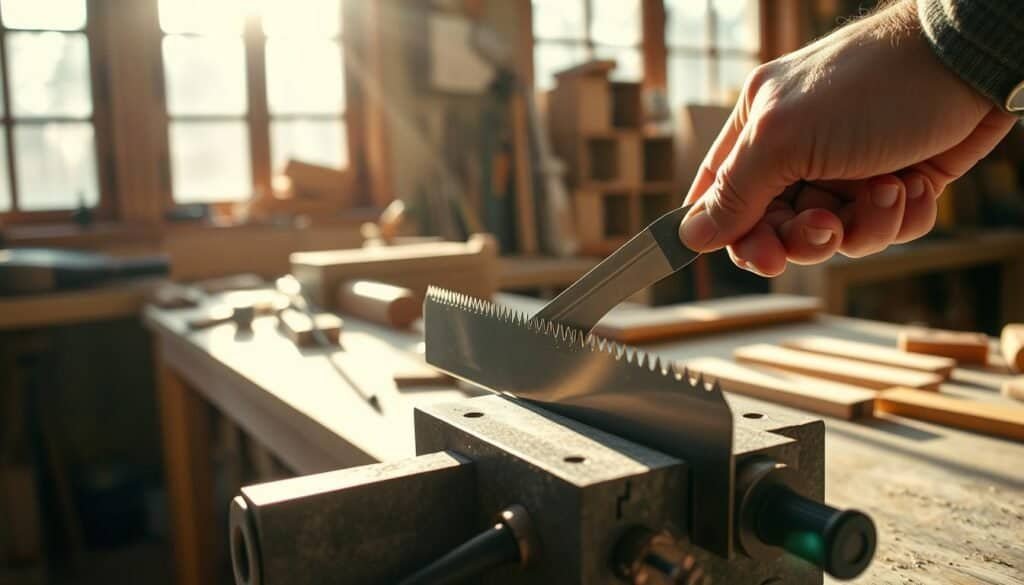
For chisels and planes, sharpening stones are best. Begin by setting the sharpening angle with a honing guide. Then, slowly move the blade across the stone, keeping the angle and pressure steady.
Regular sharpening boosts your tools’ performance and extends their life. Adding sharpening to your routine will greatly enhance your woodworking quality.
Kitchen Knife Sharpening: From Basic to Professional Techniques
Sharpening kitchen knives is a skill that needs technique, patience, and the right tools. It’s important for both home cooks and professional chefs. Sharp knives make cooking safer and more efficient.
Understanding the Importance of Sharp Knives
Sharp knives are safer and easier to use. A dull knife needs more force, which can lead to accidents. Sharp knives, on the other hand, cut smoothly, making cooking safer and more fun.
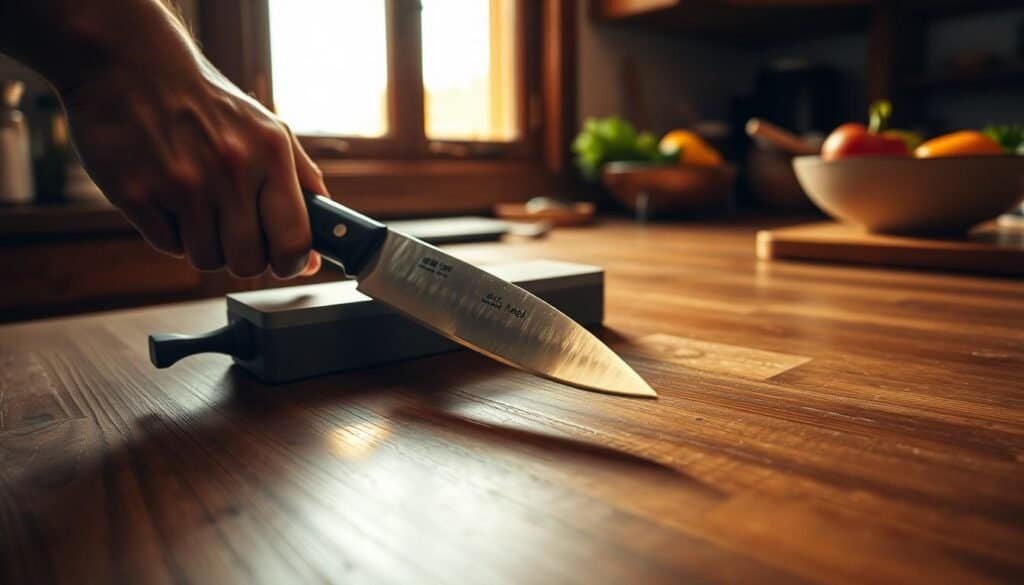
For beginners, starting with the basics is key. Using a knife sharpener is a simple way to sharpen knives. There are manual and electric sharpeners. Manual sharpeners are affordable and easy to use, while electric sharpeners are faster.
Sharpening with a stone is another basic technique. It takes practice but gives you control over sharpening. To sharpen with a stone, keep the angle at about 20 degrees and move the knife gently.
- Choose the right grit stone for your needs.
- Maintain a consistent angle.
- Sharpen both sides of the blade evenly.
Advanced Techniques for Professional Results
For those wanting to improve, honing and stropping can sharpen knives further. Honing realigns the edge, and stropping polishes it to a sharp finish.
Professionals often use these methods for their precision and sharpness. They can’t be achieved with basic techniques.
- Use a honing steel regularly to maintain the knife’s edge.
- Apply stropping for a polished finish.
- Practice regularly to maintain your sharpening skills.
In conclusion, sharpening kitchen knives is a skill that can be developed over time. With practice and the right tools, you can go from basic to advanced techniques. Knowing how to sharpen your knives well can greatly improve your cooking experience.
Router Bits and Drill Bits: Extending Their Cutting Life
Learning how to keep router bits and drill bits sharp can make them last longer. Regular care boosts your work’s quality and saves you money by reducing replacement needs.
Key Factors in Extending Cutting Life:
- Regular cleaning to remove debris and residue
- Proper storage to prevent damage
- Sharpening techniques tailored to the bit type
- Using the correct bit for the job
Router bits need regular checks for wear. A dull bit can ruin your finish and harm your tools. Sharpening router bits requires a diamond stone or a router bit sharpener. For drill bits, a drill bit sharpener or bench grinder works well.
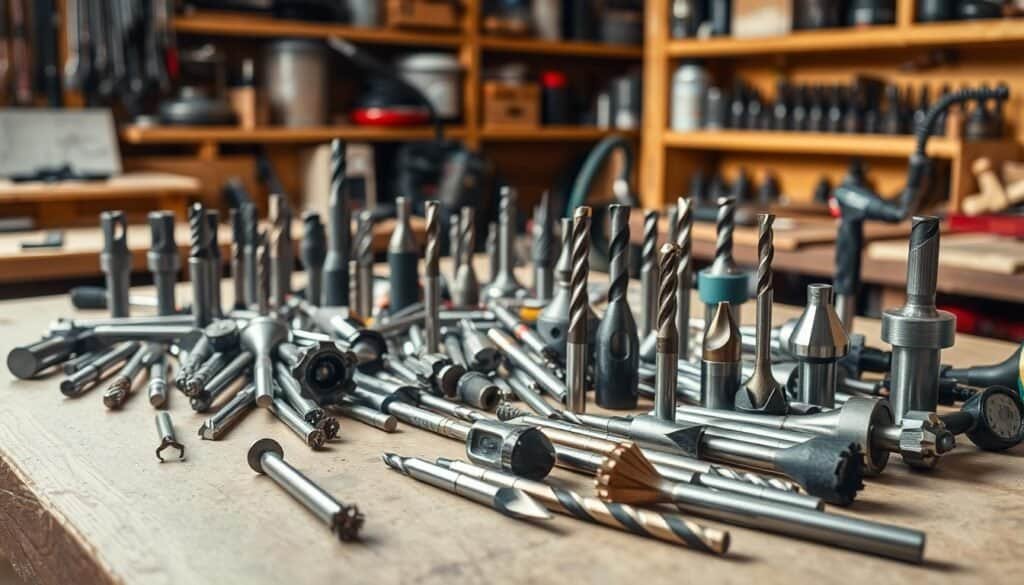
For dremel bits guide, always follow the maker’s care and sharpening tips. Dremel bits are great for many tasks, from grinding to cutting. Taking good care of them makes them last longer.
Knowing drill bit sizes and picking the right size for your project is key. Using the wrong size can make drilling hard and wear out the bit fast.
Best Practices for Bit Sharpening:
- Always wear protective gear when sharpening
- Use the right sharpening tool for the bit material
- Keep the bit’s original cutting edge angle
- Test the bit after sharpening to make sure it works right
By sticking to these tips and caring for your router and drill bits, you can make them last longer. This ensures they keep working well for you.
Lawn and Garden Tool Sharpening
Sharp tools are key to a beautiful lawn and garden. Sharp lawn and garden tools make gardening easier and more fun. You can enjoy your outdoor space without the hassle of dull tools.
Regular sharpening of your tools is vital for a healthy garden. This includes sharpening garden tools like pruning shears, hedge clippers, and lawn mowers. Dull tools can harm plants and make gardening harder.
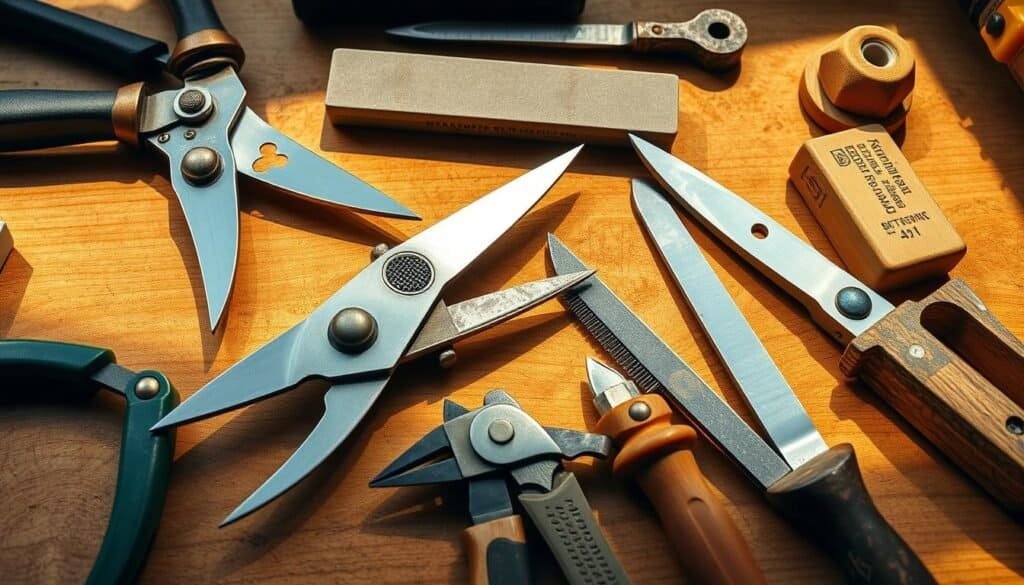
- Use a sharpening stone or file appropriate for the tool material.
- Sharpen tools at the correct angle to maintain their effectiveness.
- Regularly inspect tools for damage or wear.
Proper tool maintenance for garden is more than just sharpening. It also means cleaning and storing tools right. This keeps your tools in top shape for longer.
By following gardening tips like regular tool sharpening, gardening becomes more fun and less tiring. Remember, the quality of your tools affects your gardening success.
Proper Tool Storage to Preserve Sharpness
How you store your tools greatly affects their sharpness and performance. It’s not just about keeping your space tidy. It’s also about keeping your tools in top shape.
Effective tool storage requires careful thought. First, tools need a dry place to avoid rust and corrosion. This is key for metal tools, as moisture can harm them fast.
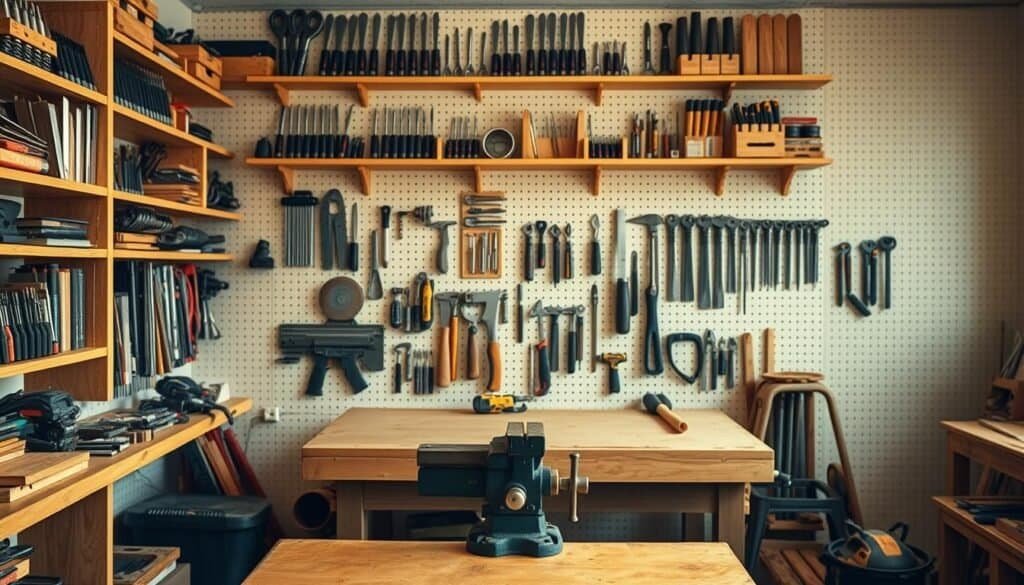
- Use designated storage containers or cases for your tools to protect them from damage.
- Store tools in a way that prevents them from coming into contact with each other, reducing the risk of edge damage.
- Consider using wall-mounted storage solutions to keep your tools organized and easily accessible.
- For smaller tools, use dividers or compartments within your storage containers to keep them separated.
By following these tool maintenance tips, you can make your tools last longer and stay sharp. Remember, keeping tools sharp isn’t just about sharpening them. It’s also about how you store them.
For essential woodworking tools, think about getting custom storage. This could be special inserts for your toolboxes or wall racks for your most-used tools.
Conclusion: Building a Lifetime Sharpening Routine
Creating a regular sharpening routine is key to keeping tools sharp and lasting longer. By adding simple sharpening steps to your daily or weekly tasks, your woodworking projects will always look professional.
Good tool care boosts performance and lowers damage risk, making tools last longer. It’s important for all tools, like kitchen knives, woodworking blades, or lawn and garden tools. A steady sharpening schedule is essential for sharp tools.
By using the tips from this article, you can make a sharpening routine that works for you. It will keep your tools sharp and in great shape. This will make your work better and save you money by avoiding frequent tool buys.
Begin your sharpening routine today. It will make your tools sharp for years, improving your work and saving you money.