Starting DIY woodworking projects can feel scary, but it’s easier than you think. Begin with easy woodworking projects to ease into it.
These simple woodworking projects for novices are perfect for beginners. They help you build confidence in your abilities.
Begin with DIY wood crafts for beginners to improve your skills. Then, you can tackle more challenging projects.
Remember, start small and keep at it. With each project you finish, your confidence will grow.
Why DIY Wood Projects Are Perfect for Beginners
DIY wood projects are great for beginners. They offer a simple way to start woodworking. These projects help new woodworkers build their skills slowly.
Simplicity and Accessibility are key benefits of DIY wood projects for beginners. Most projects need only a few tools and materials. This makes them easy for anyone to start woodworking without spending a lot of money.
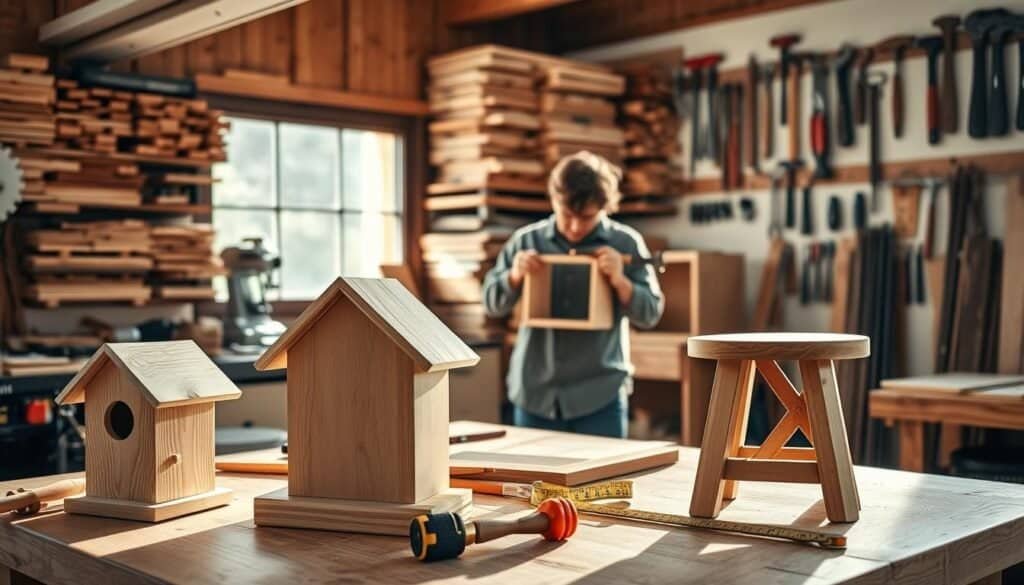
Working on woodworking projects for beginners helps you learn many skills. You’ll get better at measuring, cutting, assembling, and finishing. These skills are useful not just for woodworking but for other DIY projects too.
Finishing a DIY wood project gives beginners a big sense of accomplishment. It motivates them to try more challenging projects. This helps them improve their skills and confidence.
- Develops woodworking skills
- Builds confidence
- Encourages creativity
For those new to beginner woodwork ideas, it’s important to start with beginner-friendly projects. These projects are easy and don’t need many special tools or materials.
Starting with simple DIY wood projects helps beginners build a strong foundation. It’s a journey that improves their woodworking skills and boosts their creativity and sense of accomplishment.
Essential Tools and Materials for Beginner-Friendly Wood Projects
Starting with the right tools and materials makes wood projects easier for beginners. It’s important to know what you need to begin. The basics can make things simpler.
Tools are the foundation of woodworking. Beginners don’t need every tool. Basic hand tools like a hammer, tape measure, square, and clamps are key.
- A hammer for tapping pieces into place
- A tape measure for measuring lumber
- A square for ensuring corners are properly aligned
- Clamps for holding pieces together while gluing
Power tools are also essential. A circular saw for cutting, a drill for holes, and a sander for smooth surfaces are needed for most projects.
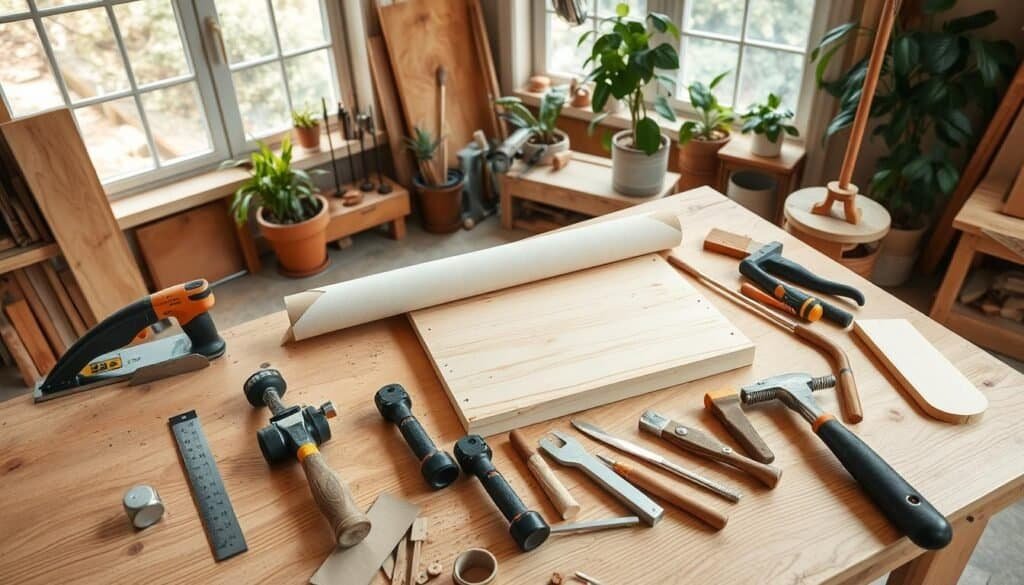
The material choice affects the project’s quality. Lumber like pine or cedar is good for beginners. Plywood works well for large, flat surfaces. You’ll also need fasteners like nails, screws, and wood glue to assemble.
Quality tools and materials are worth the investment. They improve safety and the project’s finish. Don’t forget safety gear like glasses and ear protection.
By focusing on the basics, beginners can start strong in woodworking. It’s about building a solid foundation for future projects.
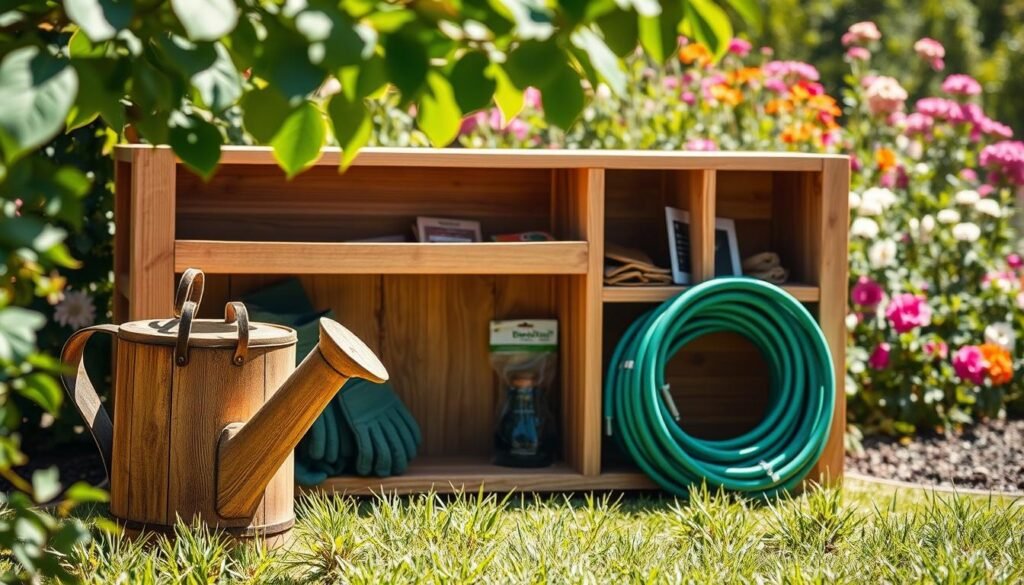
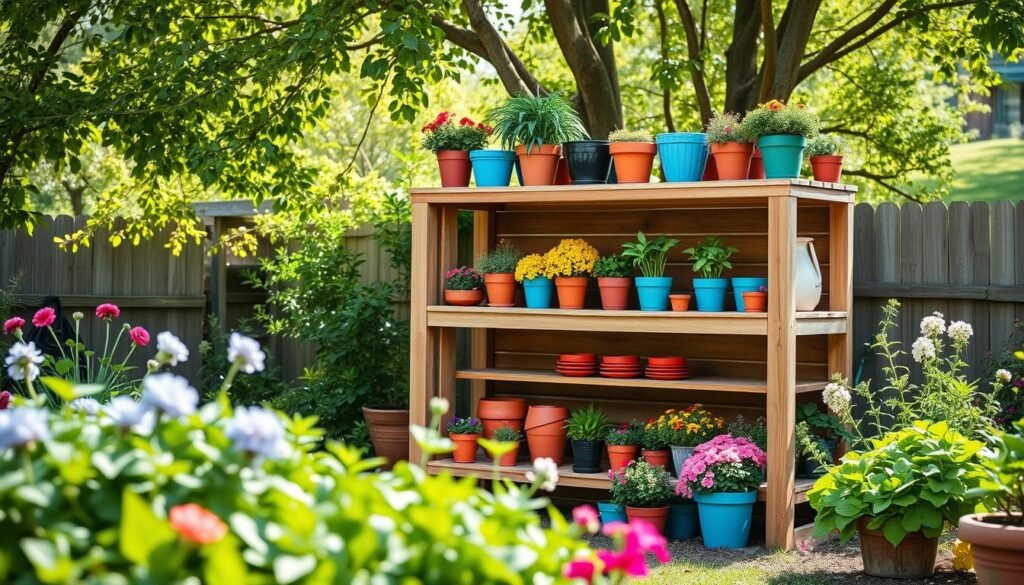
Simple Shelving Projects to Organize Your Space
Building a simple shelving unit is a smart way to tidy up your space. It also brings a stylish touch to your home. With just a few materials and simple steps, you can make a useful and chic storage spot.
Materials Needed
- Wooden planks or shelves
- Drill
- Wall mounts
- Screws
Step-by-Step Instructions
- Plan your shelves based on what you need.
- Put the shelves together and hang them on the wall. Use DIY shoe rack or wall-mounted shoe rack methods.
- Put your things away and enjoy your neat space.
Just follow these easy steps to make a lovely and practical shelving unit. It will keep your stuff organized and make your home look fantastic.
Practical Storage Solutions for Every Room
Efficient storage is key to a clutter-free and relaxing bathroom environment. Consider maximizing your space with practical solutions.
Maximizing Bathroom Storage
To optimize your bathroom, consider installing shelves or cabinets. You can also repurpose old furniture to create unique storage units.
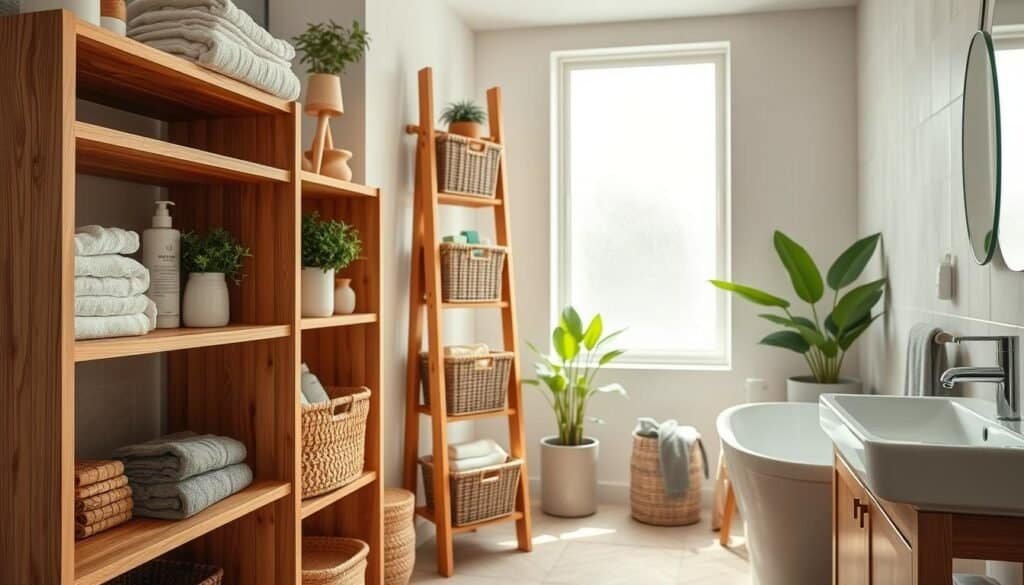
Build a linen tower using wooden crates or baskets. This will not only add storage but also create a decorative element in your bathroom.
- Gather materials: wooden crates or baskets, screws or nails
- Assemble the tower: stack the crates or baskets, ensuring they are aligned properly
By implementing these storage solutions, you can enjoy a more organized and clutter-free bathroom.
Beginner-Friendly Wood Projects for Your Living Room
Want to make your living room special with a DIY wood project? A coffee table or side table is a perfect start. It adds a personal touch and serves as a functional piece you can be proud of.
Materials Needed
- Wood (e.g., pine, oak, or maple)
- Wood screws
- Sandpaper
- Paint or stain (optional)
Step-by-Step Instructions
- Measure and cut the wood according to your design specifications.
- Assemble the pieces using wood glue and wood screws.
- Sand the entire piece to smooth out any rough edges.
- If desired, apply a finish (stain or paint) to match your living room decor.
- Allow the finish to dry completely before placing the table in your living room.
By following these simple steps, you can make a beautiful and useful piece of furniture. It will make your living room better. With a bit of creativity and basic DIY skills, you can create a space that shows off your style.
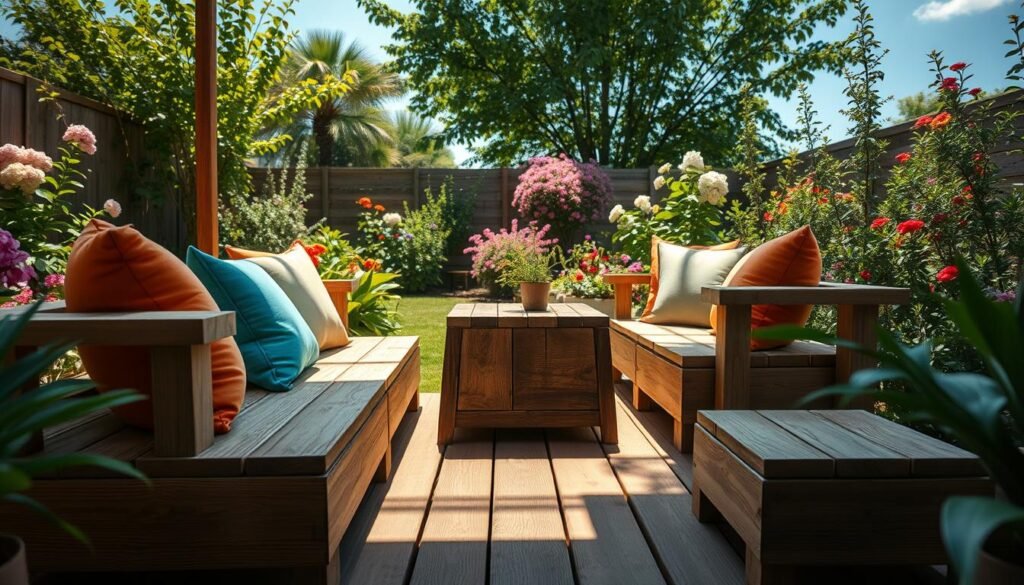
Outdoor Wood Projects for Beginners
Outdoor wood projects are fun and rewarding.
When starting, think about the materials and tools you’ll need.
Consider the wood type, design, and how you’ll use the project.
By following these steps, you can make a beautiful and useful outdoor wood project.
Upcycling Ideas: Creative Projects Using Scrap Wood
Scrap wood can be transformed into beautiful, useful items for your home. Upcycling it not only cuts down on waste. It also lets you make unique decor that shows off your style.
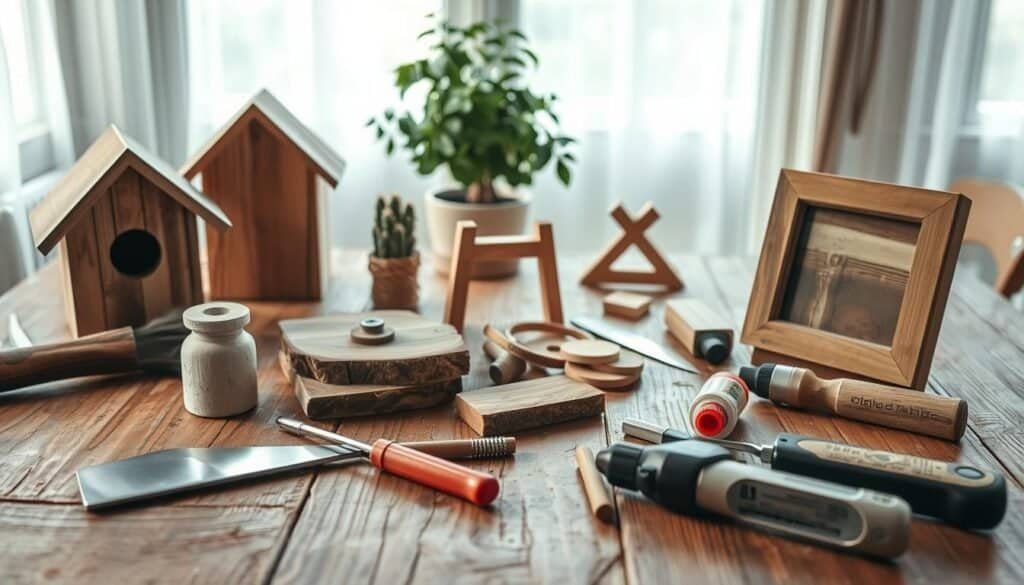
To begin your scrap wood crafts, gather some basic materials and tools for a great DIY project. You’ll need:
- Scrap wood pieces of various sizes
- Sandpaper
- Wood glue
- Hammer or nail gun
- Paint or stain (optional)
Step-by-Step Instructions
Here’s a simple DIY upcycling project to start with:
- Sort your wood scraps by size and type.
- Plan your project, thinking about size and design.
- Sand the wood to make it smooth.
- Use wood glue and nails to put the pieces together.
- Finish with paint or stain to make it look better.
Materials and Tools for Advanced Projects
For more cool wood projects, you might need more materials and tools. These include:
- Power tools (e.g., circular saw, drill press)
- Decorative hardware
- Advanced finishing techniques (e.g., distressing, glazing)
Step-by-Step Instructions for Advanced Projects
Once you’re good at basic scrap wood projects, try more complex ones. You could make:
- Custom shelving units
- Outdoor furniture
- Decorative wall art
By following these steps and trying new materials and techniques, you can make unique pieces. These will show off your creativity and skill in DIY upcycling.
Holiday-Themed Wood Projects
Get into the holiday spirit by creating your own wooden decorations or gifts. Here are some ideas to get you started.
Wooden Christmas Ornaments
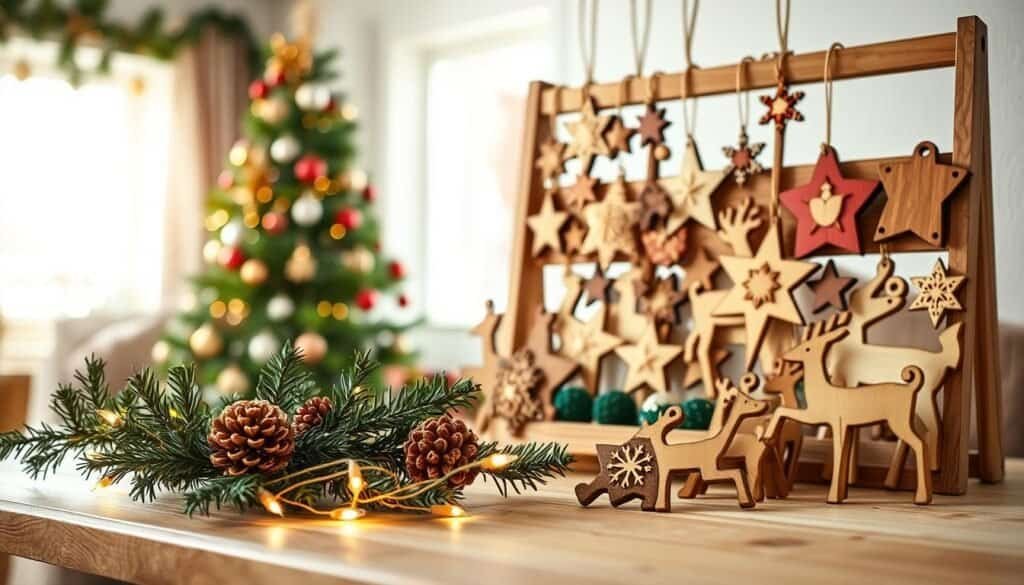
Create beautiful ornaments using different types of wood. You can make stars, trees, or even snowflakes to hang on your Christmas tree.
Holiday Decorations
Add a personal touch to your home with handmade holiday decorations. Consider making wooden candle holders, vases, or centerpieces to add a warm glow to your holiday celebrations.
By creating your own holiday wood projects, you can add a personal and meaningful touch to your holiday season.
Handmade Wooden Gifts That Impress
Give the gift of handmade love with a beautifully crafted wooden present. Whether it’s for a birthday, anniversary, or holiday, a handmade wooden gift is a thoughtful and unique way to show you care.
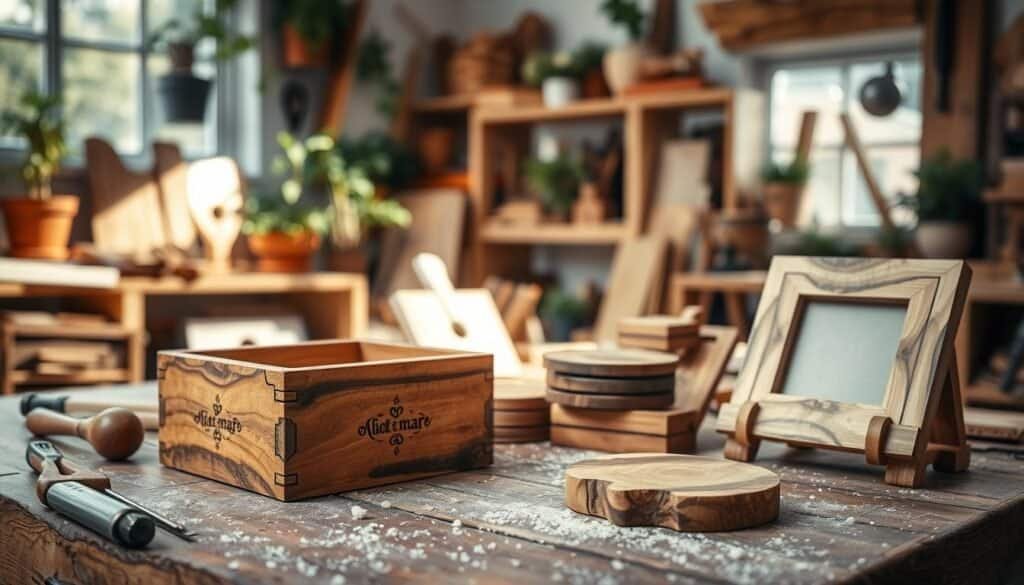
To create a stunning handmade gift, start by choosing the right type of wood. Consider the color, grain, and durability of the wood to ensure it fits the recipient’s style.
Tips for Creating Handmade Wooden Gifts
- Choose the right wood for your project
- Plan your design carefully
- Add a personal touch with engravings or carvings
Pallet Wood Projects: From Discarded to Decorative
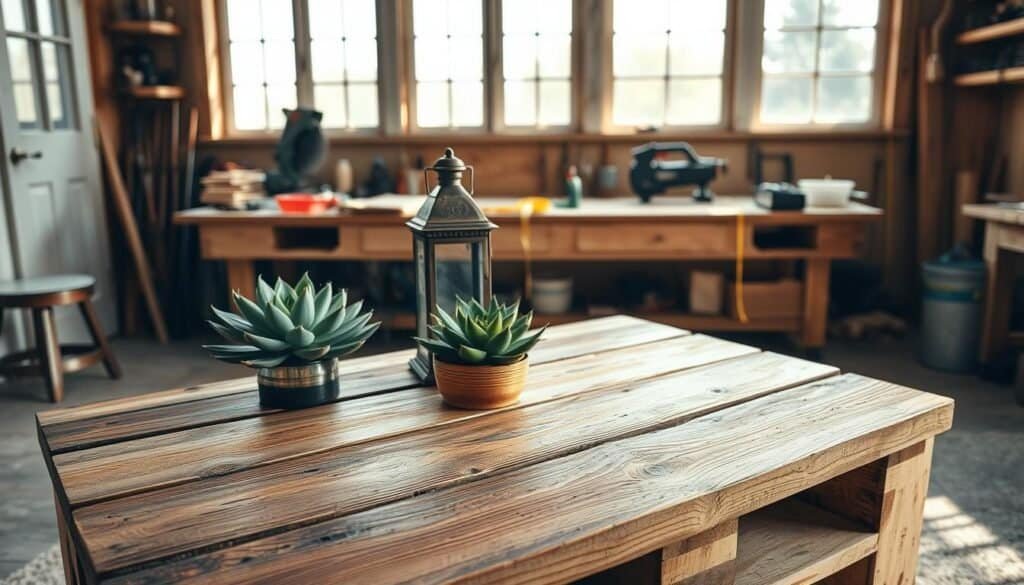
Turning old pallets into decorative items is a smart way to cut down on waste. It also lets you add a personal touch to your home. With a bit of creativity, you can make unique and useful items that show off your style.
Materials Needed
- Pallets
- Saw
- Hammer
- Nails or screws
Step-by-Step Instructions
- Collect pallets and take them apart into planks.
- Clean and sand the planks to get rid of dirt or debris.
- Plan your project, like a coffee table, headboard, or wall art.
- Cut and put together the planks as per your design.
By using pallets again, you can make beautiful and useful items. They bring a rustic charm to your home. So, get creative and breathe new life into old materials!
Troubleshooting Common Challenges in Beginner Woodworking
Troubleshooting Common Issues
—————————–
When you start woodworking, you might face some problems. Here are some common issues and how to fix them:
1. Inaccurate cuts: Double-check your measurements and make sure your saw is sharp.
2. Warped wood: Look at your wood before you start. Make sure it’s straight and even.
3. Incorrect joinery: Make sure your joints fit right and are aligned well.
Knowing these common problems helps you avoid them. This way, you can make sure your project turns out well.
Conclusion: Building Confidence One Project at a Time
Exploring DIY wood projects is a great first step. It unlocks your creativity and builds your confidence. Whether you’re new or experienced, these projects give you a solid base to create something special.
Easy woodworking projects teach you to work with different materials and tools. You’ve found joy in making something with your hands. Now, you’re ready for more challenging projects. Always remember to stay safe, be patient, and don’t worry about mistakes. They’re a key part of learning.
Keep going on your woodworking journey. Keep exploring, learning, and creating. With each project, you’ll grow more confident and skilled. You’ll be ready to take on even bigger projects.
## FAQ
### Q: What are the benefits of DIY wood projects for beginners?
DIY wood projects are great for beginners. They help you learn new skills and build confidence. You also get to create something useful for your home.
### Q: What are the essential tools needed for beginner-friendly wood projects?
For beginner-friendly wood projects, you’ll need a few basic tools. These include a tape measure, square, pencil, saw, drill, and sandpaper. They help you measure, cut, and assemble your projects right.
### Q: How do I choose the right type of wood for my project?
Choosing the right wood depends on your project’s needs. Think about durability, appearance, and budget. Consider the wood’s density, grain pattern, and moisture resistance too.
### Q: What are some common mistakes to avoid in woodworking?
Common mistakes in woodworking include wrong measurements and bad cutting techniques. Don’t forget to sand well and always follow safety rules.
### Q: How can I ensure my woodworking project is safe and durable?
To make your project safe and durable, use good construction techniques and quality materials. Always check your work before finishing the project.
### Q: Can I use reclaimed or recycled wood for my projects?
Yes, using reclaimed or recycled wood is a great idea. It’s good for the environment and adds character to your projects. Just clean and prepare the wood well before using it.
### Q: What are some beginner-friendly woodworking projects?
Beginners can start with simple projects like a cutting board or a wooden picture frame. You can also try making a small table or shelf.
### Q: How can I improve my woodworking skills?
To get better at woodworking, practice often and watch tutorials online. Take classes or workshops to learn new things and gain experience.
### Q: What safety precautions should I take when working with power tools?
When using power tools, wear protective gear like safety glasses and ear protection. Keep your clothes and hair tied back. Avoid jewelry that could get caught in the tools.
Can I make woodworking projects without expensive tools?
Yes, you can start with basic, affordable tools. As you get better and more confident, you can buy more specialized tools.