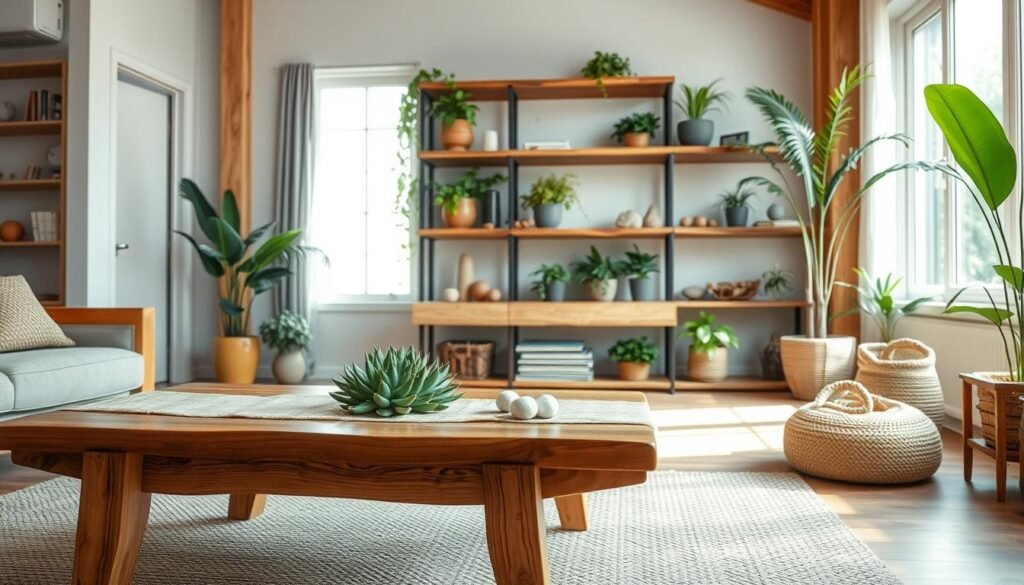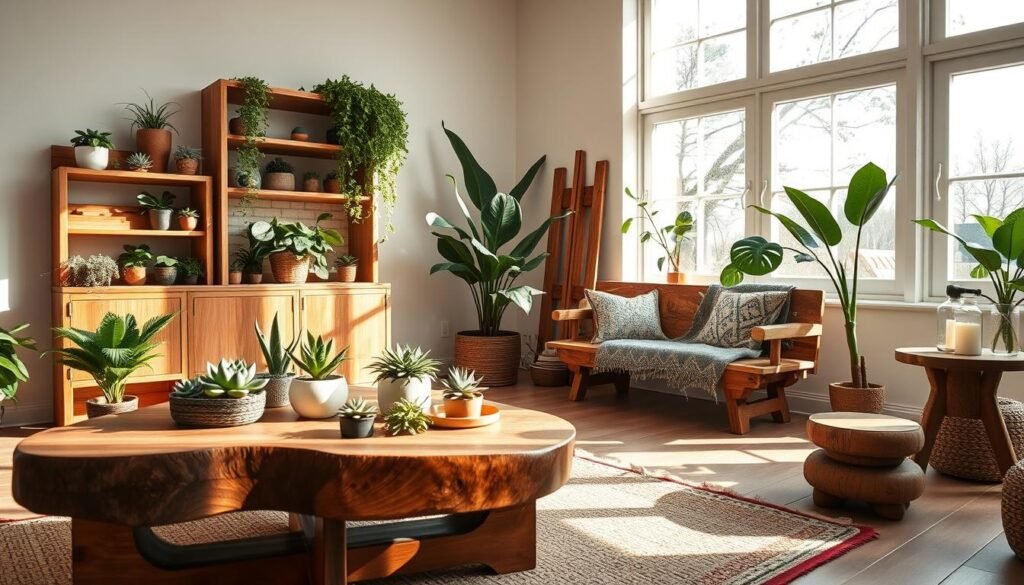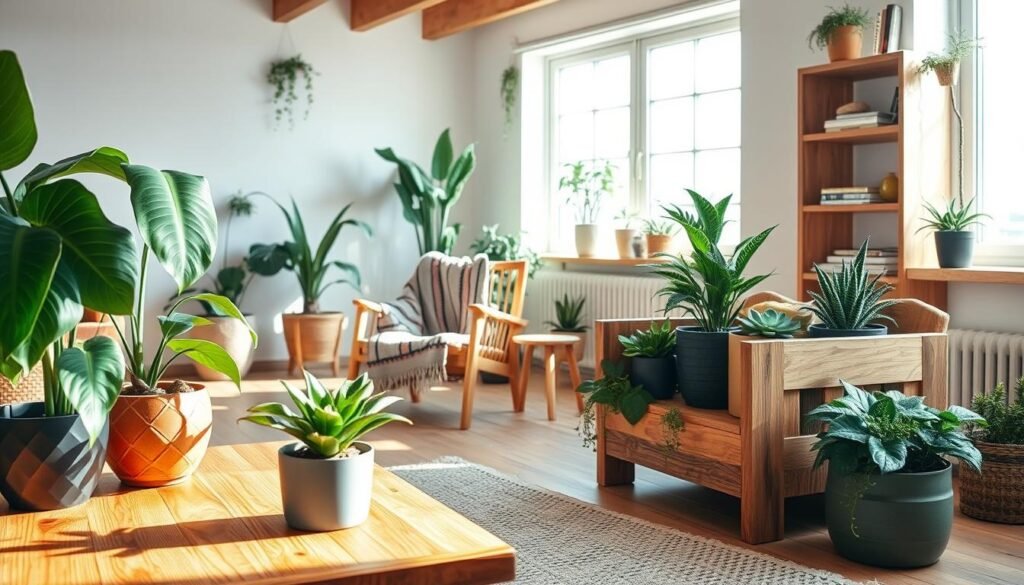
Using wood and plants together can make your home cozy. This mix adds warmth and brings in biophilic design. It makes your space feel welcoming.
Adding wood accents and greenery to your decor can change your home. It becomes sustainable and cozy. This not only improves looks but also health.
Exploring wood and plants in home design shows its benefits. It makes your space more inviting and comfortable.
The Natural Harmony of Wood and Plants in Home Design
Wood and plants together in home decor make a cozy and peaceful space. This mix is not just pretty; it also makes you feel better. Being around nature can lower stress and boost your mood.
Wood accents in furniture and decor warm up a room. Indoor greenery adds a natural touch. Together, they make an eco-friendly interior that’s inviting and green.
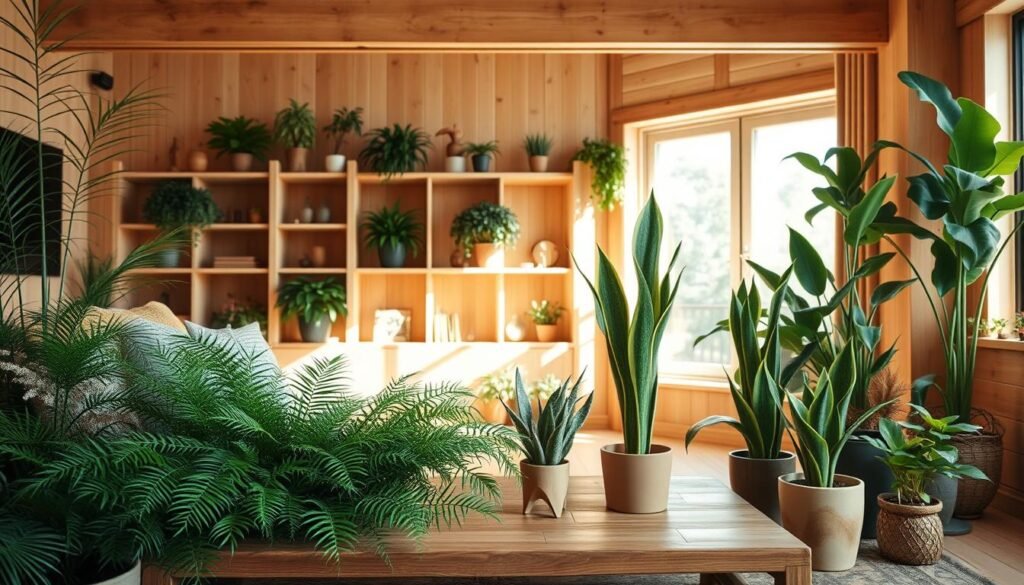
Combining wood and plants in home design has many benefits. Here are a few:
- It makes rooms look better with natural textures and colors.
- Plants help clean the air.
- Natural elements bring calm and well-being.
To get this harmony, pair wooden furniture with plants that match their look and color. For instance, a wooden coffee table with a potted plant makes a cozy spot in a living room.
By carefully mixing wood and plants, homeowners can make plant-filled rooms that are stunning and good for your health.
Warm Spaces with Wood and Plants: The Fundamentals
To make your living room look great, it’s key to know how to mix wood and plants. Warm spaces with wood and plants look good and feel cozy. The secret is picking the right wood and plants that go well together.
When picking wood, think about its color and texture. Light woods like oak or pine make rooms feel bright. Dark woods like walnut or espresso add warmth and depth. The wood’s texture matters too; smooth wood looks fancy, while rough wood is rustic.
Choosing plants depends on the room’s light and the look you want. Bright spots are perfect for plants like succulents or ferns. Less light? Go for plants like snake plants or peace lilies. The planters you pick can also change the look; terracotta adds earthiness, while glass or metal is modern.
It’s important to balance wood and plants in your room. Place plants all over to make the space feel balanced. Use wood as highlights, like a wooden coffee table or a reclaimed wood wall.
- Start with a neutral base: Use a neutral color palette to let the wood and plants be the focal points.
- Add wood accents: Incorporate wooden furniture or decorative items that complement the room’s color scheme.
- Bring in plants: Choose plants that fit the room’s lighting and add them in a way that distributes greenery throughout the space.
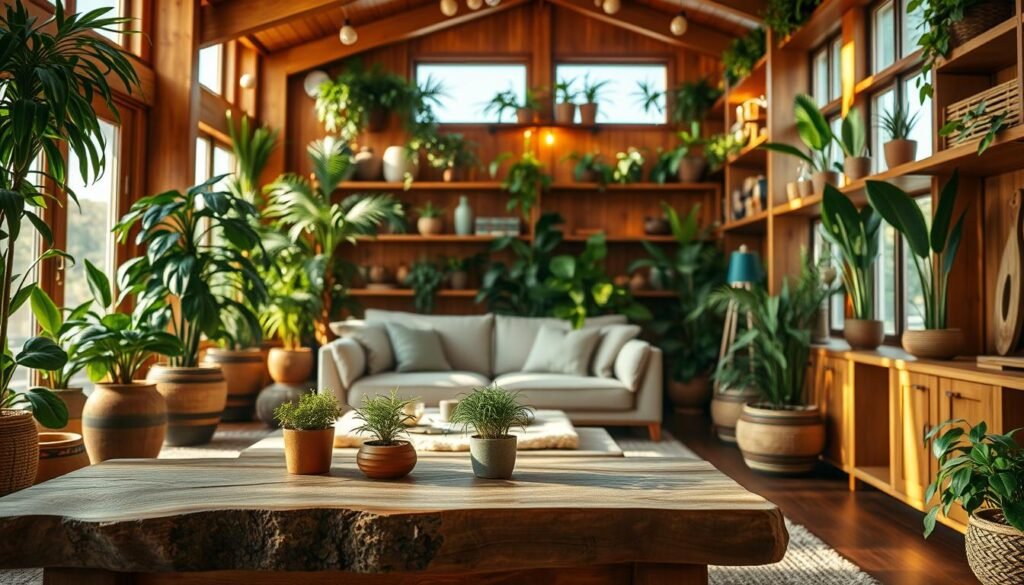
By following these tips, you can make a cozy living room design that’s both welcoming and stylish. Wood and plants not only make your room look better but also make it feel warm and inviting. Your home will become a true sanctuary.
Living Room Transformations: Wood Accents and Strategic Greenery
A living room can become a peaceful oasis with the right mix of wood and plants. This combination boosts beauty and makes the space feel welcoming.
Key Elements for Transformation:
- Reclaimed wood furniture for a rustic touch
- Strategic placement of plants to enhance natural beauty
- Minimalist decor to maintain a Scandinavian feel
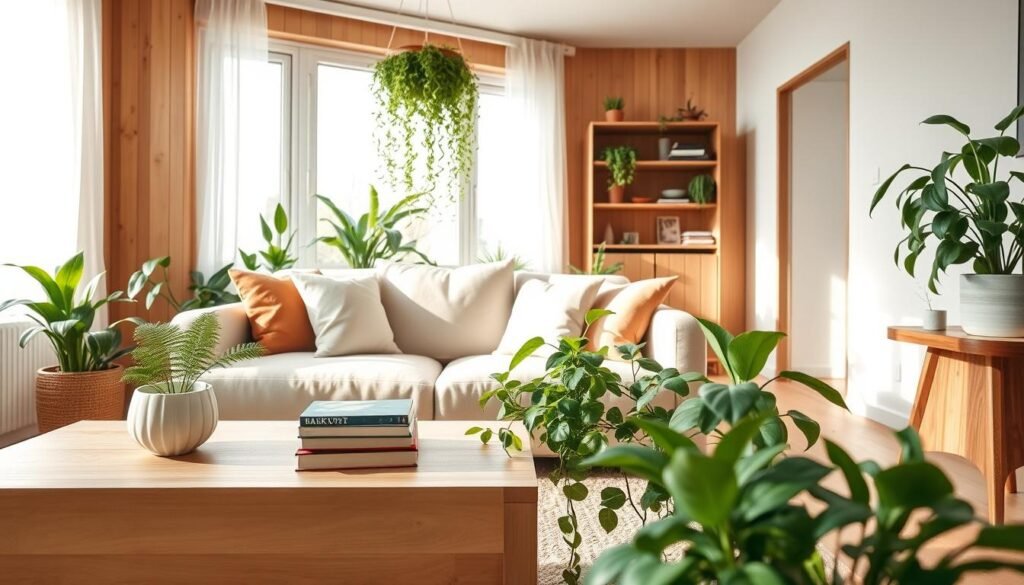
Scandinavian design is all about simplicity and function. Adding wood and plants makes your living room cozy yet simple.
Tips for Scandinavian-Inspired Decor:
- Use light wood tones to create a bright and airy feel
- Incorporate plants with clean lines and simple pots
- Maintain a clutter-free environment to enhance the sense of space
Embracing these elements turns your living room into a stylish and welcoming space. Wood and plants add warmth and bring nature inside.
Some top living room plants are snake plants, spider plants, and peace lilies. They’re not just pretty but also easy to care for, ideal for indoor decor.
In decor home living room, finding a balance between looks and function is key. Wooden furniture and plants help achieve this balance.
Kitchen Designs That Blend Wooden Elements with Herbs and Plants
Wooden elements and kitchen plants can make a kitchen cozy and useful. Wooden accents, like oak cabinets or walnut countertops, add warmth and character. Plants and herbs bring freshness and life to the space.
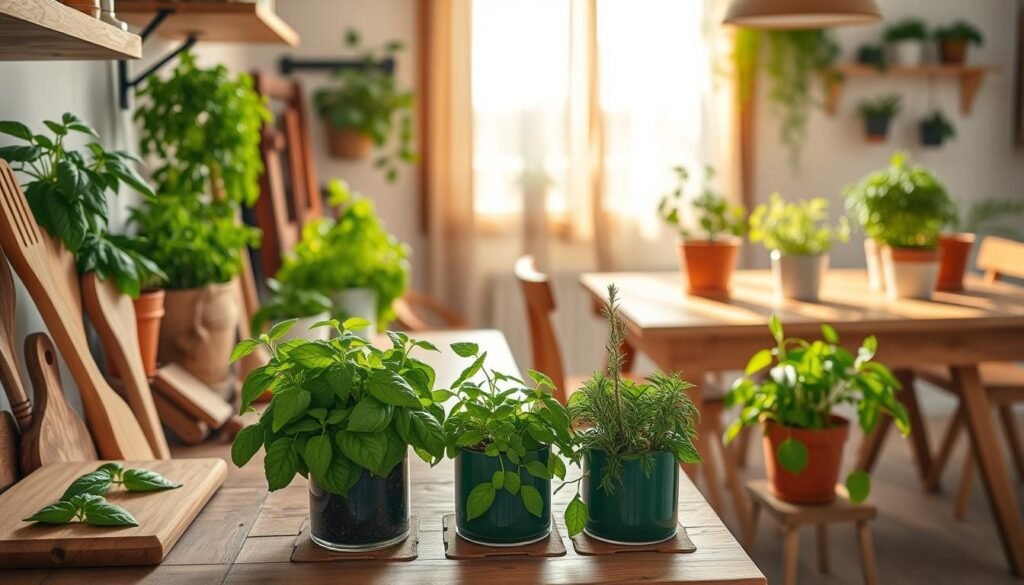
Adding plants to your kitchen design improves its look and offers many benefits. Having herbs on hand can make cooking better by adding fresh flavors. Some plants also clean the air, making your kitchen healthier.
Practical Tips for Kitchen Plants That Thrive
To keep kitchen plants healthy, pick ones that fit the kitchen’s conditions. Here are some practical tips:
- Choose plants that handle the kitchen’s temperature and humidity well.
- Use pots with good drainage to avoid waterlogged soil.
- Put plants in bright spots or use grow lights for dim kitchens.
- Fertilize plants often to help them grow well.
By mixing wooden elements with kitchen plants and herbs, you can make a kitchen that looks great and works well. This mix of natural elements turns the kitchen into the home’s heart.
Bedroom Sanctuaries: Wooden Furniture and Calming Greenery
Turning your bedroom into a peaceful retreat is simple with the right mix of wooden furniture and calming plants. A cozy bedroom is key for good sleep and a fresh start every morning.
For a peaceful space, balance natural elements with calming designs. Calming greenery, like peace lilies or snake plants, not only purify the air but also help you relax.
Creating a Sleep-Friendly Environment with Natural Elements
When picking wooden furniture for your bedroom, go for natural woods like oak or pine. These add warmth and comfort to your room.
Adding the right plants to your wooden furniture can make your bedroom even more relaxing. Plants like lavender can help calm you down and fit well with your decor.
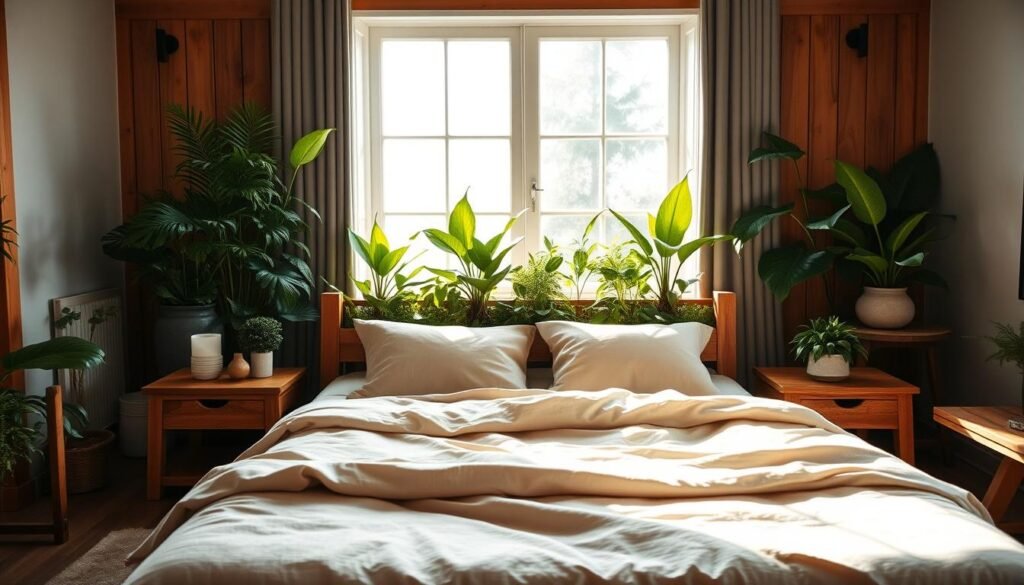
- Choose wooden furniture with clean lines and minimal ornamentation to promote a sense of calm.
- Select plants known for their air-purifying qualities and calming scents.
- Consider the color palette of your bedroom, opting for soothing tones that complement the natural wood and greenery.
By mixing wooden furniture with calming greenery, you can make a sleep-friendly environment. This environment encourages restful sleep and relaxation.
Bathroom Oases: Combining Wooden Features with Humidity-Loving Plants
Creating a bathroom oasis means mixing wood’s warmth with plants that love moisture. This mix can turn a simple space into a cozy retreat.
Wooden features bring a cozy feel to the bathroom. Humidity-loving plants do well in the moist air. Plants like ferns, orchids, and peace lilies are great for bathrooms because they love the humid air.
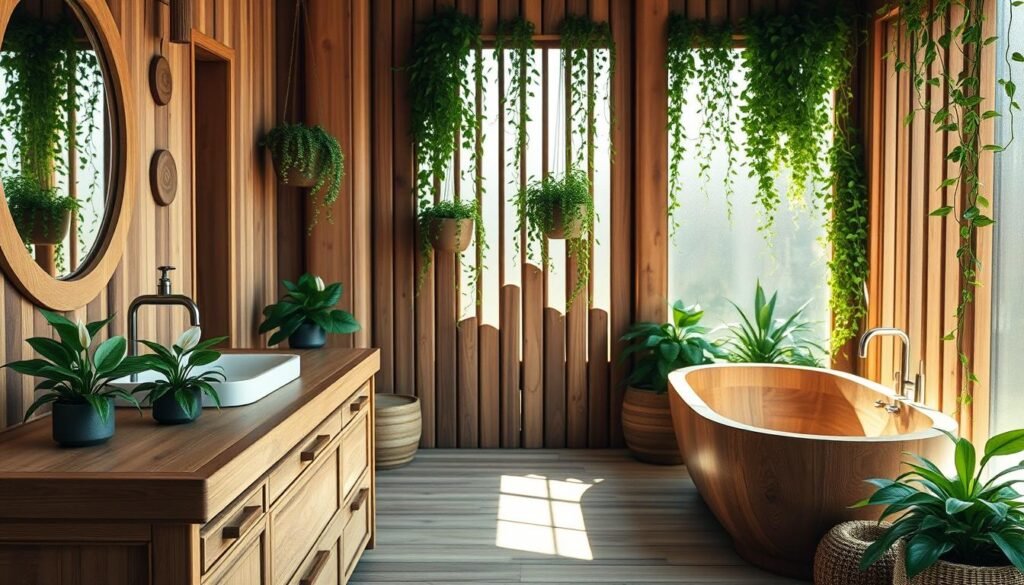
When adding wood to your bathroom, pick moisture-resistant woods for durability. Here are some good options:
- Teak: It has natural oils that fight moisture.
- Cedar: It has oils that keep moisture and insects away.
- Redwood: It naturally resists rot and insects.
By mixing these wooden elements with the right plants, you can make a bathroom that’s both beautiful and peaceful. The trick is to balance wood’s natural beauty with the lushness of plants that love humid air.
DIY Projects: Creating Custom Wood and Plant Combinations
Get creative with DIY wood and plant projects to warm up your home. Making your own wood and plant mixes lets you make your space truly yours.
Think about which wood and plants go well together. For example, cedar wood looks great with the bright colors of succulents. Choose materials that look good and are also strong and easy to care for.
Tools and Materials for Beginner-Friendly Wood Projects
If you’re new to DIY wood projects, you’ll need the right tools and materials. Here’s what you should start with:
- Basic woodworking tools: saw, drill, sandpaper
- Reclaimed or sustainably sourced wood
- Planters and pots that match your woodwork
- A variety of plants for indoor or outdoor use
Beginner-friendly projects include making a wooden planter box or a shelf from reclaimed wood. These projects add a personal touch and let you play with different wood and plant mixes.
When mixing wood and plants, think about the size and look of your project. A big wooden planter can stand out, while small ones can be grouped for a full look. 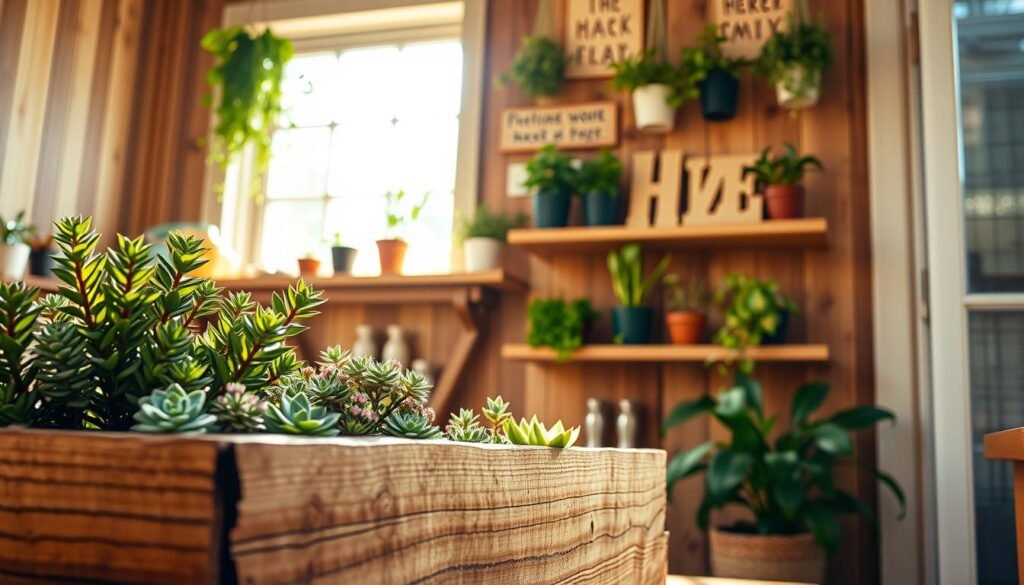
DIY projects that mix wood and plants can make your home cozy and show off your style. Whether you’re experienced or just starting, these projects are a fun way to improve your space.
Outdoor Living Spaces: Extending the Wood and Plant Harmony
Wood and plants can come together to make outdoor spaces beautiful. By using weather-resistant wood and picking the right plants, you can make your outdoor area cozy and inviting.
When setting up outdoor areas, it’s key to pick materials that can handle the weather. Weather-resistant wood is great for outside, as it’s both strong and looks good. Cedar, redwood, and treated pine are top picks because they fight off rot, decay, and bugs.
Weather-Resistant Wood Options for Exterior Applications
For outside wood, think about these:
- Cedar: It has oils that keep bugs away and stop rot.
- Redwood: It’s tough and doesn’t decay, with a cool color.
- Treated Pine: It’s been treated to last longer and stay strong.
Pairing these woods with plants that do well outside makes a welcoming space. Choose succulents, grasses, and flowering shrubs that fit your area’s weather.
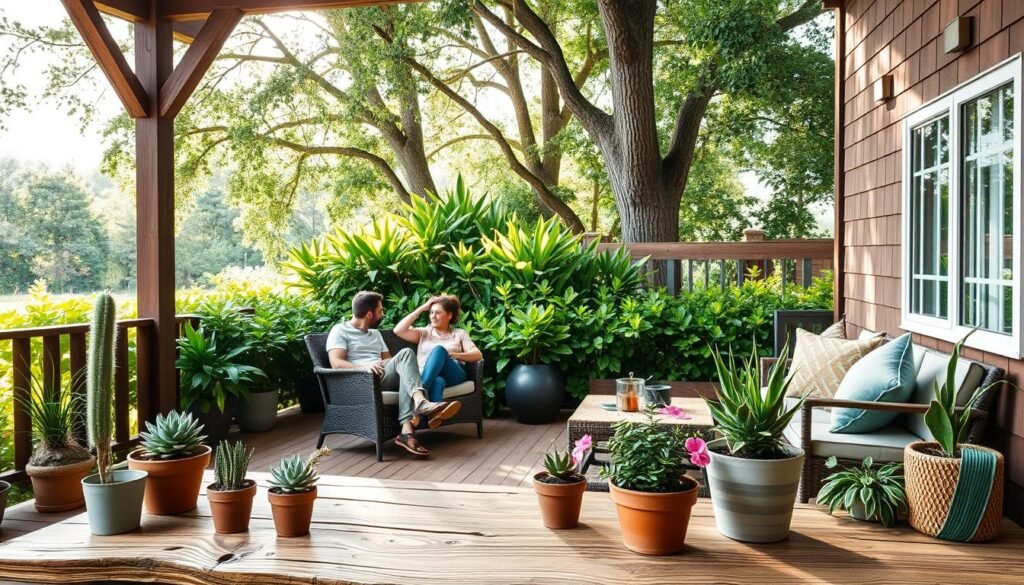
By carefully mixing wood and plants, you can make outdoor areas that are not just pretty but also useful and eco-friendly. Whether it’s a patio, deck, or garden path, wood and plants can make your outdoor time better.
Seasonal Adaptations: Wood and Plant Combinations Year-Round
Creating a stunning home decor that lasts means knowing how to change your wood and plant setups with the seasons. You need to update your decor to match the season, keeping your home welcoming and fresh all year.
Embracing Seasonal Changes in your decor makes your home look great and lets you get creative. For example, in spring, use lighter wood and bright plants like tulips to show the season’s renewal.
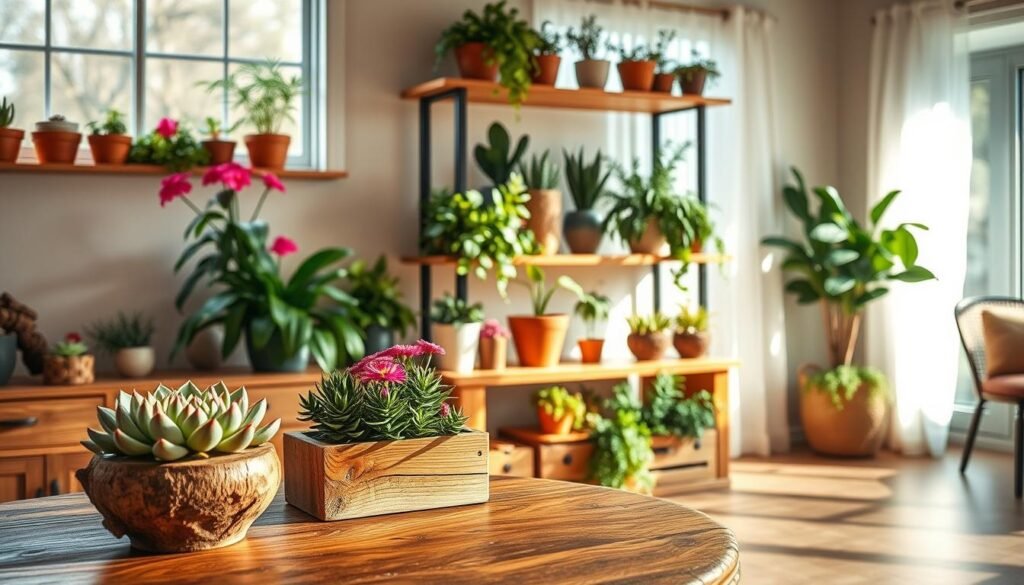
To easily switch up your wood and plant combos with the seasons, try these tips:
- Pick plants that do well in the current season, so they stay healthy and colorful.
- Change your wood accents to fit the season’s colors, like warmer tones in fall or cooler ones in winter.
- Add seasonal decor items, like pinecones in winter or seashells in summer, to your wood and plant setups.
With these strategies, you can have a beautiful, welcoming home all year. Your wood and plant combos will always be in season.
Conclusion: Embracing Natural Elements for a Truly Warm Home
Adding wood and plants to your home makes it warm and inviting. It feels like a part of nature. This change can turn any space into a cozy retreat.
Using wood and plants can make your home look and feel better. It creates a space that is both beautiful and useful. The right decor brings peace and calm into your life.
There are many ways to mix wood and plants in your home. You can add wooden touches and herbs to your kitchen. Or, create a peaceful bedroom with greenery. Embracing these elements makes your home warm and welcoming, showing off your personal style.