Bringing the outdoors into your home is easy and rewarding. Making your own wooden plant stands is a great way to add greenery. It also shows off your furniture-making skills.
There are many designs to pick from, so you can make something that fits your home perfectly. Our guide will help you through the steps. It will give you the confidence to start this fun DIY project.
By making your own indoor plant stands, you’ll make your home look better. You’ll also have a beautiful place to show off your plants. Get ready to dive into the world of DIY wooden plant stands and enjoy bringing nature indoors.
The Beauty of Bringing Nature Into Your Home
Adding a touch of nature indoors can greatly improve your well-being. Indoor plants purify the air, reduce stress, and uplift your mood. They are a great addition to any home.
Creating your own DIY wooden plant stands can enhance your home decor. You can choose from modern, sleek designs or rustic, cozy ones. A wooden plant stand adds a unique touch to your indoor garden.
Wooden plant stands are very versatile. You can pick from different wood types and finishes to match your decor. They can also be customized to fit your needs, whether for a single statement plant or a collection of smaller ones.
To start your DIY wooden plant stand project, think about the style and design that fits your space. Consider the size, shape, and material of your stand, and the plants you’ll display. With creativity and basic DIY skills, you can make a beautiful and functional plant stand that brings nature indoors.
Popular ideas for indoor plant stands include reclaimed wood designs, minimalist A-frame stands, and multi-tiered shelving units. You can also add decorative elements, like carvings or metal accents, to make it unique.
Essential Tools and Materials for DIY Wooden Plant Stands
Before starting your DIY wooden plant stand, gather the right tools and materials. Having everything ready will make the project smoother and more fun.
You’ll need a saw, drill, sandpaper, and a hammer for this project. A saw cuts the wood to size, while a drill makes holes for screws. Sandpaper smooths out the wood, and a hammer taps pieces into place.

You’ll need wood, screws, and a wood finish for your project. The wood type affects your plant stand’s look and durability. Pine or cedar are good choices for an easy project, as they’re easy to work with and look natural.
Think about your indoor space’s style when picking wood. Reclaimed wood adds a rustic touch. Oak or maple works well for a modern look.
With your tools and materials ready, start building your wooden plant stand. Always follow safety rules when using power tools and double-check your measurements before cutting.
Simple Tabletop Wooden Plant Stand
If you’re new to DIY projects, a simple wooden plant stand is a great place to start. This project is perfect for beginners. It requires minimal tools and materials.
Cutting the Wood Pieces
To begin, you’ll need to cut the wood into the required pieces. For a simple tabletop plant stand, you’ll need four legs, a top surface, and a few supporting brackets. Use a miter saw or a circular saw to cut the wood accurately.
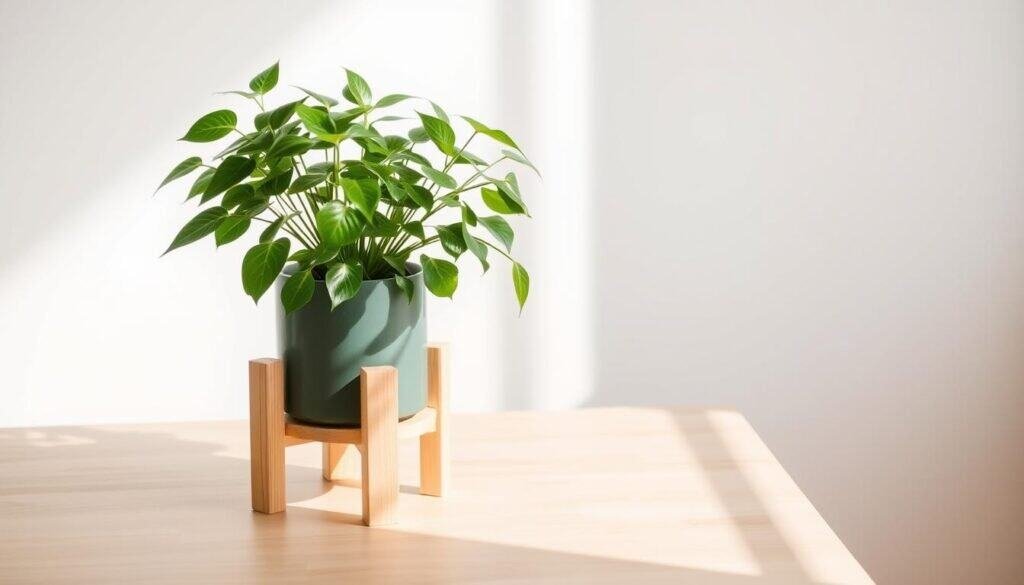
Assembling the stand involves attaching the legs to the top surface and adding the supporting brackets. Use wood screws and a drill to secure the pieces together. Make sure the stand is sturdy and even.
Sanding and Finishing
Once assembled, sand the entire stand to smooth out any rough edges. Apply a finish of your choice, such as varnish or stain, to protect the wood and enhance its appearance.
With these simple steps, you can create a beautiful and functional simple tabletop wooden plant stand to display your plants.
Mid-Century Modern Wooden Plant Stand
Elevate your indoor garden with a mid-century modern wooden plant stand. It’s a perfect mix of style and function. This DIY project is great for those who love retro chic and want to add sophistication to their home.
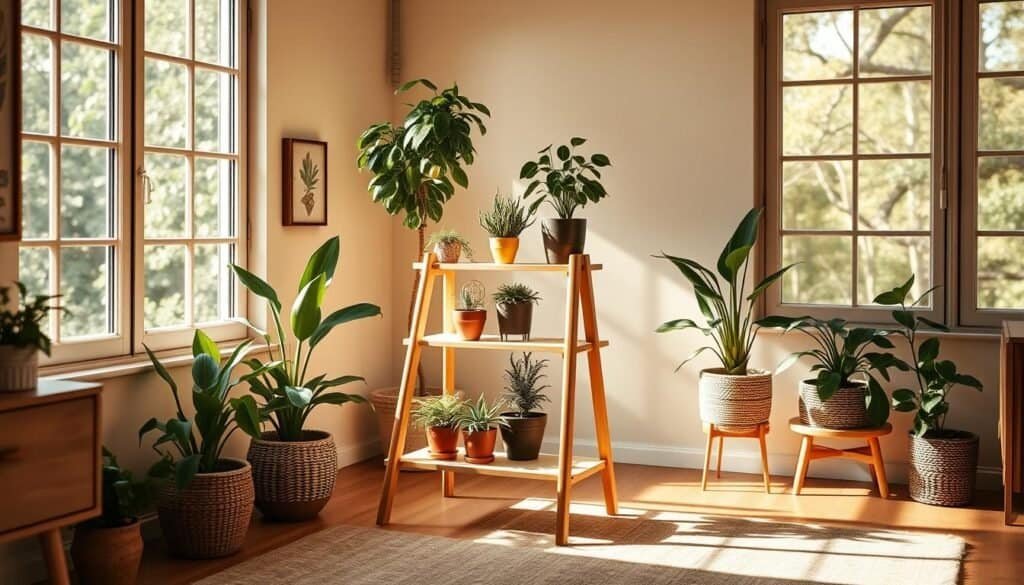
The mid-century modern style is known for clean lines and organic shapes. To get this look, you’ll need to make angled legs for your plant stand. Use a miter saw to cut the wood at the right angle. This ensures stability and the classic mid-century modern look.
Building the Platform
The platform is where your plants will sit, so it must be sturdy and level. Use high-quality wood and a simple frame design for the wooden plant stand frame. Make sure to measure carefully to avoid any unevenness.
Applying Finish
To finish your DIY project, apply a finish that enhances the wood grain and protects it. A natural or stained wood finish is often used in mid-century modern designs. Choose a finish that matches your home decor and follow the manufacturer’s instructions.
By following these steps, you’ll have a beautiful mid-century modern wooden plant stand. It will not only hold your plants but also be a decorative piece. This DIY plant stand tutorial is a great way to start woodworking and add a personal touch to your indoor garden.
DIY Wooden Plant Stands That Bring Nature Indoors: Multi-Tiered Design
Creating a DIY multi-tiered wooden plant stand is easy. It’s great for showing off several plants at once. It adds greenery and elegance to any room.
A multi-tiered plant stand saves space and looks good. You can make it fit your home and the size of your plants.

To start your DIY tiered plant stand, build the frame. Use strong wooden legs and a solid frame. Measure and cut the wood for your design. Then, put the frame together with screws or nails.
Creating and Attaching Shelves
After the frame is ready, make the shelves for your plants. Cut the wooden boards to size and attach them to the frame. Use brackets or screws. Make sure the shelves can hold the weight of your plants.
Adding Decorative Elements
To make your wooden plant stands look better, add decorations. You can use a wooden trim or stain. This protects the wood and adds style to your plant display.
With these steps, you can make a beautiful multi-tiered plant stand. It brings nature indoors and improves your home decor. This project is perfect for DIY fans or beginners. It’s a great way to show off your plants and add greenery to your home.
Rustic Ladder Plant Stand
Making a rustic ladder plant stand is a fun DIY project. It combines function with natural beauty. This piece adds charm to any room, bringing nature inside.

To begin, gather a few materials: wooden ladder rungs, a strong frame, and basic tools. The rustic look comes from the details, like distressing techniques.
Creating the Ladder Structure
First, build the ladder structure. Use solid wood for the frame and attach the rungs evenly. Ensure it’s stable to hold plants and soil.
Adding Shelves or Platforms
After building the ladder, add shelves or platforms for plants. Use wooden planks or reclaimed wood for extra rustic charm.
Distressing Techniques for Rustic Appeal
To achieve a rustic look, distress the stand. Sand edges, add a weathered finish, or use a wire brush for a worn look. This enhances the wood’s natural beauty and gives it a unique, aged appearance.
By following these steps, you’ll have a beautiful rustic ladder plant stand. It showcases your plants and adds warmth and character to your home. The DIY ladder plant stand is a great way to reuse old materials and refresh your indoor space.
Minimalist A-Frame Plant Stand
An A-frame plant stand is perfect for those who love simple designs. It looks great and is very useful. It gives your plants a strong base and adds a modern touch to your home.

To start, cut and prepare the wooden frames. You need two identical triangles for the sides. Use a miter saw or circular saw for clean cuts. Sand the edges to make them smooth.
Adding Support Bars
Adding support bars makes your stand more stable. These bars also give more room for plants. Drill them into place, making sure they’re even for a balanced look.
Finishing Your A-Frame Stand
After building, stain or paint the stand to match your home. For a minimalist look, choose a natural wood finish. It shows off the wood grain beautifully.
Making a DIY A-frame plant stand is a fun project. It mixes function with style. Follow these steps to make a beautiful, simple stand for your indoor garden.
Space-Saving Corner Plant Stand
Creating a lush indoor garden doesn’t mean you have to clutter your floors. A corner plant stand is a great way to save space. It’s perfect for small areas, adding greenery without overwhelming the space.
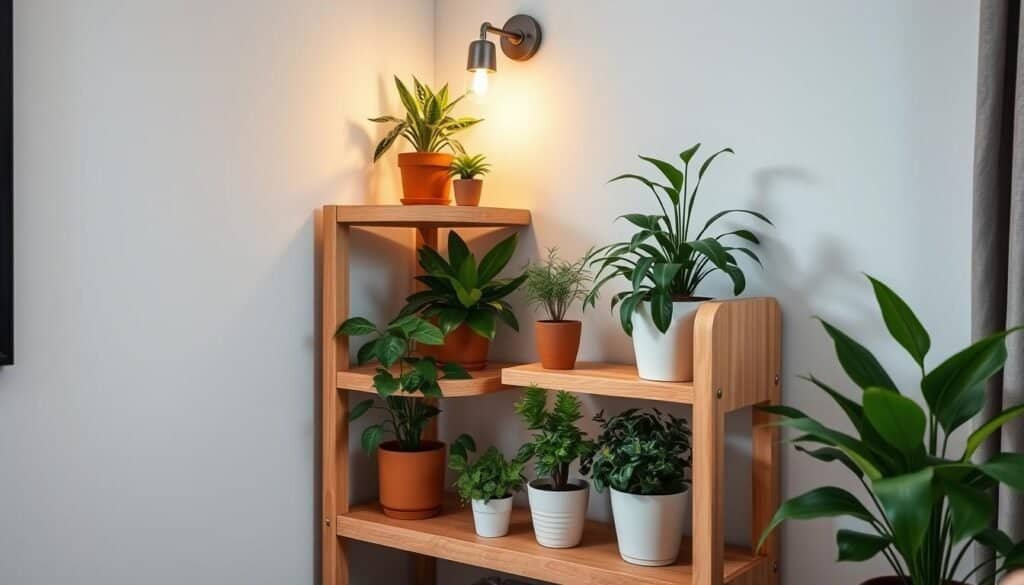
To make the most of your corner, design a stand that fits perfectly. Create a triangular or angled structure for multiple plants. Measure the corner space first, then design your stand. Use sturdy wood for stability.
Building Graduated Shelves
Graduated shelves are key for a corner plant stand. They allow you to display plants of different sizes. Build shelves that get smaller as they go up, creating a tiered look. This is not only pretty but also ensures each plant gets enough light.
Finishing Your Corner Stand
After building, finish your stand to match your home decor. Sand the wood to smooth out edges, then apply a finish like stain or paint. This protects the wood and makes your stand look great, adding beauty to your indoor garden.
By following these steps, you can make a beautiful and useful corner plant stand. It brings greenery into your home without taking up too much space. It’s a great way to improve your indoor garden while keeping your home tidy.
Conclusion: Elevate Your Indoor Garden with Handcrafted Plant Stands
Making your own DIY wooden plant stands is a fantastic way to bring nature inside. You can choose from many designs and follow easy steps. This lets you create unique and useful stands that match your home’s style.
Adding handmade plant stands to your space brings warmth and personality. You can pick from simple designs or more complex ones. The options are endless, making your home feel more natural.
Look for different indoor plant stand ideas to find the right one for your home. With a bit of creativity, you can make your indoor garden better. Enjoy the benefits of having plants around you.