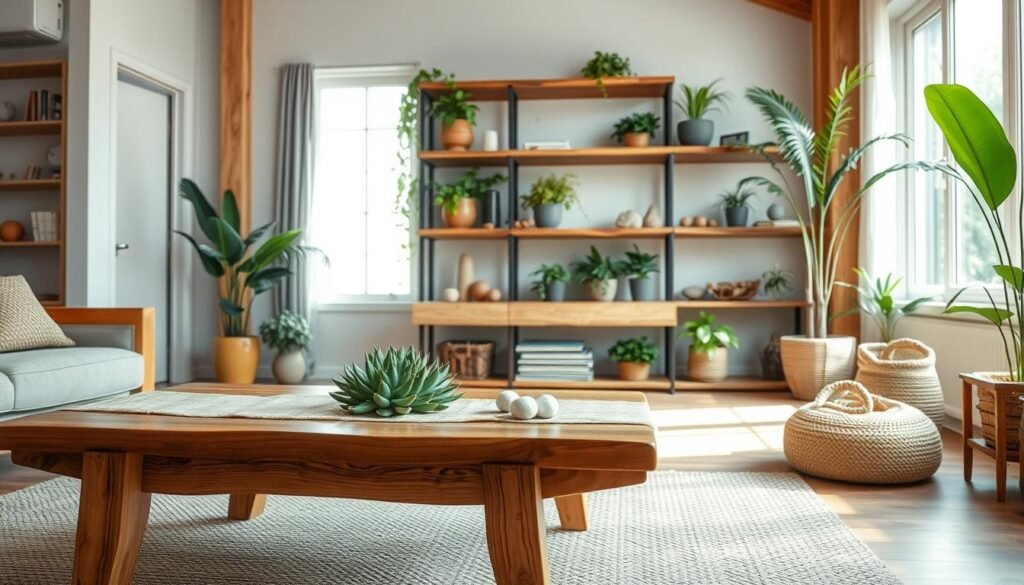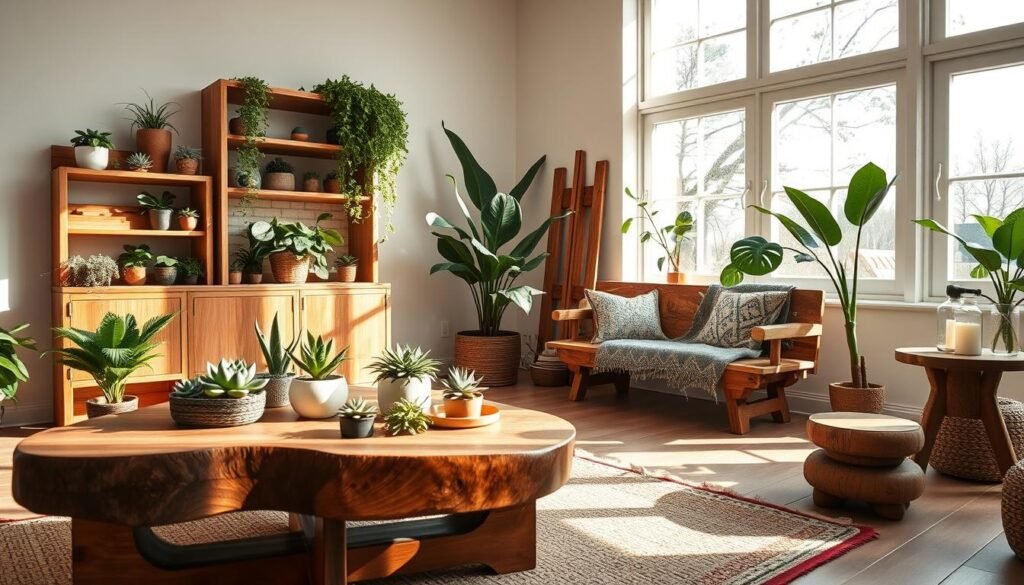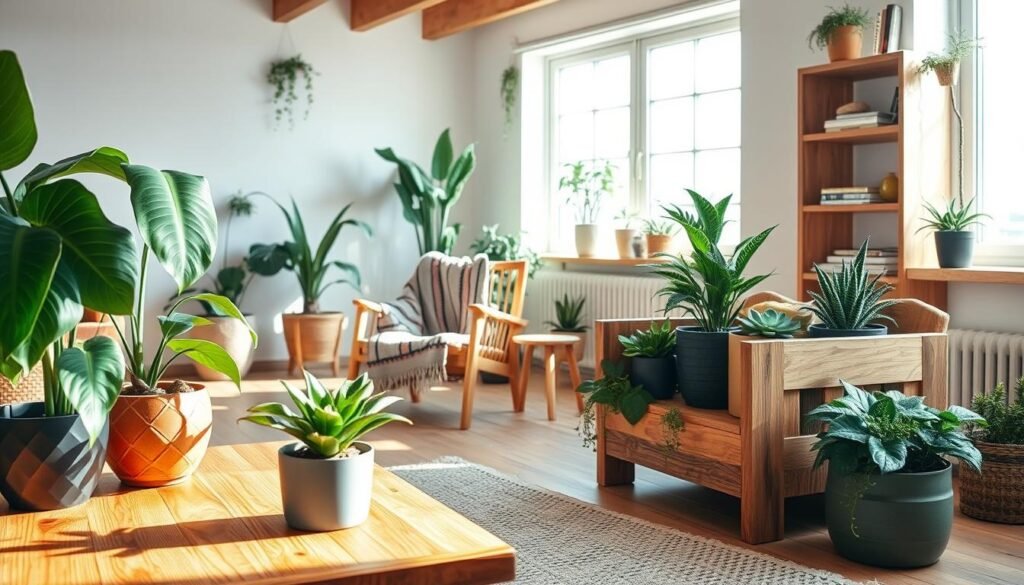
Adding natural elements to your home decor can change how your space feels. Natural wood accents and green plants can make any room feel calm and balanced.
Using wood and plant ideas makes your home cozy and inviting. This design style, known as botanical home design, uses organic elements to improve well-being and peace.
Exploring biophilic interior elements shows how easy it is to make your home a warm and welcoming place.
The Science Behind Biophilic Design: Why Plants and Wood Transform Spaces
Research shows that biophilic design, using plants and wood, makes our spaces better. It connects us with nature, boosting our well-being and productivity.
Benefits of Biophilic Design
- Reduces stress and anxiety
- Improves air quality
- Enhances creativity and productivity
- Promotes a sense of calm and well-being
Being around plants and wood improves our health. A study in the Journal of Environmental Psychology found a 15% productivity boost in offices with plants.
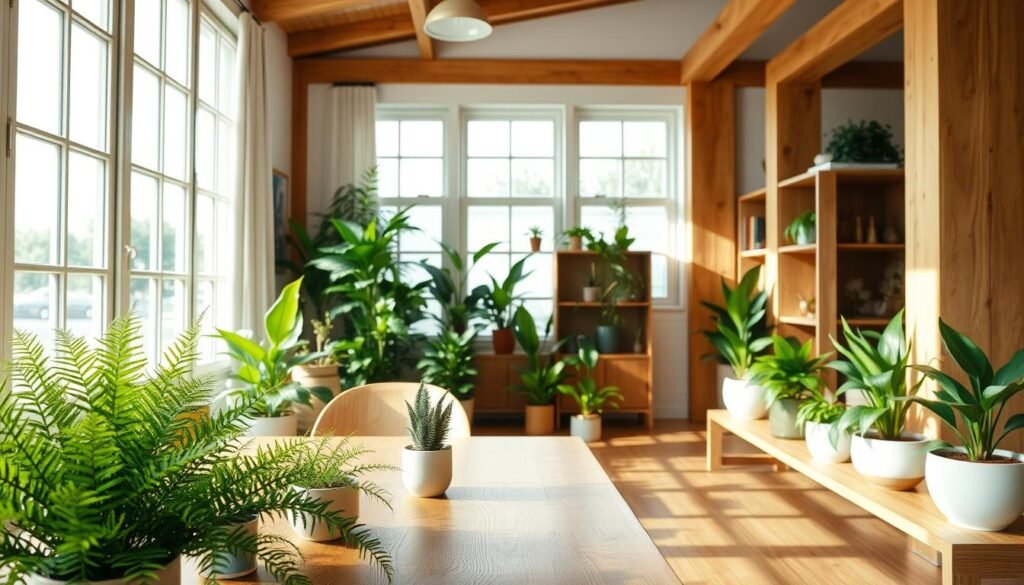
Wood adds warmth and coziness to spaces, making them feel welcoming. Its natural texture and pattern add depth and interest, making environments more engaging.
By applying biophilic design principles, we can make spaces that are not only beautiful but also healthy and uplifting.
Wood and Plant Ideas That Make a Space Feel More Alive
Adding wood and plants to your decor makes a space lively and engaging. A simple way to do this is by mixing wood accents with greenery or colorful plants.
For example, a wooden coffee table can be paired with a potted plant or fresh flowers. This creates a cozy spot. You can also use indoor plants decor by placing plants on wooden shelves or hanging them from the ceiling.
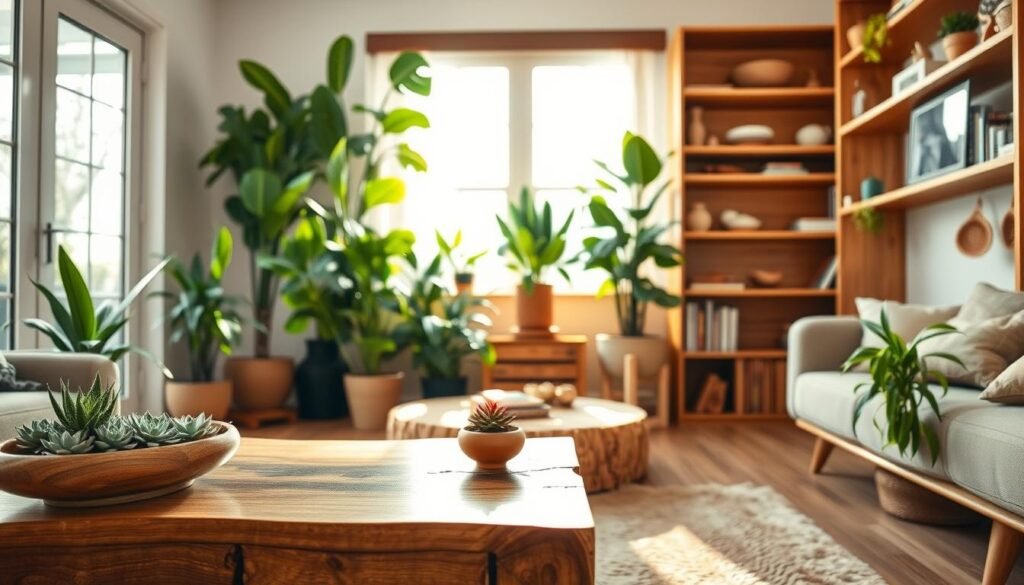
Choosing the right plants is key. Look for ones that are easy to care for and look good. Snake plants, spider plants, and peace lilies are great for home plants indoor. They clean the air and add beauty to any room.
To enhance your house plants aesthetic, mix different textures and colors. Pair a wooden planter with brightly colored flowers or a green plant with variegated leaves.
Other wood and plant ideas include a living wall on a wooden trellis or adding inside plants to your kitchen. Place them on a wooden countertop or hang them from a beam.
By using these ideas, you can make your home feel more welcoming. Whether you want to add natural beauty or refresh your decor, wood and plants are a great choice.
Statement Plants That Transform Any Room
Statement plants can change any room, making it feel alive and vibrant. They are more than just decorations. They are the heart of the room’s look.
The Monstera is a favorite for its unique, holey leaves. These leaves bring a tropical feel to any space. The Monstera albo stands out with its variegated leaves, becoming a key part of your decor.
Monstera and Philodendron Varieties
Monstera and Philodendron plants are versatile and come in many shapes and sizes. They fit well in different spaces. From the heart-leaf Philodendron to the giant Monstera deliciosa, they add drama to your home.
- Monstera deliciosa for a tropical vibe
- Philodendron selloum for a lush, green look
- Monstera adansonii for a more delicate, trailing effect
Striking Ferns and Palm Species
Ferns and Palm Species are great for statement plants. They bring a lush, green feel to a room. The fern leaf adds a whimsical touch to your decor.
Some popular options include:
- Boston ferns for a classic, elegant look
- Areca palms for a bright, sunny feel
- Bird’s nest ferns for a unique, nest-like appearance
Colorful and Variegated Options
For color, try variegated plants like the Monstera albo. Plants with colorful leaves are also great. Ivy leaves can add color and are perfect for hanging baskets or topiaries.
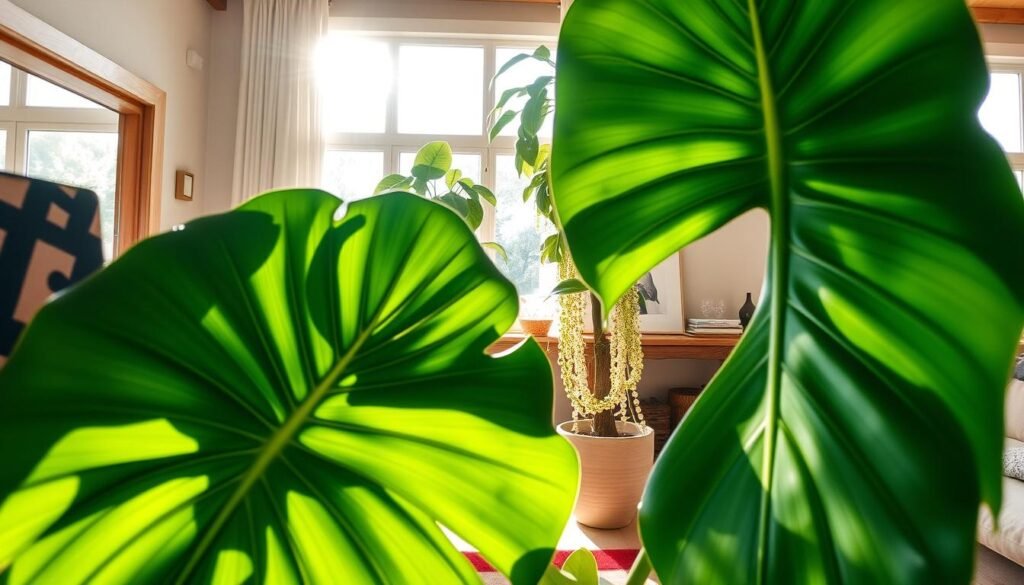
An orchid house or a terrarium with various plants can be a stunning centerpiece. They show off your green thumb and add sophistication to any room.
Adding these statement plants to your decor can turn any room into a lively, welcoming space. It feels alive with natural beauty.
Creative Wood Accents to Add Warmth and Texture
Wood accents can make your living space feel cozy and beautiful. They bring a natural touch to any room. By using different types of wood, you can change the mood of your space.
Types of Wood Accents include wooden walls, reclaimed wood beams, and wooden decorative panels. These add warmth and character to your home.
- Reclaimed wood for a rustic look
- Sleek, modern wooden panels for a contemporary feel
- Wooden accent walls paired with plants for a natural ambiance
One great idea is a wood accent wall with plants. It adds texture and brings in greenery. This makes your room look and feel better.
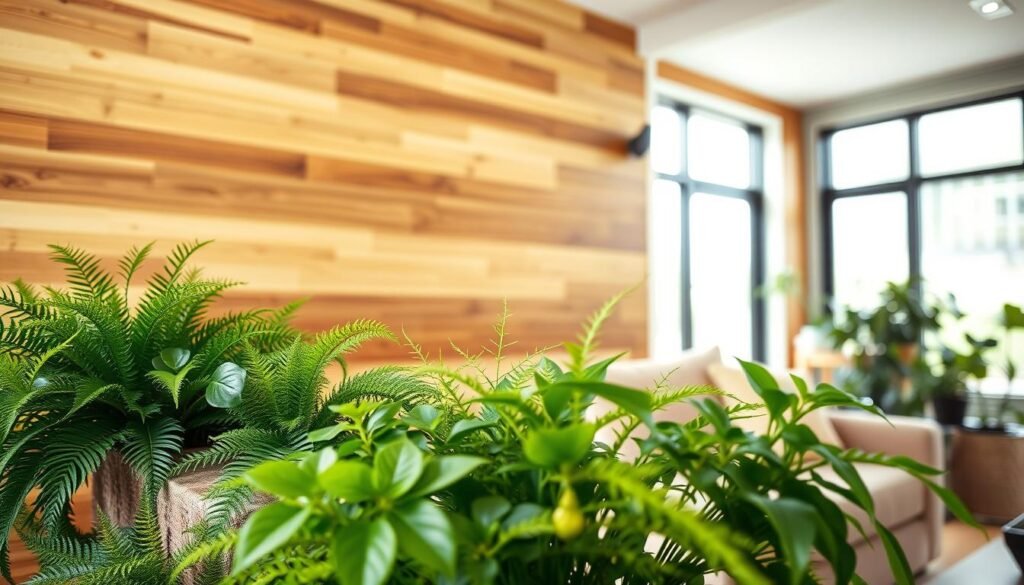
A modern wooden wall with plants uses sleek panels and plants. It blends natural elements with modern design beautifully.
Adding wooden furniture, flooring, or ceiling beams can also enhance your space. These elements make your home feel welcoming and cohesive.
Innovative Plant Display Ideas for Every Space
Innovative plant display ideas can make any room feel more alive. They connect us to nature. By displaying plants thoughtfully, you can make your home look better and enjoy the benefits of indoor plants.
Using shelving units is a great way to show off plants. Indoor plant shelving ideas range from simple floating shelves to complex, multi-tiered systems. These not only hold your plants but also decorate your rooms.
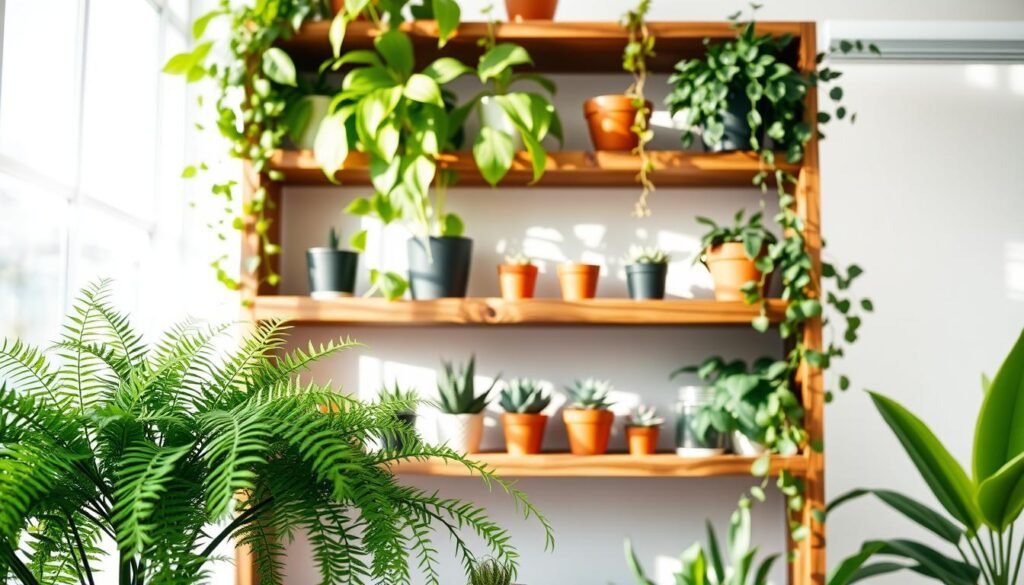
In small spaces, corners can be unused. But, with the right indoor plant corner ideas, you can make them green and lively. Try corner planters or hanging planters on walls or ceilings to use every inch.
For a neat look, use indoor plants shelf ideas made for corners or walls. They keep your plants organized and your space open.
- Use vertical space with wall-mounted planters or shelves.
- Choose compact or hanging planters to save floor space.
- Pick plants that do well indoors and need little care.
Adding these plant display ideas to your home makes it more welcoming. Whether you have a small apartment or a big house, there’s a solution for you.
Trying out different corner indoor plant ideas can help you find the best way to add plants to your decor. It will make your living space feel more natural and cozy.
Room-by-Room Guide to Plant and Wood Integration
To make your home lively, try a room-by-room plan for plants and wood. This approach can make each space feel more welcoming. It balances nature with your home’s style.
In the living room, use plants as a focal point or pair them with wood. For example, a wooden coffee table with a green plant on it makes a cozy spot.
TV Wall Ideas with Plants and Wood Elements
A TV wall can be more than just a screen. It can be a standout feature with the right decor. Mix plants and wood to make a unique TV wall.
- Use a wooden TV stand or console with built-in planters.
- Add greenery around the TV, like hanging plants or a floor-standing planter.
- Include wood accents, like a reclaimed wood wall behind the TV, for warmth.
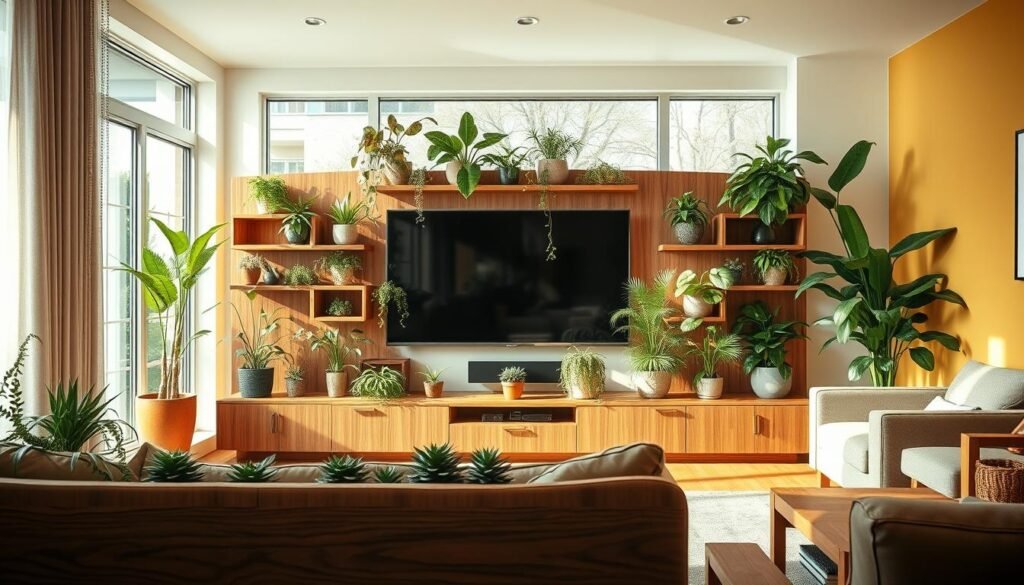
In the bedroom, a gentle touch of plants and wood can make it peaceful. Choose wooden furniture with a natural finish. Add small potted plants or a vase with fresh flowers.
In the kitchen, wood adds warmth, and plants bring freshness. Hang a wooden herb planter or use a wooden cutting board as decor.
By using a room-by-room guide for plants and wood, you can make your home inviting. It will feel connected to nature.
Essential Plant Care for a Thriving Indoor Garden
The secret to a lush indoor garden is knowing the basics of plant care. Good care means your plants will not just live but flourish. They will add beauty and freshness to your home.
Watering is a key part of indoor plant care. Too much water can harm your plants, causing root rot. To prevent this, create a houseplant watering schedule for each plant. Check the soil by sticking your finger in it up to the first knuckle. If it’s dry, it’s time to water.
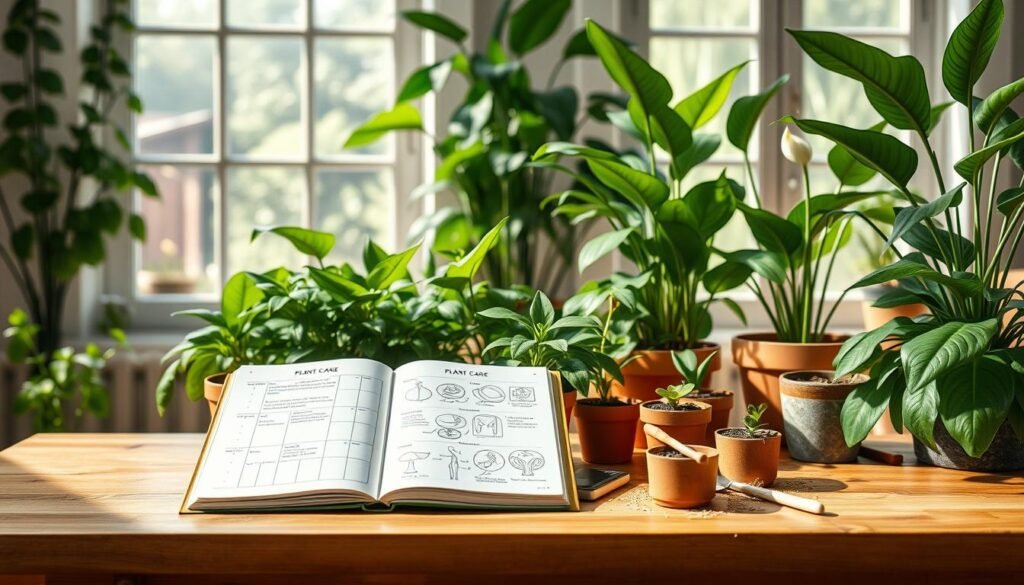
Lighting is also very important. Plants need different amounts of light. Some love bright, direct light, while others prefer indirect or low light. Make sure to find the right spot for each plant based on their light needs.
Fertilization gives plants the nutrients they need to grow. Use a balanced fertilizer in the growing season (spring and summer) to help them grow. But, dilute the fertilizer to half the recommended amount to avoid harming the roots.
To make caring for your houseplants easier, here are some tips:
- Watch the temperature: Most houseplants like daytime temperatures between 65-75°F (18-24°C) and cooler at night.
- Keep humidity up: Use a humidifier or put plants on a tray with water and pebbles to raise the humidity.
- Prune often: Pruning helps plants grow new leaves and keeps them looking good.
Creating an indoor plant watering chart can help you keep track. It can be as simple as a calendar or a whiteboard for tracking watering dates.
By following these plant care tips, you can have a vibrant and thriving indoor garden. It will make your home even more beautiful.
Styling Tips for Different Aesthetic Preferences
Creating a welcoming space starts with choosing plants and planters that match your style. Whether you love modern minimalism, rustic charm, or bohemian flair, there are ways to blend plants into your decor.
If you’re into modern minimalist looks, focus on clean lines and simplicity. Pick plants with sleek shapes and planters that are simple. Think geometric shapes or terracotta pots.
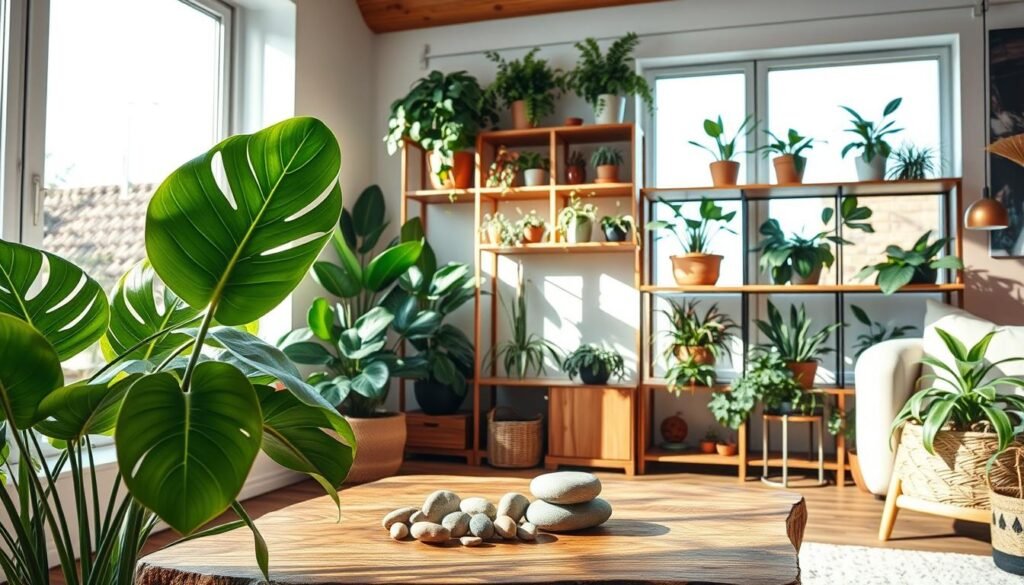
For a rustic or country-style vibe, go for plants that look natural. Pair them with planters from wood or woven baskets. This adds warmth and texture to your room.
If you’re into bohemian or eclectic styles, mix different textures, colors, and patterns. Use plants of various sizes in planters that show off your style. Vintage or colorful ceramics work great.
Here are some general tips for styling plants:
- Choose plants that match your room’s color scheme.
- Find planters that reflect your personal taste.
- Play with different heights and textures for interest.
By thinking about your style and using these tips, you can make a space that feels truly yours.
Conclusion: Creating Your Own Living Sanctuary
Turning your space into a living sanctuary is a journey. It combines the warmth of wood with the vibrancy of plants. You can make your home feel welcoming and alive with the right decor.
There are many ways to mix wood and plants in your home. You can use statement plants to change any room. Or, add wood accents for warmth and texture. This lets you create a space that shows off your personality.
Choosing the right plants and caring for them is key to a thriving indoor garden. With wood and plants together, you can make a space that nourishes your body and soul. So, why not start today and enjoy bringing the outdoors inside?