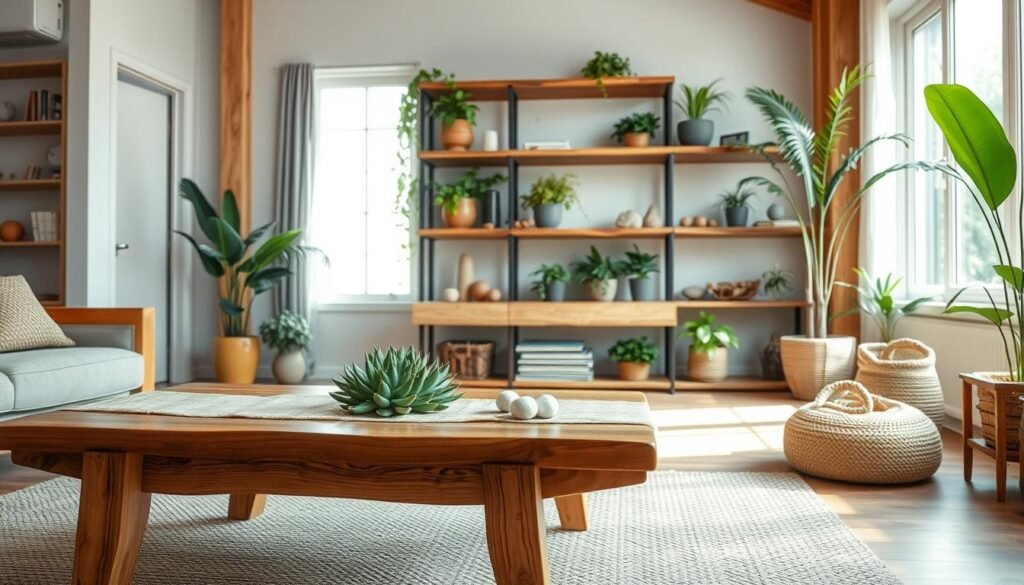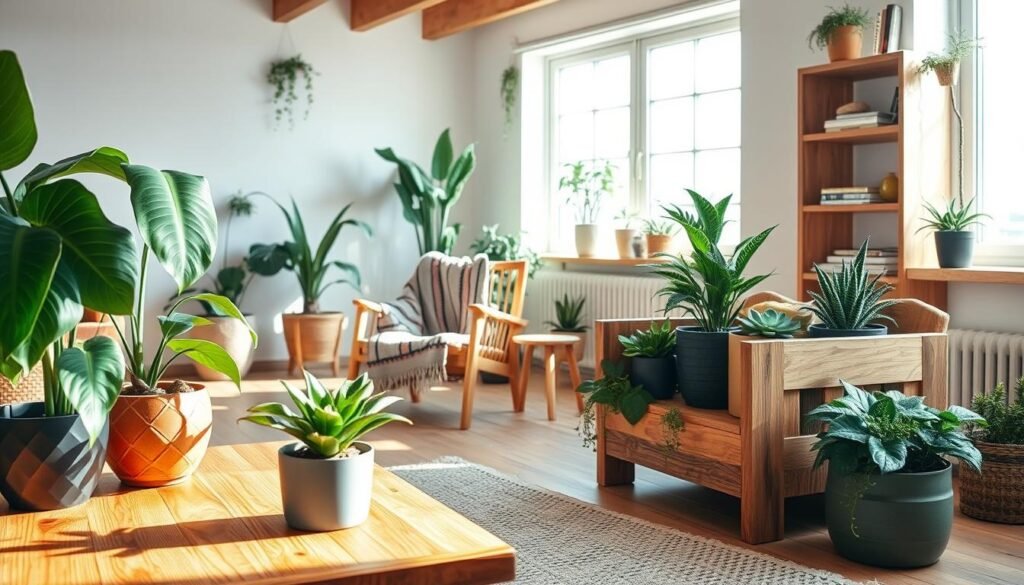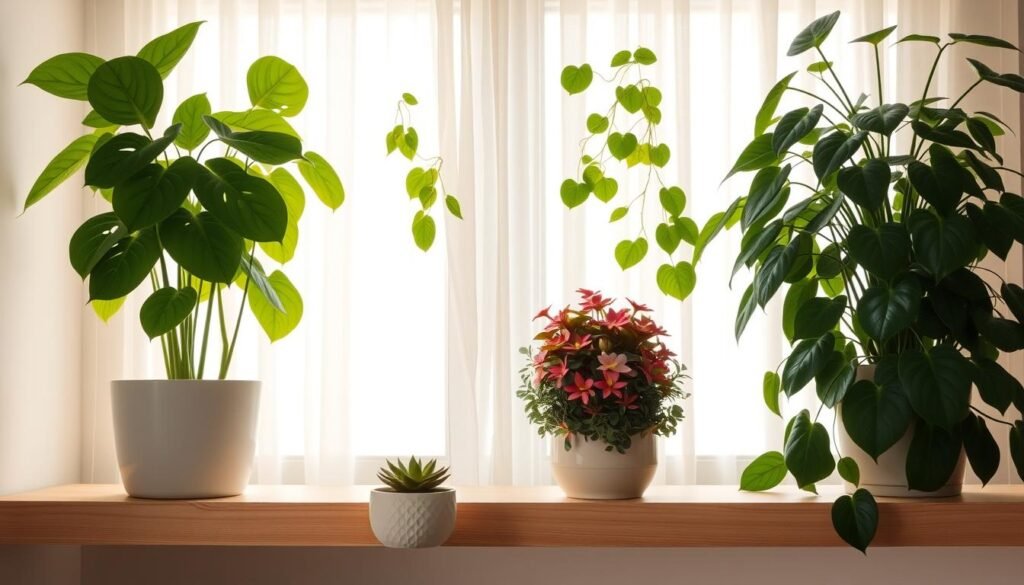
Adding wood accents and plant decor can make your home feel welcoming. These natural elements can make your living space stand out and feel truly unique.
Bringing the outdoors inside can make your space cozy and inviting. Wood accents bring warmth and character. Indoor plants clean the air and lift your mood.
With these easy home decor ideas, you can turn your home into a cozy retreat that shows off your style. Whether you want to change one room or your whole house, starting with natural accents is a smart choice.
The Power of Natural Elements in Home Design
Wood and plants make a space cozy and welcoming. Adding natural elements to your home design boosts its look and feel.
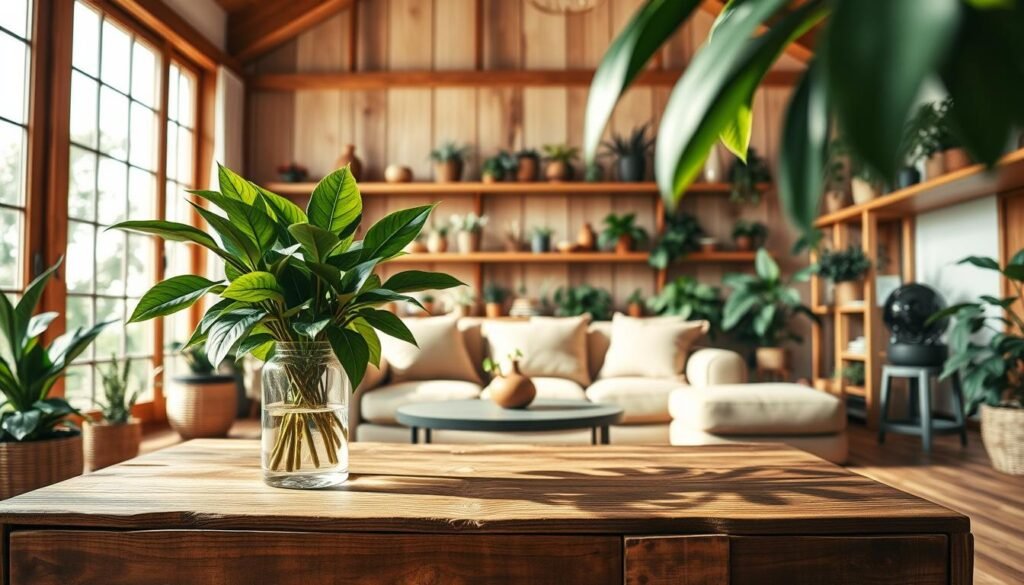
Bringing the outdoors inside makes your home feel warmer and cozier. Grounding decor elements like wood and plants add beauty and mental health benefits. Being near nature indoors can lower stress and boost happiness.
When picking organic home accessories, think about the look you want. For an earthy interior design, go for items like woven baskets and natural stone. This approach connects you more to nature, making your home better.
- Choose natural materials for decor and furniture.
- Incorporate plants to bring in a touch of greenery.
- Consider the psychological benefits of natural elements.
Adding natural elements to your home makes it a peaceful and welcoming place. It cares for your body and soul.
Natural Accents That Help a Space Feel More Grounded
Natural accents are key to making a space feel more connected to the earth. They bring calmness. By adding specific plants and wood finishes, you can make your home feel stable and serene.
Grounding Decor Elements like plants with soft leaves can calm a space. Some good choices include:
- Snake plants known for their air-purifying qualities
- Pothos plants that are easy to care for and versatile
- Peace lilies that bring elegance and serenity
Wood elements also help a space feel grounded. Reclaimed wood, for example, adds warmth and character. Think about using wooden furniture or accents like:
- Reclaimed wood coffee tables
- Wooden wall art
- Wooden decorative boxes
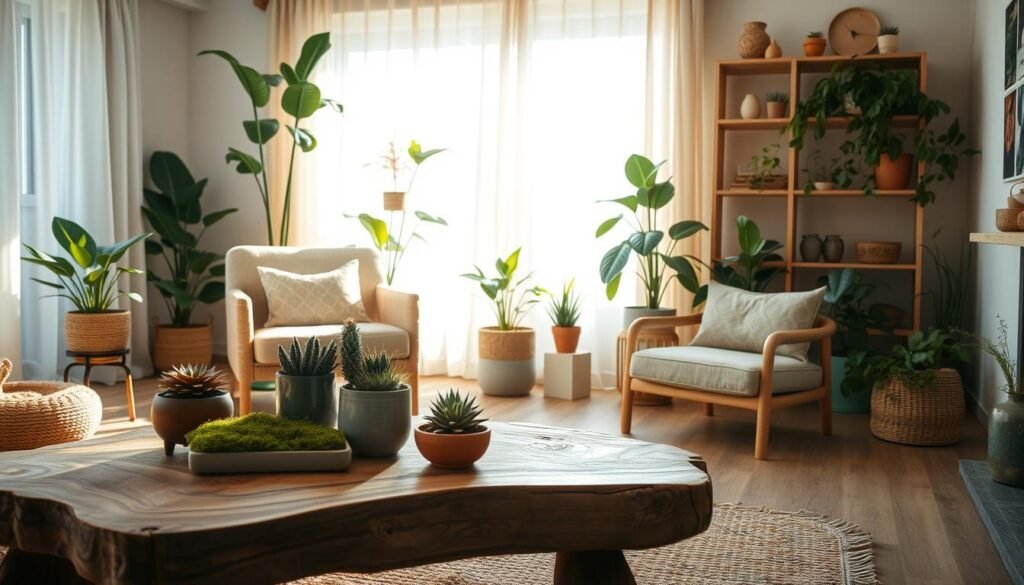
To add natural accents, start with a few pieces that match your style. Mix these with your current decor carefully. This way, you can make your home calm and grounded.
For a unified look, mix different natural materials. For example, combining wooden furniture with plants can create harmony and a connection to nature.
Selecting the Right Indoor Plants for Your Space
The right indoor plants can make your living space lively and inviting. With many varieties to pick from, it’s key to choose plants that look good and do well indoors.
Monstera and Philodendron Varieties are favorites for indoor decor. Monstera has unique, holey leaves for a tropical feel. Philodendron comes in various leaf shapes and sizes, fitting many decor styles.
Monstera and Philodendron Varieties
Both Monstera and Philodendron are easy to care for and can handle different light levels. They’re great for adding greenery to your living room or office.
Dramatic Ferns and Trailing Ivy
Dramatic ferns and trailing ivy are also top picks for indoor plants. Ferns add a lush, green feel. Ivy can be trained to climb or trail, making any room more interesting.
When picking indoor plants, think about lighting, watering, and upkeep. 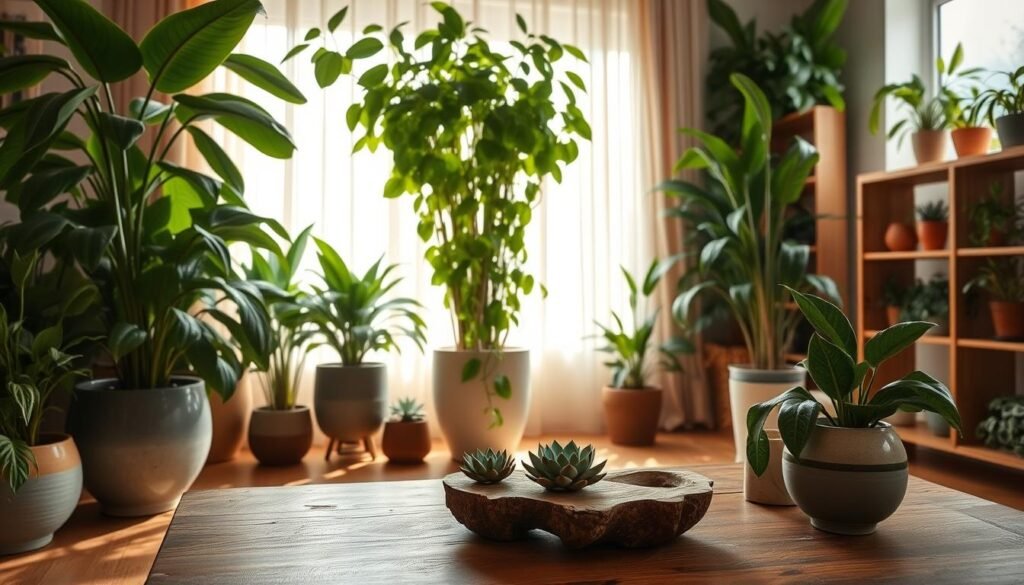
Choosing the right plants can make your home welcoming and harmonious. Whether you like the bold look of ferns or the grace of trailing ivy, there’s a plant for you.
Wood Elements That Complement Plant Life
Wood accents and plants go well together, making any room feel welcoming. Adding wood elements to your decor can make your plants look even better. It also adds warmth to your space.
Using wooden planters or shelves is a great way to mix wood and plants. These wooden decor items hold your plants and add texture and depth to the room.
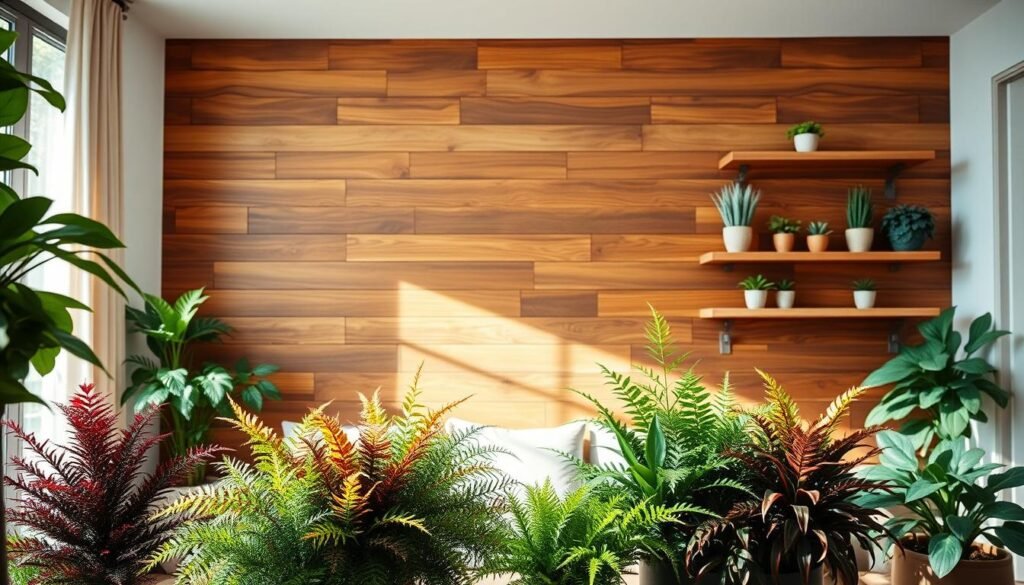
A wood accent wall can be a beautiful background for your plants. It makes them the main attraction while keeping the room’s natural look.
Adding a modern wooden wall with plants takes your interior design to the next level. It combines the natural feel of wood with the lively look of plants. This creates a unique and eye-catching scene.
By carefully combining wood and plants, you can create a peaceful and natural environment. It feels like you’re bringing a bit of nature indoors.
Creating a Plant Corner That Draws the Eye
Creating a captivating plant corner is more than just placing plants together. It’s about making a visual experience that catches the eye and calms the soul. A well-designed plant corner can become the room’s centerpiece, adding natural beauty and freshness.
Layering Plants of Different Sizes
Layering plants of different sizes is key to an attractive indoor plant corner. This method adds depth and interest to the space.
- Start with taller plants or trees towards the back or corner.
- Place medium-sized plants in the middle or around the taller ones.
- Use smaller plants or trailing plants to cascade down or fill gaps.
Creating Visual Interest with Varied Leaf Patterns
Varied leaf patterns are vital for the visual appeal of your plant corner. Mixing different textures and patterns makes the display dynamic and engaging.
- Combine plants with large, broad leaves with those that have fine, delicate foliage.
- Incorporate plants with striking leaf colors or patterns to add contrast.
- Experiment with different leaf shapes, from rounded to lance-shaped.
By using these techniques, you can make a stunning indoor plant corner. It not only beautifies your space but also brings tranquility. Remember, the most important thing is to have fun and be creative with your plant arrangements.
Innovative Plant Display Ideas for Small Spaces
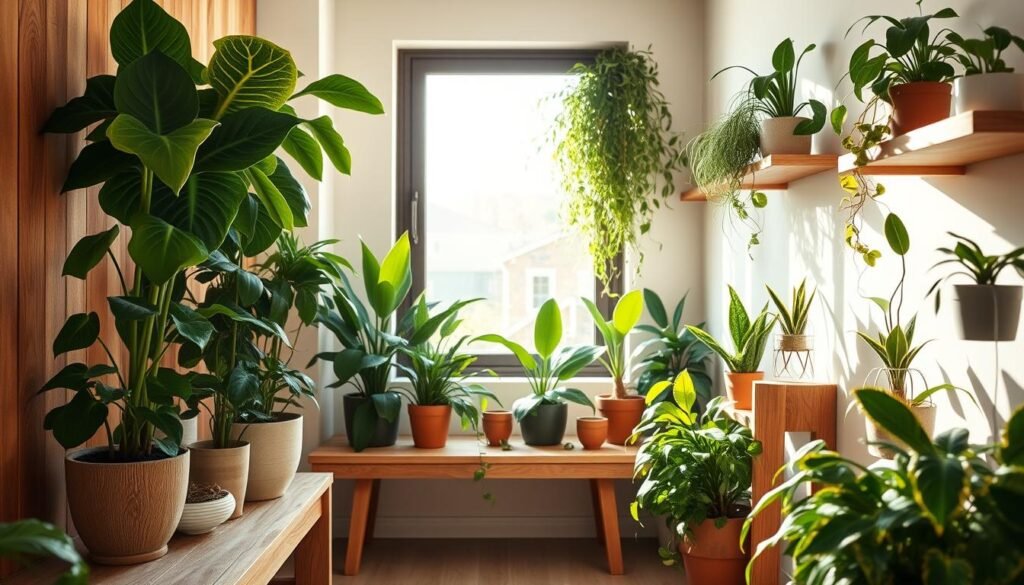
Small spaces don’t have to limit your indoor plant collection; here are some innovative display ideas. When it comes to plant display ideas for small spaces, creativity is key. You can maximize your space by using vertical shelving, hanging plants, or clever plant stands.
One effective way to display plants in small spaces is by utilizing indoor plant shelving ideas. Floating shelves or wall-mounted shelves can hold multiple plants, adding a touch of greenery without taking up floor space. Another idea is to use indoor plants shelf ideas that incorporate ladders or tiered shelving, allowing you to stack plants and create a visually appealing display.
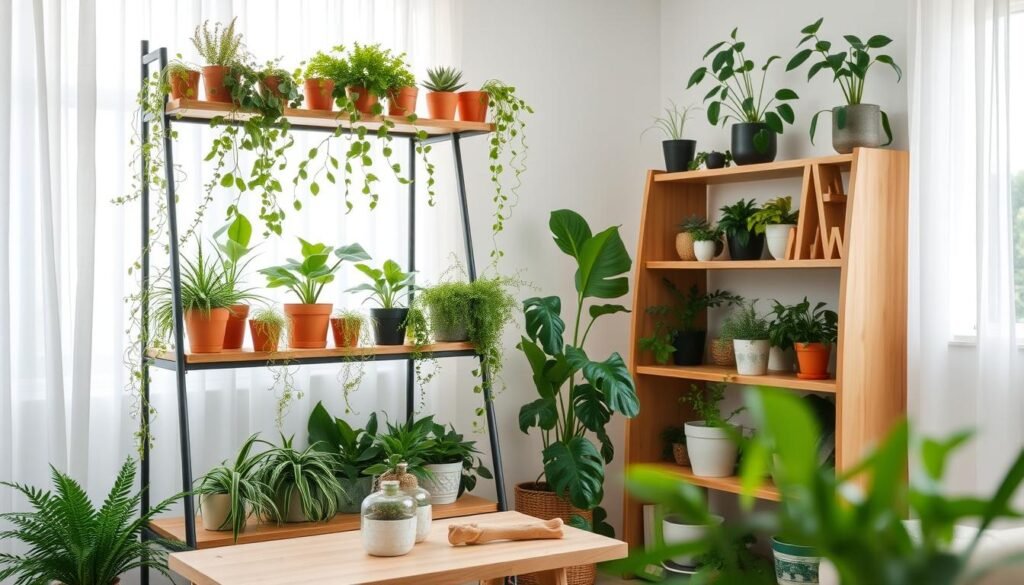
For those with extremely limited floor space, plant stand ideas indoor can be a lifesaver. Look for stands that are compact, multi-tiered, or have a small footprint. Hanging plants are another excellent option, as they can be suspended from ceilings or walls, adding a decorative element while keeping the floor clear.
- Use vertical space with wall-mounted planters or shelves.
- Opt for compact or multi-tiered plant stands.
- Hang plants from ceilings or walls to save floor space.
- Consider ladder shelves or tiered planters for a stacked display.
By implementing these plant display ideas for small spaces, you can enjoy the benefits of indoor plants even in the coziest of homes. Whether you choose shelving, hanging plants, or clever stands, your small space can be transformed into a lush, welcoming environment.
Wood and Plant Accent Walls That Transform Rooms
Wood and plant accent walls add character and warmth to any room. They bring in natural elements, making the space feel grounded and connected to nature.
Design Ideas for Wood Accent Walls
- Reclaimed wood for a rustic look
- Sleek, modern designs using polished wood
- Geometric patterns created with different wood tones
Wood accent walls can be placed behind a TV or as a statement piece in a living room. They add texture and warmth, making the space feel cozier.
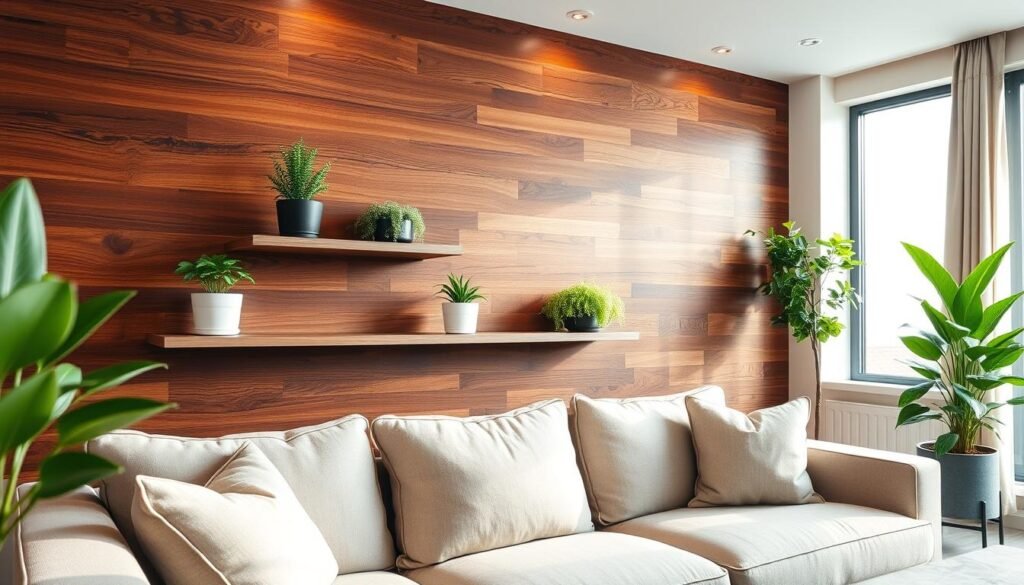
Plant accent walls are not only visually striking but also improve air quality. You can create a lush, green wall using a variety of plants or opt for a more minimalist approach with a single type of plant.
Living room wall plant decor ideas can include a mix of hanging plants and those placed on shelves or planters attached to the wall. This creates a layered, dimensional look.
For TV wall ideas with plants, consider a vertical garden or a series of floating shelves to display your plants. This adds a natural, dynamic element to your entertainment area.
By combining wood and plants, you can create a truly unique accent wall. It brings together the best of both natural elements.
Room-Specific Natural Accent Ideas
To make your home look natural and harmonious, think about decor for each room. Different rooms have their own feel and use. Choosing the right natural accents for each space can make it both functional and beautiful.
In the living room, living room plants can bring in nature’s beauty. Plants like snake plants or spider plants are easy to care for. They’re great for homes where people are always busy. Wooden planters or woven baskets can add a natural charm.
The bathroom is another place where natural accents can really make a difference. Adding bathroom decor like river rocks, shells, or driftwood can make it feel like a spa. Plants that like humid air, like ferns or orchids, can also add greenery.
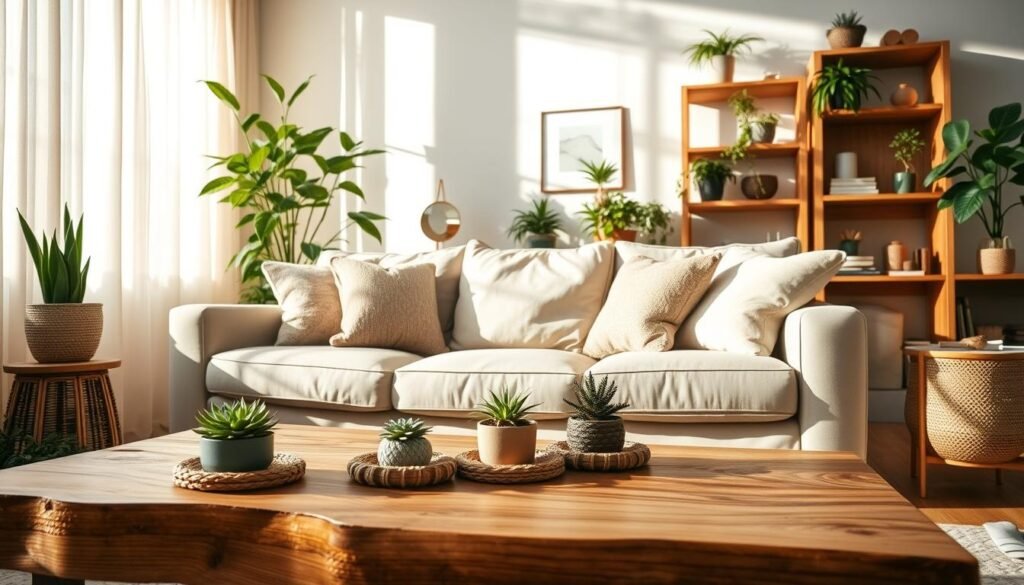
In the bedroom, use natural accents in a way that promotes calm. Wooden furniture or natural fiber rugs can warm up the room without being too much. For some green, succulents or peace lilies are good choices because they’re easy to care for.
Using house plant ideas and home decor ideas with natural elements can make your home welcoming. By picking the right natural accents for each room, you can make your home more beautiful and useful.
The secret to great room-specific decor is finding the right balance. Whether you want a calm bedroom or a lively living room, natural accents can help you get there.
Caring for Your Indoor Plant Collection
Caring for indoor plants is more than just watering them. It’s about creating a space that helps them grow. You need to know what each plant needs, like light, water, and food.
Setting up a plant care schedule is key. It means watering them regularly and watching how they react to their surroundings. For example, a houseplant watering schedule must fit each plant’s needs. This includes the soil, pot size, and the season.
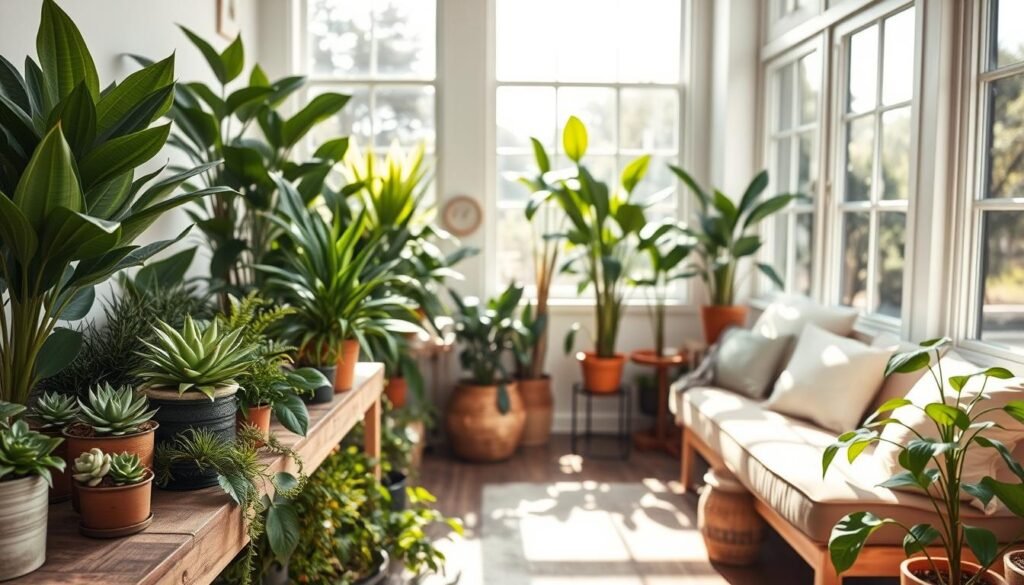
An indoor plant watering chart can be very useful. It helps you remember when to water each plant. This way, you avoid watering too much or too little.
Watering is just part of the job. You also need to give them the right light, keep the temperature right, and feed them when they’re growing. By paying attention to these things and making changes as needed, your plants will do well.
- Watch your plants for signs of stress or sickness.
- Change your care routine with the seasons to match temperature and humidity changes.
- Use a potting mix that drains well to avoid root rot.
By following these tips and sticking to your indoor plant care routine, you can have a beautiful indoor garden. It will make your home happier and more beautiful.
Outdoor Natural Accents That Connect Indoor and Outdoor Spaces
Using outdoor natural elements can link indoor and outdoor spaces. This creates a single living area. Homeowners can make their living spaces more beautiful by adding natural accents outside.
Outdoor plants are a great way to blend indoor and outdoor areas. Pick plants that do well outside and match your indoor plants.
Gardening pots can also help connect indoor and outdoor spaces. Use the same pot styles or materials inside and outside. Place plants outside house areas for enjoyment from both sides.
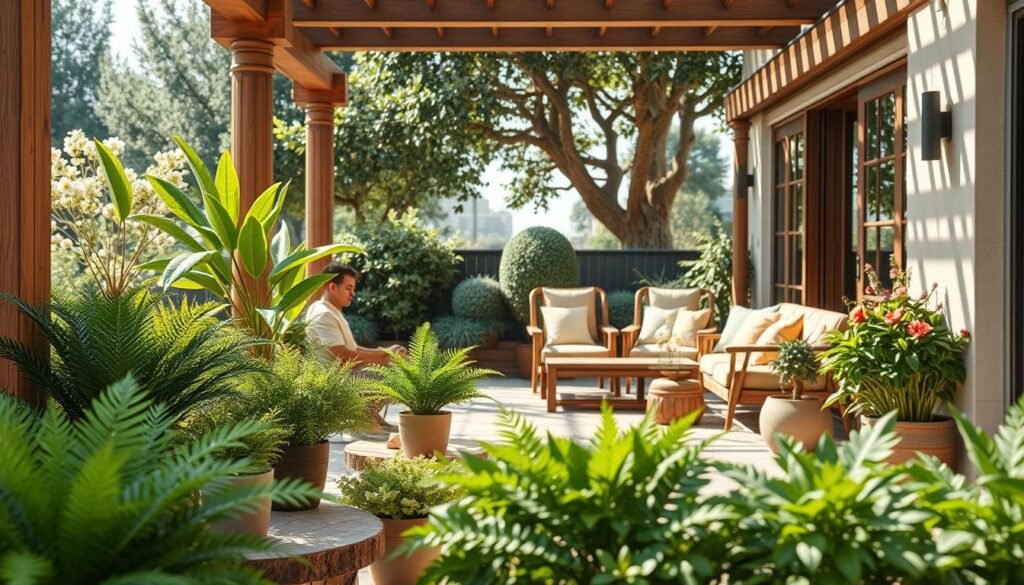
To improve the indoor-outdoor connection, use natural materials for outdoor decor. Choose materials like wood or stone that match your indoor decor. This thoughtful choice makes your home feel bigger and more connected.
Sustainable and Ethical Sourcing of Natural Elements
Decorating our homes with natural elements is important. We must think about their impact on the environment and people. The way we get these elements can harm the planet and local communities.
Sustainable sourcing means picking materials that don’t hurt the environment. For example, wood certified by the Forest Stewardship Council (FSC) is harvested responsibly. This ensures the wood comes from well-managed forests.
For plants, ethical sourcing means choosing species that are native or grown sustainably. This cuts down on carbon emissions from transport. It also helps local economies.
- Look for certifications like FSC for wood products.
- Choose plants that are locally sourced or sustainably grown.
- Consider the lifecycle of the product, from sourcing to end-of-life.
By choosing wisely, we can make our homes beautiful and good for the planet. We also support fair practices and local communities.
Conclusion: Creating Your Unique Natural Sanctuary
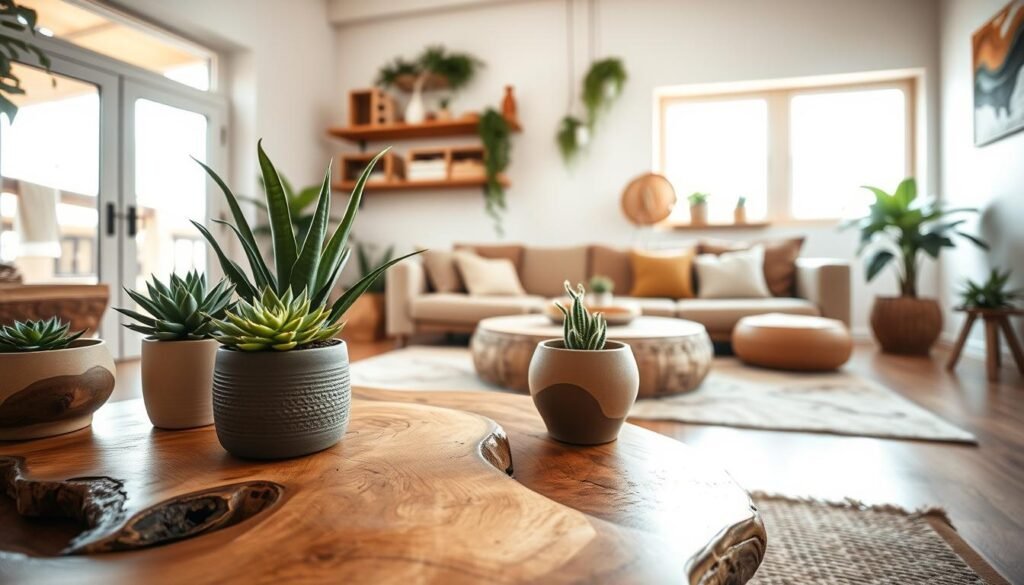
Adding natural elements to your home decor can change how your space feels. It makes your home look and feel better. You can make a peaceful spot that shows who you are.
To start your natural sanctuary, try out different natural accents. Think about the plants and wood that fit your style. Choose plants that do well in your home. This way, you can make a space that feels connected to nature.
Remember, making your natural sanctuary is all about having fun and being creative. Your home should show off your unique style. With the right natural elements, you can make a space that’s both beautiful and calming.