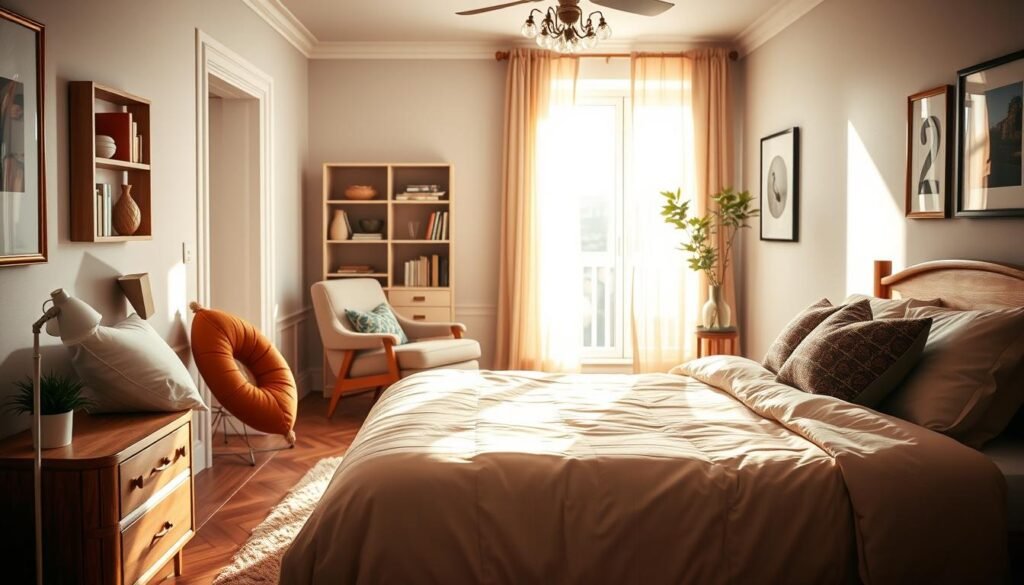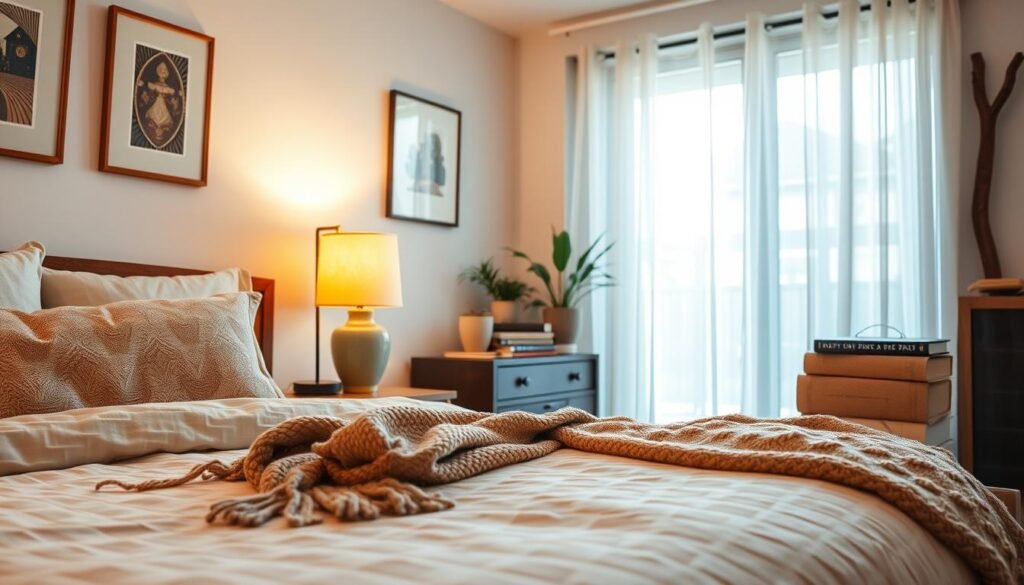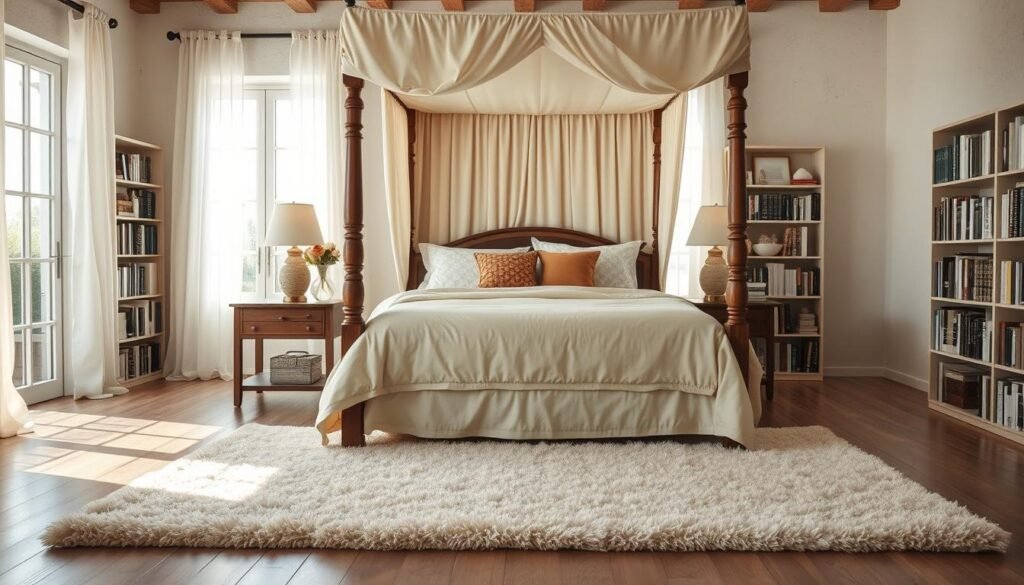
Creating a peaceful retreat in your home is key for relaxation and well-being. A serene sanctuary is vital in today’s fast world. It helps calm your mind and recharge.
Turning your sleeping space into a calming retreat is possible. Use relaxing decor and relaxation space design techniques. These elements promote relaxation, creating a haven for restful sleep and tranquility.
Effective bedroom ideas and calming bedroom decor can make your bedroom a peaceful oasis. It’s perfect for slowing down and feeling at ease.
The Psychology Behind Restful Bedroom Environments
A restful bedroom is more than just a personal choice. It’s about how the environment affects our minds and bodies. Knowing this can help make a bedroom that truly helps us relax and rest.
Color Psychology for Restful Spaces
Color psychology is key in making a bedroom calm. Soft blues, pale greens, and neutral colors create a soothing vibe. These colors can improve mood and reduce stress, perfect for a bedroom.
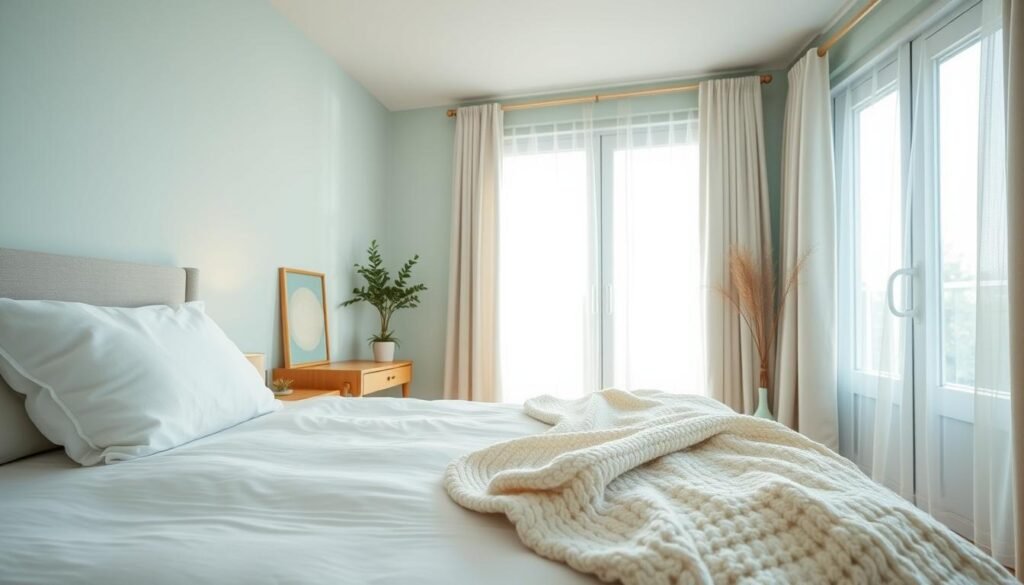
The way a bedroom is set up also matters a lot. A tidy and organized space can make us feel calmer. Placing furniture wisely helps the room’s energy flow smoothly, making it easier to relax.
By thinking about color and layout, we can make a bedroom that’s not only nice to look at. It also helps us feel relaxed and well.
Calming Color Palettes That Transform Your Space
The right color palette can make your bedroom a peaceful haven. Calming colors are key to creating a restful space. They help you sleep better and feel less stressed.
Soft hues like light blues, pale greens, and neutral tones are great for bedrooms. They make the atmosphere calm. Use these colors on walls, bedding, and curtains for a unified look that encourages relaxation.
Accent Colors That Don’t Overwhelm
While calming colors are important, adding accent colors can make your bedroom look even better. Choose accent colors that match your main colors but don’t overwhelm. For instance, if your walls are soft blue, golden or beige accents can add warmth.
Paint Techniques for Visual Interest
To make your bedroom more interesting, try different paint techniques. Ombre effects or striped patterns can add depth and character. These can be used lightly to keep the space calm.

By picking the right calming colors, accent colors, and paint techniques, you can turn your bedroom into a peaceful retreat. It will be a place where you can relax and feel refreshed.
Bedroom Ideas That Help You Actually Unwind
A well-designed bedroom can be your sanctuary, helping you leave the stresses of the day behind. To achieve this, it’s essential to focus on elements that promote relaxation and prepare your body for rest.
Creating a Pre-Sleep Ritual Space
Establishing a pre-sleep ritual is key for your brain to know it’s time to sleep. This can be done by designating a specific area for relaxation, away from daily distractions. Think about adding a cozy reading nook or a meditation corner to your bedroom.
To make your pre-sleep ritual better, follow these steps:
- Dim the lights to signal the start of your wind-down routine.
- Engage in calming activities, such as reading or practicing gentle stretches.
- Avoid screens for at least an hour before bedtime.
Incorporating Elements That Engage the Senses
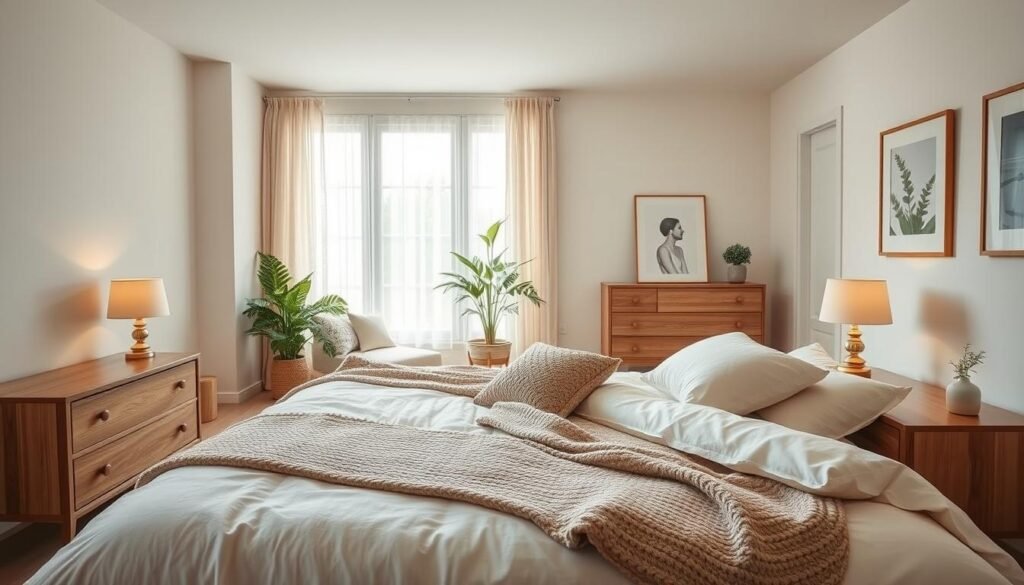 Engaging your senses is a powerful way to promote relaxation. Use calming scents, like lavender, and soothing sounds, like gentle music or nature sounds. Also, add different textures, such as soft blankets or plush rugs, to your bedroom.
To enhance the sensory experience, consider these ideas:
- Use aromatherapy diffusers or scented candles to create a calming atmosphere.
- Incorporate plants known for their air-purifying qualities and calming presence.
- Invest in comfortable bedding and pillows to promote a restful night’s sleep.
By adding these bedroom ideas to your daily routine, you can create a space that truly helps you unwind and prepare for a restful night’s sleep.
Strategic Lighting for Better Sleep and Relaxation
Lighting is key in making your bedroom a cozy place for rest. It affects both sleep and relaxation. A smart lighting plan can make your bedroom feel more inviting, helping you relax and sleep better.
Accent Lighting for Ambiance
Accent lighting helps create a calm mood in your bedroom. You can choose from:
- String lights for a cozy, warm glow
- LED candles for a flickering, soothing effect
- Dimmable overhead lights to adjust the ambiance
These options let you adjust the lighting to match your mood and activities. Whether you’re reading, relaxing, or getting ready for bed, you can find the perfect light.
Bedside Lighting Options
Bedside lighting is vital for a cozy and relaxing space. Think about:
- Table lamps with soft shades for warm, gentle light
- Floor lamps with adjustable arms for directed lighting
- Smart light bulbs that can be adjusted for brightness and color temperature
Choosing the right bedside lighting can greatly improve your ability to relax and sleep.
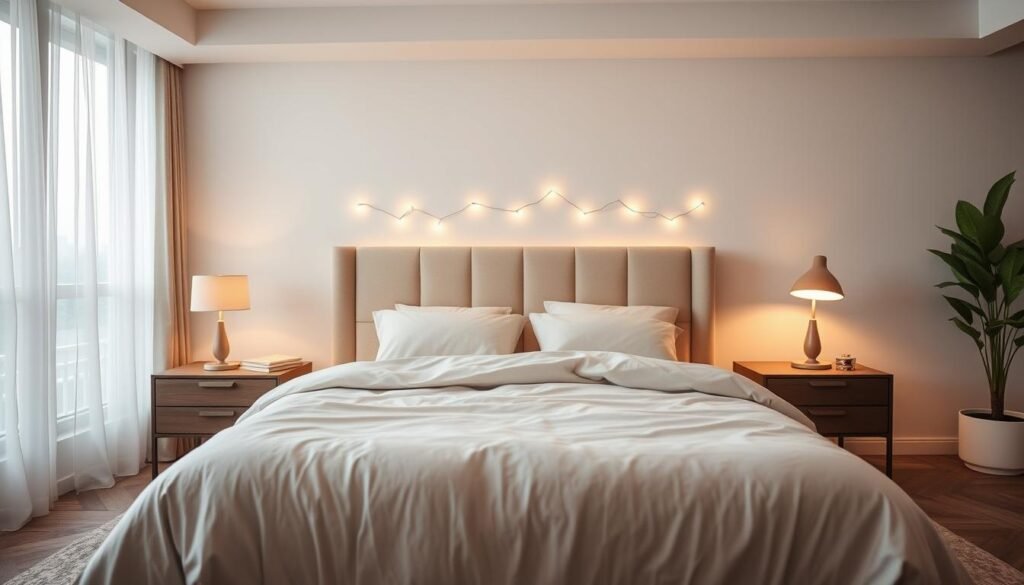
By adding strategic lighting to your bedroom, you can create a peaceful space. It will help improve your sleep quality.
Luxurious Bedding and Textiles for Ultimate Comfort
Improving your bedroom starts with luxurious bedding. The right bedding turns your bedroom into a peaceful place. It makes your sleep better.
Bedding comfort depends on thread count and more. Let’s clear up some thread count myths.
Thread Count Myths and Realities
Thread count is the threads per square inch of fabric. A higher count means softer, more durable bedding. But, it’s not that simple.
- A thread count between 200 and 800 is usually good.
- Counts over 800 don’t always mean better comfort or durability.
- The material and weaving technique matter too.
Choosing the right fabric is key. The debate between natural and synthetic fabrics is ongoing.
Natural vs. Synthetic Fabrics for Sleep
Natural fabrics like cotton, linen, and silk are great. They breathe well and are soft. They help keep your body temperature right during sleep.
Synthetic fabrics, like polyester, are durable and easy to clean. But, they might not be as comfy as natural fibers.

For the best sleep comfort, mix natural fabrics with the right thread count. This boosts your sleep quality.
In summary, a comfy sleep space is more than looks. It’s about picking the right textiles for better sleep. Knowing about thread count and fabric types helps you choose better.
Architectural Elements That Enhance Relaxation
Architectural features can make your bedroom a true sanctuary. By adding thoughtful design elements, you can create a space for relaxation and rejuvenation.
Working with Existing Architectural Features
When designing your bedroom, it’s key to work with what’s already there. Highlighting natural light with sheer curtains or blinds can make it feel bigger and calmer. Also, using existing structural elements like built-in shelves or alcoves adds character while keeping it serene.
- Emphasize natural light with the right window treatments.
- Incorporate existing structural elements into your design.
- Use soft colors to complement architectural features.
Creating Visual Height in Standard Rooms
To make a standard room feel more spacious and relaxing, add visual height. Using vertical elements like floor-to-ceiling curtains or tall furniture is effective. You can also draw the eye upward with vertical patterns or designs on walls or rugs.
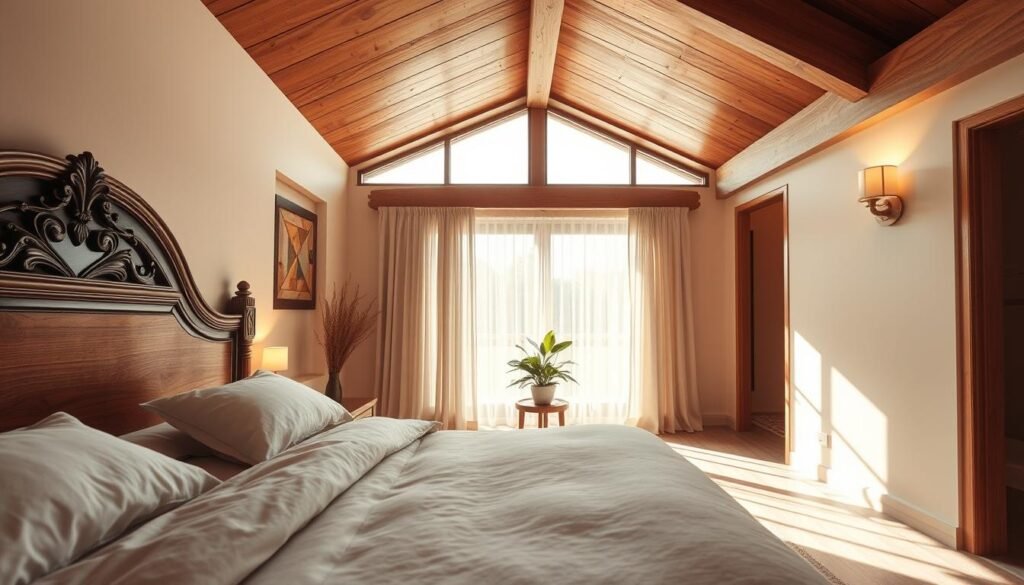
- Use floor-to-ceiling curtains to create a sense of height.
- Incorporate tall furniture to draw the eye upward.
- Apply vertical patterns or designs to walls or rugs.
By carefully choosing architectural elements and adding visual height, you can turn your bedroom into a relaxing retreat. This can improve your sleep and overall well-being.
Bringing Nature Indoors for a Peaceful Retreat
Turn your bedroom into a calm oasis by adding natural elements. This can make your bedroom a peaceful place to relax.
Low-Maintenance Plant Options
Adding plants is a simple way to bring nature inside. Low-maintenance plants like snake plants, spider plants, and ZZ plants are great. They clean the air and add greenery to your room.
- Snake plants: Known for their ability to thrive in low-light conditions.
- Spider plants: Easy to care for and great for air purification.
- ZZ plants: Require minimal watering and can tolerate a range of light conditions.
Incorporating Natural Sounds and Scents
Adding natural sounds and scents can also make your bedroom more relaxing. Use a white noise machine for sounds like rain or ocean waves. Essential oils like lavender and chamomile can help you relax and sleep better.
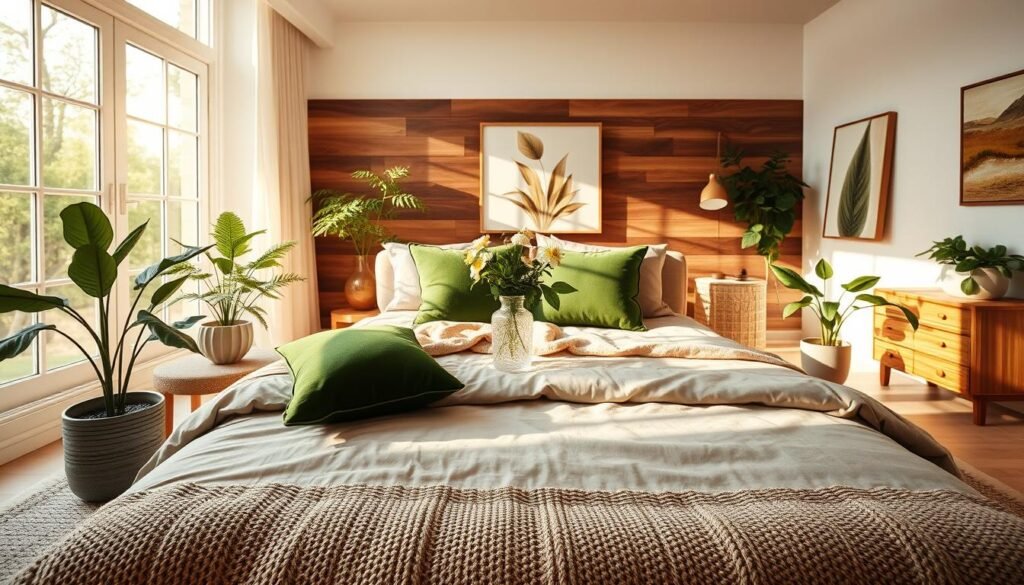
By adding these natural elements, you can make your bedroom a peaceful retreat. Whether it’s plants, sounds, or scents, small changes can greatly improve your bedroom’s feel.
Decluttering Strategies for Mental Clarity
Decluttering your bedroom is key to mental clarity and a calm space. A messy room can make your mind feel cluttered too. By using smart decluttering methods, you can make a peaceful area that boosts your mental health.
The One-In-One-Out Rule
The one-in-one-out rule is a great strategy. It means you must get rid of an old item for every new one you add. This keeps your belongings balanced and stops clutter from coming back.
Seasonal Decluttering Rituals
Try seasonal decluttering rituals too. Set aside time each season to sort through your stuff. This way, you can keep your room tidy and clutter-free all year.
Using these strategies can make your bedroom more organized and peaceful. 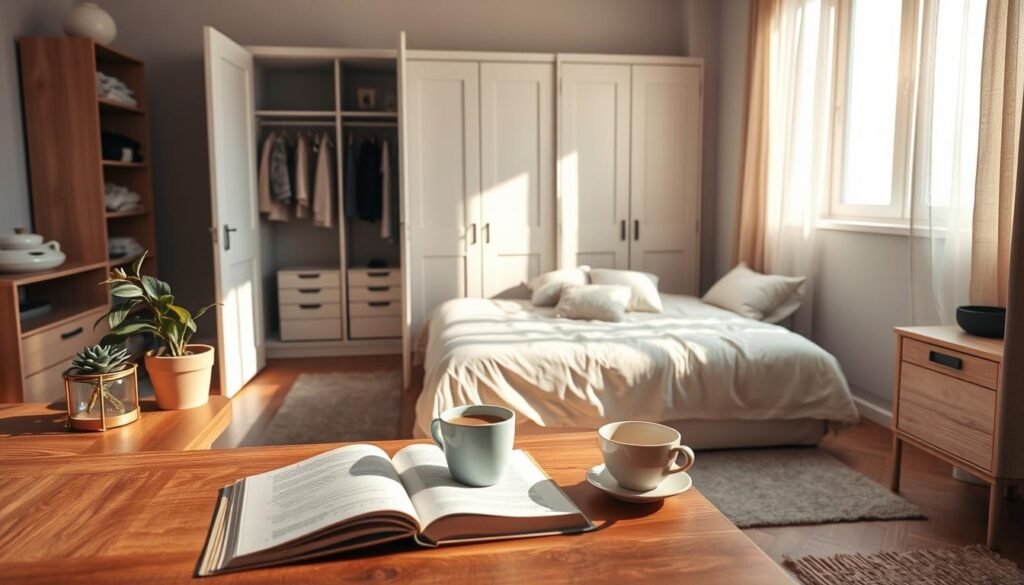 A tidy space not only helps your mind but also makes your bedroom look better. It becomes a real sanctuary.
Furniture Arrangement for Flow and Tranquility
To make your bedroom a peaceful haven, think about where you place your furniture. A well-placed bedroom looks great and helps you relax better.
Furniture Placement for Different Room Shapes
The shape of your bedroom guides how you arrange your furniture. In rectangular rooms, put the bed away from the door but aligned with it. This brings balance and harmony.
In square rooms, create a cozy spot with a comfy chair and a floor lamp. This adds visual interest.
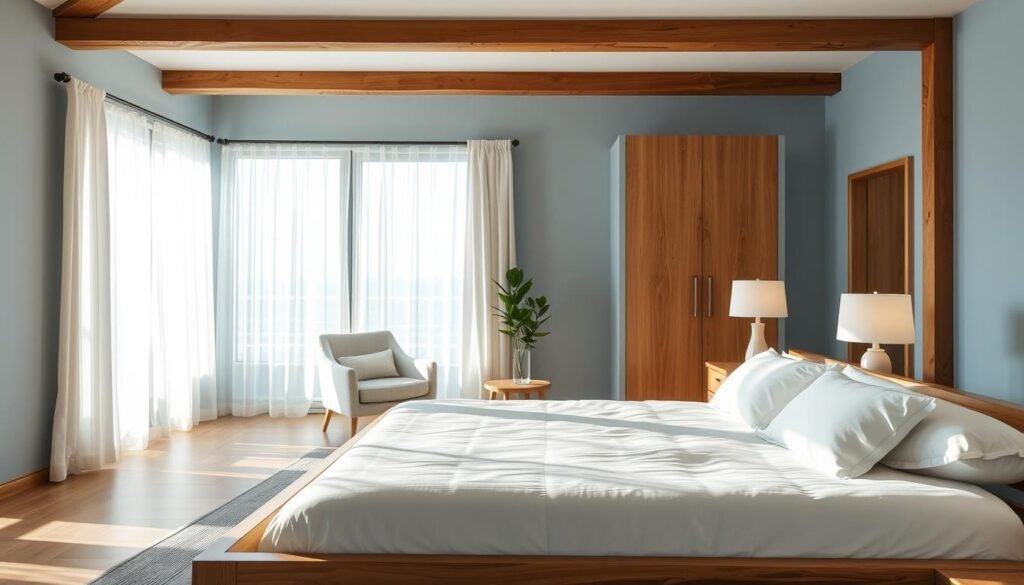
Larger bedrooms let you set up different areas, like a sleeping spot, a reading corner, and a workspace. Use area rugs and lights to mark these zones. For instance, a soft rug under the bed marks the sleeping area. A desk lamp can highlight the workspace.
By carefully arranging your furniture, you can make your bedroom a peaceful retreat.
Creating Technology Boundaries for Better Rest
Setting technology boundaries is key for a good night’s sleep. Our world is full of digital distractions like notifications and social media. These can make it hard to relax and sleep well.
To get better sleep, we need to set clear tech limits. Make your bedroom a tech-free zone. Remove TVs and computers to avoid brain stimulation and sleep disruption.
Charging Stations Outside the Bedroom
Having a charging station outside your bedroom helps you avoid phone checks before bed. Charging devices in another room cuts down on sleep disruptions from notifications and blue light.
Blue Light Management Strategies
Managing blue light is vital for tech boundaries. Use blue light glasses, apps, or software to filter out screen light. Many devices also have built-in blue light filters for evening use.
These steps help reduce tech’s impact on sleep. Creating a tech-free pre-sleep routine signals to your brain it’s time to rest.
Conclusion: Crafting Your Personal Sleep Sanctuary
Creating a bedroom that promotes relaxation is key for a good night’s sleep. By using the ideas from this article, you can make a sleep sanctuary that fits your needs.
Personalization is important for a calming bedroom. Think about your favorite colors, lighting, and bedding. This will make your space feel soothing and relaxing.
A well-designed bedroom can greatly improve your well-being. By focusing on relaxation and design, you’ll sleep better and wake up feeling great.
By following these tips, you can make a sleep sanctuary. This will help you relax and sleep well, leading to a better life.