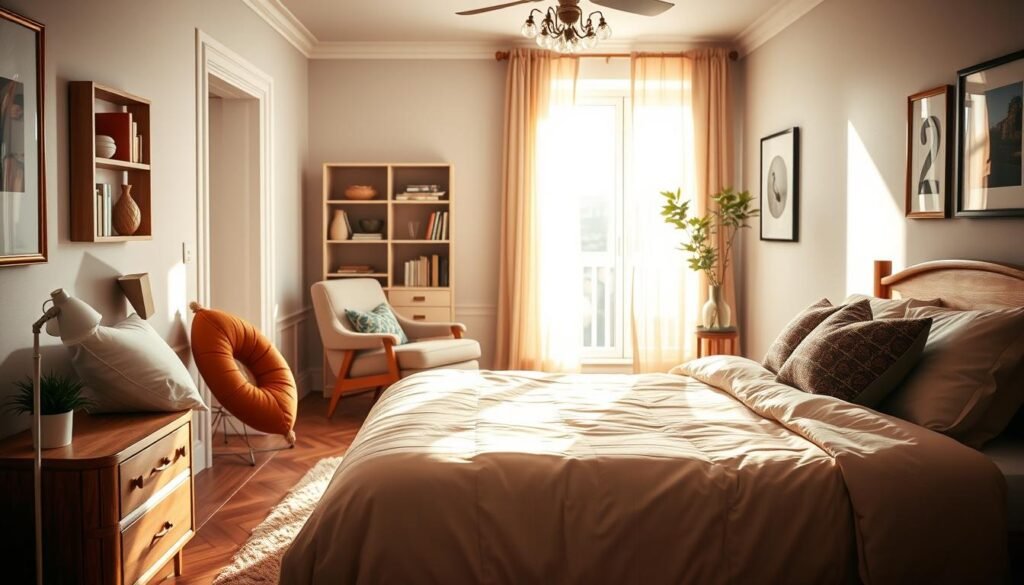
Creating a serene oasis in your home is key for rest and relaxation. A well-designed space can greatly improve sleep quality and overall well-being.
A peaceful bedroom sanctuary is more than a luxury; it’s a must for unwinding after a long day. By adding relaxation tips and calming elements, you can turn your bedroom into a stress-free haven.
We’ll look at various cozy bedroom ideas to help you unwind at home and get ready for the next day.
The Science of Sleep: Why Your Bedroom Environment Matters
The science of sleep shows how important a calm bedroom environment is for good sleep. Studies say that the feel of our bedroom greatly affects how well we sleep.
A calming bedroom atmosphere is key for relaxation. Make sure your room is dark, quiet, and cool. Darkness helps make melatonin, the sleep hormone. A quiet space means fewer distractions to keep you awake. A room between 60-67 degrees Fahrenheit is best for sleep.
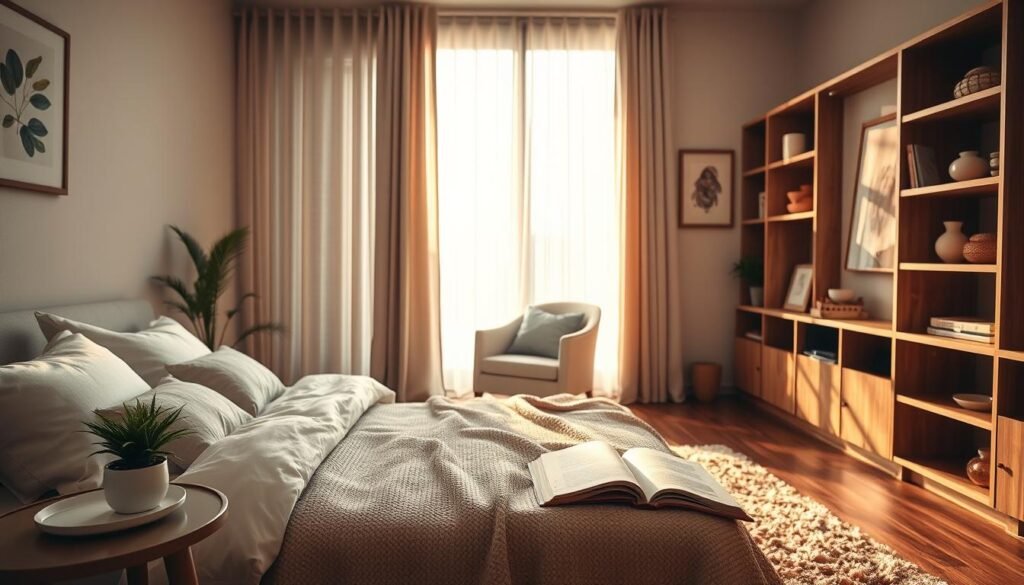
To make your bedroom better for sleep, try relaxation techniques like blackout curtains, earplugs, or a white noise machine. Also, pick master bedrooms decor that helps you relax, like soft colors and comfy bedding. This can make your sleep even better.
Learning about sleep science helps you make your bedroom sleep-friendly. This means less clutter, comfy mattresses, and a regular sleep schedule.
Color Psychology for a Restful Bedroom
Color is key in designing a bedroom for rest and relaxation. The colors you pick can greatly affect your mood and sleep. Color psychology is vital in making a bedroom a place of calm by changing how you feel and relax.
Earthy tones like sage green and sandy beige bring calm and a connection to nature. You can use these colors in your bedroom decor for walls, bedding, or furniture. This creates a soothing space that invites relaxation.
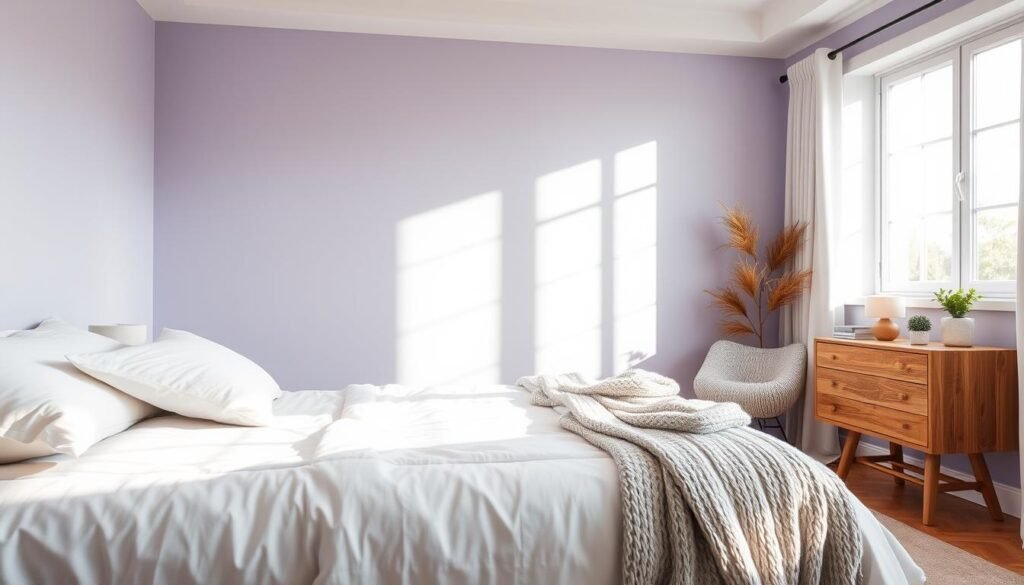
Soft pastels, like light blue or pale lavender, also help create a calm atmosphere. These colors are calming and can lower stress. They’re great for a restful bedroom. Neutral colors, such as beige and soft gray, add both versatility and peace. They’re perfect for a modern farmhouse bedroom or a beige color bedroom.
When picking colors for your bedroom, think about their psychological effects. Cooler tones can help you relax, while warmer tones can make you feel cozy. An earthy bedroom with natural tones can bring balance and peace to your space.
To make a bedroom restful, choose colors that help you relax and feel calm. By understanding color psychology, you can make a bedroom that supports good sleep and renewal.
Lighting Solutions for a Cozy Bedroom Atmosphere
Lighting is key to making your bedroom cozy. The right lighting solutions can make it warm and inviting. This helps you relax and unwind better.
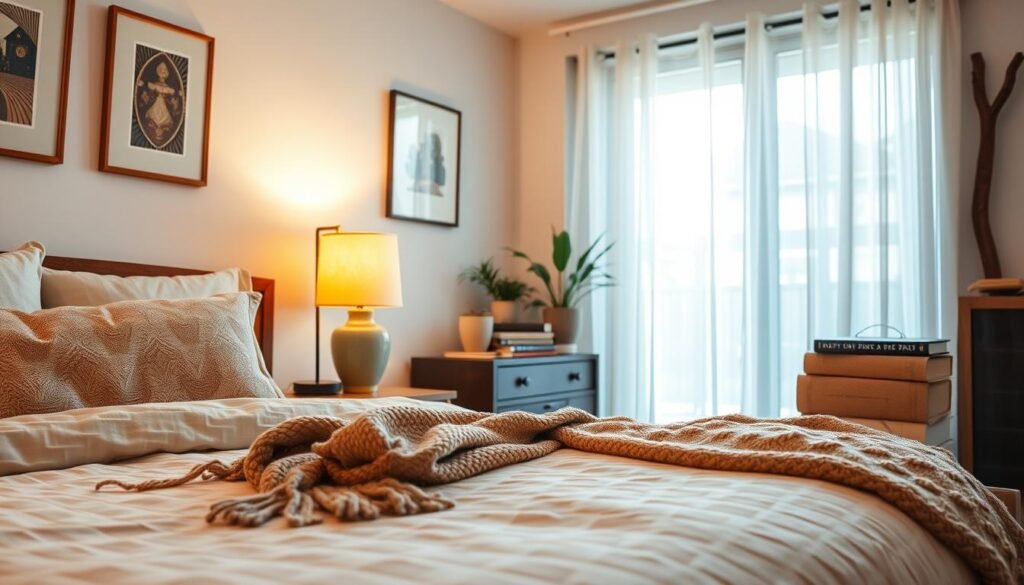
Using different lighting sources is a great way to get a cozy feel. Table lamps offer soft, warm light for reading or relaxing. Floor lamps add elegance and light up the room. String lights create a whimsical and calming vibe.
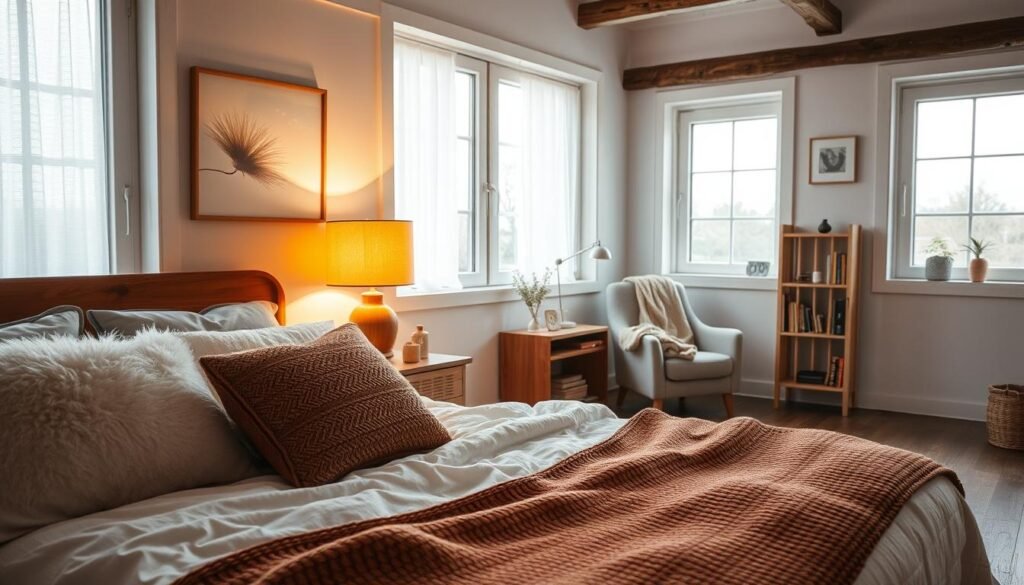
Accent lighting highlights special features in your bedroom. This could be a beautiful artwork or a cozy reading nook. Modern lighting fixtures come in many styles, fitting your bedroom’s décor perfectly.
Dimmer switches can make your bedroom even cozier. They let you adjust the light to match your mood. Smart lighting systems are also great, as they can be controlled remotely and mimic a day-night cycle.
Don’t forget about the bedroom backdrop designs. A well-designed backdrop can enhance your lighting and make the room cozier.
By adding these lighting solutions to your bedroom, you’ll create a cozy and relaxing space. It’s perfect for restful sleep and feeling refreshed.
Cozy Bedroom Ideas That Help You Truly Unwind & Simply Relax
A cozy bedroom is more than a place to sleep. It’s a sanctuary for relaxation and rejuvenation. To make it special, add elements that bring calm and serenity.
Reading Nooks and Meditation Spaces
Creating a reading nook or meditation space is a great idea. Set up a comfy chair or meditation cushion in a quiet corner. Adding a floor lamp or fairy lights can make it cozy for reading or mindfulness.
- Choose a comfortable and supportive chair or cushion.
- Use soft, warm lighting to create a cozy atmosphere.
- Keep the area clutter-free to promote relaxation.
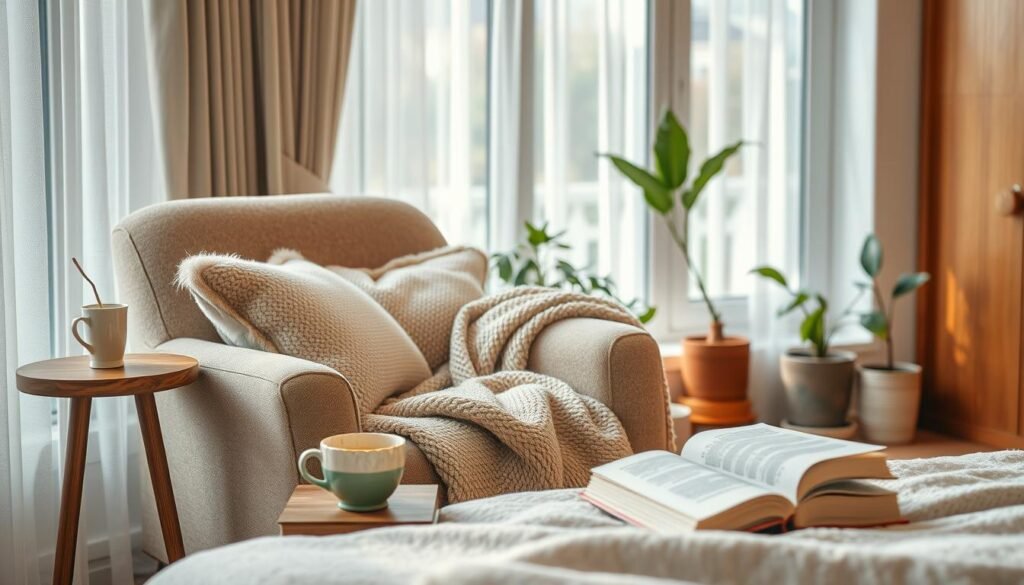
Window seats and cozy corners are also great ideas. A window seat is perfect for enjoying natural light while reading. A cozy corner with pillows and a throw blanket is ideal for relaxation.
- Select a window with a pleasant view, if possible.
- Add cushions and pillows for comfort.
- Use throw blankets to add warmth and texture.
By adding these cozy ideas, you can turn your bedroom into a haven. Whether it’s a reading nook, meditation space, window seat, or cozy corner, each adds to a serene atmosphere.
Bedding and Textiles: The Foundation of Comfort
Bedding and textiles are key to a cozy bedroom. The right choices make the space more comfortable and relaxing.
The bedding is essential. Soft, breathable fabrics like cotton or linen are best. They offer comfort and help keep your body temperature right during sleep.
Throw Blankets and Accent Pillows
Throw blankets and accent pillows do more than look good. They add comfort and coziness. Here’s why:
- They bring warmth and texture to the room.
- They let you change the room’s feel easily.
- They make the room look better with their colors and patterns.
Accent pillows can also bring in new colors or textures. This makes the bedroom more welcoming.
Area Rugs and Soft Flooring Options
Area rugs and soft flooring make a big difference in a bedroom’s coziness.
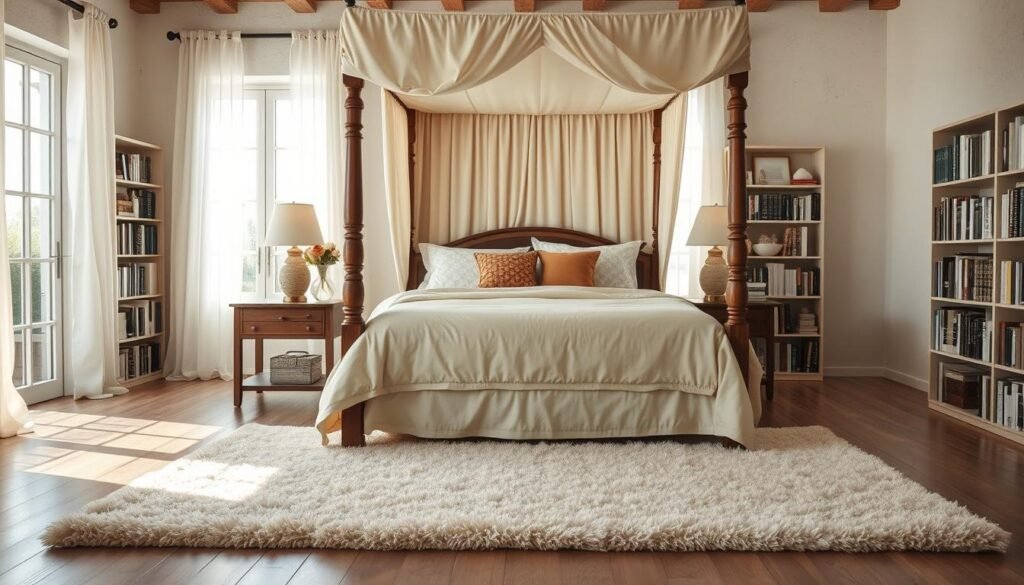
- Area rugs define the space and warm it up.
- Soft flooring like carpeting is comfy and quiet.
- Both add new textures and colors.

Using natural materials and luxurious fabrics can make the bedroom more comfortable. Wool, silk, or bamboo are great for bedding and textiles. They’re breathable and soft.
By focusing on bedding and textiles, you can make a bedroom cozy, inviting, and relaxing. The goal is to mix comfort with beauty. This way, the bedroom is both lovely and practical.
Bedroom Styles That Promote Relaxation
Different bedroom styles can make you feel calm and relaxed. The goal is to make a space that feels personal and soothing.
Modern Farmhouse Bedroom style mixes rustic charm with modern elegance. It creates a warm and inviting atmosphere. Use natural materials, vintage decor, and a neutral color palette to achieve this look. Incorporate reclaimed wood furniture and soft textiles.
A Rustic Modern Bedroom combines rustic warmth with modern design. It often has earthy tones, natural textures, and minimalist decor. To get this look, mix natural materials like wood and stone with modern lighting.
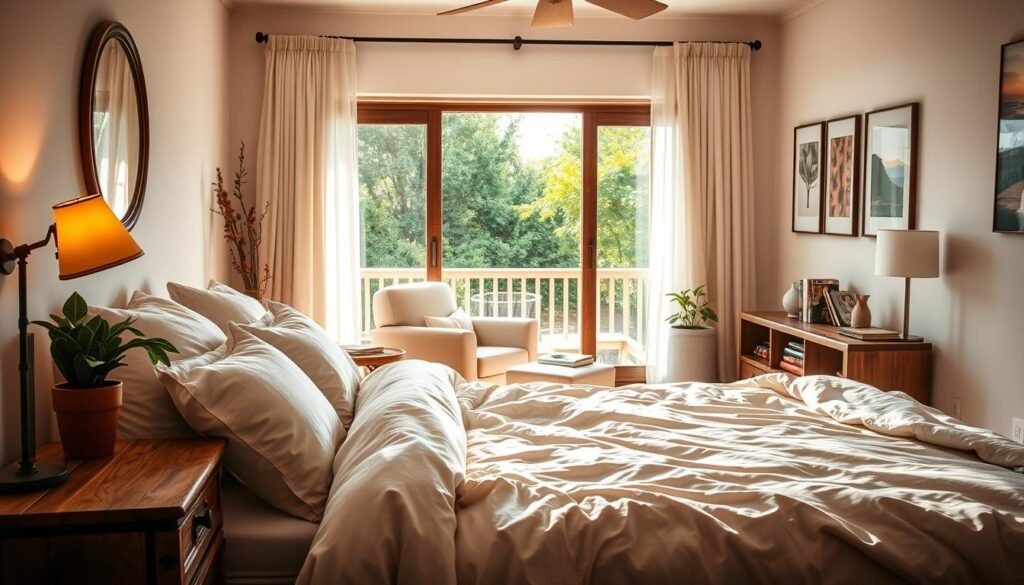
An Earthy Bedroom design focuses on natural elements and earthy tones. It promotes calm and a connection to nature. Use plants, natural fibers, and outdoor-inspired colors to bring an earthy feel to your bedroom.
A Neutral Bedroom Design is also great for relaxation. Neutral colors on walls, bedding, and furniture make a serene space. Soft grays, whites, and beiges are good choices for a calming atmosphere.
When picking a bedroom style, think about what relaxes you. Whether it’s the warmth of a modern farmhouse or the calm of a neutral design, your bedroom should reflect your taste and be a restful haven.
Furniture Arrangement for Optimal Relaxation
The way you arrange your bedroom furniture greatly affects your ability to relax. A cluttered and cramped bedroom can be stressful. On the other hand, a spacious and well-arranged bedroom can promote calmness.
Creating Negative Space is key for a relaxing bedroom. Negative space refers to the areas between and around furniture. Leaving enough space between pieces can make the room feel larger and more serene. For small bedrooms, using multi-functional furniture helps keep the room open.
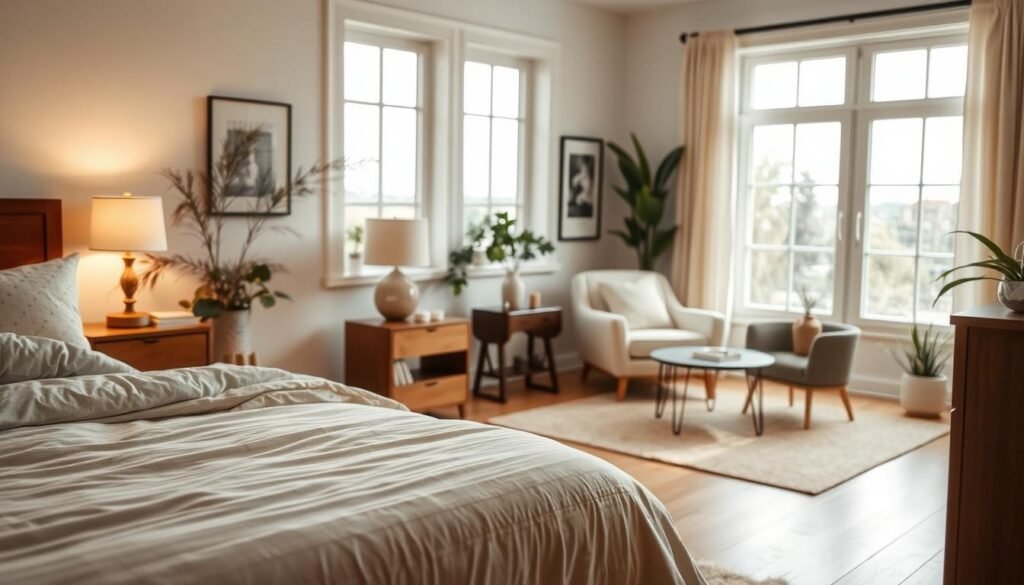
A well-planned bedroom layout also involves creating a relaxing flow. This means arranging furniture in a way that guides the eye smoothly through the room. Avoid clutter and obstacles. For a cozy master room, place the bed in a commanding position, away from the door but with a clear view of it.
For small bedroom designs, consider these tips:
- Use light colors on walls to create a sense of space.
- Opt for minimalist furniture with clean lines.
- Utilize vertical space with wall-mounted shelves or storage units.
By applying these principles, you can create a bedroom that is not only aesthetically pleasing but also conducive to relaxation. A thoughtful furniture arrangement can transform your bedroom into a sanctuary. This enhances the quality of your rest.
Sensory Elements That Enhance Bedroom Coziness
A cozy bedroom is more than just looks. It’s about creating a space that soothes your senses. This space should help you relax and sleep better.
Aromatherapy is key in making your bedroom cozy. Scents like lavender and vanilla calm you down. Use essential oils or scented candles to add these scents.
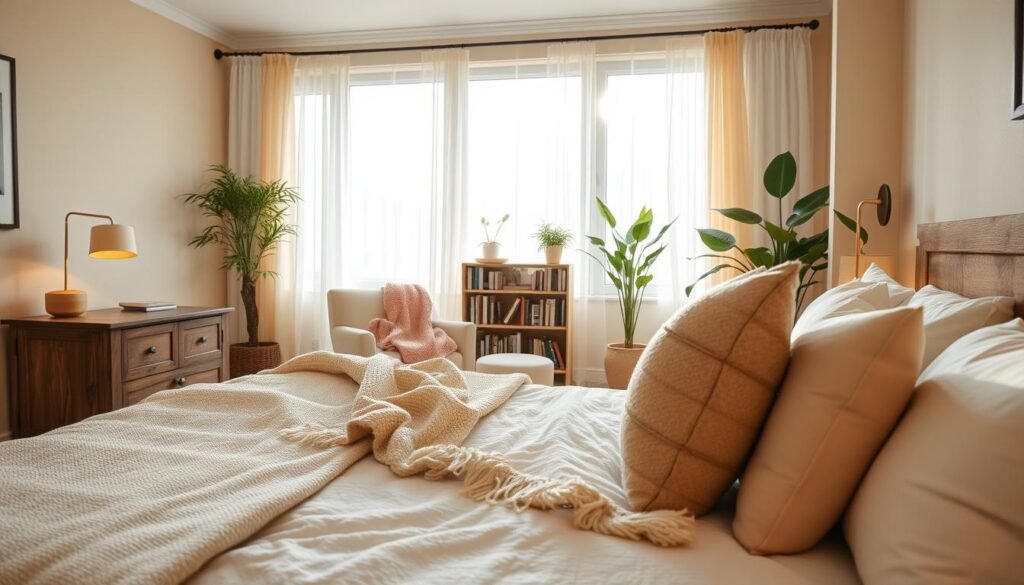
Soft music also plays a big role. A gentle tune or nature sounds can calm your mind. Think about a sound system or a white noise machine for your bedroom.
Calming scents and soft music are just the start. Other things to think about include:
- Soft, plush textiles for bedding and curtains
- Comforting temperatures through the use of heaters or fans
- Dimmable lighting to adjust the ambiance
By adding these sensory elements, you make your bedroom a cozy retreat. It’s not just pretty; it’s a place for rest and relaxation. This approach makes your bedroom a sanctuary for better sleep and well-being.
Conclusion: Creating Your Personal Sleep Sanctuary
Creating a cozy bedroom is a personal journey. It’s about understanding what you need and want. This way, you can make a space that refreshes your body and mind.
A well-designed bedroom is key for relaxation. The right decor can change everything. Think about adding soothing colors, comfy bedding, and soft lighting.
To make your master bedroom a sleep sanctuary, design it for yourself. Use these ideas to create a cozy space for restful sleep and relaxation.
By following these tips, you’ll soon have a cozy bedroom that’s your own sleep sanctuary. It’s a place where you can relax and recharge.