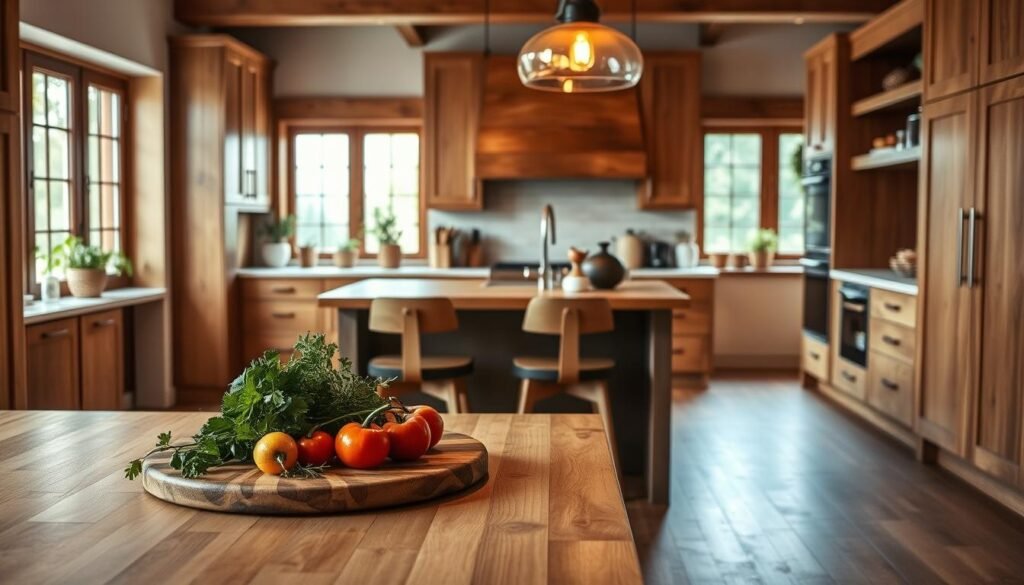
Is your kitchen feeling cold and uninviting? A chilly kitchen can make mornings feel dull. Warming up the kitchen is easier than you think.
To create a cozy atmosphere, think about adding natural elements, cozy lighting, and inviting textiles. These simple changes can make a big difference in your kitchen’s feel.
By using cozy kitchen ideas like warm colors and decorative elements, you can make your kitchen welcoming. Whether you’re planning a big renovation or just a small update, there are many ways to add coziness.
The Warm Heart of the Home
The kitchen is at the heart of every home, filled with warmth and hospitality. It’s where families come together to share meals and make memories. A warm and inviting kitchen decor can turn your home into a cozy haven.
To create this warm vibe, add elements that foster comfort and togetherness. For example, natural wood accents can make your kitchen feel like the home’s heart.

Your kitchen’s home fashion should show your style while being practical. The right color palette is key; warm colors can boost appetite and conversation, making your kitchen welcoming.
For a cottage kitchen or dream house decor feel, mix warm colors with soft textiles and cozy lighting. This mix can turn your kitchen into a cozy spot, the heart of your home.
By focusing on these elements, you can make your kitchen more than just a cooking area. It becomes a place for family and friends to gather, capturing the essence of kitchens as the home’s central hub.
Embracing Natural Wood Elements
Using natural wood in kitchen design is a classic choice. It adds warmth and depth. You can choose from wooden cabinets to a wooden island to warm up your kitchen.
Benefits of Natural Wood in kitchen design include its unique look and character. You can mix wooden elements with white appliances for a balanced look. For example, wood kitchen cabinets paired with white can look great together.
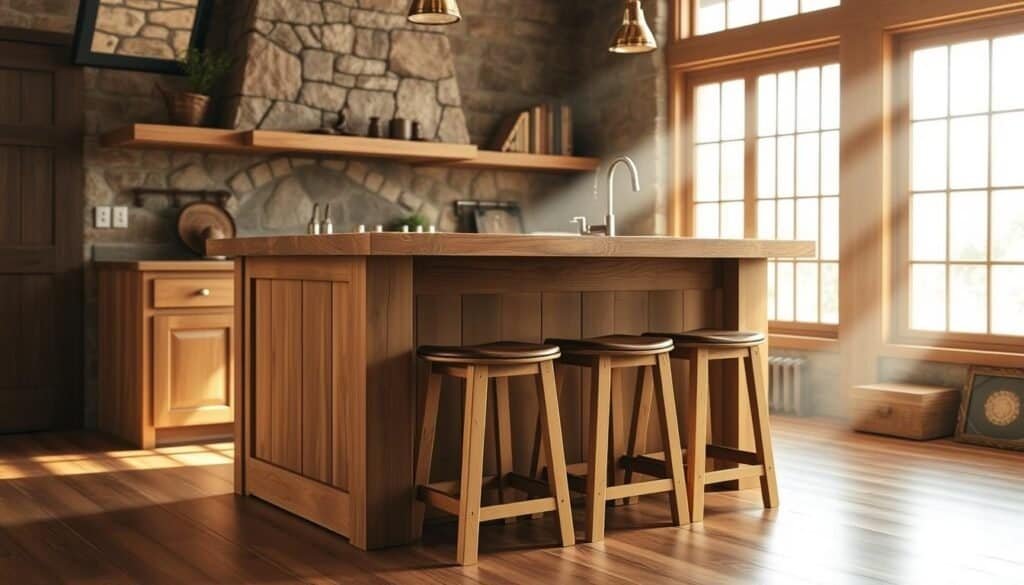
- Natural wood kitchen cabinets for a warm, inviting look
- A wooden kitchen island to add functionality and style
- Wooden accents or accessories to complement your kitchen’s design
Different woods have unique qualities. Oak is durable and classic, while maple is lighter and modern. Pick the wood that fits your kitchen’s style and your taste.
To add natural wood to your kitchen, think about the look you want. Mix wooden elements with other materials to avoid too much wood. With the right mix, natural wood can make your kitchen cozy and inviting.
Color Psychology: Warm Palettes for Your Kitchen
Warm colors make your kitchen feel cozy and inviting. The psychology of color shows that warm tones bring comfort and coziness. This makes them ideal for kitchen design.
Choosing the right cabinetry is key for a warm tone kitchen. Cabinetry ideas can be traditional wood or modern painted finishes. For example, brown kitchen cabinets modern designs add sophistication with warmth.
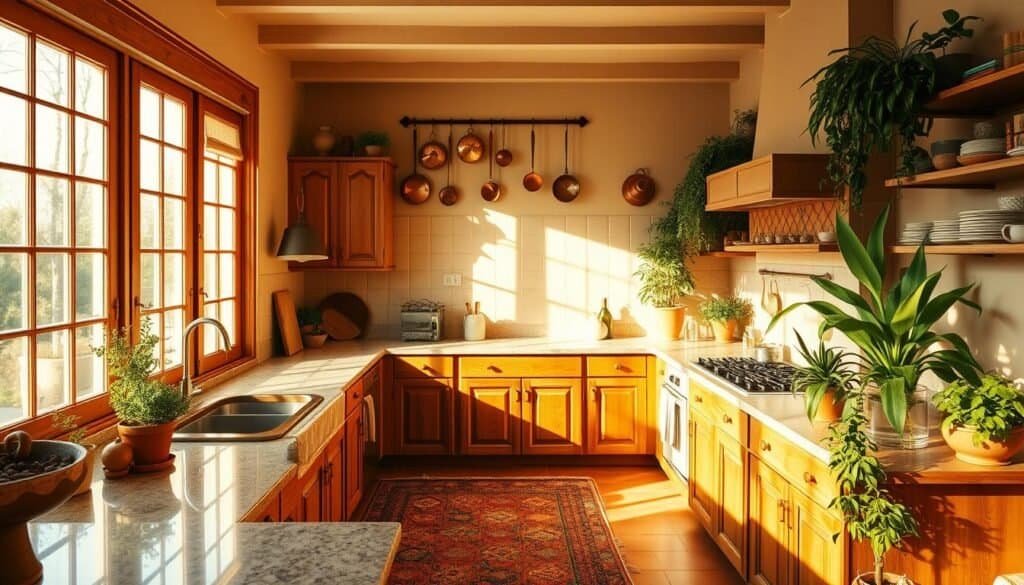
Combining warm cabinet colors with black hardware is a popular trend. This contrast creates a striking look. For kitchen cabinet color ideas with black hardware, warm neutrals like beige or soft brown work well. They complement black hardware beautifully, creating a balanced look.
To add warm colors to your kitchen, consider these ideas:
- Use warm-toned wood for cabinets or flooring.
- Choose a warm color palette for walls and countertops.
- Add warm accents with accessories like vases, rugs, or lighting.
It’s important to balance warm colors with neutral elements. Pair warm cabinets with neutral countertops or backsplashes. This balance makes your kitchen cozy yet spacious.
By carefully choosing warm colors for your kitchen, you can make it feel welcoming and comfortable. Whether you’re renovating or just looking for ideas, warm palettes are a versatile and inviting choice for your kitchen.
Textile Touches: Softening Hard Surfaces
Textiles are key in making kitchen surfaces feel softer. They help make kitchens cozy and welcoming. This makes them perfect for relaxing and enjoying warmth.
Rugs are a great way to warm up a kitchen. They bring color and texture, and can even mark out different spots. For example, a rug by the sink or island can turn a kitchen area into a cozy corner.
Other textile elements that can enhance kitchen warmth include curtains, upholstered stools, and table runners.
- Curtains add a soft, romantic feel and control light.
- Upholstered stools and chairs offer comfort and warmth.
- Table runners and placemats add color and texture to dining.
For more ideas on adding textures to your kitchen, see our article on modern texture ideas that add warmth and. It offers great tips for making your kitchen inviting and layered.
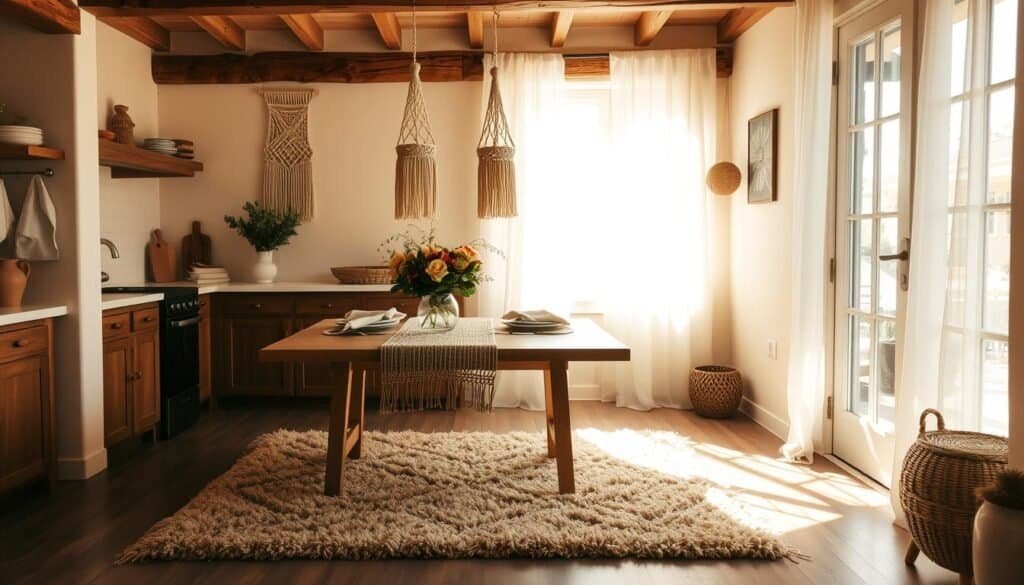
When picking textiles, think about the look you want. For a cozy, farmhouse vibe, choose natural fibers like cotton, linen, or wool. For something modern, go for sleek, synthetic materials.
By carefully choosing textiles, you can make your kitchen warm, inviting, and truly yours.
Kitchen Feeling a Little Cold? Let’s Add Some Cozy Touches with Lighting
Lighting is key in kitchen design, making or breaking the cozy vibe. A good lighting plan can turn your kitchen into a warm, inviting space. It’s great for cooking, dining, and hanging out. The right lighting can make your kitchen the heart of your home.
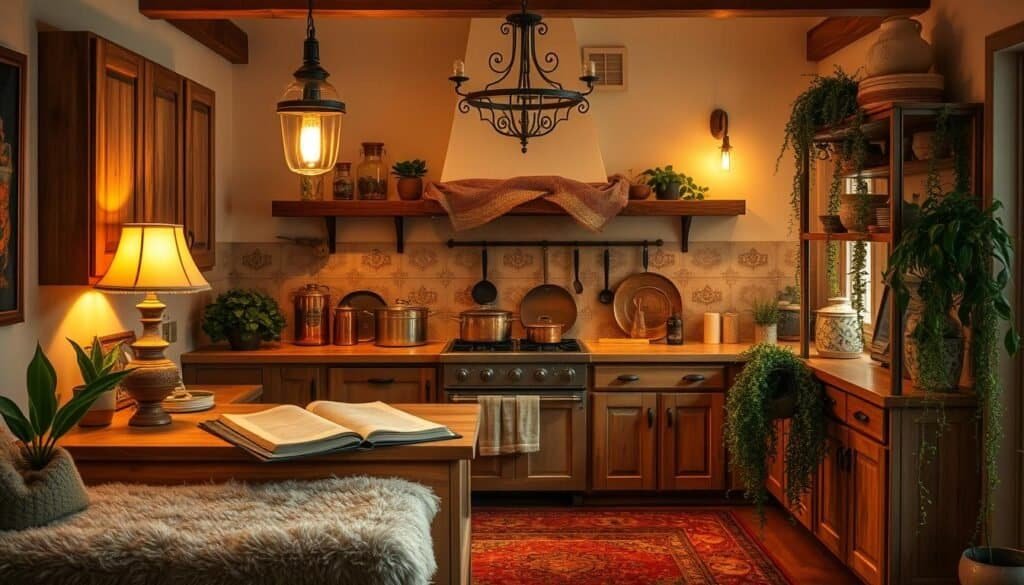
Pendant lights are great for kitchen islands, providing focused light and style. Choosing the right pendant light can elevate your kitchen’s style and provide task lighting where needed. Opt for pendant lights with warm shades for a cozy glow.
- Select pendant lights that match your kitchen’s style and color.
- Use dimmers to adjust the light for different tasks and moods.
- Layer pendant lights with other sources for a dynamic effect.
Under-Cabinet Lighting Solutions
Under-cabinet lighting adds coziness to your kitchen. It lights up countertops and cabinets, making your kitchen warm and welcoming. LED strip lights are popular for under-cabinet lighting because they’re energy-efficient and flexible.
- Choose under-cabinet lighting that’s easy to install and maintain.
- Think about the lighting’s color temperature to match your kitchen’s decor.
- Use under-cabinet lighting to highlight decor or create depth.
Adding pendant lights over islands and under-cabinet lighting makes your kitchen cozy and inviting. The secret to a cozy kitchen is layering different lights and adjusting their intensity as needed.
Bringing the Farmhouse Feel: Rustic Elements
A farmhouse kitchen’s charm comes from its rustic elements. These add warmth and character. To get this look, use natural materials and vintage decor. They bring a sense of history and coziness.
Rustic elements include reclaimed wood, antique fixtures, and vintage appliances. They add visual interest and make the kitchen warm and inviting.
Statement Range Hoods as Focal Points
A statement range hood can be a kitchen’s centerpiece. It draws attention and adds rustic charm. Look for designs with rustic elements, like copper or bronze finishes, or those that look like reclaimed wood.
- Find range hoods with decorative elements, like metalwork or carved wooden details.
- Make sure the range hood’s material and finish match your kitchen’s rustic theme.
- A statement range hood is not just decorative. It also provides great ventilation.
Other rustic elements can also make your kitchen special. Reclaimed wood for shelving, beams, or a kitchen island adds warmth. Vintage decor, like antique signs or metalware, makes the kitchen cozy and inviting.
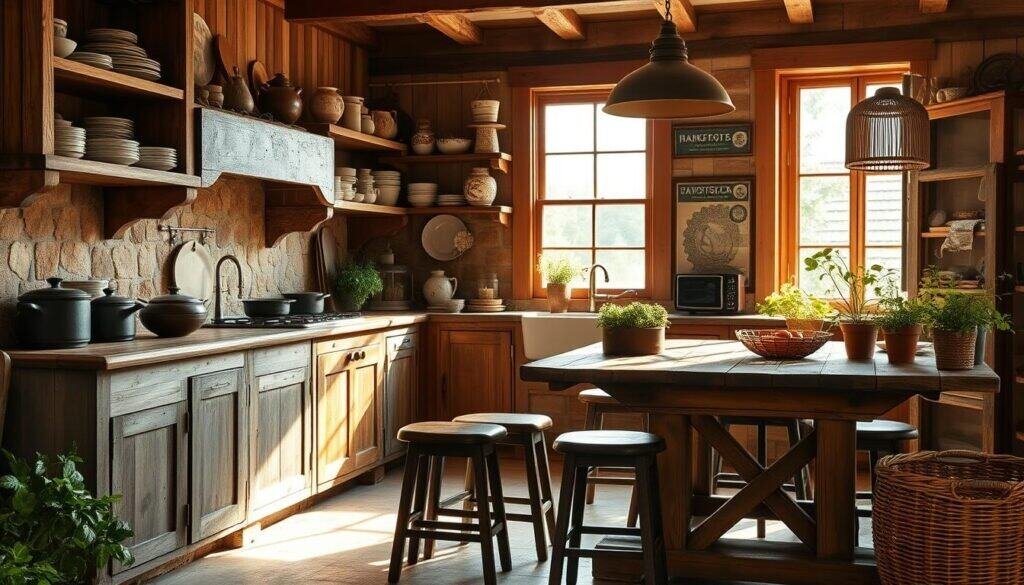
To enhance the farmhouse feel, mix rustic elements with other designs. Natural stone or brick can add to the look. This mix creates a beautiful and welcoming space.
By carefully choosing rustic elements and statement pieces like range hoods, you can make a beautiful and functional farmhouse kitchen.
Creating Intimate Dining Spaces Within the Kitchen
An intimate dining space in the kitchen can make mealtime more enjoyable. It’s important to focus on key elements for a warm and inviting atmosphere.
Choosing the Right Furniture is key. The dining table and chairs should fit the space well. A round or oval table is great for smaller kitchens, creating a cozy feel. For bigger kitchens, a rectangular table works well, allowing for more guests.
When decorating the dining area, aim for a balance between looks and function. A standout light fixture above the table adds both light and style.

Lighting sets the mood. Dimmable lights adjust the feel of the room. Warm colors in textiles like placemats and napkins also add coziness.
For kitchens that serve as dining areas, adding dining room interior design elements helps. A rug under the table and wall decor can make the space look great.
Adding dinner room ideas like a built-in banquette or a kitchen island with seats makes the dining area more functional and cozy.
Designing your dining area thoughtfully can make mealtime more enjoyable. Whether you’re setting up a dining room in living room style or a separate dining nook, balance looks with function.
Decorative Elements That Add Warmth
Adding warmth to your kitchen is easy with the right decor. Decorative elements make your kitchen cozy and inviting.
Vintage decor adds character. Think about using old clocks, vintage utensils, or retro appliances. They create a unique, warm feel.
Natural elements also warm up your kitchen. Show off woven baskets, vintage pottery, or seasonal fruits. They add interest and coziness.
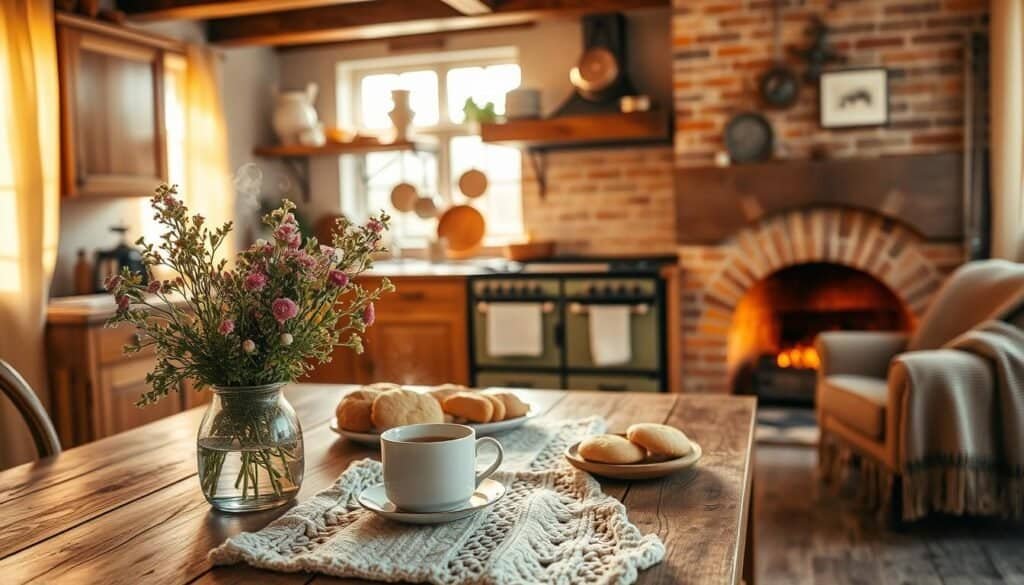
Textiles bring warmth too. Use table runners, placemats, and tea towels in warm colors. A kitchen rug can also soften the space and quiet it down.
Here are more ideas to warm up your kitchen:
- Hang warm-toned artwork or family photos on the walls.
- Use scented candles or essential oils for a cozy smell.
- Add plants or fresh flowers for a natural touch.
- Display your favorite cookbooks or vintage kitchen gadgets on open shelving.
With these decorative elements, you can make your kitchen warm and welcoming. It becomes the heart of your home.
Conclusion: Your Personalized Cozy Kitchen Journey
Making your kitchen cozy is about adding warmth and character. Use natural wood, warm colors, and textiles to make it welcoming. This will turn your kitchen into a place you love to be.
Warming up your kitchen is more than just looks. It’s about creating a cozy atmosphere that feels like home. Think about your kitchen’s layout and how to use lighting and decor to make it warmer.
If your kitchen feels cold, start with cozy elements like plush rugs or warm appliances. Try different decor until you find the perfect mix for your kitchen.
Your cozy kitchen should show off your personal style. Use the tips from this article to make your kitchen warmer and more inviting. Start your journey today!