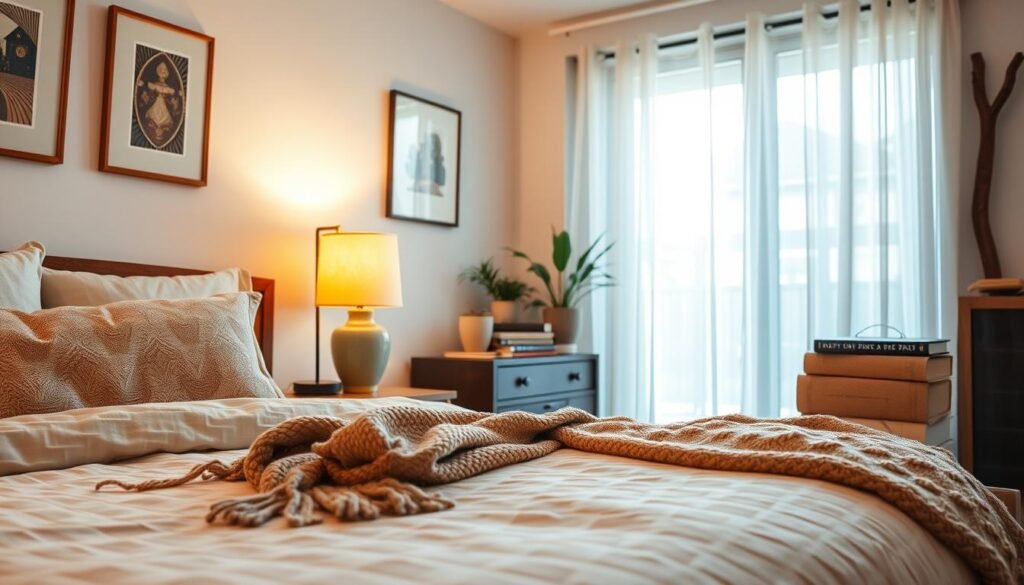
Are you having trouble unwinding after a long day? A relaxing bedroom environment can greatly improve your sleep and wellbeing.
Adding natural elements to your bedroom decor can create a calming atmosphere. This might include plants or natural fabrics.
With a few easy changes, you can turn your bedroom into a peaceful space. It will help you relax and feel ready for the next day.
The Connection Between Nature and Restful Sleep
Research shows that nature can help us sleep better. Adding natural elements to your bedroom can make a big difference. It’s a simple way to improve your sleep.
Stress Reduction Through Biophilic Design
Biophilic design brings nature indoors, reducing stress. This can make your sleep more restful. A calm space helps you relax better.
Improved Sleep Quality with Organic Materials
Bedding and rugs made from organic materials can help you sleep better. These items are good for the planet and your health. They make your bedroom a healthier place to sleep.
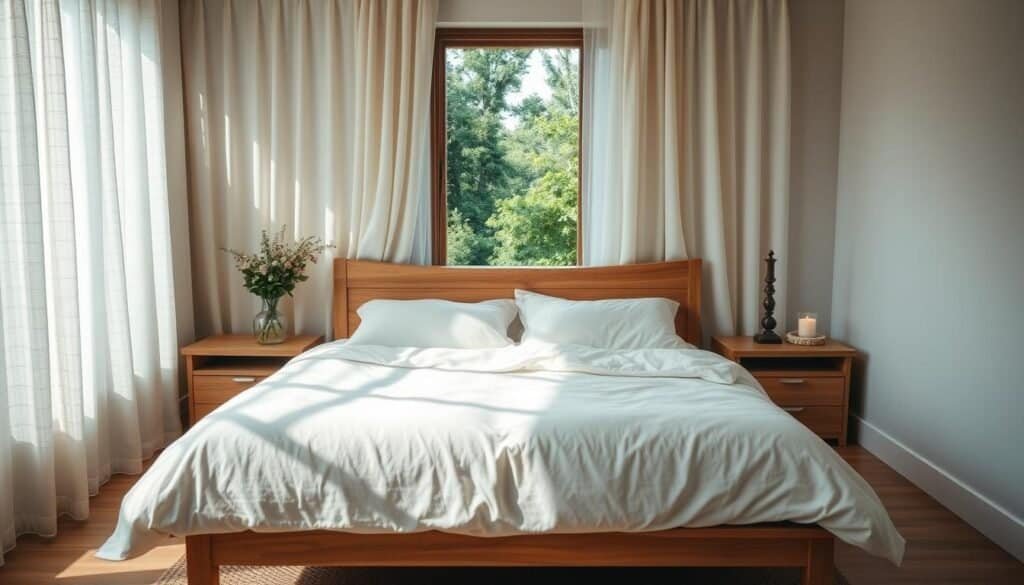
Natural textures can calm your mind and body. Adding them to your bedroom makes it cozy. This cozy space helps you sleep better.
Sensory Experiences That Promote Relaxation
- Soft, natural fabrics
- Calming colors inspired by nature
- Soothing scents from essential oils
These experiences work together to relax you. They help improve your sleep quality.
Signs Your Bedroom Is Contributing to Your Exhaustion
Your bedroom should be a place of rest and peace. But if you’re always tired, it might be because of your bedroom. There are several things that could be making you feel exhausted.
Synthetic Materials and Their Impact
Bedding and carpets made of synthetic materials can harm your sleep. They can make your room hot and damp. Try switching to natural fibers like cotton or linen for better sleep.
Harsh Lighting and Electronic Disruptions
Harsh lighting can mess with your sleep cycle. Bright lights and devices like TVs and phones in your room can also disrupt sleep. Use soft, warm lights and keep devices out of your bedroom.
A messy bedroom can stress you out. Do a clutter assessment and get rid of things you don’t need. For more ideas on making your bedroom cozy, check out The Sawdust Man. They have great wood decor ideas to improve your space.
Color Psychology and Mood Effects
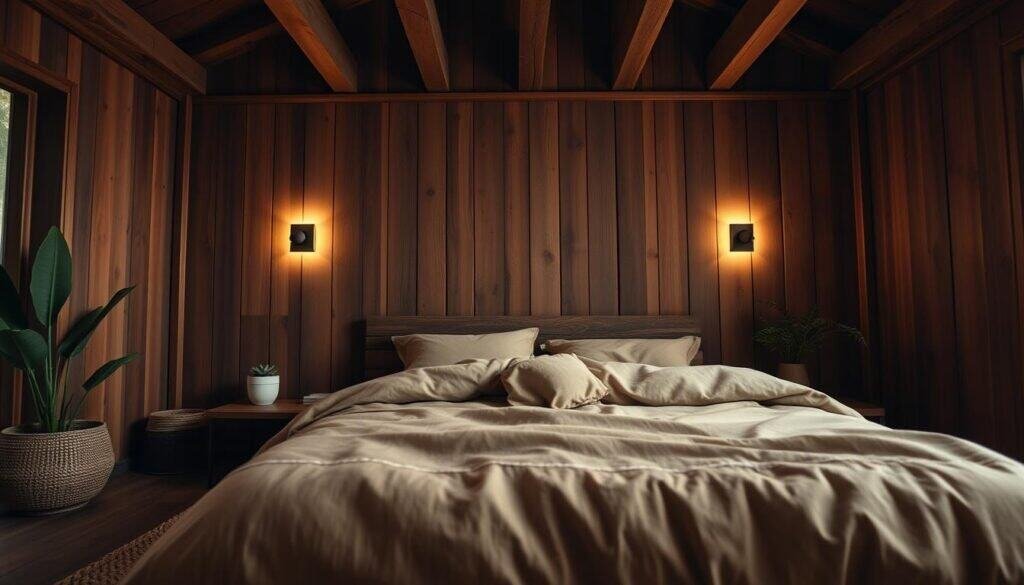
The colors in your bedroom can also affect how you feel. Dark colors can make a room cozy, but too much darkness can feel heavy. Mix dark wood furniture with lighter colors for a neutral bedroom with dark furniture that feels welcoming and calming.
Feeling Drained Tonight? Try Softening Your Bedroom With Something Natural
Adding natural touches to your bedroom can improve your sleep and wellbeing. Elements from nature can make your bedroom a calm place for rest.
Five-Minute Natural Additions That Make a Difference
It’s easy and quick to add natural elements to your bedroom. Try using a vase with fresh flowers or a potted plant. These not only look good but also clean the air and make your room feel calm.
- Add a few sprigs of lavender to your pillowcase for a calming scent.
- Place a bowl of river rocks or pebbles on your nightstand for a natural decorative element.
- Hang a piece of natural fiber art, such as a woven tapestry, on your wall.
Rearranging Existing Items for Better Energy Flow
Changing how you arrange your furniture can make your bedroom more relaxing. Try moving your bed away from the door and towards a wall with a nice view.
Replacing Synthetic Items with Natural Alternatives
Switching to natural materials can change your bedroom’s feel. Use natural fibers like cotton or linen for bedding. Also, swap plastic or metal decor for natural wood or bamboo.
Budget-Friendly Natural Element Ideas
You don’t have to spend a lot to make your bedroom natural. Look for budget-friendly options like using old jars as vases. You can also decorate with items you find outside, like pinecones or leaves.
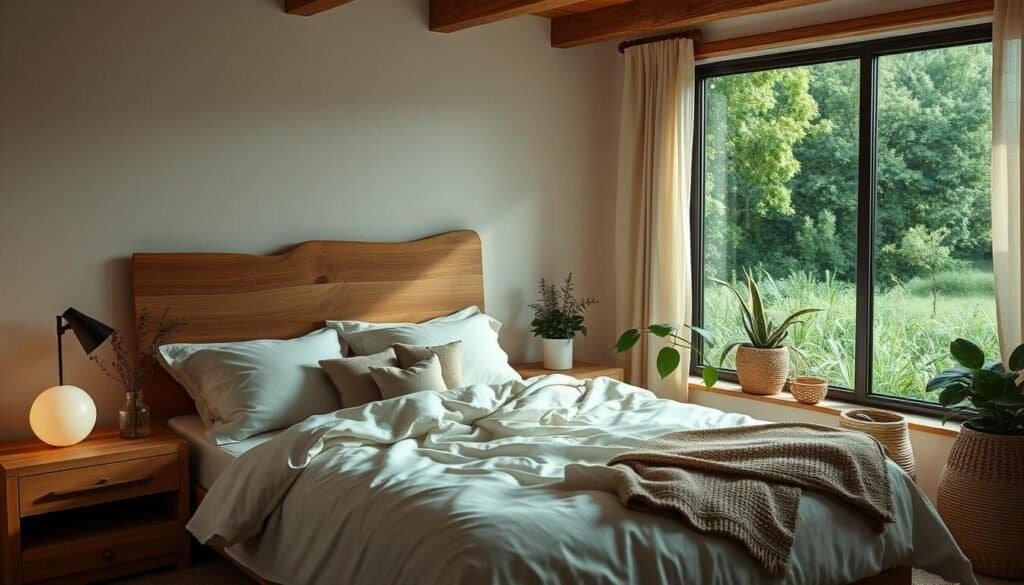
With these simple and affordable ideas, you can turn your bedroom into a peaceful place. It will help you relax and feel refreshed.
Incorporating Natural Textiles for Instant Comfort
Natural textiles can make your bedroom more comfortable. By picking the right materials, you can make a cozy sleep space. This space helps you relax and feel refreshed.
Seasonal Textile Considerations
Think about the season when choosing natural textiles. For hot months, lighter fabrics like cotton or linen are perfect. In cold months, heavier fabrics like wool or flannel are better.
Organic vs. Conventional Options
Choosing organic textiles can make your bedroom even more comfortable. Organic bedding is free from harmful chemicals. It makes for a healthier sleep space. You can also add natural wood tones to match your organic bedding.
Creating Depth with Mixed Natural Materials
Mixing natural materials adds depth and interest to your bedroom. Try combining natural fibers like cotton or silk with wood or bamboo accents. This creates a rich, layered look.
Textile Combinations for Different Sleep Preferences
People have different sleep needs. For those who sleep hot, breathable fabrics like cotton or linen are best. Those who sleep cold might like warmer fabrics like wool or fleece.
- Cotton and linen for a cool, breathable sleep environment
- Wool and flannel for a warm, cozy sleep environment
- Bamboo and silk for a luxurious, eco-friendly option

Bringing the Outdoors In: Plants That Purify and Calm
Plants do more than just look good; they clean the air and help us relax. Adding the right plants to your bedroom can improve your sleep and health.
Air-Purifying Varieties for Better Sleep
Some plants are great at cleaning the air, perfect for bedrooms. Here are a few:
- Snake Plants: They remove toxins from the air.
- Peace Lilies: They purify the air and help you sleep better.
- Spider Plants: They’re easy to care for and clean the air well.
Plants That Thrive in Low-Light Conditions
Not all bedrooms get a lot of sunlight. But, there are plants that do well in low light. Here are a few:
- Chinese Evergreen: It looks great and can handle low light.
- Pothos: It’s versatile and grows well in low light.
- ZZ Plant: It’s easy to care for and perfect for low-light rooms.
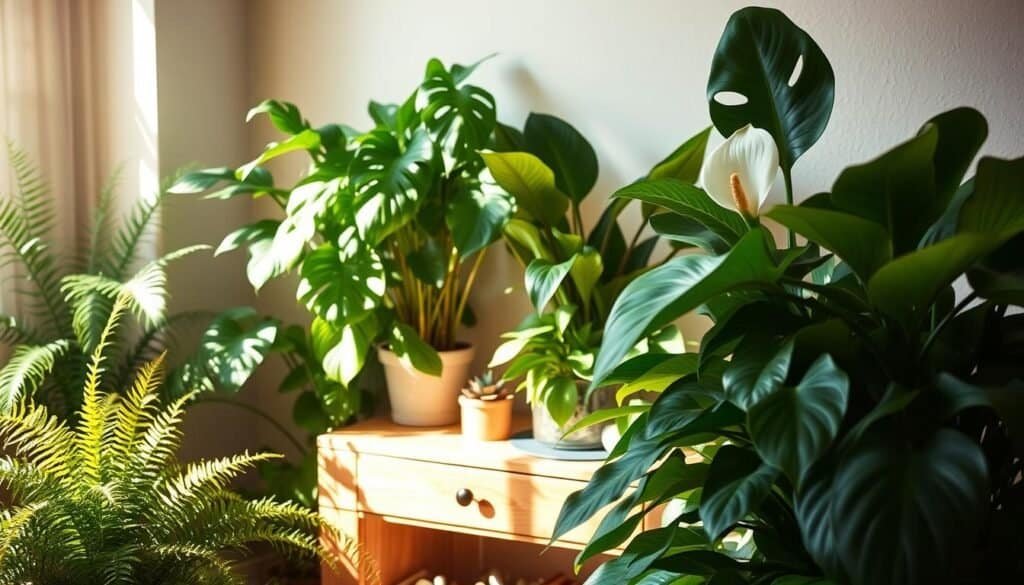
Even small bedrooms can have plants. You can make a mini indoor garden or add natural decor with plants. Here are some ideas:
- Group small plants together.
- Use tiered planters.
- Choose compact or trailing plants.
Hanging and Vertical Garden Options
Hanging plants or vertical gardens can add a unique touch. They make your space look interesting and use space well. Here are some options:
- Hanging Baskets: Great for plants like ivy or ferns.
- Vertical Planters: Perfect for a living wall.
- Macramé Plant Hangers: They add a bohemian vibe.
By adding these plants and creative displays to your bedroom, you can make a peaceful space. This space will help you sleep better and feel better overall.
Natural Wood Elements to Warm Up Dark Furniture
Adding natural wood elements is a simple way to soften dark bedroom furniture. Lighter wood tones can make your bedroom feel balanced and inviting.
Light Wood Accessories for Balance
Light wood accessories are great for balancing dark furniture. Try a light wood nightstand or a wooden mirror frame to warm up your bedroom.
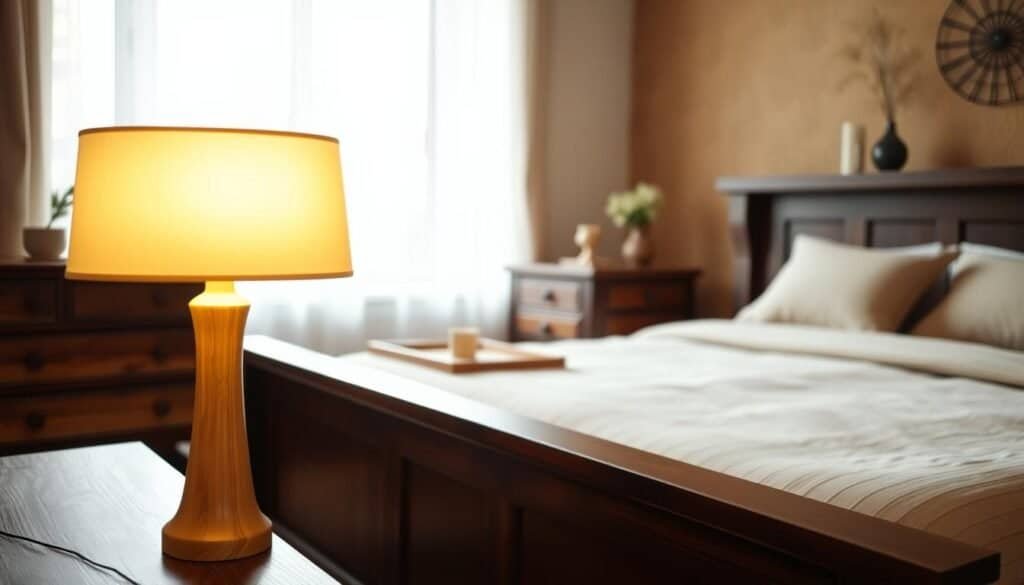
Mixing wood tones can be tricky, but it’s doable. Start by finding the main wood tone in your room. Then, pick wood tones that complement it. For example, dark brown furniture looks good with light wood accessories.
Natural Elements for Dark Brown Bedroom Ideas
Dark brown bedrooms can use natural elements like woven baskets, plants, or a natural fiber rug. These add warmth and texture, making your bedroom cozy.
Softening Dark Wood Bedroom Furniture with Organic Touches
To soften dark wood furniture, add organic touches. A natural wood headboard or reclaimed wood wall art can add warmth and character.
By using natural wood and balancing light and dark tones, you can make your bedroom cozy and inviting. These tips are great for refreshing your bedroom or starting a new one.
Earth-Inspired Color Palettes for Restorative Sleep
Earth-inspired colors can greatly improve sleep quality by making your bedroom calm. Earthy tones help relax and lower stress levels.
Earthy Tones for Grounding Energy
Colors like terracotta, sienna, and umber ground you, balancing energy for better sleep. They warm up your bedroom.
Creating Depth with Natural Color Variations
Using different shades of one earthy tone adds depth to your bedroom. This creates a soothing, interesting look.
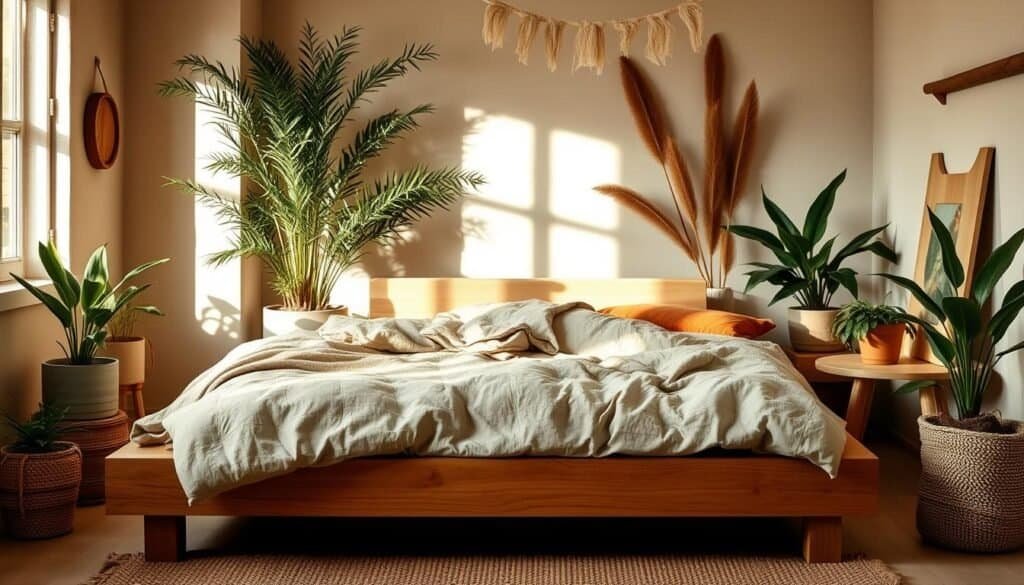
Change your colors with the seasons to keep your bedroom fresh. Lighter tones in spring and summer turn to darker ones in autumn and winter.
Incorporating Color Through Natural Materials
Using natural materials like wood, stone, and fibers adds interest and brings nature indoors. This improves your sleep space.
Choosing the right earth-inspired colors and materials makes your bedroom a place for rest and renewal.
DIY Natural Decor Projects for Personalized Touches
Make your bedroom special with handmade natural decor. DIY projects add a personal touch and make your space more relaxing.
Step-by-Step Construction Guide
Try making a natural fiber wall hanging. You’ll need a wooden dowel, twine, and natural fibers like cotton or hemp. Wrap the fibers around the dowel and tie them with twine. Hang it up to add texture and interest.
Styling Tips for Different Plant Types
Think about the size and type of plants for your bedroom. A big fern can be a centerpiece, while small succulents look good together on a shelf. Use terracotta or wood planters for a natural look.
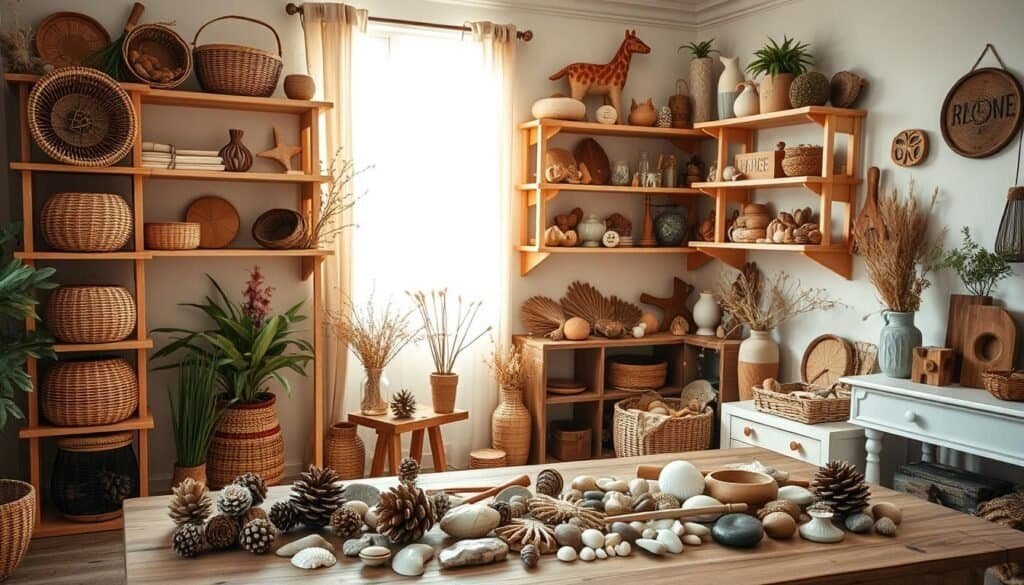
Make unique wall art with leaves, branches, or stones. Frame them or make a mobile for above your bed. Natural sculptures can also make your bedroom interesting.
Functional Decor from Found Natural Materials
Make useful decor from natural materials. An old driftwood piece can be a headboard or shelf. Get creative with items like shells, pebbles, or bamboo.
Simple Weaving Techniques for Beginners
Weaving is easy and fun. You can start with a basic loom or frame. Use wool, cotton, or silk to make wall hangings or bed runners for warmth and texture.
Incorporating Foraged Elements
Foraging for items like pinecones, acorns, or wildflowers is fun. Use them to make a centerpiece or wreath for your bed.
Adding these DIY natural decor projects to your bedroom makes it beautiful and personal. It shows off your style and personality.
Organic Lighting Solutions for Evening Relaxation
Organic lighting can turn your bedroom into a calm place. It uses elements that look like natural light. This creates a peaceful atmosphere that helps you relax.
Benefits of Warm-Spectrum Lighting
Warm-spectrum lighting makes your room feel cozy. It calms your mind and body. This lighting tells your brain it’s time to sleep, helping you sleep better.
Safety Considerations for Natural Light Elements
It’s important to think about safety when using natural light. Make sure all lighting and materials are strong and well-attached. This prevents any dangers.
Layered Lighting for Different Moods
Layered lighting lets you change your room’s mood. Using different light sources, like table and floor lamps, makes your lighting flexible. It meets your needs at any time.
- Use dimmable lights to adjust the brightness
- Incorporate warm-spectrum bulbs for a cozy glow
- Consider using smart lighting systems for ease of control
Natural Materials for Lampshades and Fixtures
Using natural materials for lampshades and fixtures adds to your room’s organic feel. Materials like linen, cotton, or wood add warmth and texture. They make your room feel cozier.
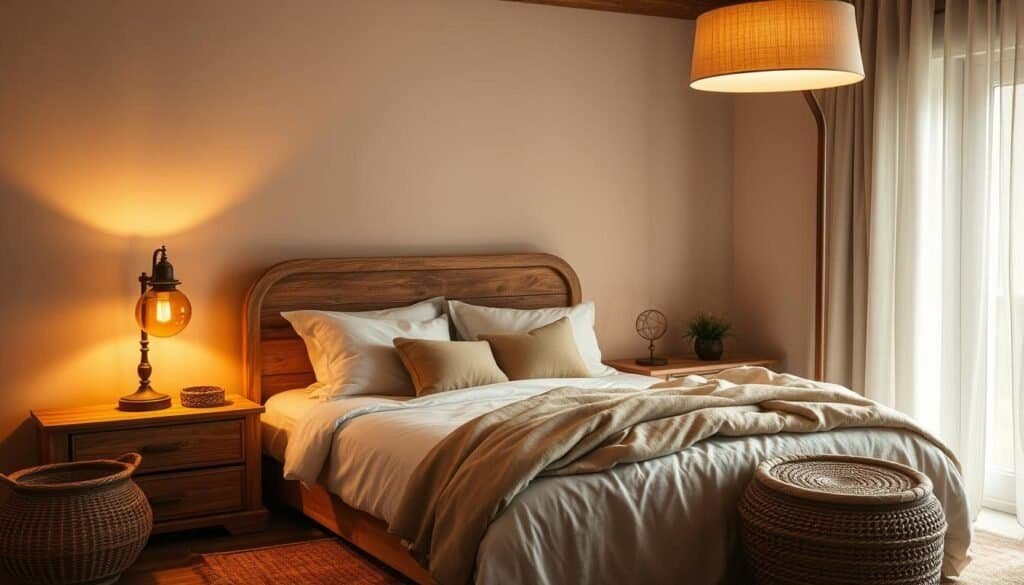
Natural Storage Solutions That Declutter and Calm
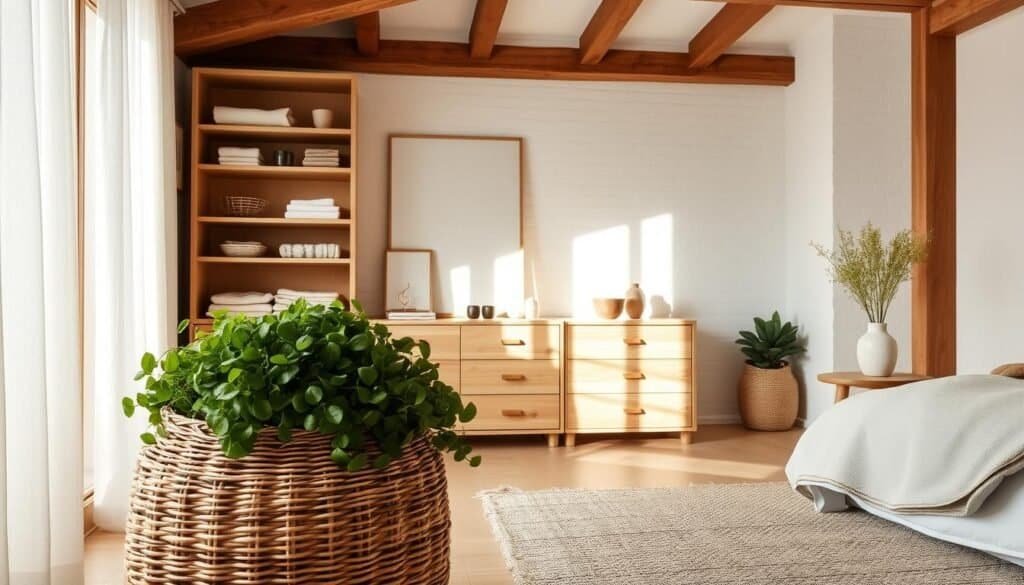
Natural storage solutions are key to a calm and clutter-free bedroom. They use sustainable materials and designs. This creates a peaceful space for restful sleep.
Selecting Sustainable Storage Options
Choose storage made from sustainable materials like reclaimed wood or bamboo. These options are good for the environment and warm up your bedroom.
Organizing Strategies for Visual Calm
Keeping your bedroom tidy is important. Use storage bins, baskets, or shelves that match your bedroom’s theme. Here are some tips:
- Use natural fiber baskets to store clothing and accessories.
- Install shelves made from reclaimed wood to display decorative items.
- Invest in a storage bed frame with drawers made from sustainable materials.
Simple Wood Rack Designs for Clothing
A simple wood rack adds style and function to your bedroom. Look for ones made from solid hardwoods like oak or maple. They’re great for hanging clothes, displaying scarves, or storing hats.
Customizing your storage solutions makes your bedroom fit your needs. Think about what you need to store and pick solutions that work for you.
With these natural storage solutions, you can make your bedroom a peaceful and tidy space.
Seasonal Adjustments: Keeping Your Natural Bedroom Fresh Year-Round
Seasonal changes are key to keeping your bedroom a sleep haven all year. By adjusting your bedroom to each season, it stays a place for rest and renewal.
Breathable Fabrics and Materials for Warm Weather
In the summer, choose breathable fabrics like cotton, linen, or bamboo for your bedding and curtains. These materials help air circulate, making your bedroom cool and cozy.
Creating Air Flow with Natural Placement
Arranging furniture to let air flow freely can make your bedroom more comfortable. Place your furniture to allow for cross ventilation, cutting down on the need for air conditioning.
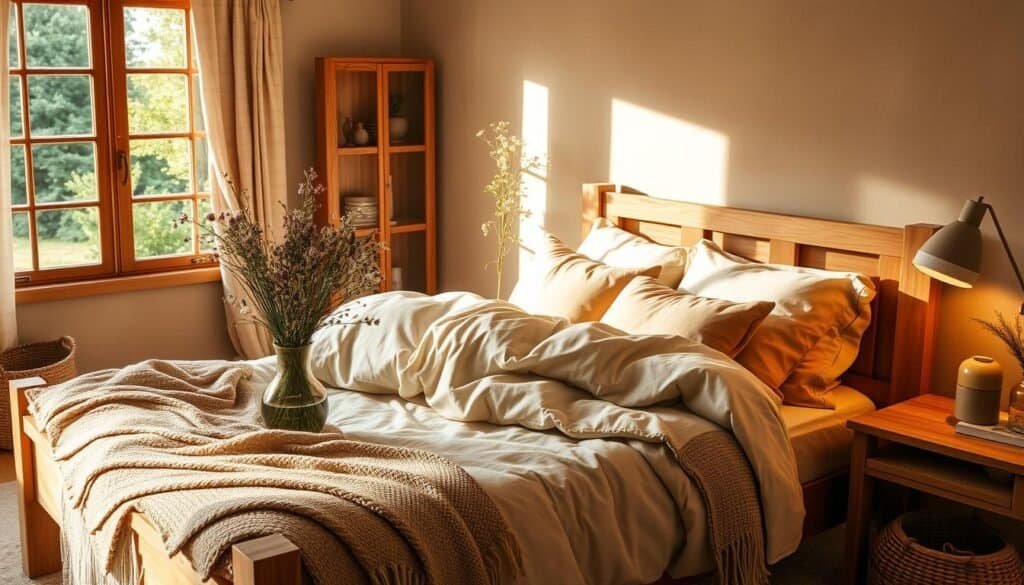
In the colder months, use layering techniques with your bedding to stay warm but not too hot. Choose natural fibers like wool or down for your blankets. Also, add thermal curtains to block cold air.
Humidity Balance with Natural Elements
Keeping humidity levels balanced is important for a cozy bedroom. Use plants or a natural-looking humidifier to control humidity. This helps ensure a good night’s sleep.
With these seasonal changes, your natural bedroom will stay inviting and comfortable all year. This helps improve your sleep and overall health.
Conclusion: Embracing Nature for Long-Term Wellbeing
Creating a natural bedroom environment is key for long-term wellbeing. Adding natural textiles, plants, and earthy colors helps you sleep better. It makes your bedroom a place of calm and rest.
Using nature in your bedroom design makes it look better and healthier. This can boost your physical and mental health. It also gives you more energy and a stronger immune system.
To keep your bedroom natural, make changes with the seasons. This keeps your space fresh and peaceful all year. It’s a way to care for your wellbeing and create a cozy sanctuary.
Begin your journey to a natural and peaceful bedroom today. Let nature’s beauty guide your design choices.