Finding room for fresh greens can be tough in tiny apartments. Start by using small garden ideas for empty spaces. This diy vertical herb wall makes the most of your balcony or patio.
Key Takeaways:
- Check wall mounting strength to ensure safety before hanging heavy pots.
- Select locations with optimal sunlight direction for healthy plant growth.
- Prioritize watering access to keep maintenance simple and mess-free.
Before you start, make sure the wall mounting strength is good. Choose spots with lots of sunlight direction for healthy plants. Make sure watering access is easy for daily care.
Exploring garden diy ideas brings nature closer to home. Fresh ingredients make every meal better. Your vertical herb garden adds organic flavors from these wooden frames.
Many herb garden ideas use floor space, but climbing designs save a lot of area. These systems add beauty and function to any home. Your kitchen will soon smell amazing with these plants nearby.
Visit The Marketplace or grab your Free Garden Starter Kit
1. Why a Vertical Herb Wall is Perfect for Small Outdoor Spaces
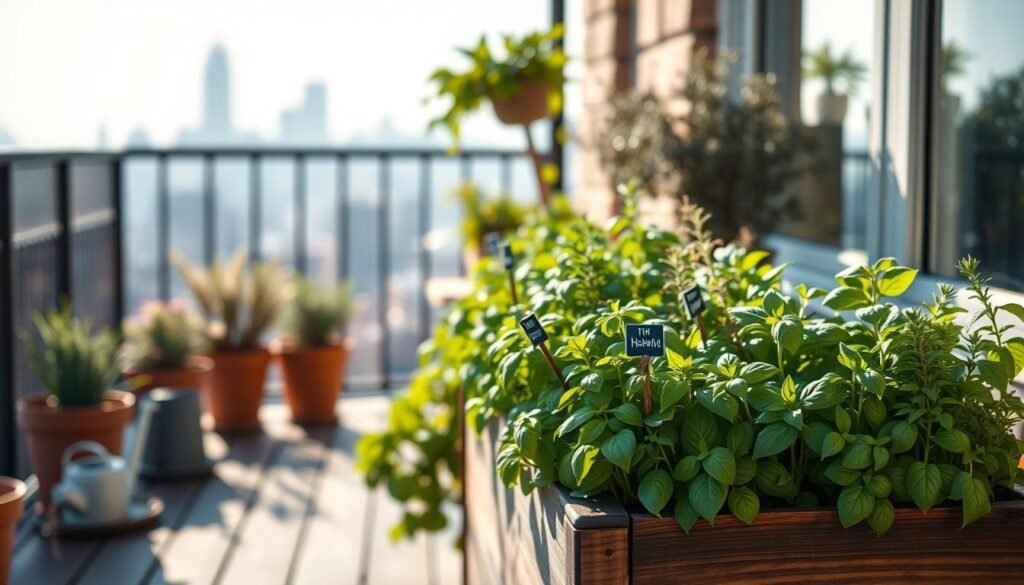
Small outdoor spaces can be lush and green with a vertical herb wall. This smart gardening idea lets homeowners use every inch of space. It turns a small area into a beautiful and useful outdoor spot.
A vertical herb wall is great for small spaces because it uses wall space that’s often wasted. It lets you grow many herbs, making your space look better and improving the air. This is because more plants mean cleaner air.
One big plus of a vertical herb wall is how it maximizes space. You can grow lots of herbs up a wall, saving floor space. This is super helpful in cities where outdoor areas are scarce.
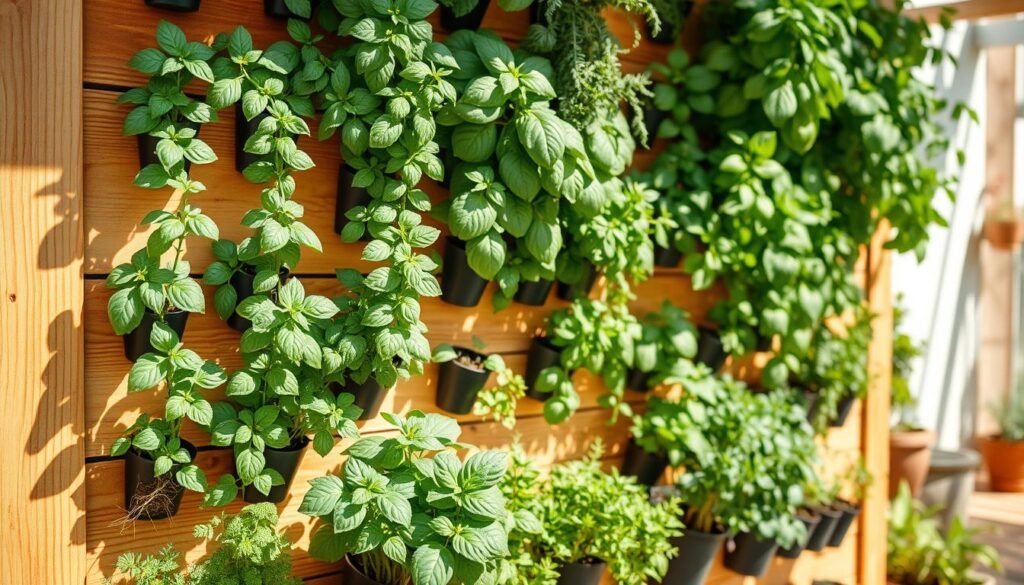
Also, a vertical herb wall makes small outdoor spaces look better. The green herbs and colorful plants add beauty and make the area feel inviting.
Plus, a vertical herb wall can improve air quality. Plants and herbs clean the air, making your outdoor space healthier. Having a vertical herb wall means fresher air and a nicer place to relax outside.
2. Thinking About Growing Herbs Outside? A Vertical Herb Wall Might Be the Answer
Thinking about growing herbs outside? A vertical herb wall is a great choice. It saves space and is very productive. Outdoor herb gardening brings fresh flavors to your cooking and adds beauty to your garden.
Benefits of Outdoor Herb Gardening
Outdoor herb gardening in a vertical setup has many benefits:
- It saves space, perfect for small gardens or city living.
- It makes it easy to pick and care for your herbs.
- It makes your outdoor area look beautiful with greenery.
A vertical herb wall is not just useful; it also looks great. It lets you grow many herbs without using a lot of space.
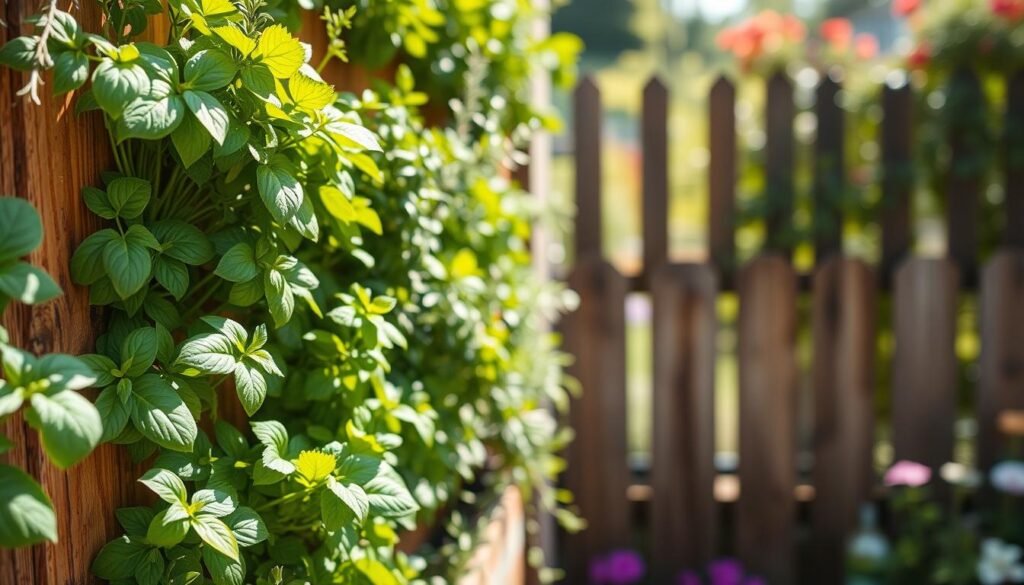
When planning your outdoor herb garden, think about the herbs you want and what they need. Most herbs need lots of sunlight and well-drained soil. A vertical herb wall can be set up to meet these needs, helping your herbs grow well.
Some important things to think about for your outdoor herb garden are:
- Find a spot that gets enough sunlight.
- Make sure there’s good air flow to avoid disease.
- Pick herbs that do well in your area’s climate.
With careful planning and upkeep, your vertical herb wall will give you a lot of fresh herbs all season long.
3. Essential Materials and Tools for Your DIY Vertical Herb Planter
Before starting your vertical herb wall, gather the needed materials and tools. The right stuff ensures your planter is sturdy, looks good, and is good for the planet.
Wood Pallet Planters for Rustic Charm
Wood pallet planters are great for DIY herb gardens because they’re eco-friendly and have a rustic look. Using old pallets cuts down on waste and makes your garden special. You’ll need:
- Old wooden pallets
- Weather-resistant screws
- A drill
- Potting soil
- Herbs of your choice
Recycled Plastic Bottles for Eco-Friendly Gardens
Recycled plastic bottles are a smart way to make a vertical herb planter. This method is green and saves money. You’ll need:
- Plastic bottles
- A sharp object to cut the bottles
- Twine or wire for hanging
- Potting soil
- Herbs
Repurposed Containers and Used Tires
Old containers or used tires can make your DIY herb planter unique. With a little creativity, you can turn them into planters. You might need:
- Old containers or tires
- Paint or varnish
- A drill for making drainage holes
- Potting soil
- Your favorite herbs
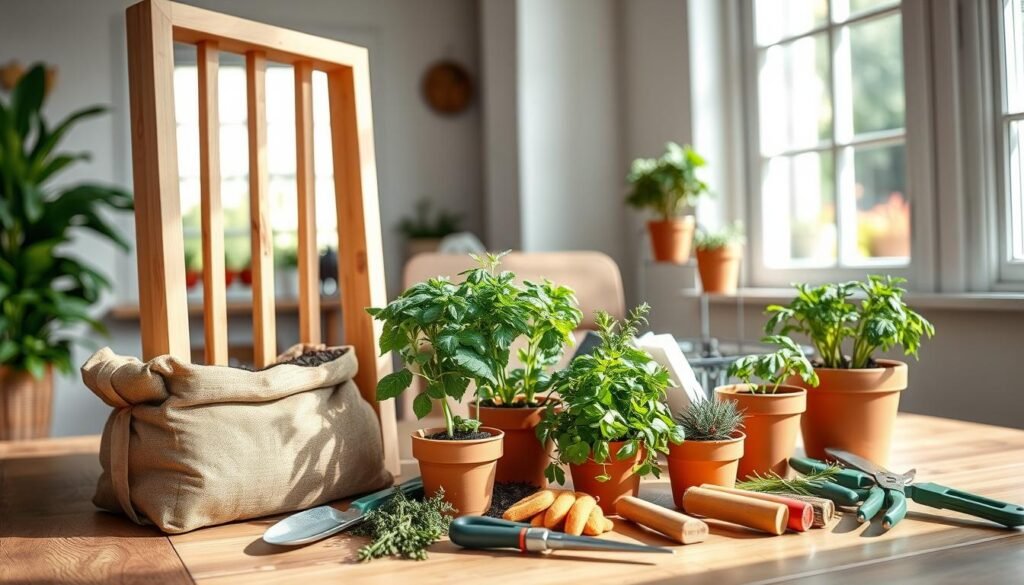
Choosing the right materials and tools lets you make a beautiful, useful DIY vertical herb planter. Whether you pick wood pallets, plastic bottles, or containers, your garden will flourish with proper care.
4. Step-by-Step Guide to Building a Wood Pallet Herb Wall
Building a wood pallet herb wall is a fun DIY project. It’s great for small outdoor spaces. It uses vertical space and adds greenery to your decor.
To begin, you’ll need some materials and tools. A wood pallet herb wall needs:
- A wooden pallet
- Potting soil
- Herb plants or seeds
- A hammer or mallet
- Nails or screws
- A drill (optional)
- Weather-resistant twine or wire
Preparation is key for a successful DIY project. Start by taking apart the pallet into planks. Clean the planks well to remove dirt or debris. If needed, cut the planks to fit your herb wall.
Then, build the planks into a frame or flat surface. You can use nails or screws for stability. For a rustic look, use weather-resistant twine or wire to hold the planks.
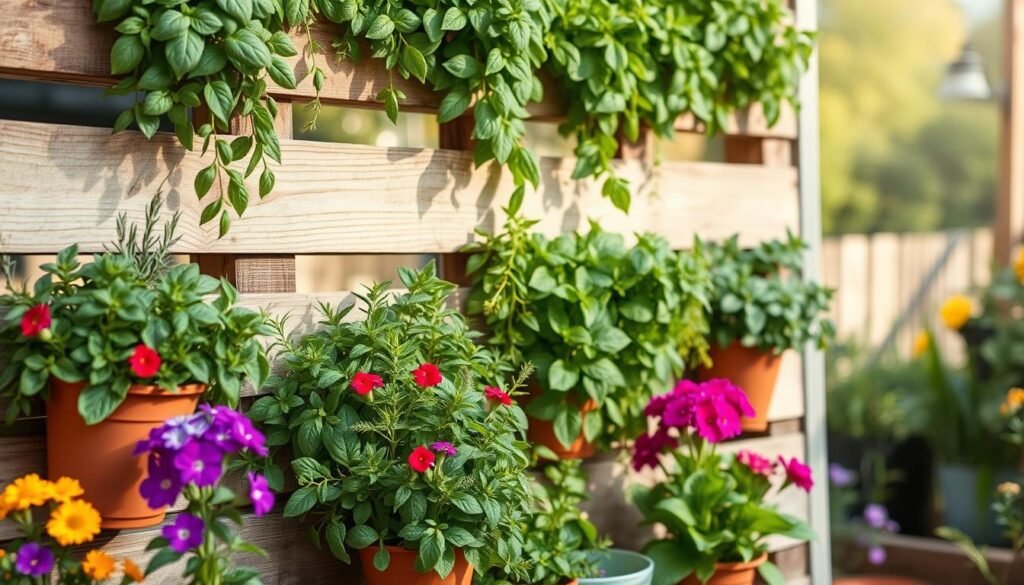
After building your structure, it’s time to plant herbs. Fill the spaces with potting soil and plant your herbs. Make sure there’s enough space for each herb to grow.
Here are some key tips for a thriving herb wall:
- Choose herbs that grow well outdoors in your area.
- Make sure your herb wall gets enough sunlight and water.
- Fertilize your herbs often to help them grow well.
By following these steps and tips, you can make a beautiful wood pallet herb wall. It will enhance your outdoor space and give you fresh herbs all season.
5. Creative Vertical Herb Garden Kit Alternatives and Design Ideas
A vertical herb garden is more than just a space-saver. It’s a stylish addition to any home, with endless design options. You can choose from repurposed materials to sleek, modern kits.
For creative garden ideas, think about using a wooden pallet or an old ladder. These add a rustic touch and are eco-friendly. Or, pick a vertical herb garden kit for a modern look.
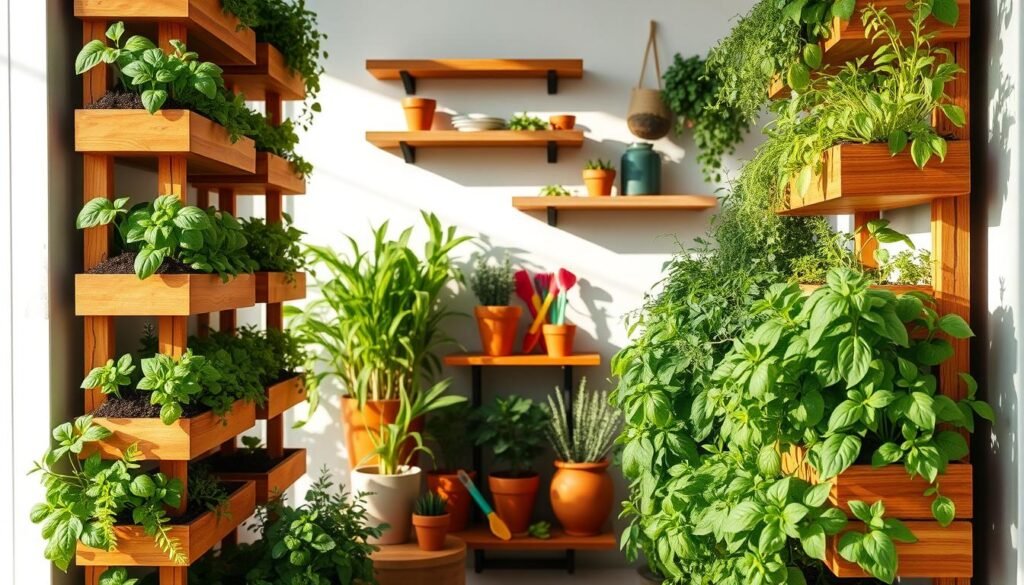
Popular DIY garden decorations include mason jars, metal grids, or old trellises. They make for a unique and functional herb garden. The trick is to use materials you might throw away.
With garden design DIY, you have many choices. You can go for a random, organic look or a structured, symmetrical design. It all depends on what you like and your space’s look.
- Repurposed wooden pallets or crates for a rustic look
- Modern vertical herb garden kits for a sleek appearance
- Mason jars or metal grids for a unique, DIY touch
- Old ladders or trellises for a creative, space-saving solution
Exploring these creative alternatives and design ideas lets you make a vertical herb or even a sign post
garden. It will not only be useful but also make your home look better.
6. Best Herbs to Grow in Your Outdoor Herb Wall
Choosing the right herbs for your outdoor herb wall is key. It makes your garden look good and your food taste better. Plus, it can attract helpful insects.
Choosing the right herbs means thinking about the weather, how they grow, and how you’ll use them. Here are some top picks that do well in outdoor herb walls. They’ll make your garden and cooking better.
Basil Varieties for Maximum Yield
Basil is a favorite for gardens because it’s easy to grow and versatile. For your outdoor herb wall, pick ‘Genovese’, ‘Sweet Basil’, or ‘Thai Basil’ for a steady supply.
- ‘Genovese’ basil is perfect for pesto and Italian dishes.
- ‘Sweet Basil’ is great for fresh salads and sauces.
- ‘Thai Basil’ adds a unique flavor to Southeast Asian cuisine.
Parsley and Cilantro for Daily Cooking
Parsley and cilantro are must-haves in many kitchens. They grow easily and can be picked often.
- Parsley is full of vitamins and makes salads and soups fresh.
- Cilantro is a key ingredient in Mexican and Asian dishes, with a distinct taste.
Rosemary and Thyme for Mediterranean Flavors
Rosemary and thyme bring the Mediterranean to your garden. They’re good at handling dry weather and need well-drained soil.
- Rosemary is perfect for roasted meats and vegetables.
- Thyme adds depth to soups, stews, and marinades.
These herbs not only make your food better but also attract pollinators and other helpful insects. By mixing these herbs in your outdoor herb wall, you’ll have a diverse and strong garden.
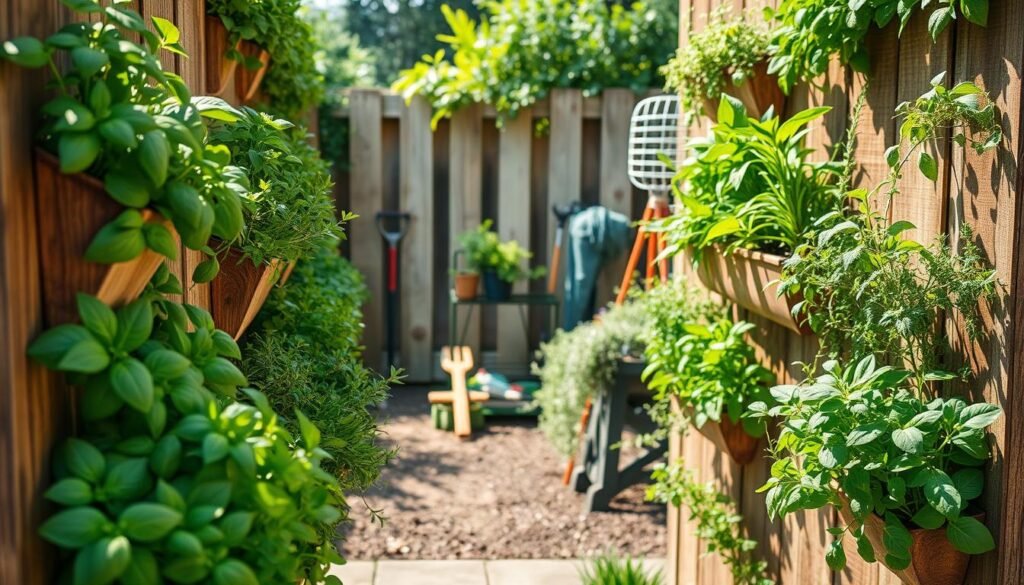
In conclusion, the best herbs for your outdoor herb wall depend on your cooking and growing conditions. Try different types to see what works best for you.
7. Herb Wall Installation and Optimal Placement Strategies
Choosing the right surface for your herb wall is key. Each surface needs a specific approach to keep the wall stable and healthy.
Fence Installations
Using a fence for your herb wall is smart. First, check if the fence is strong enough to hold the wall’s weight.
- Make sure the fence gets enough sunlight for your herbs.
- Attach a trellis or wire mesh to support the wall.
- Keep an eye out for any damage or rot to prevent collapse.
Deck Installations
Decks are great for herb walls too. Here’s what to do:
- Pick a spot with the right sunlight for your herbs.
- Choose a planter or pallet system that fits the deck railing.
- Make sure the railing can handle the wall’s weight.
Brick and Stone Wall Attachments
Attaching a herb wall to brick or stone walls needs careful planning. You don’t want to harm the wall.
Key considerations include:
- Drill into the mortar between bricks or stones for safety.
- Use a wall-mounted planter or outdoor hanging system.
- Check if the wall can support the extra weight.
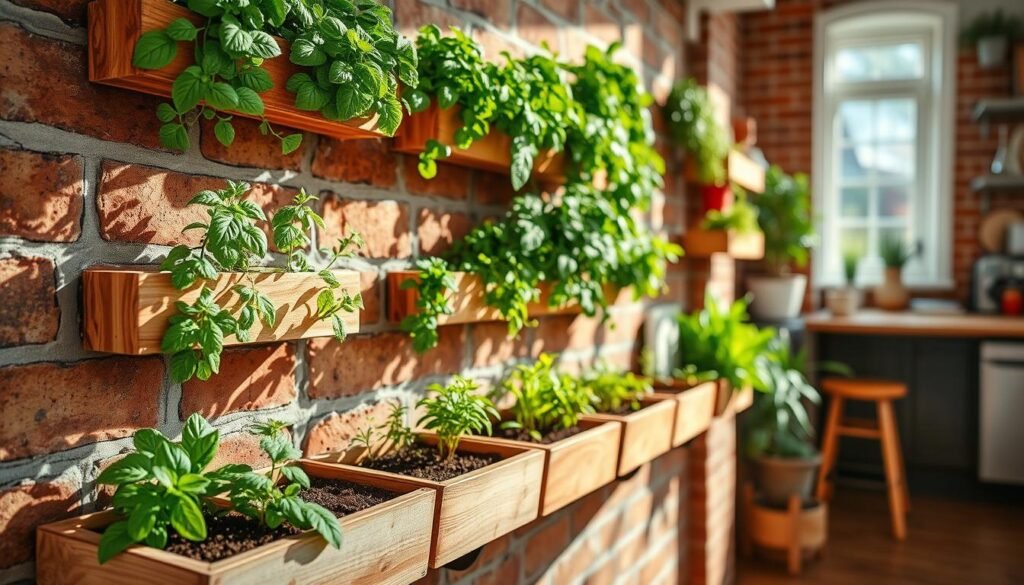
By picking the right method and preparing the surface, you can have a lush and lovely herb wall. It will make your outdoor space even better.
8. Maintaining Your Vertical Herb Garden Throughout the Seasons
To keep your vertical herb garden thriving, regular maintenance is key across different seasons. You need to understand how your herbs change with the weather.
Seasonal care is essential for a healthy and productive garden. In spring and summer, herbs need more water and nutrients. In fall and winter, they need protection from harsh weather.
DIY Drip Irrigation Setup
A DIY drip irrigation setup is a smart way to water your herbs. It saves water and keeps the soil moist. You’ll need a water reservoir, tubing, and drippers to make it.
- Choose a suitable water reservoir, such as a large bucket or container.
- Connect the tubing to the reservoir and run it along the vertical garden.
- Install drippers at regular intervals to deliver water to each herb plant.
Wicking Garden Bed Techniques for Consistent Moisture
Wicking garden beds help keep your garden moist. They have a water reservoir beneath the soil that supplies water to the roots as needed.
- Use a waterproof container or tray as the base of your wicking bed.
- Add a layer of gravel or perlite to improve drainage and prevent waterlogging.
- Fill the container with a well-draining potting mix and plant your herbs.
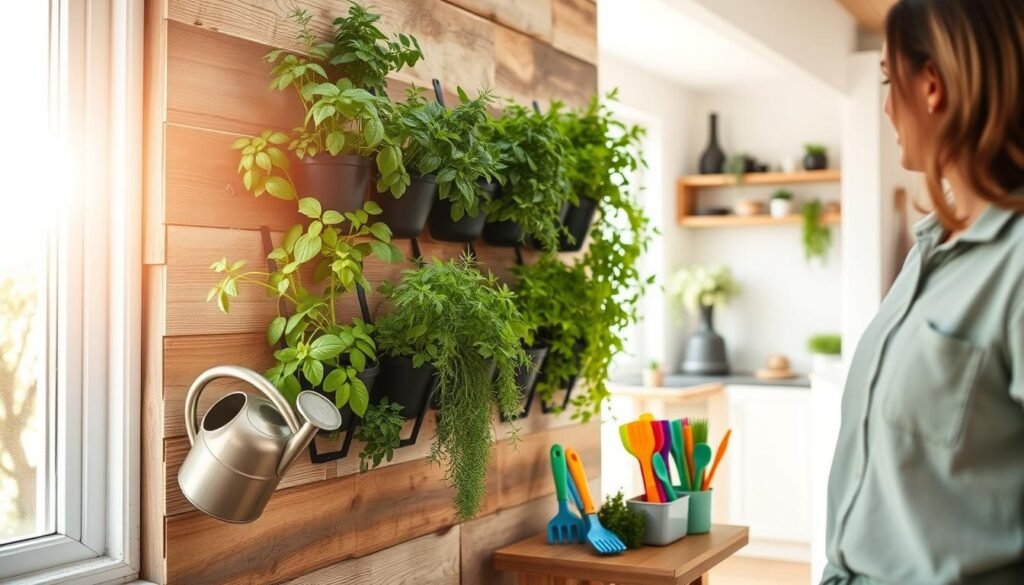
By using these techniques and adjusting your care routine with the seasons, you can enjoy a lush and productive vertical herb garden all year.
9. Conclusion
Building a DIY garden hose holder is a fun project. It brings greenery to small outdoor areas and gives you fresh herbs easily. With the right materials and creativity, you can do it.
This project combines function and beauty, making your garden look better and supporting a green lifestyle. By following our steps, you can have a vibrant herb garden that matches your outdoor style.
This DIY project is easy and has many benefits. With proper care, your herb wall will grow well. This means you’ll always have fresh herbs on hand.
We hope this guide has inspired you to start your own vertical herb garden. With some patience and care, you’ll soon enjoy the results of your hard work.