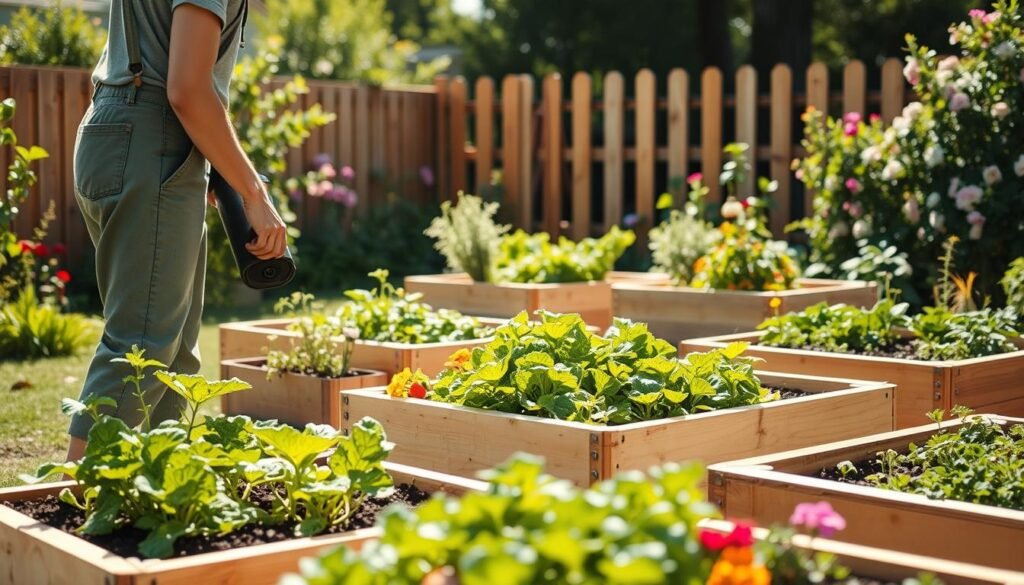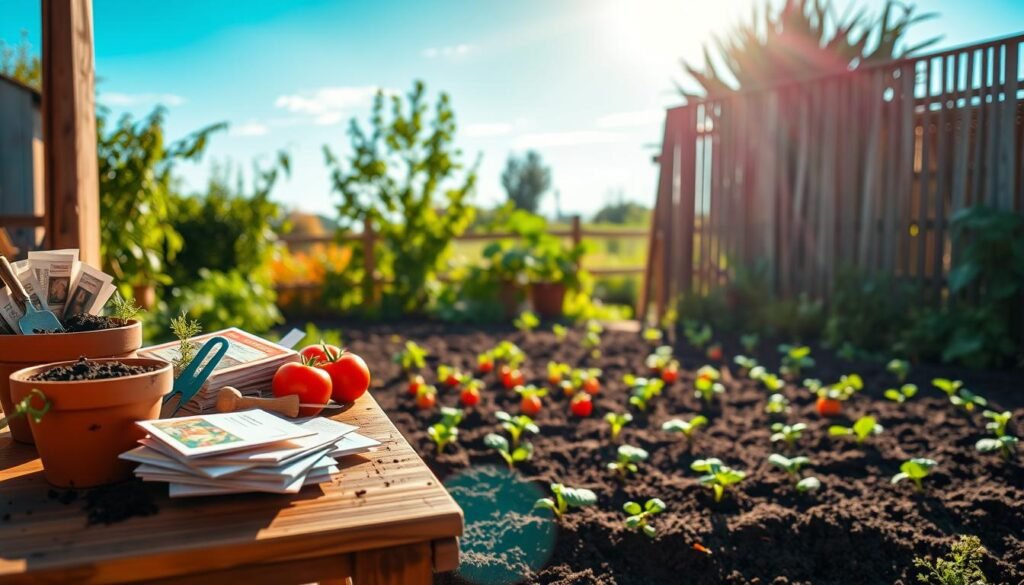
Building your own outdoor workstation makes gardening easier. It keeps tools handy and messes away. This setup makes gardening more convenient and keeps everything neat.
- Proper counter height prevents back strain during long planting sessions.
- Weather-resistant materials extend the life of your workspace significantly.
Creating a DIY garden potting bench is great for garden lovers. It offers dedicated areas for transplanting and seed starting. Every backyard gardening setup needs strong, comfortable workspaces.
Choosing the right height and storage is key. It keeps the bench useful all year. Proper planning also protects it from bad weather. Such projects can turn simple areas into professional nurseries.
Let’s see how easy it is to make a functional space for your hobby. Every choice, from the wood to the shelves, is important for long use. Begin your journey to organized gardening today.
Visit The Marketplace or grab your Free Garden Starter Kit
1. A Backyard Potting Bench Can Make Gardening Much Easier
A well-designed backyard garden bench changes the game for garden lovers. It offers a special spot for potting, planting, and more. This makes gardening more fun and efficient.
Having a backyard potting bench means better organization. It keeps your tools and supplies in one place. This cuts down on clutter and makes it simpler to find what you need.
A DIY gardening bench also makes gardening easier. It has a comfy height that eases back and knee strain. This is great for gardeners who spend a lot of time with their plants.
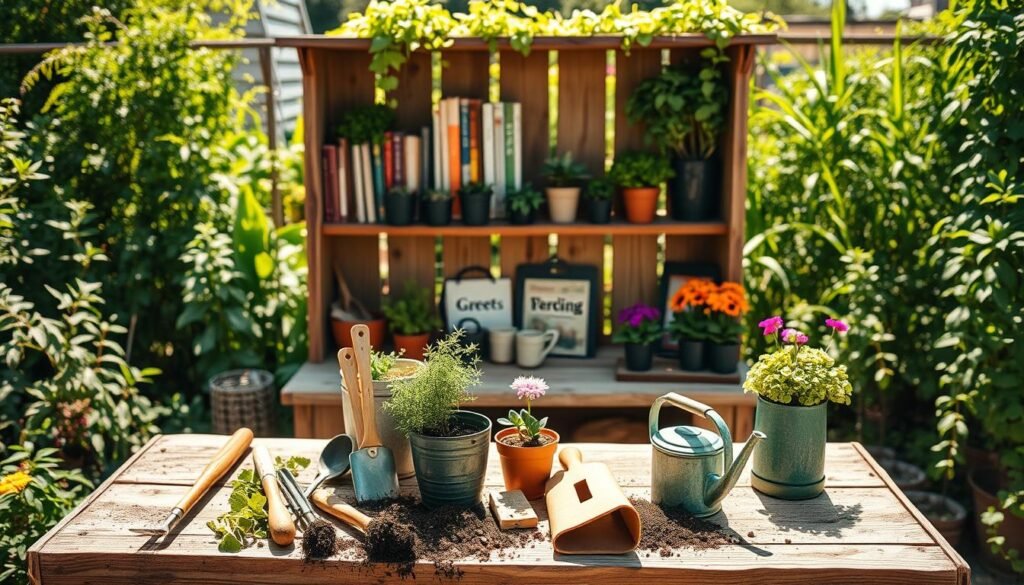
Plus, a backyard potting bench makes gardening more enjoyable. It gives you a special area to work. This lets you focus on your gardening, making it more fulfilling.
Another big plus is the gardening tool organization it offers. With features like shelves and drawers, you can easily access your tools. This makes gardening tasks smoother and faster.
- Improved organization and reduced clutter
- Enhanced gardening ease and comfort
- Increased efficiency and productivity
2. Determine the Right Size and Dimensions for Your Space
To make a great garden project station, you need to measure your garden space right. Then, pick the best potting bench size for it.
Getting the garden space measurement right is key to a good outdoor workspace. First, measure the area for your potting bench. Look at its length, width, and any things that might get in the way.
Considerations for Size and Dimensions
Choosing the right potting bench size involves a few things. Think about what you’ll do on the bench and how much space you need to be comfortable and efficient.
- Think about the bench’s height. It should be high enough to avoid back strain.
- Consider the depth. A deeper bench gives more room but might block paths if too wide.
- The width depends on the space you have and how many will use it at once.
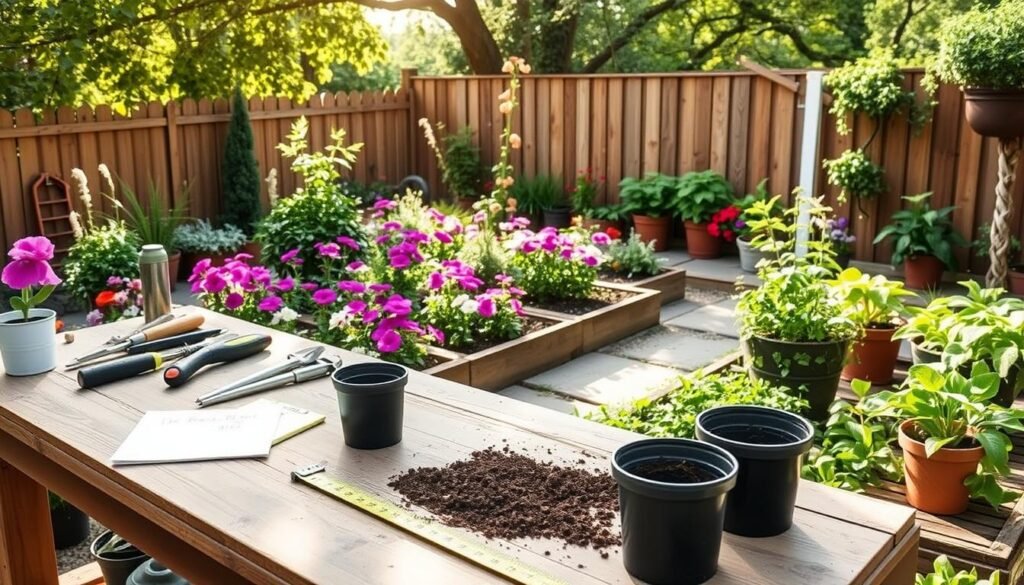
Also, think about extra features like storage bins, shelves, or a sink. These can change how big and laid out your outdoor workspace will be.
By measuring your garden space well and thinking about what you need, you can make a garden project station that’s both useful and fun to use.
3. Choose the Best Location in Your Backyard
Finding the perfect spot for your potting bench can really boost your gardening fun. When picking a location, think about a few key things. Sunlight and Shade are very important. Most gardening tasks do well in partial shade. But, if you’ll be starting seeds or keeping plants that need sun, make sure they get enough light.
How easy it is to get to your potting bench matters a lot. It should be close to your house, garden, or other outdoor areas. This makes it easier to carry plants, tools, and supplies.
Having water nearby is also key. It saves time and effort when watering plants or cleaning tools. Think about putting your potting bench near an outdoor faucet or a rainwater collection system.
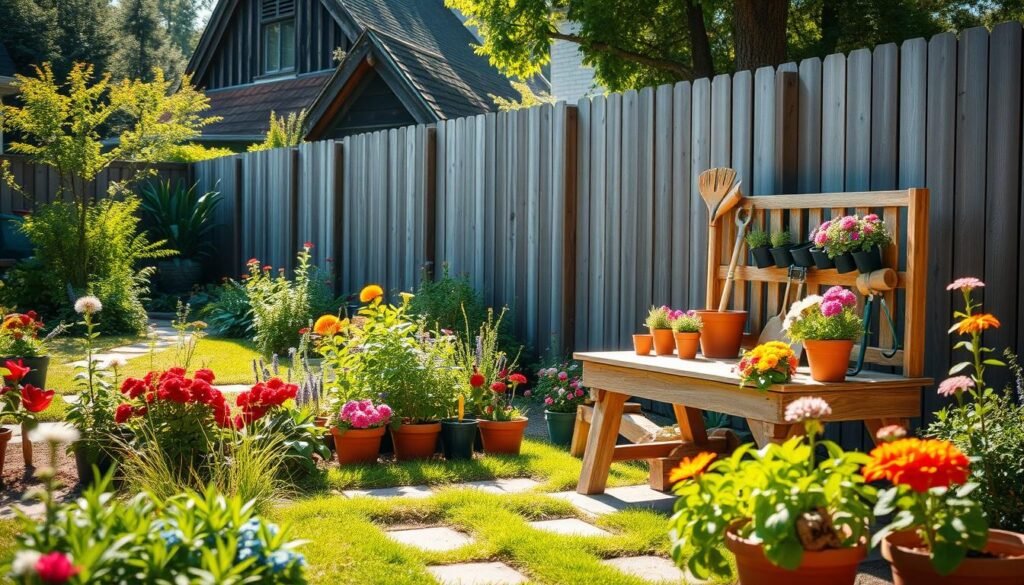
- Drainage: Make sure the area drains well to avoid water damage to your bench or nearby structures.
- Level ground: Pick a spot that’s level to keep your bench stable and even.
- Protection from harsh weather: Find a spot that shields your bench from extreme weather like heavy rain, strong sun, or winds.
By thinking about these points, you can pick a great spot for your potting bench. It will make gardening easier, support your outdoor projects, and bring your garden ideas to life.
4. Select Durable Materials for Outdoor Conditions
The life of your outdoor workstation depends on the materials you choose. When making a DIY garden plant shelves , pick materials that last. They should also resist rot, decay, and weather damage.
Durable Materials for Your Potting Bench
- Weather-resistant woods like cedar and redwood are ideal for outdoor projects.
- Recycled plastic materials offer a sustainable and low-maintenance option.
- Composite materials made from a mix of wood fibers and plastic provide excellent durability.
- Pressure-treated lumber is another viable option, though it requires careful handling.
Think about how much upkeep you want. Some materials, like cedar, need little care. Others might need sealing or treatment now and then.
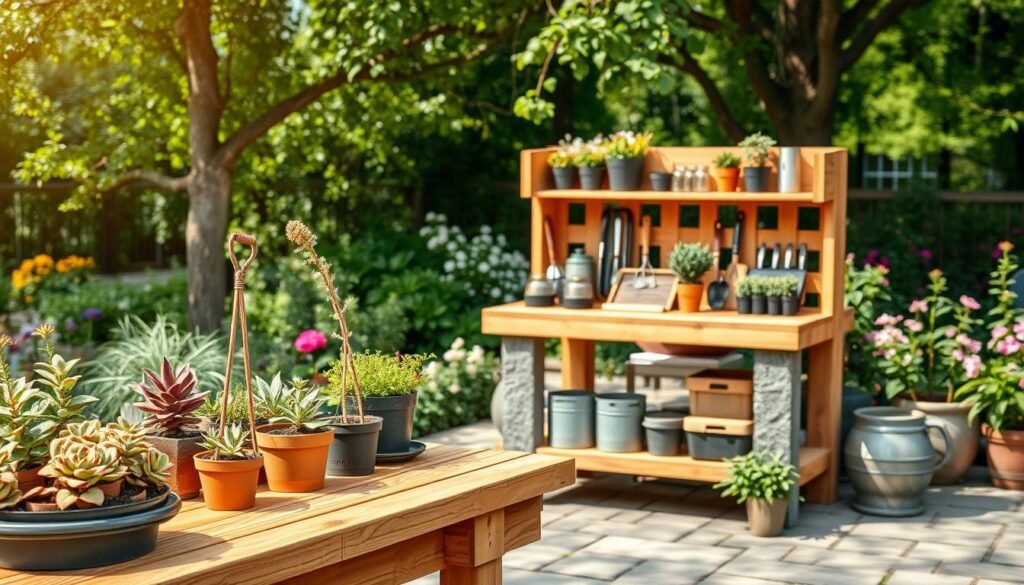
- They extend the lifespan of your potting bench.
- They reduce the need for frequent repairs or replacements.
- They can withstand harsh weather conditions, ensuring your workstation remains functional.
Choosing the right materials for your DIY project makes a big difference. You’ll get a potting bench that lasts and enhances your gardening.
5. Plan Essential Storage and Organization Features
Having a good storage and organization system is key for a useful DIY garden potting bench. It keeps gardening tools and supplies close, making gardening more fun and efficient.
Organizing Gardening Supplies
There are many ways to organize gardening supplies.
- Use storage bins and baskets for small items like seeds, fertilizers, and gloves.
- Add a pegboard or hooks to hang tools, keeping them off the work surface.
Maximizing Storage Space
To make the most of storage, think about using vertical elements like shelves or cabinets.
- Shelves are great for storing items you don’t use often, like extra pots or gardening books.
- Cabinets offer safe storage for dangerous materials or valuable items.
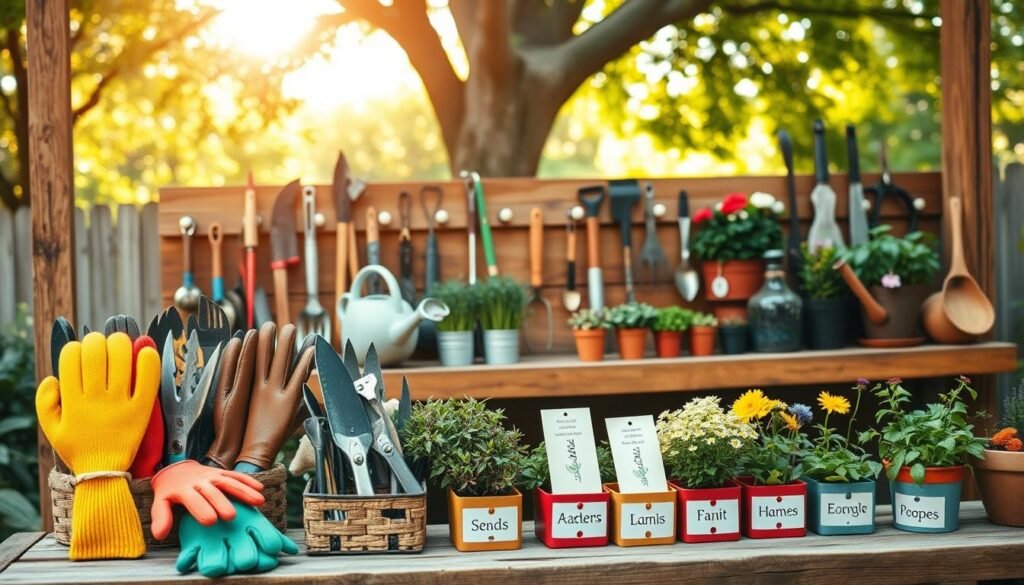
- Use garden labels to identify plants and garden sections.
- Add diy firewood rack that also serve as storage, like a decorative bench with storage underneath.
- Set up a system for organizing tools, like a tool rack or a specific drawer.
By adding these storage and organization features to your DIY garden potting bench, you’ll create a useful outdoor workspace. It will make gardening easier and more fun.
6. Design a Practical and Efficient Work Surface
To boost your gardening productivity, create a practical work surface. A well-designed work surface is key for a functional DIY garden potting bench. It lets you do various gardening tasks efficiently.
Think about the material, size, and ergonomic design when designing your work surface. The material should be tough and stand up to the weather. You can use weather-resistant woods like cedar or teak, or durable composites.
Key Considerations for Your Work Surface:
- Durability and weather resistance
- Sufficient space for potting and gardening tasks
- Ergonomic height to reduce strain
Your work surface should also be organized. Add features like built-in tool holders or a spot for potting mix. This keeps your space tidy and makes gardening easier.
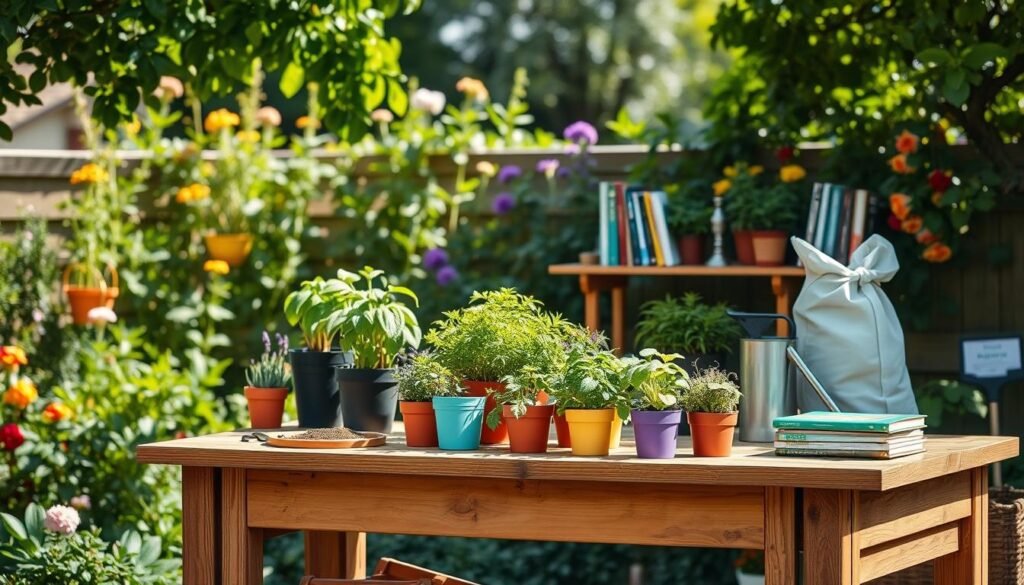
By paying attention to these details, you’ll make a work surface that improves your gardening. Your DIY garden hose holder will become a valuable part of your outdoor area.
7. Incorporate Weather Protection Elements
When you build a DIY garden potting bench, adding weather protection is key. Rain, sunlight, and extreme temperatures can harm it. This makes your outdoor potting station last longer and work better.
Roofing or Canopies for Weather Protection: A roof or canopy can protect your bench. It keeps rain off and shades the area. This helps plants and gardening tools stay cool and dry.
Use strong materials like corrugated metal, asphalt shingles, or clear polycarbonate panels for the roof. Make sure it can handle wind and rain. Adding a rain chain is a nice touch. It guides rainwater to a spot where it can be collected or spread out.
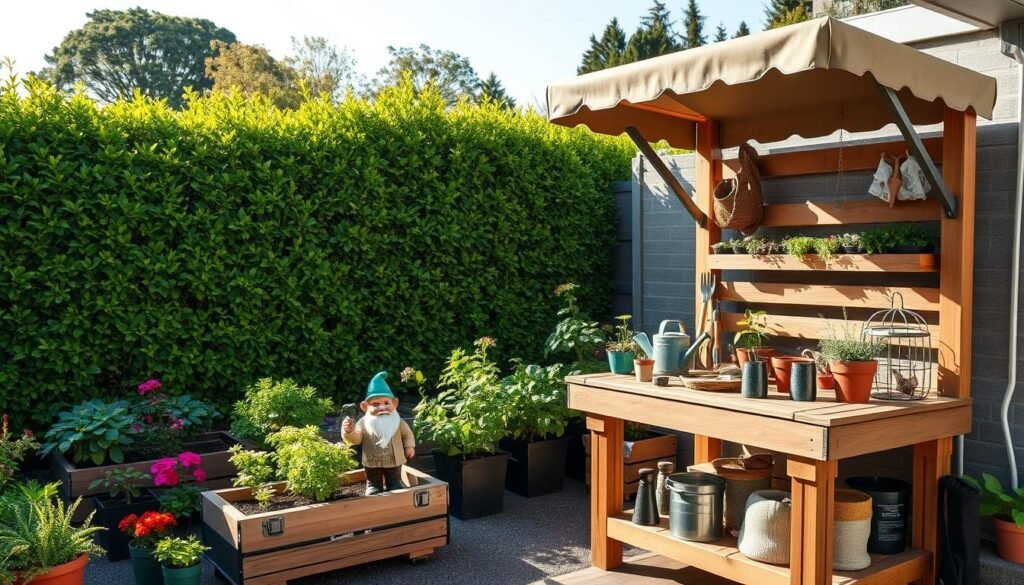
Think about adding side screens or windbreaks too. They keep your bench safe from strong winds and rain. You can make them from wood, metal, or fabric, based on what you like and need.
If it rains a lot, put in a drainage system around your bench. This stops it from getting too wet. You might need to slope the ground or install a French drain.
- Look at the weather in your area to pick the best protection.
- Choose roof or canopy materials that can stand up to the weather.
- Make sure your weather protection looks good with your garden.
8. Organize Tools and Supplies by Activity Zone
To make your DIY garden potting bench more efficient, organize tools and supplies by activity zone. This method helps tailor your workspace for different gardening tasks. It boosts your productivity.
Activity zones are specific areas for certain gardening tasks. For instance, you might have a zone for potting plants, another for pruning, and a third for supplies. This setup reduces clutter and makes finding tools easier.
Common activity zones include:
- Potting zone: For planting seeds, transplanting, and mixing soil.
- Pruning zone: For trimming plants, cutting stems, and other pruning tasks.
- Storage zone: For keeping gardening supplies, tools, and equipment.
- Workspace zone: A general area for tasks that don’t fit into other categories, such as preparing soil or mixing fertilizers.
To set up activity zones, first, understand your gardening habits. Then, assign areas of your potting bench for these tasks. Make sure the tools and supplies needed for each task are easily accessible.
Organizing tools and supplies by activity zone boosts your gardening efficiency. It saves time searching for tools, reduces clutter, and streamlines your workflow.
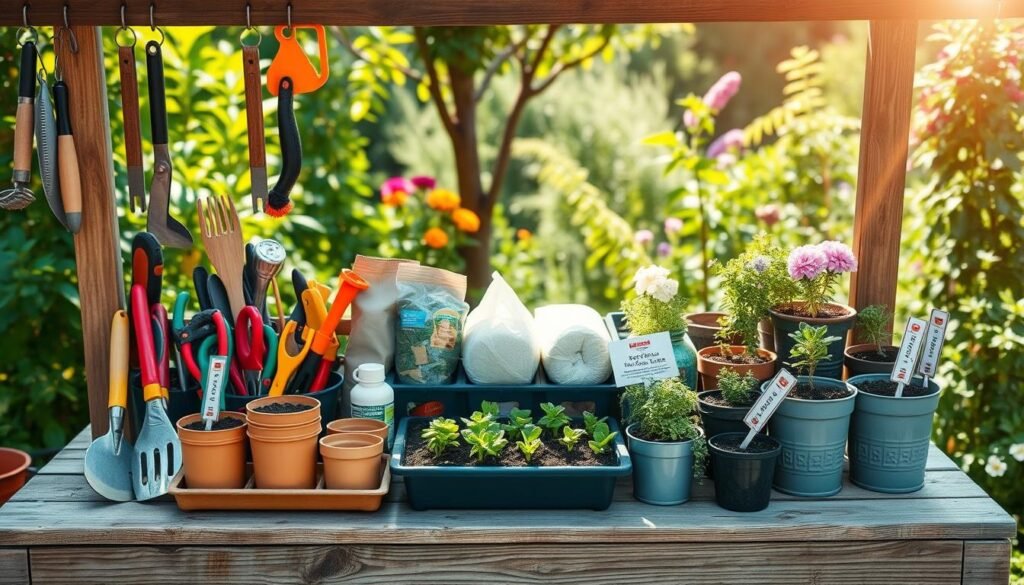
When setting up your activity zones, think about the workflow between them. Arrange zones to make task transitions smooth. This careful planning makes your backyard gardening more enjoyable and productive.
9. Add Convenient Features for Maximum Efficiency
Building a potting bench is more than just a work area. It’s about adding convenient features for maximum efficiency.
Think about adding features like built-in sinks for easy watering and cleaning. Or tool holders to keep your gardening tools handy.
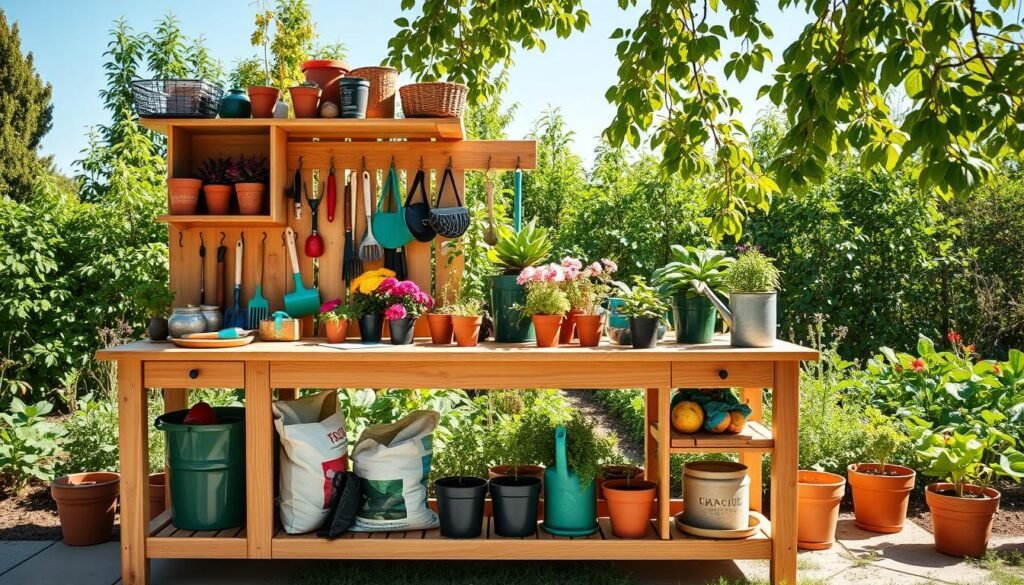
Other features can also boost efficiency. Consider storage bins for seeds, fertilizers, and other supplies. A built-in trash can is also useful for waste disposal.
- A pegboard for hanging tools and accessories
- A built-in watering can holder or hose reel
- A designated area for potting and repotting plants
By adding these convenient features, your potting bench will meet your gardening needs. It will also make gardening more enjoyable and efficient. This way, you achieve maximum efficiency in your gardening tasks.
10. Budget Your Project with Cost-Saving Strategies
Budgeting for your potting bench project can be easy with the right strategies. Good budget planning helps you finish your DIY gardening bench without spending too much.
Using recycled materials is a great cost-saving strategy. Think about using old furniture or items you already have at home. It saves money and makes your bench unique.
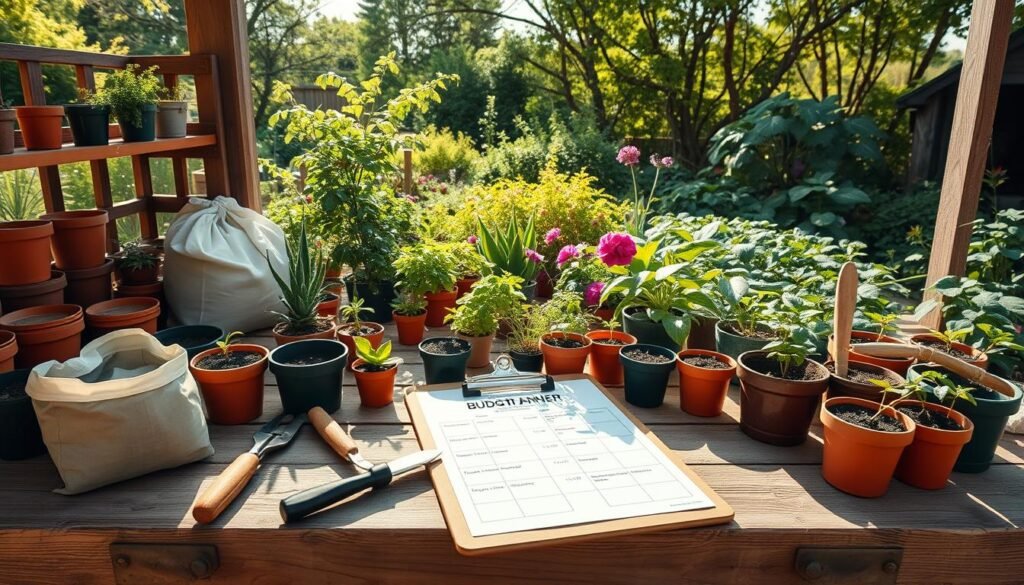
Here are some tips to help you budget your DIY gardening bench project:
- Plan your project during sales or discount seasons for gardening supplies.
- Use affordable materials that are durable and suitable for outdoor conditions.
- Opt for a simple design that requires fewer materials and less labor.
- Repurpose containers or old planters for storage.
By using these cost-saving strategies, you can make a functional and beautiful DIY garden potting bench. Remember, the key to successful budget planning is being flexible and creative with your resources.
11. Create Your Custom Design and Build Plan
Creating a custom design and build plan is key for a DIY garden potting bench. It turns your gardening needs into a useful and good-looking structure.
To begin, assess your gardening activities and find out what you do most. This will guide you in designing your potting bench’s features and layout.
Think about these elements when designing your DIY garden potting bench:
- Work surface area and height
- Storage needs for tools, seeds, and supplies
- Weather protection features such as a roof or canopy
- Accessibility and mobility
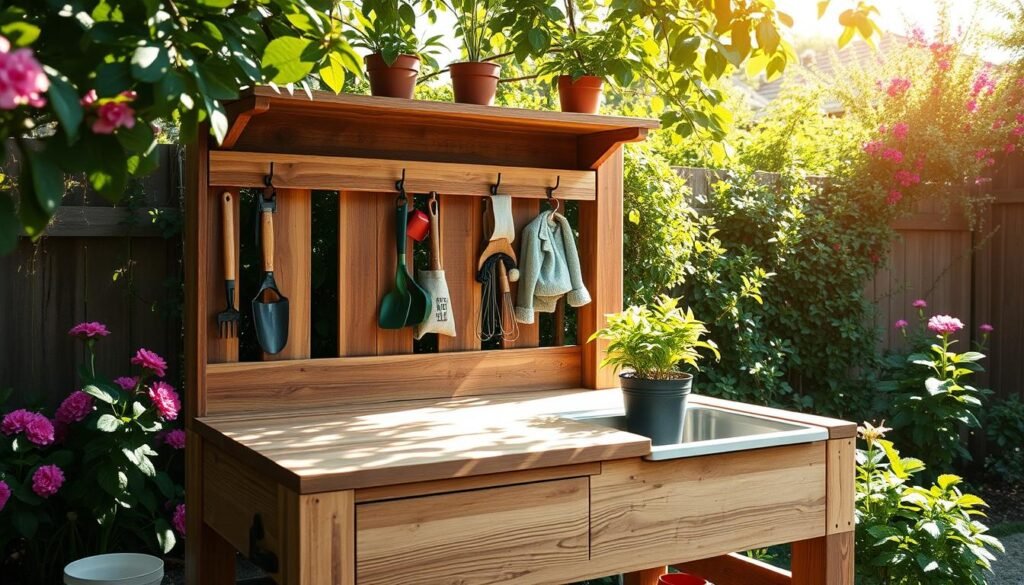
When making your build plan, choose materials wisely. Think about durability, upkeep, and cost. Make sure your design fits your skills and tools.
Here are steps for your build plan:
- Measure your space and figure out the best size for your potting bench
- Cut and prepare your materials as your design requires
- Build the structure, starting with the base and moving up
- Add storage and organizational features
- Finish and protect your potting bench with the right coatings or treatments
By following these steps and thinking about your needs, you can make a custom DIY garden potting bench. It will improve your gardening and add value to your outdoor area.
Conclusion
To make a great diy garden potting bench, think about size, location, materials, and features. This helps improve your gardening ease and sets up a useful backyard space.
A good outdoor workspace changes how you garden. It gives you a spot for planting, potting, and caring for your plants. It also keeps your tools and supplies tidy.
By following the steps in this article, you can build a diy garden potting bench that fits your needs. It’s useful for both experienced gardeners and beginners. A well-thought-out potting bench can greatly enhance your outdoor area.
With a diy garden potting bench, gardening becomes easier and more enjoyable. Start planning your outdoor space today. It’s a great way to elevate your gardening experience.