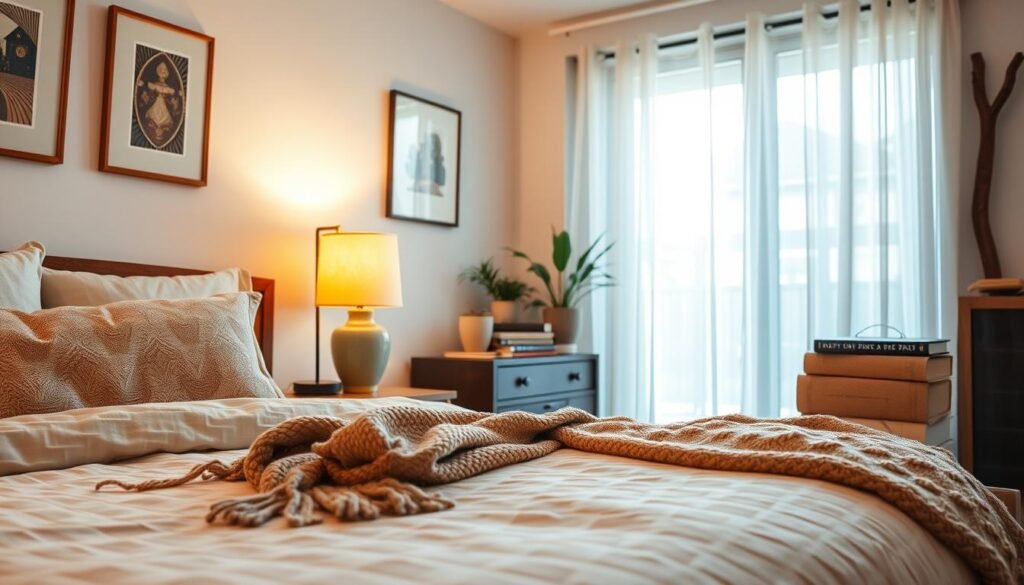
Creating a calm space is key for relaxation. It’s not just about adding more decor. It’s about making an environment that feels right.
A peaceful bedroom decor can greatly help you relax and recharge. By focusing on what truly matters, you can create a relaxing bedroom design. This design promotes restful sleep and calmness.
The secret to a serene bedroom atmosphere is simplicity and thoughtful design. In this article, we’ll show you how to create a calming space. This space will soothe your mind and body.
The Psychology Behind a Peaceful Bedroom Environment
The psychology of a calm bedroom is key for a space that helps us relax and sleep well. Knowing how bedroom design affects our mind can greatly help us unwind and refresh.
The Science of Sleep Environments
Our surroundings greatly affect how well we sleep. A stress-free bedroom ambiance is essential for our mental health. Things like lighting, color, and scent can change how well we sleep.
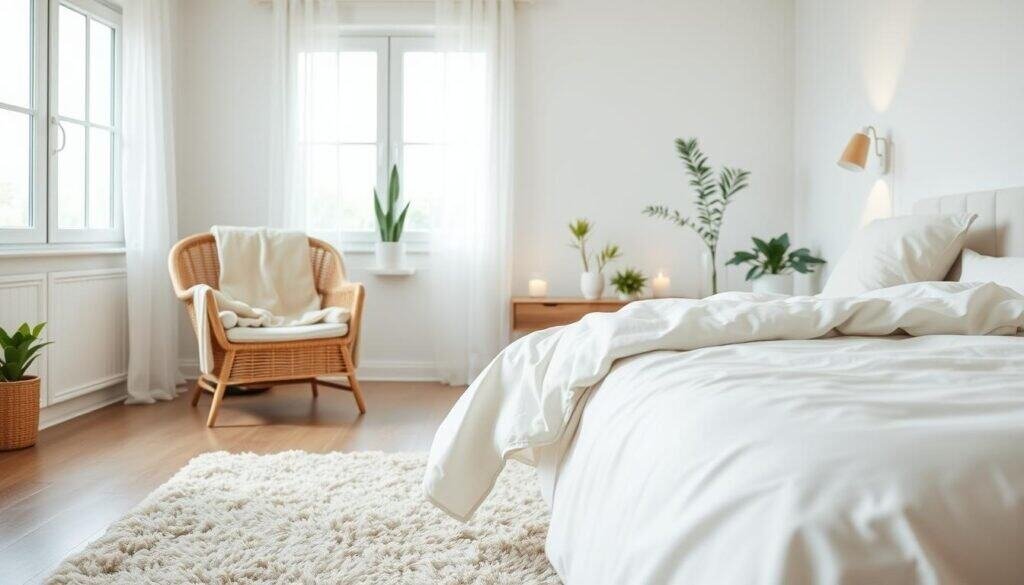
Clutter adds to mental unrest. A messy bedroom makes it hard to relax because it’s full of distractions. Cleaning and organizing can turn a bedroom into a cozy bedroom retreat that encourages calm.
Also, a well-thought-out sleep environment can reduce stress and anxiety. This leads to a better night’s sleep. By understanding how our bedroom affects us, we can create a peaceful place that boosts our well-being.
Decluttering: The First Step to Calm Bedroom Vibes
Decluttering is the first step to making your bedroom calm. It removes clutter, creating a peaceful space for rest. A tidy bedroom looks good and clears your mind.
To declutter well, sort items into groups. This makes deciding what to keep easier. It helps you tackle every part of your bedroom.
Categories to Tackle First
- Clothing: Sort through your wardrobe, removing items that are no longer needed or that don’t make you feel good.
- Books and Media: Consider digitizing your media collection or donating books to create a more minimalist space.
- Personal Items: Keep only those that bring you joy or serve a purpose.
For small bedrooms, finding storage solutions is key to maintaining a clutter-free environment.
Hidden Storage Ideas for Small Bedrooms
- Under-Bed Storage: Utilize the space under your bed with storage bins or drawers.
- Multi-Functional Furniture: Invest in furniture that serves more than one purpose, like a storage ottoman.
- Wall-Mounted Shelves: Keep your floor clear by using wall-mounted shelves for decorative items.
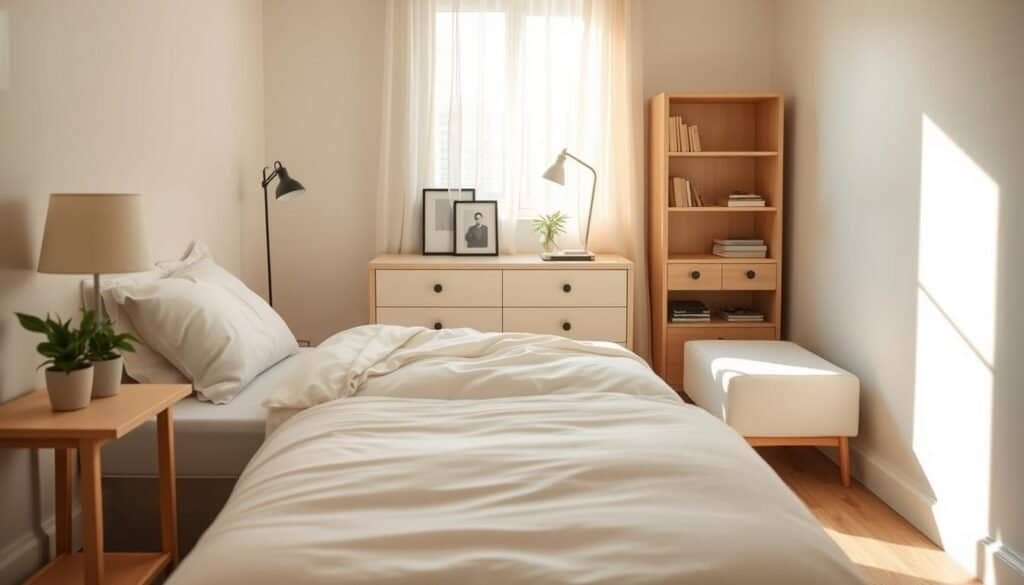
By using these decluttering tips and hidden storage ideas, you can make your bedroom calm and cozy. This change makes your bedroom look better and feel more relaxing. It’s perfect for unwinding after a long day.
Creating a calm bedroom is more than just cleaning up. It’s about making a space that feels welcoming and relaxing. It’s about following cozy bedroom ideas that help you relax and feel comfortable.
Creating Authentic Calm Bedroom Vibes Without Excess
To get a calm bedroom, focus on how it feels. A peaceful room is more than looks. It’s about making a space that calms you down and helps you relax.
Sensory Elements That Create Peace
Sensory elements are key to a peaceful bedroom. Think about adding things that touch your senses, like:
- Soft textiles like plush rugs and comfy bedding
- Calming colors like soft blues and pale greens
- Soothing scents from essential oils or scented candles
These elements help make your bedroom calm and welcoming. For more tips on a softer bedroom vibe, check out this article.
The “Less is More” Approach to Bedroom Design
The “less is more” design is simple and clean. It’s about making a room that feels calm and free from clutter, not one that’s full of stuff.
To get this look, try these tips:
- Minimize clutter by keeping surfaces clean and organized
- Use a neutral color palette to bring calm
- Select a few statement pieces instead of many items

By following the “less is more” rule, you can make a bedroom that’s peaceful and relaxing. It’s great for unwinding after a busy day.
Color Psychology: Choosing Hues That Promote Relaxation
Colors are key in making a bedroom a place of rest and renewal. By understanding color psychology, we can pick colors that help us relax and sleep better.
Beige, White, and Earth Tones in Bedroom Design
Beige, white, and earth tones are great for a calm bedroom. These colors make a neutral bedroom feel peaceful. Beige walls warm the room, and white adds brightness.
Earth tones, like brown and taupe, add natural balance. They make the bedroom feel cozy and welcoming.
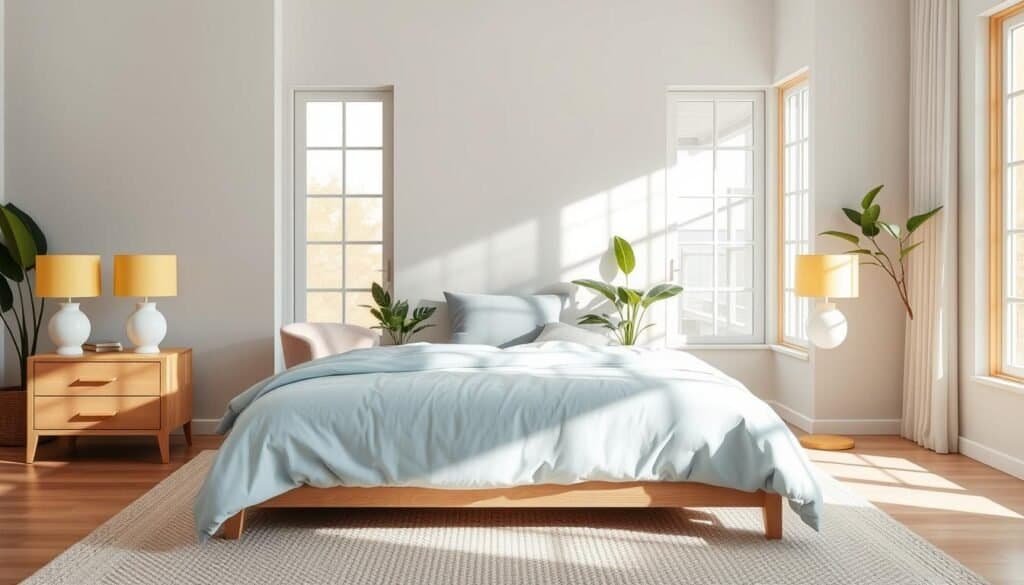
In bedroom design, finding the right balance with color is important. Start with a neutral base. Then, add color with bedding, curtains, or decor. This way, you can add color without making the room too busy.
Stick to a few colors that go well together. For example, soft blues or greens with neutral tones create a soothing space.
- Begin with a neutral color for the walls and main furniture.
- Add color through accessories like throw pillows and blankets.
- Use curtains or rugs to introduce additional hues.
By carefully choosing colors based on color psychology, you can make a bedroom that’s both calming and beautiful.
Lighting Design for a Serene Bedroom Atmosphere
The right lighting can turn your bedroom into a peaceful haven. Lighting design is key in setting the mood of the room.
Controlling the light that comes into the room is important. This is where window treatments play a big role.
Window Treatments for Light Control
- Blackout curtains for complete darkness
- Sheer curtains for soft, diffused light
- Smart glass technology for adjustable transparency
In bedrooms with vaulted ceilings or cathedral ceilings, accent lighting adds depth and interest.
Accent Lighting for Vaulted and Cathedral Ceilings
- Use recessed lighting to highlight architectural features
- Install LED strip lighting to create a modern glow
- Hang pendant lights to add a touch of elegance

By using these modern lighting ideas, you can make your bedroom a calm place. It will help you relax and sleep better.
Textile Selection: The Tactile Element of Calm
The right textiles can turn your bedroom into a peaceful haven. Choosing the right materials is key to a calm space. The feel of your bedroom’s fabrics greatly affects your ability to relax.
Natural Fibers vs. Synthetic Options
Deciding between natural and synthetic fibers is a big choice for your bedroom. Natural fibers like cotton, linen, and silk are soft and breathable. They make your bedroom feel cozy and welcoming. On the other hand, synthetic fibers might feel rough and less comfortable.
- Cotton is a favorite for bedding because it’s soft and lasts long.
- Linen is great for hot climates because it’s cool and breathable.
- Silk adds luxury to your bedroom with its smooth, hypoallergenic feel.
Seasonal Textile Adjustments
Changing your bedroom textiles with the seasons can make it feel more calm and cozy. For example, using light fabrics like cotton or linen in summer keeps it cool. In winter, thicker fabrics like wool or fleece add warmth.

Choosing the right textiles for the season and using natural fibers can make your bedroom peaceful and inviting. This not only makes your bedroom look good but also helps you relax and feel refreshed.
Furniture Arrangement for Spacious Energy Flow
Choosing the right furniture arrangement is key to a calm bedroom. The layout affects the room’s feel, making it either cramped or peaceful.
Creating a balanced layout is essential for a harmonious bedroom. Place the bed in a spot that feels safe but not too close to the door. This setup helps you relax.
Special Considerations for Vaulted Ceiling Spaces
Bedrooms with vaulted ceilings need special care. Use multi-functional furniture to keep the floor open. Place tall items, like dressers, under the vaulted ceiling to balance the room.

In small bedrooms, multi-functional furniture pieces are a lifesaver. Choose beds with storage, wall-mounted nightstands, or foldable desks. This reduces clutter and makes the room feel bigger.
With careful furniture selection and arrangement, any bedroom can feel spacious and calm. It’s all about choosing the right pieces for your space.
Natural Elements: Bringing the Outdoors In
Natural elements can make a bedroom a peaceful retreat. They help create a calm atmosphere that encourages restful sleep. By adding elements from nature, you can make your bedroom a cozy oasis.
Adding low-maintenance plants is a simple way to bring nature indoors. These plants clean the air and add greenery to your space. For a rustic modern bedroom, choose plants like succulents or air plants. They are easy to care for.
Low-Maintenance Options for Bedroom Spaces
- Succulents
- Air Plants
- Pothos
- Snake Plants
Using natural materials like wood and stone can also enhance your bedroom’s feel. Wooden furniture adds warmth, while stone features like a marble vase bring the outdoors in.
Wood, Stone, and Organic Textures
Mixing different textures can make your bedroom more interesting. Try combining wooden elements with stone or brick. Add organic textiles like woven baskets or a jute rug for extra depth.
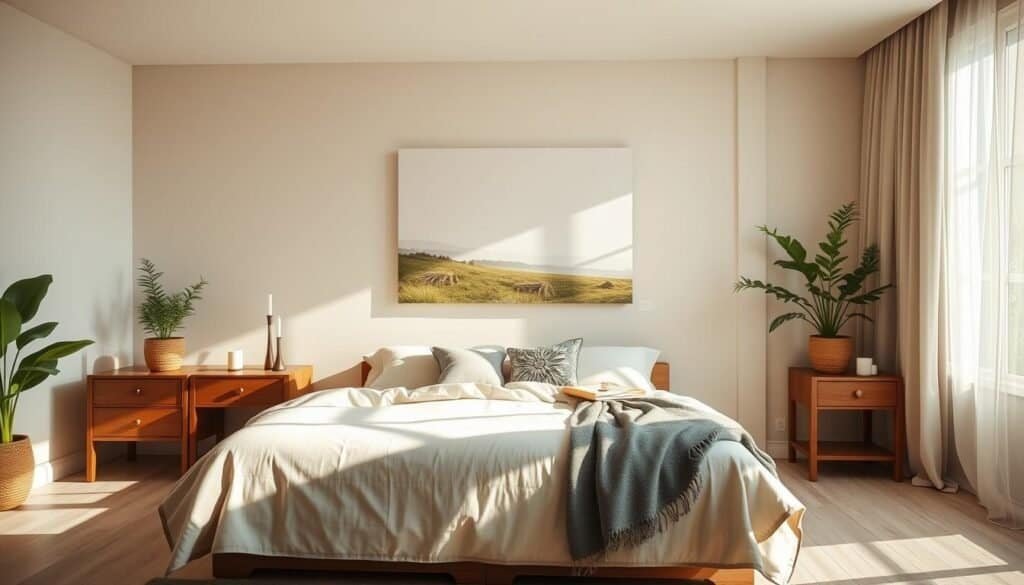
Technology Detox: Creating a Digital-Free Sanctuary
Creating a digital-free sanctuary in your bedroom can greatly improve your sleep and well-being. With technology everywhere, setting boundaries is key for good sleep and a fresh start every morning.
Creating Tech Boundaries for Better Rest
To start a technology detox, set clear tech limits. This means:
- Make your bedroom a tech-free area
- Have a “no screens” rule at least an hour before bed
- Use apps or settings that block blue light if you can’t avoid screens
These steps tell your brain that your bedroom is for sleep, not for browsing or watching videos.
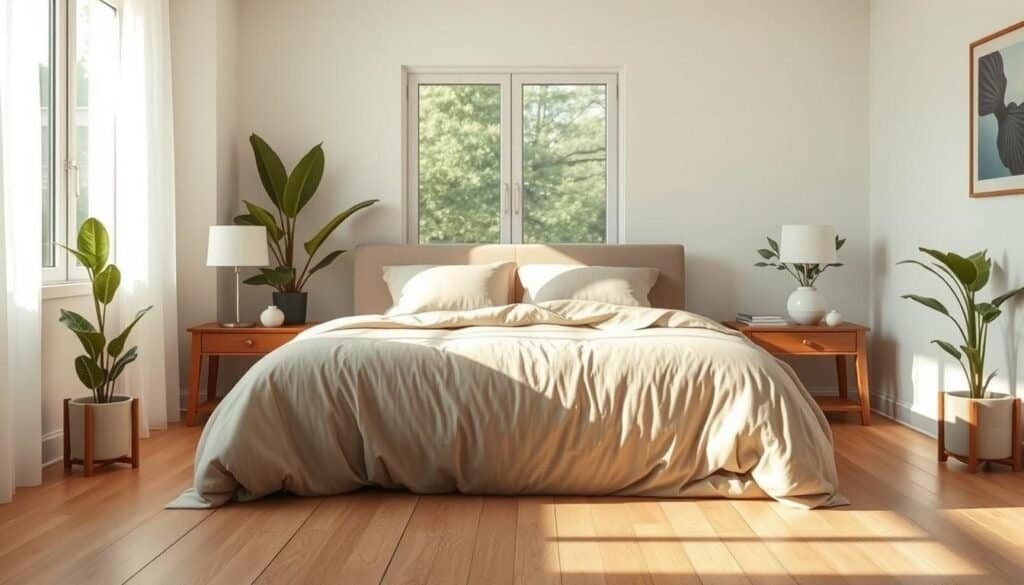
Switching from screens to analog relaxation can also boost sleep. Try:
- Reading a real book or magazine
- Doing meditation or deep breathing
- Listening to soothing music or nature sounds
Analog relaxation techniques help you relax and make a bedtime routine. This improves your sleep quality.
By starting a technology detox and using analog relaxation, you can make your bedroom a true sanctuary for rest and calm.
Conclusion: Maintaining Your Calm Bedroom Retreat
Creating a calm bedroom is just the start. Keeping it that way is a continuous effort. By using the tips from this article, you can make your bedroom a peaceful place. To keep it calm, clean and organize it regularly.
Adding soft textures and calming colors can make your bedroom cozy. A well-designed bedroom helps you sleep better. It makes waking up feel fresh and new.
To keep your bedroom peaceful, check it often and make changes when needed. This might mean moving furniture or changing the lights. Or, just tidy up a bit each day. This way, your bedroom stays a cozy place to relax and escape daily stress.