Exterior remodeling projects are exciting for homeowners. Many seek outdoor living space upgrades for family gatherings. The right materials and design are key for beauty and function.
Safety is critical when starting a backyard deck upgrade. Check the ledger board and flashing to keep the house dry. A solid foundation prevents sagging and keeps the platform level for years.
Local building codes are important for a smooth process. Experts suggest checking soil stability around support footers. Proper drainage prevents wood rot and protects the investment.
Seasonal changes can be tough on exposed wood. It’s important to check wear and tear from snow or sun. Taking these steps ensures the area remains a favorite for outdoor fun.
1. Assess Your Current Deck’s Condition and Structural Integrity
To start your deck remodeling, first check your deck’s condition and structure. This step is key to knowing if your deck upgrade ideas are possible. It helps make sure your plans match your deck’s current state.
Look for signs of wear like rotting wood, loose boards, or rusty nails. Check the foundation, beams, and joists for damage. Also, inspect the railings, stairs, and safety features to see if they’re safe and meet local codes.
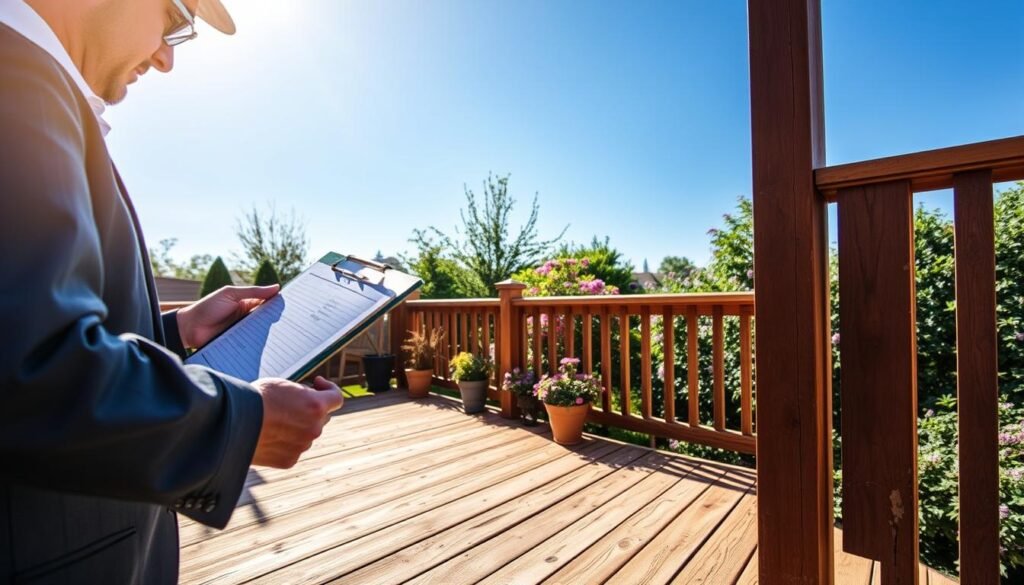
A detailed deck condition assessment will show you what needs fixing or replacing. Focus on these main areas:
- Deck surface condition: Check for damaged or rotting boards.
- Structural integrity: Inspect the deck’s foundation, beams, and joists.
- Safety features: Ensure railings, stairs, and other safety features are secure.
By checking your deck’s condition and structure, you can plan better. You can add backyard deck pergola ideas or other features. This will make your outdoor space more functional and beautiful.
2. Establish Your Deck Upgrade Cost Estimation and Budget
Creating a solid budget is key to a successful deck upgrade. You must think about several things that impact the cost of your renovation.
The cost of upgrading your deck can change a lot. It depends on the materials, deck size, and design complexity. Getting accurate estimates is vital to avoid going over budget and keep your project on track.
Here are important factors to consider for your deck upgrade cost:
- The type and quality of materials used for the decking, railings, and other features.
- The size of your deck and the number of levels or features such as stairs or built-in seating.
- Labor costs, which can vary depending on the complexity of the project and the location.
- Any necessary permits or inspections required by local building codes.

It’s wise to talk to a professional contractor for an accurate estimate. They can assess your deck and give a detailed quote. They can also suggest ways to save money and make sure your budget is realistic.
When planning your budget, think about extra features too. This includes outdoor lighting, furniture, or landscaping. By planning carefully and considering all costs, you can create a beautiful outdoor space that meets your needs and increases your home’s value.
3. Before You Upgrade Your Backyard Deck, Consider Some Options for Decking Materials
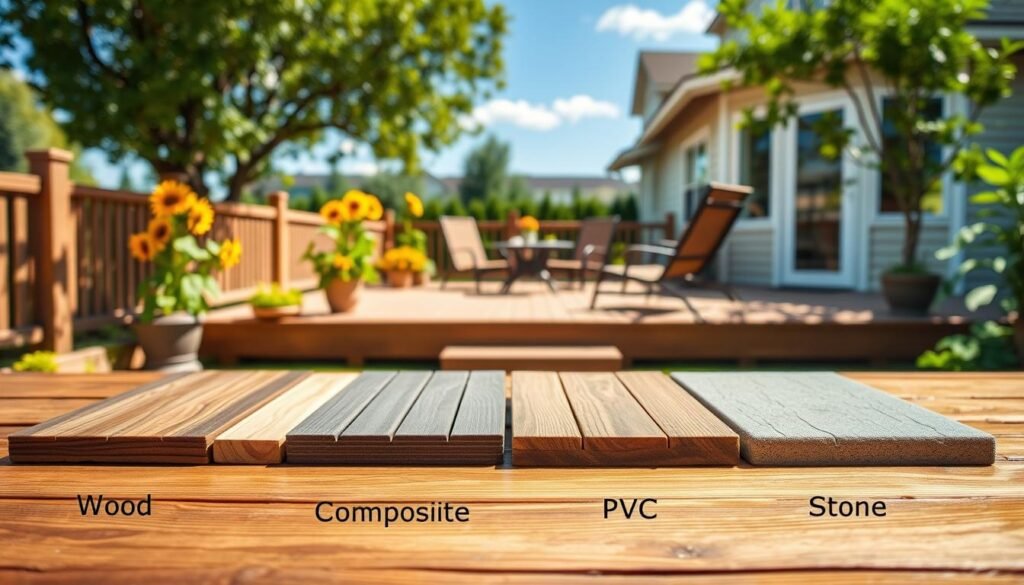
Before you upgrade your backyard deck, look at the different decking materials. The right choice can affect how long it lasts, how easy it is to maintain, and how it looks.
Comparing Longevity and Weather Resistance
Different decking materials last longer and resist weather better in different ways. For example, pressure-treated wood is affordable and can last many years with care. But it’s not as durable as composite decking, which is made from various materials and resists rot, mold, and bugs well.
Here’s a look at some popular decking materials and how they compare in longevity and weather resistance:
- Pressure-Treated Wood: Longevity: 10-15 years; Weather Resistance: Moderate
- Composite Decking: Longevity: 25-30 years; Weather Resistance: High
- Cedar Wood: Longevity: 15-20 years; Weather Resistance: High
- Hardwood: Longevity: 20-25 years; Weather Resistance: High
When picking decking materials, think about the cost and value. Some materials might cost more at first but save money in the long run because they need less maintenance and last longer.
For instance, composite decking costs more than pressure-treated wood. But its durability and low upkeep can save you money over time.
- Initial Cost: Look at the cost of the materials and installation at first.
- Maintenance Cost: Think about the cost of upkeep over the material’s life.
- Lifespan: Check how long the material is expected to last.
By weighing these factors, you can choose wisely. This way, you balance your budget with your long-term needs and preferences.
4. Determine Your Ideal Patio Deck Layout and Configuration
Creating an inviting outdoor space starts with a thoughtful patio deck configuration.
A well-designed patio deck layout can turn your backyard into a beautiful spot for relaxation and fun. Think about your yard’s shape and size, and what you like to do outside.
When planning your deck configuration, think about how you’ll use the space. Do you want a cozy spot for family dinners or a big area for parties? The deck’s purpose will guide its design.

- Multi-level decks for different activities or to fit sloping yards
- Wraparound decks for more space and a smooth indoor-outdoor flow
- Decks with built-in seating or planters for both function and beauty
By thinking about these factors, you can design a patio deck layout that looks great with your home and meets your outdoor living needs.
5. Plan for Enhanced Outdoor Living Space Functionality
To make the most of your outdoor living, planning for better functionality is key. Upgrading your backyard deck can transform it into a lively space for many activities. It becomes a place that meets all your needs.
Outdoor living space upgrades can include adding seating areas, outdoor kitchens, or fire pits. These features make your deck look better and work better too.
Think about how you want to use your deck. Do you want a place for dining, a kids’ playground, or a quiet spot? Knowing your needs helps design a deck that’s both useful and fun.
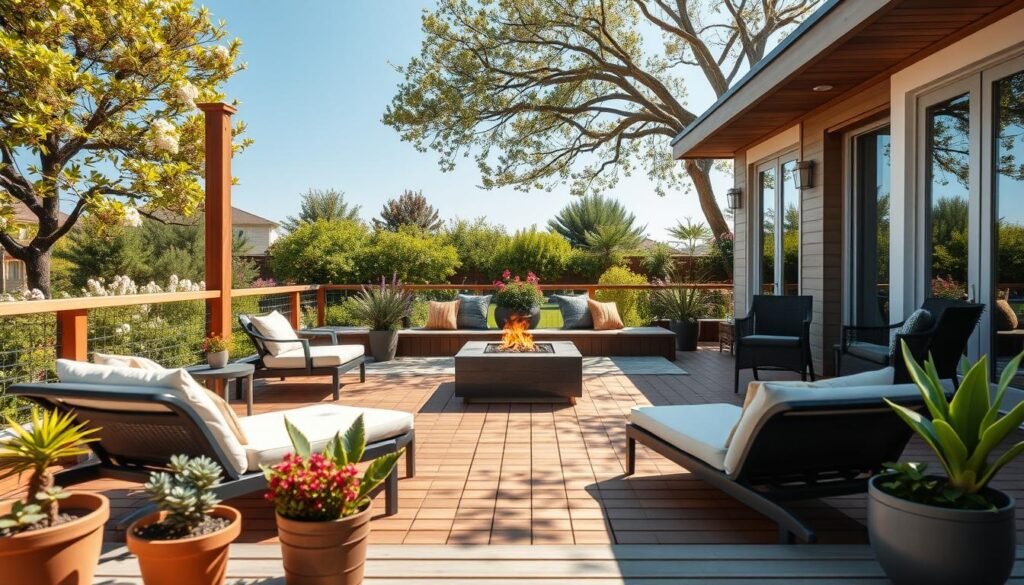
- Installing outdoor lighting to extend the use of your deck into the evening
- Creating a multi-level deck to separate different activity areas
- Incorporating outdoor heating or cooling solutions for year-round comfort
- Adding planters or gardens to enhance the natural beauty of your outdoor space
By adding these outdoor living ideas to your deck upgrade, you’ll get a space that’s both stunning and practical. It will be a joy to use for many years.
6. Explore Backyard Deck Pergola Design Options
Looking into pergola designs can really change your backyard deck. A pergola is more than just a structure. It defines your outdoor area, adds beauty, and connects your deck to the landscape.
A backyard deck pergola comes in many styles to match your home and taste. You can pick from modern to traditional designs. Materials like wood, vinyl, and metal offer different looks and benefits.
For example, a wooden pergola brings a cozy, natural vibe. A metal one gives a modern, sleek look. Your choice depends on your budget, upkeep needs, and desired style.
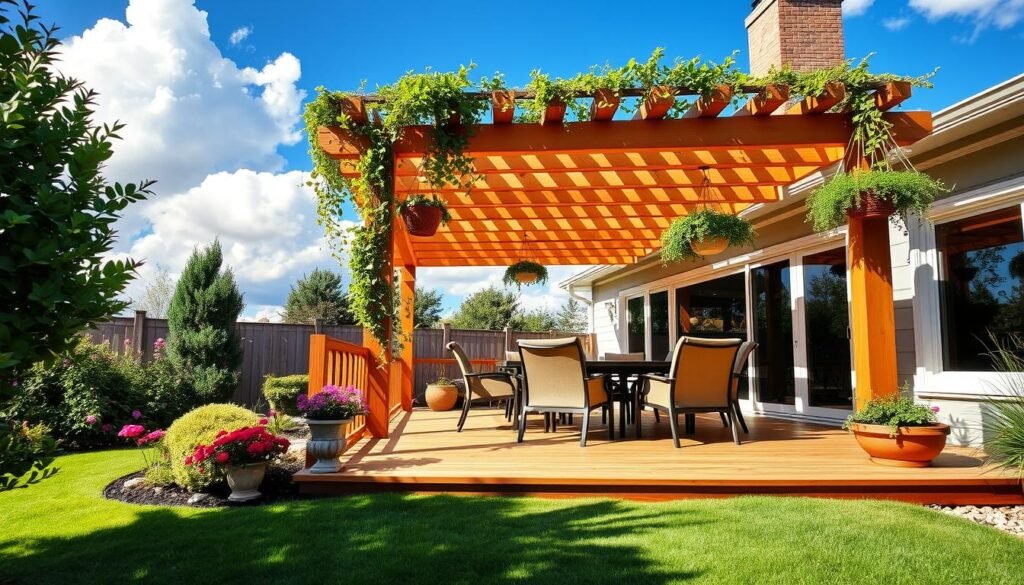
When thinking about pergola design options, consider size, shape, and shading. Popular designs include:
- Attached pergolas that connect to your house
- Freestanding pergolas for any deck spot
- Pergolas with canopies or shading systems
- Pergolas with lights or decorations
For backyard pergola decor, the choices are endless. You can add plants or lights to make it cozy. String lights or lanterns can also brighten up your space.
The best backyard pergola is one that fits your home and style. By looking at different designs and materials, you can make a welcoming outdoor area.
7. Integrate Deck and Landscaping for Cohesive Design
A beautiful outdoor space comes from combining deck design and landscaping. A cohesive design makes your deck and landscape work together. This creates a welcoming and useful area for fun and relaxation.
For a cohesive look, match the materials and colors of your deck and landscaping. For example, if your deck is cedar, use cedar tones in your landscaping. This makes your deck and landscape look like they belong together.
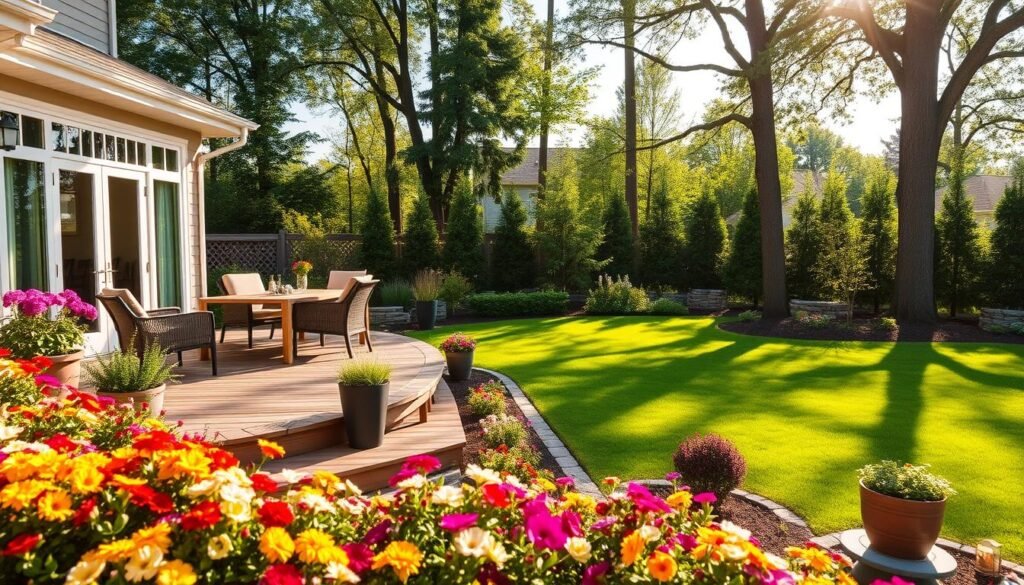
Think about how you’ll use your outdoor space. Do you want a dining area, a place to lounge, or a kids’ playground? Knowing how you’ll use it helps you design a deck and landscape that fit your needs.
Some important things to think about when combining deck and landscaping include:
- Plant selection: Pick plants that match your deck’s style and color.
- Pathways: Create paths that link your deck to other parts of your yard. This makes moving around easy.
- Lighting: Outdoor lights can highlight your deck and landscaping. They add beauty at night.
By blending your deck and landscaping, you can make a cohesive design. This design improves your outdoor space’s beauty and usefulness.
8. Address Small Backyard Design Challenges
Small backyards can be tricky to design, but they can also be lovely outdoor spaces. The right strategies can turn them into cozy retreats.
One big challenge is making the most of the space. You can do this by choosing furniture and design elements that do more than one thing.
Here are some great ideas for small backyards:
- Use wall-mounted planters or trellises to make the most of vertical space.
- Go for compact or foldable furniture to save room when it’s not in use.
- Try small deck landscaping ideas like tiered gardens or small water features.
- Consider backyard deck steps that can also be used for seating or storage.
It’s also important to make your indoor and outdoor spaces feel connected. Use similar materials and design elements in both areas.
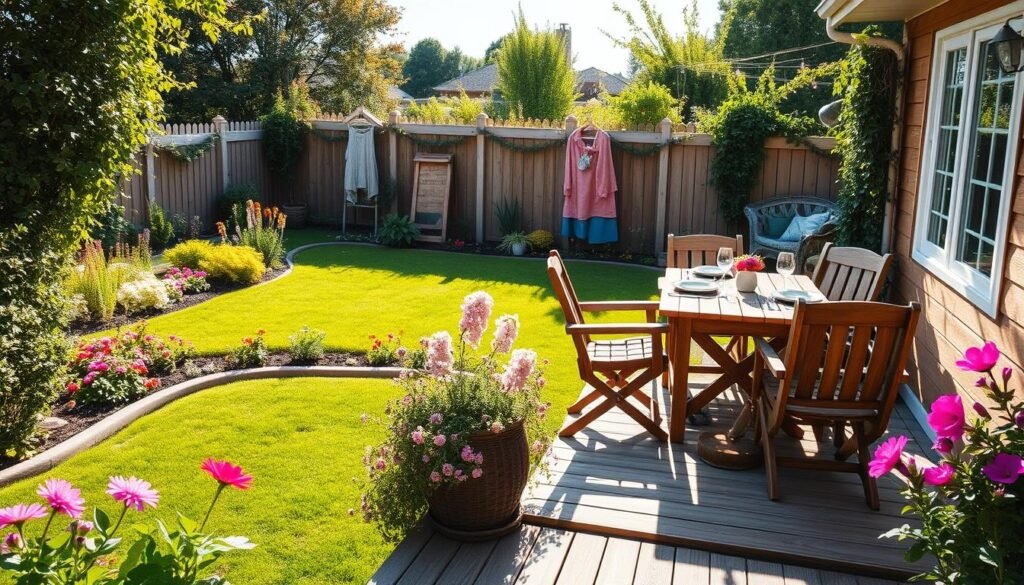
When designing a small backyard, think about the size of the elements you add. Big features can make the space feel cramped.
Here are some more tips to make your small backyard better:
- Choose a color scheme that ties everything together.
- Add lighting to make your outdoor space usable at night.
- Use plants and greenery to add texture and depth.
9. Evaluate Maintenance Requirements for Long-Term Satisfaction
Checking maintenance needs is key in deck remodeling. It affects your long-term happiness. A deck upgrade can make your outdoor area better. But, you must think about the upkeep to keep your deck safe and looking good.
Understanding Maintenance Requirements helps you make smart deck upgrade choices. Different materials need different care. Wood decks need staining and sealing to fight rot and bugs. Composite decks are tougher and need less work.

To cut down on upkeep, think about maintenance-free deck ideas. Use composite or hardwood that fights rot and bugs. Also, add gutters and downspouts to catch leaves and dirt, so you don’t have to clean as often.
- Regularly check your deck for damage.
- Pick materials that last and resist the weather.
- Design your deck to need less care.
By looking at the upkeep of your deck upgrade, you can be happy with your outdoor area for a long time. This means picking the right materials and designing your deck to need little care. This way, you can enjoy your outdoor space without worrying about too much maintenance.
10. Consider Current Deck Design Trends and Aesthetics
Keeping up with deck design trends can make your outdoor space look better and work better.
Modern composite decking materials are big now. They’re tough, easy to care for, and look sleek. They can make your backyard look amazing.
Today’s decks mix old and new styles. Adding outdoor lighting and fire pits brings warmth and makes your deck cozy. It’s perfect for chilling out or having fun.
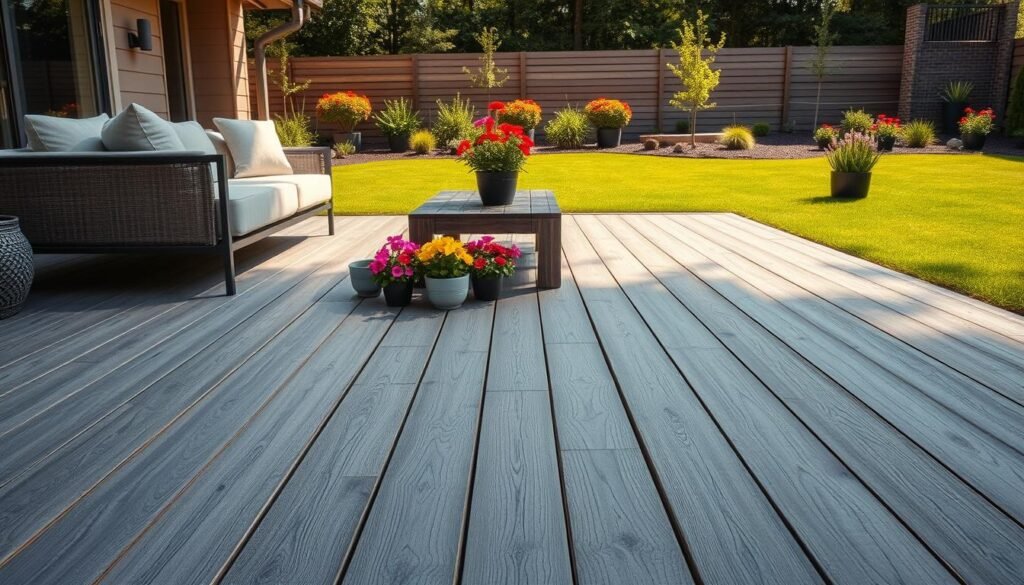
Another popular idea is adding outdoor kitchens and dining spots. It makes your deck more useful and connects indoor and outdoor living smoothly.
Think about your deck’s colors and textures too. Many people choose gray and brown tones. They match nature and look classy.
- Modern composite materials for durability and low maintenance
- Incorporation of outdoor lighting and fire features for ambiance
- Outdoor kitchens and dining areas for enhanced functionality
- Neutral color palettes that blend with natural surroundings
By using these trends in your backyard makeover, you’ll get a space that’s both beautiful and practical. It will show off your style and match your home.
11. Review Safety Features, Building Codes, and Permits
A safe and compliant deck renovation needs a close look at safety features, building codes, and permits. Making sure your deck follows these rules is key for safety. It also helps avoid legal problems.
Safety Features to think about include railings, guardrails, and good lighting. These help make your deck safe and prevent accidents.
Following local building codes is a must. These codes change by place and cover things like how strong the deck is, what materials to use, and how to build it. You should talk to local officials or a pro contractor to know what codes apply to you.
Getting the necessary permits before you start is very important. Permits mean your project will be checked and approved by local authorities. This shows it meets building codes and safety standards.
By paying attention to safety features, building codes, and permits, you can have a successful and worry-free deck renovation.
12. Decide Between DIY Deck Improvement Projects and Professional Installation
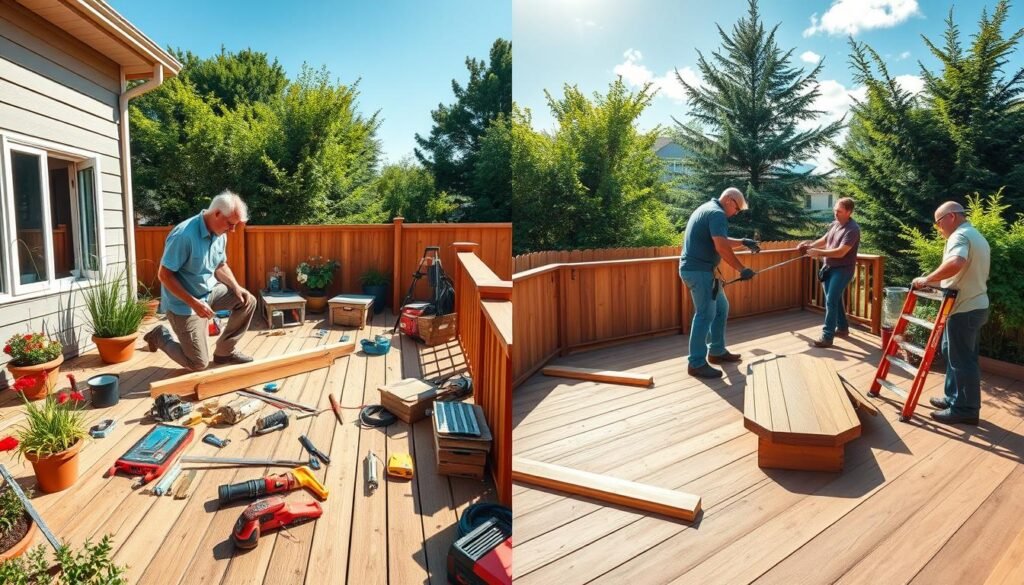
Choosing between DIY or professional installation for your deck depends on several things. These include your budget, the project’s size, and your DIY skills. It’s key to think about the pros and cons of DIY deck improvement.
Factors to Consider for DIY Deck Improvement
- Cost Savings: Doing it yourself can save on labor costs.
- Personal Satisfaction: Completing a DIY project can be very fulfilling.
- Flexibility: You can work at your own pace.
But, DIY projects have their own challenges. You might need special skills and tools. There could be safety risks and it might take a lot of time to finish.
Hiring a professional for your deck project has its own benefits.
Benefits of Professional Installation
- Expertise: Professionals have the skills and experience for complex projects.
- Time Efficiency: A professional will likely finish the project faster.
- Warranty and Liability: Professionals offer a warranty and are responsible for accidents or damages.
To make a good choice, consider these deck renovation tips:
- Be honest about your DIY skills.
- Look at how complex the project is.
- Think about your budget and the DIY cost savings.
- Consider how much time you can give to the project.
In the end, your decision should match your situation, priorities, and abilities.
Conclusion
Successful backyard deck improvements start with careful planning. First, check your deck’s condition and set a budget. Then, look at different materials and designs to match your home.
Good remodeling tips include blending your deck with the landscape. Also, think about how much upkeep it will need. Keeping up with deck design trends can make your outdoor area even better.
By following these steps and focusing on safety, you can make your backyard deck just what you want. It will greatly improve your outdoor living space.