Creating outdoor living space enhancement brings joy to every home. Building a diy pergola construction is more than just buying lumber and screws. It’s about how the earth supports heavy beams.
Post depth and beam sizing are key to a stable structure. Sun direction affects where shadows fall in the afternoon. Wind can also stress joints if the design is weak.
Local soil conditions affect how deep the footings need to be. If the ground is soft, bigger concrete bases are needed for stability. Safety is the most important thing in every project.
Using a pergola building checklist ensures no detail is missed. These backyard pergola tips turn pergola design ideas into reality. Proper planning makes the work easier for everyone.
1. Determine the Perfect Location for Your Backyard Oasis
Finding the right spot for your pergola is key to a great backyard. Think about how you’ll use the space and how it fits with your outdoor area.
Pergola Patio Attached to House Benefits
Attaching a pergola to your house blends indoor and outdoor living. It’s great for homes with big windows or sliding glass doors. A pergola patio attached to house adds shade and shelter for dining or parties.
It also lets you match the pergola to your home’s style. This makes your outdoor space look like part of your home. Plus, it can cover a patio or deck, making it better for all weather.
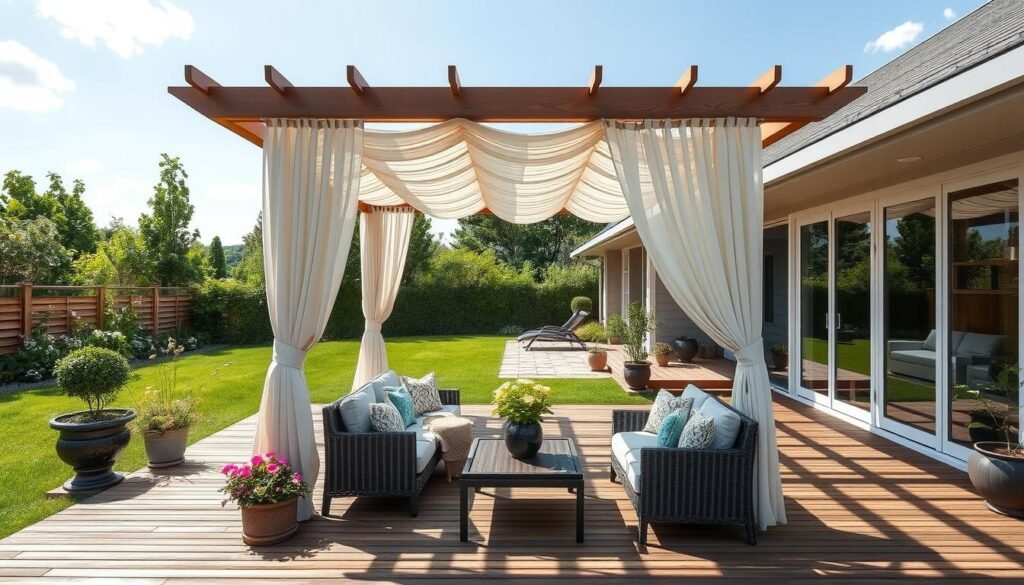
When extending a pergola from your house, think about its size. A pergola patio extension adds shade and ties your outdoor space together.
Don’t forget about your yard’s slope and drainage. Good planning keeps water away and ensures your pergola stays stable.
Gazebo Off House Placement
A gazebo away from the house offers a private spot. It’s perfect for a reading nook, meditation area, or romantic dinner. Choose a spot with nice views and good landscaping.
Make sure your gazebo is easy to get to and see from inside. Adding plants around it makes it even more peaceful.
Choosing the right spot for your pergola or gazebo makes your outdoor space better. It adds value to your home and improves your life.
2. Choose the Right Size and Proportions
Choosing the right size for your backyard pergola is key to a harmonious outdoor area. The pergola’s size should match your yard and house well.
In smaller spaces, a courtyard pergola is a great pick. These pergolas are small and fit well in tight spots. They offer shade and define the area nicely.
Courtyard Pergola Ideas for Smaller Spaces
When designing a courtyard pergola, think about your house’s scale and the furniture you’ll use. A small pergola with a simple design can make a cozy spot. Use vertical elements to make the space feel bigger.
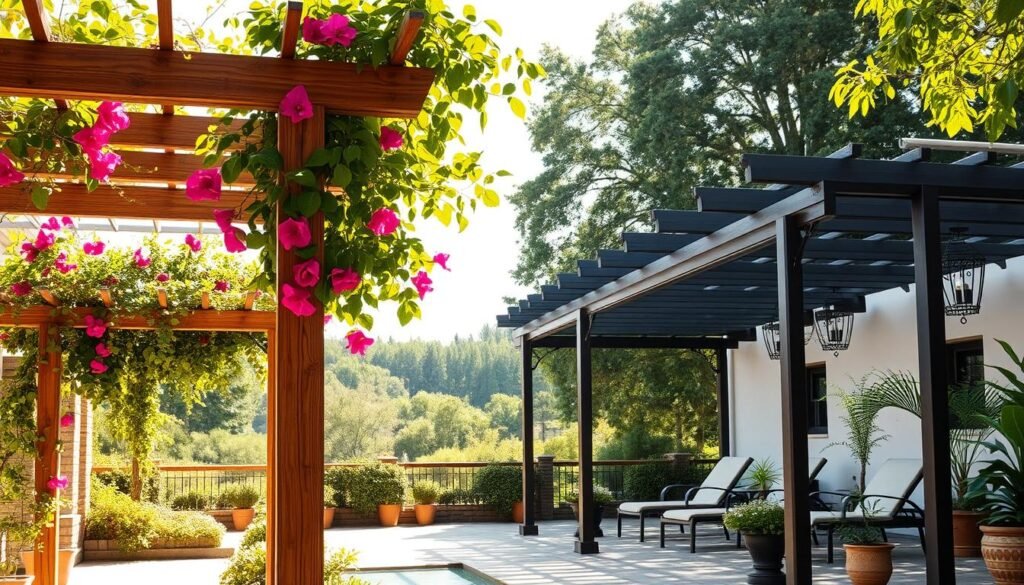
For bigger properties, a wrap-around pergola is impressive. These pergolas can go around your house or patio, blending indoor and outdoor spaces smoothly.
Wrap Around Pergola Ideas for Larger Properties
When planning a wrap-around pergola, consider its use. You might want to divide it for dining, lounging, or parties. Make sure it fits your house and yard’s style.
By picking the right size and design for your pergola, you’ll get a beautiful and useful outdoor area.
3. Select Your Pergola Design Style and Structure Type
The design and structure of your pergola greatly affect your outdoor space. You can pick a style that matches your home and meets your needs. There are many options to choose from.
Modern Pergola Gazebo with Clean Lines
A modern pergola gazebo with clean lines is great for those who like simple designs. It has a sleek look that can make your backyard look more sophisticated.
Modern Garden Gazebo with Wooden Slats
A modern garden gazebo with wooden slats brings a natural charm. The wooden slats can be arranged in different ways to make a unique and attractive design.
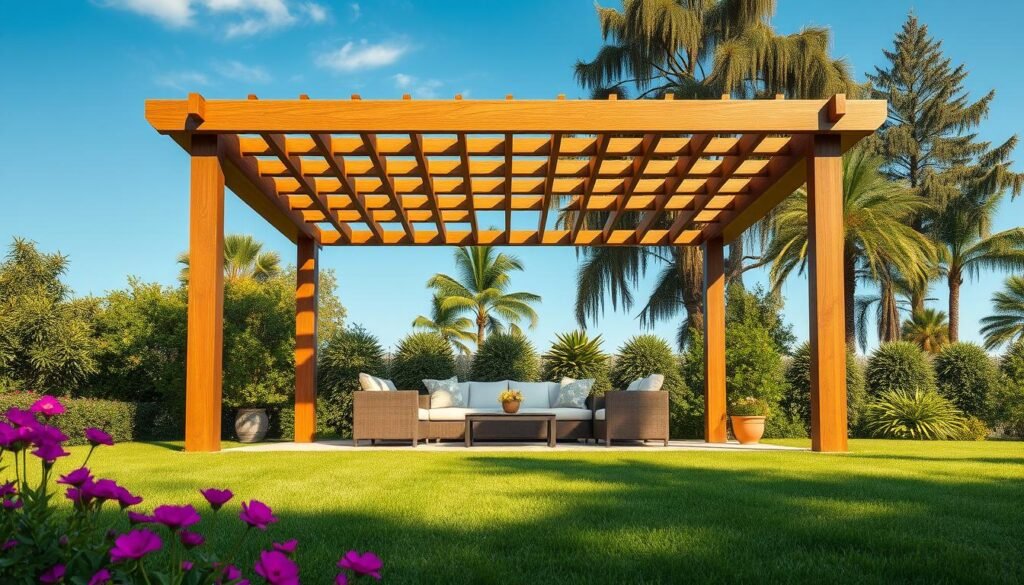
For pergola patio modern outdoor looks, aim for a smooth transition from indoors to outdoors. Use similar materials and designs in both areas.
Shaded Pergola with Roof
A shaded pergola with roof is great for blocking out the sun. You can pick from metal, wood, or fabric for the roof.
Covered Patio Ideas with Full Protection
For covered patio ideas that keep you dry, think about a pergola with a solid roof or a retractable canopy. This way, you can enjoy your outdoor space no matter the weather.
Simple Pergola Design with Minimal Coverage
A simple pergola design with little coverage is ideal for keeping your outdoor space open. It usually has a minimalist structure with minimal roofing.
Exploring these design styles and structure types helps you create a pergola that improves your outdoor living. It also matches your home’s architecture.
- Consider the style and architecture of your home when choosing a pergola design.
- Think about the level of shade and protection you need.
- Choose materials that are durable and require minimal maintenance.
4. Before You Build a Backyard Pergola, Check This Out: Material Selection Matters
The longevity and appeal of your backyard pergola depend significantly on the materials you choose.
Choosing the right material for your backyard pergola is key. It affects how long it lasts, how easy it is to keep up, and what it looks like.
Wooden Gazebo with Lights Longevity
A wooden gazebo with lights can make your backyard look amazing. But, how long it lasts depends on the wood and how you take care of it.
Wooden structures with lights need materials that can handle the weather and the weight and power of the lights.
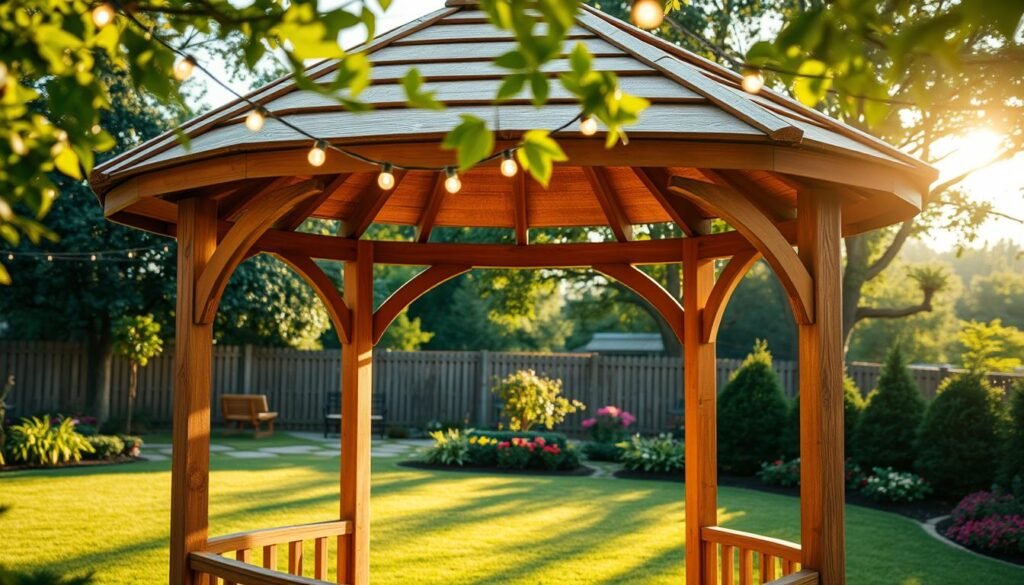
When building a wooden pergola, you can choose between cedar and pressure-treated lumber. Cedar is great because it naturally fights off rot and bugs, making it strong.
- Cedar looks good with its natural beauty.
- It lasts a long time if you take care of it.
- But, it might cost more than pressure-treated lumber.
Pressure-treated lumber is treated to fight rot and bugs. It’s cheaper than cedar but might not look as natural.
- Pressure-treated lumber is budget-friendly.
- It’s durable against rot and bugs.
- But, the chemicals used might be bad for the environment and health.
So, whether to choose cedar or pressure-treated lumber depends on what you value most: money, upkeep, or the planet.
5. Navigate Permits, Building Codes, and Legal Requirements
Building a backyard pergola is more than just picking designs and materials. You also need to follow local rules. It’s important to know and follow these rules to avoid fines or having to take down your pergola.
First, find out if you need a permit for your pergola. Whether you need one depends on where you live and the size and type of your pergola. Usually, bigger structures or those attached to your home need a permit. Check with your local building department to see what you need.
Following building codes is also key. These codes tell you what materials and methods to use. For example, they might say what kind of lumber or how deep the foundation should be. Making sure your pergola meets these codes is important for safety and lasting quality.
There are also legal rules to follow, like property line setbacks and height limits. Your local government or homeowners association (if you have one) can tell you about these rules.
By knowing and following permits, building codes, and legal rules, you can make your pergola project a success. It’s wise to talk to local authorities or a professional contractor for help.
6. Establish Your Budget and Prioritize Features
A well-planned budget is key to a successful backyard pergola project. Knowing the costs is essential for your outdoor oasis.
The cost of your pergola depends on size, materials, design, and extra features.
When budgeting, think about what you must have. Features like lighting, vines, and hanging flowers can make your pergola special.
Pergola with Lights Backyard Ideas Costs
Adding lights makes your pergola welcoming at night. The cost varies by light type and number.
Solar lights are affordable and green. String lights add a nice touch.
Patio Lights Pergola Installation
Installing patio lights under a pergola costs $500 to $2,000. It depends on the installation and light type.
Pergola with Vines and Lights Budget
Vines add beauty and shade to your pergola. With lights, it’s stunning.
Remember to include vine costs and upkeep in your budget.
Wooden Pergola with Hanging Flowers Expenses
A wooden pergola with flowers is a beautiful backyard feature.
The cost varies by wood type, pergola size, and flower choice.
Make a list of must-haves and nice-to-haves. This helps you budget better.
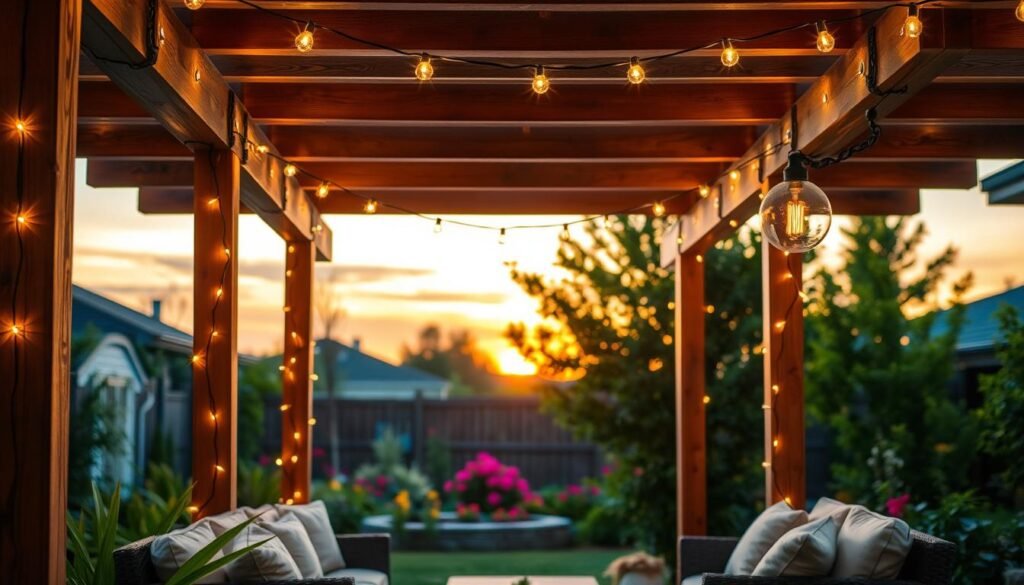
Understanding feature costs and prioritizing helps you stay within budget. You’ll get a beautiful, functional pergola.
7. Design the Foundation and Structural System
A well-planned foundation is key to a beautiful and lasting backyard pergola. The foundation and structure are vital for stability and longevity.
Concrete Footings for Permanent Structures
Concrete footings are a must for a permanent pergola. They give a solid base, stopping posts from shifting or settling unevenly. The size of your pergola and local codes will determine the footings’ depth and diameter.
Post Anchoring for Different Soil Types
The soil type affects how you anchor your pergola posts. In loose or sandy soil, deeper footings are needed to prevent shifting. But, in stable soil, less extensive anchoring is often enough.
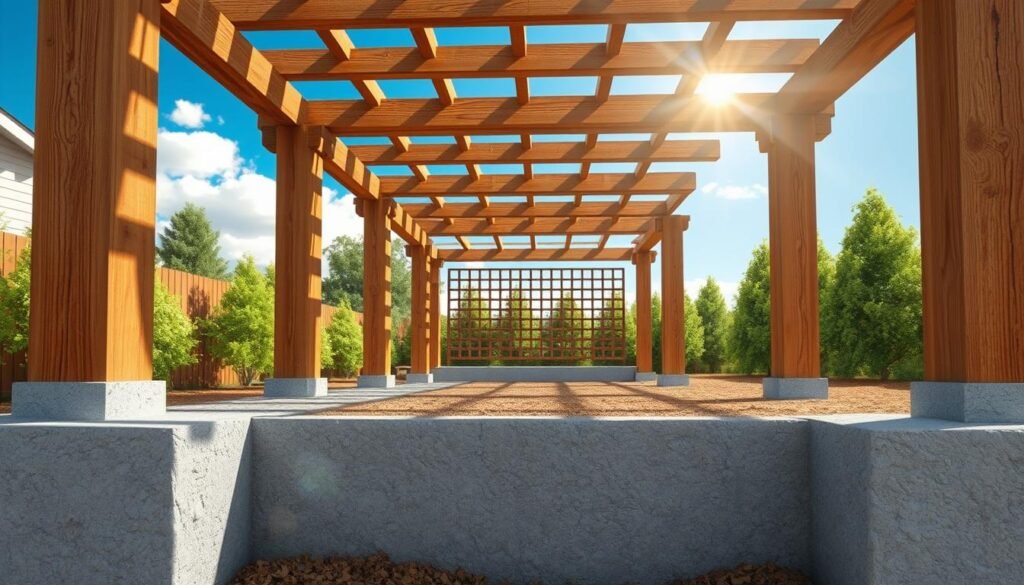
When designing your pergola’s interior, think about its style and material. Adding climbing plants, outdoor lighting, or decorative beams can boost its look.
Pathway Pergola and Covered Walkway Connections
Connecting your pergola to a pathway or covered walkway needs careful planning. Make sure the design is both cohesive and functional. This might mean matching materials or designing the pergola to fit with the existing architecture.
By focusing on the foundation and structure of your pergola, you can make a beautiful and lasting outdoor feature. It will enhance your backyard.
8. Plan for Lighting, Electrical, and Outdoor Living Features
To make your pergola even better, think about adding lights, electrical features, and outdoor living elements. A well-designed pergola can be the center of your backyard. It’s a cozy spot for relaxation and fun.
Lighting is key for a welcoming feel. For a wooden pergola with lights, you can pick from many options. String lights or LED strips under the rafters are great choices.
Wooden Pergola with Lights Installation Points
- Wrap string lights around the posts and beams for a whimsical touch.
- Install LED strips under the rafters for a modern glow.
- Use solar-powered lights for an eco-friendly option.
Adding plants and lights to your pergola makes it even more beautiful. For a pergola with plants and lights, pick flowering vines or greenery. Then, light them up with your chosen lights.
Pergola with Plants and Lights Integration
Pick plants that do well in your area and need little care. Use lights to highlight the plants, like uplighting for trees or downlighting for ground cover.
For those who love to host, a DIY pergola bar is a great idea. It’s perfect for serving drinks and becomes a key spot for parties.
DIY Pergola Bar Setup
- Plan the bar’s layout and design to fit your pergola’s dimensions.
- Choose materials that are durable and weather-resistant.
- Incorporate seating and countertops for a functional setup.
A rustic outdoor BBQ area is a great match for your pergola. It’s perfect for cooking and dining outside.
Rustic Outdoor BBQ Area Ideas
Use natural materials like stone or brick for the BBQ area. Choose outdoor furniture that fits the rustic look. Don’t forget to add lights for nighttime use.
For a bigger outdoor space, add entertainment features to your backyard pavilion. Think about outdoor speakers, a fire pit, or an outdoor kitchen.
Backyard Pavilion Entertainment Features

- Install outdoor speakers for a surround sound experience.
- Create a cozy gathering spot with a fire pit.
- Consider an outdoor kitchen for a fully equipped entertainment area.
9. Account for Climate, Weather Protection, and Seasonal Use
When planning your backyard pergola, think about how climate and weather will affect it. The local weather can change how durable and easy to maintain your pergola is. It also affects how comfortable and useful it is all year.
Climate Considerations are key in designing your pergola. For example, places with lots of rain need good drainage. Areas with lots of sun need shade.
Covered Arbour Drainage Solutions
A covered arbour needs a good drainage system in rainy areas. You might add gutters and downspouts. Or design the roof to slope for water to run off.
Roof Covered Patio Options
A roof-covered patio keeps you dry in rain and sun. You can choose from solid roofs, canopies that roll back, or pergolas with adjustable louvers.
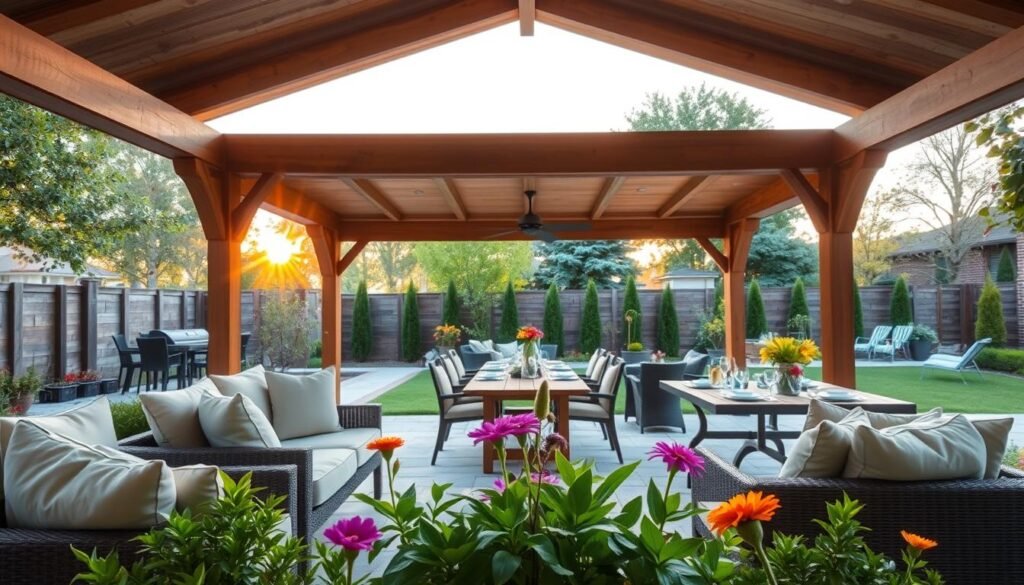
In hot places, shade is very important. Use pergolas with thick roofs or adjustable louvers to control sunlight.
Outdoor Canopy Design for Rain Protection
An outdoor canopy protects from rain and sun. You can pick from simple fabric canopies to more complex ones with metal or wood frames and waterproof roofs.
Backyard Canopy Ideas for Year-Round Use
For a backyard you can use all year, choose a canopy that changes with the weather. Think about retractable canopies or ones with sides that open or close.
By thinking about climate and weather in your pergola design, you make a space that’s not just pretty. It’s also useful and comfy all year.
10. Integrate Landscaping and Plan for Long-Term Enjoyment
To make your pergola a favorite spot, think about how it fits with your yard. Plan and design carefully to blend it smoothly with your backyard.
Backyard Patio Pergola Landscape Integration
Match your pergola with your yard’s plants and decor. Pick plants and decor that match your pergola’s look. For example, natural wood pergolas look great with greenery or flowers.
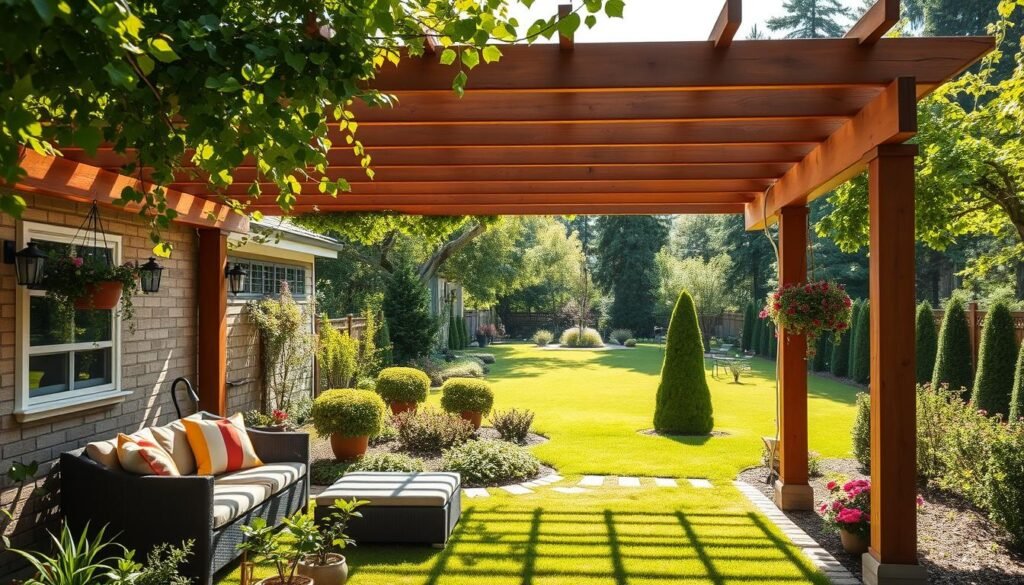
Decorating your yard with a pergola opens up many options. Hang string lights or lanterns for a cozy evening feel. Add outdoor furniture like a dining set or comfy seats for more use.
Outdoor decor ideas include:
- Using throw pillows and blankets in coordinating colors
- Incorporating natural elements like potted plants or a vase with branches
- Installing a fire pit or chiminea nearby for extended seasonal use
Pergola with Flowers and Lights Plant Choices
Pick the right plants for your pergola to make it stunning. Climbing roses, clematis, and wisteria are great for shade and color. Choose plants that bloom well with your evening lights for a magical feel.
Garden Pergola Ideas with Climbing Vines
Climbing vines are perfect for pergolas as they quickly cover it. Grapevines, honeysuckle, and morning glories are good choices. Think about their growth, care, and how they’ll look with your pergola.
By blending your pergola with your yard and adding thoughtful touches, you’ll create a beautiful space. It will be a joy to use for many years.
Conclusion
Planning is key for a great backyard pergola. By following the steps in this article, you can make a beautiful outdoor space. This will boost your home’s value and improve your life.
Planning a pergola means picking the right spot, size, and design. You also need to choose materials and deal with permits and codes. Setting a budget and focusing on what’s important will help too.
For a successful pergola, think about landscaping and long-term use. With careful planning and detail, your pergola will become a special outdoor spot.