Starting a garden is all about choosing the right structure for growth. Many people look for new backyard planter ideas to make their outdoor spaces better. It’s important to know what each plant needs.
Using a good wooden outdoor planter box helps plants stay healthy for many seasons. The right lining, moisture control, and soil depth are key. Choosing the right materials is the first step to a successful diy outdoor planter box.
Good outdoor planter box designs need smart drainage to prevent water damage. Without a way for water to drain, roots can rot. We’ll look at how to make designs that are both beautiful and durable.
Creating your own planters lets you control the garden environment. Proper wood choice and drainage tips are vital for a lasting garden feature. Let’s find out how to keep your garden safe and healthy.
Why Outdoor Planter Boxes Transform Your Garden Space
Outdoor planter boxes are a game-changer for any garden. They offer a stylish way to show off your favorite plants. By addingoutdoor planter box ideasto your garden, you can make it look better.
Using patio planter boxes adds visual interest to your garden. They come in many styles, materials, and sizes. This lets you pick the perfect one for your outdoor decor.
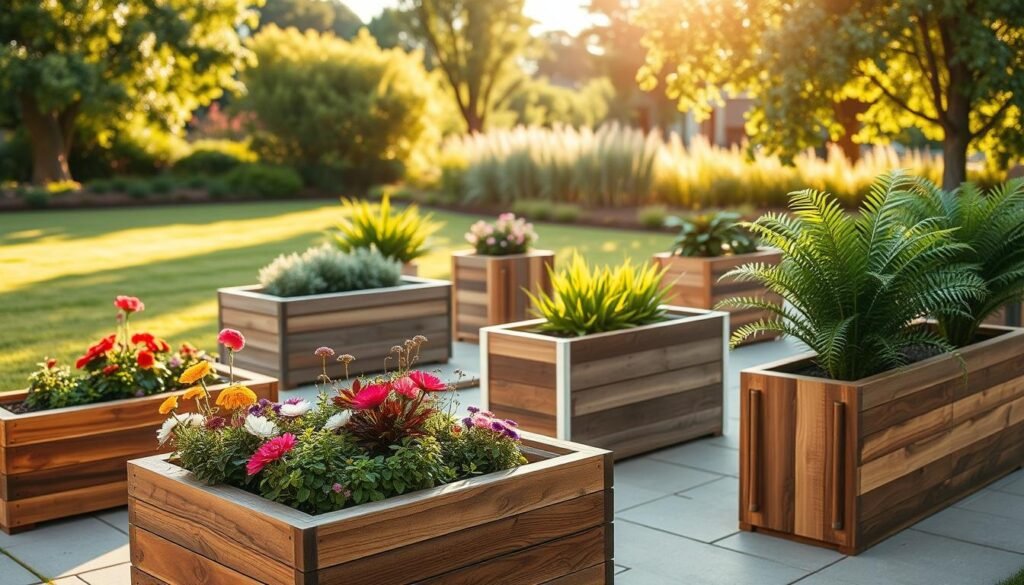
Garden planter boxes also make gardening easier. They help you reach your plants without straining your back. This is great for gardeners with mobility issues or those who want a more comfortable gardening experience.
Also, plant boxes outdoor let you choose from many plants. You can pick from vibrant flowers to lush greenery. This way, you can make your garden look unique and personal.
Adding outdoor planter boxes to your garden can give it a backyard makeover. Whether you want a peaceful spot or a place for fun, these boxes can help. They make your garden both beautiful and useful.
In short, outdoor planter boxes are great for making your garden look better, easier to use, and more flexible with plants. With the right outdoor planter box ideas, you can turn your garden into a beautiful outdoor space.
Before You Build an Outdoor Planter Box, Check out a Few Different Designs
Before you start building your outdoor planter box, it’s key to look at different designs. This will help you pick one that fits your garden’s style and your gardening needs.
Traditional Ground-Level Designs
Traditional ground-level planter boxes are a classic choice. They are easy to build and maintain, making them great for beginners. These designs fit well in most gardens and can be adjusted to any size or shape.
Long Narrow Boxes for Borders and Edging
Long, narrow planter boxes are perfect for garden borders and edging. They help define areas in your garden, adding elegance and sophistication. These boxes are also ideal for herbs or flowers that spill over, creating a stunning cascade effect.
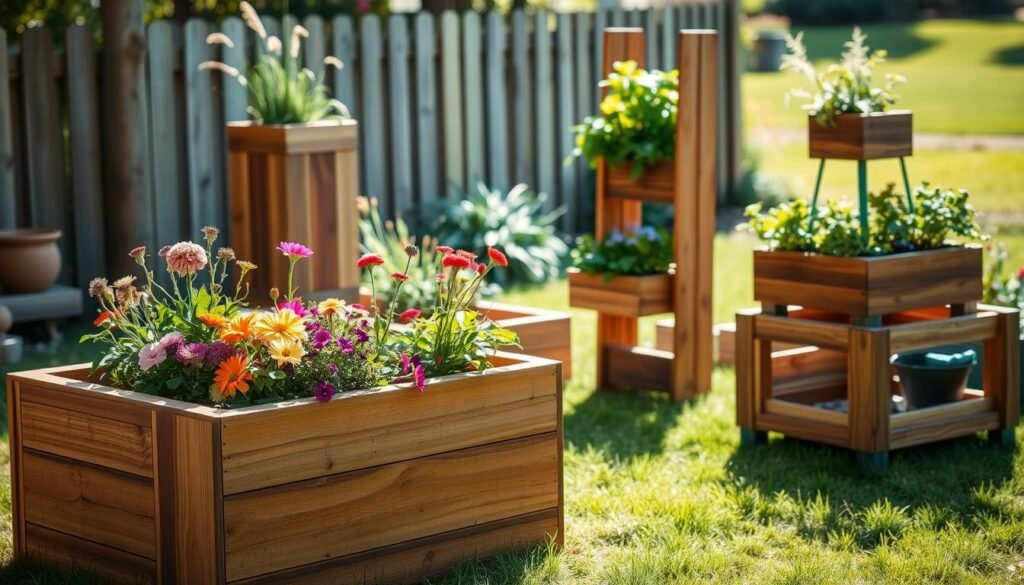
For a bold look, try a multi-level planter box. This design involves building boxes of different heights and sizes. It’s a creative way to display a variety of plants and can be a garden highlight.
Multi-level designs also make the most of space, letting you grow more plants in less area. By mixing levels and sizes, you can create a unique garden feature that’s all your own.
Choosing the Right Wood for Long-Lasting Planter Boxes
Choosing the right wood for your planter box is key. It’s not just about looks; it’s about durability and safety. The right wood keeps your planter box looking great for years.
Natural Oils and Insect Resistance
Some woods naturally fight off insects and rot because of their oils. Cedar and redwood, for example, keep bugs away and resist decay. This means you don’t need to use harsh chemicals, making your planter box safer.
Expected Lifespan and Maintenance
The wood you pick affects how long your planter box lasts. Teak and cypress are very durable and need little care. Pine, on the other hand, might need more upkeep to last as long.
- Teak: Known for its durability and resistance to rot and insects.
- Cypress: Naturally resistant to decay and insects.
- Pine: Less durable, requires more maintenance.
Weather Performance in Different Climates
Weather can change how well your planter box does. In wet places, choose woods that resist rot and decay. In dry areas, pick woods that don’t crack when they dry out.
Climate considerations help pick the right wood for your planter box.
Safety Considerations for Edible Gardens
For edible gardens, pick wood that’s safe for food. Stay away from treated woods and go for naturally rot-resistant ones instead.
Durability and Aesthetic Options
The wood you choose also affects your planter box’s look. From cedar’s natural beauty to teak’s durability, there’s a wood for every garden. Think about both how long it lasts and how it looks.
The right wood balances durability, safety, and looks. This makes your wooden outdoor planter box a great addition to your garden.
Essential Drainage Solutions for Healthy Plants
A good drainage system is vital for your outdoor planter box garden. It stops waterlogged soil and root rot. It also makes sure your plants get the right moisture.
Optimal Hole Size and Spacing
The size and spacing of drainage holes matter a lot. Drill holes that are at least 1/4 inch in diameter for good water flow. Keep holes 6-8 inches apart to avoid waterlogging.
Best Drill Bits for Different Wood Types
Picking the right drill bit is key for clean holes in your planter box. For softwoods, a standard twist bit works well. But for hardwoods, use a spade bit or a Forstner bit to avoid wood splitting.
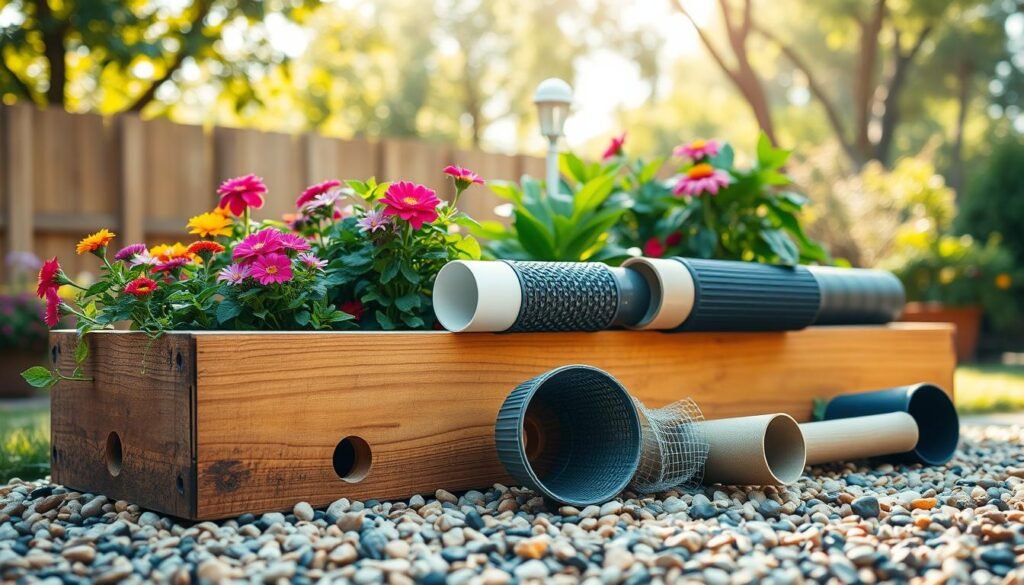
Adding gravel or stones at the bottom of your planter box helps with drainage. Pea gravel is a good choice because it lets water flow well and doesn’t compact. But, larger stones might not work as well in smaller boxes.
Preventing Soil Loss While Allowing Water Flow
To stop soil from washing away, use a layer of landscape fabric or a mesh screen at the bottom. This lets water out while keeping soil in.
Protecting Deck and Patio Surfaces
To keep your deck or patio dry, use planters with built-in saucers or trays to catch water. Or, place a waterproof mat or tray under the planter box to stop water from leaking onto the surface.
Raised Planter Box Designs for Easy Gardening
Raised planter boxes are great for those who find bending or kneeling hard. They make gardening easier by reducing back and knee strain. They also help gardeners of all ages to garden more comfortably.
Ideal Heights for Reduced Bending
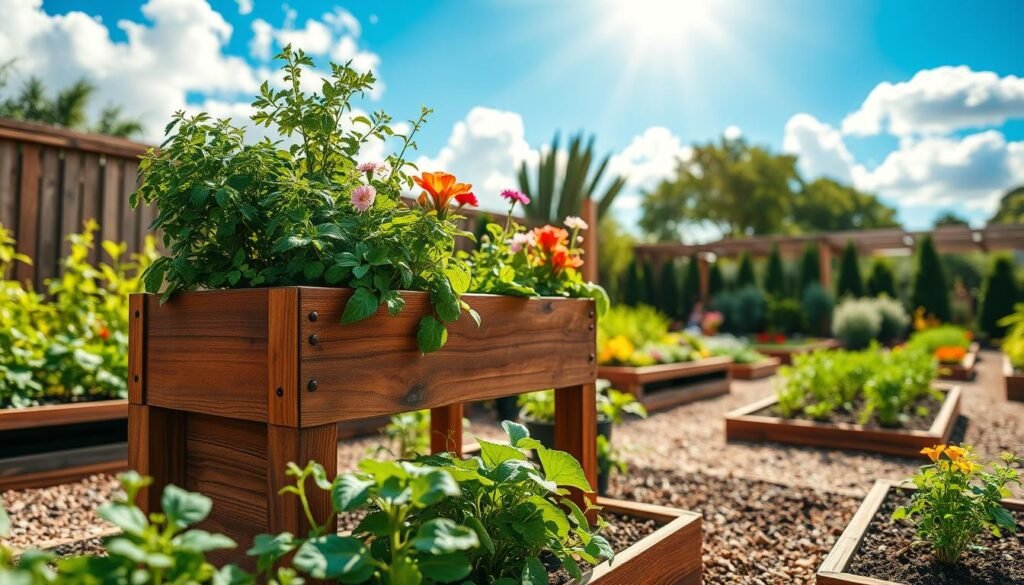
The height of a raised planter box is key for easy gardening. A height between 30 to 36 inches is ideal. This height lets gardeners work on their plants without bending or kneeling. It’s very helpful for older gardeners or those with mobility problems.
Sturdy Leg Construction Methods
Strong legs are essential to hold the soil and plants. Using durable materials like cedar or recycled plastic for the legs is a good idea. Legs made from these materials resist rot and insect damage, keeping your garden stable.
The way the legs are built is also important. A sturdy frame that’s well attached to the planter box is key. Some designs have adjustable legs, which are handy on uneven ground.
Built-In Railing Planters
Built-in railing planters are a smart way to add plants to your outdoor space. They fit right onto deck or patio railings, saving space. They’re great for hanging plants or herbs, making your outdoor area look nice.
Herb Gardens and Succulent Displays
Raised planter boxes are perfect for herb gardens and succulent displays. They help with drainage, which is good for succulents that don’t like wet soil. Herbs like basil and rosemary do well in well-draining soil, making raised planters a great choice.
Modern and Minimalist Planter Box Ideas
Modern outdoor planter boxes can turn your garden into a sleek oasis. Minimalist planter box designs offer a clean look that fits well with your outdoor decor.
Painted Finishes That Last Outdoors
Adding color to your garden is easy with painted finishes on your planters. Pick a high-quality exterior paint that won’t fade or crack. This keeps your planters looking vibrant all year.
Think about your garden and home’s colors when picking paint. Neutral colors like white, gray, or beige work well with most outdoor spaces. Bold colors can make a bold statement.
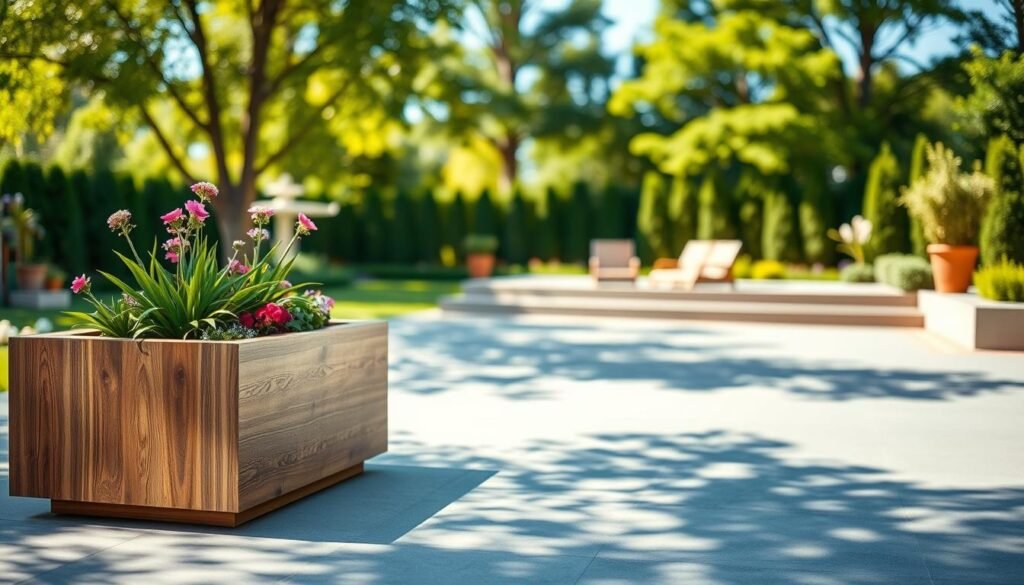
Clean lines are key in minimalist design. Choose simple, geometric shapes for your planters. Arrange them to avoid clutter and enhance your garden’s look.
For example, place planters evenly along paths or against walls. This creates harmony and makes upkeep easier. You’ll also get to enjoy your garden more.
Industrial-Style Planter Aesthetics
For a rugged look, try industrial-style aesthetics for your planters. Use materials like metal or reclaimed wood. Add exposed bolts or a distressed finish for that industrial vibe.
- Use metal planters with a rust-resistant coating for a modern industrial look.
- Incorporate reclaimed wood for a unique, eco-friendly planter box.
- Add decorative metal straps or brackets for an extra industrial touch.
Creative Planter Box Locations Throughout Your Yard
Make your outdoor space better by placing planter boxes in smart spots. They bring beauty, function, and personality to your garden or landscape.
Flanking Entryways and Walkways
Place planter boxes on both sides of entryways and along paths. It makes your garden or yard look welcoming. Choose plants that match your home’s style and the landscape for a unified look.

Planter boxes can boost your landscaping by matching its colors, textures, and styles. Think about your current garden’s plants and materials when picking plants and designs for your boxes.
Creating Outdoor Room Dividers
Use planter boxes as dividers to make different areas in your yard. This is great for big gardens or open outdoor spaces. Go for tall boxes or connect several to mark off spaces.
Choosing Tall Plants for Natural Screening
Tall plants in boxes can make natural screens or barriers. They block views, reduce noise, or add privacy. Pick plants that grow tall and stay that way all season.
Integrating with In-Ground Gardens
Combine planter boxes with in-ground gardens for more depth and interest. Mixing raised boxes with in-ground plants makes your garden lively. Use boxes to highlight plants or create a garden focal point.
Hanging and Vertical Planter Box Solutions
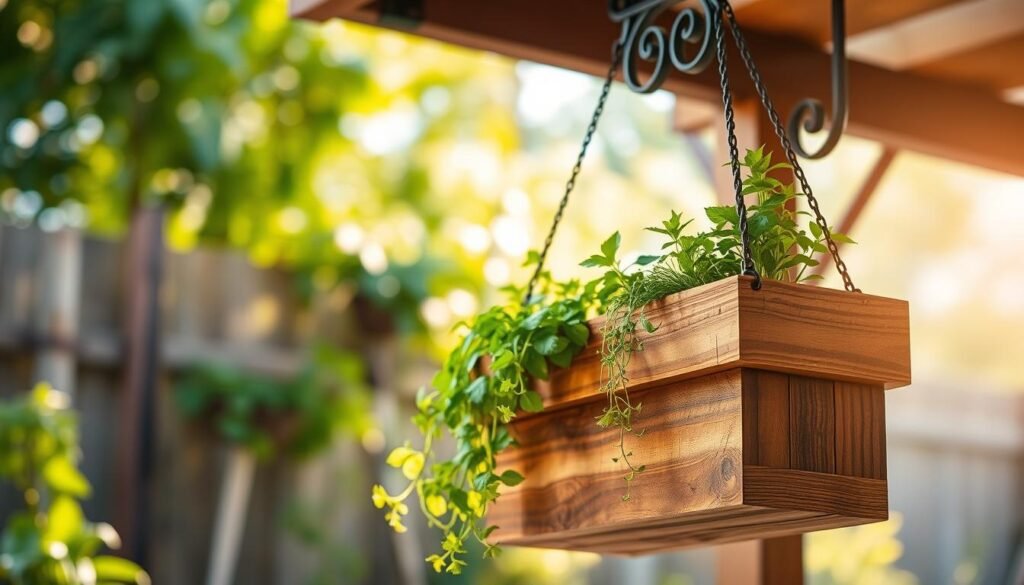
Make your outdoor or indoor space greener with hanging and vertical planter boxes. They’re great for saving space and adding greenery.
Proper Installation on Different Surfaces
Installing hanging or vertical planter boxes needs careful thought. The surface type affects how you install them for stability and durability.
- For wooden surfaces, use screws that are long enough to securely hold the weight of the planter box and its contents.
- On concrete or brick walls, use wall anchors or masonry screws to provide a sturdy hold.
- For metal or vinyl surfaces, consult a professional to determine the best installation method.
Weight Considerations and Support Brackets
Weight is a critical factor for hanging or vertical planter boxes. Make sure the brackets can handle the box’s weight when full.
Choose sturdy, outdoor-use brackets. They should be durable and not corrode.
Growing Tomatoes and Peppers in Hanging Boxes
Hanging boxes are great for tomatoes and peppers. They need sunlight and proper care. Use a well-draining mix and ensure good drainage.
Tomatoes and peppers need lots of sunlight. Place your boxes where they get at least 6 hours of direct sunlight daily.
Cascading Box Arrangements for Berry Production
Cascading boxes are perfect for berries. They let plants spill over, saving space and promoting growth.
Plan your berry box layout with plant size in mind. Leave space for easy access and upkeep.
Step-by-Step Tips for Building Your Own DIY Planter Box
Building a DIY planter box is easy and fun. It adds a personal touch to your garden. Plus, it lets you grow your favorite plants in a special spot.
Calculating Material Needs
First, measure the space for your planter box. Decide on its size and the wood type. You’ll need four sides, a bottom, and maybe support slats.
Tip: Add extra to your measurements for cuts and mistakes.
Determining Optimal Depth for Root Growth
The depth of your planter box is key for plant health. Most plants need 6-8 inches of soil. But, some like tomatoes need more.
Joining Techniques for Sturdy Construction
The strength of your planter box comes from how you join it. You can use screws, nails, or dowels. Corner brackets or metal straps help too.
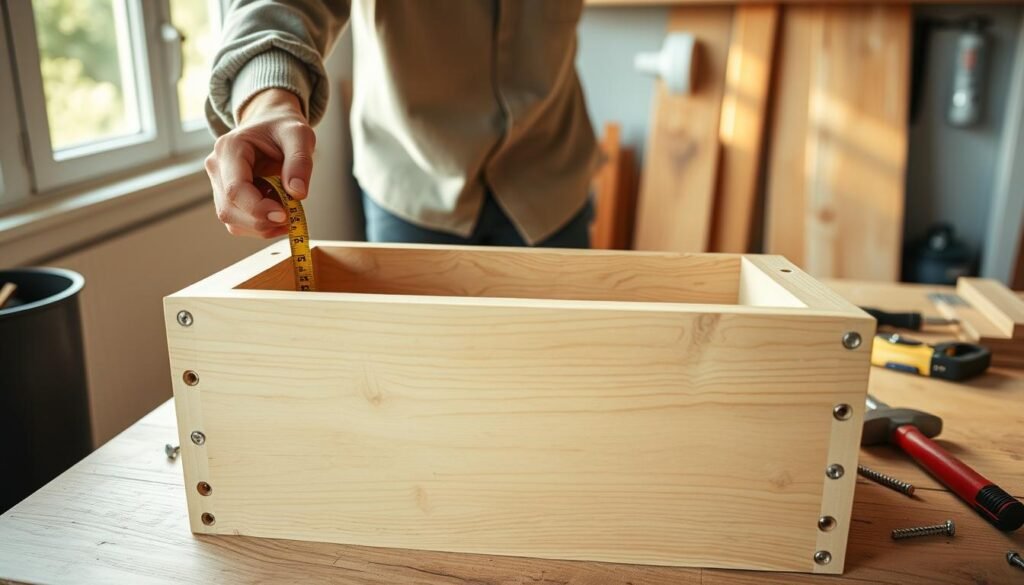
Choose screws for a stronger hold. They’re better in outdoor weather where wood changes size.
Tip: Use galvanized or stainless steel fasteners to avoid rust.
Food-Safe Sealants for Vegetable Gardens
For edible plants, use safe sealants. Look for non-toxic options that won’t harm your plants.
Stains and Finishes for Decorative Planters
Stains and finishes make your planter box look great. Pick outdoor-safe products. A good finish also protects your box from weather.
Selecting the Right Soil Mix for Container Gardening
Good soil mix is key for your garden. Choose a mix made for containers. Don’t use garden soil, as it can harm drainage.
Tip: Add compost to improve soil quality and structure.
Conclusion
Creating an outdoor planter box is more than a DIY project. It’s a chance to make your garden look better and work better. By picking the right wood and adding good drainage, you can help your plants grow well.
There are many designs to choose from, like modern or raised boxes. Trying out different designs and places in your yard can help you find the best spot. This way, you can make your outdoor space look great.
With these tips and guides, you’re ready to make a beautiful outdoor planter box. It doesn’t matter if you’re new to gardening or have been doing it for years. The right planter box can make your outdoor area even better.