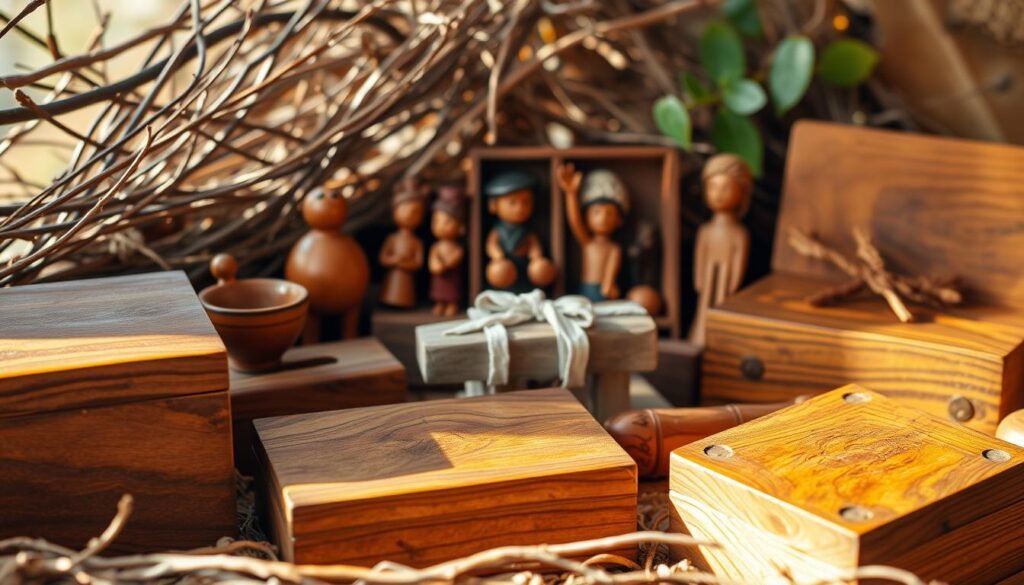
Making wooden decorations by hand is very rewarding. You just need a few tools and some basic wood carving skills. This way, you can make beautiful items for your home.
Think about adding warmth and character to your home with DIY wood accents. You can make your shelves more personal or add a special touch to your tables. Wood carving opens up a world of possibilities.
Working on small wood projects lets you be creative and make things that are both useful and beautiful. It’s a wonderful way to make your home feel more personal.
The Joy of Handcrafted Wood Accents
Making handcrafted wood accents is a fulfilling task. It adds a personal touch to shelves and tables. These unique items not only make a room look better but also show the creator’s skill and personality.
Handcrafted wood accents bring a natural feel to modern spaces. The wood carving aesthetic adds warmth and texture to simple places.
Enhancing Home Decor with Handcrafted Wood Accents
Adding hand carved wood to your decor is easy. You can put a decorative accent on a shelf or make a detailed centerpiece for your dining table. Wood carving lets you express your creativity in many ways, from simple wood carving to abstract wood carving.
Here are some ideas to improve your home decor with handcrafted wood accents:
- Place a carved wooden decorative piece on your coffee table
- Use handcrafted wooden accents to make a unique gallery wall
- Add carved wood elements to your kitchen decor
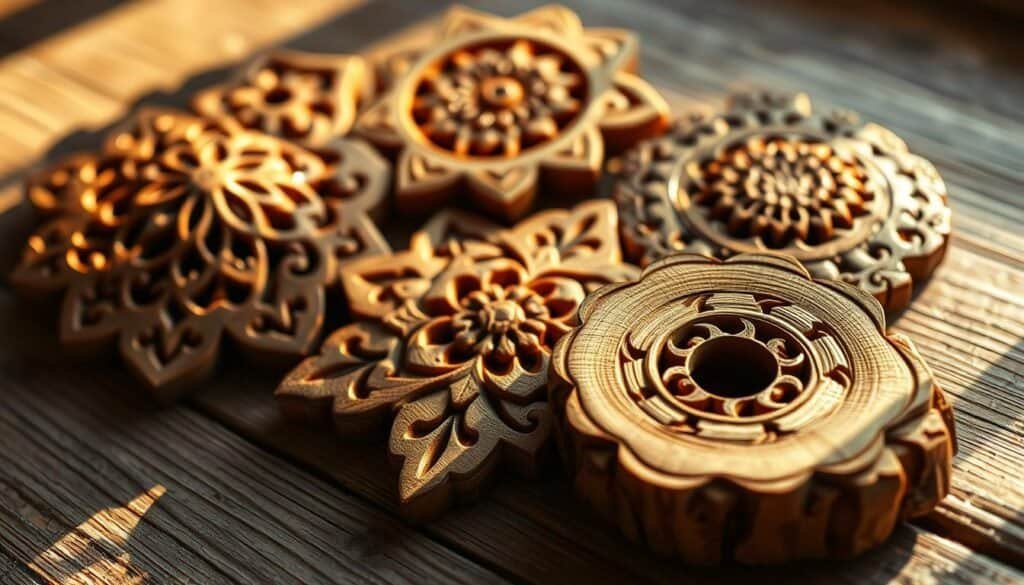
The charm of handcrafted wood accents is their uniqueness and personal touch. They can add a subtle touch or make a big statement. Handcrafted wood accents are both versatile and beautiful.
Wood carving lets you create pieces that not only make your home look good but also share a story of skill and hard work.
Essential Tools for Small Wood Carving Projects
To start small wood carving projects, you need a few key tools. These tools are vital for both dremel crafts and traditional whittling. They help you create beautiful decorative accents.
For wood carving for beginners, starting with the basics is key. You’ll need a detail-oriented power tool like a Dremel for small designs. Also, sharp, high-quality carving knives are essential for traditional techniques.
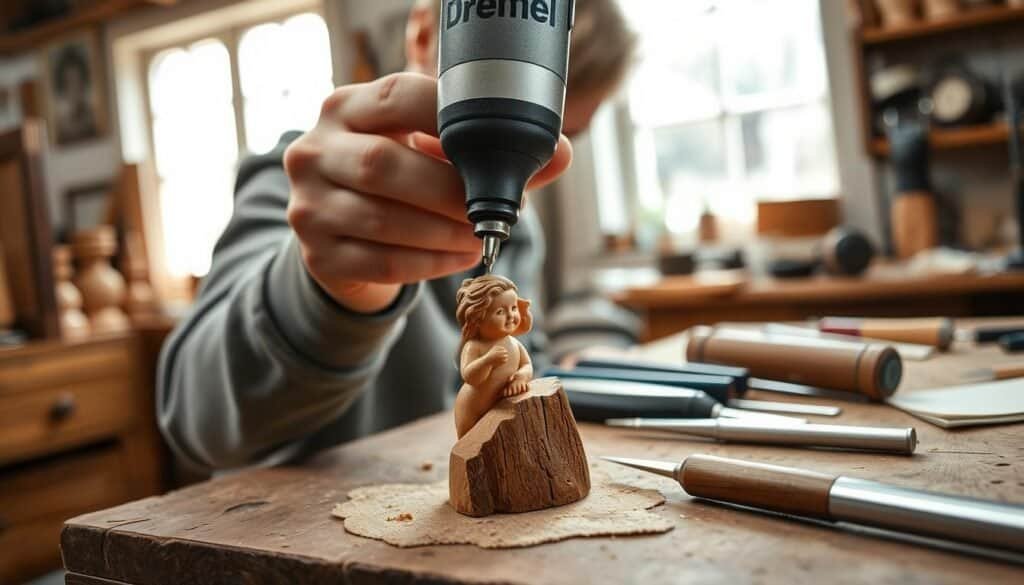
When using sharp objects and power tools like in dremel carving, safety is critical. Always wear protective gear, like safety glasses and gloves, to prevent injuries.
- Keep your workspace well-lit and clear of clutter to avoid accidents.
- Use a dust mask when working with power tools to avoid inhaling wood dust.
- Always follow the manufacturer’s instructions for your tools.
For beginners, trying whittling patterns is a great way to improve. These patterns help you create detailed designs. They also teach you how to work with different types of wood.
Investing in the right tools and following safety guidelines makes crafting wood accents fun. Whether you’re new or looking to improve, the joy of creating something with your hands is rewarding.
Selecting the Right Wood for Your Decorative Accents
The wood you pick for your projects greatly affects your handmade wooden decorations. Choosing the right wood for shelves and tables is key.
Different woods have unique qualities that can make or break your shelf decor ideas. Hardwoods like oak and maple are strong and timeless. Softwoods like pine give a rustic look.
Characteristics of Ideal Wood for Decorative Accents
The best wood for decorations should be:
- Durable: It should last through daily use.
- Aesthetically pleasing: Its grain and color should match your decor.
- Workable: It should be easy to shape without straining tools.
Think about the finish when picking wood for table accents. Some woods stain or paint better, changing your project’s look.
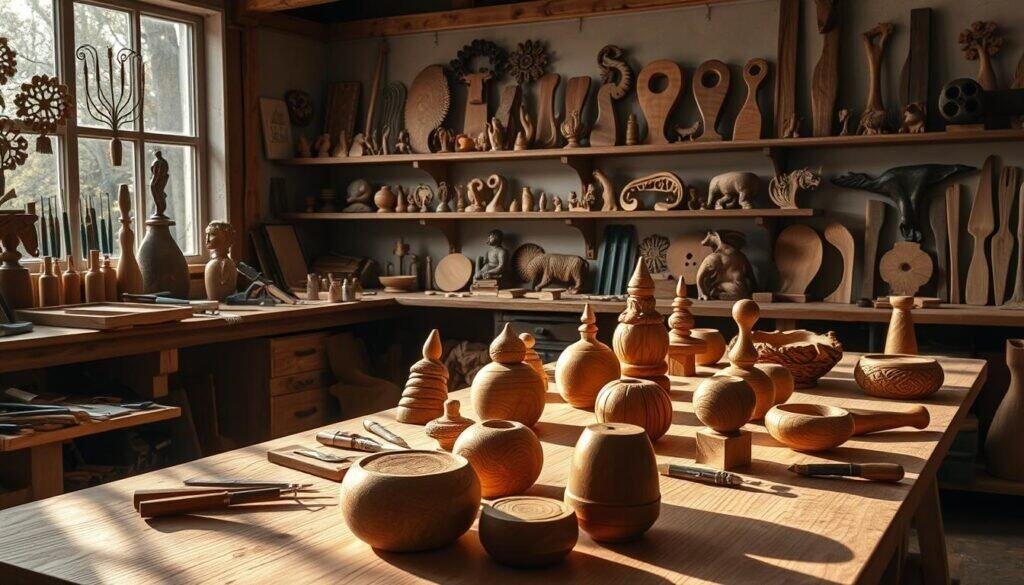
Basswood is soft and easy to carve, while cherry has a rich color. The best wood depends on your project and taste.
Choosing the right wood makes your decorative pieces stand out. Whether simple or detailed, the right wood enhances your handmade wooden decorations.
How to Carve Small Decorative Wood Accents for Shelves & Tables
Learning how to carve small decorative wood accents can make your home unique. With the right skills, you can make beautiful pieces for your shelves and tables.
First, pick the right wood for your project. Think about the grain and texture to match your design. Softwoods like pine or basswood are great for easy carving ideas wood projects.

Creating detailed wood carvings takes patience and the right tools. Start with simple whittling projects to get better. Then, move on to more complex designs.
- Use sharp, high-quality tools for clean cuts and details.
- Practice on scrap wood before your final project.
- Look at different wood carving art sculpture techniques for ideas.
As you get better, try more detailed designs and patterns. This will improve your wood carving how to skills. Remember, practice and a desire to learn are key to mastering wood carving.
By following these steps and tips, you’ll make beautiful small decorative wood accents. These will add a personal touch to your home decor.
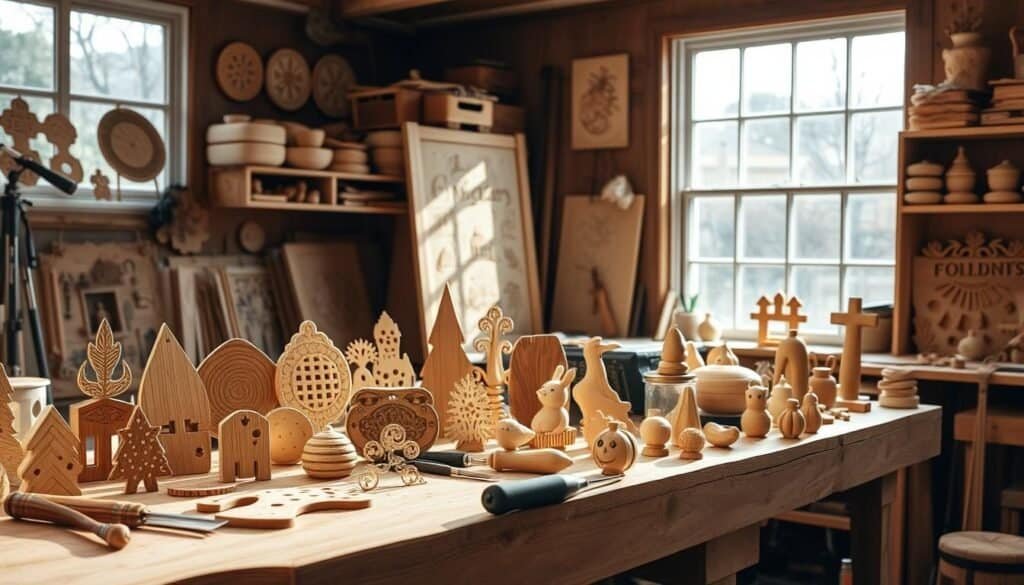
5 Beginner-Friendly Decorative Wood Accent Projects
Starting with wood carving can be fun and easy. Decorative wood accents can make any room special. These beginner-friendly projects let you add your personal touch.
Here are five simple wood carving projects to get you started:
- Simple Wooden Coasters: Carve designs into small wooden coasters. They protect your furniture and add charm.
- Decorative Wall Hooks: Carve hooks from a single piece of wood. They’re both functional and decorative.
- Wooden Picture Frame: Make a plain picture frame special with carved designs. It adds a personal touch to your decor.
- Carved Wooden Magnets: Carve small designs into wood and attach a magnet. They make unique refrigerator magnets.
- Ornamental Wooden Box: Create a beautiful wooden box with carvings. It’s perfect for storing small treasures or keepsakes.
After finishing one of these projects, think about making it unique. Try different designs in wood, like patterns or messages.
Experiment with techniques like staining or painting. You can also add metal or fabric for extra flair.
Start with these simple projects and explore customization. You’ll soon create beautiful decorative wood accents that show off your style.
Intermediate Wood Carving Projects for Home Decor
Take your wood carving to the next level with projects that use incised carving. These projects will challenge you and help you make beautiful pieces for your home.
You should know the basics of wood carving tools and techniques. Now, it’s time to get creative with more complex wood carving designs and wood carving patterns.

Incised carving is a technique you can use in your projects. It involves carving designs into the wood, making a striking contrast.
Some exciting projects for you include:
- Decorative wall panels with detailed designs
- Custom wooden signs with special messages
- Wooden boxes with complex carvings for storage or display
For more ideas, check out this page. It shows how these projects can make your space better.
By doing these projects, you’ll improve your skills and make unique items for your home.
Adding Artistic Details to Your Wood Carvings
Adding artistic touches to your wood carvings can make them stand out. You can use various techniques to make them more beautiful and detailed. This turns simple decorations into stunning art pieces.
Enhancing Your Carvings with Artistic Touches
Using intricate wood carving templates is a great way to add artistic details. These templates help you create complex patterns and designs. For example, an art nouveau wood carving pattern can add elegance to your work.
Some techniques to consider include:
- Using a variety of gouges and chisels to create different textures and patterns.
- Incorporating vine carving to add organic and flowing elements to your designs.
- Experimenting with different wood types to achieve varying effects, as some woods are better suited for detailed carvings.
For more inspiration, check out wood accent decor ideas. They can help you add the perfect finishing touch to your projects.
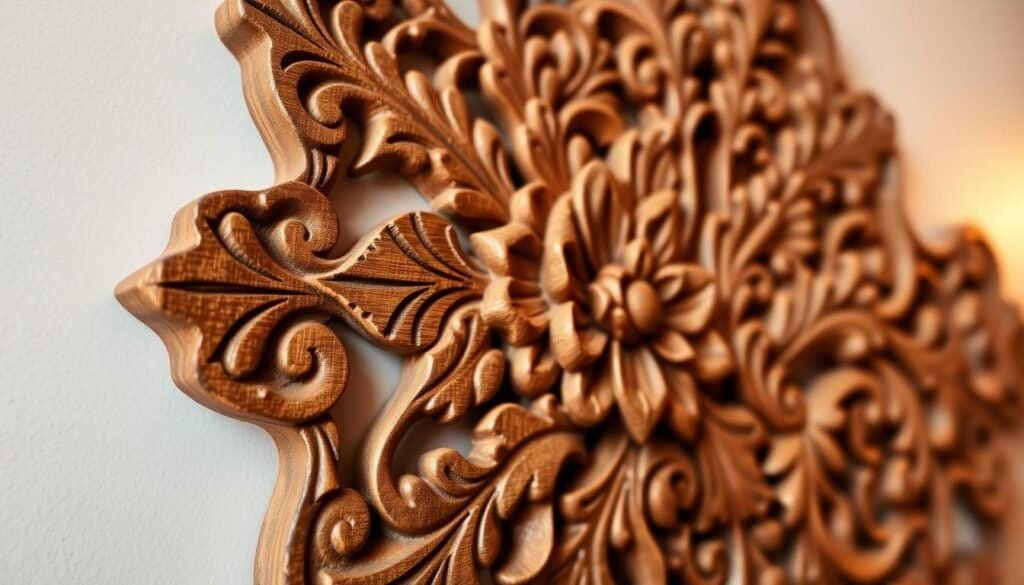
By mastering these techniques and trying different designs, you can create ornate wood carvings. These carvings will show off your skill and artistry. Remember, patience and practice are key. It may take time to develop your skills.
Finishing Techniques for Wood Carved Accents
A well-finished wood carving can make your shelves and tables look amazing. It’s important to know the different finishing techniques.
The first step is sanding and polishing. This smooths out the wood, removing any blemishes or rough spots. Begin with coarse-grit sandpaper and then switch to finer grits for a smooth finish.
Applying Finishing Coats
After sanding and polishing, it’s time for a finishing coat. You can choose from varnish, polyurethane, or wax. Each has its own benefits and how you apply it.
- Varnish: Provides a hard, durable finish and is available in various sheens.
- Polyurethane: Offers a strong protective coating and is suitable for items that will be subject to wear and tear.
- Wax: Gives a soft sheen and can be used over other finishes for added protection.
When applying a finishing coat, follow the manufacturer’s instructions and work in a well-ventilated area. Apply thin coats, letting each dry before adding the next.

Mastering these finishing techniques can greatly improve your wood carved accents. Whether you’re new or experienced, the right finish can transform your work.
Conclusion: Displaying Your Handcrafted Wood Accents
Now that you’ve put time and effort into making beautiful wood accents, it’s time to show them off. Displaying your handcrafted wood accents can add a personal touch to your home decor. It also makes for a great conversation starter.
When displaying wood accents, think about the look you want. You can group similar items or mix different textures and shapes. Try out different arrangements to find the perfect fit for your shelves and tables.
Tips for Maintaining Your Wood Accents
To keep your wood carvings looking great, regular care is key. Dust them often with a soft cloth. Also, avoid direct sunlight and extreme temperatures. For maintaining wood carvings, consider using a wood conditioner or wax. This protects the wood and makes it look even better.
By following these easy tips for wood carving care and showcasing handmade decorations, you can enjoy your wood accents for many years. Show off your creations and share your skill with others.