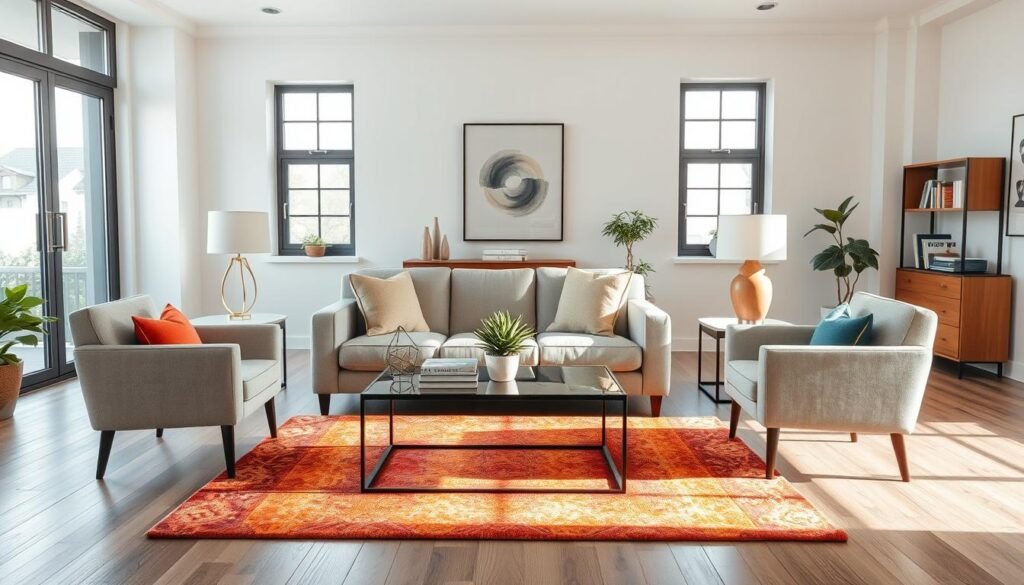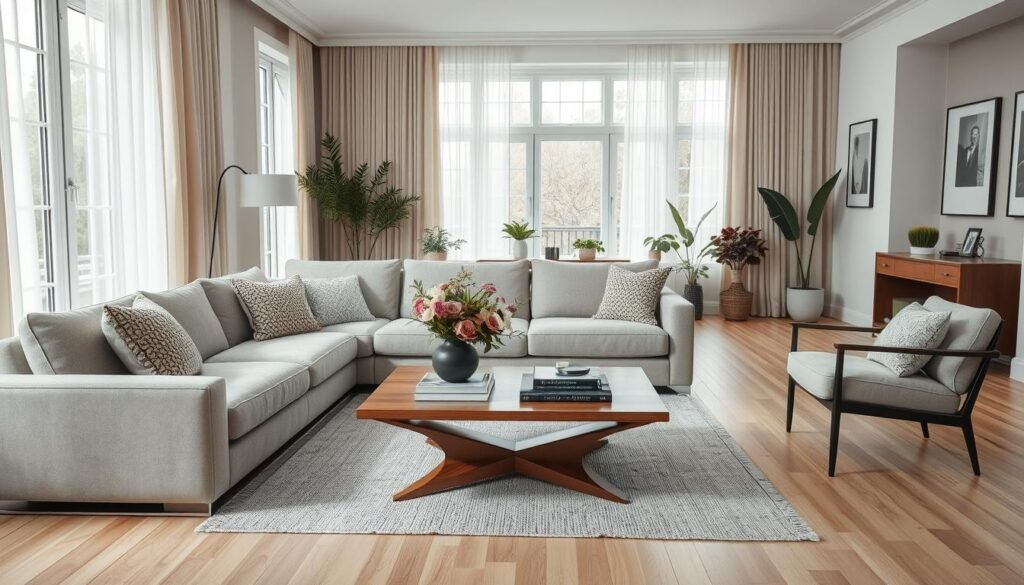
You cleaned the space and styled every corner. One might step back and say, “Looks good.” Yet, some strange tension remains.
That unsettled feeling often stems from poor living room layout choices. Functional households must accommodate everyone effectively to ensure long-term satisfaction.
Effective space optimization ensures the area remains inviting for guests and family. When home decor seems cluttered, the issue usually involves placement, not the objects themselves.
Good interior design involves more than trendy colors. It requires smart furniture arrangement to support relaxation. Minor errors frequently diminish the overall comfort from any gathering spot.
Proper planning creates a cozy atmosphere for guests. Avoiding common errors helps people enjoy the area every day. This guide explores how to fix those hidden issues easily.
We want to help everyone build a perfect sanctuary. Identify practical strategies to improve home decor charm. High-quality interior design matters for peace. Smart space optimization and furniture arrangement change the vibe.
Professional tips provide clarity for homeowners seeking better circulation. Aesthetic beauty should never sacrifice the practical needs of those residing within. Developing an ideal flow requires patience and specific knowledge about spatial dynamics.
1. Pushing All Furniture Against the Walls
Many people push all furniture against the walls when arranging it. This can make a living room feel cold and uninviting. Instead, try floating furniture away from the walls to create a cozy atmosphere.
Creating Intimate Conversation Zones
Creating conversation zones with furniture can make your living room feel welcoming. Arrange seating in a circular pattern, with chairs and sofas facing each other. This layout encourages conversation and creates a sense of warmth and connection among family and friends.
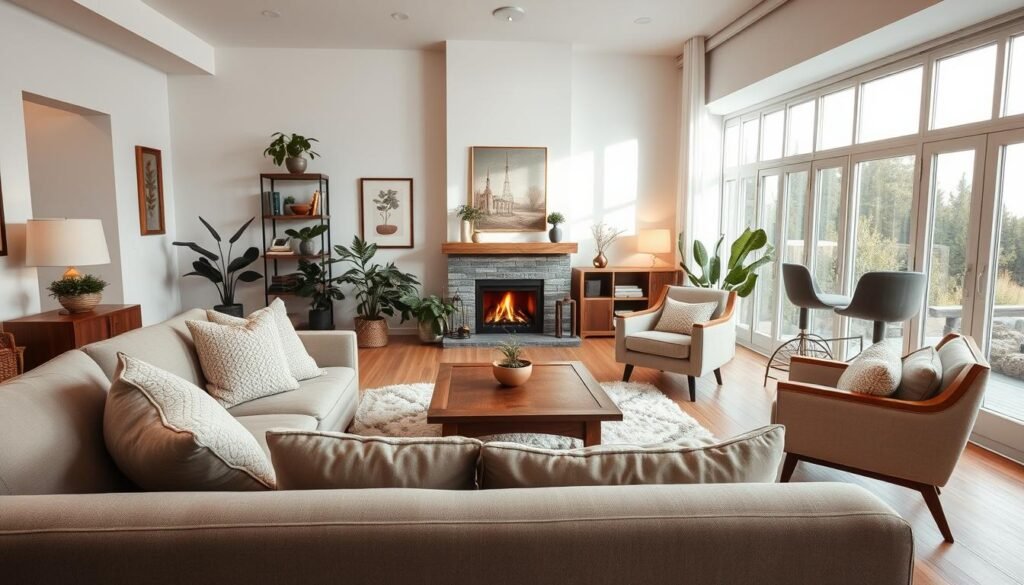
In open floor plans, pushing furniture against the walls can make the space feel open but less defined. Use furniture to create separate zones in the room. For example, a sectional sofa can define the seating area, while a console table can separate it from the dining space.
By thoughtfully arranging your furniture, you can create a more functional and cozy living room that feels perfect for relaxation and socializing.
2. Ignoring Natural Traffic Flow Patterns
A well-designed living room is more than just pretty. It’s about making a space that works well for everyone. When people move around, they usually follow certain paths. If your furniture blocks these paths, it can make the room feel cramped and uncomfortable.
Mapping Your Main Walking Routes
To fix this, start by mapping out the main paths in your room. Find out where people usually go and how you can set up your furniture to fit these paths. Think about the doors, windows, and other features that affect how people move around.
Key areas to consider include:
- The path from the main entrance to other parts of the house
- The route between the living room and adjacent rooms or hallways
- Access to frequently used items, such as a TV or bookshelf
Furniture Placement That Guides Movement
After finding your main paths, you can arrange your furniture to help guide people through the room. Place furniture in a way that makes a clear path. For example, a console table or bench can make a narrow path that guides people through.
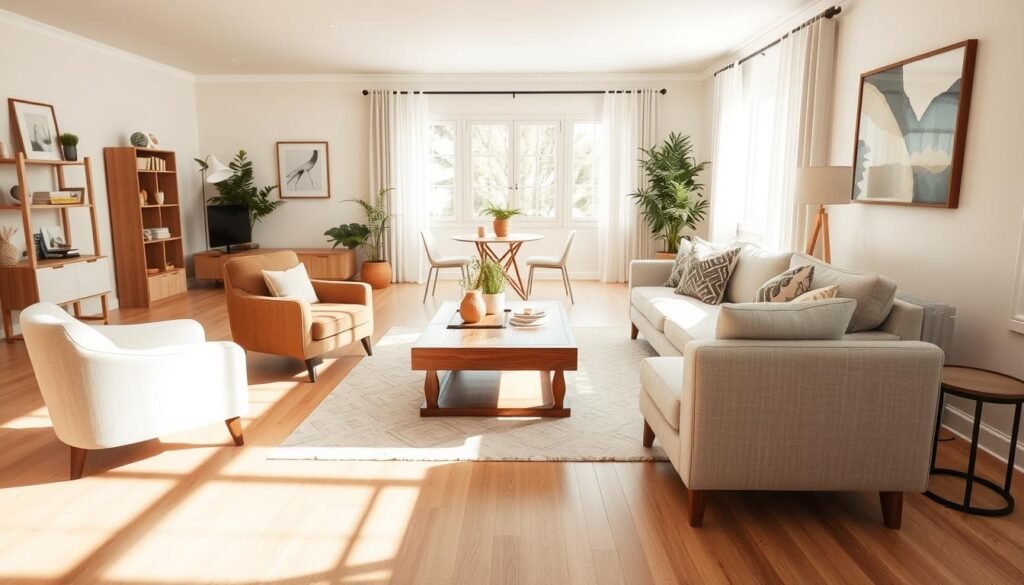
- Placing furniture at an angle to create a sense of flow
- Using rugs to define different areas within the room
- Leaving enough space between furniture pieces for people to move comfortably
3. Choosing Furniture That’s Too Large for Your Space
Designing a living room can be tricky. One big mistake is picking furniture that’s too big. Oversized furniture can make a room feel tight and uncomfortable. It can also mess up the flow of conversation and relaxation.
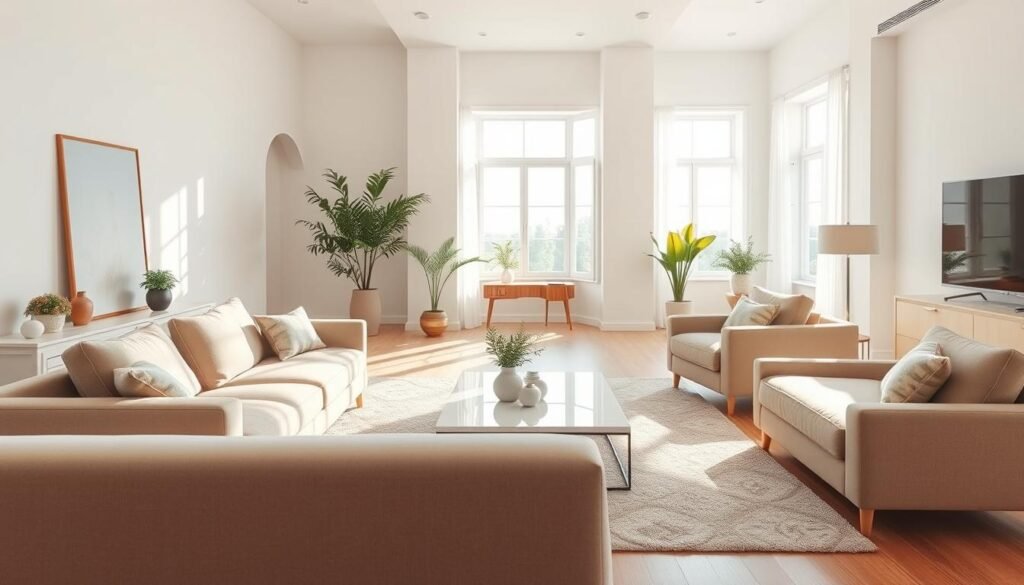
To avoid this mistake, think about how your furniture fits in the room. A good rule of thumb is the two-thirds rule.
The Two-Thirds Rule for Furniture Scale
The two-thirds rule says your furniture should be no more than two-thirds the length of the wall it’s against. This keeps the room balanced and looks good.
- Measure your walls and furniture carefully to ensure a proper fit.
- Consider the height of your furniture in relation to the ceiling.
- Leave enough space between pieces for easy movement.
Alternative Seating Options for Small Spaces
In small living rooms, different seating options can be a big help. Look into using compact sofas, armchairs, or ottomans that don’t take up too much space.
Some good alternatives include:
- Nesting tables and chairs that can be easily rearranged.
- Stools or poufs that can be tucked away when not in use.
- Wall-mounted shelves or storage units to keep the floor clear.
By picking furniture that fits your room well, you can make your living room cozy and welcoming. It’s perfect for relaxing and hanging out with friends.
4. Why Your Living Room Feels a Little Off (Even If It Looks Fine)
A living room that looks good doesn’t always feel cozy. This mismatch can be due to several factors. The design elements of a room greatly affect how it feels, beyond just its looks.
Color Psychology and Emotional Response
The colors in your living room greatly impact its feel. Color psychology shows that different colors can stir different emotions. Warm colors like oranges and reds can make a space feel cozy and welcoming. Cool colors like blues and greens can help you relax.
When picking a cozy apartment color scheme, think about the mood you want. Soft, muted colors can make a room feel more intimate and comfy. Remember, the emotional effect of color is personal, so choose colors that fit your style and life.
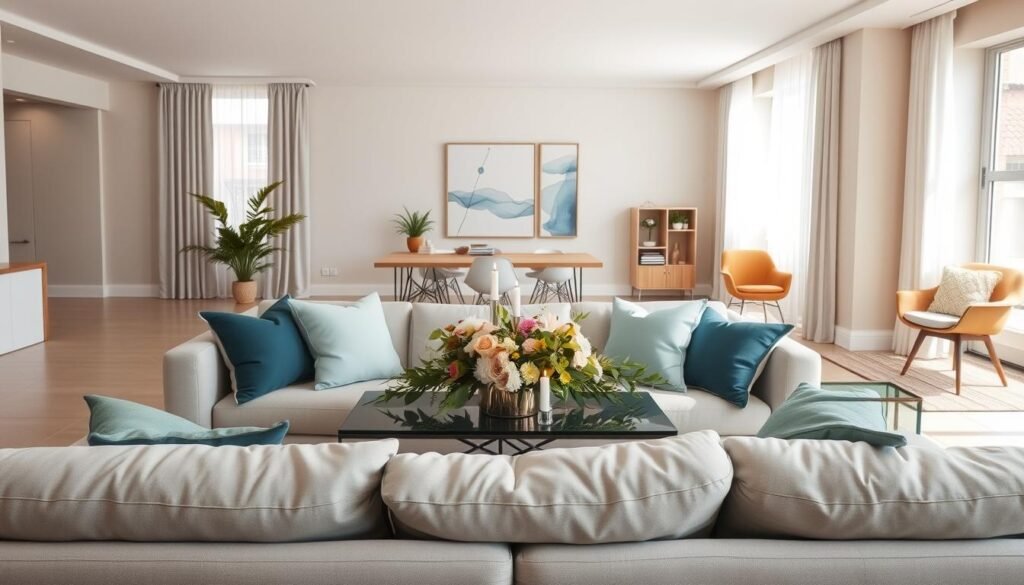
Texture variety is key to your living room’s feel. Mixing different textures adds depth and interest. Try combining smooth surfaces like glass or metal with rougher ones like wood or woven fibers.
This mix of textures not only looks good but also affects how you feel. A room with varied textures feels more welcoming and inviting. It encourages you to touch and explore.
By focusing on color psychology and texture variety, you can make your living room both look and feel great.
5. Mounting Your TV at the Wrong Height or Distance
TV mounting is more than just hanging a screen on the wall. It’s about making your viewing experience comfortable. Mounting your TV at the wrong height or distance can cause discomfort and health issues like eye fatigue and neck strain.
Avoiding Neck Strain and Eye Fatigue
To avoid these issues, finding the ideal viewing height is key. The general rule is to place the TV screen’s center at eye level when seated. This prevents you from tilting your head up or down, which can strain your neck.
The distance from the TV also matters. Sitting too close can cause eye fatigue, while sitting too far away may require straining to see details. Aim for a distance between 1.5 to 2.5 times the TV screen’s diagonal measurement.
Adjusting for Different Seating Heights
Different seating heights can affect the best TV mounting height. For rooms with various seating options, consider using a tilting or adjustable TV mount. This lets you adjust the TV’s angle and height for different viewers’ needs.
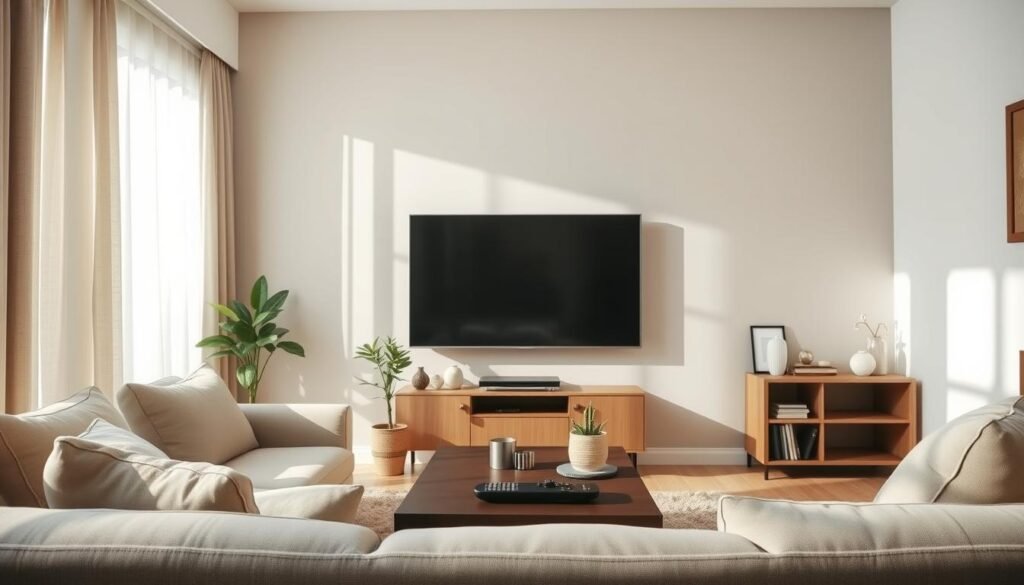
By focusing on these details, you can make your living room a comfortable space for everyone. Proper TV mounting is a key part of comfortable living room ideas, improving your viewing experience.
6. Relying Only on Overhead Lighting
Using only overhead lighting can make your living room feel flat and uninteresting. It can also create harsh shadows, making the space less welcoming. To fix this, it’s key to use layered lighting techniques.
Layered lighting means combining different light sources for a balanced look. This includes:
- Ambient lighting: Gives the room a general glow and mood.
- Task lighting: Shines on areas where you do things, like reading or cooking.
- Accent lighting: Shows off special features or decorations, adding depth.
Ambient, Task, and Accent Lighting Explained
Ambient lighting is the main light in a room, from overhead lights or natural light. Task lighting, like a reading lamp, focuses on specific areas. Accent lighting, for example, highlights art or vases.
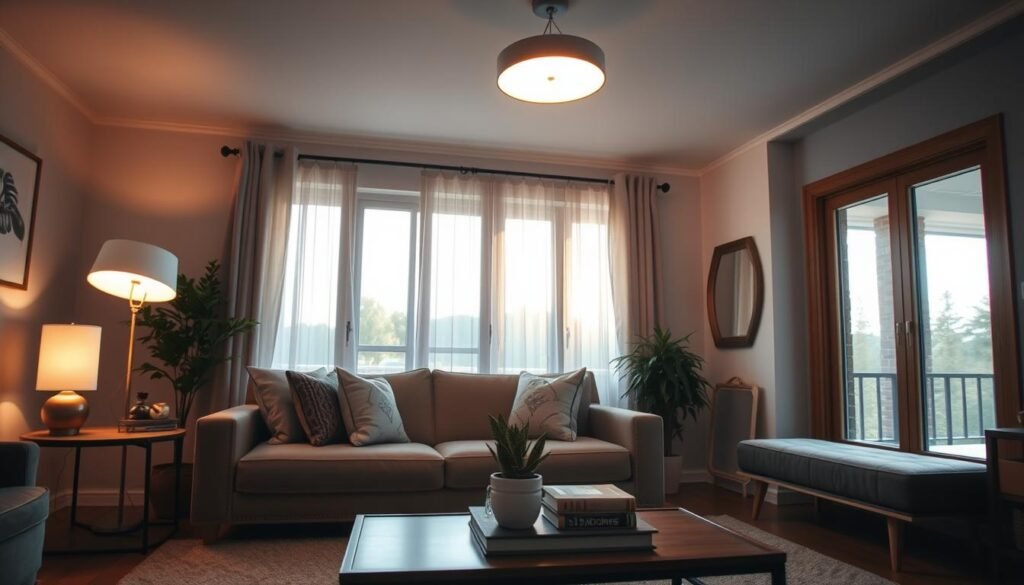
Adding dimmer switches can also improve your lighting. They let you change light levels for different activities and moods. With dimmers, you can go from bright for tasks to soft for relaxing.
By using layered lighting and dimmer switches, you can make your living room more inviting and useful. It will be more comfortable for you and your guests.
7. Failing to Establish a Clear Focal Point
One big mistake in living room design is not having a clear focal point. A focal point is something that catches your eye and is the room’s centerpiece. It’s what everything else is arranged around.
A focal point can be many things, like a fireplace, a beautiful window view, or an entertainment center. Finding a focal point is key to a room that looks good and feels right.
Fireplace, Window View, or Entertainment Center
Think about your living room’s natural features when picking a focal point. A fireplace can be perfect, with its unique design. A big window with a great view is also a natural choice. Or, if you love watching TV, your entertainment center could be the focal point.
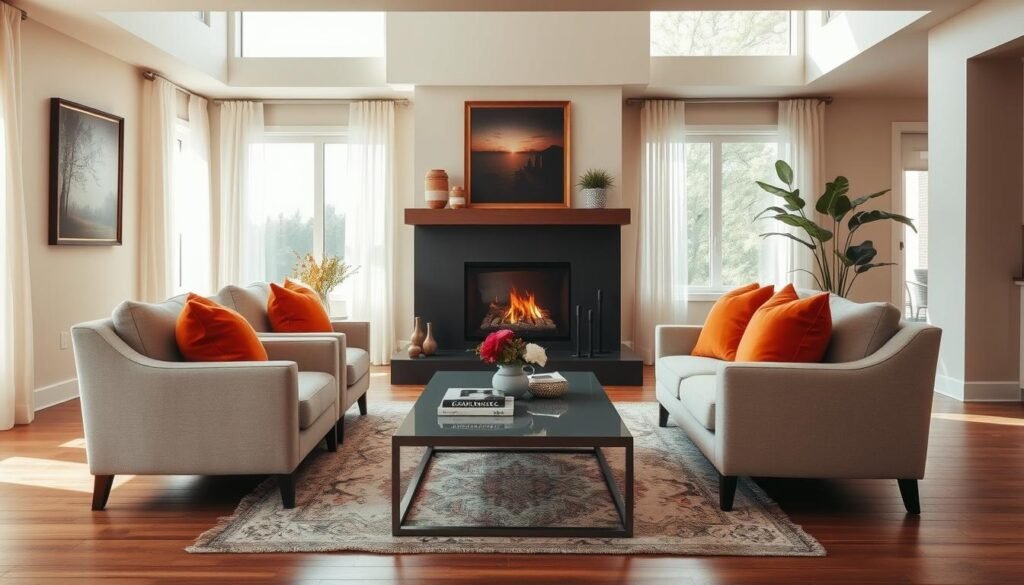
After picking your focal point, arrange your furniture to face it. This means setting up your sofas and chairs to look at the focal point. For example, if your fireplace is the focal point, make sure your furniture is facing it. This creates a cozy and welcoming space.
By having a clear focal point and arranging your furniture right, your living room will feel balanced and look great. This simple rule can really improve your room’s comfort and style.
8. Spacing Seating Too Far Apart for Conversation
Spacing seating too far apart is a common mistake in living room layouts. It can make the space feel disjointed and uninviting. When seats are too far apart, it’s hard to have a conversation, making the room less cozy and less engaging.
A well-designed seating arrangement is key to creating conversation zones. These zones help family and friends interact better. It’s important to keep seats close together for this.
Creating Multiple Seating Clusters
Creating multiple seating clusters is a good strategy. This means grouping furniture into smaller, more intimate settings. For example, you can have a main seating area around a fireplace or TV, and a secondary area for reading or quiet talk.
This approach makes your living room more versatile and inviting. It caters to different activities and preferences.
Using Area Rugs to Define Zones
Area rugs are great for defining different zones in your living room. Placing an area rug under a seating cluster makes the space visually warm and cozy.
Area rugs add texture and color to your room. They also help create a more intimate atmosphere. For example, a plush area rug under a conversational seating arrangement makes the space feel more inviting and comfortable.
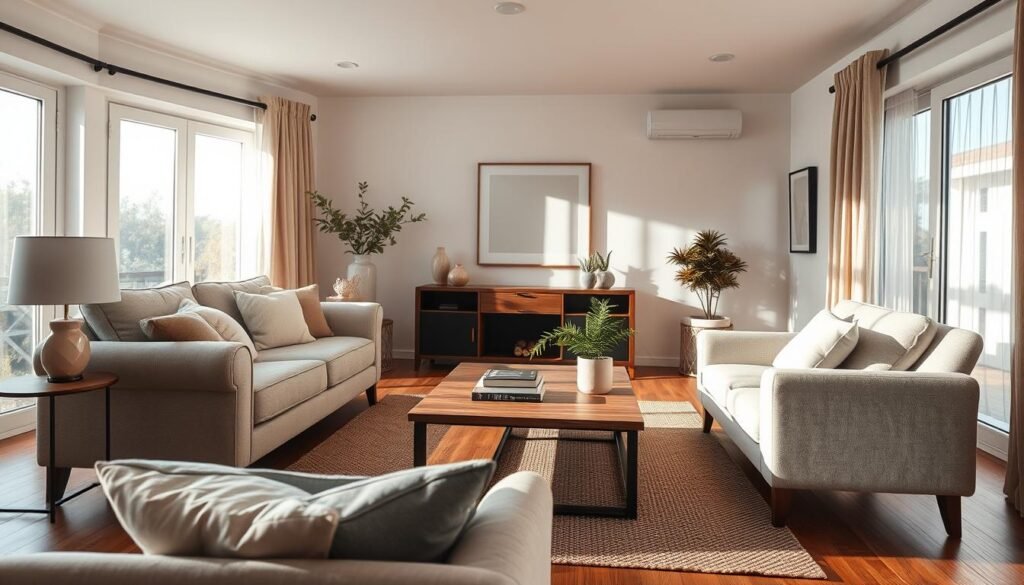
By using these strategies, you can make your living room more engaging and comfortable. It becomes a space for meaningful interactions and relaxation.
9. Blocking Windows and Natural Light Sources
Many homeowners make a big mistake by blocking windows and natural light. This can really change how a living room feels. Natural light makes a room look better and makes us feel more comfortable.
Maximizing natural light is key to a bright and cozy apartment. It’s important to think about where you put your furniture near windows.
Low-Profile Furniture Near Light Sources
Using low-profile furniture near windows helps keep natural light flowing. You can put slim console tables or low-seating sofas under or near windows.
- Choose furniture with a minimalist design to avoid obstructing the view and light.
- Consider using sheer curtains or blinds that allow natural light to filter through while maintaining privacy.
Window Treatment Mistakes That Darken Rooms
Window treatments can greatly affect how much natural light gets in. Avoid heavy, dark drapes or thick curtains that block sunlight.
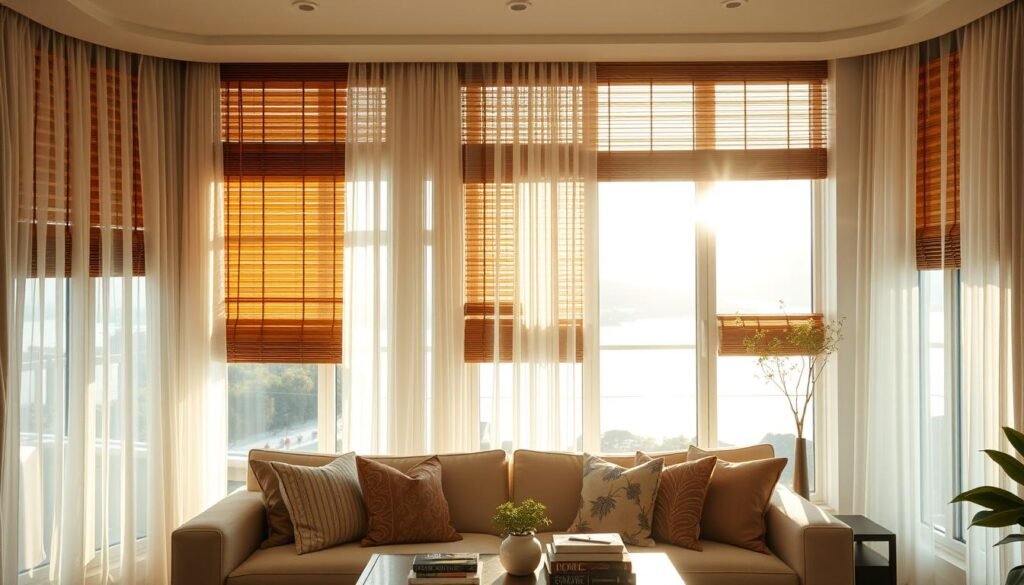
Instead, choose lighter, more translucent options. These let sunlight in and brighten the space. By being careful with window treatments and furniture, you can make your living room feel bright and welcoming.
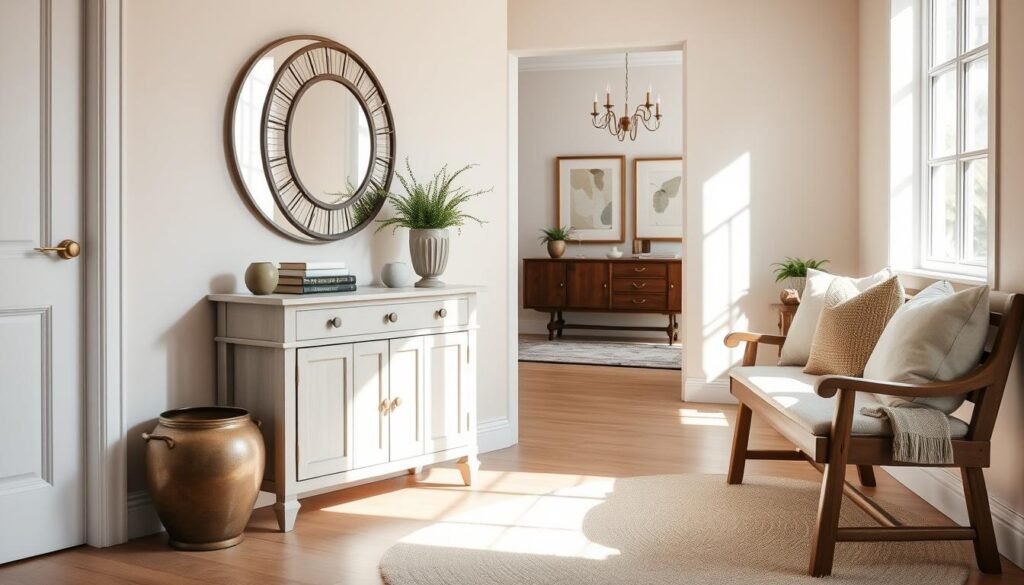
10. Neglecting the Front Door Entry Transition
The entryway is more than just a passageway; it’s an opportunity to make a great first impression.
A well-designed entry transition sets the tone for your entire home. It can significantly impact the overall ambiance.
Using Furniture as Room Dividers
Furniture can be effectively used as room dividers to separate the entryway from the rest of the living area. This creates a sense of separation and definition.
- Use a console table or a bench to create a visual divide.
- Place a screen or a decorative partition to block the view into the living area.
- Select furniture that complements the style of your home.
Console Tables and Benches for Definition
Console tables and benches not only provide storage but also help define the entryway. They can be used to display decorative items, store keys and mail, or simply provide a place to sit.
When choosing a console table or bench, consider the style and scale of your entryway.
Open Concept Entryway Solutions
For open concept entryways, using area rugs and strategic lighting can help create a sense of separation. This can be achieved by:
- Placing an area rug under the console table or bench to define the entryway.
- Using pendant lighting or table lamps to create a visual distinction.
- Selecting furniture with a distinct style or color to differentiate the entryway.
11. Prioritizing Style Over Functional Comfort
When designing a living room, it’s easy to get caught up in the latest trends and styles. But, it’s equally important to prioritize functional comfort. A space that looks great but feels bad is a waste.
One key aspect of achieving functional comfort is ensuring that side tables are within arm’s reach. This simple design element can greatly enhance the usability of your living room.
Side Tables Within Arm’s Reach
Having side tables nearby makes it easy to place drinks, snacks, or reading materials. This makes your living room more relaxing and enjoyable. Make sure your side tables fit well with your seating arrangement.
In addition to side tables, incorporating hidden storage solutions can also make your living room more functional and comfortable.
Hidden Storage Solutions That Look Good
Hidden storage keeps clutter away, keeping your space clean and organized. Look for storage ottomans, coffee tables with storage, or decorative baskets. These can hide items like throw blankets, books, or remote controls.
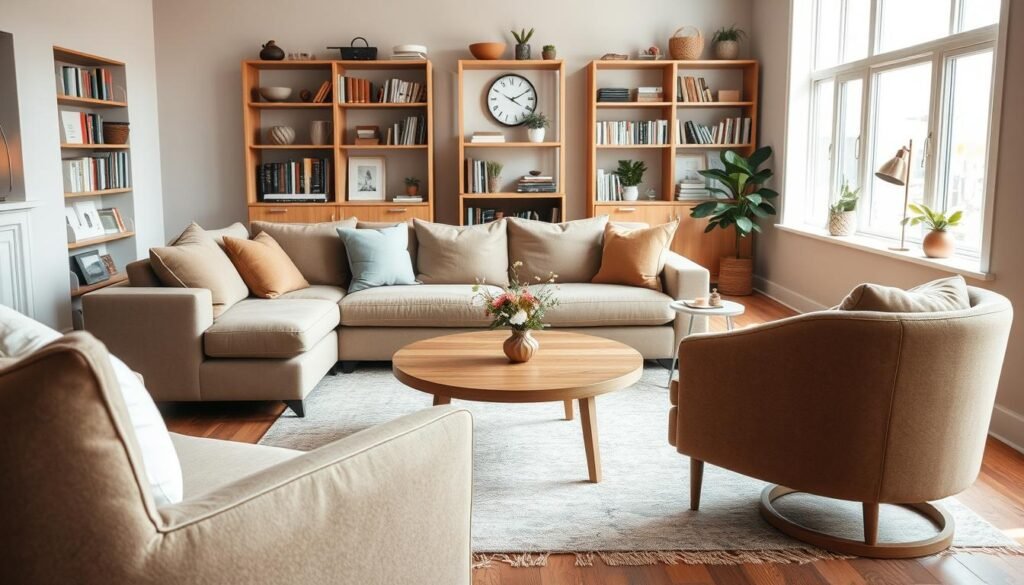
By balancing style and functional comfort, you can create a beautiful and inviting living room. This balance is key to cozy living room designs inspiration. It makes your space a haven for relaxation and socializing.
12. Conclusion
A well-designed living room is key for relaxation and socializing. Avoiding common layout mistakes helps create a cozy space. It’s all about finding the right balance between looks and use.
Things like furniture placement, natural flow, and lighting are important in design. They help make your living room a cozy spot for family and friends. Good home decor goes beyond looks; it makes a space comfortable and healthy.
Using what you learned here, you can turn your living room into a cozy retreat. Make it reflect your style while keeping it comfy and useful. This way, your living room will be perfect for making memories with those you love.