Looking for a creative outlet that’s not too much? Woodworking is a great hobby that lets you make something with your hands. It’s a wonderful way to relax and show your creativity through wood crafting ideas.
Whether you’re new to woodworking or have some experience, DIY wood projects are a great place to start or find new ideas. With woodworking for beginners, you can begin with simple projects and then tackle more complex ones.
Looking into wood projects plans and wood ideas projects can help you find the perfect creative outlet. In this article, we’ll explore woodworking and share some easy and fun projects to get you started.
The Joy of Working with Wood: A Perfect Creative Outlet
Woodworking is a great way to find joy and relieve stress. It lets people create something with their hands. This can be very calming.
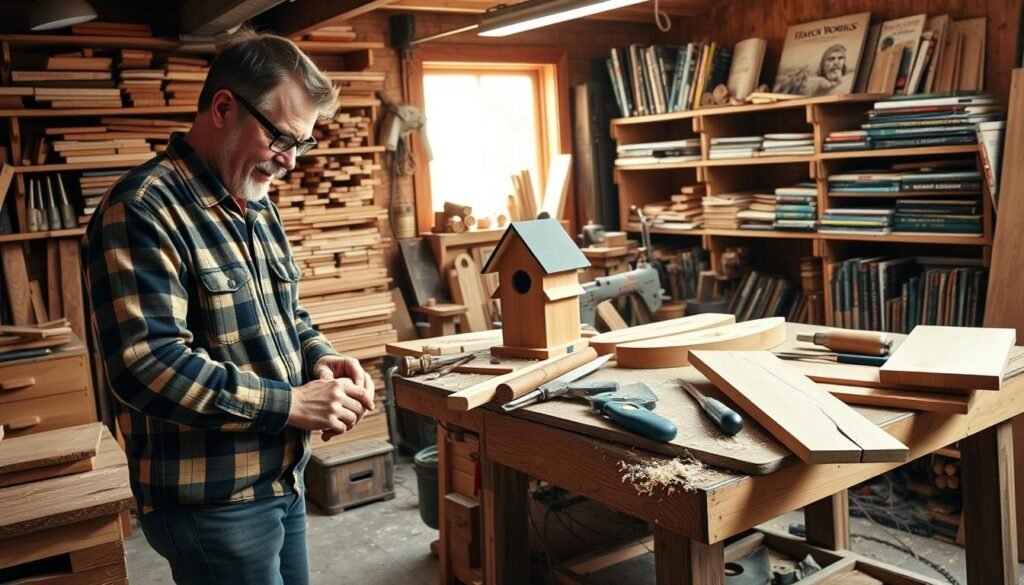
Woodworking mixes creativity with usefulness. By making simple projects, you can show your creativity. You also make things that are useful for your home.
There are many fun projects you can do with wood. You can make decorative items like wall art or useful things like storage from scrap wood. These projects make you feel proud and give you something beautiful or useful.
- Wood creations can range from simple decorative items to complex furniture pieces.
- Scrap wood crafts are a great way to reuse materials and reduce waste.
- Pallet projects, such as building a pallet summer house, can be a fun and challenging woodworking endeavor.
Woodworking is a rewarding hobby. It brings many benefits like stress relief, creative expression, and the joy of making something yourself.
Getting Started: Essential Tools for Beginner Woodworkers
To start woodworking, you need the basics. Beginner woodworking ideas often begin with simple projects. But, having the right tools is key for success.
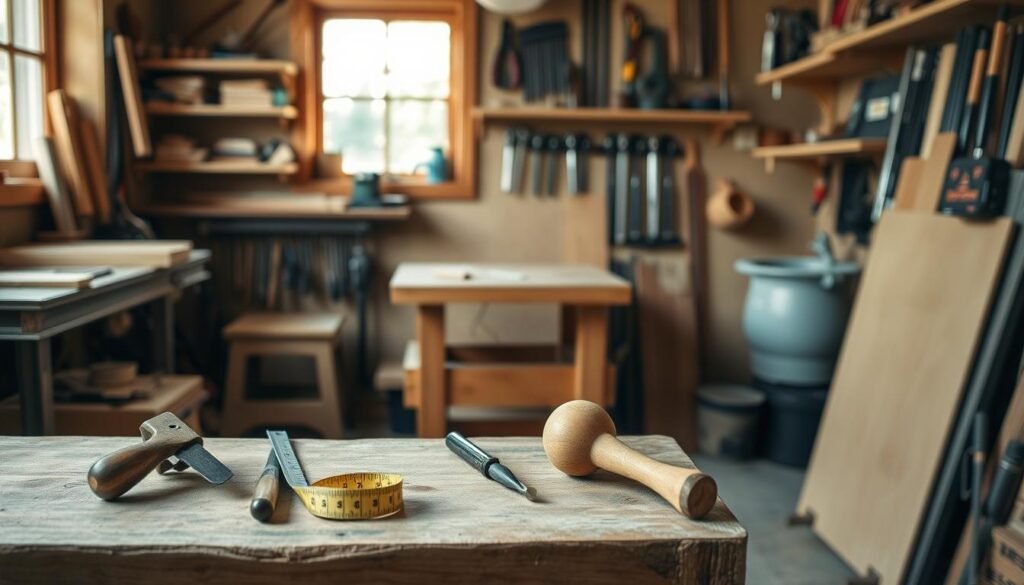
For woodworking for beginners, you’ll need a tape measure, a square, a pencil, and a saw. These tools help you measure, cut, and assemble projects well. As you do more simple wood projects, you might add a drill, sandpaper, and clamps to your collection.
Safety Equipment
Safety is always first when working with wood. You’ll need safety glasses, a dust mask, and hearing protection. Safety glasses keep your eyes safe from sawdust. A dust mask stops you from breathing in wood particles. Hearing protection is important when using power tools.
- Safety glasses
- Dust mask
- Hearing protection
When doing easy wooden projects or small wooden projects, remember safety and precision are important. With the right tools and safety gear, you’ll make beautiful wood furniture diy pieces to be proud of.
Start with the basics and add more tools as you go. This will make your woodworking journey fun and rewarding. Happy crafting!
Safety First: Protecting Yourself During Woodworking Projects
Keeping yourself safe while woodworking is essential. It’s not just a precaution; it’s a must. Woodworking can be both fun and rewarding. But, it involves sharp tools and heavy machinery, making safety a top priority.
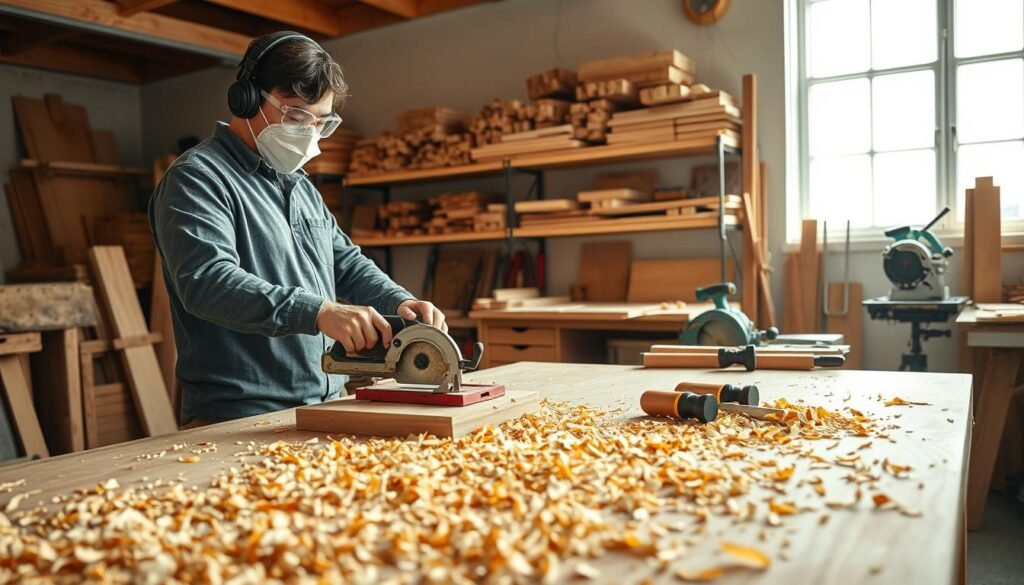
To have a safe woodworking experience, knowing the hazards is key. Use safety gear like safety glasses, ear protection, and a dust mask. Also, keep your workspace clean and organized to avoid accidents.
Avoiding Common Hazards
- Keep loose clothing and long hair tied back to avoid entanglement with machinery.
- Use push sticks or other safety devices when operating table saws or other dangerous equipment.
- Ensure that all tools are properly maintained and in good working condition.
For more ideas on quick and safe woodworking projects, visit The Sawdust Man for inspiration. By following these safe woodworking practices, you can minimize risks and enjoy the creative process.
Craving Creativity? Try a Quick Wood Project Today
Trying a quick wood project today is a great way to unleash your creativity and enhance your garden. There are many easy DIY wood projects out there. You can pick one that fits your skill level and interests.
For woodworking inspiration, think about using reclaimed or scrap wood. It adds a unique touch to your projects. You can find lots of DIY wood ideas online or in woodworking communities.
Inspiration for Your Next Project
Looking for more wood project ideas? Try making functional items for your home. Like wooden decorative boxes or simple shelving units. These projects make you feel accomplished and give you useful items.
- Explore different types of wood and their characteristics.
- Join online woodworking communities for inspiration and advice.
- Start with simple projects and gradually move to more complex ones.
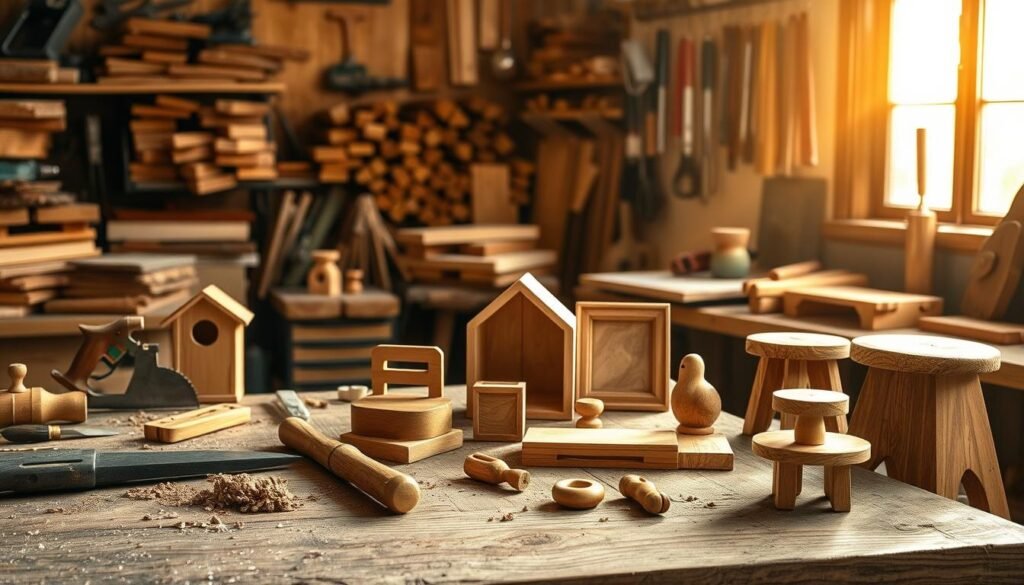
By starting with quick wood projects, you’ll build your confidence and skills. This will help you tackle more complex and creative woodworking projects.
Project 1: Rustic Picture Frames from Reclaimed Wood
Reclaimed wood projects, like rustic picture frames, mix creativity with sustainability. Making a rustic picture frame from reclaimed wood is a fun and rewarding project. It can make your home decor more personal.
To begin, gather some key materials. You’ll need reclaimed wood, a saw, sandpaper, and a frame assembly kit. Choosing the right reclaimed wood is key for a rustic look. Look for wood with character, like barnwood or wood with unique textures and marks.
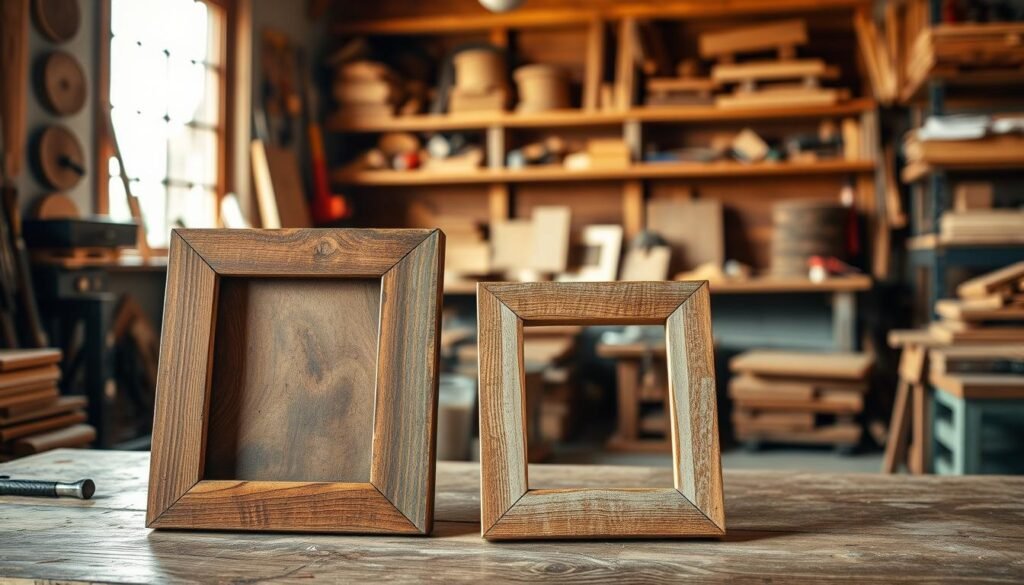
- Cut the reclaimed wood into the needed pieces for your frame, using a saw.
- Sand the cut pieces to smooth out any rough edges or surfaces.
- Assemble the frame using a frame assembly kit.
- Add a personal touch by incorporating decorative elements, such as metal straps or vintage nails.
When working with reclaimed wood, remember its history and character. Preserving the original texture and patina adds to the frame’s rustic charm. Also, using reclaimed wood is good for the environment. It reduces the need for new lumber and helps save old-growth forests.
Here are some tips for your rustic picture frame project:
- Inspect the reclaimed wood carefully for any nails or debris.
- Use a level to ensure your frame is properly aligned.
- Consider adding a protective coating to preserve the wood and enhance its appearance.
By following these steps and tips, you can make a stunning rustic wooden picture frame. It will add warmth and character to your home decor. Whether it’s for a cherished memory or to enhance your home’s look, a rustic picture frame from reclaimed wood is a wonderful choice.
Project 2: DIY Wooden Step Stool for Your Home
Building a DIY wooden step stool is a great way to add convenience and charm to your living space. It’s perfect for those who want to make their home more functional without a big woodworking project.
To start, you’ll need the following materials:
- 2 x 12 lumber for the sides
- 1 x 6 lumber for the steps and shelf
- Wood screws
- Wood glue
- Sandpaper
Key Features of Your DIY Wooden Step Stool:
- Durable construction using solid wood
- Two-step design for easy access
- Additional storage shelf
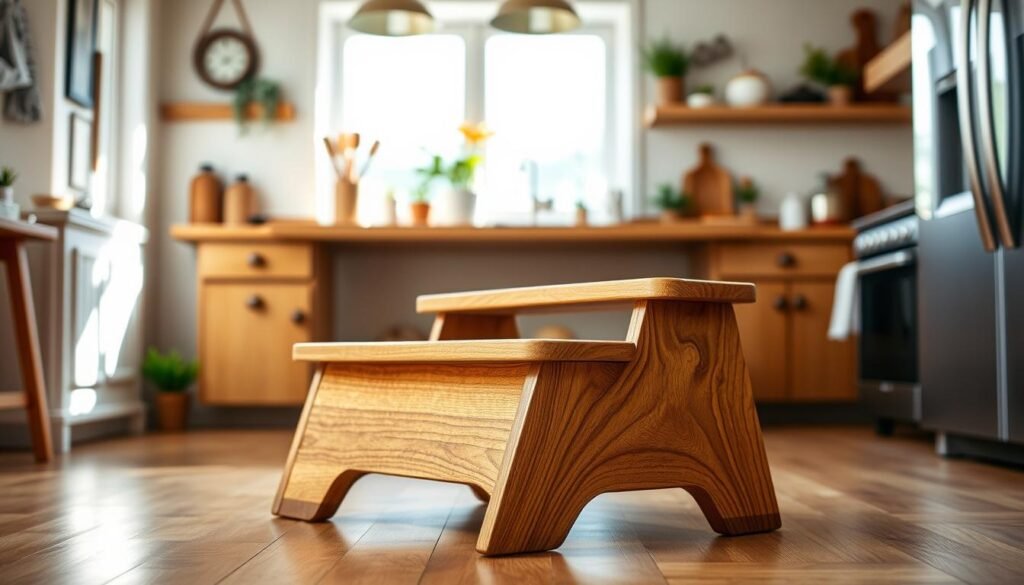
Assembling your DIY wooden step stool is straightforward. Start by cutting the lumber according to your plan. Sand all cut edges to smooth them out.
Next, assemble the sides and attach the steps and shelf using wood screws and glue. Make sure everything is square and sturdy.
Lastly, sand the entire stool to a smooth finish. Then, apply your choice of stain or paint to match your home decor.
With these simple steps, you can create a functional and stylish DIY wooden step stool. This wood step stool diy project is a great way to start with woodworking. The end result is a practical piece you’ll use for years.
Project 3: Handcrafted Wooden Tic-Tac-Toe Game
Making a handcrafted wooden tic-tac-toe game is a fun woodworking project. It’s both challenging and enjoyable. You can create a game that everyone can play. Plus, you can make it look beautiful, adding a personal touch to any room.
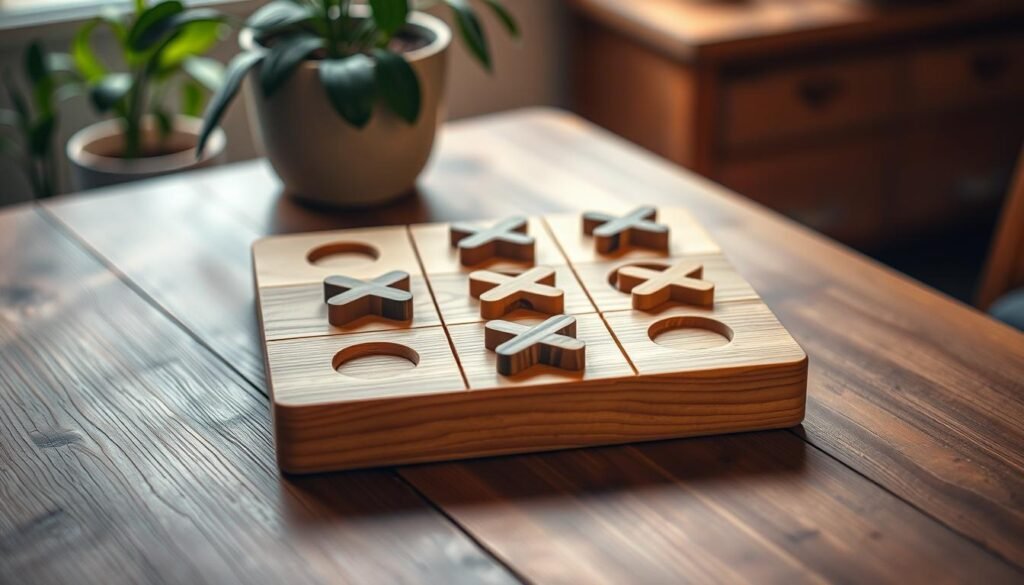
First, design your game board. Think about using a rustic wooden tic-tac-toe game theme with reclaimed wood. The board has a 9-compartment grid. You can make it stand out by adding unique designs or patterns.
Building the Game Pieces
After your board is done, make the game pieces. A tic-tac-toe game has X and O pieces. You can use different woods for each to tell them apart. Adding decorations or engravings makes them even more special.
Here are some tips for making your game pieces:
- Use contrasting woods for the X and O pieces to make them easily distinguishable.
- Add a personal touch by engraving names or special messages on the pieces.
- Consider using a variety of shapes or sizes for the pieces to add visual interest.
Looking for more woodworking ideas? Check out 10 easy wood projects you can finish in one weekend. Making a wooden tic-tac-toe game is not only fun but also creates a beautiful piece that lasts for years.
Project 4: Bathroom Storage Tower from Scrap Wood
Give your bathroom a fresh look with a DIY storage tower made from scrap wood. It’s good for the planet and keeps things tidy. This project helps you organize your bathroom essentials easily.
First, think about your bathroom’s space and what you need to store. Measure carefully to make sure your tower fits right and meets your needs.
Building the Tower
After planning, start cutting your scrap wood into the right pieces. You can use a circular saw or hand saw, depending on what you prefer. Then, put the pieces together with wood glue and nails or screws for extra strength.
- Cut the wood according to your plan.
- Assemble the tower frame.
- Add shelves as needed.
To make your tower stand out, think about staining or painting it. This makes it look better and keeps the wood safe.
Here are some tips for working with scrap wood:
- Check the wood for damage or rot before using it.
- Use different wood types and textures for a unique look.
- Feel free to mix different wood finishes.

By following these steps, you can make a useful and stylish bathroom storage tower. It will not only help you stay organized but also add a personal touch to your bathroom.
Project 5: Mountain Wood Wall Art for Home Decor
Turn your living space into a work of art with mountain wood wall art. It’s a fantastic DIY project for homeowners. This piece can bring rustic elegance to any room, sparking interesting conversations.
To begin, gather materials like reclaimed wood for a genuine look. Look at ideas on how to make blank walls come alive with DIY wooden art.
Building the Art Piece
First, design your mountain wood wall art. Think about the size, shape, and pattern that suits your space. You can go for a simple design or something more complex, based on your skill and taste.
Key steps in building your mountain wood wall art include:
- Cutting your reclaimed wood into the required shapes and sizes.
- Assembling the pieces into your desired design.
- Adding a finish to protect the wood and enhance its appearance.
Using reclaimed wood adds character and eco-friendliness to your project. Always follow safety rules when using power tools and wood.

By following these steps, you can make a stunning mountain wood wall art. It adds a personal touch to your home decor. Plus, it’s a creative way to make something you can sell, making it a worthwhile DIY project.
Conclusion: From Hobby to Passion – Growing Your Woodworking Skills
As you finish more woodworking projects, you’ll see big improvements in your skills and confidence. To keep growing, take on new challenges and try different techniques. This will help you on your woodworking journey.
Tips for Advancing Your Skills
To improve your woodworking hobby, try working with different types of wood. Also, add unique designs to your projects. Look for inspiration online or in woodworking communities to stay motivated and learn from others.
For woodworking for beginners, start with simple projects. Then, move to more complex ones as you get better. This way, you’ll build a strong foundation and improve your skills over time.
If you want to make money, look into woodworking ideas to sell online or at local craft fairs. You can make functional items like storage solutions or decorative pieces like wood creations. These can attract customers.
Using scrap wood crafts is a creative way to reduce waste and make unique items. Stay inspired by following woodworking influencers, reading blogs, and finding woodworking inspiration in nature and art.