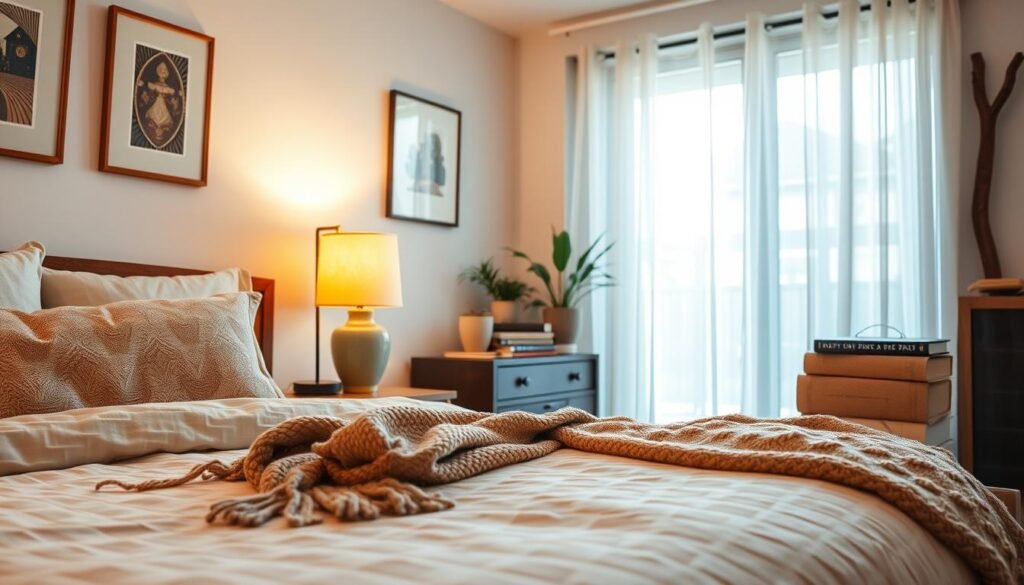
A good night’s sleep is key for your health. Your bedroom should be a calm place that helps you relax.
A peaceful sleeping environment is vital for better sleep. It’s not just about a comfy bed. It’s also about calming bedroom decor and bedroom design ideas that bring peace.
By adding elements that relax you, you can create a bedroom that calms you. This makes it easier to fall asleep and stay asleep. In this article, we’ll show you how to design a bedroom that helps you relax, ensuring you get the restful sleep you need.
The Science Behind a Calming Bedroom Environment
A calming bedroom environment is a mix of many factors. A well-designed bedroom can greatly improve our sleep and well-being.
The Sleep-Wake Cycle and Environmental Factors
The sleep-wake cycle is influenced by light, temperature, and noise. A dark, quiet, and cool bedroom helps us sleep better. Use blackout curtains, earplugs, or a white noise machine if needed.
Stress Reduction Through Design
Design elements like color, texture, and furniture layout affect stress reduction. A tidy space with calming colors can lower anxiety. Check out cozy bedroom wood decor for a soothing feel.

Make your bedroom a sleep sanctuary. Avoid TV and work in bed. Instead, have a bedtime routine that tells your brain it’s time to sleep.
Sensory Processing and Sleep
Sensory processing is key for sleep. A bedroom that feels good to the senses, with comfy bedding and a calm vibe, helps us relax and sleep better. Think about these for a peaceful bedroom:
- Comfortable mattress and pillows
- Soothing colors and textures
- Minimal noise and distractions
By knowing and using these tips, you can make a bedroom that helps you relax and feel better overall.
How to Create a Bedroom That Calms You: The Basics
To make your bedroom calm, start by knowing what disrupts your sleep. Then, make changes to help you relax better. It’s all about understanding sleep disruptors and fixing them.
Identifying Sleep Disruptors
The first step is to find out what sleep disruptors you have. These can be things like blue light from screens, bad bedding, or an irregular sleep schedule. Common ones include:
- Electronic devices in the bedroom
- Uncomfortable bedding or mattress
- External noise or light pollution
- Stress and anxiety
Recognizing Areas for Improvement
After finding sleep disruptors, look at what needs fixing. This might mean checking your bedroom’s current state and seeing what changes can help you relax more.
Short-Term vs. Long-Term Changes
Some fixes, like cleaning or changing lights, can be done right away. Others, like new furniture or bedding, take more time and planning. Knowing the difference helps you focus on what’s most important.
Budgeting for Better Sleep
Budgeting for better sleep is key. It lets you spend wisely and make choices that help. Set aside money for the biggest sleep problems and to make your bedroom more relaxing.
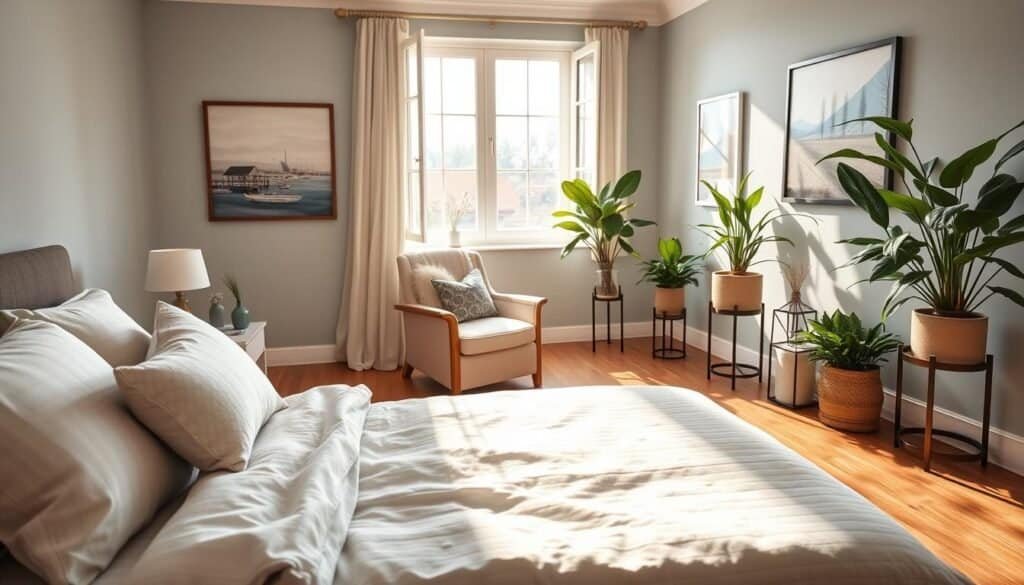
By understanding how to make your bedroom calm and tackling sleep disruptors, you can sleep better and feel better overall.
Choosing Serene Bedroom Colors for Ultimate Relaxation
The right bedroom colors can turn your space into a peaceful haven. The colors you pick can greatly affect your mood and sleep. Cool colors like blue and green help you relax. Warm colors like beige and taupe make your room cozy.
Cool vs. Warm Tones
Choosing bedroom colors involves understanding cool and warm tones. Cool tones calm you down, perfect for a relaxing room. Warm tones, on the other hand, feel comforting and intimate.
- Cool tones: Blues, greens, and purples can promote relaxation and serenity.
- Warm tones: Beige, taupe, and soft reds can create a cozy and inviting atmosphere.
Saturation and Its Effect on Mood
The brightness of your bedroom colors also affects your mood. Bright colors can wake you up, not calm you. Soft colors help you relax.
Tips for choosing the right saturation level:
- Opt for muted tones for a calming effect.
- Avoid overly bright colors that can stimulate.
- Consider soft pastels for a serene ambiance.
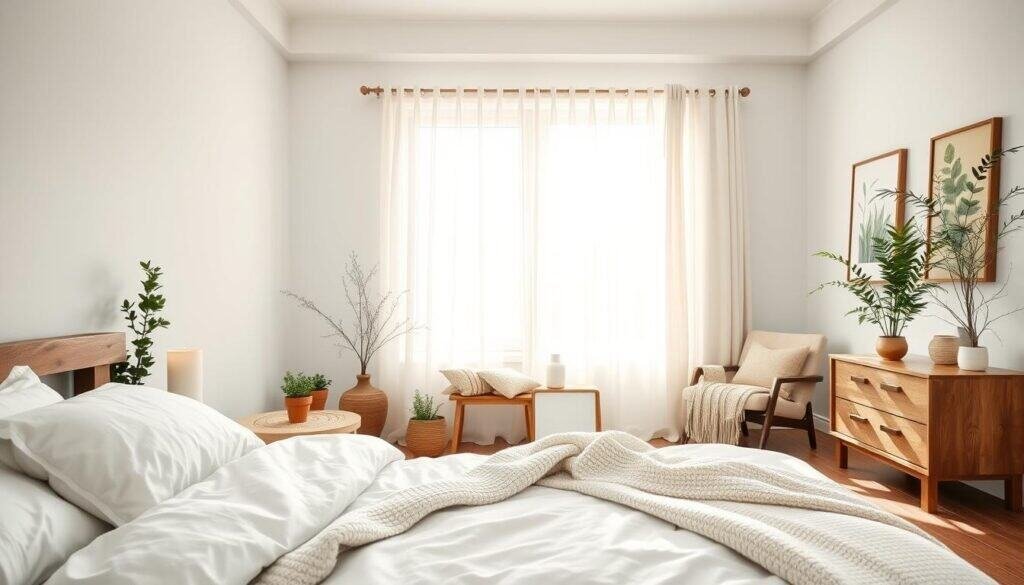
Adding color through textiles and accessories can make your bedroom feel better. Use colored bedding, curtains, and rugs to add depth and interest.
Creating a Cohesive Color Palette
A unified color scheme is key for a peaceful bedroom. Pick a few main colors and use them everywhere: walls, bedding, and accessories.
By picking the right colors and a cohesive palette, you can relax better and sleep well. Try out different colors and brightness levels to find the best for your bedroom.
Furniture Arrangement for a Tranquil Bedroom Ambiance
Creating a peaceful bedroom is more than just picking the right colors. It’s also about how you arrange your furniture. The way you set up your furniture can make your bedroom either a calm oasis or a messy space.

Putting your bed in a command position is key for a safe and calm bedroom. This means placing your bed so you can see the door but not right in front of it. This setup makes you feel safe and in control.
Creating a Sense of Security
Feeling secure is essential for a peaceful bedroom. To add to the sense of safety, use furniture to make your space cozy and enclosed. Place your bed against a solid wall and use nightstands or a bench at the foot of the bed. This creates a cozy feel.
Minimalist vs. Cozy Approaches
When setting up your furniture, you can go for a minimalist or cozy look. A minimalist design has clean lines and few pieces, making the room feel open. On the other hand, a cozy setup uses soft furniture and lots of textiles to make your space warm and welcoming.
Think about what you like and need when deciding between these styles.
Natural Materials and Their Benefits
Using natural materials in your furniture can make your bedroom more peaceful. Wood, bamboo, and woven fibers add warmth and texture, creating a calming atmosphere.
Traffic Patterns and Accessibility
Remember to think about how people will move around and access your furniture. Make sure there’s a clear path through the room and that everything is easy to get to. Avoid clutter and tight spaces.
Visual Space and Perceived Openness
The look and feel of your bedroom’s space can greatly affect its calmness. Use mirrors to make the room seem bigger, choose furniture with legs instead of heavy bases, and keep things tidy. These steps help create a sense of openness and peace.
Decluttering and Organization for Mental Peace
To make your bedroom a calm space, focus on decluttering and organization. A messy room can stress you out, making it hard to relax. With good storage and a tidying schedule, you can make your bedroom a peaceful haven for mental peace.
Under-Bed and Vertical Storage Options
Using under-bed and vertical storage is a smart way to tidy up. Under-bed containers can stash away clothes and linens, keeping them hidden but easy to find. Wall-mounted shelves or storage units save floor space and keep things neat.

Choosing dual-purpose furniture is another smart move. Think about a bed with storage, a dresser with a mirror, or an ottoman with hidden space. These items do more than one thing, cutting down on clutter and keeping your room tidy.
The Five-Minute Tidy Routine
Having a daily tidying routine is key. The five-minute tidy means spending just five minutes a day cleaning up. It’s about making your bed and putting away any mess. This small habit keeps your bedroom calm.
Seasonal Decluttering Strategies
Don’t forget about seasonal decluttering too. Take time each season to sort through your stuff, give away what you don’t need, and reorganize. This stops clutter from piling up and keeps your bedroom a peaceful spot.
By following these tips, you can make your bedroom a serene and peaceful place. It will not only look good but also help you relax and sleep better, bringing you mental peace.
Lighting Solutions for a Cozy Bedroom Retreat
A good lighting plan is key to making your bedroom a cozy retreat. The right lights can greatly enhance your bedroom’s cozy feel. This invites relaxation and rest.
Window Placement and Treatment
Windows’ placement and treatment are vital for controlling natural light in your bedroom. Use curtains or blinds to adjust light levels throughout the day. For more cozy bedroom tips, check out this article.
Seasonal Light Considerations
Light changes with the seasons. In summer, block harsh sunlight. In winter, let in as much light as possible. Seasonal window treatment adjustments keep your bedroom cozy all year.
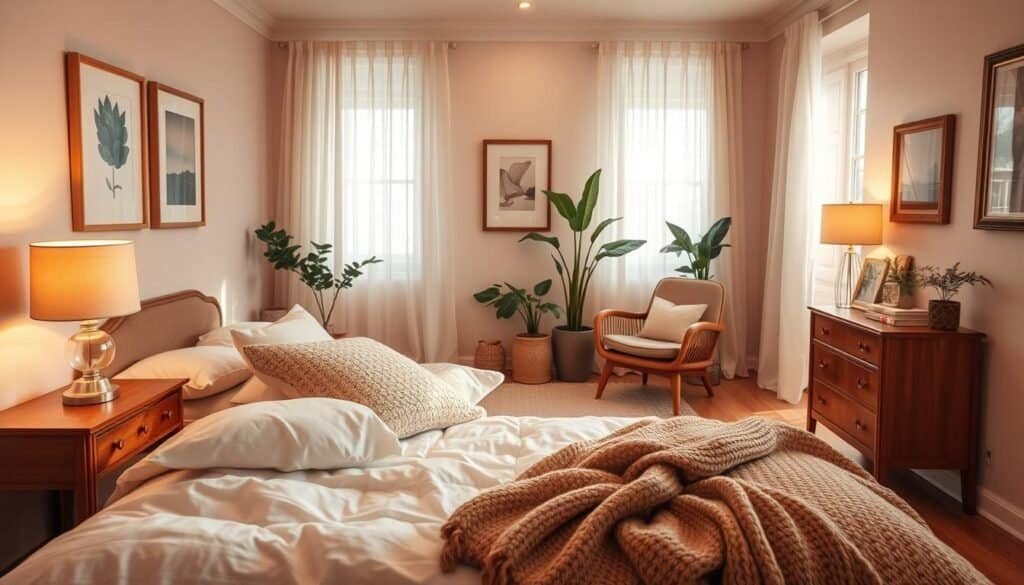
Layered lighting uses various light sources for a cozy feel. This includes overhead lights, table lamps, and floor lamps. Layered lighting lets you adjust brightness and mood as needed.
Color Temperature and Brightness
The color and brightness of your lights affect your bedroom’s coziness. Warm white light (2700K-3000K) is more relaxing than cool white. Adjusting light brightness also improves the atmosphere.
Programmable Systems
Programmable lighting systems make controlling your bedroom’s lights easy. Set lights to turn on and off automatically or adjust them remotely with smart lighting.
Circadian-Friendly Lighting
Circadian-friendly lighting helps your bedroom light match your natural sleep cycle. Use lights that dim or change color to signal bedtime. This helps regulate your sleep and improve quality.
By using these lighting solutions, you can make your bedroom a cozy retreat for relaxation and sleep.
Textiles and Bedding for the Ultimate Comfort
To get the best sleep, picking the right textiles and bedding is key. The right choices can really improve your sleep and relaxation.
Support and Temperature Regulation
A supportive mattress and comfy bedding are essential for a good night’s sleep. Look for materials that keep you cool, like breathable fabrics that stop you from getting too hot.
Materials and Allergen Considerations
When picking bedding, go for materials that are good for your skin and don’t cause allergies. For tips on making your space calming, check out this page about natural textures.
Natural vs. Synthetic Fabrics
Natural fabrics like cotton and linen are great for their breathability and softness. Synthetic fabrics are durable and easy to clean. Find a mix that suits you best.

Change your bedding with the seasons. Use light fabrics in warm months and thick ones in cold months to keep your sleep area comfy.
Rugs, Curtains, and Sound Absorption
Rugs and curtains not only look good but also help with sound. They make your bedroom quieter. Pick materials that absorb sound well.
Layering Textures for Sensory Comfort
Layering different textures makes your bedroom feel cozier. Mix smooth and rough textures for a welcoming feel.
By choosing the right textiles and bedding, you can make your bedroom comfy and perfect for sleep.
Creating a Multi-Sensory Relaxation Experience
A multi-sensory relaxation experience can help you sleep better. It engages your senses to make your bedroom a place for deep relaxation. This prepares your body for a refreshing sleep.
Sleep-Promoting Essential Oils
Lavender and chamomile essential oils are calming. Using them in a diffuser can make your room feel soothing. This calms your mind and body.
Diffuser Options and Placement
Choose a diffuser that fits your bedroom size and mist preference. Place it near your bed or in a corner for even fragrance. Look for diffusers with a timer for continuous operation throughout the night.
White Noise and Nature Sounds
White noise machines or apps with nature sounds can block out disturbing noises. You can pick from rain, ocean waves, or birdsong to find what works for you.

Adding sound-absorbing materials like acoustic panels or thick curtains can make your room quieter. This helps reduce echo and outside noise.
Ideal Sleep Temperatures
Keeping your room at 60-67°F (15-19°C) can improve your sleep. Use a smart thermostat to keep the temperature just right.
Air-Purifying Plants and Systems
Plants like snake plants or peace lilies can clean the air. Or, you can use air purifiers to remove allergens and pollutants. Both help make your sleep environment healthier.
By adding these elements, you can make your bedroom a place for relaxation and sleep. It will look great and help you sleep well.
Conclusion: Your Personal Sanctuary for Rest and Renewal
Turning your bedroom into a calm space is a journey. It needs careful attention and understanding of what helps you relax. By following the tips in this article, you can make your bedroom a place for restful sleep.
A good bedroom is more than a place to sleep. It’s a personal sanctuary that boosts your well-being. Choose soft colors, arrange furniture wisely, and add cozy textiles and lights. This way, you create a space for rest and renewal.
When making your dream bedroom, focus on relaxation. Clear out clutter, pick soothing colors, and get comfy bedding. With time and creativity, your bedroom will become a peaceful place. It will help you relax and feel better.