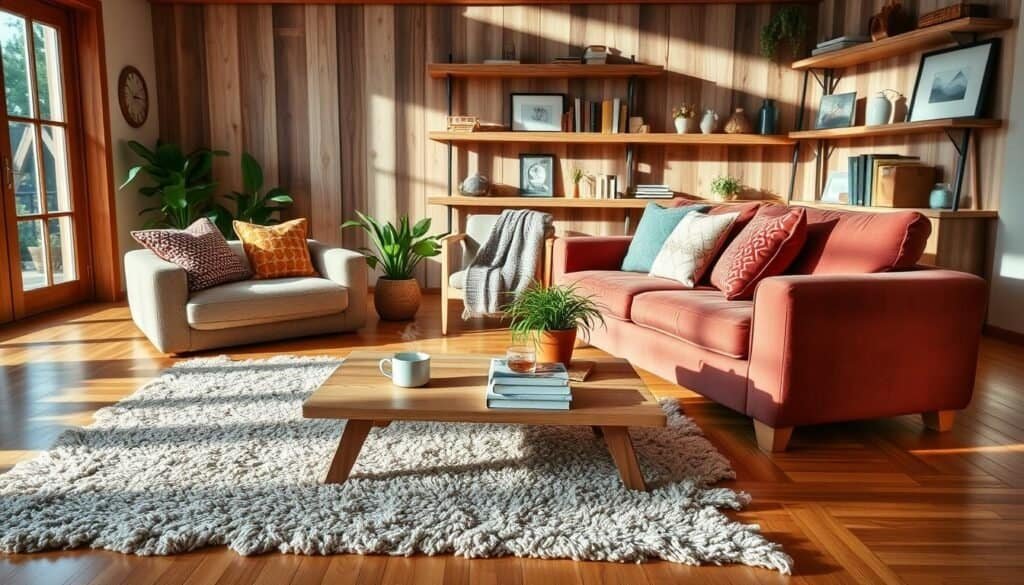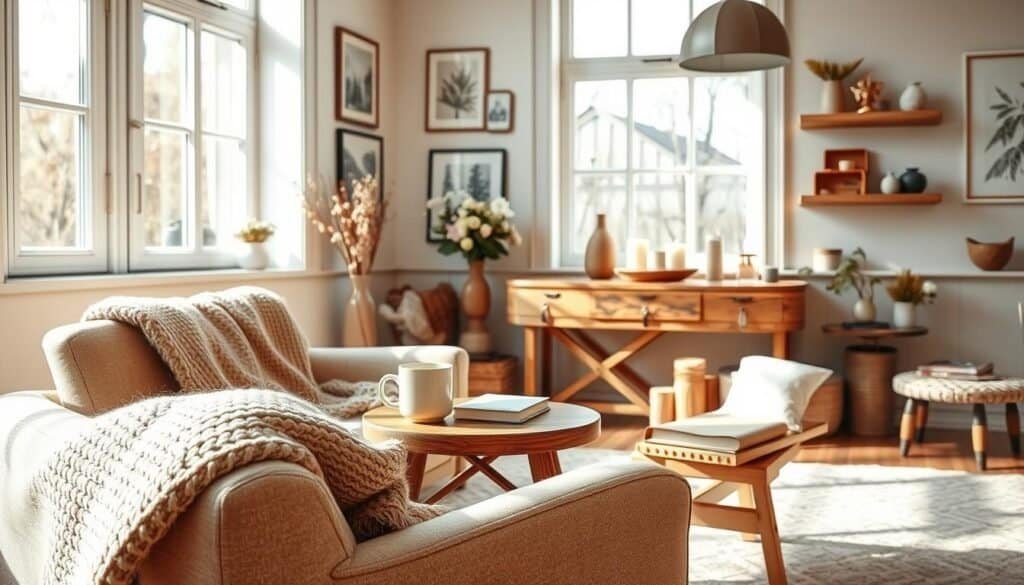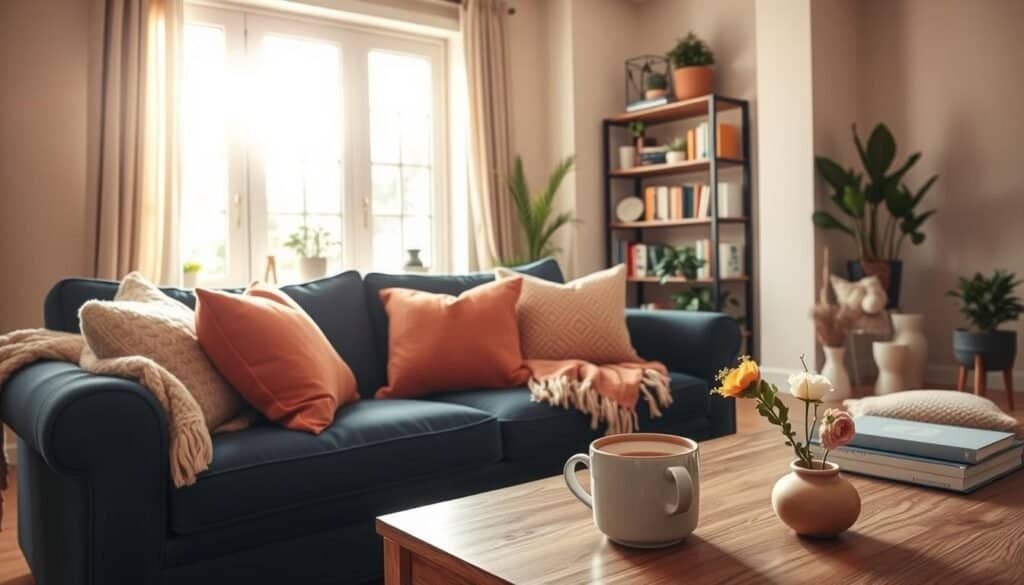
A well-connected home feels calmer and more inviting. To achieve this, it’s essential to focus on home decor ideas and interior design tips that promote a cohesive and peaceful environment.
By implementing the right strategies, you can create a softer flow between rooms. This makes your living space feel more harmonious. For more inspiration on improving your home’s ambiance, check out our guide on elevating your space with natural accent. This will help you achieve a cozy home ambiance that makes your home feel like a haven.
Why Connected Spaces Matter in Modern Homes
Connected spaces are key to a harmonious home. They make the space feel bigger and more welcoming. This creates a peaceful home environment.
These spaces are not just about looks. They also improve how we use the space. This is important for home improvement projects.
Connected spaces help us move and interact better in the home. They are a big part of room makeover inspiration. They encourage creative use of space.
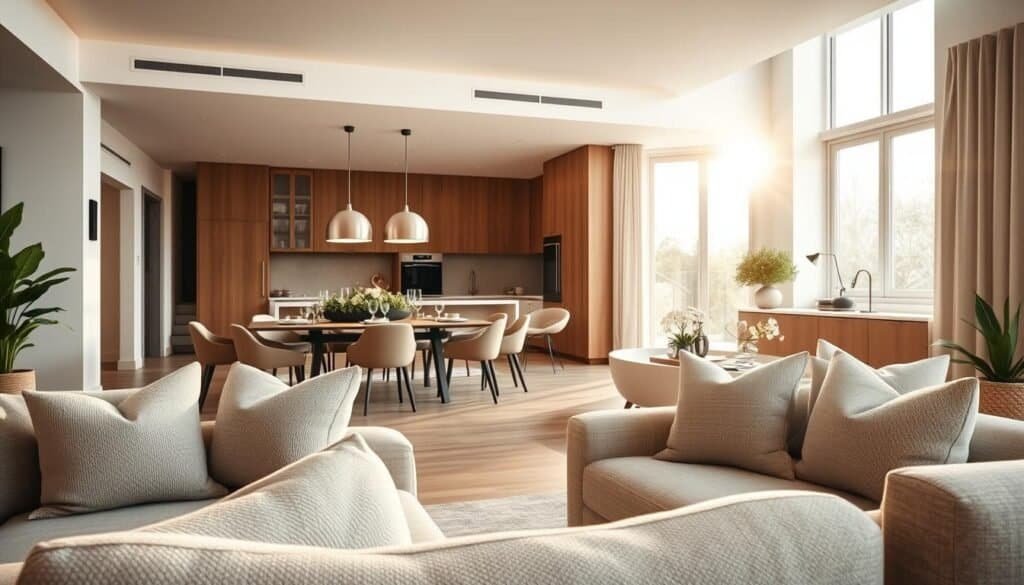
Connected spaces also make the home feel more cohesive and relaxing. Using home relaxation techniques like less clutter and soothing colors helps. This improves the flow and feel of our living spaces.
In short, connected spaces are essential in modern home design. They affect both how the home works and looks. Understanding their value helps homeowners create a more welcoming and harmonious home.
How to Create a Softer Flow at Home: Core Principles
To achieve a softer flow in your home, follow a few key design principles. One important principle is embracing a minimalist living room look. This means decluttering and simplifying your space to bring calm.
When decorating a small apartment, think about the flow between areas. Use a consistent color scheme and flooring to make room transitions smooth.
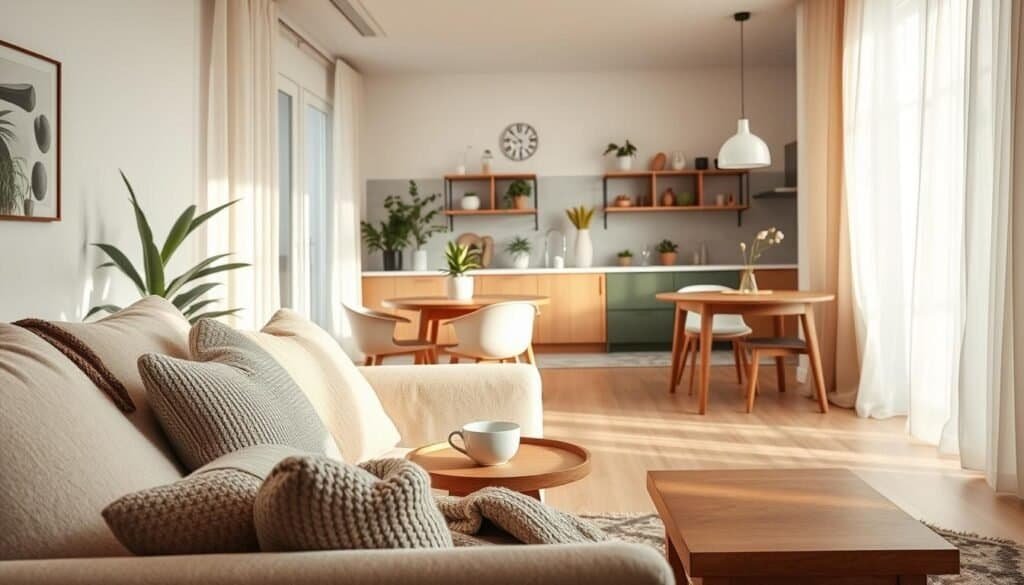
- Use a cohesive color palette throughout your home.
- Select flooring that complements each room.
- Opt for small living room inspirations that promote a sense of openness.
- Create a cozy atmosphere by incorporating elements that contribute to an apartment aesthetic cozy feel.
By following these principles, you can make your home more harmonious and inviting. This approach not only makes your home look better but also makes it a more enjoyable place to live.
Cohesive Color Schemes That Connect Your Rooms
Creating a softer flow between rooms starts with a good color scheme. A well-chosen palette can tie different spaces together. This makes your home feel connected and harmonious, which is key in open-plan areas or homes with unique designs.
It’s not about every room being the same color. Instead, pick a palette that works well together. Use different shades or complementary colors in each room. For example, pick a main color and use its lighter or darker shades in other rooms.
Gradient Color Progression Techniques
Using gradient color techniques can make your home look cohesive. Start with a light shade in one room and move to a deeper shade in the next. This creates a flow that makes your home feel bigger and more connected.
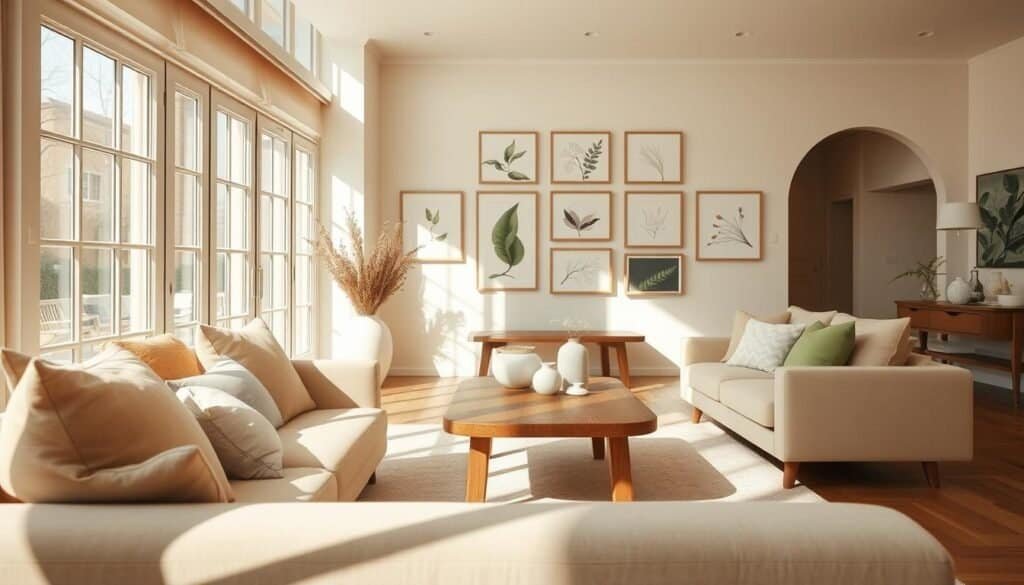
Think about your home’s natural flow when using this technique. It can also help draw attention to certain areas or features.
Using Accent Colors to Guide the Eye
Accent colors are key in a cohesive color scheme. Use them consistently to tie your home together. For example, if you have a bold color in your living room, use it in throw pillows or rugs in other rooms.
This approach not only ties your home together but also guides the eye. It’s great for larger homes or those with complex layouts, helping to create a sense of flow.
By using these strategies, you can make your home more harmonious and visually appealing. Whether your space is small or minimalist, a thoughtful color scheme can make a big difference.
Flooring Solutions for Seamless Room Transitions
Flooring plays a big role in making your home feel softer. The right choice can make room transitions smooth, making your home feel more welcoming.
Consistent Flooring Materials are essential for a seamless transition. Using the same or similar flooring throughout your home creates a sense of unity. For example, hardwood floors in living areas can flow into hallways and bedrooms, making your home feel connected.
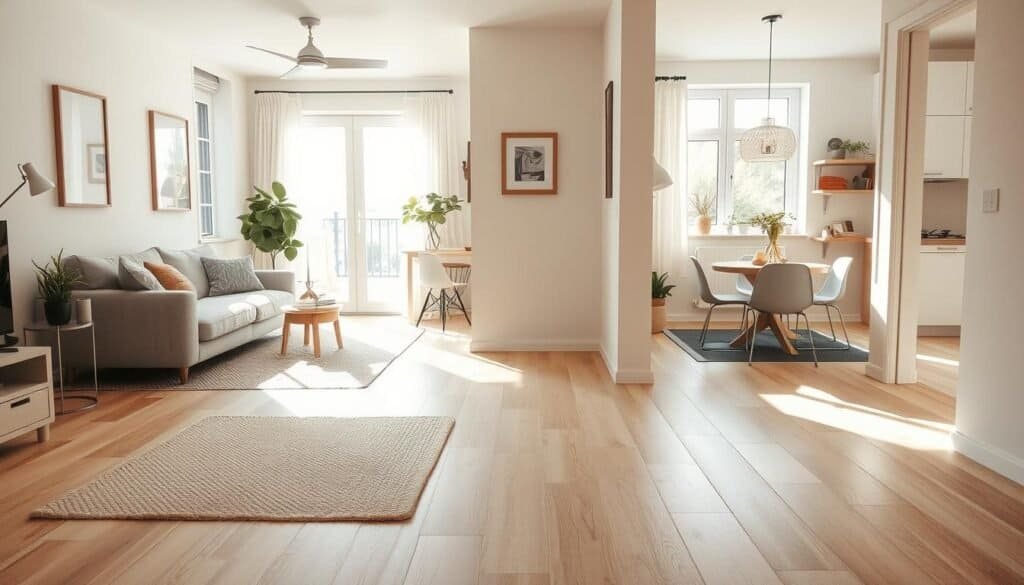
- Hardwood flooring for a classic, timeless look
- Laminate or engineered wood for a cost-effective alternative
- Porcelain or ceramic tiles for durability and versatility
- Luxury Vinyl Tiles (LVT) for a modern, waterproof option
In small apartments or homes, finding the right flooring is tough. Mixing greenery with wooden flooring can create a soothing, natural atmosphere. This not only looks good but also makes your space feel calmer.
Choosing the right flooring can greatly improve how rooms connect. It makes your home feel bigger and more connected.
Furniture Arrangement Strategies for Natural Flow
Furniture arrangement is key to making your home feel connected. By placing furniture wisely, you can make your living space more welcoming and useful.
Creating a clear path in the room is important. Make sure there’s enough space between furniture and keep it clutter-free. For example, in a small living room with an open floor plan, choose furniture that does more than one thing. This reduces clutter and improves flow.
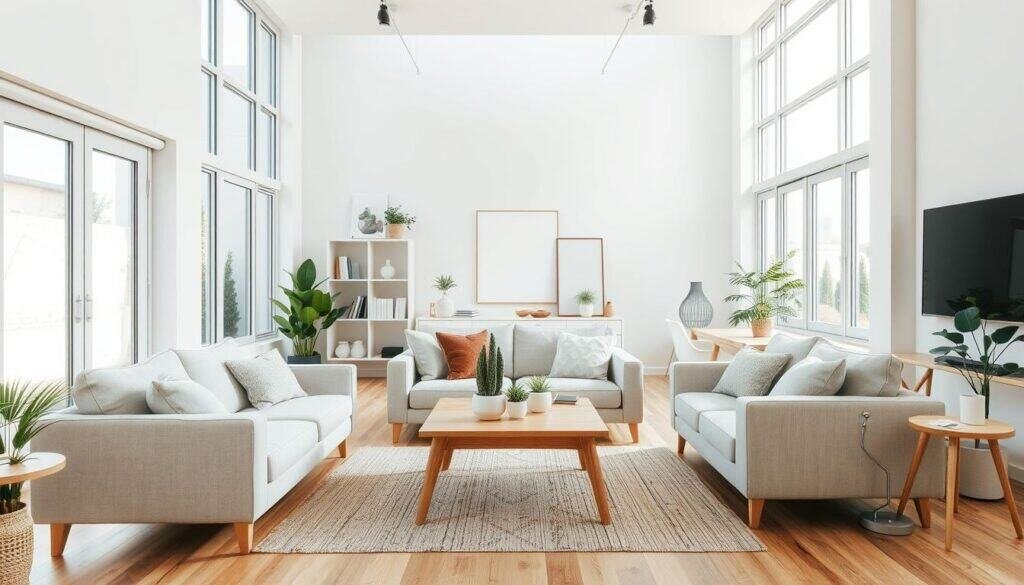
It’s also vital to balance your furniture. You can do this by spreading out the visual weight of your furniture. For instance, if you have a big sofa on one side, balance it with something similar or a few smaller pieces on the other. This balance brings harmony and connects the space.
Adding boho home decor minimalist touches, like natural fabrics and plants, can warm up your space. It keeps the look simple yet adds character. This mix can unify your home’s different areas.
In a small natural living room, go for furniture with simple designs. This keeps the room feeling open. Using a natural style home interior design approach, with natural materials and colors, also helps. It makes your home feel more connected to the outdoors.
By using these strategies, you can make your home feel more natural and inviting. It becomes a cozy and welcoming place for everyone.
Lighting Techniques That Unify Different Spaces
Using the right lighting can make your home feel like one big space. Lighting sets the mood and affects how connected your rooms are.
Layered Lighting is a smart way to make your home look unified. Mix overhead lights, table lamps, and floor lamps for a cozy feel. For example, in a modern boho sitting room, combining pendant lights with table lamps adds depth.
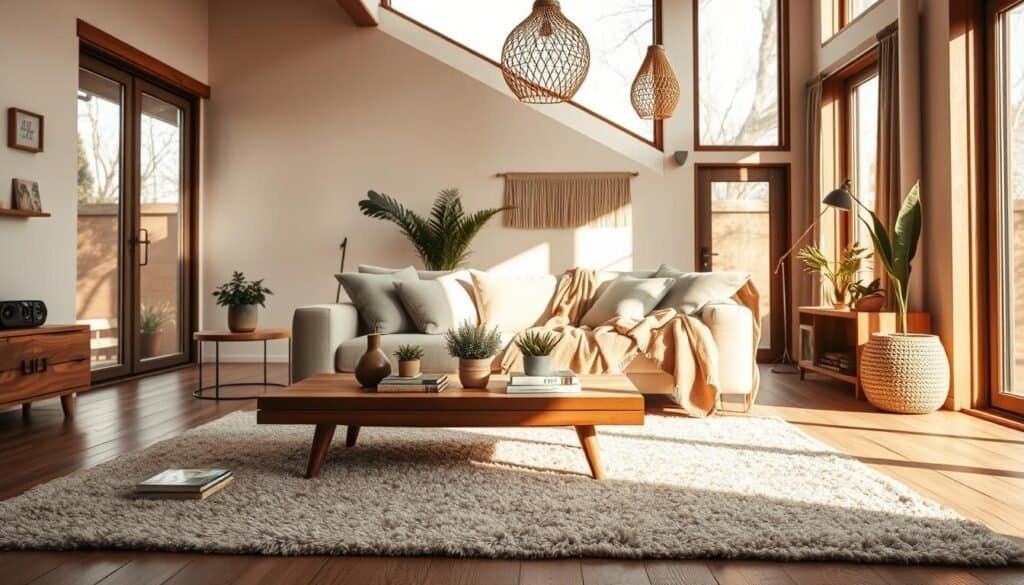
In a wooden themed living room, warm lighting brings out the wood’s beauty. It makes the room feel cozy. An apartment living room simple in design looks better with minimalist lights, keeping it clean.
Choose lights that match your furniture and decor. A beige corner sofa looks great with soft, warm lights. It makes the room feel relaxing.
- Use dimmers to adjust lighting levels according to the time of day and activity.
- Select fixtures that complement your home’s style, whether it’s modern, traditional, or a mix.
- Layer different light sources to create depth and visual interest.
With these lighting tips, you can make your home feel more connected and welcoming.
Natural and Wooden Elements for a Cohesive Home
To make your home feel softer and more natural, think about adding natural and wooden elements. This not only makes your home look better but also makes it feel warmer and more welcoming.
Using materials like wood, stone, and plants can make your living room feel richer and cozier. For small spaces, wooden accents like reclaimed wood furniture or wall art can add warmth without making the space feel too big.
Benefits of Natural Elements:
- Bring a sense of calm and serenity
- Add texture and depth to your decor
- Create a cohesive look throughout your home
In a neutral living room, natural elements can be the star that ties everything together. For example, a wooden coffee table or a stone vase can be the centerpiece that matches other neutral decor.
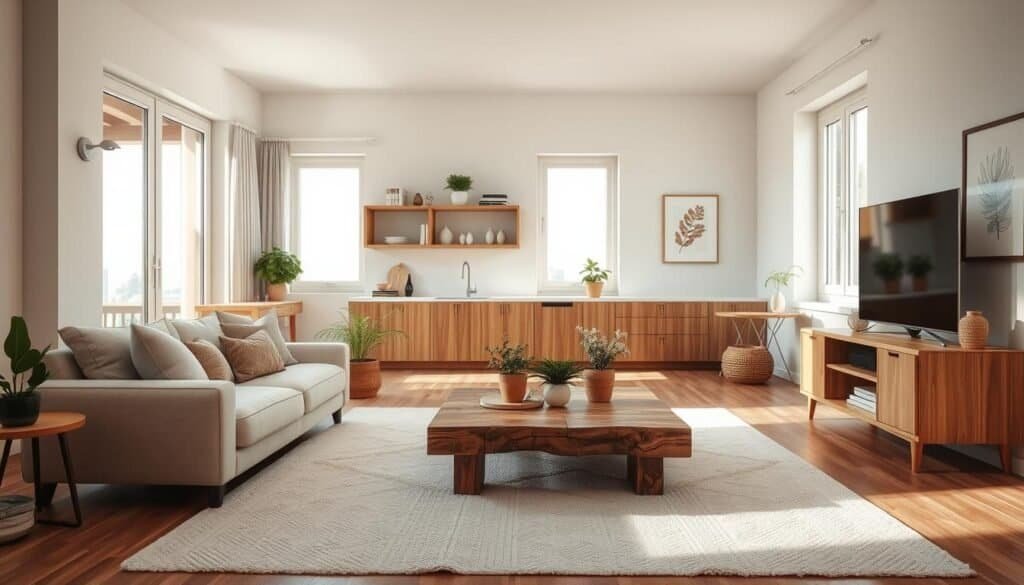
When designing a small apartment living room, finding the right balance is key. Pairing wooden furniture with neutral walls and accessories can make a cozy and harmonious space.
Tips for Incorporating Natural Elements:
- Start with small additions like potted plants or a vase with branches.
- Use wooden accents in furniture or wall decor.
- Incorporate natural textiles like woven baskets or jute rugs.
By carefully adding natural and wooden elements, you can make your home feel connected and welcoming.
Architectural Elements That Create Soft Transitions
Architectural elements are key to creating a softer, more natural flow between the spaces in your home. By incorporating thoughtful design features, you can enhance the sense of continuity and harmony throughout your living areas.
One effective way to achieve this is by using archways. An archway can serve as a gentle transition between rooms, creating a sense of connection without the need for doors. This is beneficial in small apartment living room designs where space is limited. For instance, pairing an archway with a beige couch in the living room can create a seamless transition to the adjacent dining area.
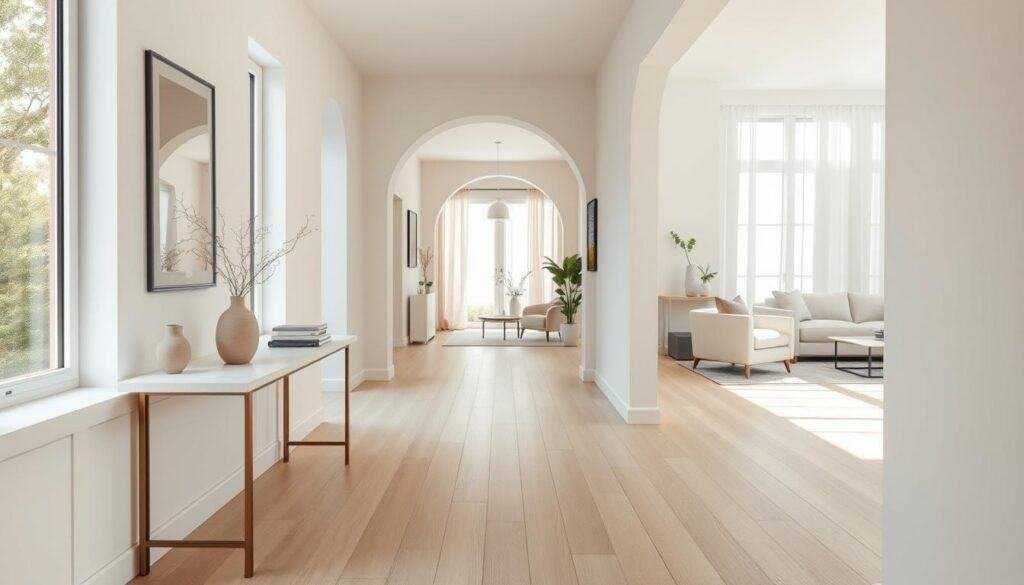
In addition to archways, columns can also play a significant role in defining different spaces within an open-plan area. By strategically placing columns, you can create a visual separation between areas, such as between the living room and hallway, without disrupting the flow. This technique is useful in simple neutral apartment living room layouts where maintaining an airy feel is key.
Another architectural element that can contribute to a cohesive home environment is the use of consistent ceiling heights and profiles. Maintaining a consistent ceiling design throughout your home can create a sense of continuity, making the transition between rooms feel more natural. For corner sofa living room beige setups, this means designing the ceiling to complement the color scheme and style of the furniture.
Lastly, incorporating hall ideas modern such as built-in shelving or niches can further enhance the flow between spaces. These elements not only provide storage and display opportunities but also help to create a visually appealing connection between different areas of your home.
By thoughtfully integrating these architectural elements, you can create a home environment that feels more connected and harmonious. This improves the overall living experience.
Small Space Solutions: Flow in Apartments and Condos
In small homes, making spaces flow well is key to a better living experience. It’s important to think carefully about interior design.
Using furniture that does more than one thing is a smart move. For example, storage ottomans and sofa beds save space and keep things tidy. A storage ottoman can be a seat and a place to store things like blankets or toys.
Choosing design elements that make a room look bigger is also vital. Light colors on walls and floors can make a room appear larger. Mirrors can also make a room feel bigger by reflecting light and images.
For creative wood wall layouts, pick natural textures and tones that fit your home’s style. This can make your room feel more open.
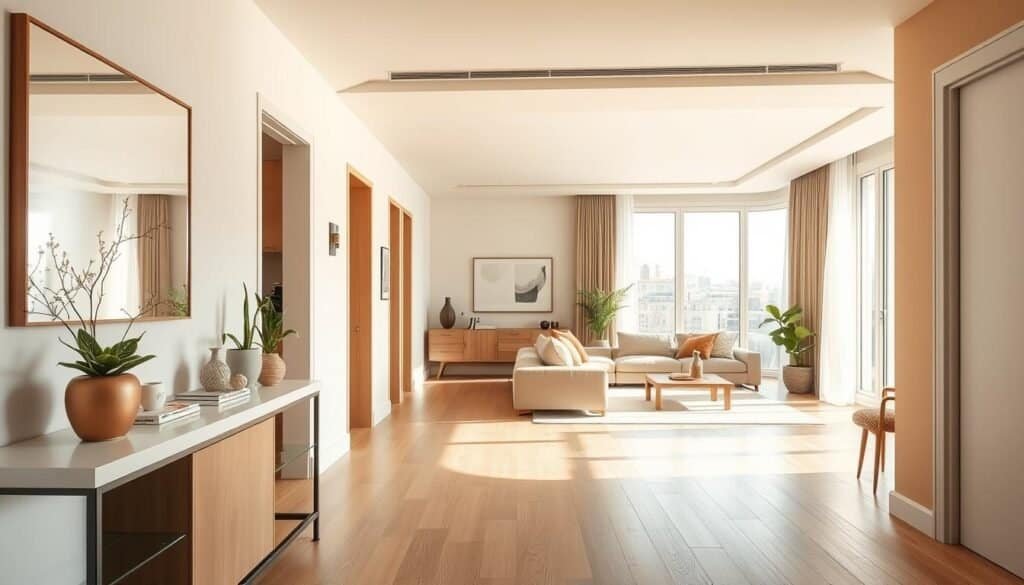
Designing a living room with a TV should focus on sleek, low-profile furniture and TV mounts. This keeps the floor clear and makes the room feel open. For hall TV design interiors, keep things simple to keep the flow going.
In today’s homes, 2024 trends favor spaces that are both useful and look good. By using hall modern designs and designs that encourage flow, homes can feel more welcoming and relaxed.
Textile and Accessory Strategies for Connected Rooms
Using the same textiles and accessories helps rooms feel connected. Throw pillows, rugs, and other items with a common color or texture create a smooth flow. This makes your home feel more natural and cohesive.
For living room modern design ideas, mix patterned and solid-colored throw pillows. For example, a modern sofa looks great with pillows that have a subtle geometric pattern. This adds to the room’s look and links it to other areas.
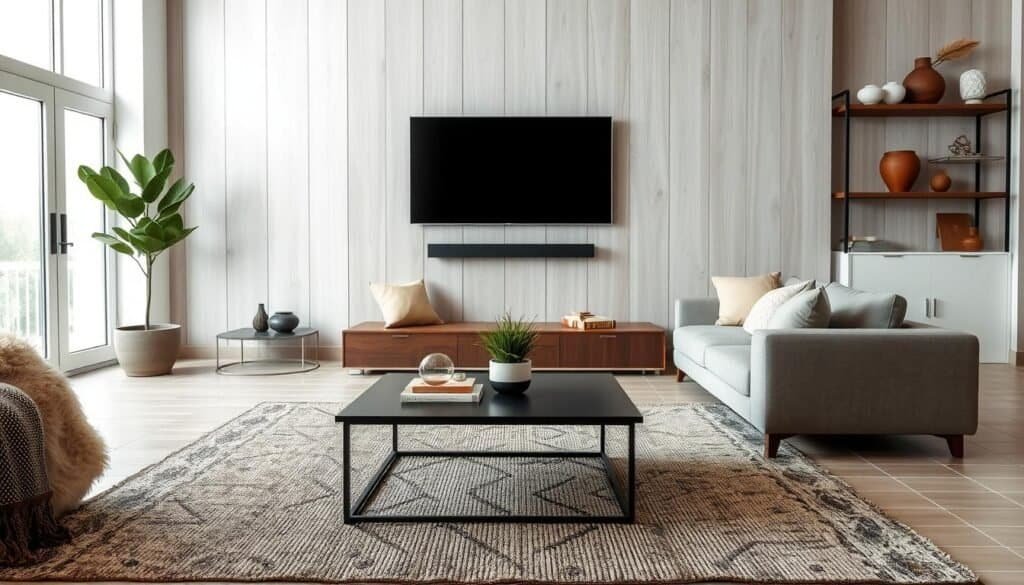
Designing a tv room wall involves using the same color or texture for accessories. This could be vases, wall art, or decorative boxes. A living room modern tv wall should have a sleek, minimalist design that fits with the rest of your home.
Here are some ways to make rooms feel connected through textiles and accessories:
- Area rugs with similar patterns or colors help rooms flow together.
- Throw blankets and pillows in the same color or texture work across different spaces.
- Consistent lighting fixtures or table lamps create a unified atmosphere.
- In small living room designs with tv, choose multi-functional furniture. It adds to the room’s use while keeping it looking good.
Choosing and placing textiles and accessories wisely can greatly improve how rooms connect. This makes your home feel more welcoming and harmonious. For more on mixing styles, check out this article on adding rustic touches to modern living rooms.
Conclusion: Embracing a More Connected Home Environment
Making your home feel more connected can really improve its vibe. By using the tips from this article, you can make your home feel welcoming and in harmony. This makes your living space feel more like a cozy retreat.
For a small living room with a TV, go for a minimalist look to keep it open. A modern room with wooden decor and a unified color scheme works well too. The right furniture arrangement is key to a smooth flow.
In modern homes, using the same flooring and lighting in all rooms helps them feel connected. Even tiny homes can feel calm and peaceful with a simple design.
By following these ideas, you can make your home a place of peace and connection. Whether your living room is small or large, focus on creating a flow that feels natural and welcoming. This way, your home will truly feel like your own.