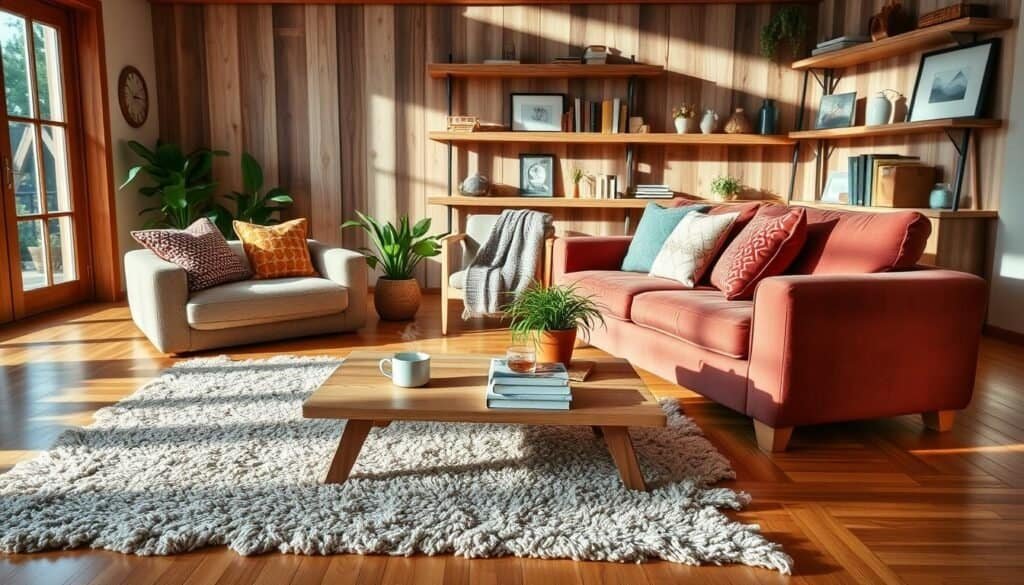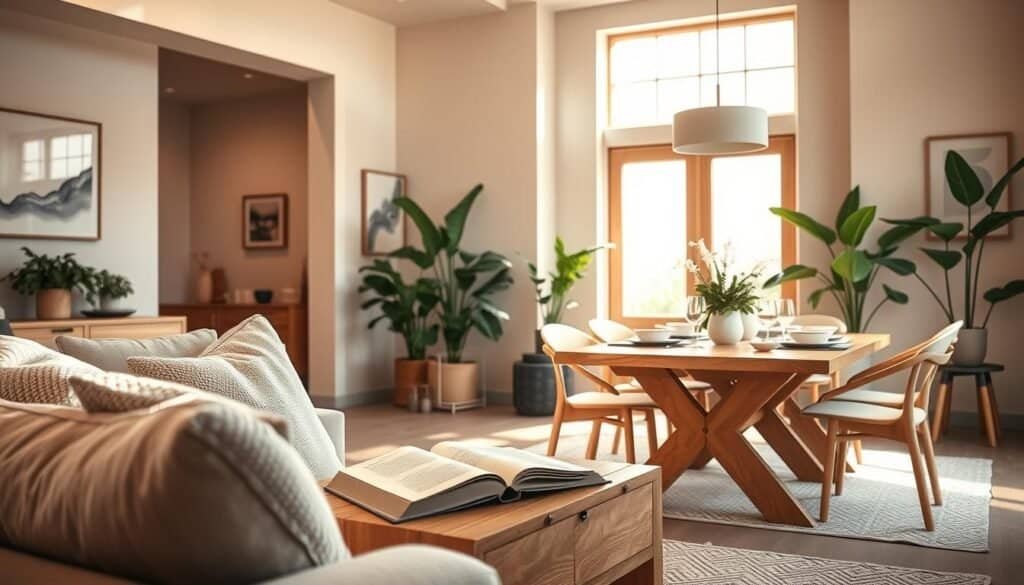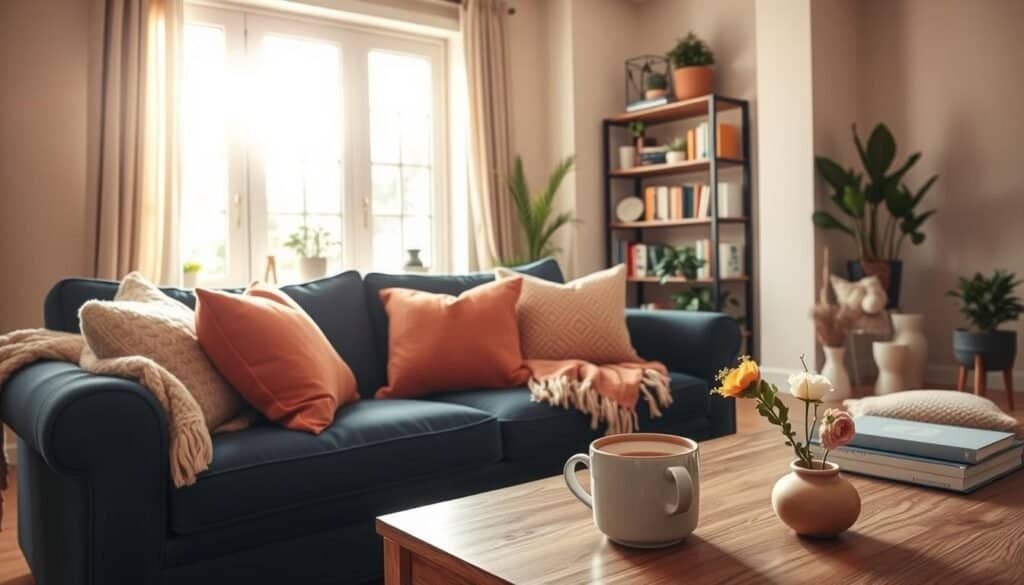
The most important rooms are the ones you pass through every day. These are the spaces that make up the fabric of your daily routine. From morning coffee to evening family gatherings, they are key.
Making your home cozy is more than just looks. It’s about crafting an atmosphere that feels welcoming and comfortable. With the right cozy home decor ideas and home styling tips, you can make your living spaces warm and inviting.
By focusing on these everyday spaces, you can enhance the warmth and coziness of your home. This makes it a haven for relaxation and connection.
The Heart of Home: Understanding Where Life Really Happens
Homes are more than just places to live. They are where we spend our days, filled with joy, comfort, and connection. The areas we use most shape the warmth and character of our homes.
Physical Comfort Considerations
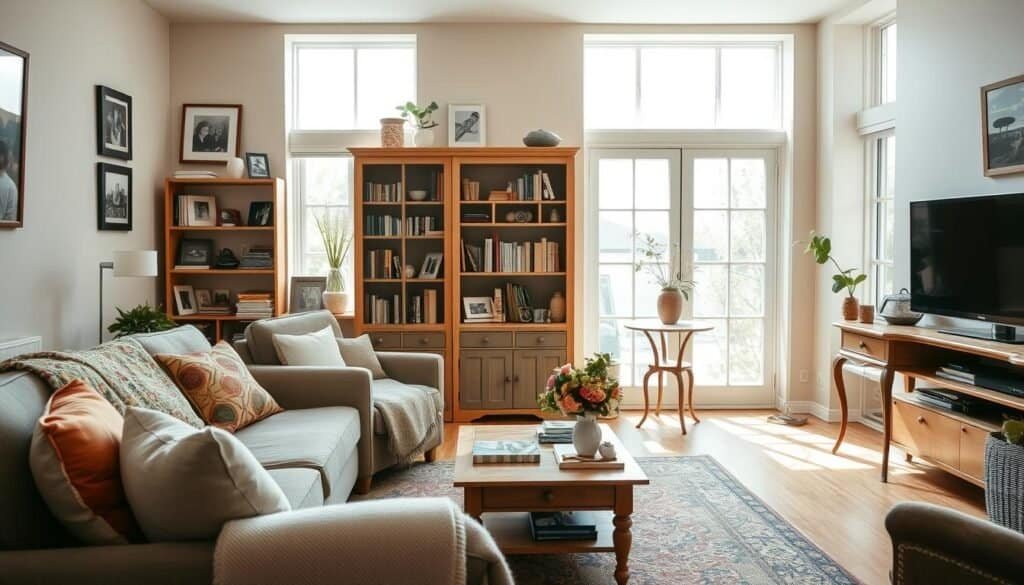
A cozy living room design is key to a welcoming home. It’s not just about looks but also how it feels. Soft lighting, comfy furniture, and warm colors make a room a cozy spot for relaxation and chatting.
Emotional Comfort Elements
Emotional comfort matters too. It comes from a family-friendly interior design that shows who we are. Things like personal decor, special items, and a well-designed living space make us feel at home and happy.
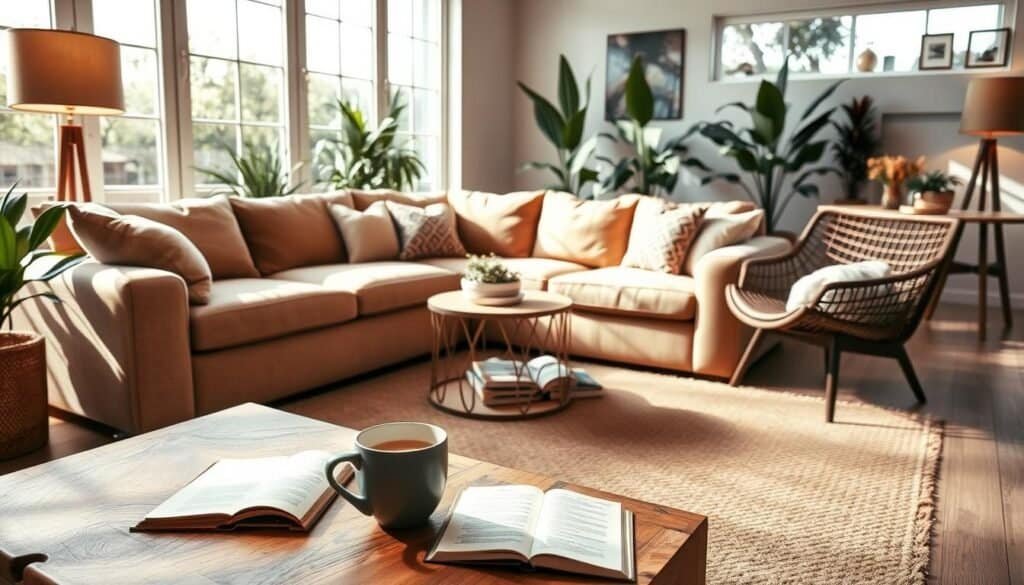
By paying attention to both physical and emotional comfort, we can make spaces that are beautiful and caring. These spaces support our well-being.
The Psychology Behind Warm and Inviting Spaces
Creating a warm and inviting space is more than just looks. It’s about how it makes us feel. Engaging interior design that brings in nature can make a house feel warm and welcoming.
Biophilic Design Principles
Biophilic design connects us to nature. It uses natural materials, plants, and light to make spaces warm. This natural style home interior design brings the outdoors inside.
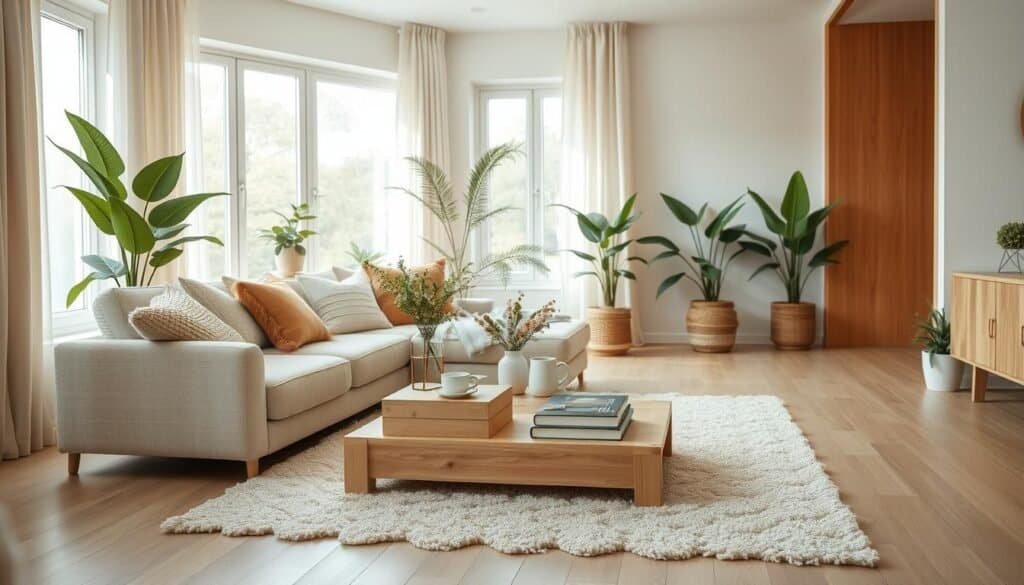
Things like texture, color, and scent are also important. Mixing textures and using a boho home decor minimalist style can make a room interesting. For tips on a mood-boosting living room, check out this resource.
Creating a Welcoming Living Room That Invites Gathering
The living room is more than just a space; it’s where life happens. Making it warm is key to making it inviting. This encourages family and friends to gather, making it the heart of the home.
One effective way to achieve this is through thoughtful furniture arrangement. Corner sofa configurations are popular for their cozy, intimate setting.
Corner Sofa Configurations
Using a corner sofa can make the seating area feel more welcoming. Pairing it with a beige corner sofa adds a neutral tone that complements many decorating styles. This setup maximizes space and encourages conversation.
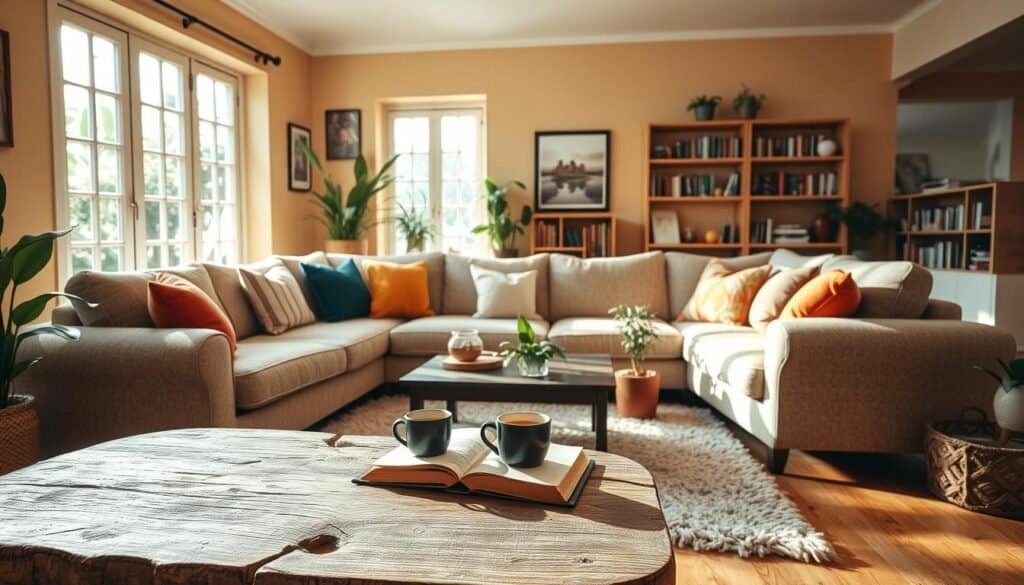
Incorporating multifunctional furniture enhances the living room’s functionality and warmth. Pieces like storage ottomans or coffee tables with storage keep the space clutter-free while serving multiple purposes.
By combining these design ideas, homeowners can create a living room that is both inviting and practical. It’s perfect for gathering and making memories.
Kitchen Transformations: Beyond Cooking to Connection
In today’s homes, the kitchen is the heart of the house. It’s where memories are made and conversations flow. It has evolved from just cooking to a hub of family life and social interaction.
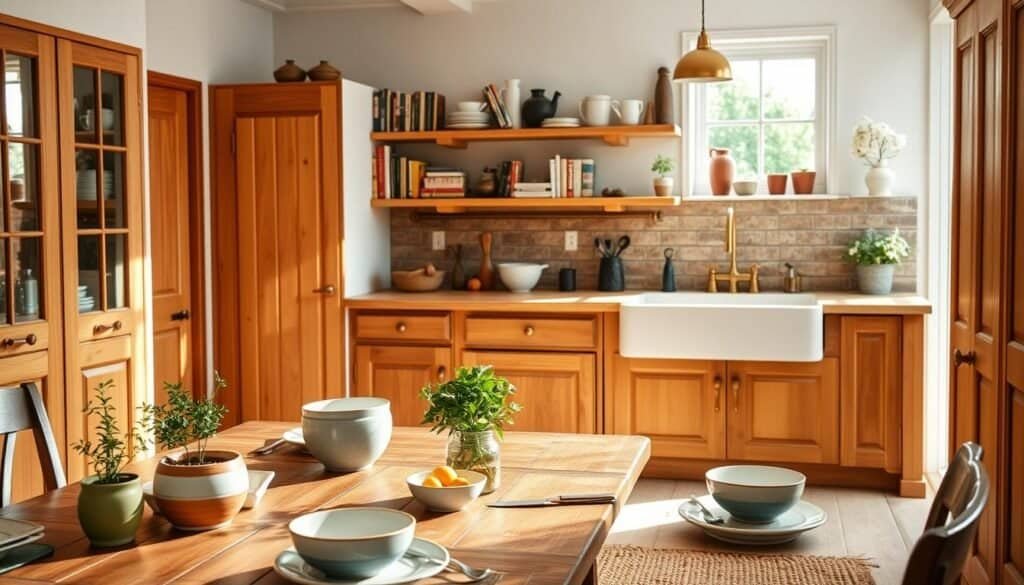
Open shelving is a great way to enhance this transformation. It gives easy access to dishes and cookware. It also lets you display personal items, adding warmth to the kitchen.
Open Shelving for Accessibility and Display
Open shelving is both practical and beautiful for kitchens. It lets you show off favorite cookbooks, decorative dishes, and personal items. This makes the space feel more inviting and personalized.
- Easy access to frequently used items
- Opportunity to display personal and decorative items
- Creates a sense of openness and airiness in the kitchen
Incorporating Soft Elements in Hard-Surface Rooms
Kitchens often have lots of hard surfaces like countertops and cabinets. Adding soft elements like textiles and plants can balance these. This creates a cozier atmosphere.
Think about adding a kitchen island with seating, a woven basket, or a few potted plants. These can bring warmth and texture to the space. They make the kitchen feel more like a living area, great for casual dining and socializing.
Bedroom Sanctuaries: Restful Retreats for Real Life
Turning your bedroom into a peaceful haven is simpler than you might think. A calm bedroom is vital for recharging and facing daily life’s challenges. By adding coziness and organization, you can make a cozy bedroom decor that encourages relaxation.
Bedside Essentials Organization
Good bedside organization is essential for a tidy and peaceful room. Think about using a bedside table with storage or a tray. This keeps your phone, book, and glasses handy but hidden.
- Use a bedside caddy or organizer for your personal items.
- Invest in a comfortable reading light to create a cozy ambiance.
- Keep your bedside table tidy to maintain a sense of calm.
Hidden Storage Solutions
Hidden storage helps keep your bedroom clutter-free while keeping it calm. Use under-bed storage bins, hidden compartments in furniture, or decorative baskets. These are great for storing items you don’t need right away.
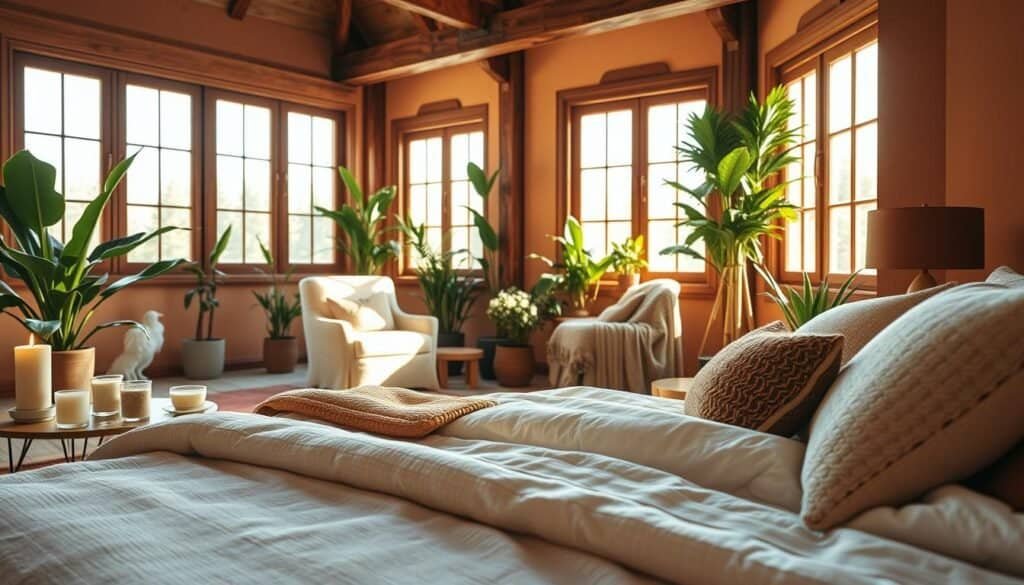
By using these bedroom ideas, you can make your bedroom a true sanctuary. Whether you’re after restful retreats or just want to improve your bedroom’s feel, these tips will help. They’ll make your space more relaxing and refreshing.
Multifunctional Spaces: When Rooms Serve Multiple Purposes
Multifunctional spaces are changing how we live, work, and play at home. Our homes are becoming more flexible, meeting various needs. This change is because we want our homes to be more than just places to rest.
We need spaces for work, guests, and fun. This shift towards flexibility is driven by our desire for homes that serve multiple purposes.
Home Office/Guest Room Combinations
The home office/guest room combo is a common multifunctional space. This dual-purpose room needs careful planning to meet both needs well. Think about using a Murphy bed or a sofa bed that converts to save space.
A desk that folds away or a wall-mounted shelf can keep the office area tidy. This way, the room can easily switch between uses.
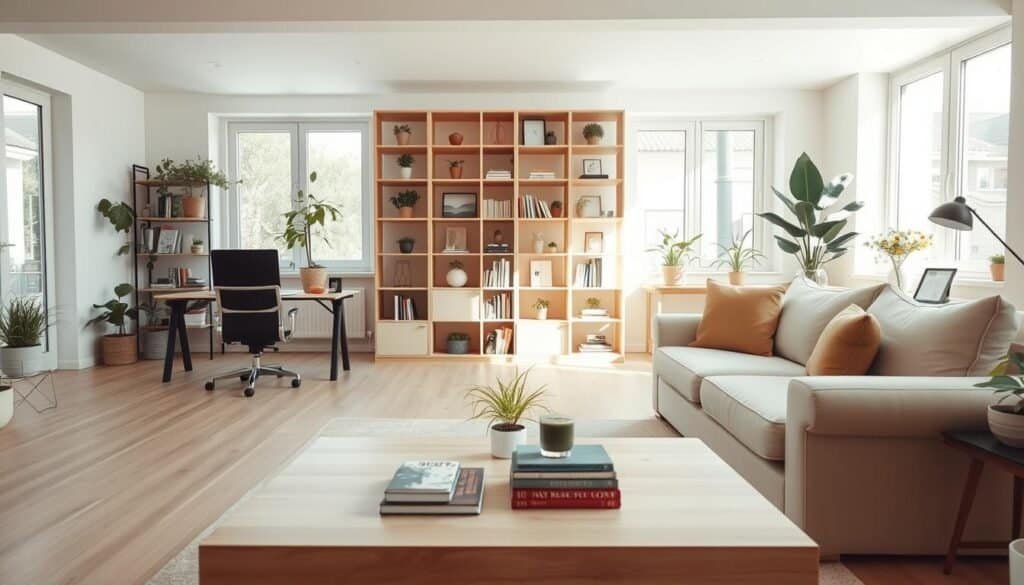
The living/dining room combo is another popular multifunctional space. It’s key to pick furniture that works for both areas or can be rearranged. A dining table that also works as a workspace or a coffee table with storage is very useful.
Using area rugs and different lighting setups can help define the areas. This creates a sense of separation without needing walls.
By embracing multifunctional spaces, homeowners can make their homes more flexible. Whether it’s a home office that turns into a guest room or a living area that becomes a dining space, the goal is to be versatile and functional.
How to Create Warmth Where Life Happens Through Color Psychology
Color psychology can make your living spaces feel cozier and more welcoming. The right colors can stir emotions, shape moods, and even change how a room feels. By knowing how colors work together, you can make your home warm and inviting.
Color Psychology Basics
Colors fall into two groups: warm and cool. Warm colors like red, orange, and yellow make us feel cozy. Cool colors like blue, green, and purple calm us down. To create warmth, focus on warm colors.
Accent Wall Strategies
An accent wall in a warm color can make a room pop. It adds depth and warmth to the space.
- Choose a wall that naturally draws attention, such as the one behind a fireplace or a large piece of furniture.
- Select a color that complements the existing color scheme but adds a warm touch.
- Consider the room’s purpose; for example, a warm accent wall in a living room can encourage social interaction.
Neutral Bases with Colorful Accessories
Start with a neutral base for your walls and furniture, then add warmth with colorful accessories. This approach is flexible and easy to change.
- Use neutral tones for large surfaces like walls and sofas.
- Add warmth with throw pillows, blankets, and rugs in vibrant, warm colors.
- Experiment with different textures and colors to find the perfect balance for your space.
For more ideas on adding cozy elements to your home, check out this article on incorporating cozy accent pieces.
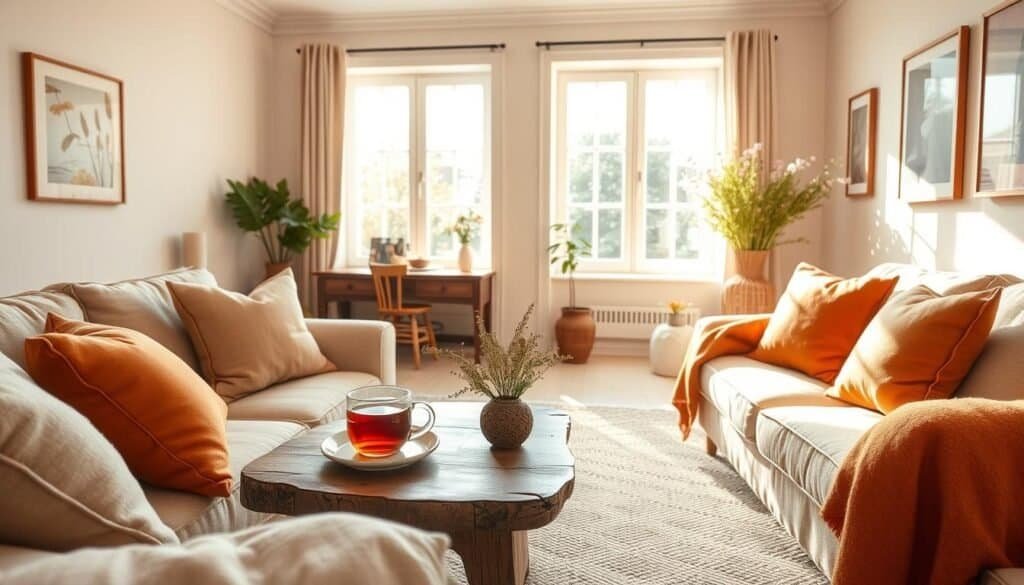
By using these color psychology tips, you can make your home warm and welcoming. It will feel cozy and inviting to everyone.
Texture and Tactile Elements That Transform a Space
To make your home cozy and inviting, think about texture and touch. Texture brings depth and interest to any room. It makes spaces feel welcoming and comfy.
Natural Materials That Add Warmth
Natural materials are key to warmth in your home. Wood, stone, and woven fibers add organic warmth and authenticity. They make your living areas feel real and cozy.
- Reclaimed wood for furniture or flooring
- Stone or brick accents for walls or fireplaces
- Woven baskets or rugs made from natural fibers like jute or sisal
Layering Techniques for Depth and Interest
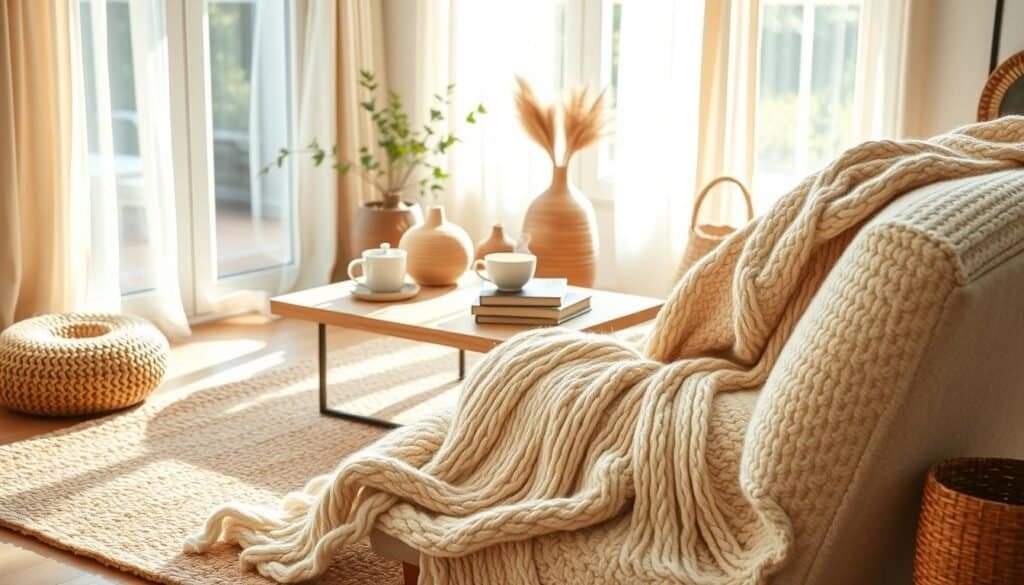
Layering textures and elements adds depth and interest. Mixing different textures creates a rich, inviting atmosphere.
- Start with a base layer, like a plush area rug.
- Add throw blankets and pillows in various textures.
- Incorporate natural elements, like a vase with branches or a bowl of river rocks.
Using natural materials and layering techniques can turn your living spaces into cozy retreats. They’re perfect for relaxing and socializing.
Lighting Design: Creating Ambiance Where You Need It Most
Lighting is more than just turning on a switch. It’s about making your home feel like a warm, welcoming place. Good lighting design can really make your living spaces feel cozy and inviting.
To get the right feel, you need to know about the different kinds of lighting. There’s task lighting for things like reading or cooking. And then there’s ambient lighting for creating a cozy atmosphere.
Task Lighting for Everyday Activities
Task lighting shines a light on areas where you do things like read or cook. Here are some examples:
- Under-cabinet lighting in the kitchen
- Desk lamps for workspaces
- Reading lamps by armchairs or sofas
Ambient Lighting for Atmosphere
Ambient lighting lights up a whole room, setting the mood. You can use:
- Ceiling fixtures
- Table lamps
- Floor lamps
When you mix task lighting and ambient lighting, you get a layered lighting effect. This adds depth and interest to your space. It lets you change the lighting to fit different activities and moods.
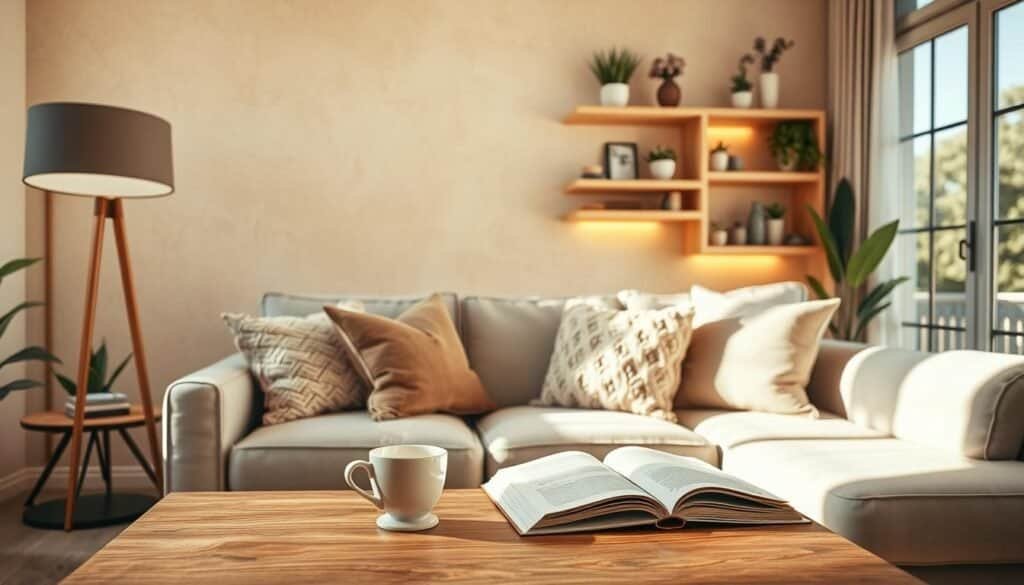
With smart lighting design, you can make your spaces both useful and cozy. Whether it’s cozy table lamps or fancy ambient lighting, the right lights can really change a room.
Personal Touches: Infusing Your Authentic Self Into Spaces
Personal touches make a house a home, where memories are made. By adding elements that show your personality and history, you create a warm, inviting space. It feels truly yours.
Displaying family photos is a great way to add personal touches to your home. Try creating a gallery wall with different frame styles and sizes. This adds visual interest.
- Use a mix of black and white and color photos for a visually appealing display.
- Play with different frame shapes and sizes to add depth to your gallery wall.
- Consider adding vintage postcards or artwork to your gallery wall.
Incorporating Heirlooms and Collectibles
Adding heirlooms and collectibles to your home decor adds depth and history. Display cherished items proudly. They can also be great conversation starters.
Here are some ideas for using heirlooms and collectibles:
- Use vintage items as decorative pieces, like old doors or windows.
- Display collections in a dedicated cabinet or on a shelf.
- Make family heirlooms part of your furniture, like reupholstering a vintage armchair.
By adding personal touches like family photos and heirlooms, you make your home reflect your personality and history. This makes your space more inviting and turns it into a meaningful, memorable place.
Budget-Friendly Ways to Add Warmth to Everyday Spaces
There are many ways to make your home feel warmer without spending a lot. You don’t need to spend a lot to make your living spaces cozy and inviting. A few simple and affordable changes can make a big difference.
Thrift Store Transformations
Thrift stores are a great place to find unique, vintage pieces. These items can add character to your home. For example, an old armchair can be made cozy with new fabric, creating a perfect reading spot. Check out this article for more ideas on cozy home decor.
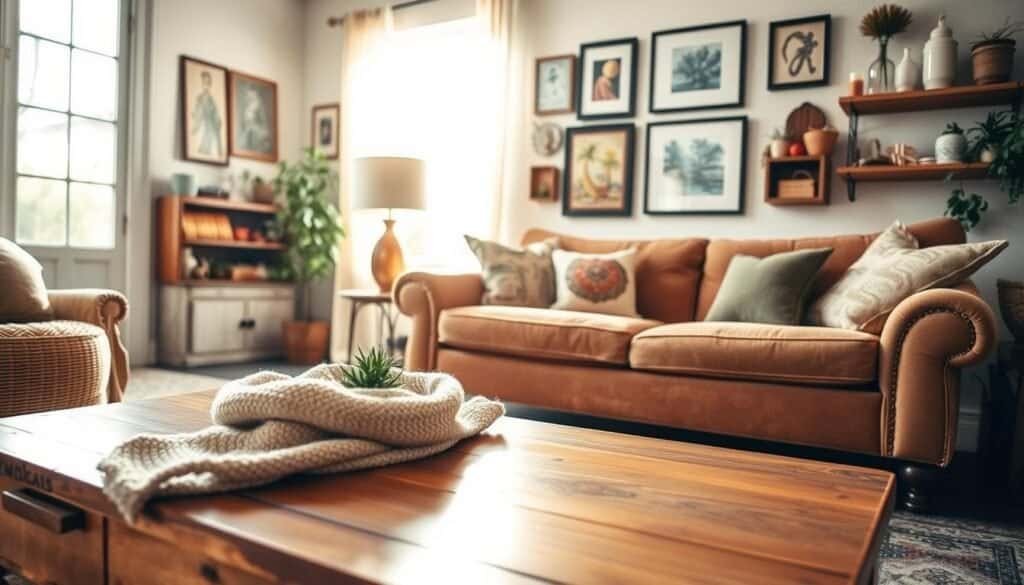
Simple changes can also make a big impact. Adding throw blankets, pillows, and rugs in warm colors can instantly warm up a room. Also, rearranging your furniture to create cozy spots can make your home feel more welcoming.
By using these budget-friendly tips, you can make your home warmer and more inviting without spending a lot.
Conclusion: Embracing the Beauty of Lived-In Spaces
Making a home warm and inviting is more than looks. It’s about creating places where life unfolds. We’ve seen how to make kitchens, living rooms, and bedrooms special.
Accepting the beauty of lived-in spaces means loving the imperfections. A cozy home is warm, welcoming, and shows who lives there. Adding personal touches and textures makes it uniquely yours.
The charm of lived-in spaces comes from their ability to change and meet our needs. By embracing this, we can have a home that’s beautiful, useful, and meaningful. So, let your home show your life’s messy, imperfect beauty.
In the end, finding beauty in everyday moments makes your space truly yours.