Turning the lawn into a cozy spot starts with smart outdoor projects. People enjoy spending time outside, but the sun can make it hard to relax. Creating a personal sanctuary is the perfect solution for reading or hanging out with friends.
Finding new garden inspiration helps unlock your land’s full beauty. Adding unique diy garden decorations brings a whimsical garden feel to life. These projects add value and comfort to our daily lives.
Exploring creative designs shows how to enhance your patio. Building a sturdy wood shade frame adds style and durability to any seating area. This diy backyard project brings joy to all who visit.
Creating a comfortable outdoor space requires careful planning and the right materials. The spacing of beams and the tension of fabric are key to both shade and stability. Homeowners often look for ways to block the sun while keeping the area beautiful.
Adding structure makes your property more useful during summer. Success comes from choosing materials that last through every season. Enjoying the fresh air becomes easier when your outdoor space feels welcoming and cool.
1. Need Backyard Shade? A Simple Wood Shade Frame Might Work
A simple wood shade frame is perfect for adding shade to your backyard. It’s great for creating a cozy reading nook or a shaded area for dining outside. A wooden shade frame can make your outdoor living better.
Having enough shade in your backyard is not just about feeling comfortable. It’s also about making a welcoming space for all-day enjoyment. A well-designed shade structure can make your outdoor space more usable. It’s ideal for family gatherings, barbecues, or just relaxing outside.
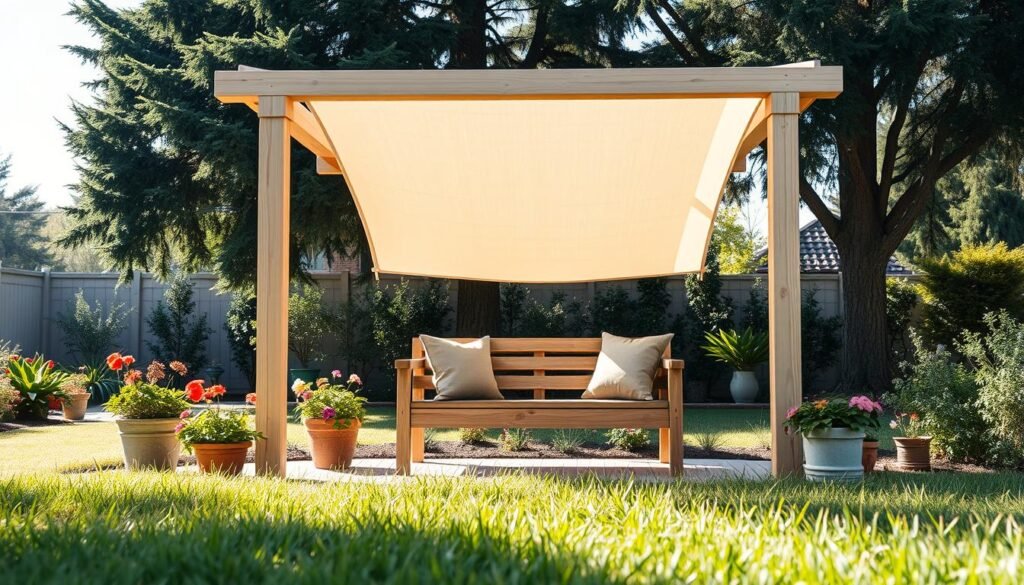
When thinking about a DIY shade solution, consider what kind of shade you need. A simple structure can be a pergola or a more complex gazebo. The important thing is to pick a design that fits your backyard’s look and gives the right amount of shade.
Some great ideas for backyard shade include:
- Installing a pergola with a retractable canopy
- Building a wooden shade frame with a fixed roof
- Creating a shaded area under a large tree
No matter the design, a wooden shade frame is a smart and affordable choice. By picking the right materials and design, you can make a beautiful and useful shade structure. It will improve your backyard’s look and function.
2. Assess Your Garden Space and Determine Shade Needs
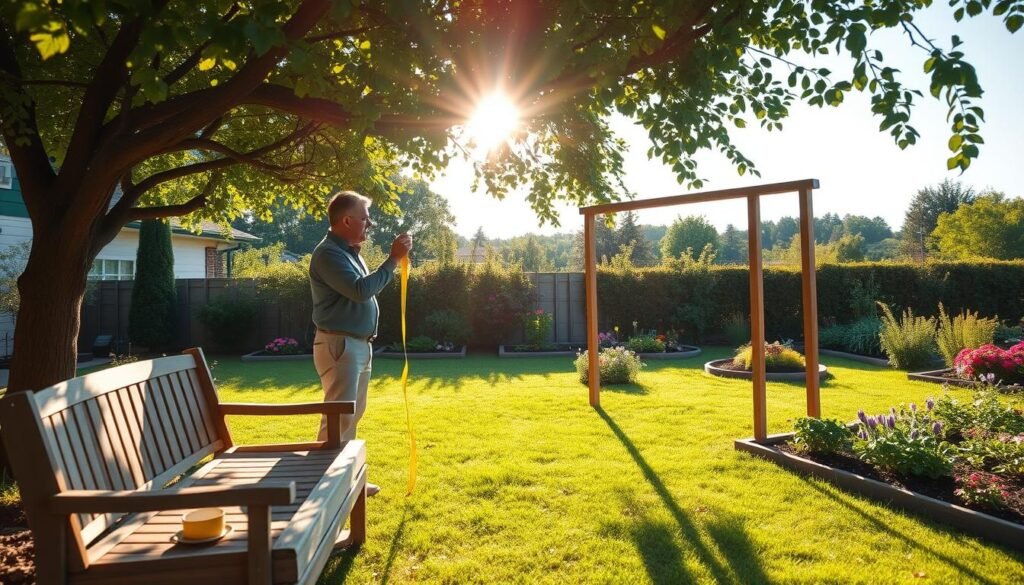
It’s important to know your garden’s unique conditions to pick the right shade structure. Start by watching how the sun moves during the day. Note where it’s direct, partial, or full shade.
Evaluating Sunlight and Shade Patterns is key to choosing the right shade. Watch your garden at different times and seasons. This helps you see where shade is needed and what kind of structure works best.
- The amount of sunlight your plants receive
- The type of plants you have and their shade requirements
- The size and layout of your garden
- The location of your seating areas and other outdoor living spaces
Think about these factors to determine your shade needs. Whether it’s a simple shade net or a complex structure, knowing your garden is essential. It helps create a beautiful and useful outdoor area.
Some popular outdoor shade options include:
- Shade sails
- Gazebos
- Umbrellas
- Shade cloth
By understanding your garden and its shade needs, you can make a lovely and practical outdoor space. It will meet your needs and make your garden even more beautiful.
3. Select the Right Wood and Materials for Durability
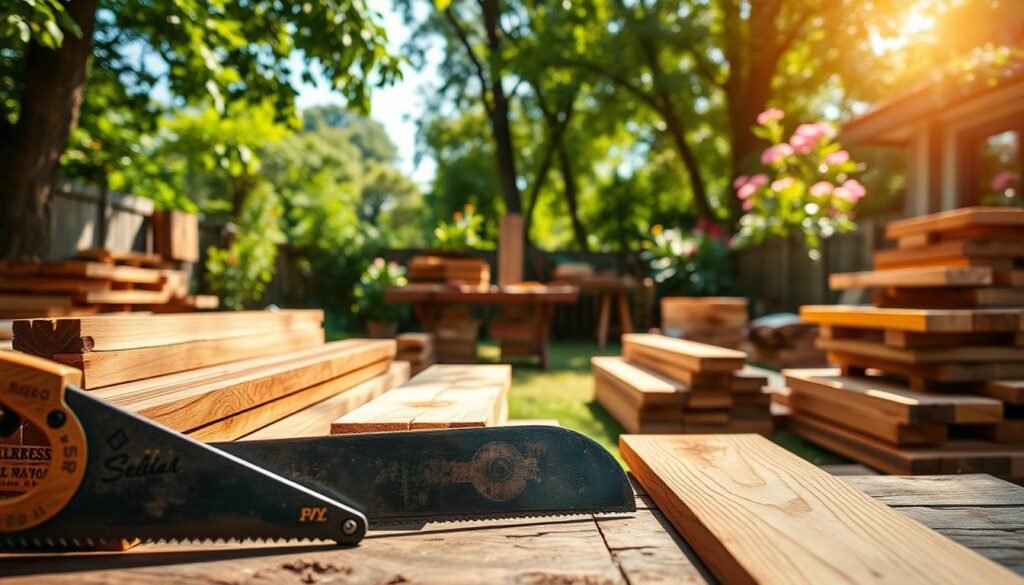
Choosing the right wood and materials is key for a long-lasting backyard shade frame. The wood type greatly affects how well it can handle weather and pests.
When picking wood, think about both durability and cost. Different woods resist rot, decay, and bugs in different ways.
Pressure-Treated Pine for Budget Builds
Pressure-treated pine is a budget-friendly choice for a shade frame. It’s treated to fight off rot and bugs, making it strong for outdoor use.
- Cost-effective: Pressure-treated pine is cheaper than other durable woods.
- Durable: The treatment helps it last longer against decay and insects.
- Wide availability: You can find it at most hardware stores and home improvement centers.
Cedar and Redwood for Natural Resistance
If you’re looking to spend more, cedar and redwood are great. They naturally resist rot and bugs without chemicals.
- Cedar: It has a scent that keeps bugs away and oils that fight rot.
- Redwood: It has oils that protect against decay and bugs, and it looks good too.
Cedar and redwood cost more than pressure-treated pine. But they’re a natural, chemical-free choice that’s just as durable.
4. Gather Essential Tools for Frame Construction
Before starting your DIY backyard shade frame, gather all needed tools. This will make the construction process smoother.
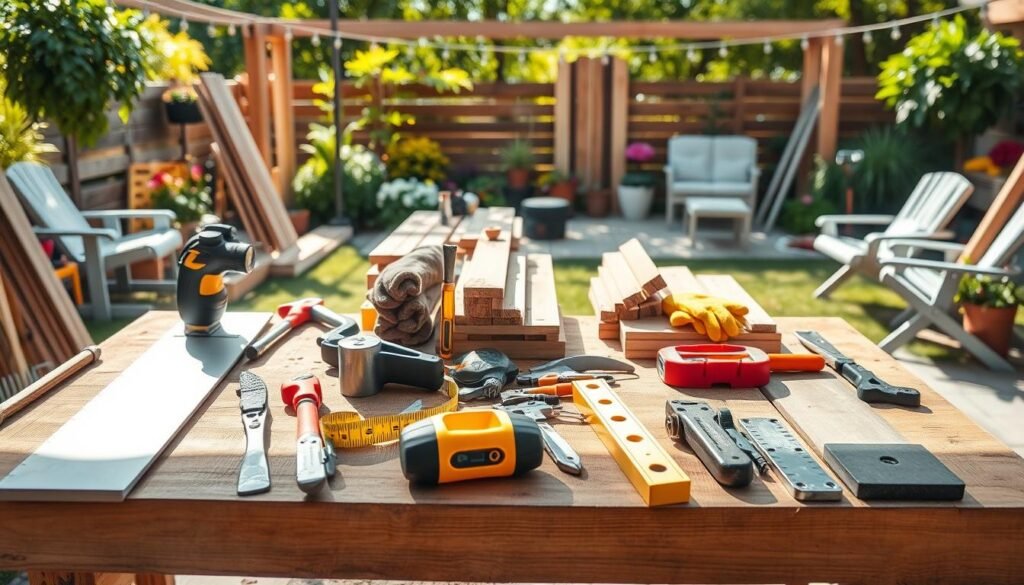
Having the right tools is key to a successful project. Here are the essential tools for building your frame:
- Power drill for drilling holes and driving screws
- Tape measure for measuring and marking lumber
- Level for ensuring the frame is level and plumb
- Saw for cutting lumber to the required size
- Hammer for tapping pieces into place
- Screwdriver for driving screws and other fasteners
- Clamps for holding the frame together while you work
You might also need safety gear like safety glasses and a dust mask. These protect you while using power tools.
With these tools, you’re ready to build your frame confidently. Always follow safety rules and tool instructions.
5. Choose a Shade Frame Design That Fits Your Budget
Choosing the right shade frame design is key to improving your outdoor space without spending too much. A good shade frame adds shade to your seating areas and makes your backyard look better.
When picking a shade frame, think about your budget and how to get the most value. Budget-friendly options include simple DIY shade sail setups and more complex designs.
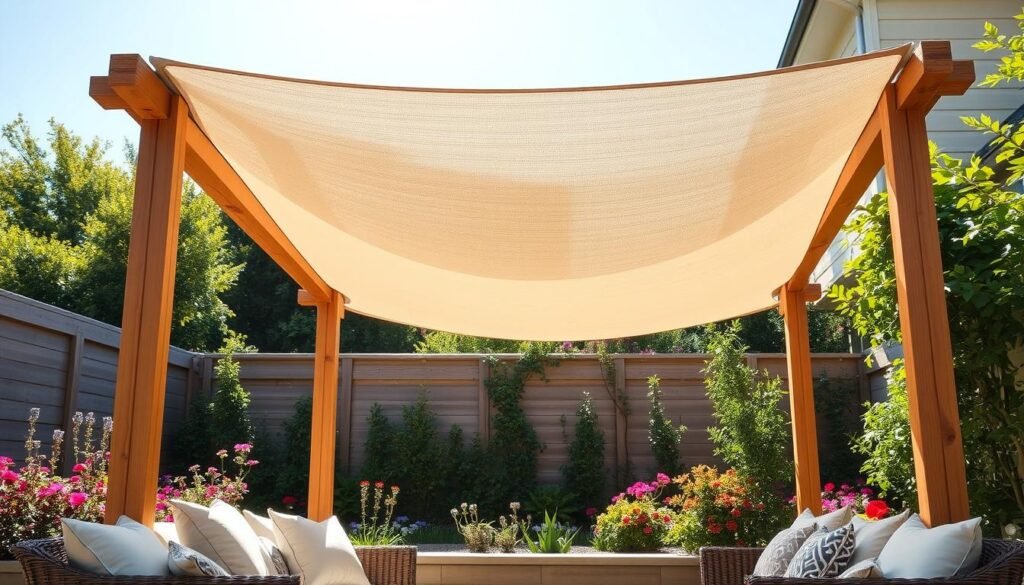
For those interested in outdoor shade sail ideas, a shade sail is a stylish and affordable choice. Shade sails are flexible, letting you create a unique shaded area in your garden or patio.
Some top sun shade sail ideas for patios are:
- Triangular shade sails for a modern look
- Rectangular shade sails for a more traditional appearance
- Combining multiple shade sails for a dynamic shade structure
Renters might find it hard to install permanent structures. But, there are renter-friendly outdoor shade options like freestanding shade sails or portable canopy tents. These are easy to set up and take down.
To make a cheap backyard patio, think about using recycled materials or affordable building supplies. This not only saves money but also makes your outdoor space unique.
In summary, finding a shade frame that fits your budget means looking at materials, size, and design complexity. By exploring different options, you can make a shaded outdoor area that’s both useful and looks great.
6. Prepare the Foundation and Install Support Posts
Building a DIY shade frame starts with a solid foundation and strong support posts. This is key for a stable and lasting backyard shade area.
First, check the spot where you’ll put your shade frame. Remove any dirt, plants, or things in the way. Then, mark where the support posts will go. Make sure they’re even and match your shade frame design.
Preparing the Foundation means checking the ground’s level and packing down the soil. This stops the ground from sinking later. You might need a level tool and a tamper or plate compactor for this.
- Look up local building rules for outdoor structure foundations in your area.
- A simple concrete footing is usually enough for DIY shade frames. Dig holes 12 inches deep and a bit wider than the post base.
- Fill the holes with concrete, then place the support posts. Make sure they’re straight and level. Wait for the concrete to harden as the maker says.
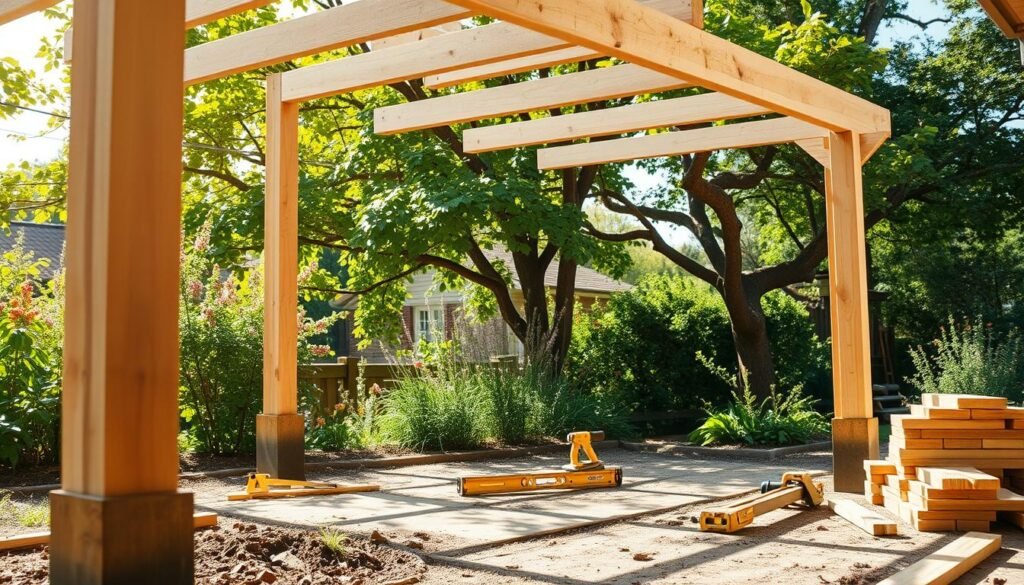
Installing Support Posts needs careful alignment and fixing. Use post levelers or temporary supports to keep the posts straight while the concrete hardens. After it’s set, you can start building the frame’s main part.
By doing these steps, you’ll have a strong base for your shade frame. It will stay stable and safe for a long time.
7. Build the Main Frame Structure Step by Step
The main frame is the heart of your backyard shade project. Building it step by step makes it strong. First, gather all the parts you’ve prepared.
Before you start, check that all wood is cut right and looks good. It’s important to use strong wood and accurate measurements for a solid frame.
Place the parts on a flat area to see how they fit. The main frame has two side frames and a top beam that links them.
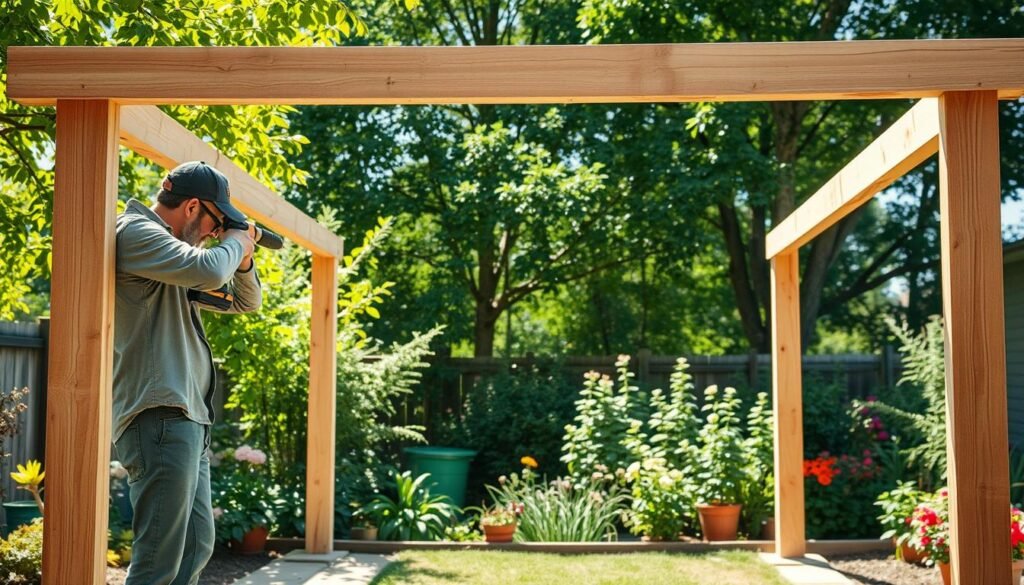
- Begin with the side frames. Use screws or nails to hold them together, making sure they’re square and strong.
- When the side frames are done, lay them side by side on the ground.
- Attach the side frames with the top beam, using the right fasteners. Ensure the structure is level and well-attached.
It’s key to double-check the measurements and the frame’s squareness to avoid problems later.
After building the main frame, check it for any flaws or weak spots. Fix anything needed before moving on.
8. Install Your Chosen Shade Covering
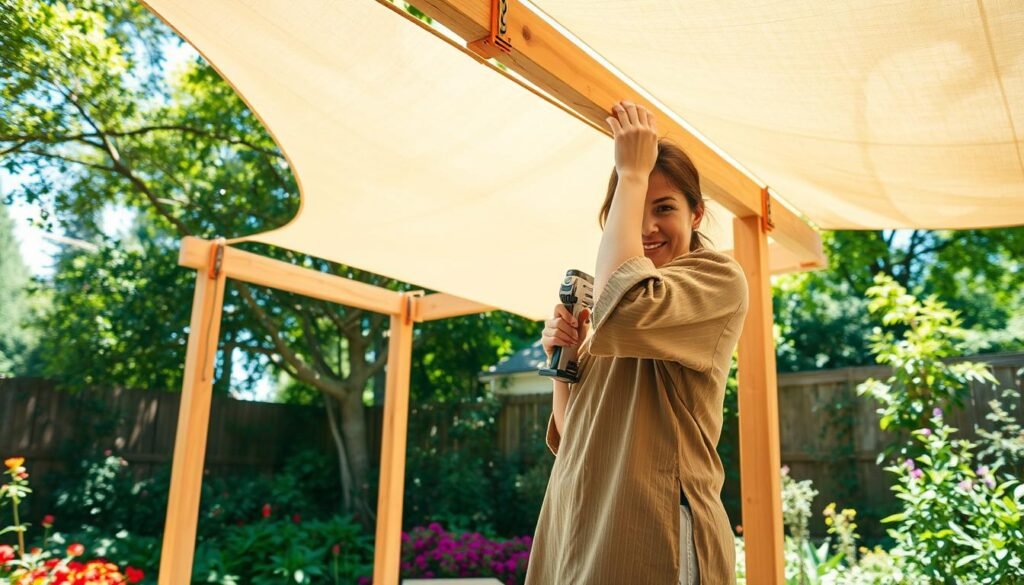
The final step is to install your shade covering. This will turn your garden seating area into a cozy spot. You can choose from fabric canopies, pergolas with shade sails, or a simple tarp for a budget-friendly option.
For a shade structure for patio, use durable materials like canvas or polyester. These are affordable and protect well against the sun.
For DIY shade outdoor ideas, consider shade sails or canopies for your frame. Start by measuring your frame to find the right shade size.
When using a fabric canopy, make sure it’s tight to avoid sagging. For outdoor shade ideas cheap, try a retractable shade that you can adjust with the weather.
Choose materials that are durable and weather-resistant for garden shade structures. UV-resistant materials will make your shade last longer.
Check your shade often for wear and tear. Do maintenance as needed. After installation, step back and enjoy your work. Make sure it’s secure and evenly spread.
With the right shade, your backyard will be more inviting for relaxation and fun.
9. Add Decorative Touches and Functional Enhancements
Make your garden more inviting with creative touches and useful upgrades to your DIY shade frame. This step is about making your outdoor area your own, showing off your style and tastes.
Decorative Ideas for Your Shade Frame
- Add twinkling string lights or fairy lights around the frame for a magical ambiance.
- Incorporate plants or flowers around the base or within the frame for a natural look.
- Hang wind chimes or other decorative elements from the frame to create a soothing atmosphere.
- Use colorful fabrics or canopies to add a pop of color and texture.
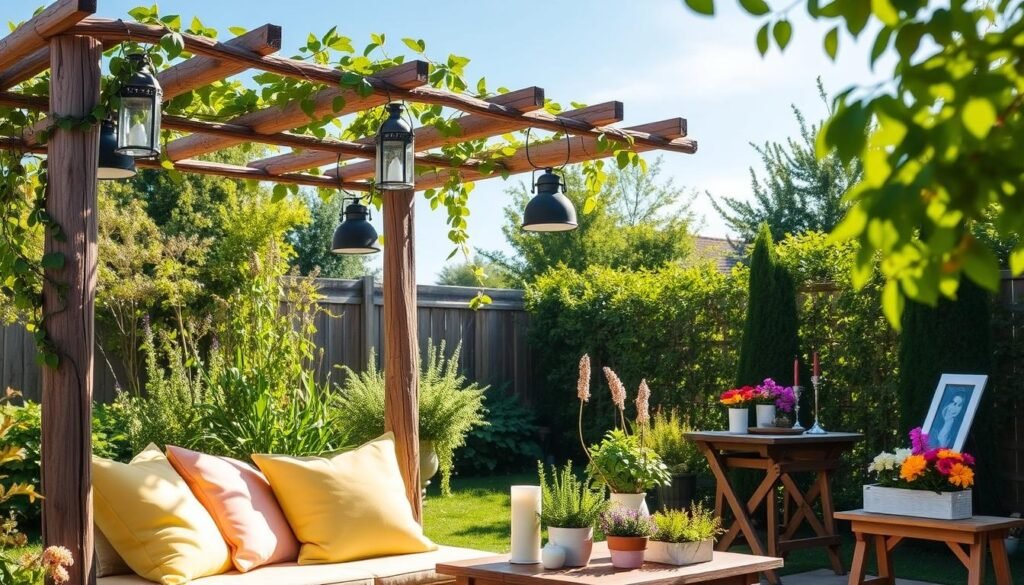
- Install outdoor lighting, such as solar-powered lights, to illuminate the area.
- Add a ceiling fan or outdoor heater to extend the usability of your shade frame across different seasons.
- Incorporate storage compartments or shelves within the frame for keeping outdoor essentials.
- Consider adding a built-in seating or a hammock for ultimate relaxation.
By adding these decorative and functional elements, you can turn your backyard shade frame into a stunning and useful part of your garden. Whether you’re into village garden decoration ideas or cinder garden themes, there’s a lot you can do.
For more ideas, check out water well decoration garden ideas or other garden DIY decor inspirations. This will help make your outdoor space truly special.
10. Weatherproof Your Shade Frame for Longevity
To make your DIY backyard shade frame last longer, weatherproofing is essential. It keeps your structure safe from the weather, making it more durable and lasting.
Using waterproof materials is a great way to weatherproof your shade frame. Choose treated wood, metal, or composite materials that fight off rot, rust, and corrosion. Also, adding a protective coating can make your frame even more weather-resistant.
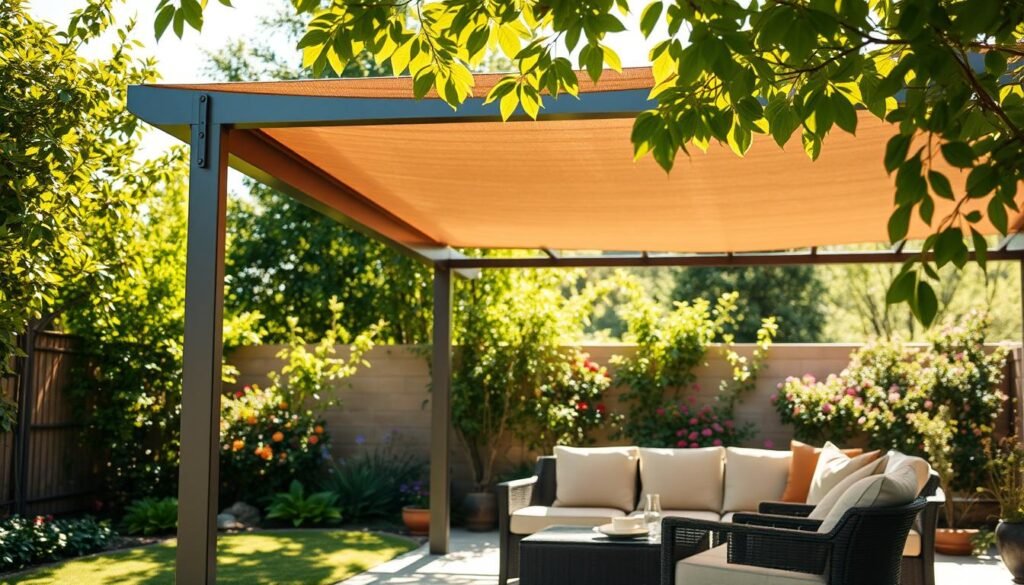
Think about linking your shade frame with other outdoor features, like a DIY rain barrel for garden or a DIY rain water barrel. Rainwater collection cuts down on water bills and gives your garden a natural water source. This approach makes your outdoor space look and work better.
Keeping your shade frame in good shape is important. Check it for damage, clean it often, and put on new protective coatings when needed. This way, you can stop small problems from getting big, keeping your shade frame in top condition.
- Use waterproof materials for construction.
- Apply protective coatings to the frame.
- Regularly inspect and maintain the structure.
- Consider integrating with rainwater collection systems.
By following these tips, you can make your backyard shade frame last longer and be more enjoyable. It will become a key part of your garden for years to come.
11. Maintain Your Backyard Shade Frame Throughout the Seasons
As the seasons change, your backyard shade frame needs care to stay strong and look good. Regular upkeep not only makes it last longer but also keeps it a cozy spot for fun and chill times.
Seasonal Checks are key to keeping your backyard shade frame in top shape. Before spring arrives, check the frame for winter damage. Look for any signs of wear, like loose screws, damaged wood, or rusty metal.
- Check the foundation and support posts for stability.
- Inspect the shade covering for tears or sagging.
- Tighten any loose fittings or screws.
In summer, the shade frame gets a lot of use. So, it’s important to keep it clean and clear of dirt. Regularly sweep away leaves and dust from the shade and frame.
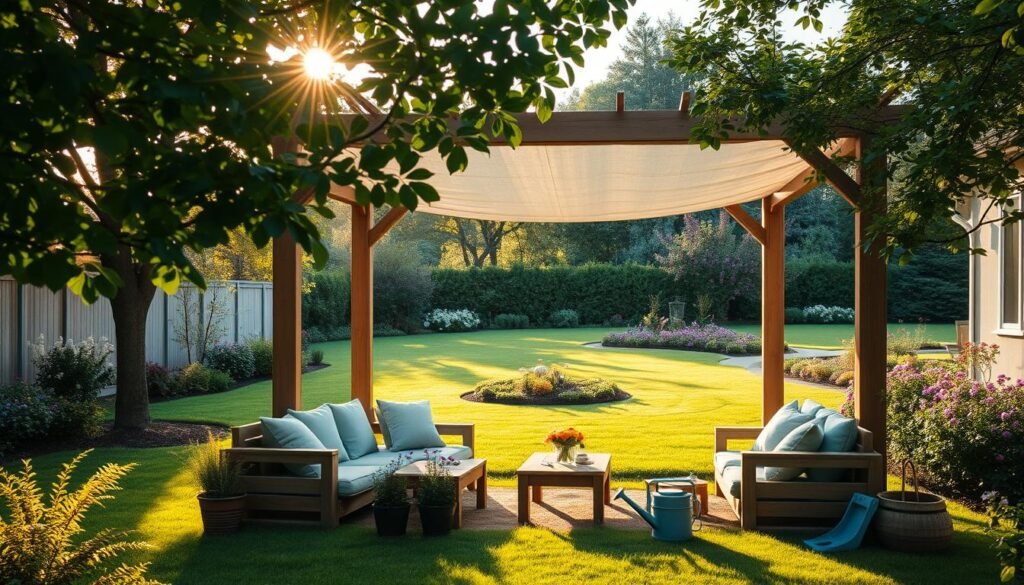
As autumn comes, get your shade frame ready for winter. Remove any debris that’s built up. Also, think about applying a protective sealant to the wood to shield it from the weather.
In winter, make sure the shade frame can handle snow and ice. Clear off any heavy snow to avoid damage to the structure.
Tips for Long-Term Maintenance
To keep your backyard shade frame in great shape, try these garden hacks and DIY garden ideas:
- Regularly inspect and maintain the structure.
- Apply protective coatings to the wood.
- Keep the area around the shade frame clear of debris.
By sticking to these easy maintenance tips, you can enjoy your backyard shade frame for many years. Use it in your garden design DIY projects and herb garden ideas.
12. Conclusion
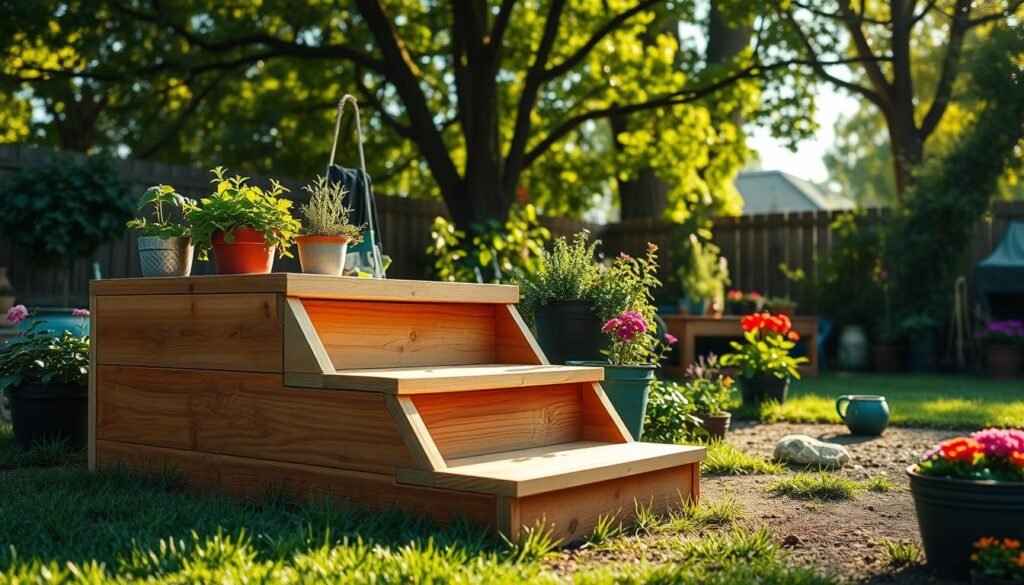
Follow these steps to make a stunning DIY backyard step platform. It will make your garden seating areas even better. Good diy backyard landscaping includes shade, water features, and trellises for a peaceful vibe.
Think about adding a diy garden water collection system, like a water barrel project. It will make your outdoor area even more special. You can also try out stick trellis or rustic branch trellis designs for more charm.
With these projects, you’ll create a welcoming outdoor space. Start planning now and enjoy a beautifully landscaped backyard.