Turning your outdoor area into a peaceful spot starts with garden privacy solutions. Many people want private areas for enjoying coffee or watching sunsets without being seen. Adding outdoor privacy screen ideas makes your space feel more personal and can even increase your home’s value.
Creating your own diy garden screen lets you be creative and save money. You can choose from sleek slats or green vertical planters. These projects can turn your lawn into a cozy spot. A strong privacy fence for garden also marks your property and keeps views out.
Choosing the right backyard privacy screen depends on your space and style. We’ll look at easy ways to build them using basic tools and little experience. Get ready to make your outdoor space more comfortable and stylish with these upgrades.
Need a Little Privacy in the Garden? A Wood Screen Can Help
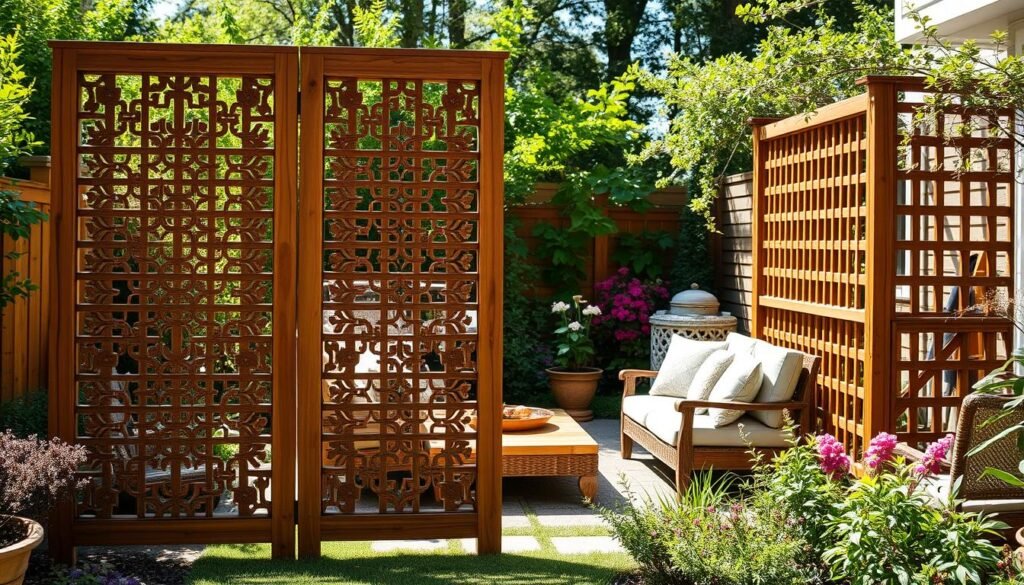
Looking for a private spot in your garden? A wooden privacy screen is a great choice. They are durable and look good, making them a favorite for garden privacy. You can customize them to fit your garden’s size and shape.
A wood screen can make your backyard seating area cozy and private. It blocks views from neighbors or the street. This way, you can enjoy your outdoor space without feeling watched.
Durability and Aesthetic Appeal of Wooden Screens
Wooden screens are built to last through different weather. Treated wood, for example, fights off rot, decay, and bugs. This means your screen will stay strong for many years.
Also, you can stain or paint wooden screens to match your garden’s look. They come in various woods and styles. This lets you match them with your outdoor furniture and garden design.
Popular woods for garden screens include cedar, redwood, and pressure-treated pine. Each wood has special qualities. Cedar resists rot and bugs, redwood is durable, and pressure-treated pine is affordable and treated to resist damage.
- Cedar is known for its natural beauty and resistance to rot and insects.
- Redwood is durable and can withstand harsh weather conditions.
- Pressure-treated pine is a cost-effective option that is treated to resist rot and insect damage.
Classic Lattice Trellis Designs for Climbing Plants
Lattice trellises have been a key part of garden design for centuries. They bring beauty and privacy to your garden. They also give climbing plants a place to grow, creating a natural screen.
A classic lattice trellis design is both useful and beautiful. The lattice pattern lets you get creative with your design. You can choose from simple to complex patterns, fitting many garden styles.
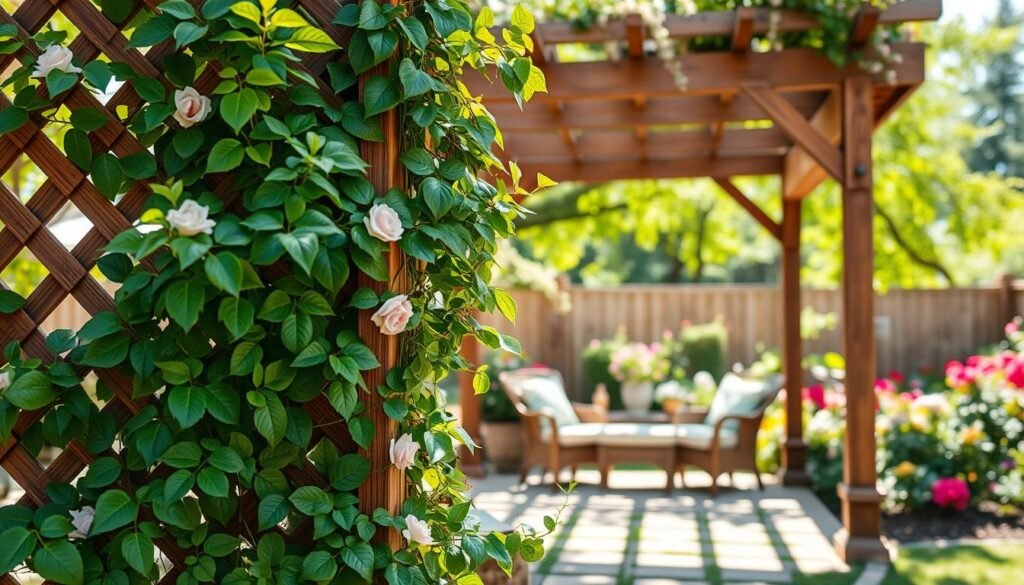
Choosing the right climbing plants is key for a good privacy screen. Look for plants that grow well, are dense, and fit your climate.
- Clematis: Offers beautiful flowers and can grow densely.
- English Ivy: Evergreen and fast-growing, ideal for year-round privacy.
- Roses: Climbing roses add beauty and fragrance, though they may require more maintenance.
When picking climbing plants, think about sunlight, soil, and how much care you want to give. A well-made lattice trellis with the right plants makes a DIY privacy lattice. It makes your garden more beautiful and private.
Modern Horizontal Slat Privacy Walls
If you’re looking to add a touch of modernity to your outdoor space, a horizontal slat privacy screen is a great option.
Modern horizontal slat privacy walls are not only stylish but also provide an effective solution for creating seclusion in your garden or backyard seating areas.
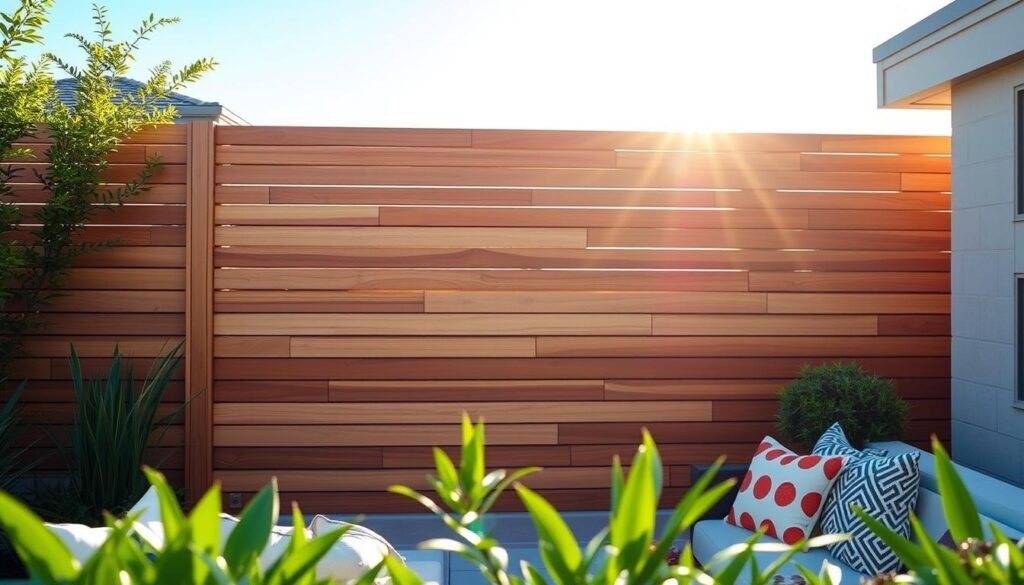
When it comes to building a DIY screen wall, the choice of material is key. Durable materials like cedar, recycled plastic, or metal are best for outdoor privacy panels. They resist weather and last long.
For a privacy walls outdoor installation, consider these tips:
- Choose a design that complements your garden’s aesthetic.
- Ensure the slats are evenly spaced for optimal privacy and visual appeal.
- Use a level to guarantee straight installation.
- Secure the structure firmly to withstand outdoor conditions.
By following these guidelines and selecting the right materials, you can create a sleek and functional horizontal slat screen. It will enhance your outdoor living space.
Functional Planter Box Privacy Screens
Looking for a practical and pretty solution for your garden’s privacy? Consider functional planter box privacy screens.
These screens block unwanted views and add greenery to your outdoor space. They create a natural barrier that makes your garden more beautiful.
Benefits of Planter Box Privacy Screens:
- Enhanced privacy without losing beauty
- Added greenery to your outdoor space
- Flexibility in design and plant selection
- Can be used to section off different areas of the garden
Choosing the Right Plants for Your Planter Box Screen
Choosing the right plants for your planter box screen is key. It’s important for privacy and beauty.
Look for plants that are dense, tall, and grow well. Some good choices are:
- Bamboo
- Climbing vines like ivy or clematis
- Tall grasses
- Evergreen shrubs
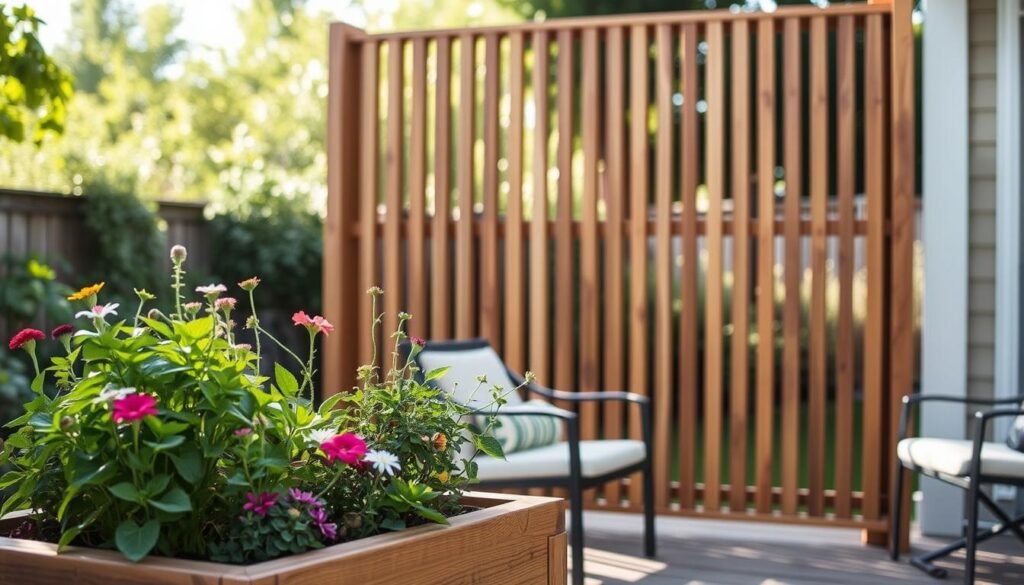
Think about your climate, how much care the plants need, and how much sun they get. This will help you pick the best plants.
By picking the right plants and designing your screen well, you can make a beautiful and useful privacy solution for your garden.
Folding Screen Dividers for Flexible Seating
Looking for a way to add privacy to your outdoor seating? Consider a folding screen divider. These dividers are not only useful but also enhance your garden or backyard’s look.
Folding screen dividers are great for flexible seating. They can be moved or folded away when not needed. This makes them perfect for spots where you need temporary privacy.
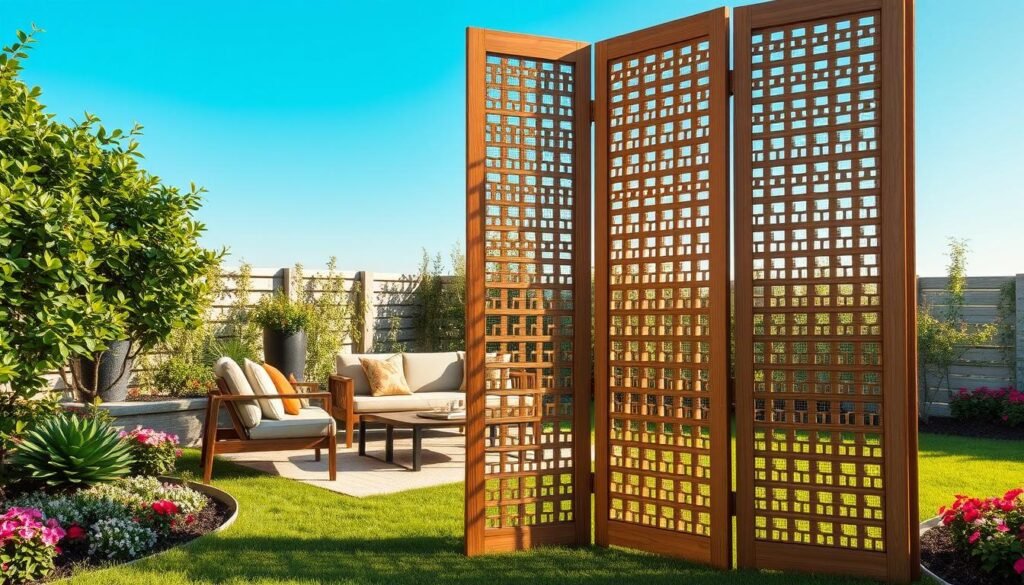
Creating your own folding screen divider can be a fun DIY project. Here are some ideas to get you started:
- Repurpose Old Screens: Use old room dividers or screens and give them a new life by adding outdoor-friendly materials like bamboo or weather-resistant fabric.
- Use Natural Materials: Incorporate natural elements such as branches, reeds, or plants into your screen divider for a more organic look.
- Add Lighting: Incorporate solar-powered lights or string lights into your divider to create ambiance in the evening.
- Customize with Art: Make your divider a statement piece by adding art or decorative panels that reflect your personal style.
When designing your DIY folding screen divider, think about the material, size, and mobility. It should be sturdy enough to stand alone but light enough to move easily.
For more complex designs or if you prefer an easy solution, many pre-made folding screen dividers are available for outdoor use.
Natural Living Walls with Pleached Trees
Pleached trees are a great choice for garden privacy. They offer a natural way to create a living wall. This approach adds beauty and function to your garden.
Pleaching trains trees to grow in a specific shape. It turns your garden into a stunning natural screen. This not only beautifies your garden but also gives you privacy.
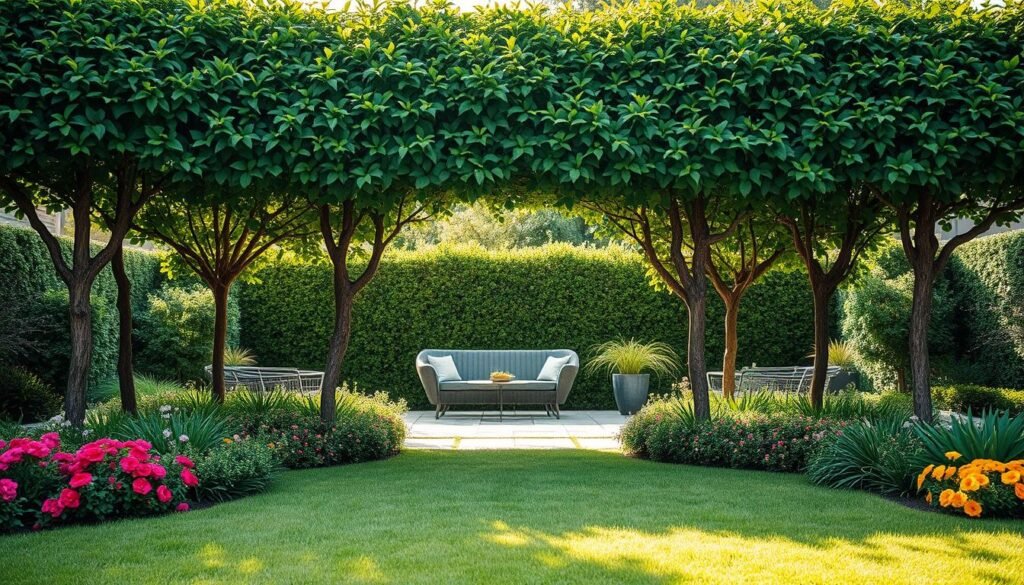
To make a natural living wall with pleached trees, you need to plan and maintain it. Here’s how to do it:
- Choose the Right Trees: Pleached lime trees are popular for their beauty and versatility. You can also use other trees based on your climate and style.
- Plant Trees Correctly: Plant the trees at the same distance apart. Make sure they get enough sunlight and water.
- Train the Trees: Use a framework or trellis to shape the trees. Prune them regularly to keep their shape and promote growth.
- Maintain the Trees: Prune the trees every year to keep their shape. This ensures they continue to offer privacy.
By following these steps and picking the right trees, you can make a beautiful natural wall. It will enhance your garden’s privacy and look.
Benefits of Pleached Trees for Privacy
- Pleached trees offer a natural way to keep your garden private.
- They can fit any garden size or shape.
- They add beauty to your garden, making it unique and stunning.
Woven Branch and Reed Fencing Alternatives
Looking for a natural way to keep your garden private? Woven branch and reed fencing is a great choice. It adds beauty and privacy to your outdoor area.
Woven branch and reed fencing uses materials that are good for the planet. It’s made from natural stuff that breaks down easily. This makes it a green option for garden lovers.
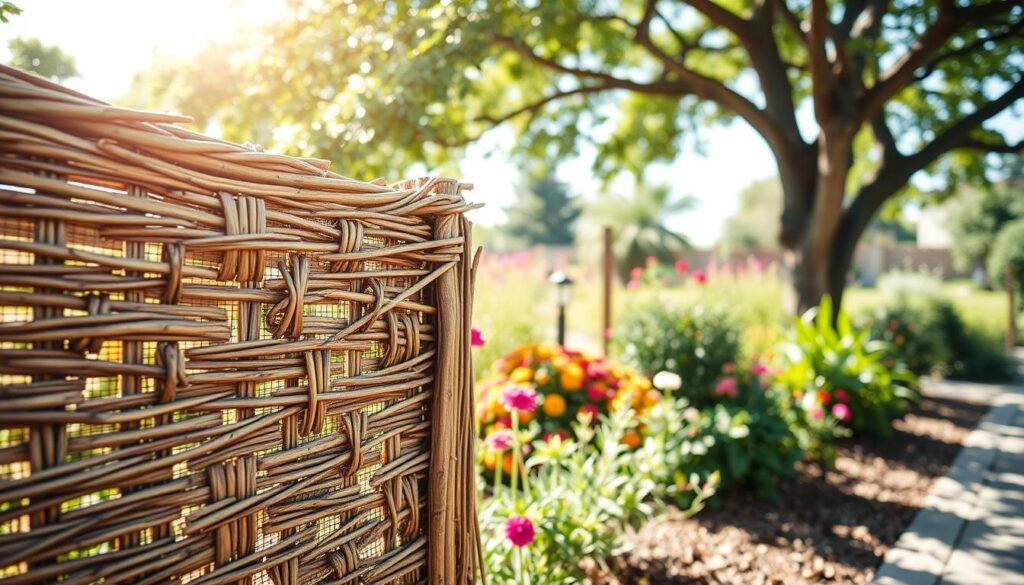
To make a woven branch and reed fence, start by getting your materials. You’ll need branches, reeds, and something to hold the fence up.
- Find branches and reeds that are good for the environment or buy them at a garden store.
- Clean and cut the materials to the right size.
- Build a base for your fence with wooden posts or a ready-made frame.
- Start weaving the branches and reeds onto the frame, securing them as you weave.
This fencing is not just a natural fencing alternative. It also helps animals and can divide big gardens.
Adding woven branch and reed fencing to your garden makes it more private and peaceful. It also helps the environment.
Creative Upcycled and Repurposed Privacy Barriers
Using upcycled materials for your garden privacy screen is good for the planet. It also makes your garden look unique. You can turn old items into a privacy barrier that shows off your style.
DIY Projects for Upcycled Privacy Screens are fun and rewarding. You can make a privacy screen from old pallets. Just arrange them, attach them, and add plants or trellises for decoration.
DIY Projects for Upcycled Privacy Screens
Here are some more DIY backyard privacy ideas:
- Make a privacy barrier from old fencing.
- Use an old door or gate as a garden decoration.
- Build a living wall with a trellis and climbing plants.
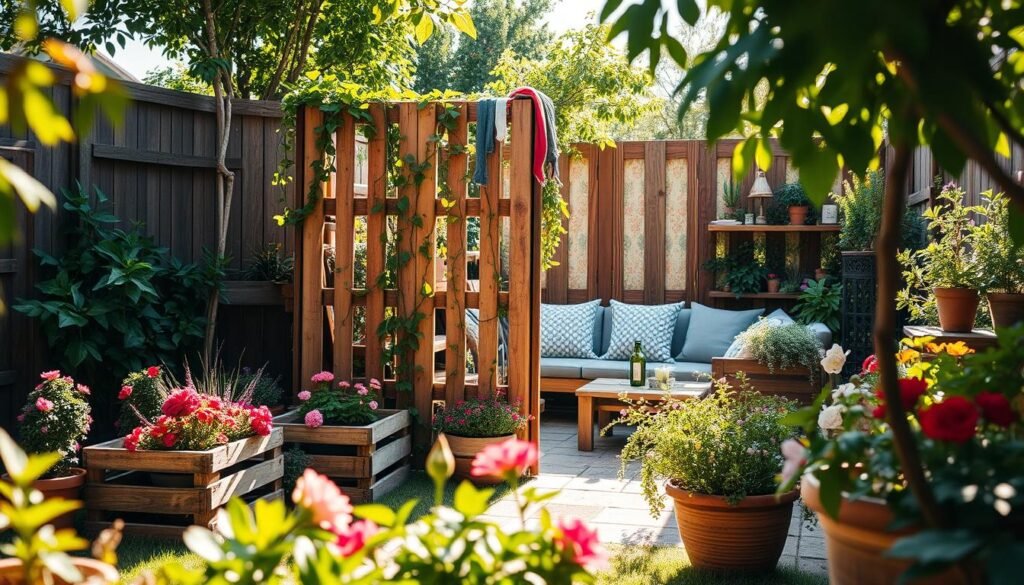
These repurposed fencing ideas bring creativity to your garden. They also serve a purpose. Using upcycled materials for privacy screens makes your outdoor space special.
For more DIY privacy patio ideas, try bamboo or reeds. They’re good for the environment and make your garden beautiful.
Conclusion
Adding a DIY garden privacy screen to your backyard can make it a peaceful retreat. You can choose from many designs, like a classic lattice trellis or a modern slat wall. Each option can improve your backyard’s privacy.
Think about adding garden privacy plants to your screen for a lush feel. Or, try a privacy fence or a woven branch and reed fence for something different.
With these ideas, you can make a private outdoor space for relaxing and having fun. Pick the right materials and design for your DIY screen. Then, enjoy a quiet and private oasis right at home.