Tangled hoses and lost cans make outdoor work hard. Building your own diy watering station can change that. It keeps your tools neat and organized.
Using smart garden watering ideas saves you time and effort. This project makes gardening more efficient. It puts all your equipment in one easy-to-reach place.
Creating this backyard watering station also makes your space look better. It keeps your gear safe from bad weather. Having a place for everything makes daily tasks easier. Start this easy project today for a better outdoor area.
A Backyard Watering Station Makes Gardening Faster & Easier
Having a dedicated area for watering your garden can change how you garden. It makes watering easier and saves you time.
Saving Time and Effort
A good outdoor watering system puts all your tools in one spot. This makes it quicker to get what you need. It also cuts down on the strain from running back and forth.
Also, a central watering station keeps your garden tidy. It stores hoses and cans in one place. This makes gardening easier by keeping everything within reach.
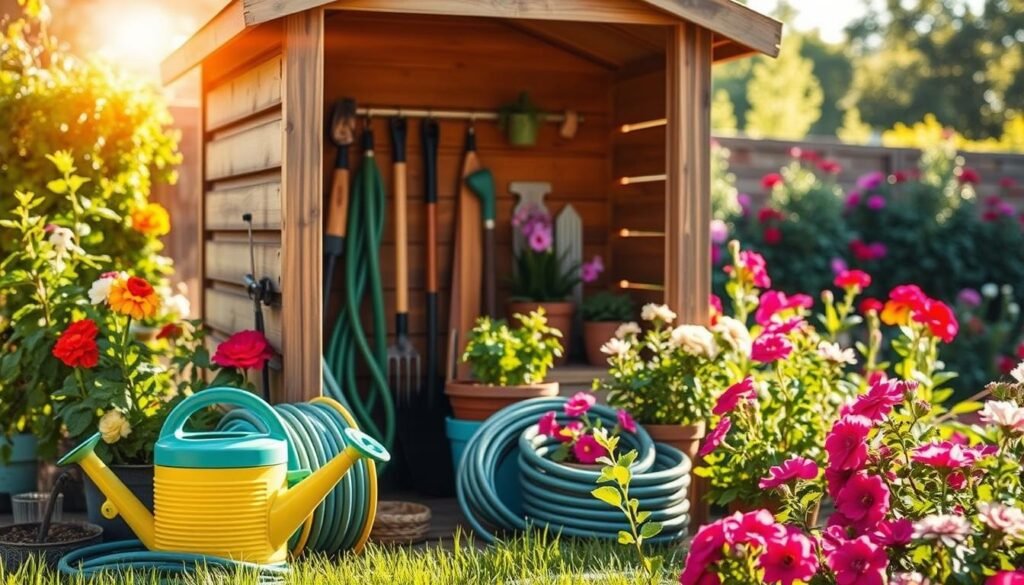
An efficient backyard garden watering system also makes it easier to get around. It’s great for gardeners with mobility issues. It means no more heavy cans or tangled hoses.
- Reduces time spent on gardening tasks
- Decreases physical strain
- Minimizes clutter
- Improves accessibility for all gardeners
Setting up a backyard watering station makes gardening better. It’s a simple way to make gardening faster, easier, and more fun.
Essential Components for Your Watering Hub
A well-designed watering hub is key for any serious gardener. It makes watering easier and more efficient. An effective watering solution has several important parts that work together.
A backyard gardening station needs good hose storage. This keeps your garden clean and your hose in good shape. Look for a sturdy reel or hook system to hold your hose securely.
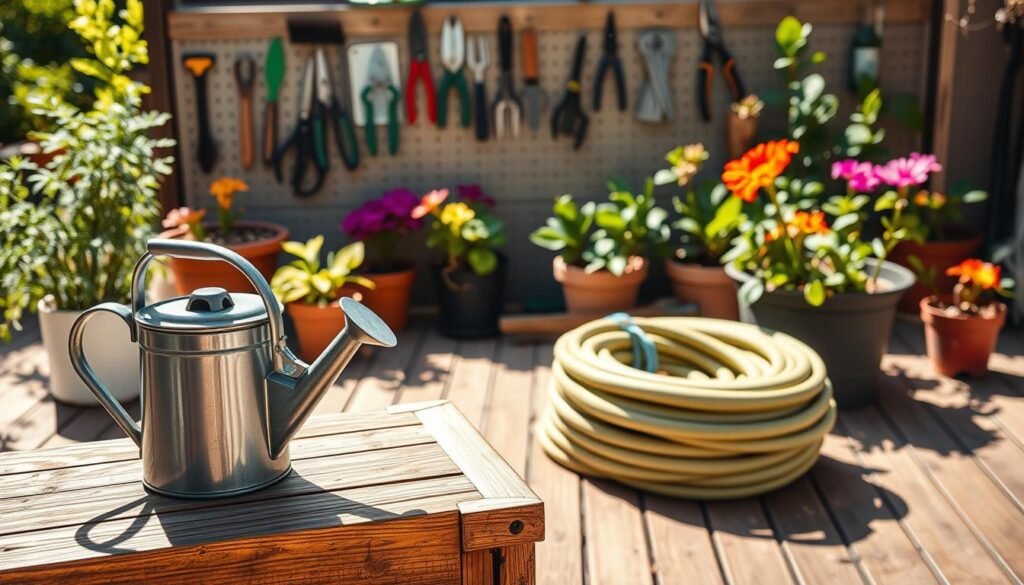
A watering can holder is also vital. It keeps your watering cans off the ground and organized. Don’t forget a spot for your sprayers and other tools, so everything is in one place.
For advanced gardening, consider a DIY drip irrigation system. It delivers water right to your plants’ roots. This cuts down on waste and ensures your plants get the right moisture.
To set up a DIY drip irrigation system, you’ll need a few things. These include a water source, tubing, drippers, and a filter. Adding these to your watering hub makes your garden more efficient.
- A reliable water source
- Tubing and drippers for water distribution
- A filter to prevent clogging
- A timer or controller for automated watering
With these key components, your watering hub becomes a full backyard gardening station. It simplifies your gardening and helps your garden flourish.
Wall-Mounted Hose Storage Solutions
Maximizing garden space is key, and wall-mounted hose storage solutions help a lot. An organized garden looks better and makes gardening easier.
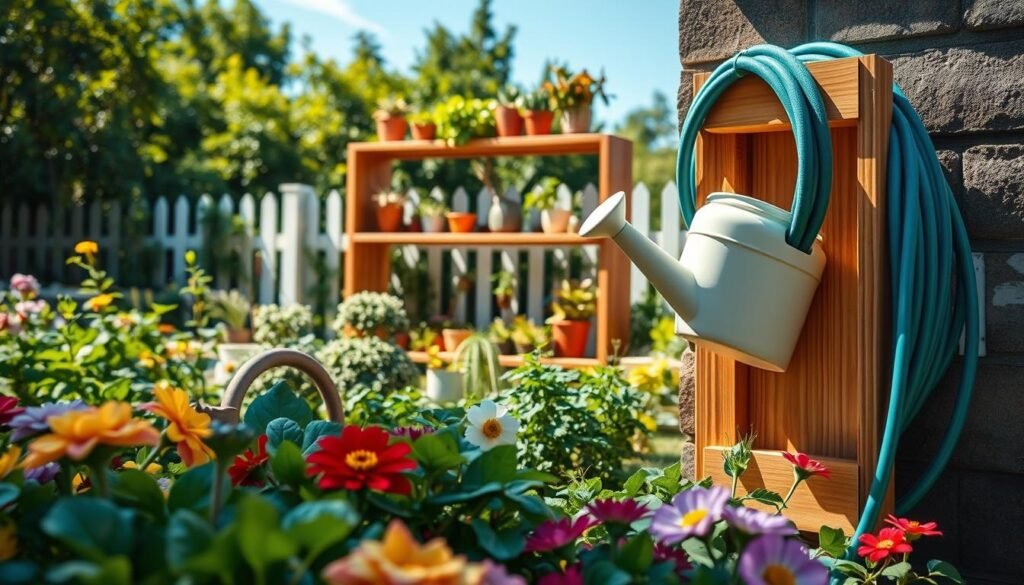
One easy DIY garden project is a wall-mounted hose storage. Use a wooden or plastic grid, also called a garden grid, on your garden wall. It holds your hose, tools, and accessories, making them easy to find.
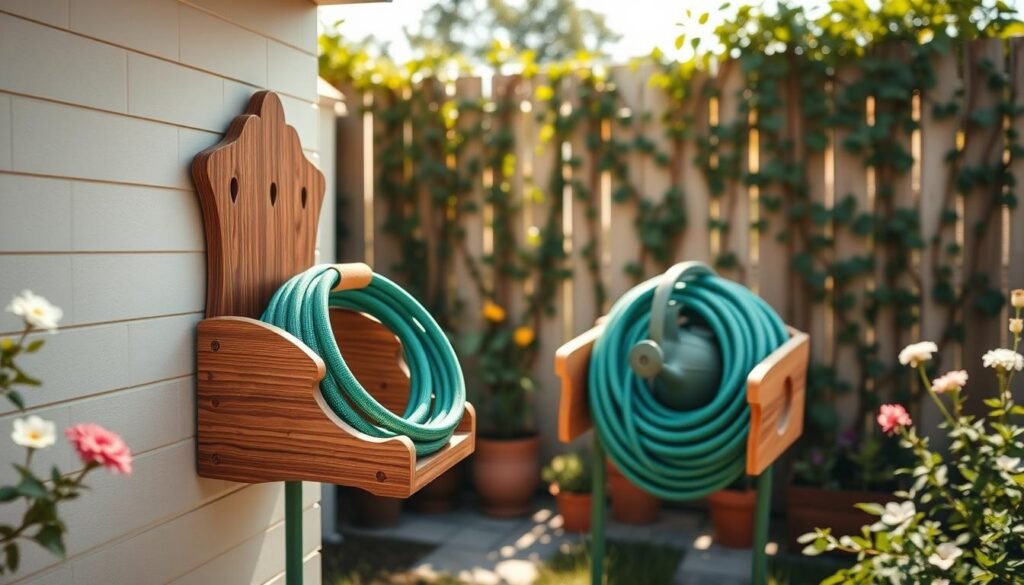
First, pick a good spot for your storage. It should be easy to get to and near your gardening area. Then, attach the grid to the wall with screws or brackets. The grid is a great place to hang your hose, gloves, and tools.
Wall-mounted storage also keeps your garden floor clear. This reduces tripping hazards and makes it easier to move around. It’s very helpful in busy gardens or those with little space.
Using garden hacks diy like wall-mounted hose storage improves your gardening. It keeps your tools organized and makes your garden look professional. If you’re into self-watering containers, add a storage system for your watering cans too.
- Choose a sturdy material for your wall-mounted storage to ensure it can hold the weight of your hose and tools.
- Consider the height at which you mount your storage to ensure it’s accessible from various angles.
- Keep your most frequently used gardening tools at eye level for easy access.
Vertical Shelving for Watering Cans and Sprayers
In gardening, every inch counts. Using vertical space with shelving can make a big difference. It keeps essentials within easy reach.
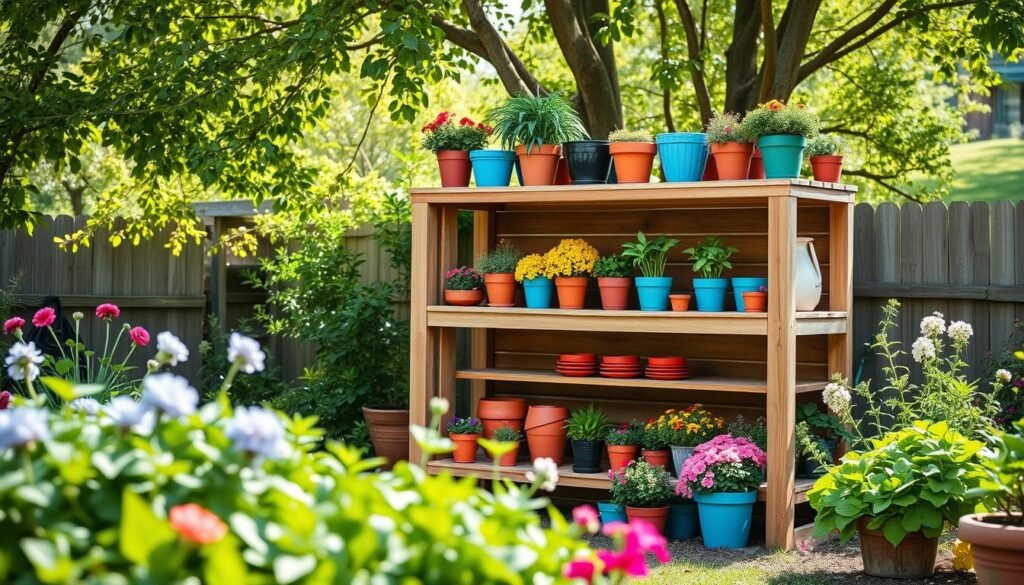
For gardeners, keeping things organized is key. Vertical shelving is a smart way to store watering cans and sprayers. It keeps them off the ground and easy to get to.
There are many types of vertical shelving for gardening. Wall-mounted shelves save floor space. Freestanding units fit in corners or against walls, giving lots of storage without losing mobility.
- Maximizes storage space in small gardening areas
- Keeps watering cans and sprayers organized and easy to access
- Enhances the overall efficiency of gardening tasks
For those into vertical gardening or improving their home vegetable garden, vertical shelving is a big help. It keeps the area tidy and makes gardening more fun.
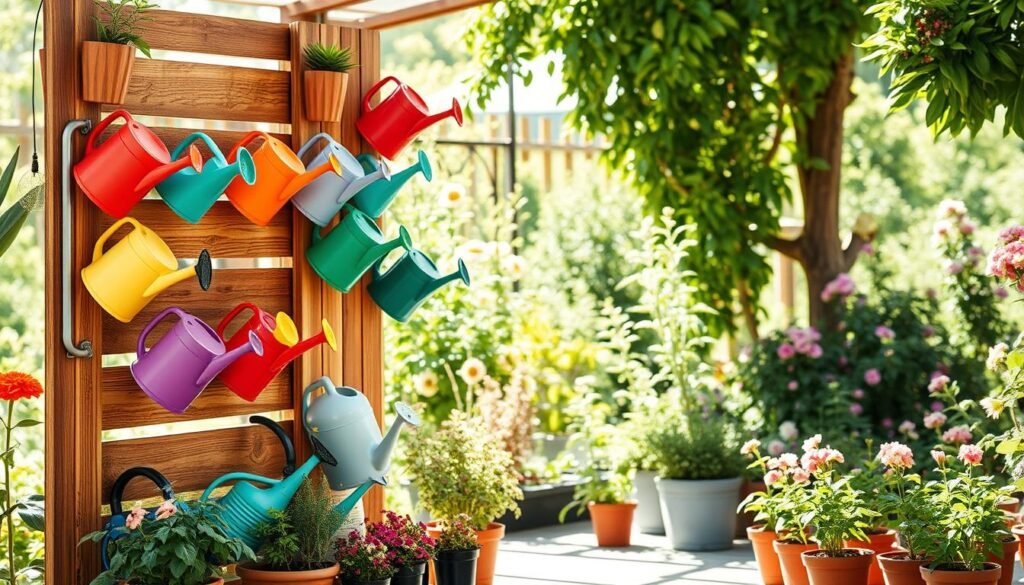
Using vertical shelving makes gardening more efficient. It’s great for container gardening vegetables or self-watering planters. It keeps tools and supplies in order.
Integrating Rainwater Harvesting Systems
Adding a rainwater harvesting system to your DIY garden watering station is a smart move. It cuts down on your need for city water and helps manage stormwater better. This makes your garden more sustainable.
A rainwater harvesting system collects and stores rainwater for later use. It gives you a natural, chemical-free water source for your garden. Using rainwater can lower your water bills and make your garden more self-sufficient.
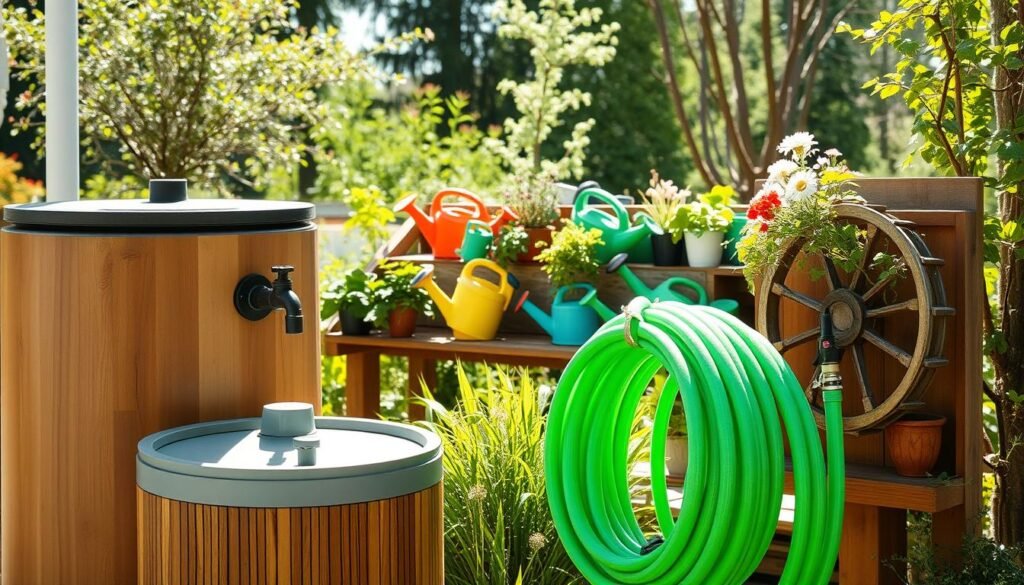
There are many benefits to using a rainwater harvesting system in your garden. Some key advantages include:
- Lower water bills because you use less city water
- A greener gardening method that uses natural rain
- Less stormwater runoff, which helps manage water better
- A chemical-free water source that’s better for plants
By adding a rainwater harvesting system to your watering station, you make gardening more efficient and eco-friendly. It meets your garden’s needs and supports a greener gardening approach.
Incorporating Drip Irrigation Manifolds
Drip irrigation manifolds are key to saving water in gardens. They make sure water goes exactly where it’s needed.
A drip irrigation system design with a manifold sends water straight to plant roots. This cuts down on water waste and helps plants grow better by reducing evaporation and runoff.
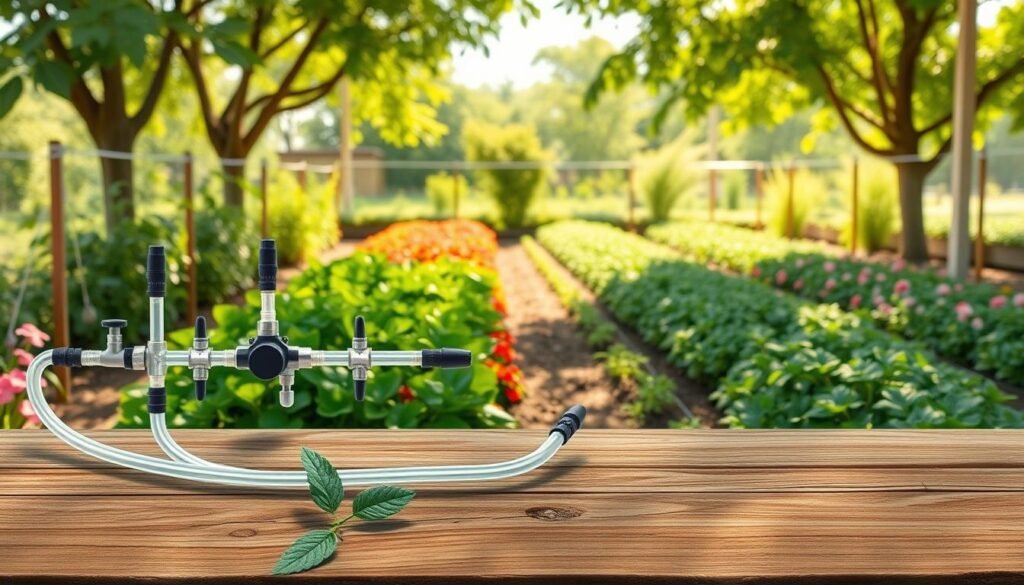
When you’re setting up your irrigation system diy, adding a drip irrigation manifold is vital. It’s the main hub for your drip irrigation system. It lets you control water flow to different garden areas.
Here are some main perks of using a drip irrigation manifold:
- It makes water use more efficient by targeting roots.
- It cuts down on water loss from evaporation and runoff.
- It keeps plants healthy with steady moisture.
- It makes managing and fixing your irrigation system easier.
For an irrigation system design that’s both effective and simple, a drip irrigation manifold is a must. It makes watering your garden simpler, perfect for gardeners of any skill level.
To start your drip irrigation diy project, think about your garden’s layout and what your plants need. This will guide you in setting up your drip irrigation manifold and irrigation system.
Creative Storage for Garden Tools and Accessories
A well-organized garden is a gardener’s dream. Creative storage for tools and accessories is essential. It keeps your garden tidy and makes the most of your space.
Garden tools and accessories can quickly clutter your space. Effective storage solutions keep your tools organized and protected from the elements. This helps them last longer.
Repurpose items you might throw away for creative storage. Old pallets can become shelving or tool holders. You can also use hanging organizers for garden tools.
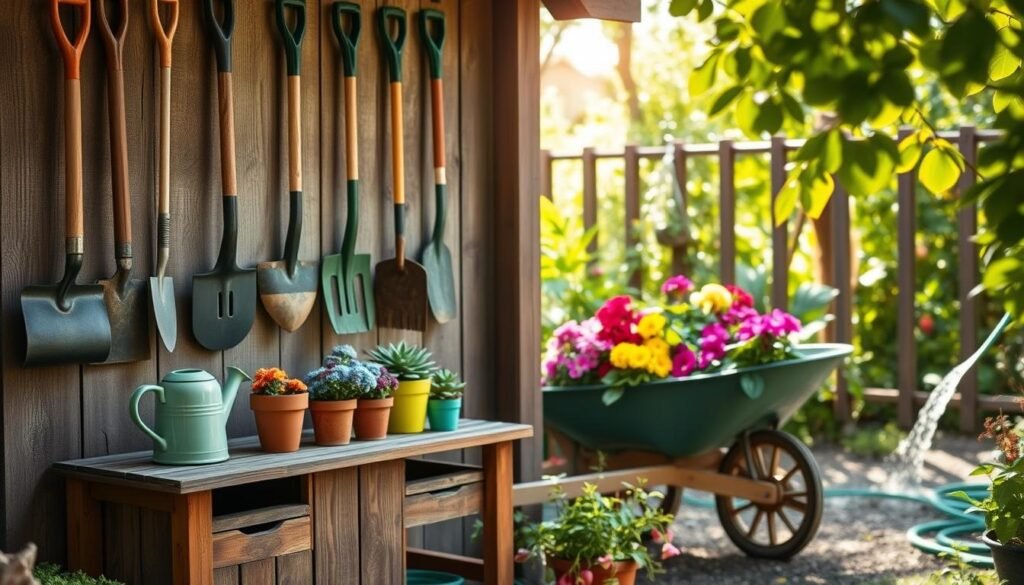
For garden tools storage, try DIY projects. Build a wooden shed or a pegboard to keep tools handy. Use stackable containers or mason jars for small items like seeds and gloves.
If you’re starting with hydroponic gardening for beginners, you’ll need space for nutrients and grow lights. Use vertical space with shelving or hanging baskets to keep things organized.
Here are some garden irrigation ideas DIY that also offer storage:
- Install a hose reel or retractable hose to keep your watering system organized and prevent kinks.
- Use a watering can holder or a designated shelf for your watering cans and sprayers.
- Consider a drip irrigation manifold with labeled outlets to simplify your irrigation system.
These creative storage solutions improve your gardening space’s functionality. They make gardening more efficient and enjoyable.
Building Self-Watering Planter Stations
Building a self-watering planter station is a great DIY project for gardeners. It lets plants get water when they need it. This means you water less often and your plants stay moist.
Benefits of Self-Watering Planter Stations include healthier plants and less water waste. They’re perfect for busy gardeners or those who often forget to water.
To make a self-watering planter, you’ll need a big container, a water reservoir, and a wicking system. Bucket gardening is a simple way to start. Use a large bucket as the planter and add a self-watering feature.
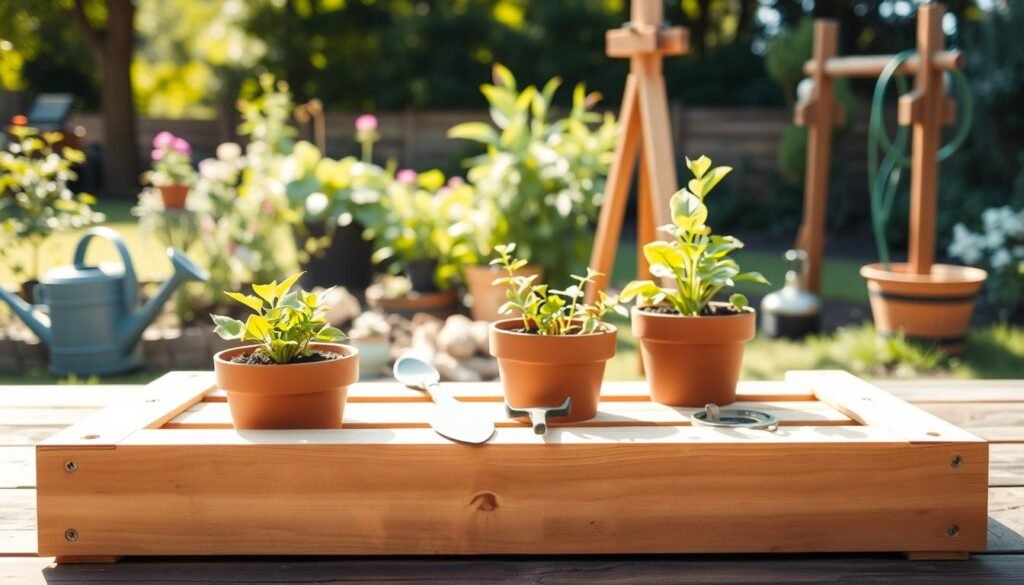
- Choose a suitable container that can hold both the soil and the water reservoir.
- Design a wicking system using materials like cotton rope or a water-absorbing fabric.
- Implement a separator between the soil and the water reservoir to prevent mixing.
- Ensure adequate drainage to prevent waterlogged soil.
Adding self-watering raised garden beds or planter stations to your garden is a smart move. You’ll have healthier plants and a better watering system. It makes gardening easier and helps save water.
If you want to try more advanced self-watering plants systems, think about adding drip irrigation or automated watering. These can make your planter stations even more efficient.
Safety and Maintenance Tips for Your Station
Keeping your DIY garden watering station safe and well-maintained is key. It helps it last longer and work better. Regular upkeep is essential for both.
Regular Maintenance Tasks include checking hoses for leaks and cleaning filters. Also, check the sprinkler system diy for damage or wear.
- Check hoses for signs of wear and tear.
- Clean filters regularly to maintain water pressure.
- Inspect the water catchment system diy for debris and contamination.
Safety Precautions are also vital. Make sure your station is on a stable surface. Keep all electrical parts away from water to prevent accidents.
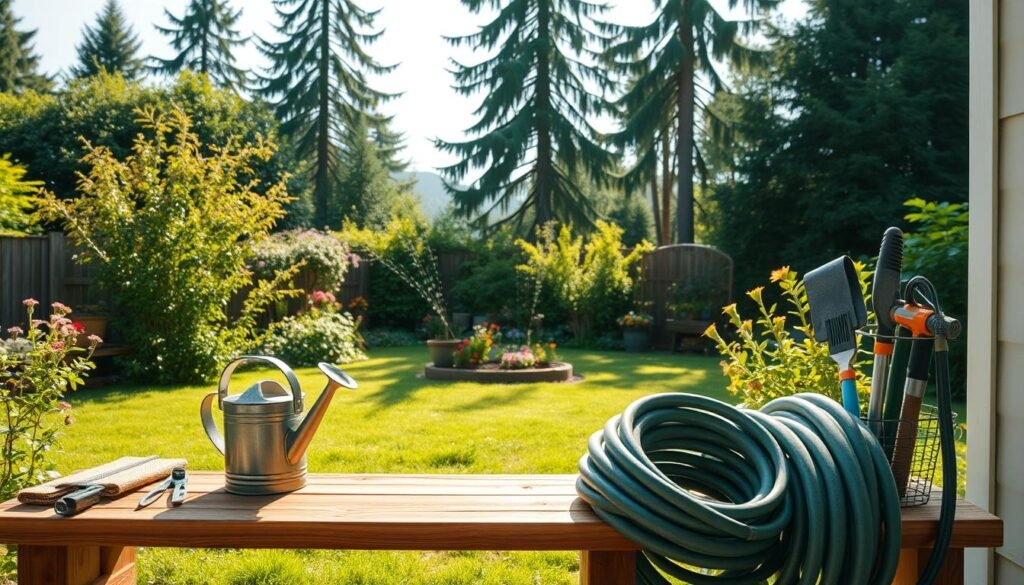
By sticking to these maintenance tips and safety rules, your watering station will be safe and functional for many years.
Budget-Friendly DIY Hacks for Watering Efficiency
Improving your garden’s watering doesn’t have to cost a lot. Here are some easy DIY hacks to make your garden’s watering system better. These affordable ideas can make your garden healthier and save water. DIY Hydroponics System is a great way to make watering more efficient. It’s not as hard as it sounds and can be done on a budget.
You can make a Kratky Hydroponics DIY system with simple materials like PVC pipes and nutrient solutions. This method lets plants grow in water and nutrients, not soil. It uses less water.
Building a DIY Hydroponic Tower is another smart choice. It saves space and uses less water. You can grow many plants in a small area, all while saving water.
If you want to make your garden’s watering better, try these DIY hacks:
- Use rain barrels to collect rainwater for irrigation, reducing the demand on municipal water supplies.
- Implement a drip irrigation system, which delivers water directly to the roots of plants, minimizing evaporation and runoff.
- Utilize soaker hoses, another efficient way to deliver water directly to the soil.
Adding these DIY hacks to your garden watering system makes gardening more efficient and sustainable. These solutions not only save you money on water bills but also help your garden thrive.
In short, making your garden’s watering better doesn’t need to cost a lot. With these DIY hacks and maybe some hydroponics, you can have a greener and more efficient garden.
Conclusion
Creating a DIY garden watering station makes gardening easier and more fun. Using a rain water harvesting system can cut down your water bills. It also helps you garden in a more eco-friendly way.
A good watering station has all you need right there. This includes drip irrigation and self-watering planters. These features help save water and keep your plants healthy.
Following the steps in this article, you can build a watering station that works for you. It’s perfect for both new and experienced gardeners. A DIY watering station can really improve your gardening skills.