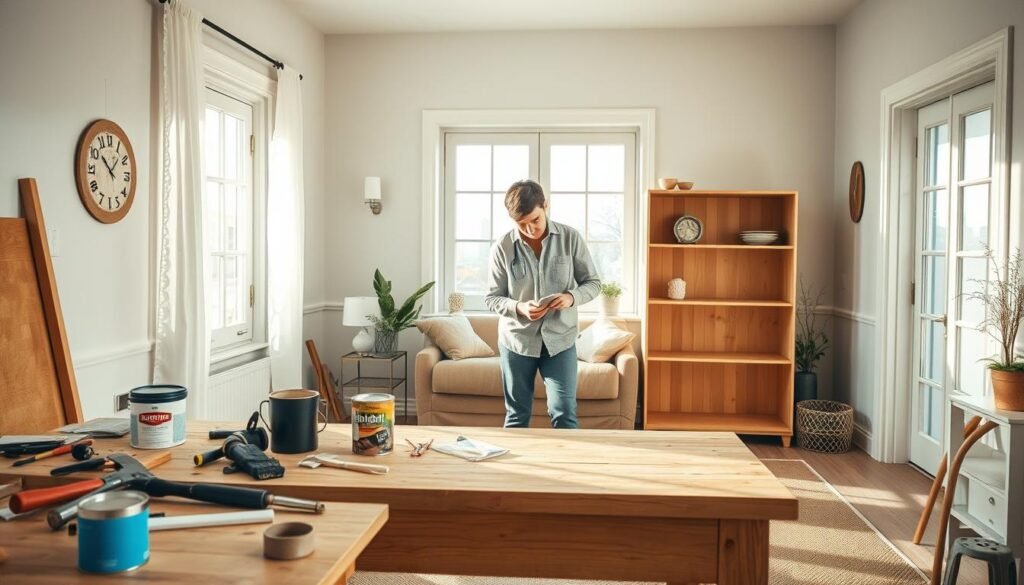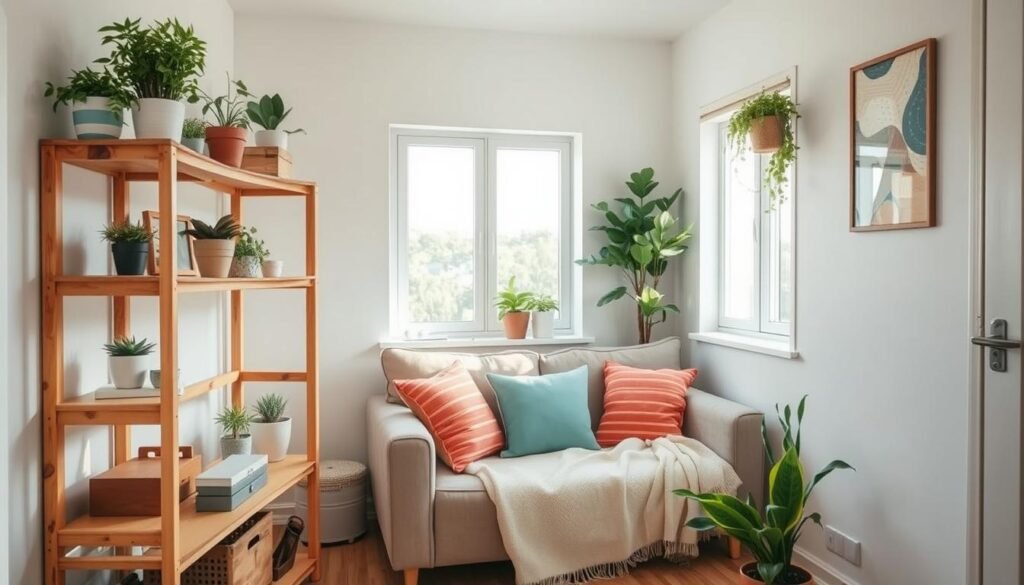
Many homeowners want a cozy and inviting living space. Simple DIY home projects can make your home feel more relaxing and welcoming.
There are many ways to make your living space feel more serene. These projects add beauty and improve your well-being.
With a few diy ideas, you can turn your home into a peaceful haven. This article will show you some practical and creative home improvement projects. They will help you create the cozy retreat you’ve always wanted.
Why Home Comfort Matters More Than Ever
In today’s fast-paced world, coming home to a comfortable space is more than just a luxury. It’s a necessity for recharging and finding peace amidst the chaos of daily life. Home comfort plays a significant role in our overall well-being, affecting both our mental and physical health.
A comfortable home environment can significantly reduce stress levels, improve mood, and even enhance productivity. With the rise of remote work, the boundaries between work and personal life have become increasingly blurred. Creating a peaceful home decor that fosters relaxation is key.
Implementing simple home upgrades can make a big difference in creating tranquil living spaces. This can be as simple as rearranging furniture, adding plants, or incorporating soothing colors into your decor. Such DIY home decor projects not only personalize your space but also contribute to a sense of calm and comfort.
Comfort in your home is not just about looks; it’s also about creating an environment that supports your well-being. By focusing on comfort, you can transform your home into a sanctuary that nurtures both body and mind.
In essence, prioritizing home comfort is an investment in your health and happiness. As we continue to navigate the challenges of modern life, making our homes a haven of peace and tranquility is more important than ever.
DIY Home Projects That Quietly Improve Comfort and Calmness
Turning your home into a peaceful retreat is easy with DIY projects. By doing easy diy home improvements, you can make your space more comfortable and calm.
Starting with simple woodworking projects is a great idea. Making a wooden headboard or a shelf from reclaimed wood can warm up your home. These projects make your home look better and feel cozier.
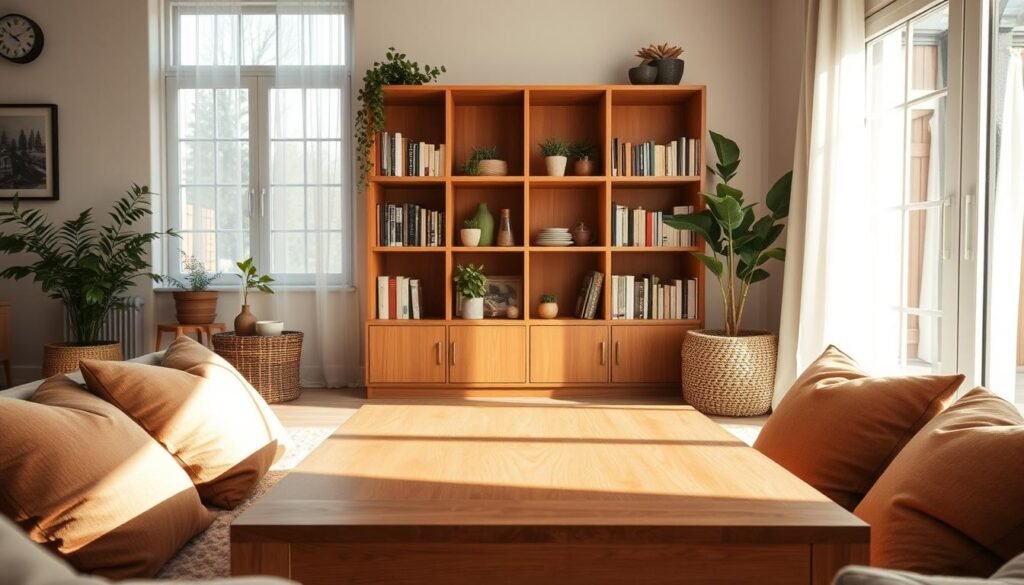
Decluttering and organizing your space is another good way to go. With simple wood projects like custom storage or floating shelves, you can keep things tidy. This reduces clutter and makes your home feel calmer.
Woodworking isn’t the only way to improve your home. Adding plants, using aromatherapy, or creating a cozy reading nook can also help. These easy diy home improvements can greatly enhance your home’s comfort and calmness.
To begin, consider these DIY projects:
- Create a wooden planter box for your plants.
- Build a simple wooden bench for a cozy reading spot.
- Design a custom shelving unit for your books and decorative items.
These projects are not only enjoyable but also make your home more serene and welcoming.
Textile and Soft Furnishing Upgrades
Upgrading your home’s textiles can make it feel more welcoming. It’s a simple way to add comfort and style.
Materials and Fabric Selection
Choosing the right materials and fabrics is key. Think about durability, texture, and color. These factors greatly impact your soft furnishings.
Key considerations include:
- Durability and maintenance requirements
- Texture and how it feels against the skin
- Color and pattern to match your home decor
Simple No-Sew and Sewing Options
You don’t need to sew to upgrade your home. Simple no-sew methods, like fabric glue, work well.
If you can sew, making custom pillow covers or curtains adds a personal touch.
Calculating the Right Weight
Choosing the right weight for curtains or drapes is important. It affects how they hang and keep your home warm.
Consider using weighted hems or adding weights to the bottom of your curtains.
Filling Distribution Techniques
For DIY projects like throw pillows or cushions, even filling is essential. It ensures comfort and looks good.
Blackout Liner Integration
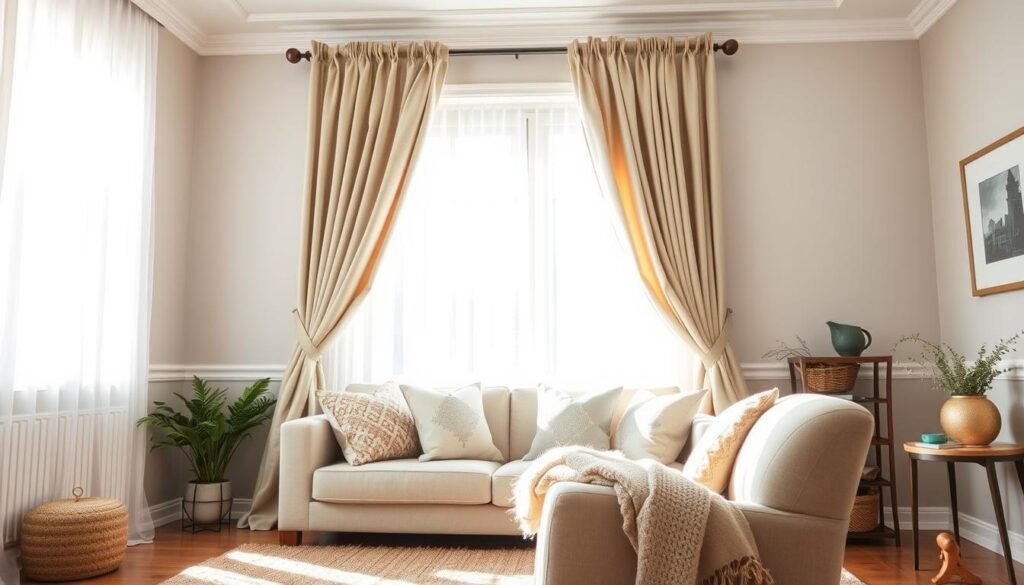
Adding blackout liners to your curtains or drapes blocks light and reduces noise. It makes your home more comfortable.
Thermal Insulation Properties
Using materials with good thermal insulation keeps your home cozy. It helps control the temperature, making it warmer in winter and cooler in summer.
By focusing on textile and soft furnishing upgrades, you can make your home more inviting.
Lighting Projects for Ambient Comfort
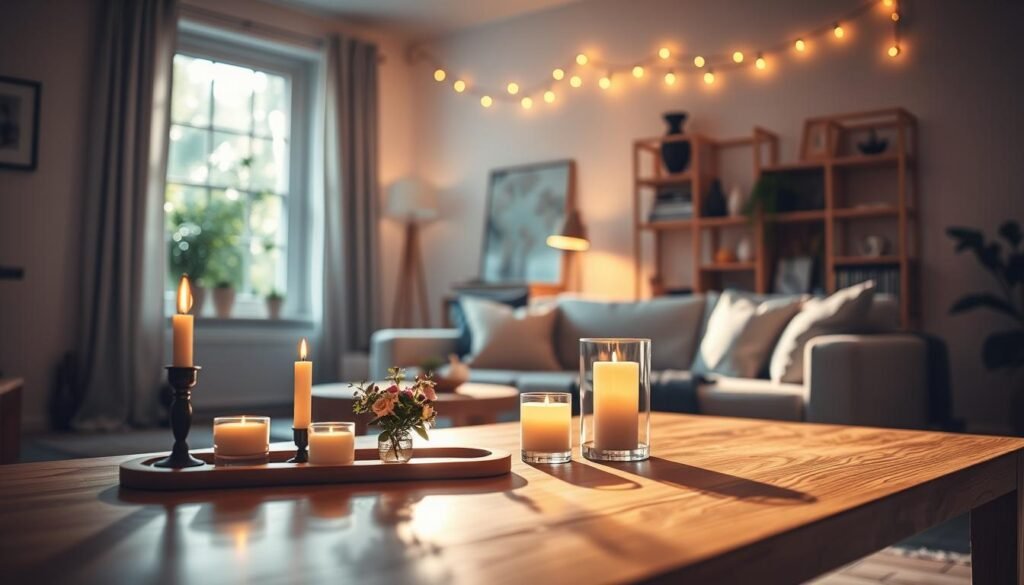
Lighting is key to a cozy and welcoming home. The right lights can change a room, making it feel warmer and more inviting.
Choosing Compatible Bulbs
Choosing the right bulbs is vital for lighting projects. Different bulbs have different brightness and colors, affecting a room’s feel.
- Consider the color temperature: Warm white bulbs (2700K-3000K) create a cozy atmosphere, while cool white bulbs (3500K-5000K) are better suited for task-oriented areas.
- Think about dimmability: Dimmable bulbs offer flexibility, allowing you to adjust the lighting level to suit different moods and activities.
Basic Electrical Safety
Before starting any lighting project, it’s vital to work safely with electricity.
- Turn off the power: Always switch off the power to the circuit you’re working on at the main electrical panel.
- Use appropriate fixtures: Ensure that any new lighting fixtures are compatible with the existing electrical setup.
For DIY lighting projects, the frame you choose can greatly affect the overall look and feel.
- Select a frame that complements your decor: The frame should match or enhance the style of the room.
- Prepare the frame: Clean and sand the frame to ensure a smooth finish.
Fabric Tension Techniques
Fabric tension techniques can be used to create unique lighting fixtures that add to the ambient comfort of a room.
By applying tension to fabric, you can create interesting shapes and designs that diffuse light beautifully.
LED Strip vs. Puck Lights
When deciding between LED strip lights and puck lights, consider the specific needs of your space.
- LED strip lights: These are versatile and can be used to create continuous lighting effects.
- Puck lights: These provide focused lighting and are ideal for highlighting specific areas or features.
Wireless vs. Hardwired Options
The choice between wireless and hardwired lighting options depends on your specific needs and preferences.
- Wireless options: These are easy to install and offer flexibility in terms of placement.
- Hardwired options: These provide a more permanent solution and can be more energy-efficient.
By considering these factors and options, you can create a lighting scheme that enhances the ambient comfort of your home. This makes it a more enjoyable and relaxing space.
Sound Dampening Solutions for a Quieter Home
A quieter home is essential for relaxation. Sound dampening solutions can make it happen. The right materials and techniques can cut down noise and make your home peaceful.
Acoustic Foam Core Selection
The acoustic foam core is key in sound dampening. It absorbs sound waves, reducing echo and reverberation. Choose the right density and thickness for your needs.
Decorative Fabric Choices
The right decorative fabric can make your sound dampening solutions look good. Go for thick, heavy fabrics to absorb sound. Use them to cover acoustic panels and match your decor.
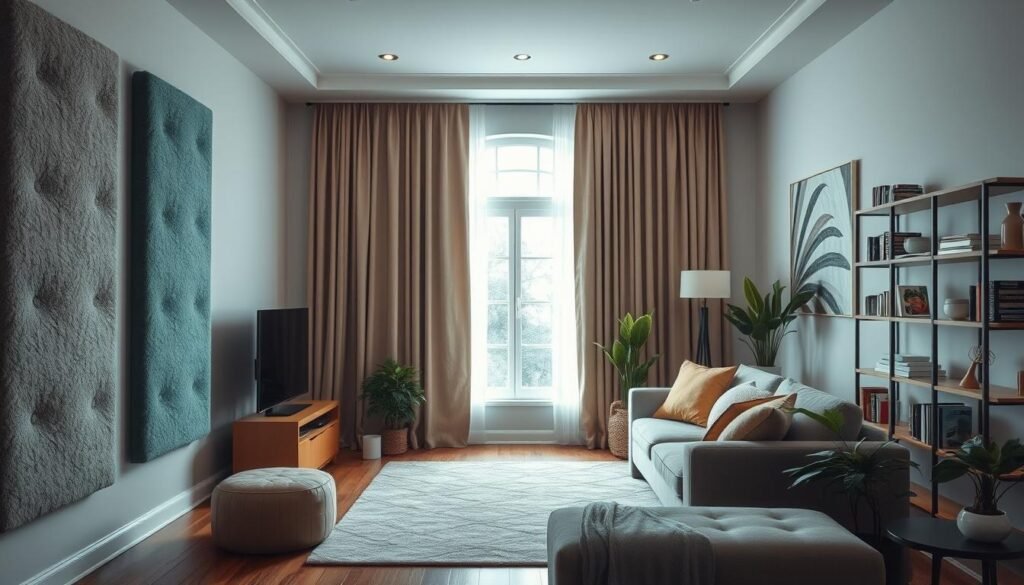
The filling material in sound panels can differ. Polyester fiberfill and cotton batting are common. They absorb sound waves well and can be chosen based on your space’s needs.
Proper Sizing for Different Doorways
When making sound dampening solutions, size matters. Proper sizing ensures they work without blocking doorways. Measure your doorways to find the perfect size for your panels.
Sound-Absorbing Materials
Sound-absorbing materials are the heart of sound dampening. They come in forms like acoustic panels and DIY projects. Find the best materials for your needs and use them in your strategy.
Installation Without Permanent Changes
Many sound dampening solutions can be installed without making permanent changes to your home. This is great for renters or those who don’t want to alter their home. Use command strips, adhesive hooks, or other removable fasteners to hang your panels.
Exploring these sound dampening solutions can make your home quieter and more comfortable. Whether you want to improve your living space or create a peaceful retreat, the right materials and techniques can help a lot.
Natural Elements and Biophilic Design Features
Bringing the outdoors in can make your home cozy. This approach makes your home look better and feel more comfortable.
Vertical Planter Construction
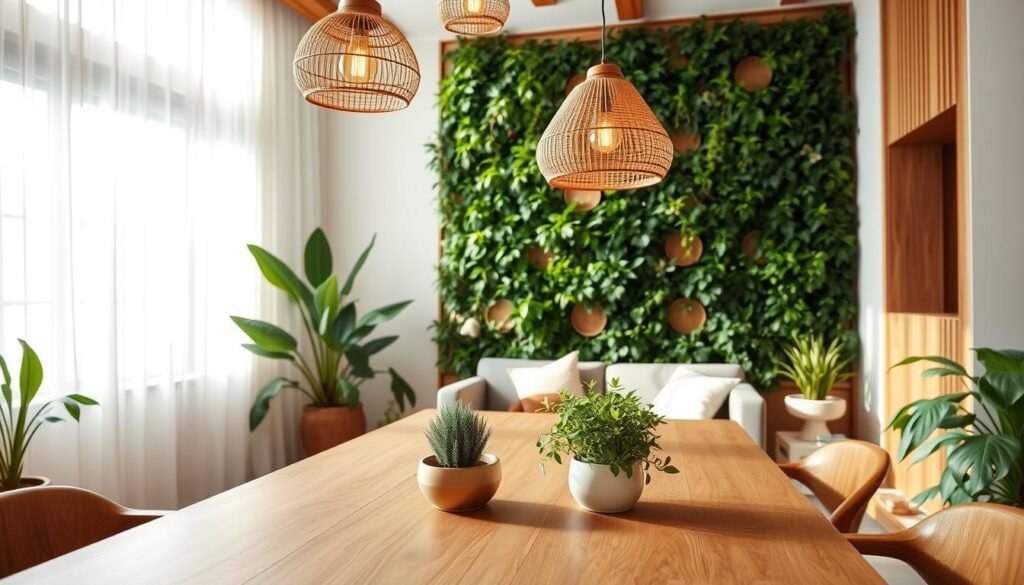
Vertical planter construction is a great way to add nature to your home. It lets you grow plants up, saving space.
- Choose a sturdy frame that can support the weight of the soil and plants.
- Select plants that thrive in vertical conditions, such as ferns or ivy.
- Ensure proper drainage to prevent waterlogged soil.
Drainage and Watering Solutions
Good drainage and watering solutions keep your plants healthy in a vertical planter. A self-watering system can make care easier.
- Design a watering system that delivers water directly to the roots.
- Use a well-draining potting mix to prevent water from accumulating.
- Monitor your plants regularly to adjust watering as needed.
Preserving dried flowers adds natural beauty to your home. You can dry them in the air or use a dehydrator.
- Hang flowers upside down in a dry, dark place.
- Use a dehydrator on a low setting to preserve color and texture.
- Seal preserved flowers with a clear coat to protect them.
Creative Display Ideas for Every Room
Displaying natural elements creatively can make any room feel special. Use vases, baskets, or shadow boxes for your preserved flowers or natural finds.
Wood Selection and Weatherproofing
When using wood in your design, wood selection and weatherproofing are important. Pick durable woods like cedar or teak. Apply a weatherproof sealant to protect against the elements.
Planter Box Integration Design
Adding planter boxes to your home design can connect indoor and outdoor spaces. Choose built-in planters or ones that can be moved.
- Design planters that complement your home’s architecture.
- Use planters to frame windows or doors.
- Incorporate planters into outdoor seating areas.
Rustic Woodworking Projects That Add Warmth
Rustic woodworking projects can instantly add warmth and character to your home. By using natural wood and traditional craftsmanship, you can make your home cozy and inviting.

Distressing techniques are key to giving your projects an authentic, aged look. You can use sanding, chiseling, or a wire brush to distress the wood.
Some popular distressing techniques include:
- Using a hammer to create dents and scratches
- Applying a wire brush to roughen the wood surface
- Sanding edges to create a worn look
Corner Joining Methods
Corner joining methods are vital for the stability and durability of your projects. You can use mortise and tenon, dovetail, or butt joints, depending on the project.
Here are some common corner joining methods:
- Mortise and tenon joints for added strength
- Dovetail joints for a traditional look
- Butt joints for simplicity
Determining Ideal Dimensions
Determining the ideal dimensions for your projects is key for a perfect fit in your home. Consider the space and the project’s purpose.
Factors to consider when determining dimensions:
- Available space in the room
- Purpose of the project (e.g., storage, decoration)
- Proportionality with other furniture
Finishing Options for Durability
Finishing options are important for the durability of your projects. You can choose from oil, wax, or polyurethane finishes.
Some popular finishing options include:
- Oil finishes for a natural look
- Wax finishes for added protection
- Polyurethane finishes for durability
Hidden Bracket Installation
Hidden bracket installation securely attaches shelves or features to the wall without visible brackets. This method enhances the aesthetic appeal of your projects.
Steps for hidden bracket installation:
- Locate the wall studs
- Attach the hidden brackets to the wall
- Secure the shelf or feature to the brackets
Weight Capacity Considerations
Weight capacity considerations are essential for rustic woodworking projects, like shelves or storage units. Make sure your project can support the intended weight.
Factors to consider for weight capacity:
- Type of wood used
- Design and construction of the project
- Intended use and load
Aesthetic Room Decor Enhancements
Make your home more inviting with unique aesthetic room decor. It’s not just about looks. It’s about making a space that feels welcoming and comfy.
Macrame Wall Hangings
Macrame wall hangings add texture and interest to any room. You can customize them to fit your style, from bohemian to modern minimalist.
Tips for Creating Macrame Wall Hangings:
- Choose the right cord material and color to match your decor.
- Experiment with different patterns and knot designs.
- Consider the size of your wall hanging in relation to the wall space.
Canvas and Paint Techniques
Canvas art is a great way to enhance your room’s look. You can use various paint techniques to create unique pieces that add a personal touch.
Popular Canvas and Paint Techniques:
- Ombre painting for a gradient effect.
- Abstract art using different brush strokes.
- Geometric patterns for a modern look.
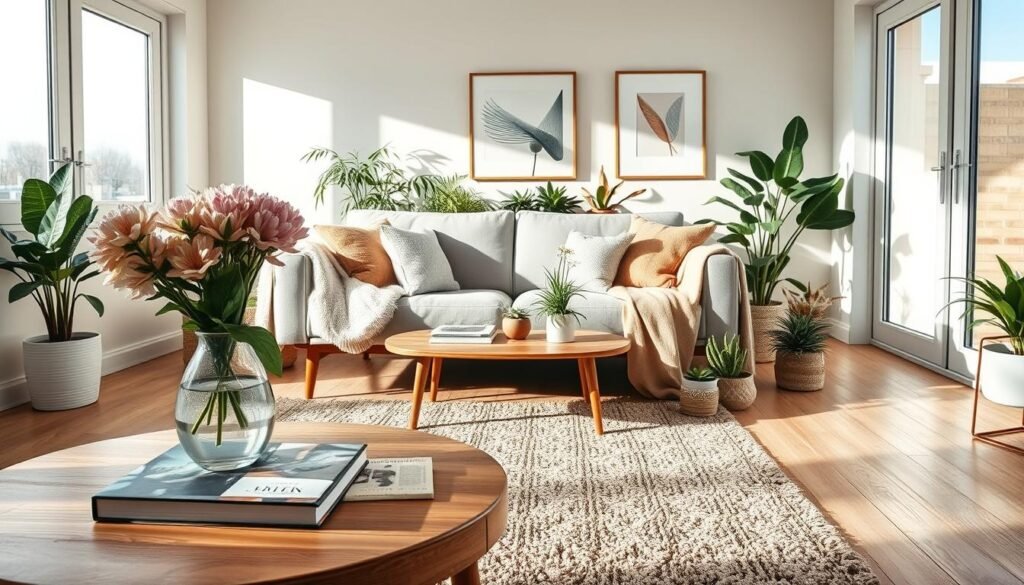
Paper flower wall installations add elegance to any room. They come in various colors and sizes.
Steps to Create Paper Flower Wall Installations:
- Design your flowers and choose appropriate paper types.
- Assemble the flowers and arrange them on a backing board.
- Hang your installation on a wall or across a room.
Origami and Folded Paper Art
Origami and folded paper art add a fascinating element to your decor. From simple designs to complex models, these pieces can be displayed in frames or as standalone art.
Ideas for Origami and Folded Paper Art:
- Create a series of origami cranes for a mobile.
- Use folded paper to create 3D geometric shapes.
- Design intricately folded boxes for storing small items.
Smart Storage Solutions That Reduce Visual Clutter
A clutter-free living space starts with smart storage options. These options keep your belongings organized and make your home look better.
Space-Saving Vertical Designs
Using space-saving vertical designs is a great way to store things without clutter. By using the vertical space, you can keep floors and surfaces clear. This makes your rooms feel bigger and more peaceful.
- Install tall shelving units or bookcases to make ceilings seem higher.
- Use wall-mounted cabinets or storage units to keep items off the floor and out of sight.
Floating Shelf Configurations
Floating shelf configurations are sleek and modern. They can be customized to fit any room’s style. These shelves are great for displaying decorative items or storing books, kitchenware, and more.
- Choose the right material for your floating shelves, such as wood or glass, to match your home’s style.
- Consider the weight capacity of the shelves to ensure they can hold your intended items.
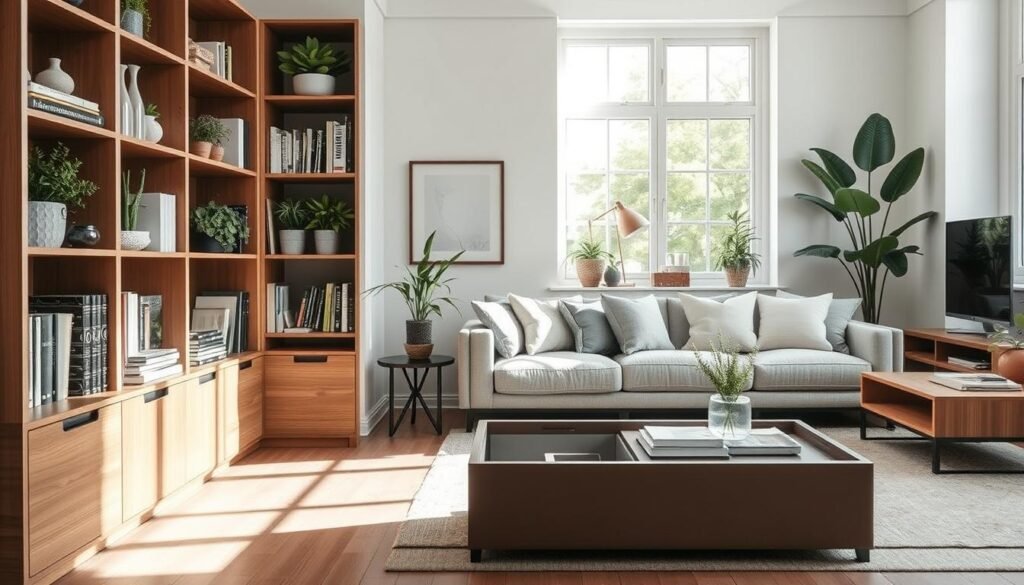
When choosing smart storage solutions, think about the material and tool requirements. Different materials and tools are needed for different projects.
- For wooden shelving units, you’ll need wood, screws, a drill, and a level.
- For floating shelves, you’ll need the shelf material, brackets, a drill, and a stud finder.
Customizing Shelf Heights
Customizing shelf heights lets you tailor your storage to your needs. Whether you’re storing tall vases or books, adjustable shelving maximizes your space.
To customize shelf heights, adjust the shelf brackets to the desired height. Make sure the shelves are level and secure.
Frame Construction Basics
For complex projects like built-in shelving units or storage benches, knowing frame construction basics is key. A sturdy frame is vital for supporting the weight of the unit and its contents.
- Plan your frame design carefully, considering the materials and tools you’ll need.
- Use sturdy materials, such as solid wood or metal, to construct the frame.
Upholstery Techniques for Beginners
If you’re adding upholstered elements to your storage solutions, like a storage ottoman, learning basic upholstery techniques is helpful. Start with simple projects, like reupholstering a stool or making a throw pillow.
- Choose a fabric that complements your home’s décor and is durable enough for the intended use.
- Use a simple upholstery pattern or tutorial to guide you through the process.
Aromatherapy and Scent Projects for Relaxation
Creating a relaxing home atmosphere is easy with aromatherapy and scent projects. Aromatherapy uses essential oils to improve physical, emotional, and mental health.
Oil Blend Combinations for Different Moods
Essential oil blends can change your mood. For example, lavender and chamomile mix promotes calmness. Peppermint and eucalyptus blend is invigorating.
- Lavender and chamomile for relaxation
- Peppermint and eucalyptus for invigoration
- Frankincense and sandalwood for grounding
Container Selection and Reed Preparation
Choosing the right container and preparing reeds are key for a good reed diffuser. Pick a container that fits your home decor. Cut the reeds to the right length.
Tips for Reed Preparation:
- Cut the reeds to the correct length
- Use a sufficient number of reeds for optimal fragrance
- Flip the reeds regularly to maintain scent intensity
Wax and Fragrance Ratios
When making scented candles, the wax to fragrance ratio matters. Use 6-12% fragrance oil to wax.
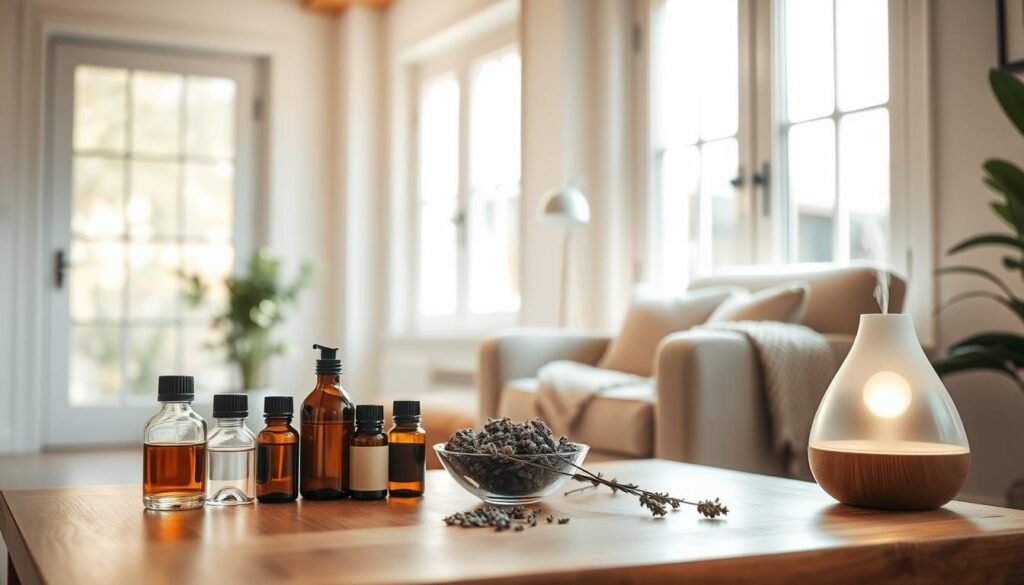
Fabric pouches with potpourri or herbs add charm to your home. Pick a breathable fabric, fill it with potpourri, and sew it up.
Organizational Rack Building
An organizational rack keeps your aromatherapy supplies tidy. Build a rack with compartments for oils and diffusers.
Creating a Dedicated Wellness Corner
A wellness corner in your home is a peaceful retreat. Add aromatherapy, comfy seating, and calming colors for a serene space.
Elements to Include:
- Aromatherapy diffusers
- Comfortable seating
- Calming colors and decor
Temperature and Air Quality Improvements
Improving temperature and air quality is key for a healthier home. It makes your home more comfortable and improves your well-being.
Installing window films or treatments is a good start. They help control temperature and save energy. Proper installation techniques are vital for a smooth application.
Installation Techniques for Bubble-Free Results
To get a bubble-free installation, follow these steps:
- Clean the window surface before applying the film.
- Use a solution to help place the film right.
- Squeegee the film from the center out to remove air bubbles.
Removable vs. Permanent Options
Choosing between removable and permanent window treatments is important. Removable options are flexible and easy to change. Permanent ones last longer.
Adding plants to your home is a natural way to improve air quality.
Best Plants for Indoor Air Quality
Some top plants for better air include:
- Spider plants
- Snake plants
- Peace lilies
Displaying these plants on a tiered stand can enhance their benefits.
Tiered Stand Construction Plans
Building a tiered stand is a fun DIY project. Here’s a simple plan:
- Use wooden planks or brackets for the tiers.
- Make sure the stand is sturdy for the plants’ weight.
- Adjust the size based on your space and plants.
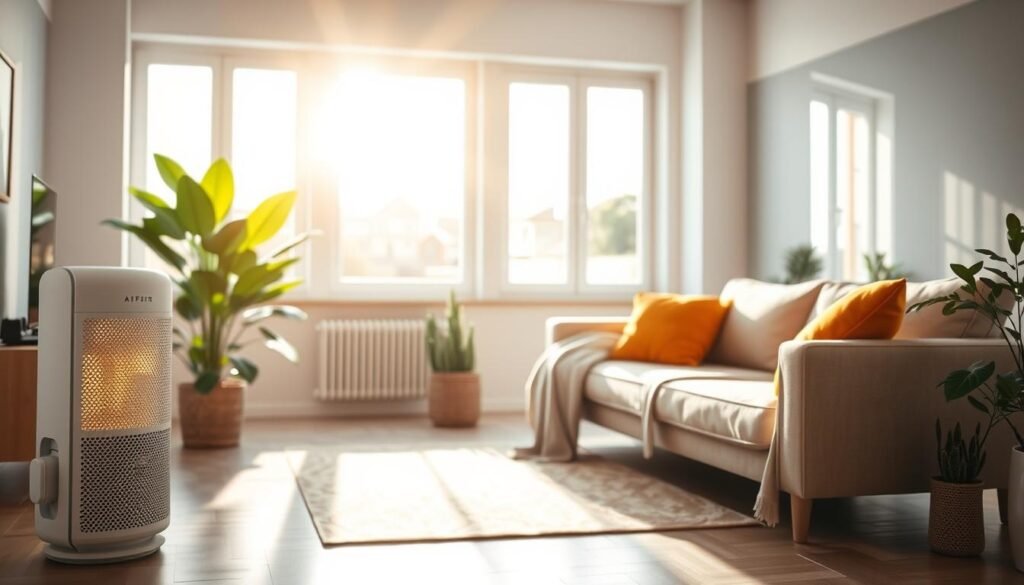
Changing your home’s decor with the seasons can also help. Opening windows in mild weather improves air flow.
Adding Remote Control Capabilities
Smart technology can make managing temperature and air quality easier. Adding remote control to your systems makes it convenient and efficient.
By using these strategies, you can greatly improve your home’s comfort and air quality. This makes your living space healthier and more enjoyable.
Personal Comfort Zones and Cozy Corner Creation
Creating a personal comfort zone at home can greatly improve your relaxation and well-being. A cozy corner or a special area for relaxation can be a sanctuary. It offers a much-needed break from daily life stresses.
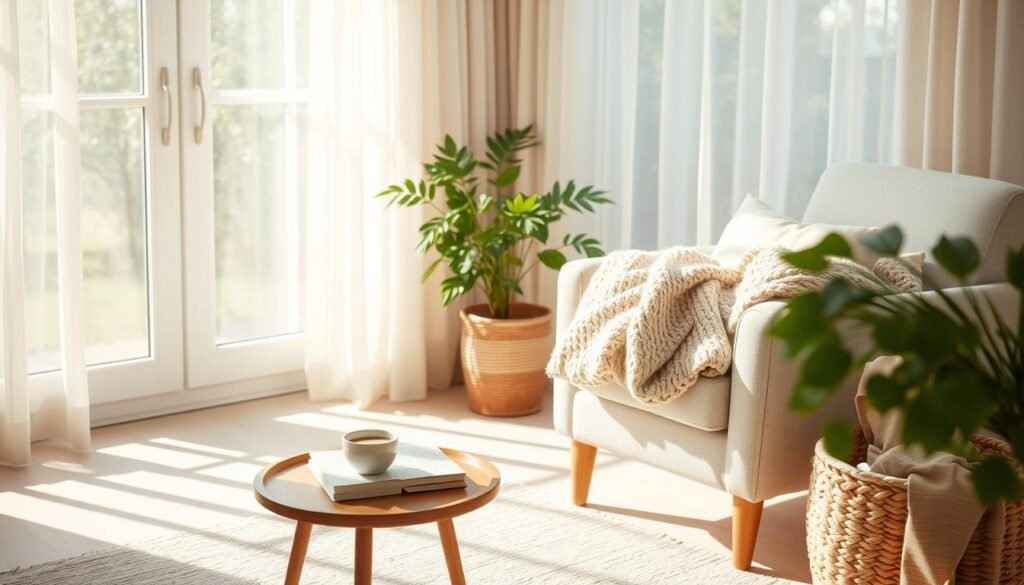
A key part of any cozy corner is comfortable seating. Cushioned seating construction means picking the right materials and design for a welcoming space. Look for plush fabrics and sturdy foam for comfort and durability.
- Select fabrics that are soft to the touch and look good.
- Use high-density foam for lasting comfort.
- Adding a reclining function can make it even more relaxing.
Task Lighting Integration
Good lighting is essential for a cozy corner’s ambiance. Task lighting integration means setting up lights that are both useful and calming. You can use table lamps, floor lamps, or string lights, depending on the mood you want.
- Opt for lamps with adjustable arms for focused lighting.
- LED bulbs are energy-efficient and a good choice.
- Dimmer switches let you adjust the light for different moods.
Size and Shape Variations
The size and shape of your cozy corner depend on the space you have and your preferences. It could be a small reading nook or a big meditation area. The goal is to make it personal and inviting.
Fill Material Comparisons
There are many filling materials for cushions and seating to choose from. Options include polyester fiberfill and down feathers, each with its own benefits and drawbacks. Comparing these materials helps you choose based on comfort, allergies, and upkeep.
Essential Components for Mindfulness Practice
Setting up a space for mindfulness is more than just comfy seating. It also needs elements that help you stay calm and focused. This includes calming colors, natural elements, and few distractions.
Sound and Lighting Considerations
The feel of your cozy corner is greatly affected by sound and lighting. Adding elements like soft music or nature sounds can help relax you. Adjustable lighting lets you create the perfect mood for unwinding.
Conclusion
Turning your home into a cozy haven is simpler than you might think. By trying out different DIY projects, you can make your home more comfortable. This will also help you create a peaceful living space.
There are many ways to do this, like upgrading your textiles and adding natural elements. These changes can make your home feel more relaxing. They also let you show off your personal style.
Looking to make a cozy reading spot or just improve your home’s feel? These DIY projects have got you covered. So, why not start today? Begin making your home a peaceful sanctuary that’s all your own.