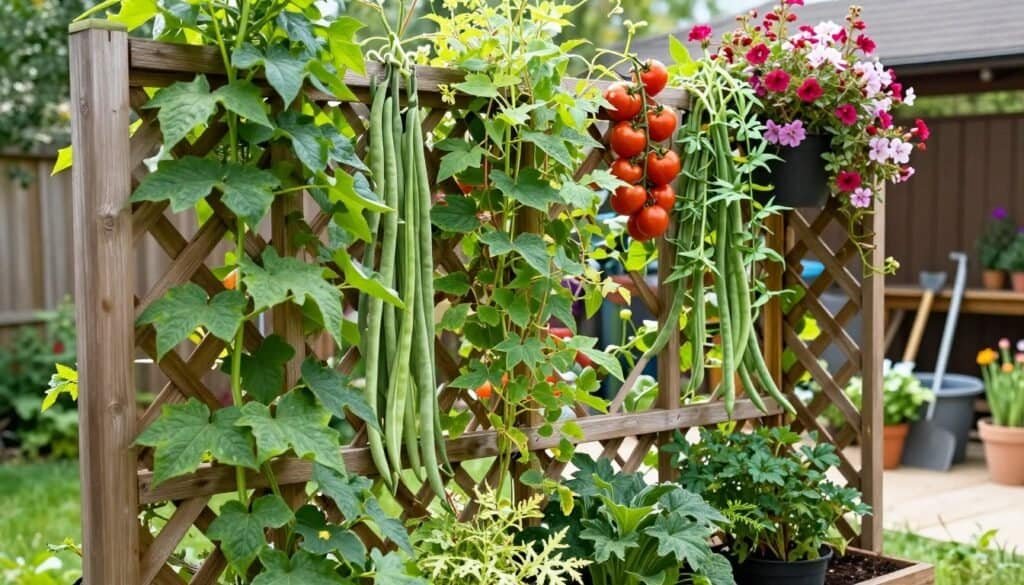
Ever dreamed of picking fresh tomatoes from your own yard? Home gardening is a rewarding hobby that brings delicious flavors to the dinner table. Creating custom structures allows complete control over every plant you harvest.
Using raised garden beds offers massive advantages for every beginner gardener. These setups provide better control over the soil quality and help keep stubborn weeds away. They also save backs from excessive bending while you work outside.
Success depends on specific factors like soil depth and board thickness. Proper drainage ensures that roots stay healthy instead of drying out. Following these vegetable gardening tips helps your crops thrive throughout every season.
Building your own home gardening space is a simple way to be productive. Use sturdy materials to create a productive space in any backyard. Let’s start by exploring how to build solid foundations for your favorite greens.
Key Takeaways:
- Success relies on proper soil depth, sturdy board thickness, and excellent drainage.
- Using raised garden beds reduces physical strain and simplifies weed management for everyone.
Why Raised Garden Beds Are Perfect for Beginning Vegetable Gardeners
Raised garden beds are great for new gardeners. They improve drainage and soil quality. This is better than traditional gardens.
They help manage water, preventing root rot. You can also control the soil mix. This is good for sustainable agriculture and organic gardening.
Here are some key advantages of raised garden beds for beginners:
- Improved drainage and soil aeration
- Warmer soil temperatures for earlier planting
- Better accessibility and reduced strain on the back
- Easier control over weeds and pests
For those thinking about growing vegetables, a raised bed frame is a great start. It’s a contained space for your gardening journey.
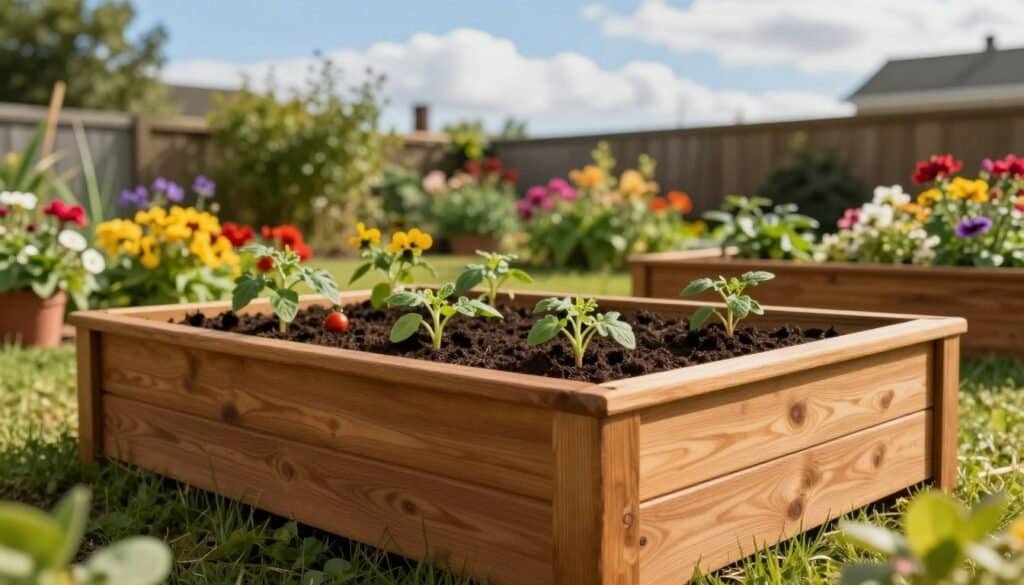
Starting with a raised bed helps beginners succeed in vegetable gardening. It makes gardening more productive and less stressful.
Thinking About Growing Vegetables? A Raised Bed Frame Might Be the Easiest Start
Raised bed frames make starting a garden easy. They help beginners get into gardening. Raised beds also improve drainage and soil aeration, which are key for plants to grow well.
Tiered planter boxes show how raised beds can fit into any space. They let you garden in layers, making the most of small areas. This is perfect for those with little room, as it lets you grow many vegetables in a small space.
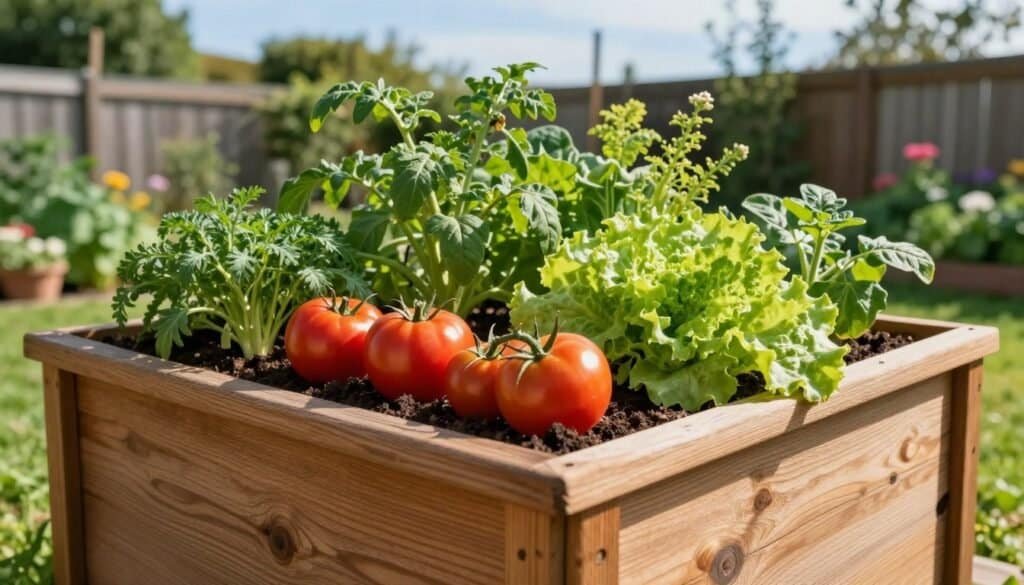
Think about how you’ll arrange your garden rows when planning your raised bed. Good spacing makes it easier to get around and care for your garden. Also, using garden bed edging can make your garden look better and be easier to manage.
If you have very little space or trouble moving around, a rolling planter is a great choice. These planters can be moved to get more sunlight or to protect plants from bad weather.
Using corrugated boxes or similar materials for your raised bed is smart. These materials are cheap and can make strong, effective raised beds. They’re a good choice for gardeners who are watching their budget.
- Simplified gardening process
- Better drainage and soil aeration
- Adaptability to different spaces and needs
- Improved accessibility and reduced maintenance
Top Benefits of Raised Garden Bed Frames for Vegetable Growing
Using raised garden bed frames greatly improves drainage and soil quality. Raised beds let gardeners control the soil mix for their vegetables.
These frames also make gardening easier. They help gardeners plant, weed, and harvest without bending. This is great for people with mobility issues.
Raised beds can also boost crop yields. They provide a perfect environment for vegetables to grow strong and healthy. For instance, raised strawberry beds can lead to more strawberries.
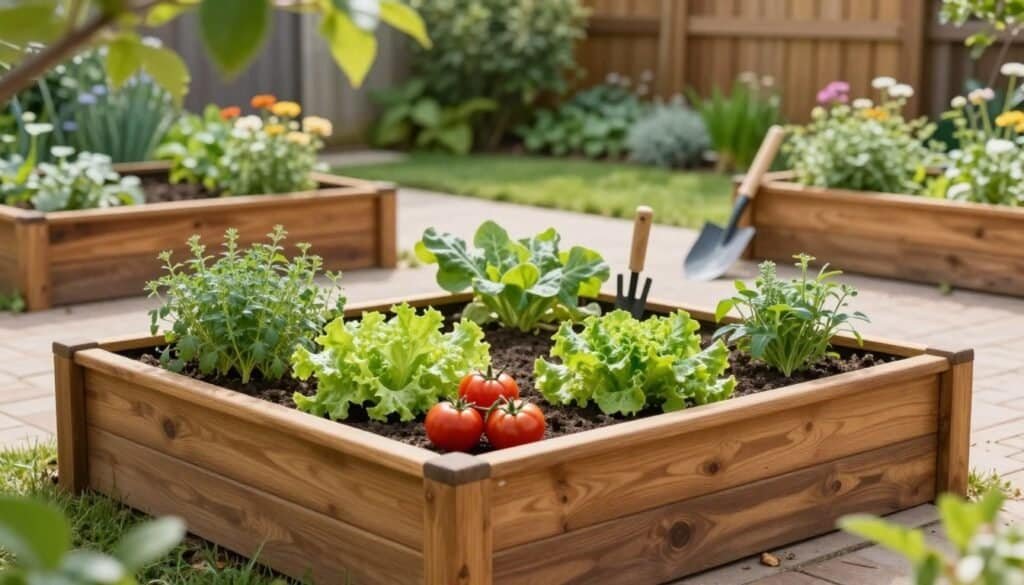
Plus, raised garden bed frames can make your garden look good. You can add a tomato border or other plants for a beautiful design.
In summary, raised garden bed frames have many benefits. They improve soil, make gardening easier, and increase crop yields. Whether you’re new or experienced, raised bed ideas can help your garden thrive.
Selecting the Best Location for Your Raised Vegetable Bed Frame
Choosing the right spot for your raised vegetable bed frame is key to gardening success. Several factors are important to make sure your vegetables grow well.
The first thing to think about is sunlight. Most vegetables need at least 6 hours of direct sunlight a day. Look around your yard to find the sunniest spots.
Accessibility is also very important. Your raised bed should be easy to get to with watering cans and gardening tools. Don’t put it too close to trees or shrubs that might steal water and nutrients.
The soil under your raised bed matters, even though it will have its own soil. Good drainage is key. Make sure the area doesn’t get waterlogged, which can harm your plants’ roots.
Here are some key considerations when selecting a location:
- Proximity to a water source
- Avoidance of shade, if you’re growing sun-loving plants
- Level ground to prevent soil erosion and ensure even watering
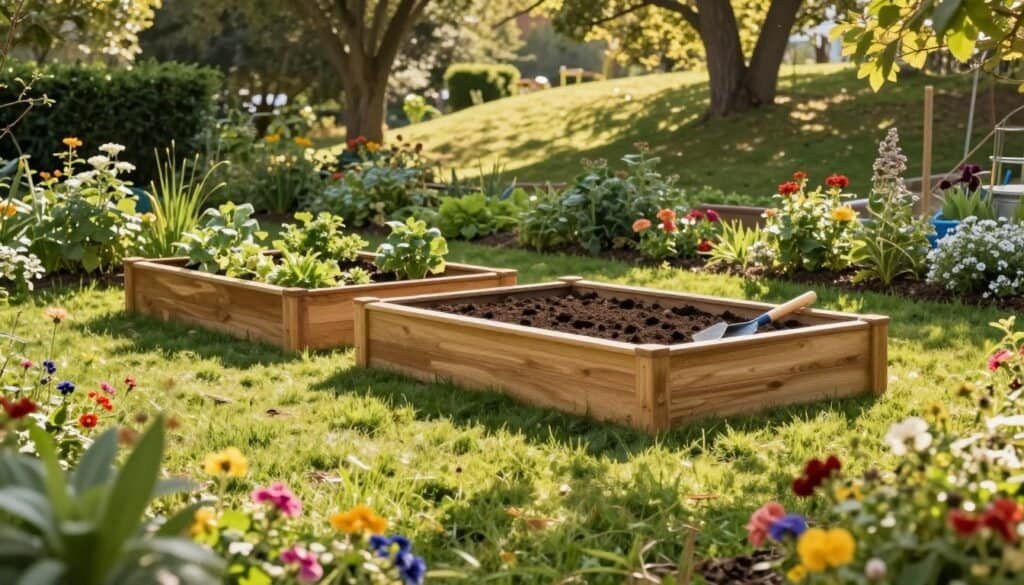
When planning yourgarden, think about how your raised bed fits into your backyard or patio. You might want to usebackyard planter ideasorpatio planter boxesthat match your outdoor decor.
For a successful harvest, remember that the location of your raised vegetable bed frame is just the start. Goodplant box ideasandpatio planter ideascan make your gardening better.
Essential Materials and Tools for Building Your Raised Bed Frame
Choosing the right materials is key for a durable and attractive raised bed frame. The right tools and materials make your raised bed both functional and beautiful.
Cedar Raised Garden Beds for Natural Rot Resistance
Cedar is great for raised garden beds because it fights off rot and insects well. Cedar raised garden beds last long and look warm and natural in your garden.
Redwood as a Premium Long-Lasting Option
Redwood is also durable and doesn’t decay easily. It’s pricier, but redwood is a top choice that stands up to the weather.
Untreated Pine as a Budget-Friendly Alternative
Untreated pine is a budget-friendly option. It might not last as long as cedar or redwood. But, you can make it look great with a natural sealant.
Composite Planters for Low Maintenance
Composite planters mix recycled plastic and wood fibers. They’re low maintenance and fight off rot and insects. They’re perfect for those who want a durable, easy-to-clean raised bed.
Cinder Block and Concrete Slab Edging
For a rustic or modern look, try cinder blocks or concrete slabs. They’re durable and give your garden a clean edge. They’re great for a modern or industrial look.
Corrugated Metal for Modern Aesthetic
Corrugated metal brings a modern, stylish vibe to your garden. It’s sleek and industrial, and pairs well with other materials for a unique look.
When picking materials, think about durability, upkeep, and cost. Here are some important points:
- Durability: How long will the material last?
- Maintenance: How much upkeep is required?
- Cost: What is the initial cost, and are there any long-term savings?
- Aesthetic appeal: How will the material look in your garden?
Some planter box designs mix materials for both function and beauty. For example, wood, metal, or stone can create a unique look.
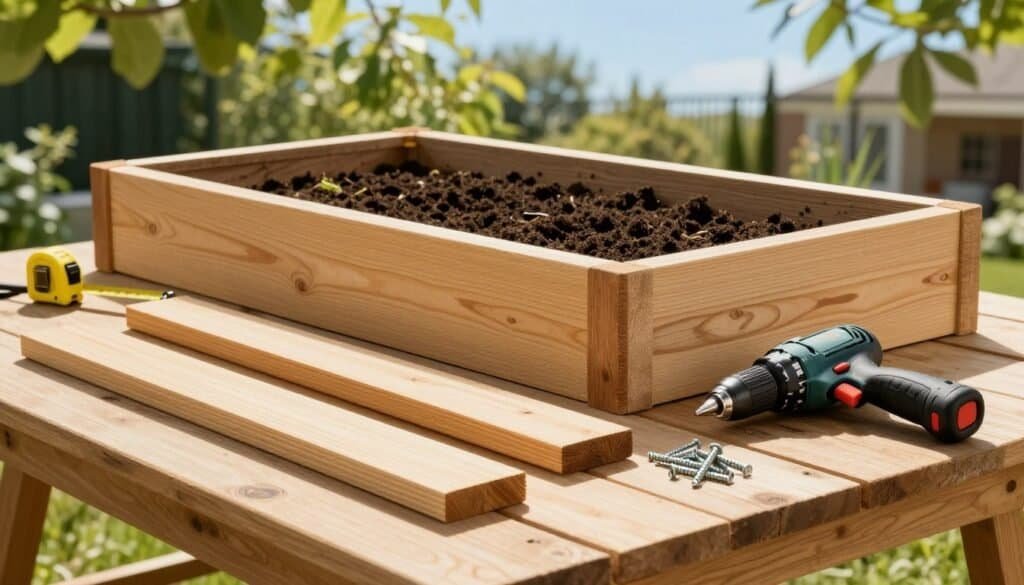
Looking for planter boxes front yard ideas or outside planter ideas? The materials you pick are key to your raised garden bed’s success. Think about your budget, style, and maintenance level.
By choosing the right materials and tools, you can make a beautiful, functional raised garden bed. It will give you years of enjoyment and a rich harvest.
Step-by-Step Instructions: How to Build a Classic Raised Garden Bed
Starting your vegetable garden is easy with a classic raised bed. You can use materials you already have. It’s great for both new and seasoned gardeners.
Optimal Width for Easy Reach: 3 to 4 Feet
Think about the bed’s width for easy access. A width of 3 to 4 feet is best. It lets you reach the middle without stepping in, avoiding soil damage.
Recommended Height: 10 to 12 Inches Minimum
The bed’s height is key for drainage and root growth. Aim for a height of 10 to 12 inches. This depth is good for roots and helps water drain.
Length Based on Your Available Space
The bed’s length depends on your garden space. You can make it fit any yard size. Just make sure you can reach all parts easily.
Creating Strong Corner Joints
Strong corners are vital for a stable bed. You can use:
- Using screws or nails to secure the corners
- Employing a mortise and tenon joint for added strength
- Utilizing corner brackets for extra support
Using Corner Brackets or L-Brackets for Extra Stability
For more stability, add corner brackets or L-brackets. They help keep the bed strong, even with heavy soil and plants.
Here’s how to put your raised garden bed together:
- Cut the lumber to your size.
- Build the frame with your chosen corner method.
- Secure the corners with screws, nails, or brackets.
- Place the bed and fill it with soil.
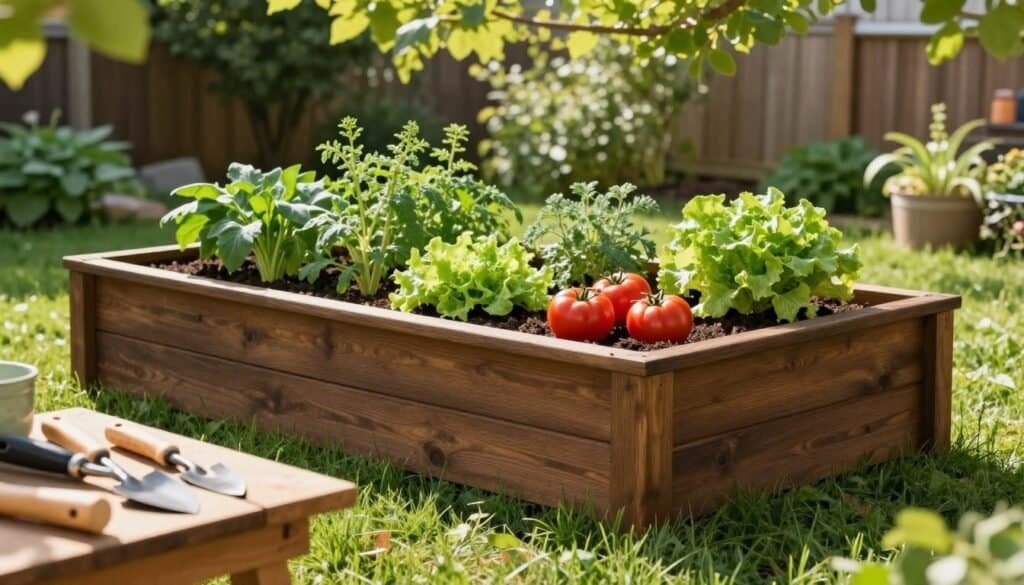
Follow these steps and tips for a lasting raised garden bed. Happy gardening!
Creative Raised Bed Design Ideas and Variations for Every Space
Take your gardening to the next level with creative raised bed designs. Whether you have a big backyard or a small balcony, there’s a design for you.
Waist-High Beds for Comfortable Gardening
Waist-high raised beds are great for those who don’t like bending. They’re about 30-40 inches tall. This makes planting, weeding, and harvesting easier on your back.
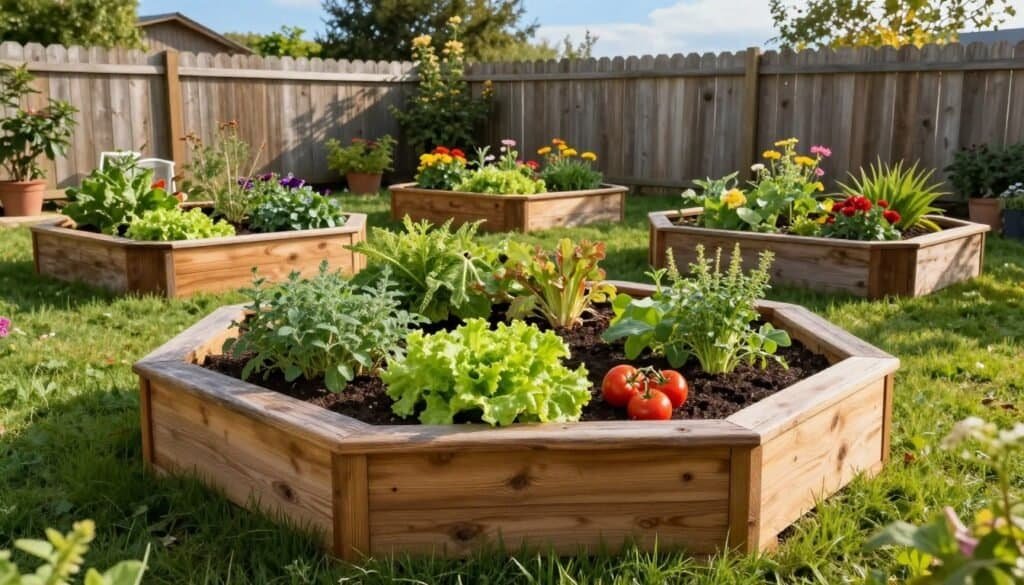
Raised beds off the ground are perfect for decks or patios. You can build them to fit your space and add beauty to your area. They also keep pests away from your plants.
Hanging Veggie Garden Boxes on Walls
Hanging veggie garden ideas use wall space well. You can grow veggies and herbs in hanging planters. This adds greenery to your space, indoors or outdoors.
Hanging Strawberry Planter Ideas
Hanging strawberry planter ideas are creative for growing strawberries. Hang them from balconies, patios, or walls. They’re a great way to save space.
Pallet Raised Garden Bed Construction
Building a pallet raised garden bed is cheap and eco-friendly. Pallets can be turned into garden beds. This gives your garden a rustic look.
Repurposed Materials: Reusing Trampolines and Containers
Get creative with old trampolines and containers for your raised beds. They can be turned into unique garden beds. This adds innovation to your garden.
Cheap Easy DIY Raised Garden Bed Using Untreated Lumber
Use untreated lumber for a cheap raised bed. It’s affordable and keeps your garden chemical-free.
These creative raised bed designs offer endless possibilities. Choose the right design for your space. Enjoy a bountiful harvest and a beautiful garden.
Filling Your Raised Bed and Planting Your First Vegetables
Now that your raised garden bed frame is built, it’s time to fill it with the right soil mix. This mix is key for healthy vegetable growth. It provides the nutrients your plants need to thrive.
The Basic Formula: Compost, Peat Moss, and Vermiculite
A mix of compost, peat moss, and vermiculite is a good start. Compost adds nutrients, peat moss keeps moisture in, and vermiculite helps with drainage. This mix supports healthy root growth.
Organic Gardening Amendments for Nutrient-Rich Soil
You can also add organic gardening amendments to your soil. Manure tea, fish emulsion, or bone meal are good choices. They provide extra nutrients for your vegetables. This helps your plants grow strong and healthy.
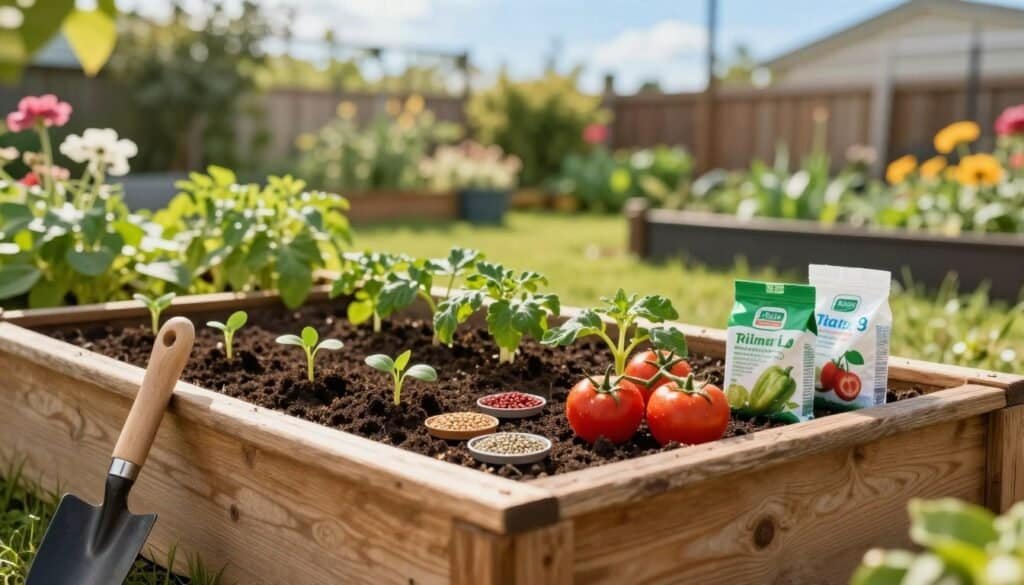
For beginners, start with easy plants like tomatoes, lettuce, and herbs. These plants are hardy and produce a lot with little care. Tomatoes need support, while lettuce and herbs can be grown in succession for a steady harvest.
Raised Strawberry Beds for Compact Fruit Growing
Raised strawberry beds are great for small spaces. Strawberries are easy to care for and produce fruit fast. They can be in their own bed or mixed with vegetables, adding variety and productivity.
By following these tips and choosing the right vegetables, you’ll have a successful garden. It will be rewarding and fun.
Conclusion
Building a DIY raised garden bed is easy and rewarding. It can turn your backyard into a lush vegetable garden. You can find affordable options for raised garden beds and planters.
By following the steps in this article, you can make a beautiful raised bed. It will give you fresh veggies for years. Raised beds are perfect for anyone looking to start gardening.
Don’t wait to start your gardening adventure. Begin today and enjoy the benefits of growing your own veggies in a raised bed garden.