Starting backyard gardening projects is very rewarding, like building something useful. Making a DIY herb planter lets you control the soil and water, which is key for plants. These boxes also get lots of sunlight, helping plants grow strong.
Many people want herb garden ideas outdoor to use small spaces well. Creating a raised herb planter is easy and fun for a weekend. It’s great for both new and experienced gardeners, making gardening easier and more beautiful.
Having an outdoor herb garden makes any patio or deck look better. These boxes keep the soil warm and stop weeds. It’s a simple way to grow plants and enjoy nature right outside.
Why You Should Want Fresh Herbs Close to Your Kitchen
Having fresh herbs near your kitchen is essential, not just a nice-to-have. It takes your cooking to a whole new level.
A kitchen herb planter or a culinary herb garden by your kitchen door is perfect. You can pick what you need right away, making your dishes taste fresher.
Enhancing Your Cooking Experience
Cooking with fresh herbs is a delight. They bring out the best in many dishes, from soups and salads to sauces and marinades.
- Enhance flavors with freshly picked herbs like basil, rosemary, or thyme.
- Add a burst of freshness to salads and soups with herbs like parsley or cilantro.
- Elevate your baking with herbs like lavender or mint.
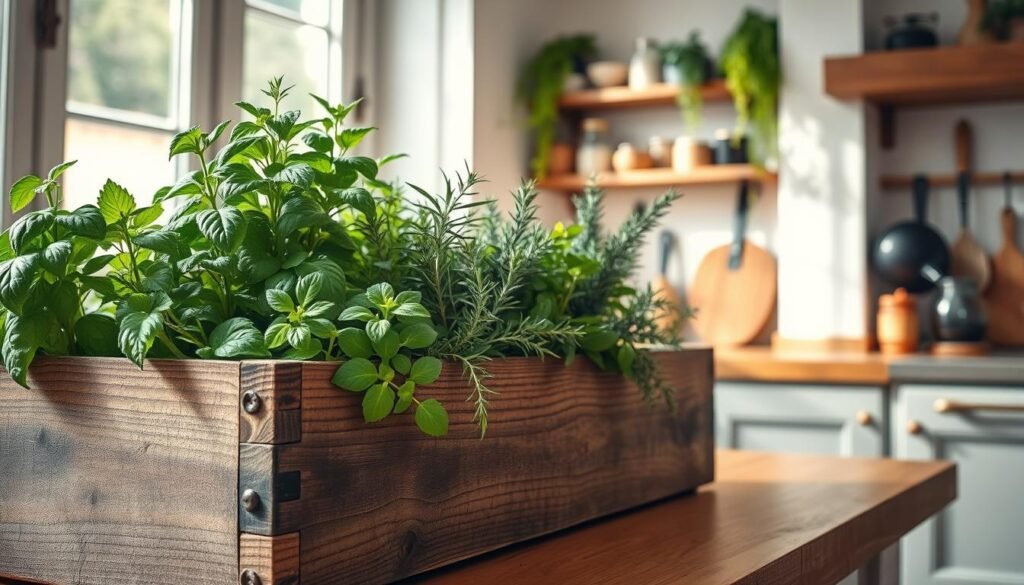
Having a culinary herb garden near your kitchen does more than just improve your cooking. It also saves you time. No need to rush to the store for herbs. This encourages you to try new recipes and flavors.
Essential Tools and Materials for Your DIY Herb Planter
Before starting your DIY herb planter, make sure you have all the tools and materials ready. This will make your project fun and successful.
First, choose quality materials that can handle outdoor weather. For a DIY herb box or herb planter boxes, cedar or redwood wood is great. These woods fight off rot and bugs well, perfect for outdoor gardens.
Necessary Gardening Tools
Having the right tools is key for a good project. Here are some tools you’ll need:
- Trowel or small shovel for planting herbs
- Gardening gloves to protect your hands
- Pruning shears for trimming herbs
- Measuring tape and square for accurate measurements
- Hammer and nails or screws for assembling the planter
If you’re into gardening pallet ideas or wood pallet projects, you’ll need a saw. Make sure your pallets are safe and free from harmful stuff.
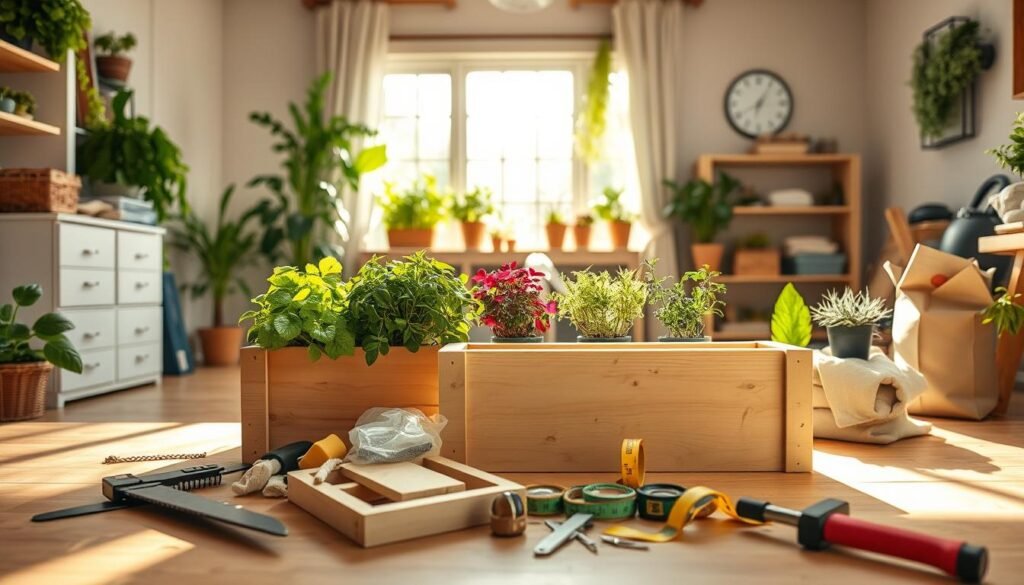
For wooden projects diy, like a wooden herb planter, you’ll need wood glue, sandpaper, and a waterproof sealant. Always be careful when using power tools and materials.
With these essential tools and materials, you’re ready to start your DIY herb planter. Remember, the quality of your materials and tools will affect your project’s look and durability.
Classic Wooden Raised Bed Herb Garden Designs
Wooden raised bed herb gardens are both charming and practical. They add a rustic charm to your backyard. They also help you grow herbs in a controlled space.
These gardens are often made from cedar or redwood. These woods resist rot and insects well. The wood is left untreated, giving it a natural, weathered look.
The design of these gardens can vary. You might see simple boxes or more complex shapes with corners and curves. The most important thing is to make sure the garden drains well and gets enough sunlight.
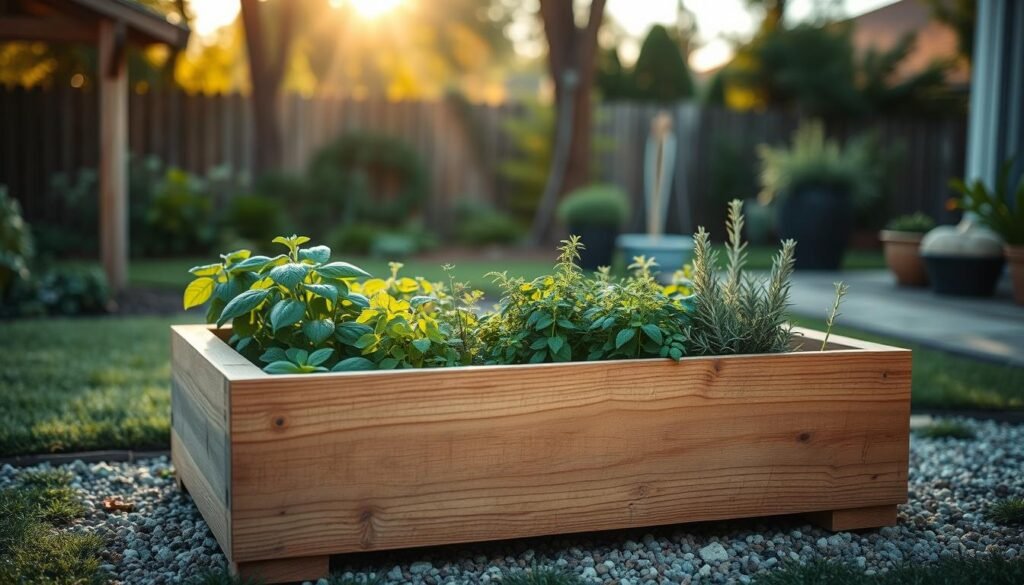
While traditional designs are always in style, you can also try modern twists. Using composite wood or reclaimed wood can make your garden stand out.
- Using a mix of wood and metal for a modern look
- Adding self-watering systems for easy care
- Putting in a trellis or obelisk for climbing herbs
These modern touches can make your herb garden more than just a place to grow herbs. They can make it a beautiful part of your backyard.
By mixing classic and modern elements, you can create a wooden raised bed herb garden. It will be both beautiful and useful.
Creative Pallet Herb Garden Projects for Small Spaces
Pallet herb gardens are great for small spaces. They offer a green way to grow herbs. They’re perfect for city folks or those with little yard space who want fresh herbs.
Pallet herb gardens are flexible and easy to customize. They fit any space, from tiny balconies to small backyards. Pallets can turn into a lush herb garden.
Space-Saving Ideas
Here are some creative ways to use pallets for your herb garden:
- Vertical Pallet Garden: Attach pallets to a wall or fence for a vertical garden. It saves space and looks good.
- Pallet Tiered Planters: Stack pallets for tiered planters. This lets you grow many herbs in a small area.
- Corner Pallet Garden: Make a corner herb garden with a pallet. It uses up often-wasted corner spaces.
These pallet projects save space and add a rustic touch. They’re also eco-friendly, as they reuse pallets.
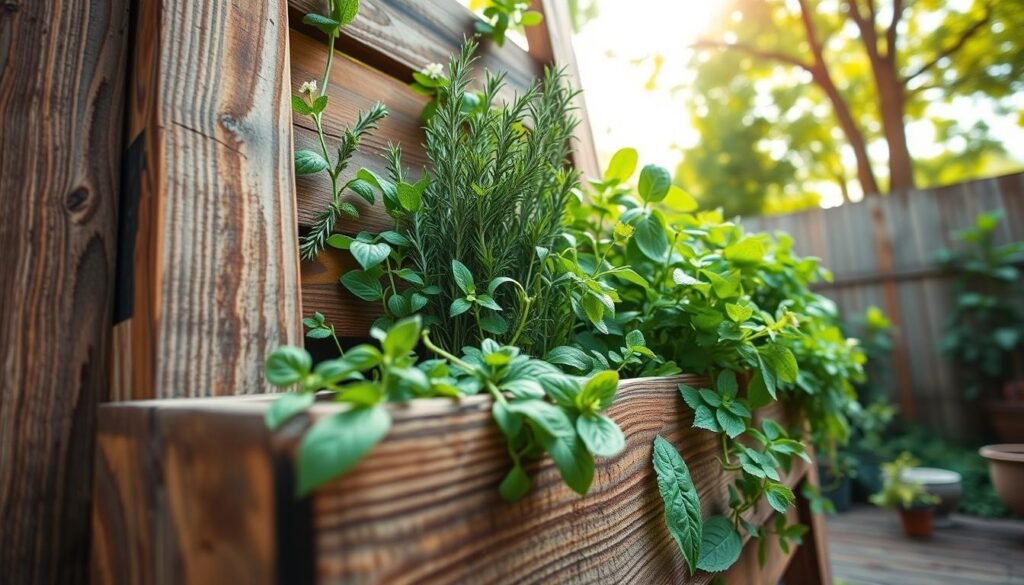
When making your pallet herb garden, think about the herbs you want. Most herbs need good drainage and sunlight. Place your pallet garden where it gets enough light.
Good herbs for pallet gardens include basil, mint, rosemary, and thyme. They’re easy to grow and taste great in many dishes. They’re perfect for a kitchen garden.
- Choose the right pallet: Make sure it’s sturdy and safe for gardening.
- Prepare the pallet: Clean and fix it if needed, then shape it into your garden.
- Add soil and herbs: Fill it with potting mix and plant your herbs.
Vertical Herb Garden Ideas for Balconies and Patios
Vertical herb gardens are great for small outdoor spots like balconies and patios.
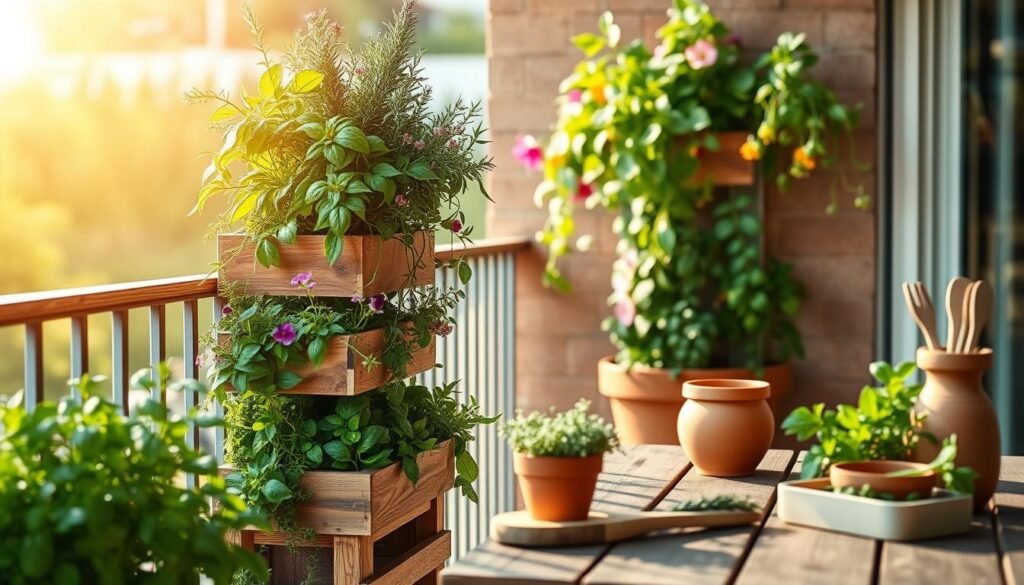
- Space efficiency
- Enhanced aesthetic appeal
- Easy access to fresh herbs
- Customizable designs
Aesthetic Considerations
Think about the planter, herb arrangement, and design to match your balcony or patio.
Consider the planter color, herb texture, and how they balance together.
- Choose planters that match or contrast with your balcony or patio colors.
- Select herbs with varying textures and colors.
- Arrange herbs for a balanced display.
This way, you get a garden that’s both useful and pretty.
Rustic Wall-Mounted Herb Planter Concepts
Rustic wall-mounted herb planters add charm to your decor. They also make it easy to get fresh herbs.
These planters can be made from reclaimed wood or wooden pallets. They have a unique, rustic charm. This charm complements any kitchen or dining area.
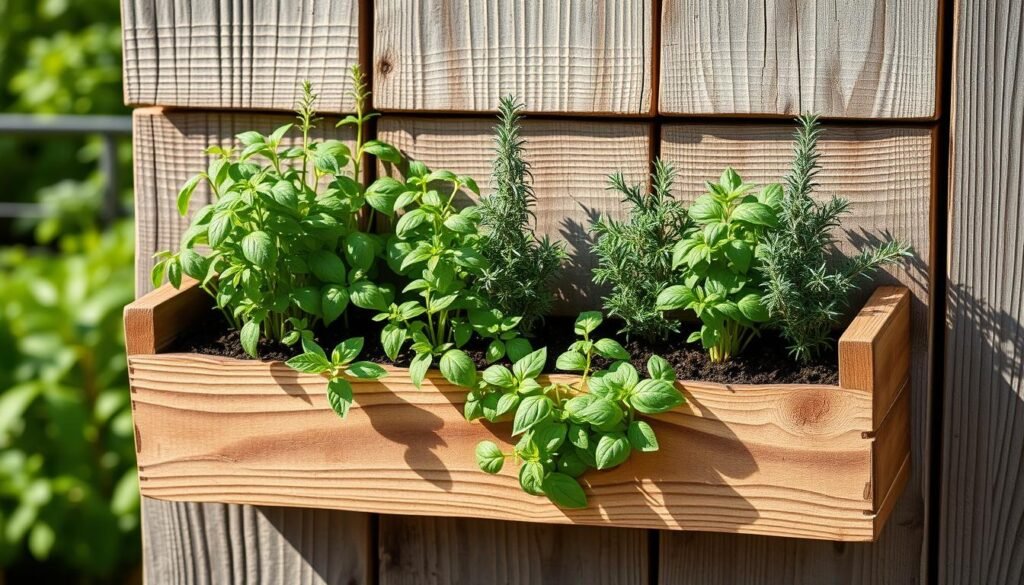
Installing a rustic wall-mounted herb planter is easy. You just need a few basic tools.
To start, you’ll need a sturdy wall-mounted herb planter. It should be made from durable materials like reclaimed wood or a wooden pallet.
- Choose a location for your planter that receives adequate sunlight for the herbs you plan to grow.
- Ensure the wall can support the weight of the planter when filled with soil and herbs.
- Use a level to ensure the planter is straight, and secure it to the wall with appropriate fixtures.
By following these simple steps, you can enjoy a thriving DIY wall-mounted herb garden. It adds beauty and functionality to your space.
Consider using an herb pallet or arranging herbs on a wooden palette. This creates a visually appealing display.
Selecting the Best Herbs to Grow Together in Containers
To get the most from your container herb garden, picking the right herbs is key. You need to know about companion planting. This means choosing herbs that grow well together, based on their needs and how they fight pests.
Herb Compatibility
It’s important to think about how well herbs get along in the same pot. For example, basil and mint do well together. They like the same conditions and help each other grow. Basil also keeps pests away from mint, like aphids and spider mites.
But, some herbs don’t mix well. Mint and rosemary need different things and can fight for space. Mint spreads too much and needs a lot of room. Rosemary likes dry soil and can get sick if it’s too wet.
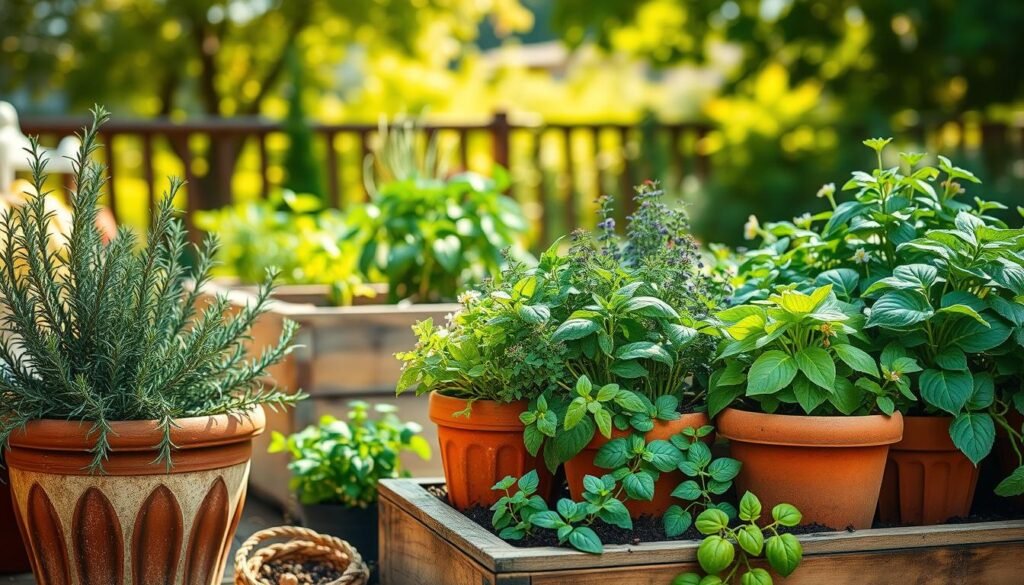
These herbs not only get along but also taste and smell great together.
By picking the right herbs and using companion planting, you can make a lively and varied container herb garden.
Space-Saving Herb Garden Designs for Apartment Living
Living in an apartment doesn’t mean you can’t have a herb garden. With a bit of creativity, you can grow fresh herbs right at home.
For indoor spaces, think about vertical herb gardens or wall-mounted planters. These not only save space but also make your apartment look better.
Key Benefits of Indoor Herb Gardens:
- Year-round herb availability
- Space efficiency
- Aesthetic appeal
Outdoor Alternatives
If you have a balcony or patio, you can grow your herbs outside. Use small planters or tiered garden beds to make the most of your space.
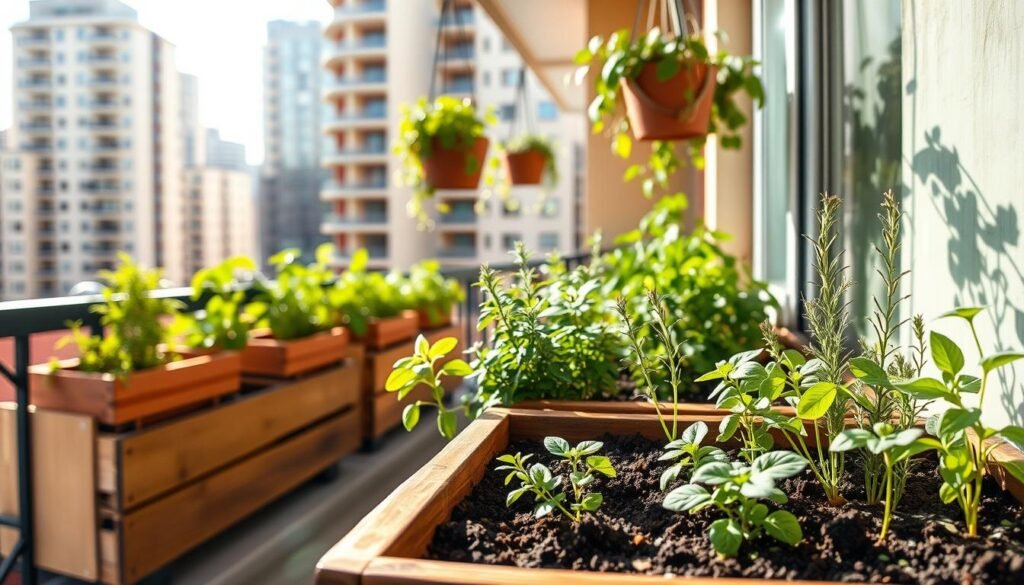
Outdoor herb gardens get natural sunlight and air, which is good for the plants. Pick containers that are easy to move to get the best sunlight.
Tips for Outdoor Apartment Herb Gardens:
- Choose herbs that do well in your local weather.
- Use containers that let water drain well.
- Put your herb garden where it gets the right sunlight for your herbs.
Step-by-Step Guide to Building a Simple Herb Box
Building a simple herb box is a fun DIY project. It can make your backyard gardening better. It’s great for both beginners and experienced gardeners, needing just a few materials and no special skills.
To start, you’ll need the following materials:
- Untreated wood planks or cedar wood for the box
- Wood screws and a drill
- Weather-resistant wood glue
- Drainage material (e.g., small rocks or broken pottery)
- Potting soil and your chosen herbs
Assembly and Planting
Start by screwing the wood planks together. Make sure the corners are tight and the box is strong. Use weather-resistant wood glue to make the joints stronger.
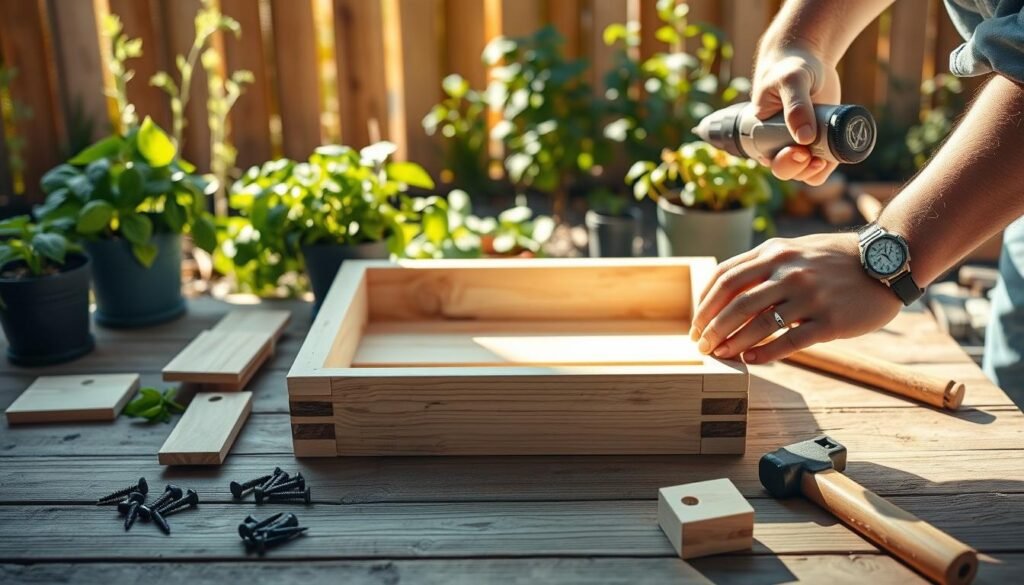
After building the box, add drainage material at the bottom. This stops the soil from getting too wet. Fill the box with potting soil, leaving room for your herbs. Plant your herbs and water them well.
Tips for a thriving herb box:
- Choose herbs that grow well together and need the same sunlight.
- Put the herb box in a sunny spot, getting at least 4-6 hours of direct sunlight.
- Water the herbs often, but don’t overdo it.
Maintenance Tips for a Thriving Backyard Herb Garden
To keep your herb garden thriving, focus on watering, pruning, and pest control. A well-cared-for herb garden adds fresh flavors to your cooking and beauty to your yard.
Watering is key. Herbs need moist soil but not too wet. Check the soil by feeling it with your finger. If it’s dry, it’s time to water.
Pest Control and Fertilization
Pests can harm your herbs. Aphids, spider mites, and slugs are common. Use organic pest control like neem oil to protect your garden.
- Check your plants often for pests.
- Use barriers to keep slugs and snails away.
- Plant a variety of herbs and flowers to attract good bugs.
Fertilization is also important. Herbs need balanced fertilizers for healthy growth. Avoid too much nitrogen.
- Use a balanced, water-soluble fertilizer during the growing season.
- Fertilize herbs once a month, following the instructions.
- Try compost tea for a nutrient-rich, organic option.
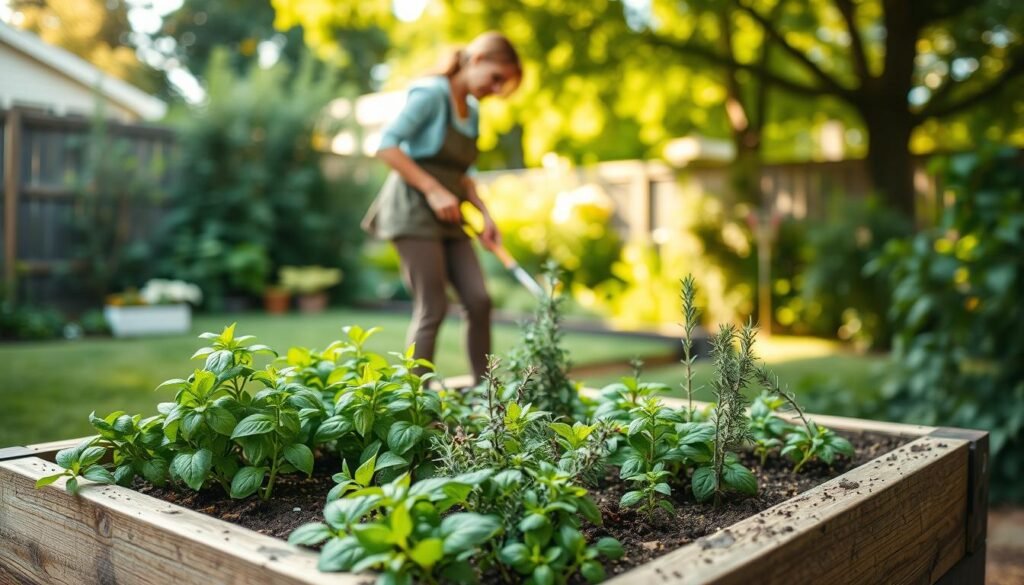
Pruning helps herbs grow bushy and prevents flowering. It keeps plants from getting too tall and promotes strong roots.
- Pinch off flower buds to focus on leaf growth.
- Trim overgrown stems to keep shape and encourage new growth.
- Harvest herbs often to keep them producing.
Conclusion
Creating a DIY raised herb planter box is a great way to bring the benefits of herb garden right into your backyard or kitchen. With the inspiration and ideas provided, you’re now ready to start your herb gardening journey.
Begin with a Small DIY Herb Garden Setup
Starting a herb garden is easier than you think. Begin with a small diy herb garden setup, and as you gain experience, you can expand your garden to include more herbs and creative designs.
The benefits of herb garden are numerous, from having fresh herbs at your fingertips to making your outdoor space more beautiful and fragrant. So, take the first step, and get started with your very own herb garden today!