Start transforming your outdoor space with a fun task. This diy wooden planter box brings charm to any patio. It’s the perfect spot for colorful backyard flowers and fresh herbs.
Building your own planters is a great idea. You can choose the style without needing to be an expert. Many wooden planters for beginners use simple tools and materials from local stores.
Success comes from a few key things. Drainage holes and the right soil depth are important. Also, wood sealing protects against rain. These steps help your planter last through many seasons.
Starting gardening with wooden planters lets you grow plants anywhere. You can put them on balconies or along paths. Enjoy making something beautiful with your own hands today.
Looking for a Simple Garden Project? Try a Wooden Planter Box
Turn your outdoor area into a beautiful space with a DIY wooden planter box. It’s a great choice for anyone who loves gardening. A wooden planter box is easy to make and can make your backyard look better.
It lets you be creative with your garden design. Plus, it’s very versatile.
You can put it anywhere in your backyard or on your patio or deck. This makes it perfect for adding greenery to your outdoor area.
Enhancing Backyard Aesthetics
A wooden planter box can make your backyard look amazing. Here’s how:
- It adds a natural, rustic charm to your outdoor space
- It lets you show off different plants and flowers
- You can customize it to fit your garden’s theme
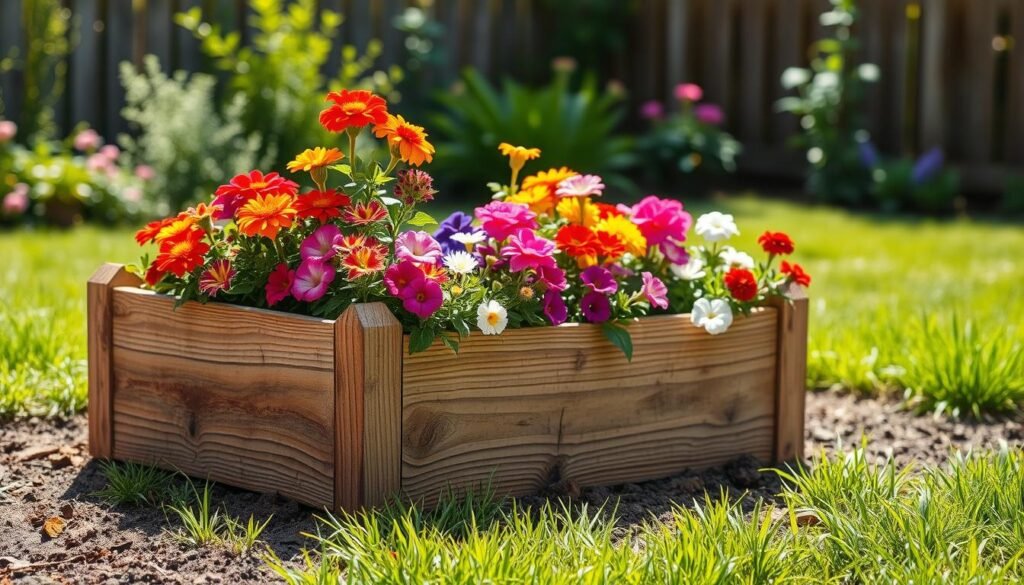
Also, a wooden planter box is a great way to start or grow your garden. It’s a garden project idea that works for any backyard or gardening level.
- Choose wood that’s durable and looks good.
- Pick plants that do well in planter boxes and fit your climate.
- Think about the size and where to put your planter box for the best look.
Essential Materials and Tools for Beginners
Creating a wooden planter box is easy for beginners. You just need some basic materials and tools. The wood you pick is key for both durability and looks.
Choosing the Right Wood: Cedar, redwood, and cypress are great because they resist rot and bugs. You can also use reclaimed wood for a special look.
Here’s what you’ll need:
- 2″ x 6″ or 2″ x 8″ lumber for the frame
- 1″ x 4″ or 1″ x 6″ lumber for the slats
- Wood screws
- Wood glue
- Weather-resistant wood finish (optional)
You’ll also need some basic tools:
- Circular saw or hand saw for cutting the wood
- Drill for drilling screw holes
- Impact driver for driving screws
- Tape measure and square for accurate measurements
- Safety glasses and a dust mask for protection
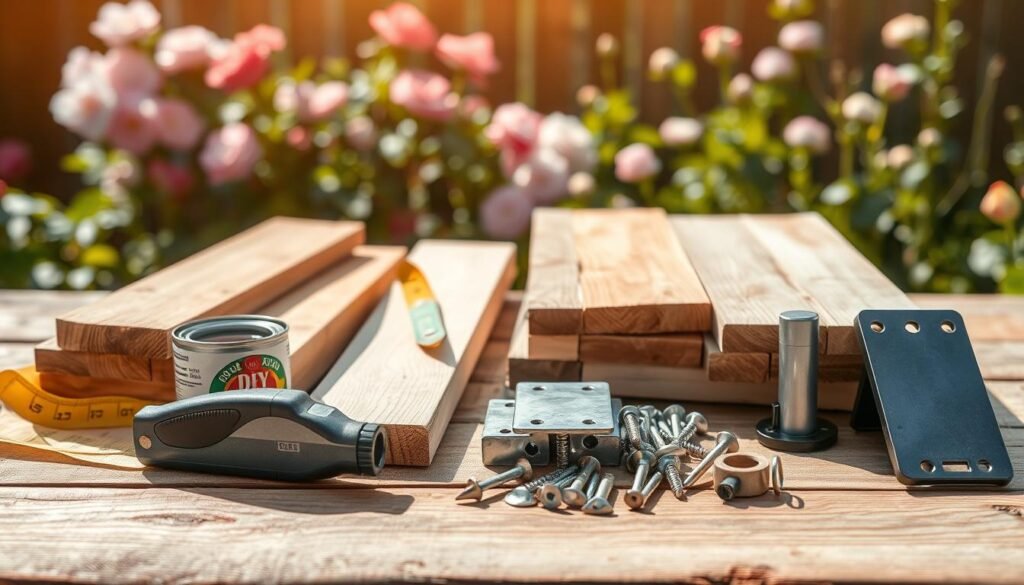
With these materials and tools, you’re ready to start. Always follow safety rules and take your time. This way, you’ll make a sturdy and beautiful planter box.
Classic Raised Bed Designs for Vegetable and Flower Gardens
Gardeners can make their outdoor space better with classic raised bed designs. These designs help with soil drainage, warmer soil, and easier access. They are a key part of gardening.
These designs work well for both vegetable garden beds and flower gardens. The design and how it’s built are very important.
Think about the size and shape of your raised bed. A width of 3-4 feet makes it easy to reach the center. The length depends on your space and what you like.
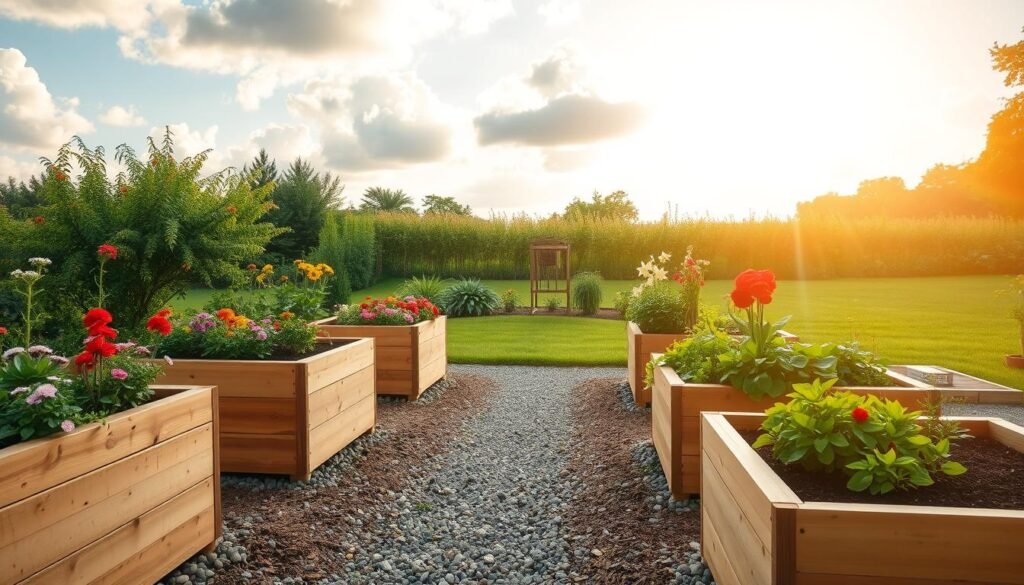
For vegetable garden beds, the bed’s depth matters. Vegetables need at least 6-8 inches for roots. But, raised strawberry beds can do well in shallower beds.
Garden bed edging is also key. It looks good and keeps the bed’s contents in place.
- Choose materials that are durable and match your garden’s look.
- Wood, metal, or composite materials work well for edging.
- The edging should be 3-4 inches high to keep everything in.
By thinking about these details, you can make a garden that looks great and grows well for years.
Creative Mobility Solutions for Patio and Deck Planters
For those with patio or deck gardens, adding mobility to planter designs is a big plus. Rolling planters make it easy to change up your garden layout. This brings flexibility and versatility to your outdoor space.
Benefits of Rolling Planters
Rolling planters are a top choice for patio and deck gardens. They let you move plants around with no hassle. This is super helpful for getting the most sunlight or rearranging your garden.
- Flexibility: Rolling planters let you change your garden’s layout whenever you want.
- Ease of Maintenance: They make it simple to move plants for tasks like pruning or repotting.
- Sunlight Optimization: You can easily shift plants to spots with the best sunlight.
Other Mobility Solutions
There are more ways to make your patio or deck planters mobile.
- Lightweight Materials: Using light materials for your planters makes them easier to move.
- Planter Box Handles: Adding handles lets you lift and move your planters with ease.
- Modular Designs: Designing planters in modular parts makes it simpler to change or grow your garden.
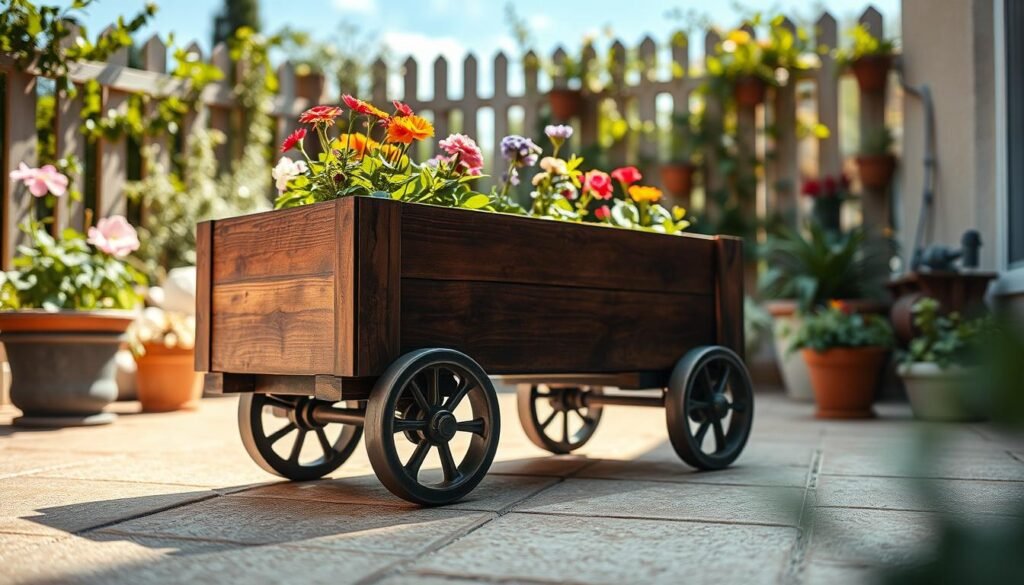
By using these mobility solutions in your patio or deck planter designs, you can make your garden more dynamic and adaptable.
Modern and Minimalist Planter Box Aesthetics
For those who love clean lines and simple designs, a modern planter box is perfect. These designs are popular for making outdoor spaces look better without adding clutter.
A modern planter box stands out for its simplicity and focus on function. It often has clean lines, few decorations, and highlights the beauty of its materials.
Design Principles for a Modern Look
To get a sleek, modern look, follow these design tips:
- Clean Lines: Stay away from complex patterns and go for simple, straight lines.
- Minimal Ornamentation: Keep decorations simple to avoid clutter.
- Functionality: Make sure the planter box looks good and works well.
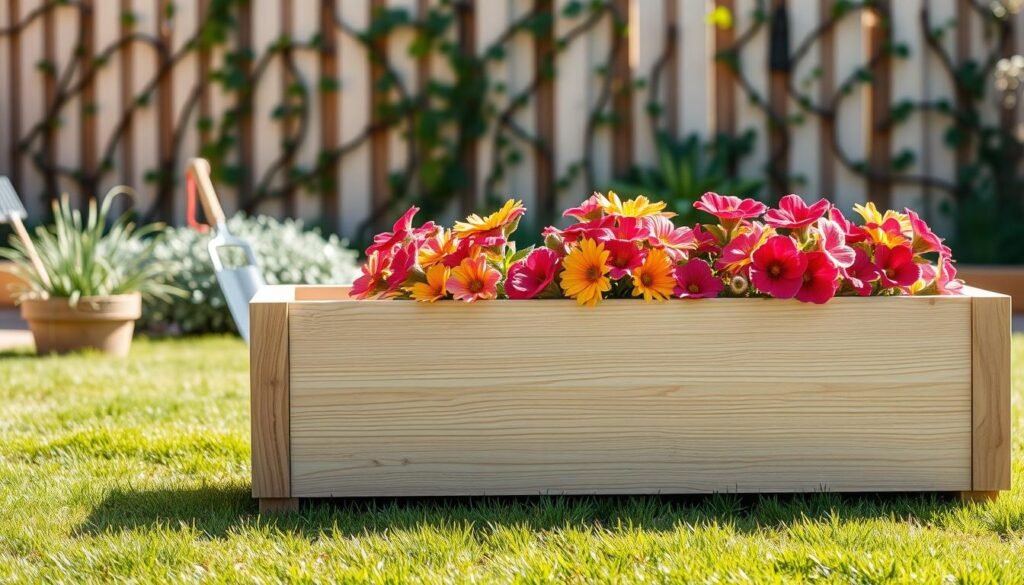
Modern planter boxes have many advantages. They match many outdoor decor styles and are easy to care for. They can be made from wood, metal, or composite materials, so you can pick the best one for your garden.
Key Features of Modern Planter Boxes
- Simple and sleek designs
- Use of high-quality, durable materials
- Emphasis on functionality and ease of use
- Versatility in terms of size and material
Adding modern and minimalist planter box aesthetics to your garden can make it beautiful and peaceful. It shows off your personal style.
Space-Saving Ideas for Balconies and Small Backyards
You don’t need a big yard to have a beautiful garden. Thanks to clever ideas, even small spaces can be green and lush. This is great for city dwellers or those with little outdoor room.
Being creative is essential for gardening in tight spots. Vertical gardening is a top choice for saving space. It turns walls and fences into green havens, even in the smallest areas.
Gardening in small spots needs careful planning. Think about the sunlight, the right plants, and how to use every inch of space wisely.
Hanging Planters and Wall-Mounted Gardens
Hanging planters and wall gardens are perfect for small spaces. They look good and keep the floor free, making your area feel bigger.
Hanging planters are great for many plants, like flowers, herbs, and veggies. They come in various materials, like plastic, terracotta, and baskets. This lets you pick the ones that match your garden’s look.
- Choose planters that are sturdy and have good drainage.
- Select plants that are suitable for hanging baskets, such as trailing plants or those that don’t require a lot of root depth.
- Consider the weight of the planters when filled with soil and plants to ensure they can be safely hung.
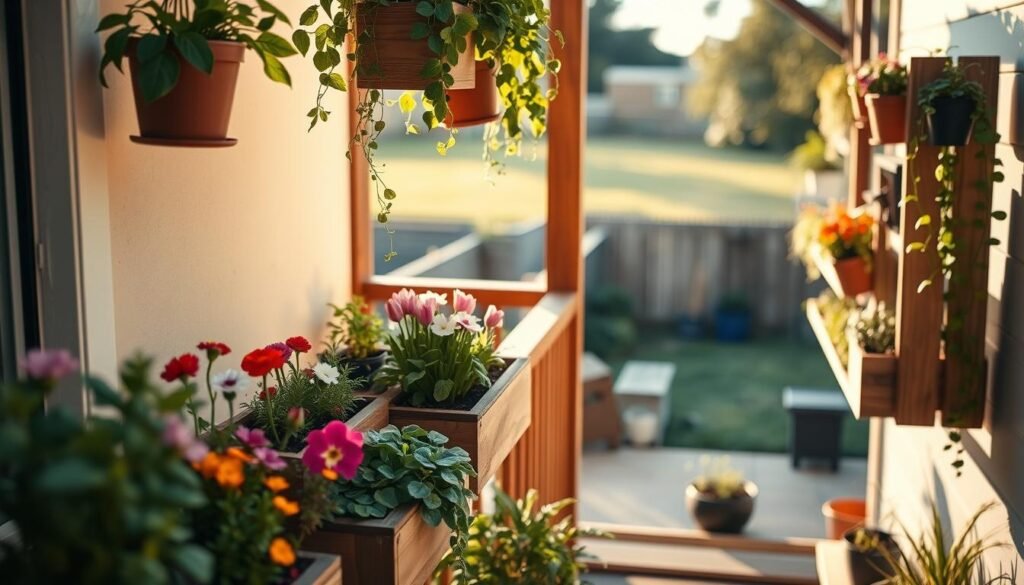
Wall-mounted gardens are another excellent choice. They can be simple pots on a wall or a full living wall system. These gardens save space and add beauty to your outdoor area.
Adding hanging planters and wall gardens to your balcony or small backyard lets you enjoy a lively garden. You won’t lose too much space.
Landscaping Integration and Backyard Makeover Tips
To make your backyard look great, think about how planter boxes fit into your design. They can make your outdoor area both beautiful and useful.
When adding planter boxes, pick ones that match your landscape. Choose materials, colors, and styles that fit your backyard’s look.
Where you put planter boxes matters a lot. Place them to make your yard look better and guide the eye. For example, put them on paths or near where you sit to make spaces feel welcoming.
Here are some tips to improve your backyard:
- Use different sizes and shapes of planters to make things interesting.
- Pick plants that match your backyard’s colors and style.
- Add planter boxes to your outdoor lights to show them off at night.
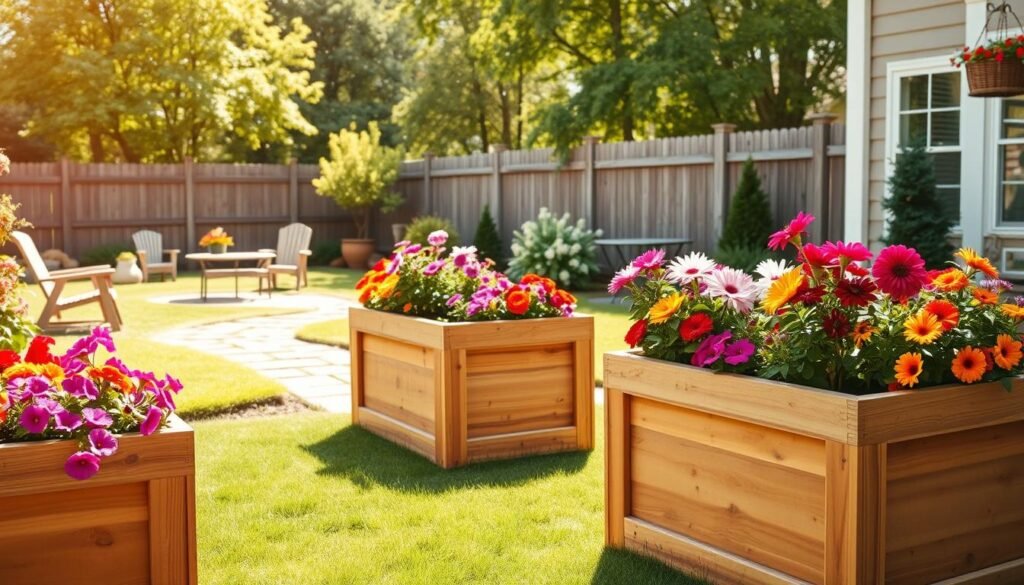
By carefully adding planter boxes to your design, you can make a beautiful and useful outdoor space. It will really improve your backyard makeover.
Maintenance and Longevity for Wooden Garden Structures
To keep your wooden planters lasting, follow some easy maintenance tips. Regular care can make your wooden garden structures last longer. They will stay in great shape for years.
Protecting your wooden planters from the elements is key. Use a sealant or stain to shield them from rain, sun, and snow. A good sealant or stain keeps the wood’s color and prevents damage.
It’s also important to check your wooden garden structures often. Look for cracks, rot, or insect damage. Fixing these problems early can stop them from getting worse.
- Clean your wooden planters regularly to prevent the buildup of dirt and debris.
- Apply a fresh coat of sealant or stain every few years to maintain protection.
- Inspect your planters regularly for signs of damage.
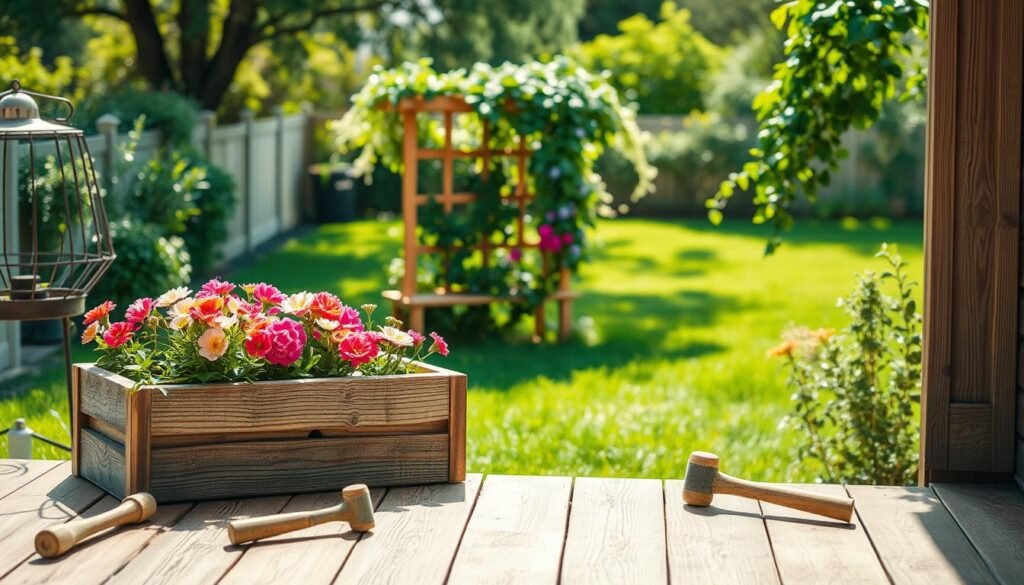
By sticking to these maintenance tips, your wooden garden structures will last a long time. Good garden care makes your garden look better. It also helps your wooden planters last longer.
Conclusion
Building a wooden planter box is a fun DIY project that can make your backyard better. By following the steps in this article, you can improve your soil and grow more plants. It’s a great way to make your outdoor space more beautiful.
With the right materials and tools, you can make a planter box that looks good and works well. It’s perfect for both experienced gardeners and beginners. DIY gardening with wooden planter boxes is a great way to start your gardening journey.
Adding gardening tips and tricks to your routine can make your garden flourish. It will bring joy and beauty to your outdoor space. So, why not start today and see the benefits of wooden planter box gardening for yourself?