
Fixing cracked wood can save you money and make your wood last longer. Cracked wood not only looks bad, but it can also get worse if not fixed.
You don’t need to be a pro to fix DIY wood crack fix. With the right stuff and some basic skills, you can make your wood look new again. A wood crack filler is a simple and effective fix for cracks.
Doing it yourself saves you from the cost and trouble of replacing the wood. This guide will show you how to do it, so you can get great results at home.
Understanding Wood Cracks: Why They Happen and When to Repair
Wood cracks are not just ugly; they can also mean there’s a bigger problem. They can happen because of the environment, wear and tear, or just because wood ages.
Environmental Factors Affecting Wood
Environmental changes are a big reason for wood cracks. Changes in humidity and temperature make wood expand and contract. This can cause cracks over time. For example, dry air makes wood shrink, while wet air makes it expand.
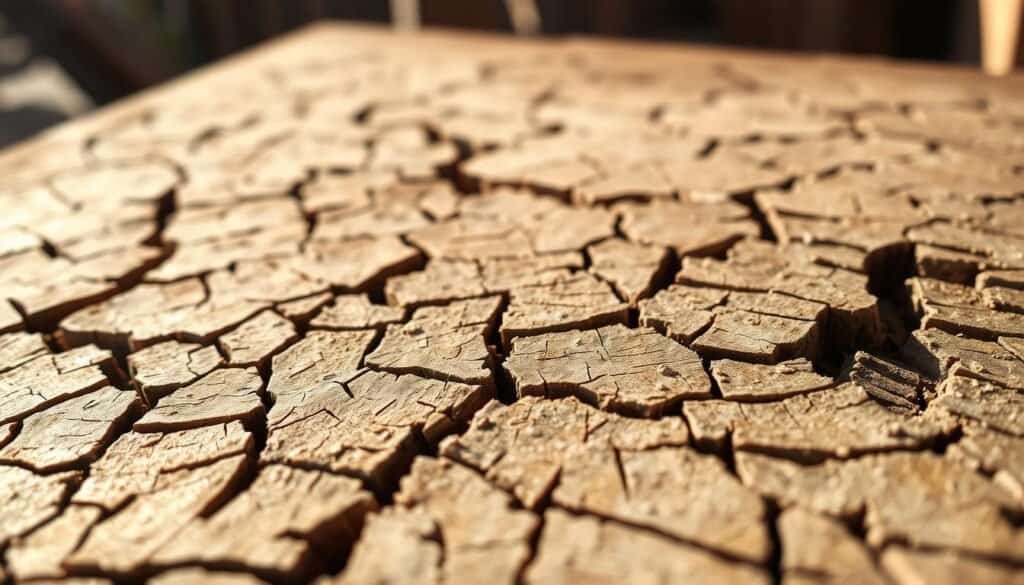
Deciding when to fix wood cracks depends on how bad they are. Small cracks can be fixed with simple DIY methods, like wood crack sealing or filling. But bigger cracks or those with other damage might need a pro.
Knowing why a crack happened helps choose the right fix. If it’s from drying out, using a wood conditioner or restaining can help. Also, sanding furniture tips can make the fixed area look like the rest of the surface.
Understanding wood cracks and knowing when to fix them is key to keeping your wood looking great. Whether you do it yourself with cracked wood restoration or get help from a pro, fixing cracks quickly stops more damage. It also makes your wooden items last longer.
8 Essential Tools and Materials You’ll Need for Wood Repair
Getting the right tools and materials is key to fixing cracked wood. Having everything ready will make the repair easier and faster.
First, you’ll need basic tools for the cracked area. Sanding wood is important to smooth the surface. Use a medium-grit sandpaper to get rid of debris or old finish. Then, switch to a fine-grit sandpaper for a smooth finish.
Materials Needed for Filling Cracks
- Wood filler: This compound fills cracks and holes in wood. Pick a filler that matches your wood’s color as closely as you can.
- Wood glue: It’s needed to bond wood pieces together. Apply wood glue to the cracked area before clamping it in place.
- Clamps: These hold the cracked wood in place while the glue dries.
For detailed repairs, you might need wood crafting tools like chisels, hand saws, or a wood carving knife. These tools help in removing damaged wood or fitting the repair precisely.
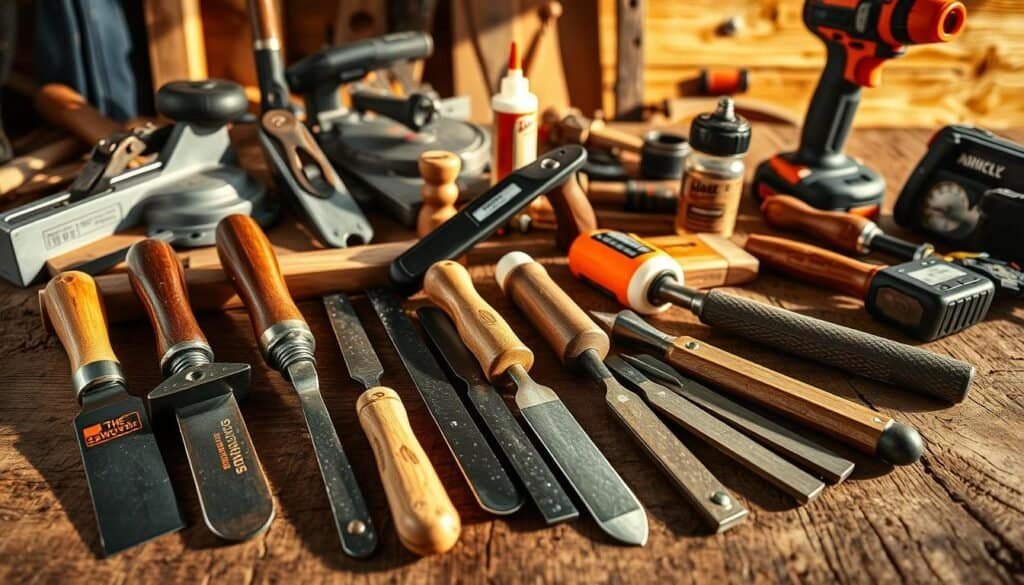
If your wood is painted or finished, you’ll need to strip the old paint or finish first. Stripping paint from wood requires a chemical stripper and safety gear like gloves and goggles.
With these essential tools and materials, you’re ready for most wood repair jobs. Always work safely and follow safety rules when using power tools or chemicals.
How to Fix Cracked Wood Without Replacing It: 5 Proven Methods
Cracked wood can be fixed using five effective methods. These techniques work for both cracked wood tables and damaged trim. They help you get professional-looking results without needing to replace the wood.
One common method is using a wood filler. Wood filler can fill cracks, holes, and gaps in wood surfaces. Start by cleaning the area around the crack to remove dirt or debris.
Tips for Applying Wood Filler Effectively
- Choose a wood filler that matches your wood’s color as closely as possible.
- Apply the filler with a putty knife, pressing it firmly into the crack.
- Let the filler dry completely, following the manufacturer’s instructions.
- Sand the area smooth, feathering it out towards the edges so it blends with the wood.
For bigger cracks or holes, use bondo wood filler or dap plastic wood filler. These products are great for filling big damage. They can be sanded and painted over once dry.
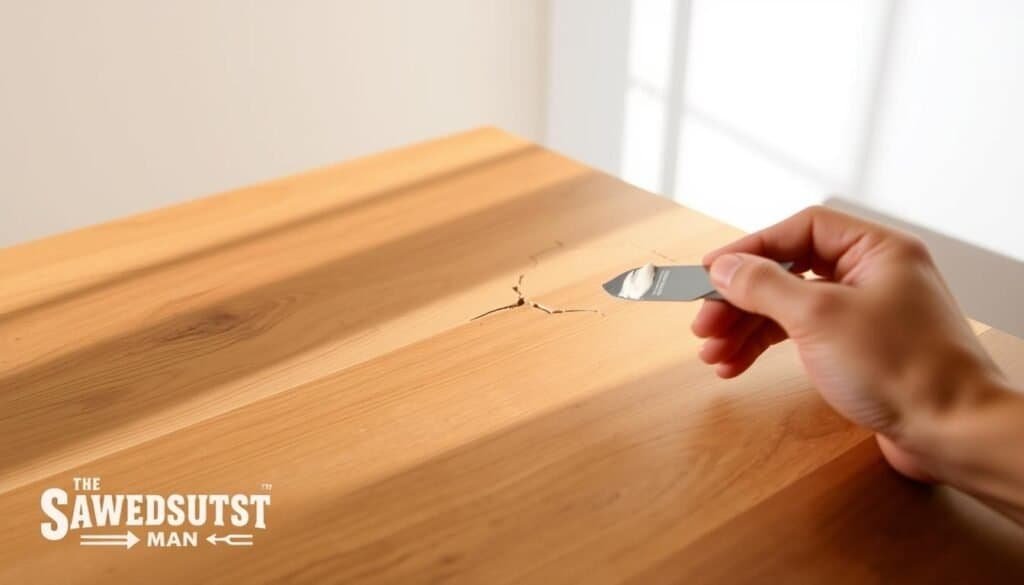
Other ways to fix cracked wood include using epoxy resin for a strong bond, applying a wood patch for big damaged areas, and using caulk for small cracks. Each method has its own uses and benefits.
- Epoxy resin is great for bonding cracked wood together, making a strong and durable repair.
- Wood patches are good for big damage, letting you replace the damaged section entirely.
- Caulk works well for small cracks, where a flexible seal is needed.
- Using wood filler and sanding can restore the wood’s original look.
- For tough cracks, you might need to apply multiple layers of filler or try a different method.
By using these five methods, you can fix cracked wood without replacing it. Whether it’s a cracked wood table or damaged trim, these techniques will help you get lasting results.
Step-by-Step Guide to Repairing Cracked Wood Furniture
Cracked wood furniture can be fixed with patience and the right steps. You can make it look new again. Follow these steps to restore your furniture’s beauty.
The first step is to clean the surface. Remove dirt or debris that could get in the way. Use a gentle wood cleaner and a soft cloth to avoid damage.
- Inspect the crack to determine its depth and length.
- Clean the area around the crack with a wood cleaner.
- Dry the area completely before proceeding.
After cleaning, start the repair. For small cracks, wood filler might work. For bigger ones, use wood glue and clamps.

Let the wood filler or glue dry as instructed. Then, sand the area with fine-grit sandpaper. Smooth it out so it blends with the wood.
- Apply a wood stain or finish to match the original color and sheen.
- Allow the stain or finish to dry according to the instructions.
- Apply a second coat if necessary, following the drying instructions between coats.
When refinishing veneer furniture, be gentle. Use homemade furniture polish to keep the finish. Regularly stripping old wax and dirt helps too.
By following these steps and using the right materials, you can fix cracked wood furniture. This will make it last longer and look great.
DIY Solutions for Fixing Cracked Wood Floors and Trim
Fixing cracked wood floors and trim is easier than you think. With the right tools and techniques, you can make your wooden surfaces look new again.
Cracks in wood floors and trim can come from many things. These include changes in humidity, settling foundations, or just wear and tear. It’s important to fix these cracks quickly to stop more damage. For wood floors, you can use a repair kit or mix wood glue with sawdust to fill in the cracks.
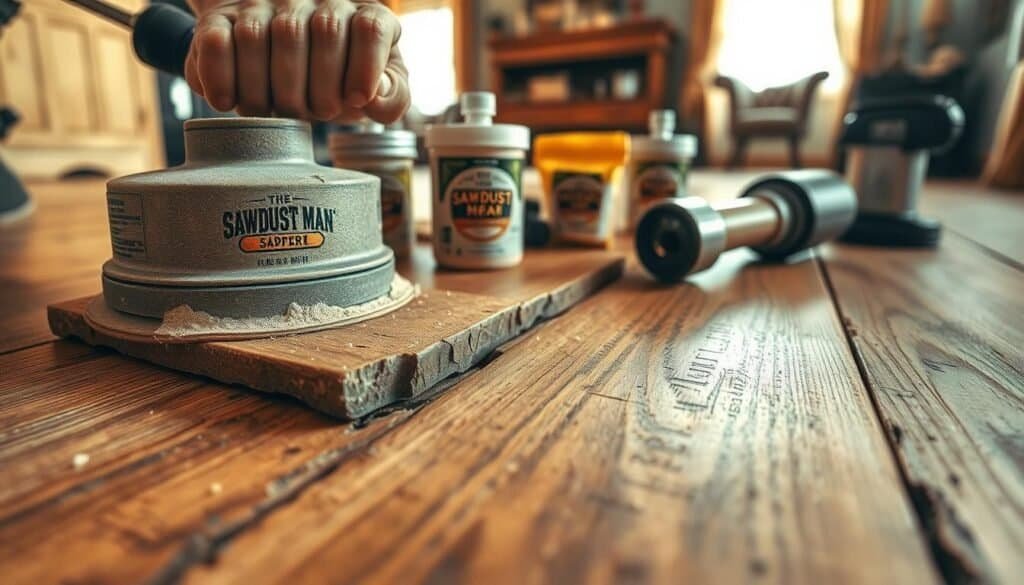
When filling cracks in hardwood floors, picking the right filler is key. It should match the floor’s color and texture. For bigger cracks, you might need to use wood filler and sanding to get a smooth finish, like a walnut wood texture seamless surface.
Fixing Cracked Wood Trim
Fixing cracked wood trim around windows and doors works the same way. Apply wood glue into the crack and clamp it until it’s dry. For bigger cracks or gaps, mix wood filler with caulk for a strong and nice-looking fix, perfect for a wood island top.
- Clean the cracked area well before you start.
- Choose a wood filler that matches the trim’s color as much as you can.
- Use a putty knife to apply the filler, pressing it firmly into the crack.
- Sand the area smooth once the filler is dry.
- Finish with a coat of paint or varnish to match the trim.
By using these DIY tips, you can fix cracked wood floors and trim. This will make your wooden surfaces look better and last longer.
Advanced Wood Crack Repair Techniques for Lasting Results
Restoring wood surfaces requires advanced repair methods for lasting results. Epoxy for wood repair is a top choice. Epoxy fillers are strong and durable, perfect for fixing wood cracks.
Epoxy fills the crack and hardens, bonding well with the wood. Clean the crack area first to remove debris. Then, mix the epoxy as directed and fill the crack. Let it cure before sanding it smooth.
Techniques for Reinforcing Weakened Wood
Cracked wood may need extra support. Using wood hardener or consolidant can help. These products strengthen wood fibers, making it stable and less likely to crack further.
- Apply wood hardener as directed, usually with a brush.
- Let it dry completely, which can take hours or overnight.
- After drying, use epoxy or another filler for extra support.
Another way to reinforce wood is with internal reinforcement. This involves inserting dowels or rods into holes that cross the crack. It adds structural support to the repair.

Using epoxy and reinforcing weakened wood leads to lasting repairs. These methods are great for restoring antique furniture or fixing damaged trim. They help you achieve professional-quality results.
Finishing Touches: Making Repaired Areas Blend Seamlessly
To make a wood repair look professional, it must blend with the rest of the surface. This means sanding, staining, and applying a finish that matches the original. It’s all about making it look like new.
Sanding is the first step. It smooths out the fixed area, removing any extra filler. This makes it blend with the wood around it. Start with coarse grit sandpaper and move to finer grits for a smooth finish.
Applying a Finish to Match the Original
After sanding, apply a stain if needed. The question is, can you stain over wood filler? Yes, but you must prepare it well. Make sure the filler is dry and sanded smooth before staining.
- Choose a stain that matches the original color as closely as possible.
- Apply the stain according to the manufacturer’s instructions.
- Allow it to dry completely before applying a finish.
For the final touch, use Minwax High Performance Wood Filler with a topcoat. This gives a durable and attractive finish. Restaining wood furniture or flooring after repair also protects it from damage.

By sanding wood furniture and applying a matching stain and finish, you can make repairs almost invisible. This not only makes your wood surfaces look better but also lasts longer.
Preventing Future Wood Cracks: 7 Maintenance Tips
Stopping wood cracks before they start is simpler than fixing them. With the right care, your wooden items can last longer. Keeping your wood furniture and surfaces in good shape not only looks better but also saves money.
Regular Inspection is key to keeping your wood furniture and surfaces in top shape. Look for signs of wear, damage, or cracks often.
Protecting Wood from Environmental Damage
Things like humidity and temperature changes can harm your wood. Here are 7 tips to help prevent wood cracks:
- Keep your home’s humidity steady to stop wood from swelling or shrinking.
- Don’t let direct sunlight hit your wood, as UV rays can cause fading and cracking.
- Put felt pads on furniture legs to stop scratching and damage to wood floors.
- Dust and clean wood surfaces often to avoid dirt buildup.
- Apply a wood conditioner or wax to protect the wood and make it look better.
- Keep wood furniture away from heating vents and radiators to prevent drying out.
- Use a humidifier in dry seasons to keep humidity healthy.
By following these easy tips, you can stop wood cracks and keep your wooden items looking great for years.

Protecting Your Investment with regular care saves money and keeps your wooden items a source of pride and joy.
Conclusion: Extending the Life of Your Wooden Treasures
Repairing and maintaining wood surfaces is key to keeping your furniture in great shape. By using the methods from this article, you can make your wood furniture look new again. This way, it will stay a valuable item for many years.
Doing DIY furniture restoration is both cost-effective and fulfilling. It’s rewarding whether you’re fixing water-damaged wood or just refinishing an old piece. The important thing is to be careful and detailed in your work.
Take on Your Next DIY Project with Confidence
Now that you’ve learned from this article, you’re ready for bigger wood restoration projects. Wood restoration is more than just fixing damage. It’s about keeping the unique character and charm of your wooden items.
By using the advice and techniques from this article, you can make your wood furniture last longer. So, go ahead with your next DIY project with confidence. Enjoy the feeling of bringing back your wooden treasures to their former beauty.