How Architectural Flow Changes the Way Your Home Feels Day to Day

When rooms connect naturally, moving around feels easier. The whole home feels calmer. This is the power of architectural flow, a design principle that can change your living space.

A well-designed home layout can make your daily life better. It makes your home feel more harmonious and relaxing. By creating a smooth transition between spaces, you can improve your home’s overall feel.

Good home design is more than just looks. It’s about making your home functional and comfortable. With the right house layout ideas, you can make your home welcoming and serene.

The Psychology Behind Architectural Flow

Exploring the psychology of architectural flow shows how home design affects our mental health. Mihaly Csikszentmihalyi introduced the concept of flow state. It’s a state of complete focus and engagement in an activity. In home design, flow refers to how a home’s layout and structure affect our mood and actions.

A well-designed home can help us feel in flow. This means moving smoothly between spaces, making our living experience better. The benefits of flow in home design include reduced stress, clearer thinking, and more comfort and happiness.

Studies in environmental psychology show that our surroundings greatly impact our mental state. For example, a messy or disorganized home can make us feel confused and anxious. On the other hand, a clean and well-arranged home can make us feel relaxed and joyful.
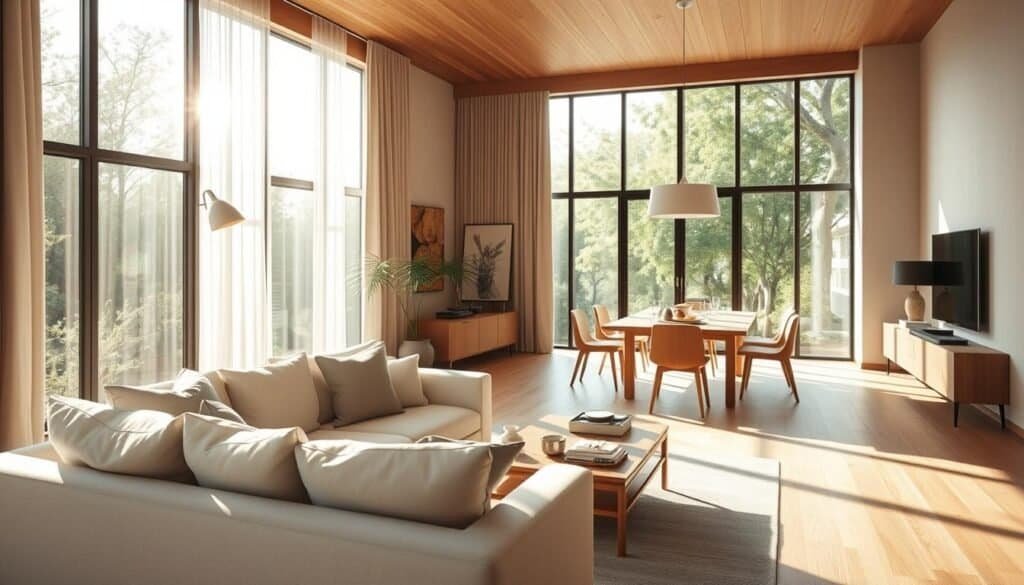
A serene, modern living space that embodies the psychology of flow in architecture. In the foreground, a tastefully arranged open-plan seating area with minimalist furniture, featuring calming neutral tones. Soft sunlight streams through large windows, casting gentle shadows and illuminating the warm wood accents of the room. The middle ground showcases a seamless transition to a dining area, with a large wooden table set for a cozy meal, surrounded by comfortable chairs. In the background, lush greenery can be seen through the glass doors, inviting the outside in, enhancing the sense of connection and tranquility. The overall atmosphere is one of calmness and harmony, evoking a sense of well-being. The lighting is bright and natural, with a soft focus effect to create a dreamy ambiance, using a wide-angle lens to capture the space's expansive feel.

The psychology of flow also points out that environments that match our abilities can make us happier. So, a home that’s not too simple or too complicated can keep us engaged and satisfied.

By understanding and using flow psychology, we can make homes that are not just beautiful but also good for our minds.

Flow Changes Everything: The Transformative Power of Thoughtful Design

The power of architectural flow is amazing. It can change a house into a home. It’s where memories are made and life happens.

Thoughtful design is more than looks. It’s about making a space that works well and feels right. It’s about how people move and interact in a space.

Before and After: Real-Life Flow Transformations

Here are some examples of home transformation through architectural flow changes:

  • A cluttered, old kitchen became a modern, open space. It now connects cooking and socializing better.
  • A dark, narrow hallway was made brighter and wider. It now flows better between rooms, feeling more open.
  • A small, closed living room was opened to the outdoors. Now, moving between inside and outside is smooth.

These changes show how flow changes everything in a home. By improving flow, homes become more enjoyable and useful.
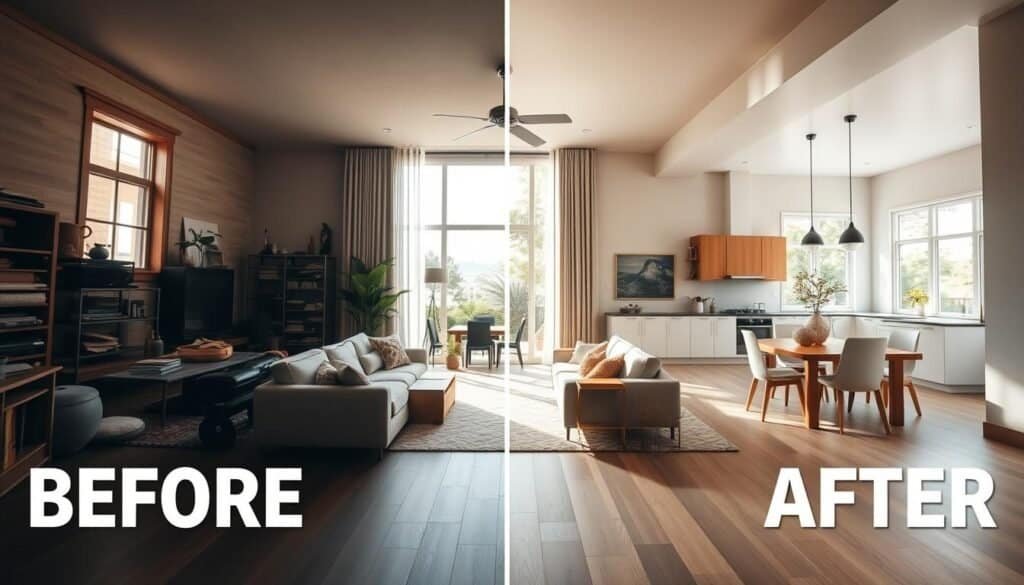
A stunning visual comparison of a home's transformation, showcasing a "before and after" perspective. In the foreground, the "before" side features a cluttered, dark living room with outdated furniture and poor lighting. The middle ground transitions to the "after" side, displaying a bright, airy space with modern decor, open floor plan, and large windows inviting soft natural light. A cozy seating area is styled with contemporary furnishings and warm accents. The background highlights a seamless connection to an inviting kitchen, accentuated by fresh greenery outside. The mood is uplifting and inspiring, evoking a sense of tranquility and enhanced flow within the home. The scene is captured with a wide-angle lens to emphasize the spaciousness, with a focus on soft sunlight creating a warm atmosphere.

Entryways: Setting the Tone for Your Home’s Flow

Entryways are more than just doors. They set the mood and flow of your home. A good entryway makes your home feel welcoming and organized.
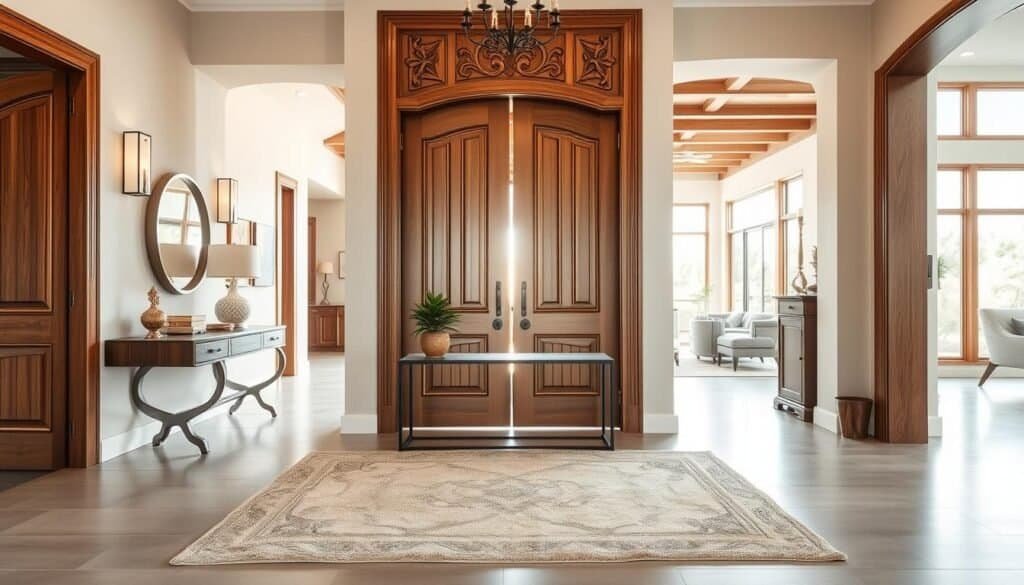
A beautifully designed entryway of a contemporary home, featuring a large wooden door with intricate carvings, flanked by elegant sidelights. The foreground includes a stylish console table adorned with a small potted plant and decorative items, inviting warmth and personality. In the middle, a soft, airy rug grounds the space, leading towards the door. The background reveals a glimpse of a bright, spacious living area illuminated by soft sunlight streaming through large windows, creating a harmonious blend of indoor and outdoor spaces. The overall atmosphere is calm and welcoming, emphasizing the vital role of the entryway in shaping the architectural flow of the home. The scene is captured with a wide-angle lens, highlighting the open layout and using natural lighting to enhance the inviting feel.

The entryway is your home’s first impression. It should be both useful and beautiful. The design depends on your household type.

Day-to-Day Entry Solutions for Different Household Types

Families need sturdy benches and lots of storage for shoes and backpacks. Singles might prefer a sleek console table with a mirror for elegance. Think about your household’s needs when designing your entryway.

For a better home flow, check out tips on calming chaotic entryways. This can make your home more peaceful and inviting.

The secret to a great entryway is finding the right balance. It should look good and also improve your home’s flow.

Kitchen Flow: The Heart of Home Functionality

A well-designed kitchen flow is key to making your home more functional. It makes cooking more fun. The kitchen is where everyone gathers, and its layout affects how we use the space.

Efficient kitchen flow means a layout that’s easy to use. It should have a design that follows the “work triangle” idea. This layout has the sink, stove, and fridge in a triangle to cut down on walking and improve movement.
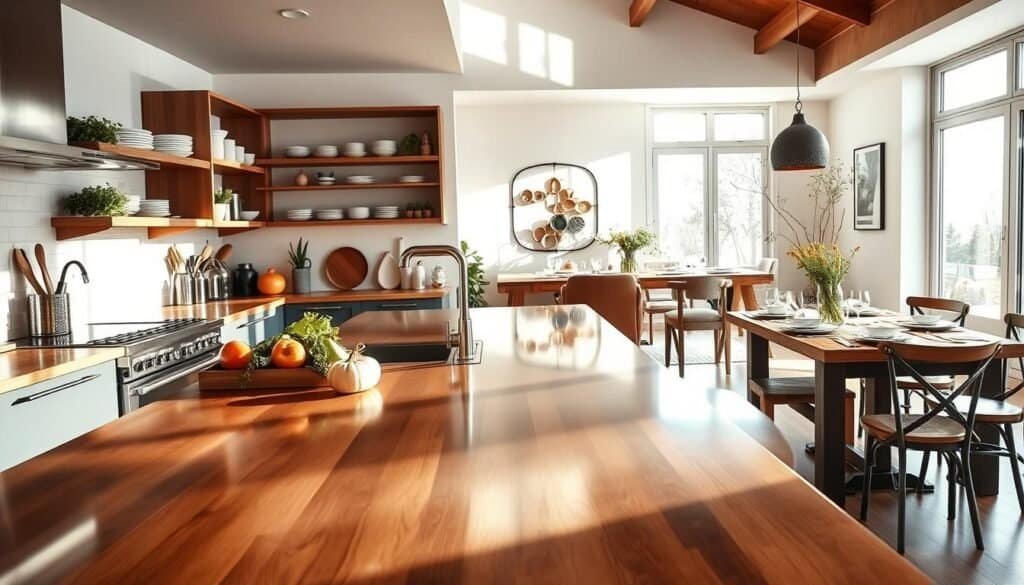
A modern, inviting kitchen that showcases optimal flow and functionality. In the foreground, a polished wooden island with fresh ingredients and stylish kitchenware, reflecting bright natural light that streams through large windows. The middle ground features sleek countertops, stainless steel appliances, and open shelving adorned with neatly arranged dishes and vibrant herbs. In the background, a spacious dining area with a rustic wooden table set for a meal, bathed in soft sunlight that creates a warm, airy atmosphere. The overall mood is one of harmony and practicality, emphasizing the kitchen as the heart of the home. A wide-angle perspective captures the seamless connection between cooking and dining spaces, illustrating an ideal flow for daily family life.

Mexican-inspired kitchens are lively and welcoming. To bring this style to your kitchen, use bold colors and traditional Mexican tiles. Talavera tiles, for example, add a vibrant Mexican touch with their bright colors and lasting quality.

Feeling stuck in your kitchen? It’s time to brighten it up with new decor ideas. Here are some tips:

  • Adding warm lighting for a cozy feel
  • Using natural materials like wood and stone
  • Bringing in colorful textiles and decor

By focusing on kitchen flow and adding Mexican-inspired touches, you can make your kitchen both useful and stunning. Whether you’re redoing your kitchen or just want to make it more welcoming, these ideas will help.

Living Room Design: Crafting Conversation and Connection

Creating a living room that invites conversation and connection needs careful thought. A well-designed space can make a home feel welcoming. It becomes a place where people enjoy spending time.

Creating Conversation Areas is essential. Arrange furniture to encourage family and friends to talk. A circular or U-shaped setup is great for this.
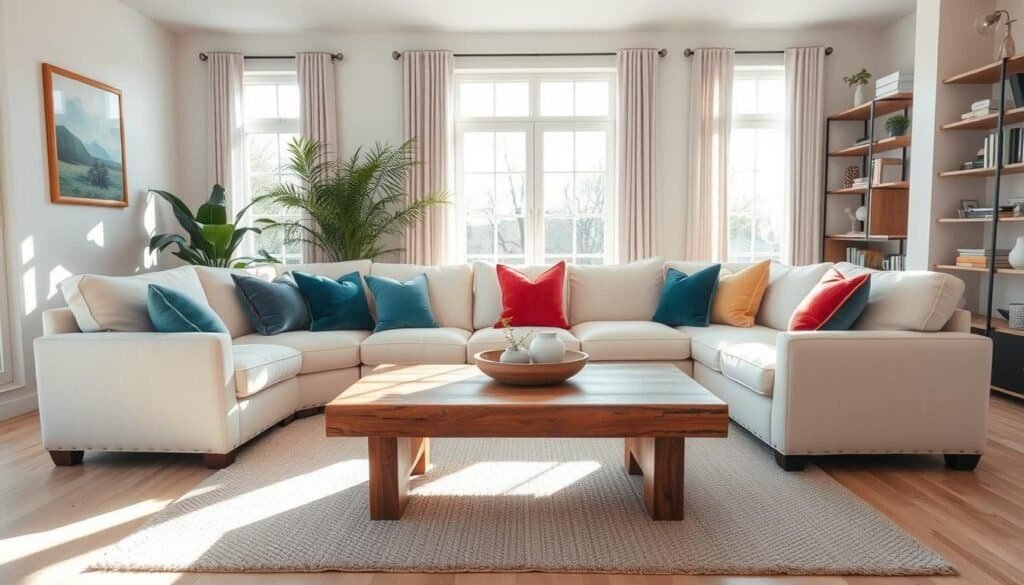
A cozy living room design, featuring a plush cream-colored sectional sofa adorned with vibrant throw pillows, centered around a warm, rustic wooden coffee table. The foreground includes a soft textured area rug beneath the table. In the middle, a large window allows bright natural light to filter in, casting soft shadows across the room. On one side, a beautiful indoor plant adds a touch of greenery, while a modern bookshelf filled with books and decor pieces lines the wall. The background showcases a serene view of the outside, highlighting a sunny day. The overall atmosphere is warm and inviting, promoting conversation and connection among family and friends. The lighting is soft and airy, enhancing the inviting feel of the space. Capture this scene with a slightly wide-angle lens for depth and a warm color palette.

For a versatile living room, think about how it will be used at different times. Use light colors and natural light during the day. Then, switch to warmer lights at night for a cozy feel.

  • Use furniture that serves more than one purpose.
  • Add smart lighting to change the mood.
  • Plan furniture layout to ensure easy movement.

By following these design tips, you can make a living room that looks good and works well. It will easily change from day to night.

Hallways and Corridors: The Arteries of Home Flow

Hallways and corridors are key to a home’s flow and functionality. They can either boost or ruin a home’s vibe, based on their design and decor.

Decorating narrow hallways can make a big impact. Light colors on walls and mirrors can make spaces seem bigger. A bold piece of art or a runner can also add charm to these often-forgotten spots.
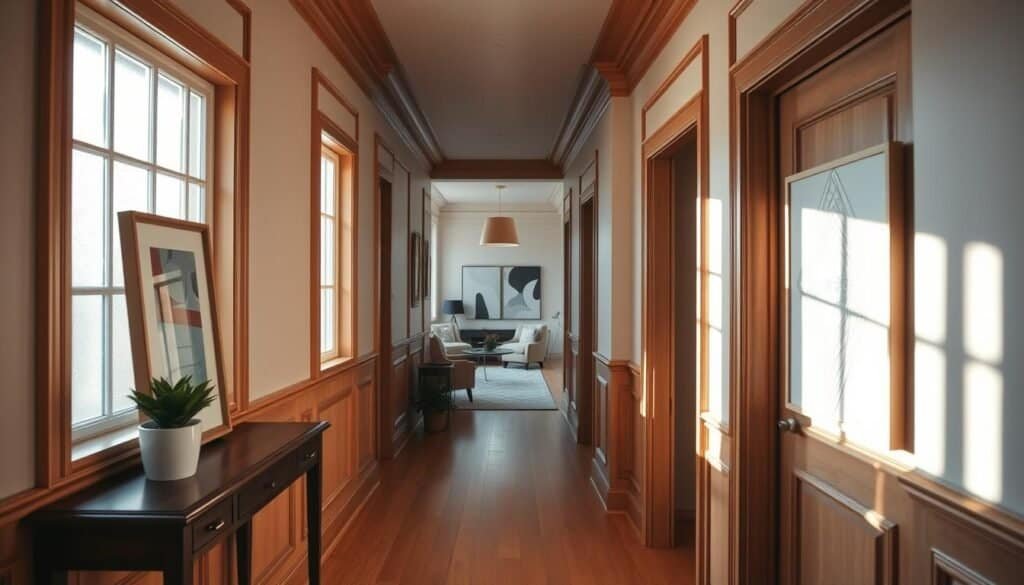
A narrow hallway decorated with elegant wooden paneling and subtle moldings, featuring warm-toned wooden flooring. The foreground includes a stylish console table adorned with a small potted plant and a framed artwork, contributing to a welcoming ambiance. In the middle ground, the hallway is illuminated by soft, diffused sunlight streaming through strategically placed frosted glass windows, creating a serene atmosphere. In the background, the hallway extends with an inviting glimpse of an open living space, showcasing geometric artwork on the walls and hanging pendant lights that add a touch of sophistication. The overall mood is bright and airy, emphasizing a harmonious flow, with a focus on the interplay of light and space that enhances the feeling of comfort and movement within the home.

Designing hallways and corridors well can enhance home flow. It makes living spaces feel more connected and peaceful. It’s about turning these areas into welcoming paths that guide everyone through the home.

Home Office Flow: Designing for Focus and Productivity

Remote work has become more common. This means designing a home office that boosts focus and efficiency is key. A well-designed space can greatly improve your work performance.

To boost productivity, you need a space that cuts down on distractions and is comfy. Add natural light, ergonomic furniture, and materials that block noise to achieve this.
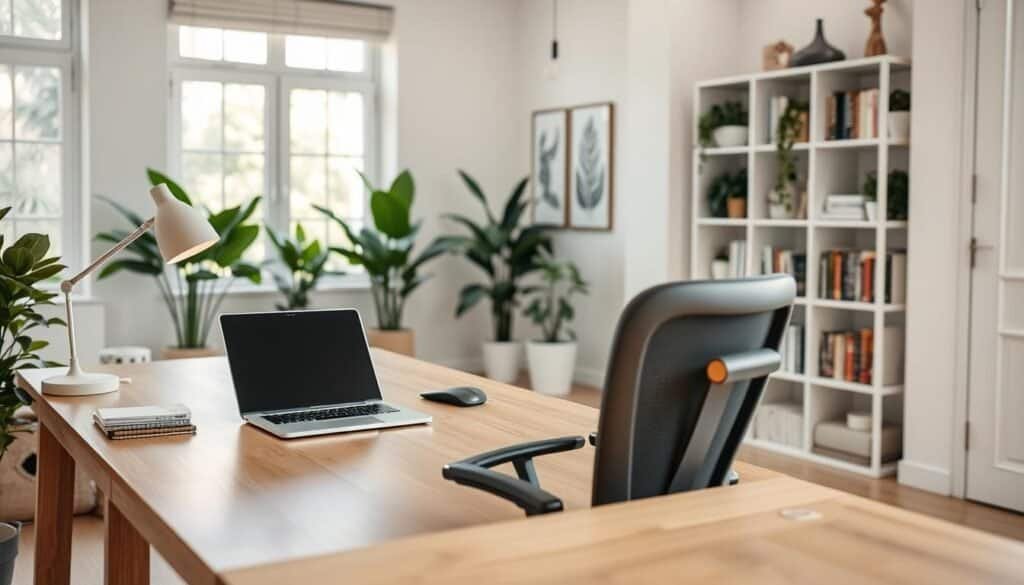
A bright and airy home office designed for focus and productivity, featuring a spacious wooden desk with minimal clutter, a sleek laptop, and a stylish desk lamp gently illuminating the workspace. In the foreground, a comfortable ergonomic chair with soft fabric in muted tones. In the middle ground, large windows allow soft sunlight to stream in, showcasing indoor plants that enhance the natural feel. The background includes light-colored walls adorned with inspirational artwork, and a well-organized bookshelf filled with neatly arranged books and decorative accents. The overall atmosphere is calm and inviting, emphasizing a sense of tranquility and concentration. The scene is captured from a slightly elevated angle to provide a comprehensive view of the workspace.

When you share your home office, it’s important to design for everyone’s needs. Two-person office solutions include:

  • Divided workspaces to cut down on distractions
  • Shared storage to keep things organized
  • Furniture that can change to fit different work styles

By adding these features, you can make a home office flow that supports your work and boosts productivity.

Bedroom Sanctuaries: Flow for Rest and Rejuvenation

The bedroom is a personal haven where flow and design meet to promote rest. It’s essential to create a sanctuary-like atmosphere for rejuvenation. Think carefully about the layout and decor.

Key Elements of a Restful Bedroom:

  • Minimal clutter for a peaceful environment
  • Soothing color schemes to promote relaxation
  • Comfortable bedding for restful sleep

For more ideas on creating a calming atmosphere, consider combining greenery with soft wooden touches, as explored in this article. This approach can enhance the sense of tranquility in your bedroom sanctuary.

Also, the flow within the bedroom should make movement easy and contribute to calmness. Ensure there’s enough space between furniture and that the room is well-ventilated.
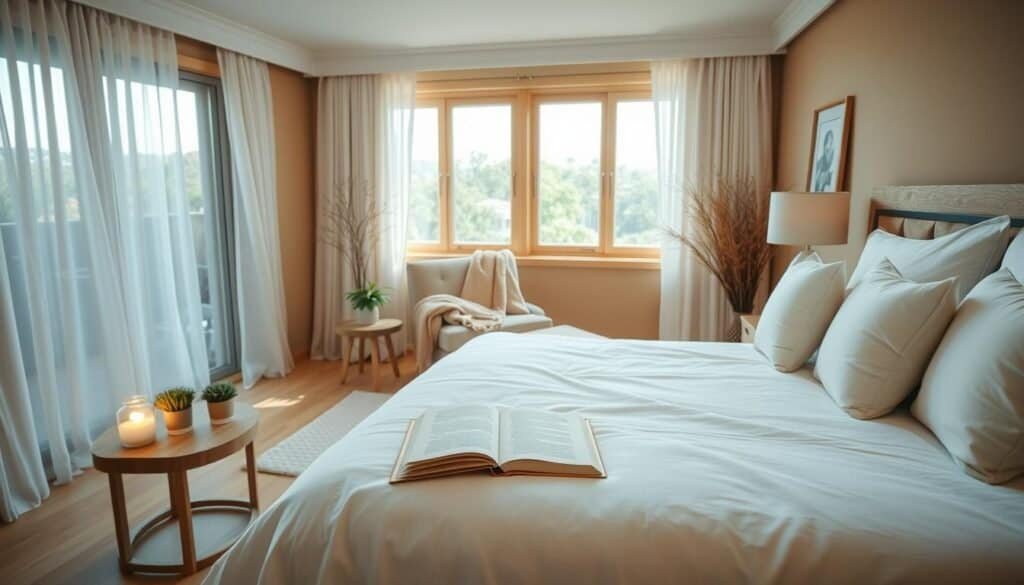
A serene bedroom sanctuary designed for rest and rejuvenation, featuring a large, plush bed adorned with crisp white linens and soft pastel throw pillows. In the foreground, a wooden bedside table holds a softly glowing lamp and a small potted plant. The middle of the scene includes a cozy reading nook with a comfortable chair draped in a soft blanket, complemented by an open book resting on a small, rustic side table. The background showcases large windows allowing bright, natural light to fill the room, with sheer curtains softly billowing in the gentle breeze. The walls are painted in calming earth tones, and wooden accents enhance the warm, inviting atmosphere. The overall mood is tranquil and airy, evoking a sense of peaceful retreat and well-being.

Small Space Solutions: Maximizing Flow in Compact Homes

Creating flow in small homes is a challenge. It needs creative and practical solutions. Every square foot matters, and the design should make the space feel open and useful.

Efficient layout is key in compact homes. By planning the layout well, homeowners can make their space feel bigger. This can be done by:

  • Using furniture that does more than one thing
  • Adding stylish storage solutions
  • Creating open-plan living areas

Using vertical space is another smart move. High ceilings can make an area feel taller, making it seem more spacious.

A-Frame and Cabin Designs That Maximize Flow

A-frame and cabin designs are great for small homes, often found in rural or natural areas. These designs are good at making flow better because of their:

  1. Triangular shape, which opens up the space
  2. Loft spaces that add living or storage without taking up floor space

To improve flow in these designs, add big windows and skylights. They let in natural light and connect you to the outdoors, making the space feel bigger.
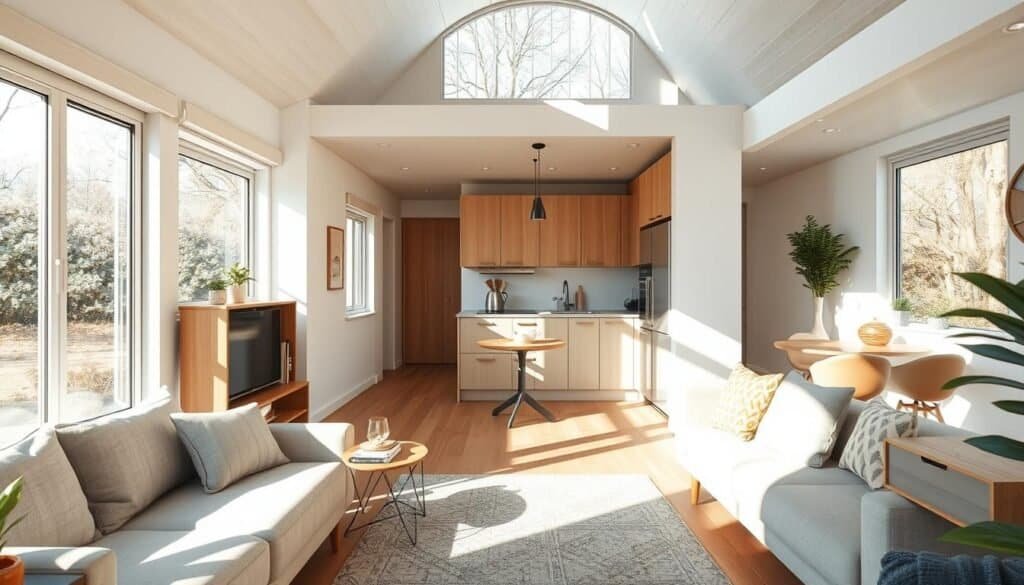
A compact home interior that emphasizes clever design and architectural flow. In the foreground, a cozy living space features a multifunctional sofa, a small wooden coffee table, and a stylish bookshelf. The middle ground reveals an open kitchen layout with sleek cabinetry and a breakfast nook, all surrounded by large windows allowing bright, soft natural light to flood in. In the background, a minimalist approach showcases a small dining area with a round table and chairs, enhancing spaciousness. The scene captures a harmonious and airy atmosphere, with wooden accents and greenery for a touch of warmth. The overall mood is inviting and refreshing, accentuated by natural sunlight creating gentle shadows and highlights.

In summary, making flow work in small homes needs careful planning. Use efficient layouts, vertical space, and the right design elements. This way, homeowners can make their small home feel bigger and more welcoming.

Indoor-Outdoor Flow: Extending Living Beyond Walls

Indoor-outdoor flow changes how we see our homes. It makes the inside and outside blend together. This way, our living spaces become more functional and beautiful.

To achieve this flow, outdoor areas should match the indoors. Using the same materials and designs in both spaces helps. For example, having the same flooring inside and outside makes the transition smoother.

Key Features of Indoor-Outdoor Flow:

  • Large sliding or folding doors that connect indoor and outdoor spaces
  • Outdoor kitchens and dining areas that mirror indoor living spaces
  • Consistent landscaping and decor that ties both areas together
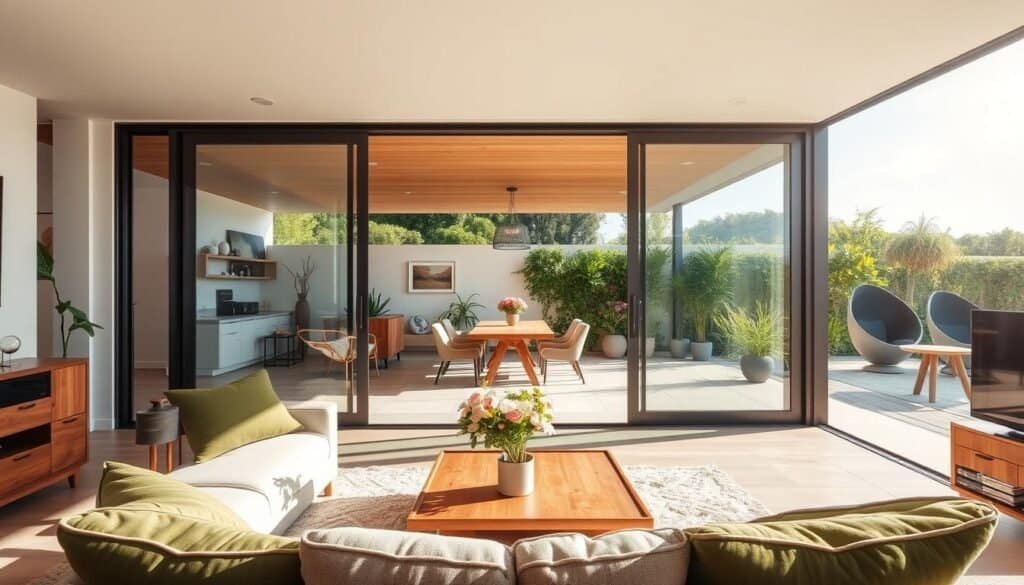
A beautifully designed open-concept living space that seamlessly blends indoor and outdoor elements. In the foreground, a cozy living room features a plush sofa with neutral tones and green cushions, complemented by a wooden coffee table adorned with fresh flowers. Large glass sliding doors in the middle frame allow natural light to flood in, revealing a serene outdoor patio with potted plants and an inviting dining area. The background showcases lush greenery and a clear blue sky, enhancing the sense of space and connection to nature. The scene is bathed in soft, warm sunlight, creating a welcoming and airy atmosphere. The angle captures both the indoor comfort and the outdoor tranquility, emphasizing the harmony of indoor-outdoor living.

With these features, homes feel bigger and more connected to nature. This improves our living experience and increases our home’s value. Making outdoor living a key part of home design leads to a better, more balanced life.

Cultural Influences on Home Flow: From Haciendas to Modern Designs

Cultural heritage shapes how a home feels and works. This is true from traditional haciendas to modern designs. The way a home is designed is deeply connected to its cultural background.

Global design elements can greatly impact a home’s flow. For example, hacienda-style homes have big courtyards and open spaces. These features encourage a sense of community and connection with nature. On the other hand, modern designs focus on clean lines, minimalism, and function.
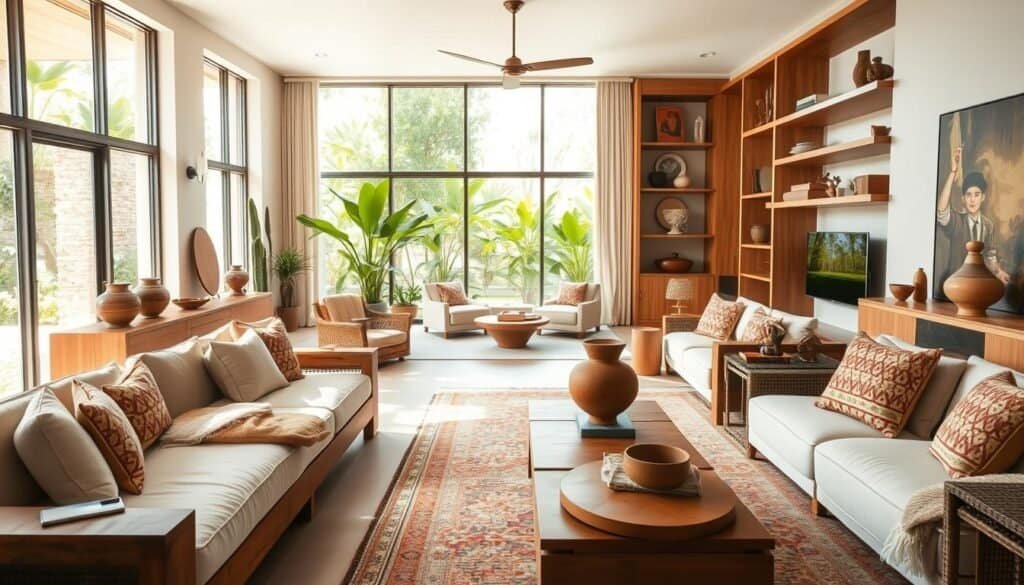
A beautifully designed interior space showcasing the cultural influences on home flow. In the foreground, rich wooden furnishings inspired by traditional haciendas blend seamlessly with sleek modern elements like minimalist decor and open shelves. The middle ground features a spacious living area with large windows allowing bright natural light to flood in, highlighting soft textures and elegant patterns in textiles. Cultural artifacts, such as pottery and woven rugs, adorn the space, reflecting a harmonious fusion of styles. In the background, lush greenery can be seen through the windows, suggesting a connection to nature. The lighting is soft and airy, creating a warm and inviting atmosphere. Capture this scene from a slightly elevated angle, emphasizing depth and flow within the space.

When adding global design elements, it’s key to do so with respect and thought. This means understanding the cultural importance of certain design features. It’s also important to avoid stereotypes or misrepresentations.

  • Research the cultural context and significance of design elements.
  • Consult with experts or individuals from the culture being referenced.
  • Use design elements in a way that is respectful and sensitive to their cultural origins.

By embracing cultural influences and adding global design elements thoughtfully, homeowners can create a unique and meaningful space. This space reflects their personal style and cultural appreciation.

Conclusion: Reimagining Your Home Through the Lens of Flow

Architectural flow is key to a well-designed home. It’s about the psychology of flow and how it changes our spaces. Thoughtful design can really change our daily lives.

By focusing on flow, you can make your home more livable and enjoyable. You can improve your kitchen, make living areas great for talking, or create a peaceful bedroom. Every part of your home can get better with flow in mind.

When you think about changing your home, use the ideas from this article. This will help you create a space that shows your style and improves your life. You’ll get a home that truly feels like home.
FAQ

Q: What is architectural flow, and why is it important in home design?

A: Architectural flow is how spaces in a home connect and work together. It’s key in design because it makes a home livable, comfortable, and inviting. It shapes how we move and interact in our homes.

Q: How does the concept of flow state relate to home design?

A: Flow state, a state of full focus on an activity, ties to home design. A well-designed home can help us feel in flow. It does this by creating spaces for different activities, improving our living experience.

Q: What are some ways to improve the flow in a home?

A: To better the flow in a home, focus on the layout and connections between spaces. Use design elements that bring continuity and harmony. This might include open plans, smart door and window placement, and consistent design throughout.

Q: How can entryways be designed to set a positive tone for a home’s flow?

A: Make entryways welcoming with good lighting and organization. Use decor that matches your home’s style and include storage for coats and shoes. This sets a welcoming tone for your home’s flow.

Q: What are some Mexican-inspired kitchen flow solutions?

A: For a Mexican-inspired kitchen, use bright colors, traditional tile, and warm materials. These elements make your kitchen both functional and welcoming, reflecting Mexican culture’s warmth and hospitality.

Q: How can living rooms be designed to foster conversation and connection?

A: Design living rooms for conversation by arranging seating for interaction. Choose comfortable furniture and add warmth with fireplaces or soft lighting. This creates a cozy space for connection.

Q: What are some decorating ideas for narrow hallways?

A: For narrow hallways, use mirrors to expand the space and light colors to make it feel larger. Add decor that’s interesting but doesn’t clutter the area. This makes the hallway more inviting.

Q: How can home offices be designed to enhance focus and productivity?

A: Design home offices for focus by creating a distraction-free space. Use ergonomic furniture and add comfort with good lighting and plants. This boosts productivity and well-being.

Q: What are some design principles for creating a sanctuary-like bedroom?

A: For a peaceful bedroom, choose calming colors and comfortable bedding. Keep it clutter-free to promote rest and rejuvenation. This creates a serene space for relaxation.

Q: How can A-frame and cabin designs maximize flow in small homes?

A: A-frames and cabins use open plans and loft spaces to feel spacious. Smart layouts make the most of small areas, creating a sense of openness.

Q: What are some ways to achieve indoor-outdoor flow?

A: Connect indoor and outdoor spaces with large windows and sliding doors. Design outdoor areas that match your indoor spaces. Use similar design elements to create a seamless transition.

Q: How can global design elements be incorporated into home design without cultural appropriation?

A: Use global design elements thoughtfully by respecting their cultural origins. Understand their significance and use them in a way that’s considerate of their cultural context. This avoids cultural appropriation.