Key Takeaways:
- Placement determines how often a porch gets used.
- Small shifts in direction boost comfort and relaxation.
Sometimes the chair matters less than its orientation. If your backyard seating feels awkward, the orientation alone might push folks back inside. That outdoor space layout creates a mood for every visitor.
Proper placement direction helps guests feel relaxed while they visit. When ergonomic chairs meet a great view, relaxation increases naturally. Smart layout choices improve comfort and make a porch feel like a true room for lounging.
Homeowners often overlook these minor details, yet such factors define success. Think about light and wind too. Each decision makes an area more inviting for everyone.
Discover ways to transform those spots into favorite areas for family gatherings. These simple tips help anyone create a better flow today. A well-planned patio offers fresh air plus peace. Such spots become hidden gems within a home.
Understanding the Impact of Seating Direction on Your Outdoor Experience
Seating direction is key in outdoor seating. It greatly affects your comfort and overall experience.
The direction you face outdoors can change how you feel the sun, wind, and views. This can impact your comfort and enjoyment.
Key Considerations for Seating Direction:
- The position of the sun and its impact on your seating area
- The direction of prevailing winds and possible shelter
- The view and focal points you want to enjoy
When setting up your backyard seating, think about these factors. They help create a welcoming and comfy outdoor space.
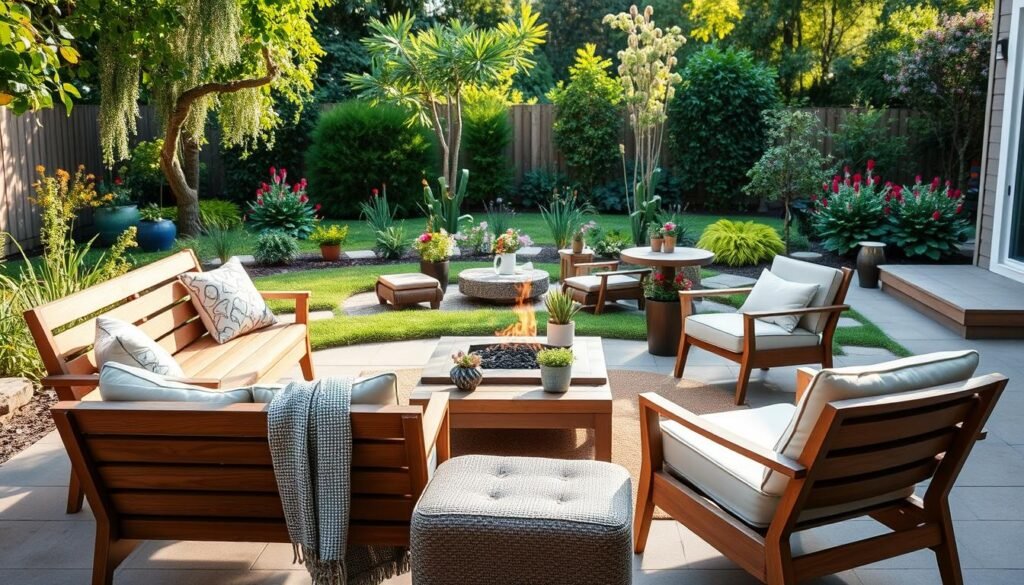
A good seating direction can make your outdoor time better. For example, facing away from harsh winds or direct sunlight can really help.
Benefits of Proper Seating Direction:
- Enhanced comfort due to reduced exposure to elements
- Improved enjoyment through optimal views and ambiance
- Better social interaction through thoughtful seating arrangements
Sun Exposure and Shade: The Primary Comfort Factor
Sun exposure and shade are key to a comfy outdoor seating area. Finding the right mix can greatly improve your backyard time.
East-Facing Seating for Breakfast and Coffee
An east-facing seating area is great for morning sun and a nice breakfast or coffee. The morning sun is soft and pleasant, unlike the harsh midday sun.
To keep things comfy, add umbrellas or pergolas for shade when it gets hot. This keeps your area inviting.
West-Facing Seating for Sunset Views
A west-facing seating arrangement is perfect for sunset lovers. The setting sun’s warm glow makes it a cozy spot for unwinding.
- Provides a serene ambiance in the evening
- Enhances the aesthetic appeal of your backyard
- Creates a perfect setting for social gatherings
Umbrellas and Pergolas
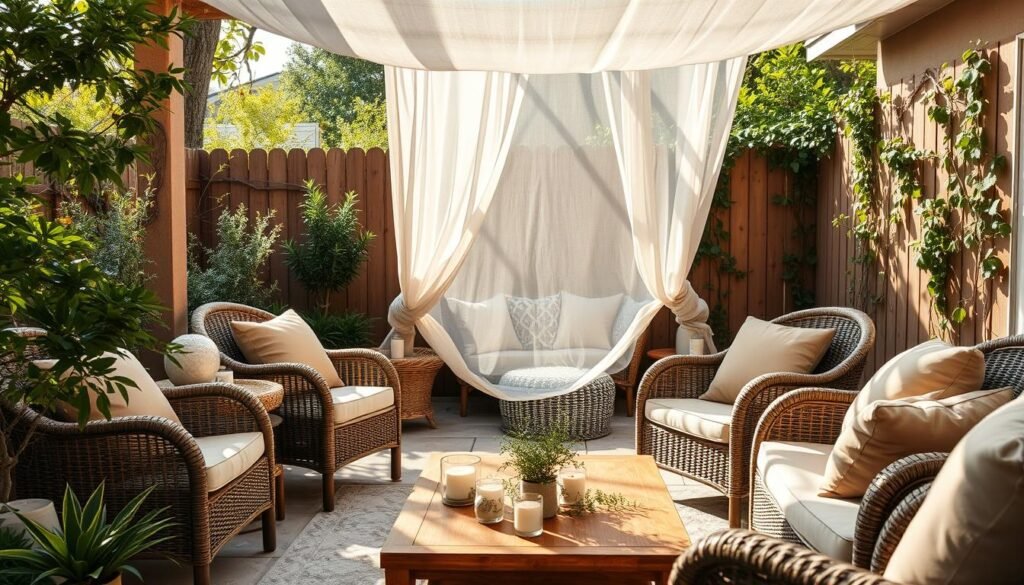
Umbrellas and pergolas are great for shaded areas in your backyard. They protect from the sun and look good too.
When picking between umbrellas and pergolas, think about durability, upkeep, and style. Make sure they fit your garden decor.
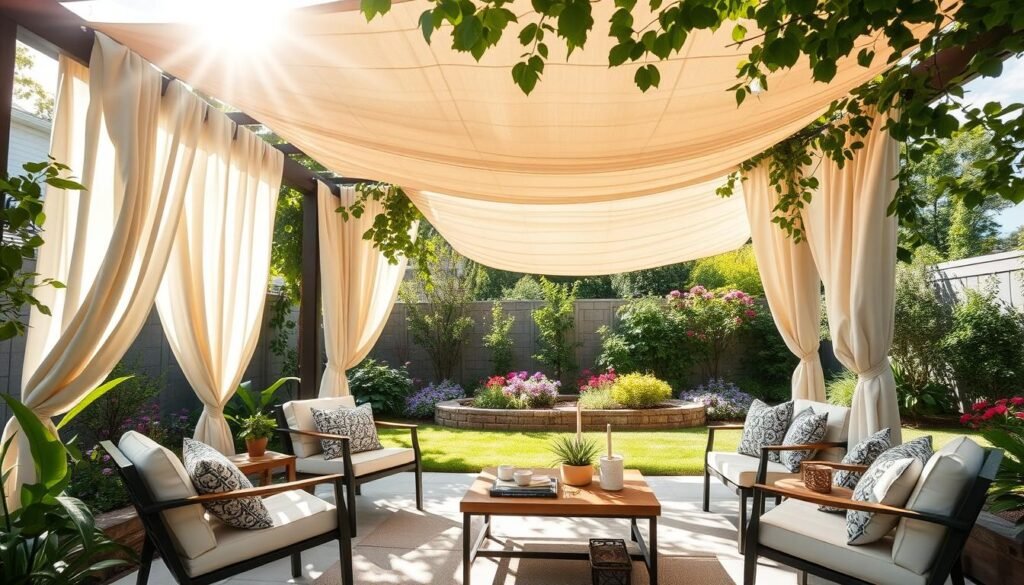
A natural tree canopy offers shade and beauty. Trees like oak, maple, or pine give lots of shade, cutting down on the need for artificial shade.
- Reduces the need for additional shading structures
- Enhances biodiversity in your garden
- Adds to the natural beauty of your outdoor space
Wind Direction and Natural Protection
The way wind moves through your yard can greatly affect the comfort and enjoyment of your outdoor seating. Understanding and mitigating the impact of wind direction is essential for creating a cozy and inviting outdoor space.
Walls, Fences, and Hedges
One of the most effective ways to protect your backyard seating from harsh winds is by utilizing walls, fences, and hedges. These barriers can block or redirect wind, creating a more sheltered area.
- Walls can provide a solid barrier against wind but may require additional structural support.
- Fences are a more flexible option and can be designed to allow some wind to pass through while providing protection.
- Hedges, specially dense ones, can act as natural windbreaks and add aesthetic value to your yard.
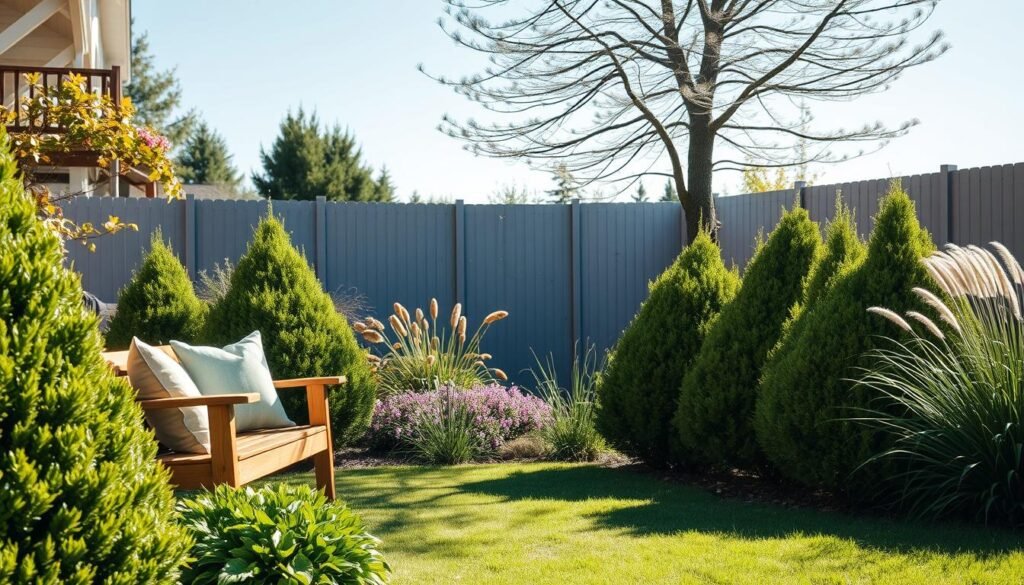
In addition to man-made structures, strategic plant placement can significantly enhance the natural protection of your backyard seating area. By planting trees, shrubs, or other foliage in the right locations, you can create a natural barrier against the wind.
- Choose plants that are known to be effective windbreaks, such as dense shrubs or trees with a robust branch structure.
- Consider the mature size of the plants and leave enough space for them to grow without becoming too dense or requiring excessive maintenance.
- Planting in a staggered pattern can be more effective than a straight line, as it disperses the wind more evenly.
By combining these strategies, you can create a more comfortable and enjoyable outdoor seating area that is protected from harsh winds. This not only enhances the usability of your yard but also adds to its overall aesthetic appeal, making it a perfect spot for relaxation and entertainment.
Is Your Seating Facing the Wrong Direction?
The direction your seating faces is key to a great outdoor experience. If it’s wrong, you might find yourself uncomfortable and not using your space as much.
Facing Walls or Fences
Many people make the mistake of facing their seats towards walls or fences. This can make your outdoor area feel confined and uninviting. Try to face your seats towards a nice view or a yard focal point instead.
Direct Sun Glare Problems
Direct sun glare is another big problem, worse during peak sun hours. To stay comfortable, place your seats where they won’t get direct sunlight. Using umbrellas or shade structures can help a lot.
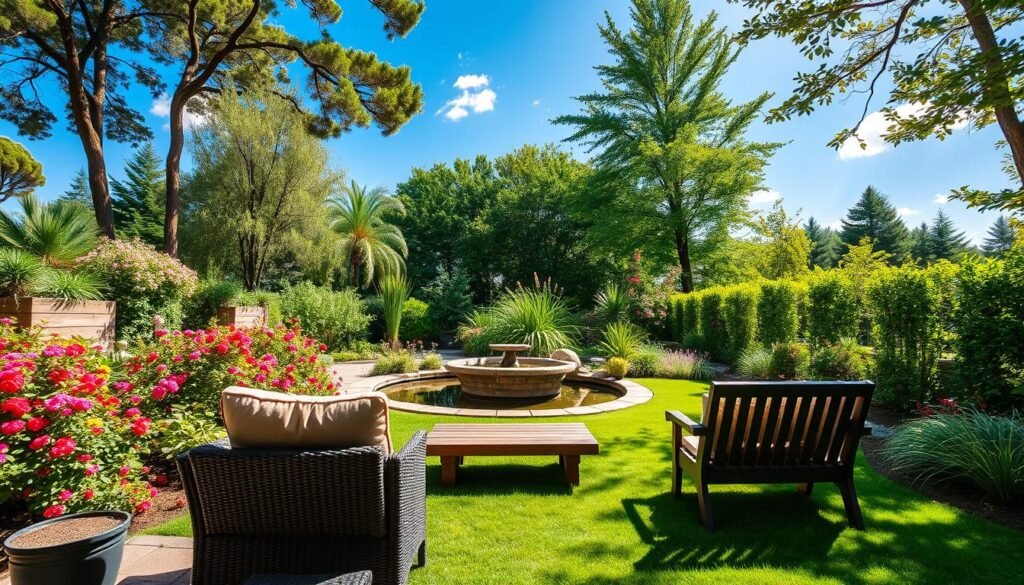
Ignoring neighbor sightlines can hurt your privacy. It’s important to find a balance between a nice view and keeping things private. Use screening elements like plants or fences to get this balance right.
By knowing these common seating direction mistakes, you can fix them. You might need to rearrange your seating or add things to solve these problems. This will make your outdoor space more enjoyable.
To make your seating better, follow these best seating practices: understand your yard’s unique features, focus on comfort and privacy, and be open to making changes when needed.
Views and Focal Points: What Your Seats Should Face
Choosing the right view for your seats is key to enjoying your backyard. The direction of your seats greatly affects the feel of your outdoor space.
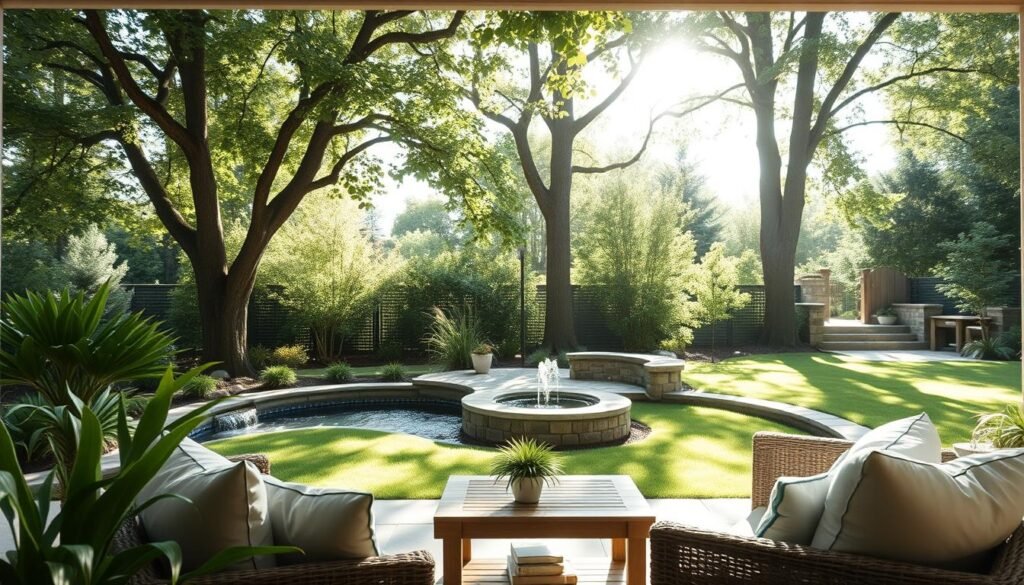
Creating a visually appealing focal point is essential. This could be a beautiful flower bed, a serene water feature, or a stunning natural landscape. By facing your seating towards these features, you can enhance the aesthetic appeal of your backyard.
Showcasing Flower Beds and Water Features
Flower beds and water features are great focal points in garden design. A well-maintained flower bed adds vibrant colors and textures. A water feature creates a soothing, peaceful atmosphere.
To showcase these features effectively, consider the following:
- Position your seating to face the flower bed or water feature directly.
- Ensure that the seating is at a comfortable distance to appreciate the feature without being too close or too far.
- Use outdoor pots and planters to complement the existing landscape and add more visual interest.
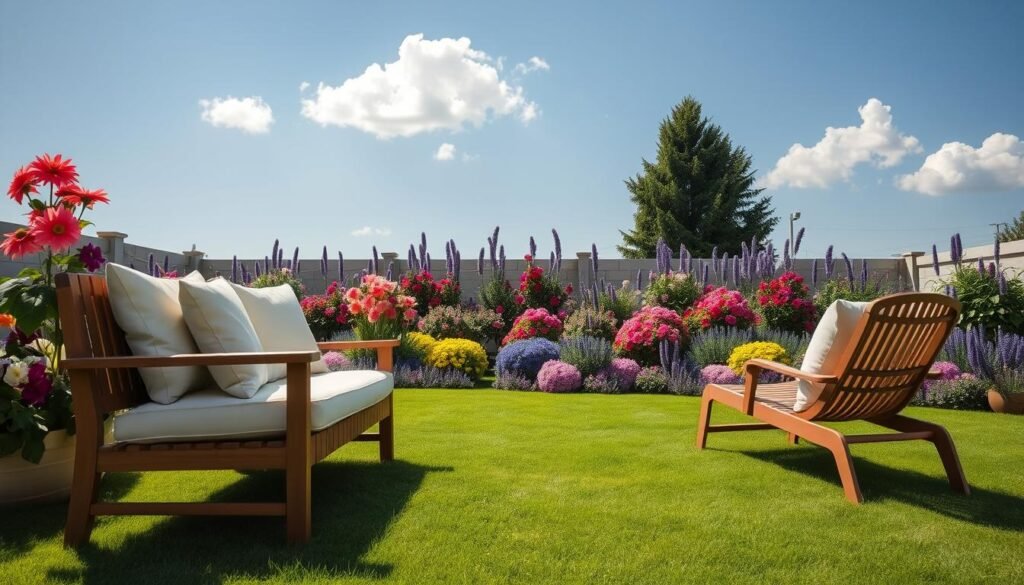
If your backyard has a natural landscape, like a wooded area or a mountain view, framing this landscape with your seating arrangement can be incredibly effective. This approach not only highlights the natural beauty but also creates a sense of harmony between your outdoor living space and the surrounding environment.
To frame natural landscapes effectively:
- Position your seating to take advantage of the view, using the natural landscape as a backdrop.
- Minimize obstructions between the seating and the view to maintain an unobstructed line of sight.
- Incorporate elements of garden design DIY, such as native plants or natural stone, to blend your seating area with the surrounding landscape.
By carefully considering the views and focal points in your backyard and arranging your seating, you can significantly enhance your outdoor experience. Whether it’s a serene water feature, a vibrant flower bed, or a stunning natural landscape, the right seating arrangement can make your backyard a more enjoyable and inviting space.
Privacy Considerations in Seating Placement
To enjoy your outdoor space fully, balance openness with privacy. This is key for a comfy and relaxing backyard. Privacy is vital for a cozy atmosphere.
Creating a secluded ambiance is possible with smart design choices. Use living privacy walls to block views from neighbors.
Living Privacy Walls
Living privacy walls use plants to block views and beautify your space. They fit any backyard style and size.
Decorative Screens and Trellises
Decorative screens and trellises also boost privacy. They can divide your yard or shield your seating area from outside.
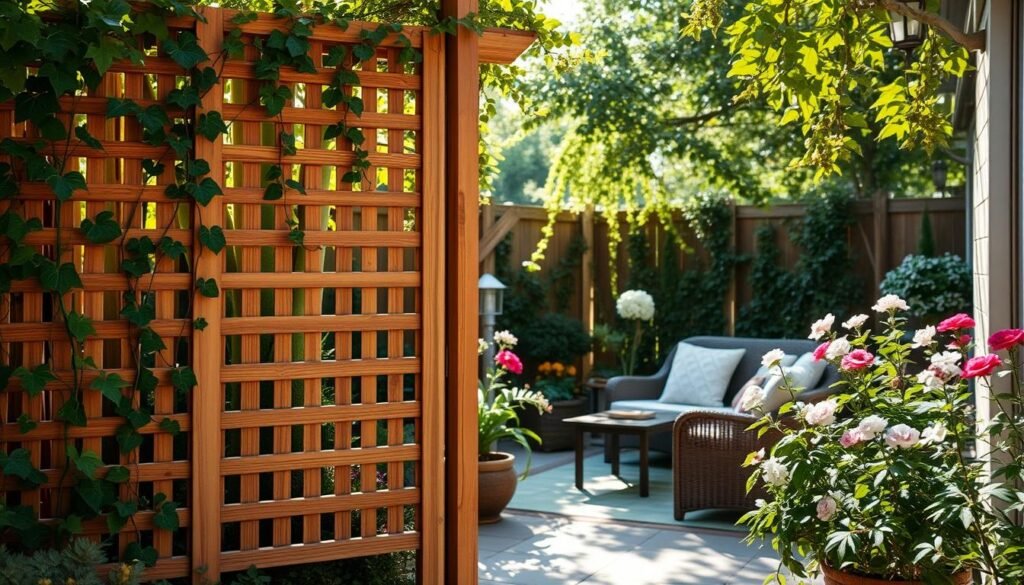
Integrating these features thoughtfully makes your outdoor seating area more private and enjoyable. It’s perfect for relaxation and seclusion.
- Living privacy walls provide a natural screen.
- Decorative screens add an aesthetic touch.
- Trellises can support climbing plants for added privacy.
Traffic Flow and Accessibility Around Seating Areas
When designing your backyard seating area, think about traffic flow and accessibility. A well-planned area makes your garden look great and ensures your furniture gets used right.
Effective traffic flow is key to avoid congestion. It makes sure people can move around easily. Place your furniture to create a clear path through your garden.
Avoiding Awkward Reach-Across Situations
Badly planned seating areas can lead to awkward reach-across situations. These happen when furniture placement forces people to stretch or move awkwardly. To fix this, follow these tips:
- Put tables and serving areas where people can easily reach them.
- Make sure there’s enough space between furniture for easy movement.
- Choose surfaces for drinks and food that are easy to access.
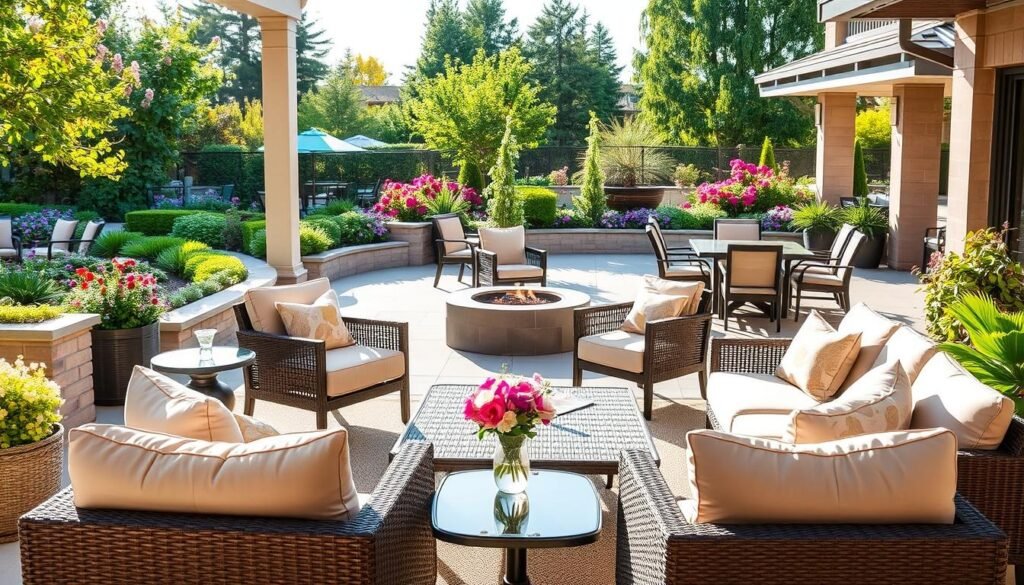
Having multiple access routes to your seating area makes things more flexible and convenient. This is great for gatherings or when guests have mobility issues. Here’s how to achieve this:
- Make more than one path to the seating area for different entry and exit points.
- Make sure paths are wide and clear of obstacles for easy movement.
- Think about the flow of traffic in your garden and adjust as needed to keep it smooth.
By focusing on traffic flow and accessibility, you can make your backyard seating areas much better. This thoughtful approach improves your outdoor space’s functionality. It also makes your garden a more welcoming place for relaxation and socializing.
Proximity to Key Backyard Features
Placing seating in the right spot is key to making your outdoor area welcoming. When you design your outdoor space, think about how different parts work together.
Having seating near dining spaces and outdoor kitchens makes your outdoor area more fun and useful.
The Ideal Range for Dining Spaces
For dining areas, the best spot for seating is a few feet away. This makes it easy to move around and talk. A distance of 8 to 12 feet is often perfect, for both ease and conversation.
Balancing Convenience with Smoke Concerns
Outdoor kitchens need a balance between being close and avoiding smoke and heat. Seating areas downwind or with outdoor fans can solve these problems.
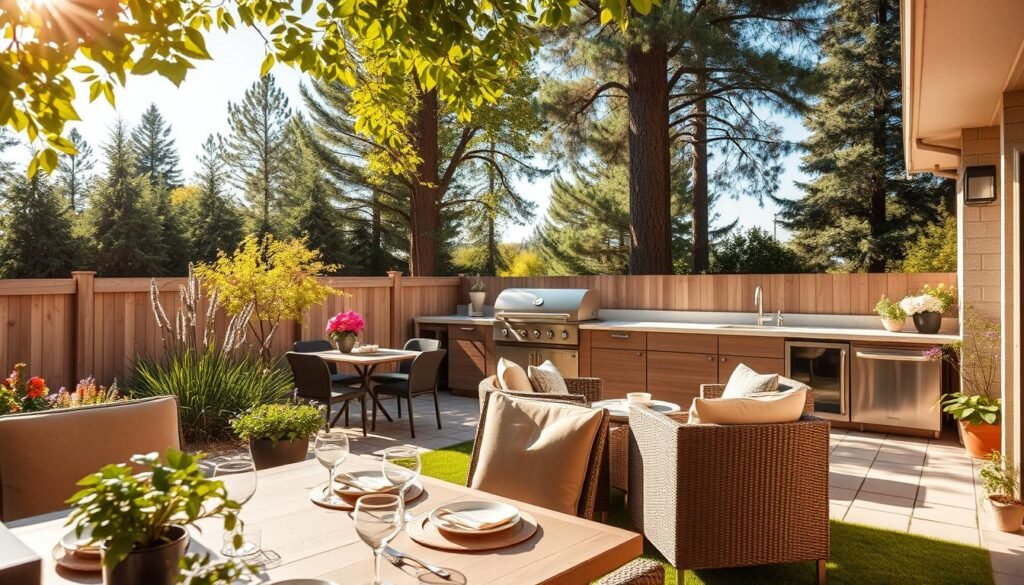
Thinking about where to put seating near key features makes your outdoor space better. It becomes more functional, comfy, and fun.
Social Dynamics and Conversation-Friendly Layouts
The way you arrange your outdoor seating can greatly affect your gatherings. A well-planned seating layout can help conversations flow, encourage people to talk, and make your space welcoming.
Circular and U-Shaped Configurations
Circular and U-shaped seating are great for starting conversations. These setups let guests face each other, making it easier to chat.
Circular configurations make everyone feel included in the conversation. They’re perfect for small groups. You can use a circular patio set or arrange furniture in a circle.
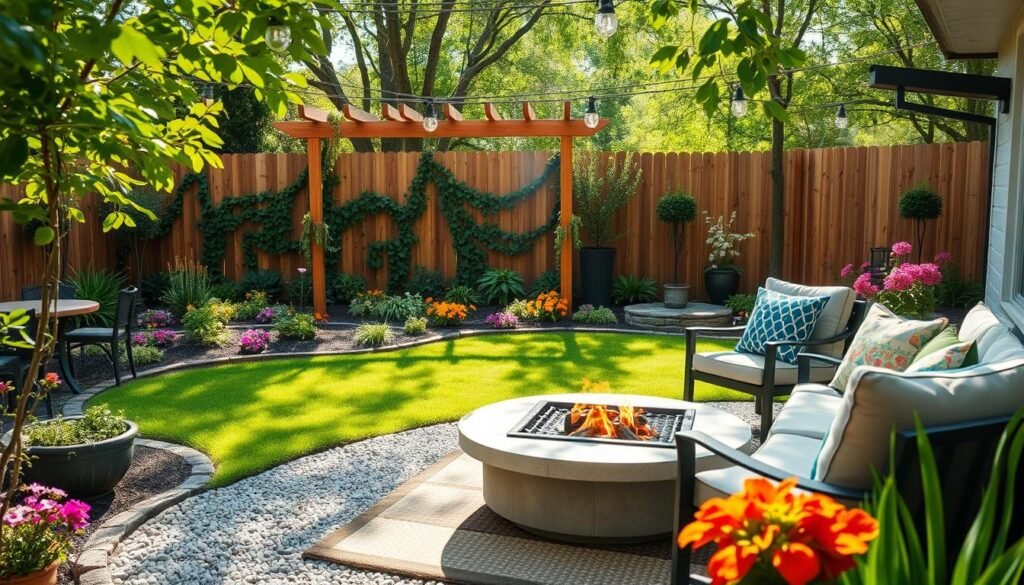
U-shaped configurations work well for bigger groups. They have a clear center, like a fire pit or TV. This setup helps guests talk while keeping a focus point.
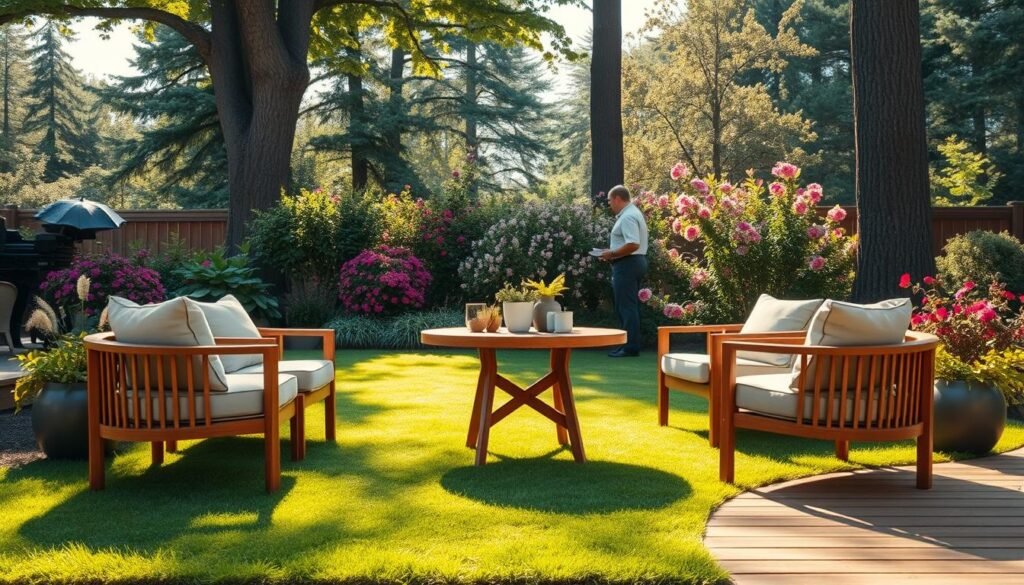
The distance between seats is key for good conversations. Seats that are too far apart make talking hard. Seats too close can feel too personal.
- Leave enough space between seats for easy conversation (usually 3 to 5 feet).
- Adjust the distance based on the size of your gathering.
- Make sure there’s enough room for guests to move around.
By thinking about these points and choosing a good seating layout, you can make your outdoor space great for talking and socializing.
Adapting Seating Position for Seasonal Changes
As the seasons change, your backyard seating arrangement should too. This ensures it remains a comfortable and inviting space. Adjusting your seating to accommodate the changing weather conditions can significantly enhance your outdoor experience.
Seeking Morning Shade
During warmer months, seeking morning shade can be a great strategy to keep your seating area cool. Positioning your seating in a spot that receives shade during the hottest part of the day can make it more comfortable to use.
- Consider the direction of the sun and how it affects your yard.
- Use umbrellas or canopies to create shade if natural shade is not available.
- Plant trees or shrubs on the south and west sides of your seating area to block direct sunlight.
Positioning Near Cooling Water Elements
Positioning near cooling water elements is another effective way to keep your seating area comfortable during hot weather. The sound and sight of water can also enhance the ambiance of your outdoor space.
- Install a small fountain or birdbath near your seating area.
- Consider a pond or a larger water feature if space allows.
- Use the evaporative cooling effect of water to naturally lower the temperature around your seating.
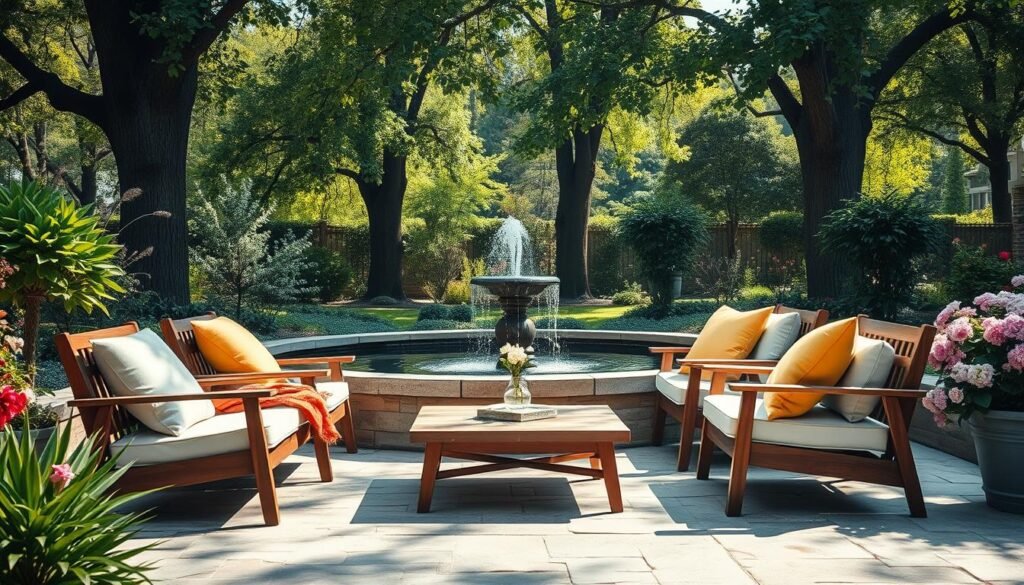
By adapting your seating position to the changing seasons and incorporating elements like morning shade and cooling water features, you can create an outdoor space that is enjoyable throughout the year. This approach not only enhances comfort but also adds to the aesthetic appeal of your garden. It aligns with great outdoor decor ideas and garden diy projects.
Ground Surface and Stability Considerations
When setting up backyard seating, the ground and stability are key. They can greatly affect your comfort and safety outdoors.
A stable ground is vital to avoid accidents. It keeps your outdoor furniture secure and level.
Creating Terraced Seating Options
For homes with sloping yards, terraced seating is a smart choice. It turns a slope into a unique outdoor feature.
This approach not only looks good but also offers various seating levels. It makes your outdoor space more versatile and fun.
- Check your yard’s slope to figure out how many terraces you need.
- Use retaining walls or natural stone to define each level.
- Choose furniture that fits well with each terrace.
Addressing Wobble and Tipping Hazards
Uneven surfaces or unstable furniture can cause wobble and tipping hazards. This is dangerous. To fix this, make sure the ground is even where you’ll place furniture.
Using furniture with adjustable legs or anti-tip features can also help. This makes it more stable.
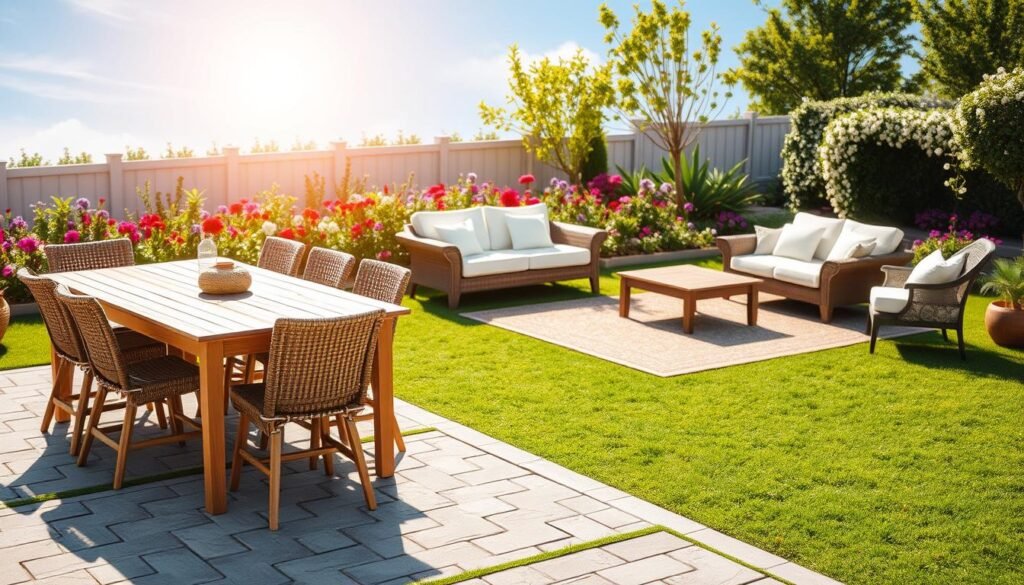
Check your outdoor furniture often and adjust as needed. This helps prevent accidents and keeps your furniture lasting longer.
By focusing on the ground and stability, you can make a safe and welcoming outdoor seating area. This will improve your outdoor experience.
Practical Steps to Optimize Your Current Seating Arrangement
To make your outdoor space more comfy and welcoming, follow these steps. Improving your backyard seating can greatly enhance your outdoor experience.
Testing Your Space at Different Times of Day
Testing your space at different times is key to optimizing seating. It helps you see how sun exposure and other factors change.
Watch how the sun moves in your yard. Note where it’s sunny, partially shaded, or fully shaded at different times. This info helps place your seating for maximum comfort.
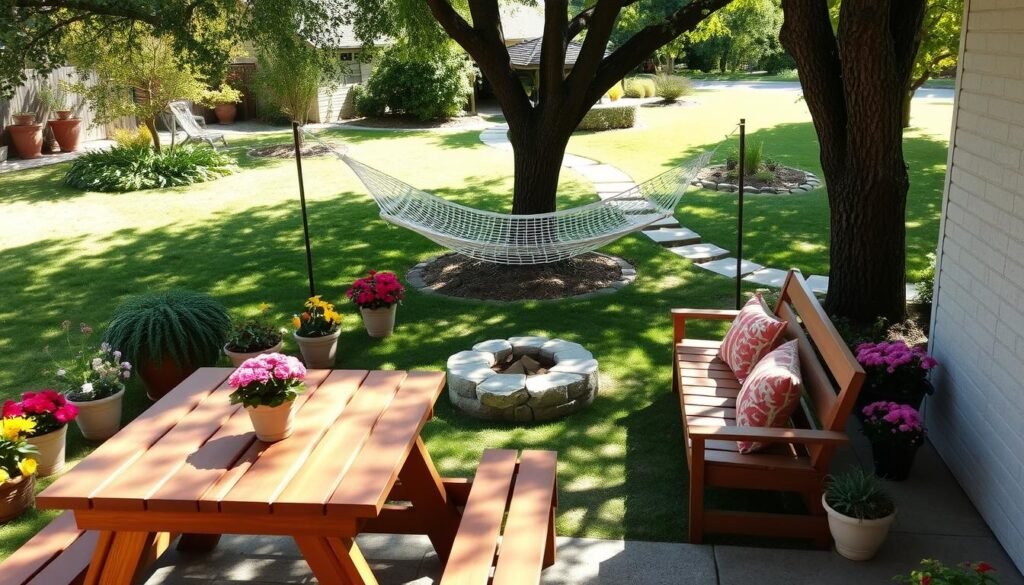
Getting feedback from your family is also important. Ask them about their likes and dislikes of the outdoor space.
- Do they prefer sitting in the sun or shade?
- Are there any areas they avoid due to discomfort or other reasons?
- What features would they like to see included or improved in the seating area?
By listening to their feedback, you can spot areas for improvement. This helps you make smart choices to better your outdoor space.
Practical steps like these can really boost your outdoor space. It becomes a more enjoyable spot for everyone.
Conclusion
Choosing the right spot for your backyard seating is key to a great outdoor time. Think about the sun, wind, and views when setting up your seats. This way, you’ll make your outdoor space super comfy.
It’s also important to think about how people will talk and move around. Change your seating as the seasons do. Make sure your seats are close to important parts of your yard. This makes your outdoor area welcoming and useful.
This article has given you tips to make your backyard seating better. Whether you want to chill, have guests over, or just enjoy nature, good seating makes a big difference. A well-thought-out seating plan can turn your backyard into a cozy haven.