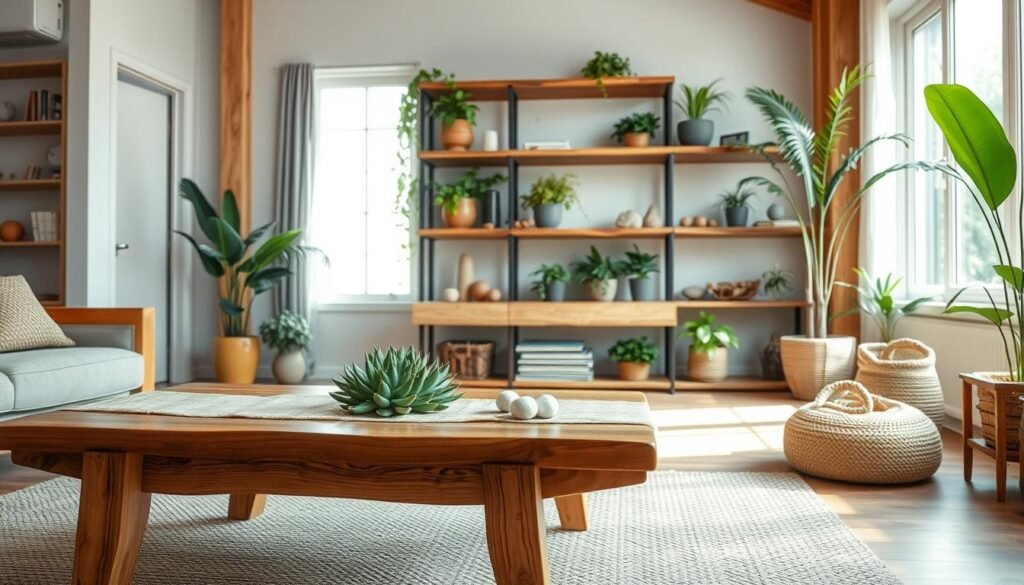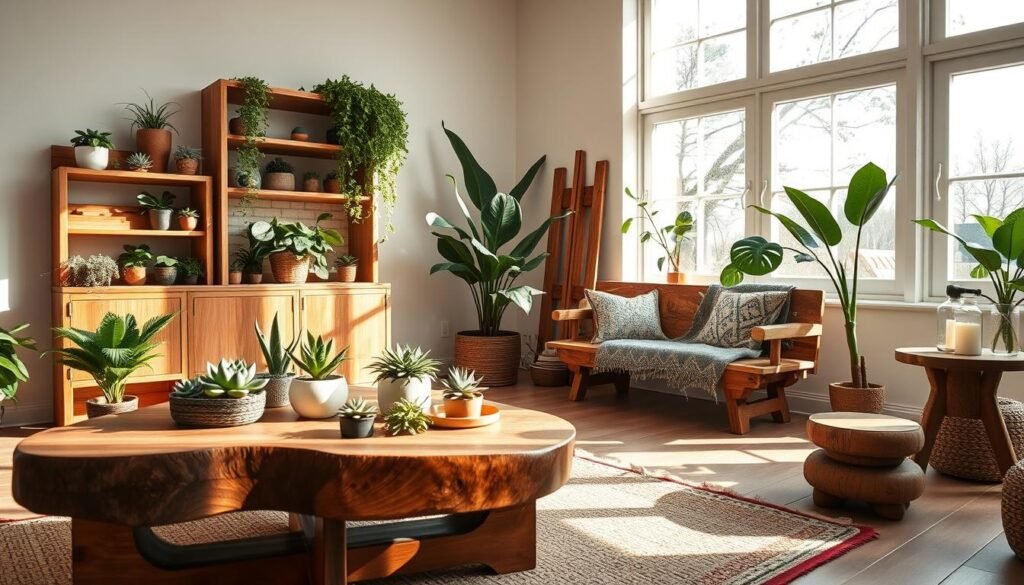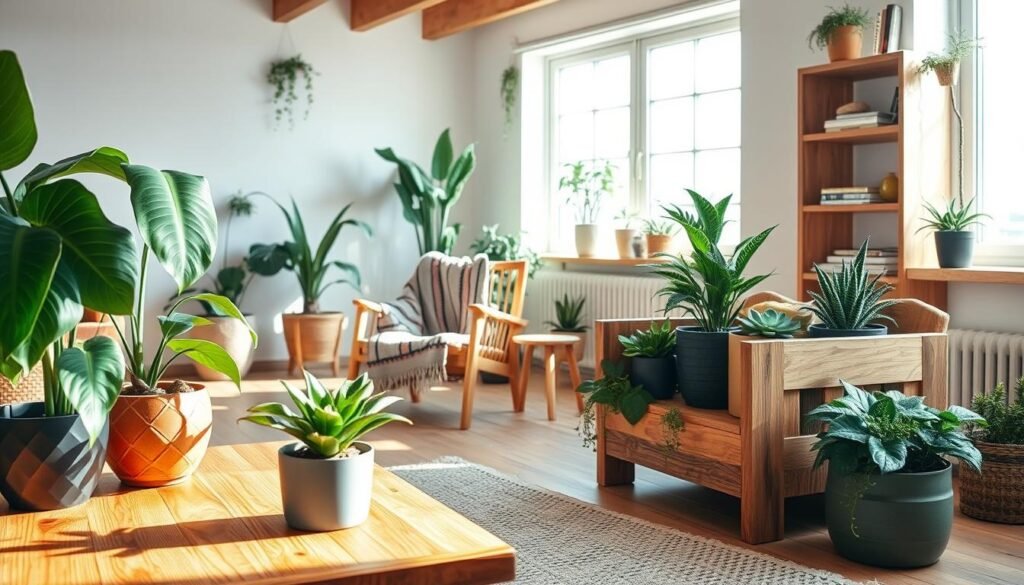
It’s amazing how fast a room changes when a living thing enters. Adding greenery can make a space feel more welcoming and alive.
Indoor plants do more than just look good; they make a room more beautiful. With the right care, a small plant can be a beautiful part of your small plant home decor.
Looking to add a house plants aesthetic or just some life to your space? Adding plants to your indoor plants decor can make a big difference.
The Power of Small Plant, A Big Shift
By adding small plants to our homes and offices, we tap into our love for nature, known asbiophilia. This idea says humans naturally love nature. Being around plants can make us feel better and work better.
Research on Biophilia and Human Connection to Nature
Studies show plants in our spaces can greatly improve our mental health and mood. Thehuman connection to natureis strong. Small plants help connect our indoor lives to the outdoors.
For beginners, starting with easy plants like themoney plantis a good idea. Here are somesmall plant care tipsto help you:
- Water plants sparingly to avoid overwatering.
- Provide adequate sunlight based on the plant’s requirements.
- Fertilize plants during their growing season.
Some of thebest small plants for beginnersare the money plant, snake plant, and ZZ plant. These plants are easy to care for. They also add greenery to any room.
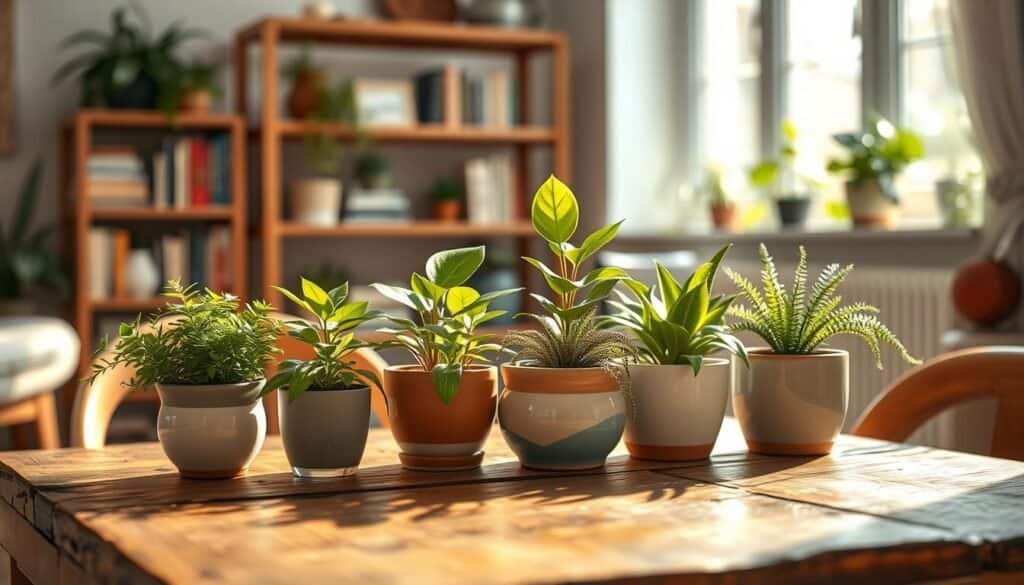
Adding small plants to our lives can deeply change our surroundings and well-being. By using the power of biophilia, we can make our living spaces more harmonious and healthy.
Creating Focal Points with Miniature Greenery
Small plants are great for making focal points in your home. By picking the right plants and styling them well, you can highlight certain areas of a room.
Monstera and Philodendron are top picks for houseplants. They have striking leaves that grab attention. Their unique shapes and colors can brighten up any space.
Monstera and Philodendron as Attention-Grabbers
Monstera and Philodendron stand out because of their special features. For instance, the Monstera leaf has big, holey leaves that bring a tropical vibe. To make a beautiful display:
- Put a Monstera or Philodendron in a pot that matches your decor.
- Place the plant in a corner or against a plain wall for contrast.
- Grouping smaller plants together can make a lush, lively display.
For more ideas on using plants to improve your space, check out this article on changing a room’s energy with plants.
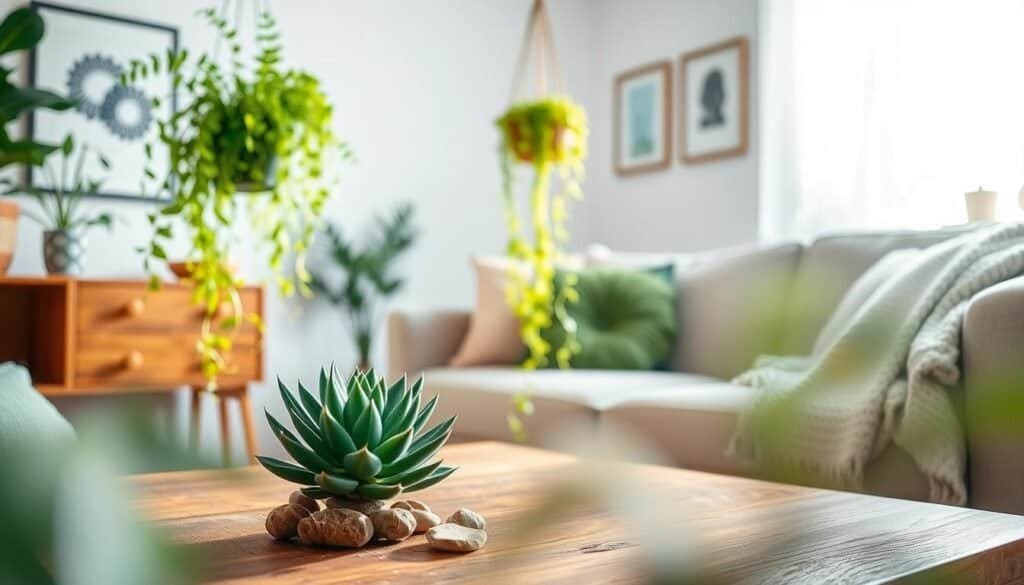
Transforming Dead Corners into Living Spaces
Turning neglected corners into green havens is easy and effective. These spots often get ignored, but with the right plants and decor, they can become cozy spots. They can make our homes feel more welcoming.
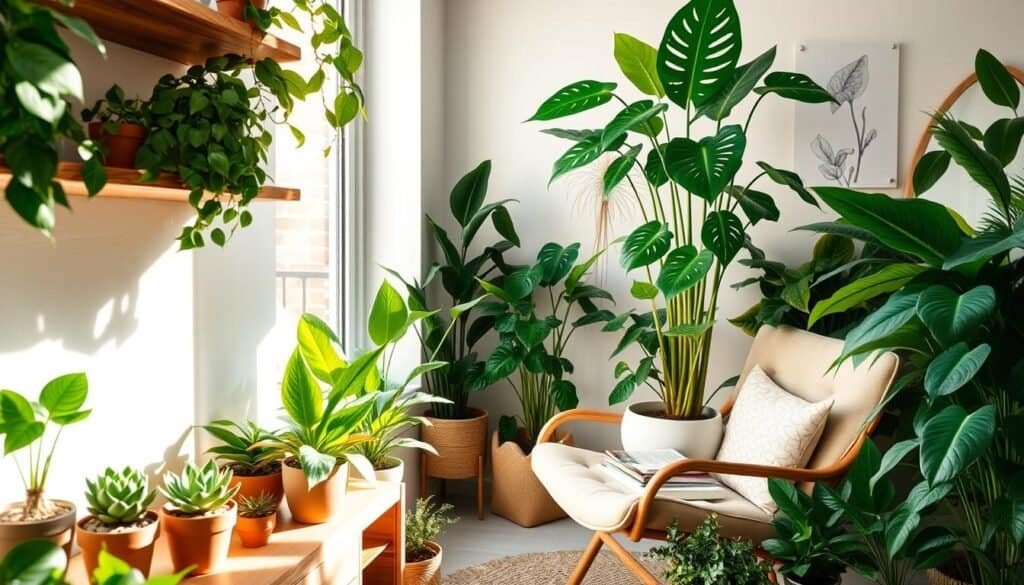
Every home, big or small, can benefit from plant corner ideas. In tiny apartments, vertical planters or hanging plants save space. For bigger homes, a mix of floor plants and decorative pots can make a statement.
- For small spaces, use compact plants like succulents or air plants.
- In medium-sized rooms, mix and match different plant sizes and textures.
- For large spaces, incorporate statement pieces like large ferns or peace lilies.
Choosing the right plants and decor can turn dead corners into beautiful indoor plant corners. They not only make your space look better but also improve the air quality.
Adding Dimension to Flat Surfaces
Adding plants to your decor can make flat surfaces more interesting. Plants like ivy and ferns work well on shelves and walls. They add depth and visual appeal.
Ivy and Ferns for Vertical Interest
Ivy leaves and ferns are great for adding height to your decor. They can climb up walls or trellises, making a lush green display.
- Ivy is versatile and can grow in different lighting conditions.
- Ferns add a delicate touch and thrive in humid places.
- Both plants are perfect for indoor plants shelf ideas to create a layered look.
To make a display that looks good, use plant shelving ideas with different levels and textures. You can:
- Use layered shelving units for multiple plants.
- Mix materials like wood and metal for depth and interest.
- Try vertical gardening to use space well.
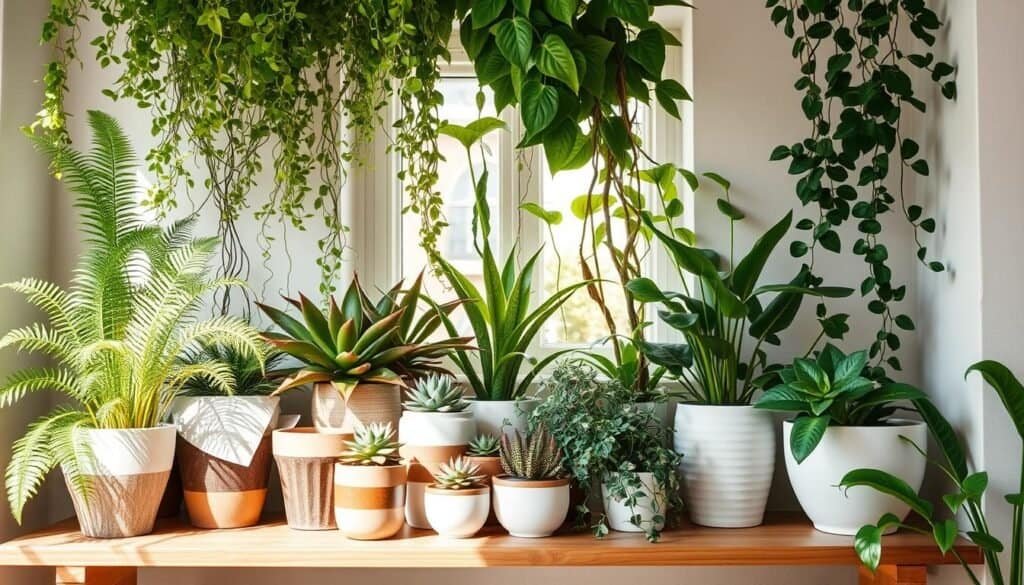
By adding these elements, you can turn flat surfaces into lively displays. They add dimension and interest to your space.
Bringing Color to Monochrome Environments
Monochrome spaces can greatly benefit from the vibrant hues of flowering plants like orchids and adenium. These plants are not only beautiful but also add a unique touch to any room. By incorporating them into your decor, you can create a more visually appealing space.
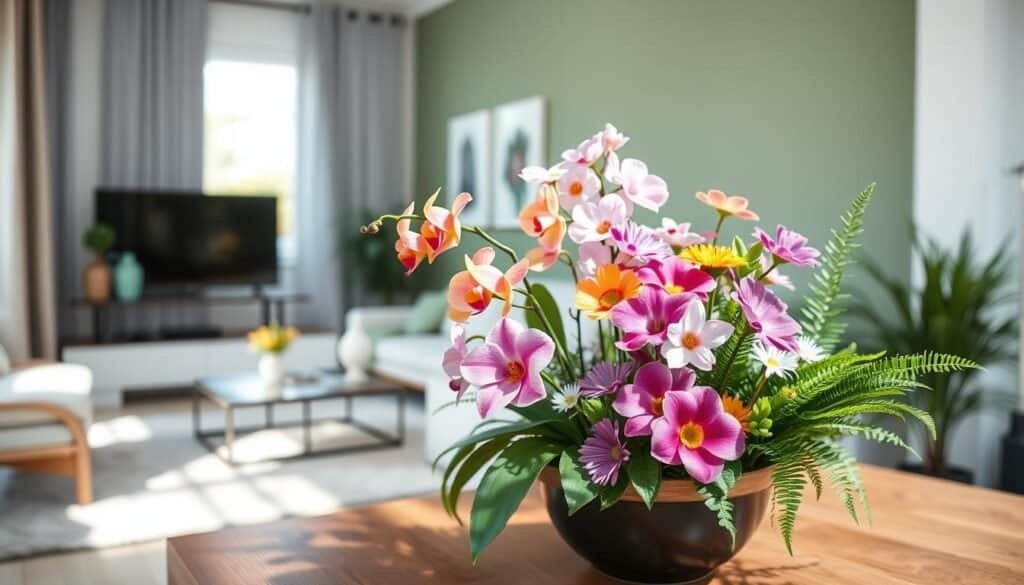
Orchids and adenium plants are excellent choices for adding color to monochrome environments. They come in a variety of colors and can be placed in decorative pots to enhance their beauty. Their unique shapes and vibrant colors can instantly brighten up a room.
When choosing flowering plants, consider the overall aesthetic you want to achieve. For a more dramatic effect, select plants with bold, bright colors. For a subtler look, opt for plants with softer hues. Either way, colorful plants can add a much-needed splash of color to a monochrome space.
Some strange plants can also be considered for their unusual beauty and ability to add a unique touch. But, it’s essential to ensure they fit with the overall decor and do not clash with other design elements.
By thoughtfully incorporating flowering plants into your decor, you can create a more dynamic and engaging environment. Whether you choose orchids, adenium, or other colorful plants, the result can be a more vibrant and interesting space.
Creating Micro-Environments in Different Rooms
Adding a few plants can turn your home into unique spaces. By choosing and placing plants wisely, you can show off your style and personality in every room.
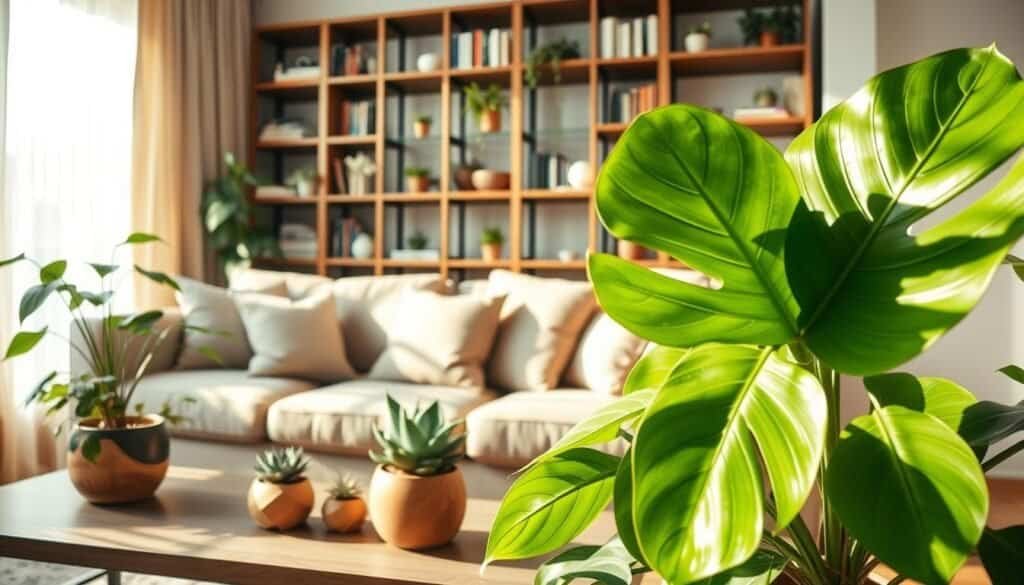
Living Room Plant Aesthetic: Creating Conversation Pieces
The living room is where family and friends come together. Plants here can make the air cleaner and the space more welcoming. Use plants with striking leaves or bright flowers to spark conversations.
Match your plants with your room’s decor for a unified look. If your room is already green, pick plants in different shades of green. For a bold look, choose plants with colorful flowers or interesting textures.
- Group plants together for a lush look.
- Use stands or shelves to add depth.
- Pick plants that like your room’s light.
For more ideas on making your living room better, read this article on mood-boosting living rooms.
By adding plants to your living room, you create a space that’s beautiful and inviting. It’s perfect for relaxing and enjoying time with others.
Personalizing Your Space with Unique Plant Containers
Choosing the right plant container can add a personal touch to your space. The container you pick can change how your room looks and feels.
There are many options for plant containers. Tall pots can make a big statement, while hanging planters add elegance.
Tall Pots vs. Hanging Planters: Choosing the Right Display
Think about your room’s layout and the plants you have when choosing between tall pots and hanging planters. Here are some things to keep in mind:
- Tall pots are perfect for floor displays and can be a room’s focal point.
- Hanging planters save space and add beauty to walls and ceilings.
- Think about the size and weight of the planter when deciding.
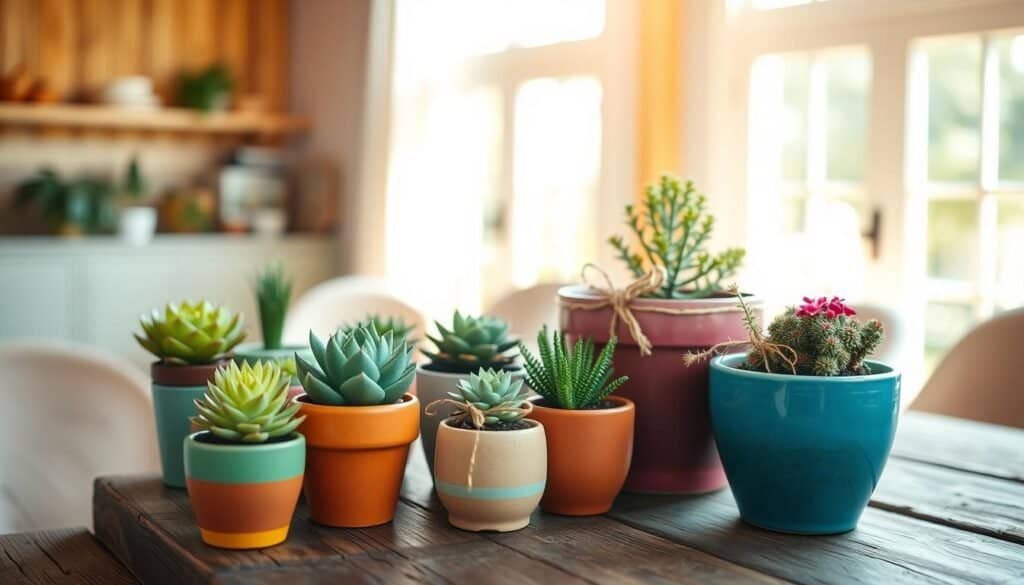
For plant pots ideas, try using terracotta or ceramic. Or pick decorative planters with cool designs. You can also play with indoor plant display ideas, like grouping plants or using stands.
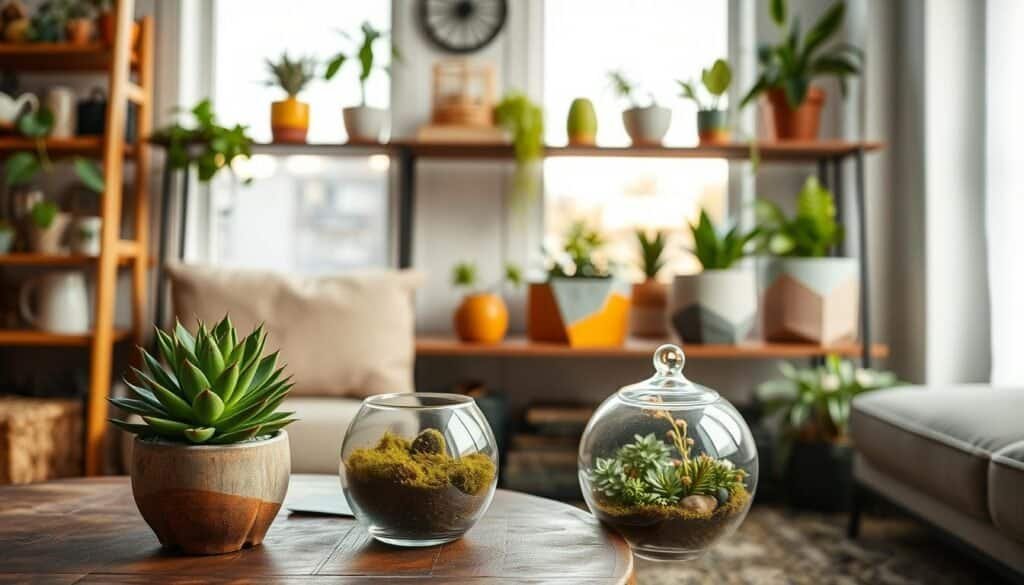
The right plant container can really change your space’s look. By picking a unique and stylish one, you can make your home feel more welcoming.
Using Plants to Improve Air Quality and Wellness
Adding plants to your home or office can make it healthier. Plants clean the air by removing harmful substances. This not only makes your space look better but also makes it healthier to live in.
Improving Air Quality with Plants
Plants take in carbon dioxide and give out oxygen, which is good for us. Some plants are better at cleaning the air than others. Spider plants, snake plants, and peace lilies are great at this.
By adding these plants to your indoor space, you can make the air much cleaner. For more tips on how plants can change a room’s feel, check out this article.
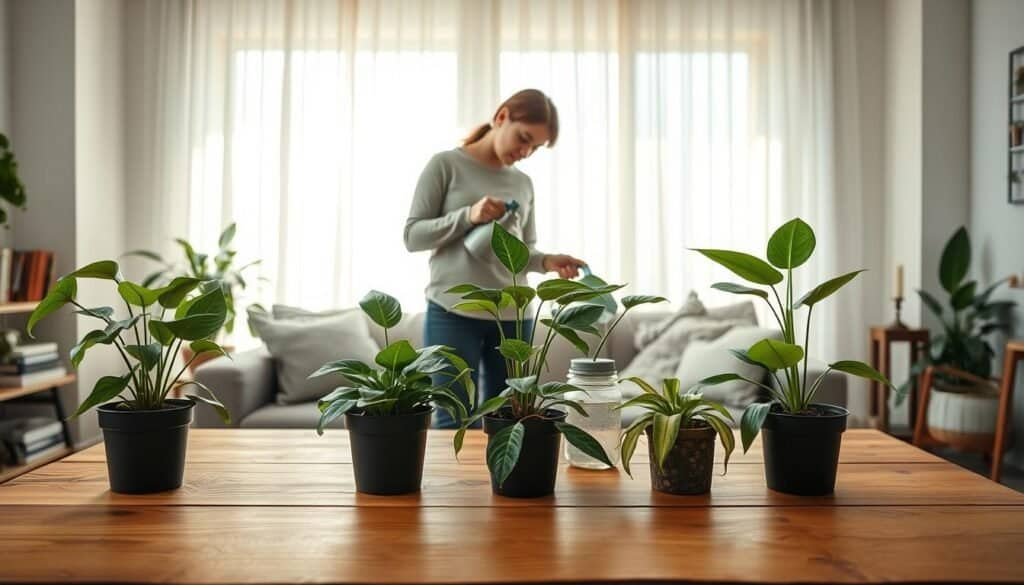
To keep your plants healthy and air-purifying, you need a plant care schedule. This means watering, pruning, and fertilizing them regularly. A houseplant watering schedule can prevent you from watering too much, a common mistake in indoor plant care.
By spending a few minutes each week on plant care, you can keep your plants thriving. This way, you can enjoy the many benefits of having plants indoors.
- Water your plants based on their needs, considering your space’s humidity and temperature.
- Prune plants often to keep them looking good and growing well.
- Fertilize your plants during their growing season to give them the nutrients they need.
By following these easy steps and keeping up with a care routine, you can get the most out of your plants. This will help you create a healthier, more welcoming space.
Small Plants for Small Spaces: Apartment Solutions
Even the smallest apartments can become green havens with the right plants. Small plants are ideal for tight spaces. They are simple to care for and don’t take up much room.
Choosing the right plants is key for small areas. Look for plants that are naturally small or can be trimmed to stay small. Succulents, air plants, and small ferns are great choices.
Plant Shelving and Stand Ideas for Compact Areas
Maximizing space is essential in small apartments. Plant shelving and stands help keep your plants tidy and your area clear.
- Corner shelves to make the most of often-wasted corner space
- Multi-tiered plant stands to stack multiple plants in a small footprint
- Wall-mounted planters to keep floors and surfaces clear
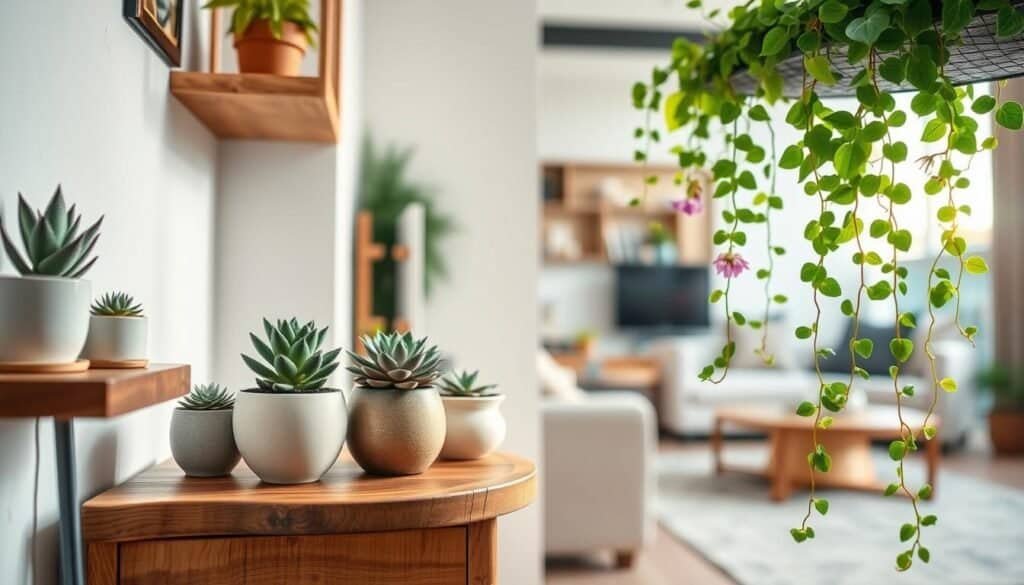
With these ideas, you can enjoy plants in your small apartment. They improve air quality and add beauty.
Low-Maintenance Options for Plant Beginners
Starting with hardy plants makes plant care easier. Beginners should pick plants that are simple to care for. These plants can do well in different conditions.
Low-maintenance plants are great for new plant owners. They need less care and can handle forgetting to water them sometimes. Some top picks include:
- Money Plants: They grow well in low light and don’t need much water.
- Snake Plants: These plants are tough and need very little care.
- ZZ Plant: It’s almost impossible to kill and requires almost no care.
Money Plants and Other Hardy Varieties
Money Plants are a favorite for beginners because they’re easy to care for. They can thrive in many places, like hanging baskets or on shelves. Other easy plants like Pothos and Dracaena are also good for beginners.
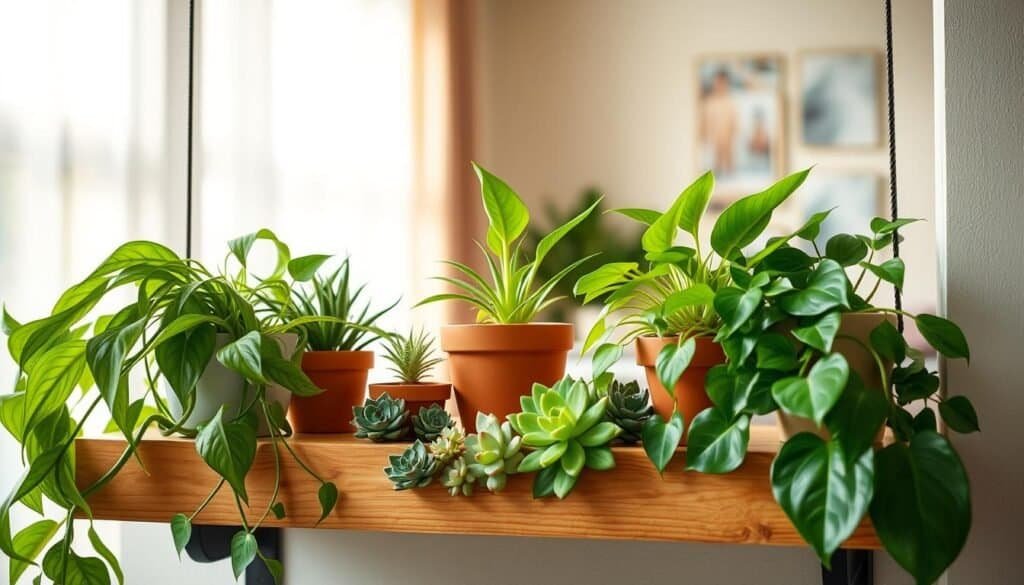
Choosing these beginner-friendly plants lets you enjoy having plants at home. You won’t have to worry about complicated care routines.
Small Plants as Thoughtful Gifts
A small plant makes a lasting and meaningful gift. They bring nature indoors and symbolize growth and friendship. Think about the recipient’s lifestyle and where the plant will go.
Benefits of Gifting Small Plants:
- They are low maintenance and easy to care for.
- They can brighten up any room with a touch of greenery.
- They are a unique alternative to traditional gifts like flowers or chocolates.
Including Care Instructions for Plant Novices
To make sure the gift lasts, include simple care tips. This can include how often to water, the best lighting, and fertilization basics. For those new to plants, a care guide is very helpful.
Conclusion: The Lasting Impact of Small Green Additions
Small plants can change a whole area, making a big difference. They make your home feel more welcoming. Adding indoor plants to your decor brings nature indoors, improving air and health.
Small plants can highlight areas, make corners look good, and add depth. They can also brighten up dull spaces and make your home unique. Their many benefits and flexibility make them key in decorating.
Choosing the right small plants can greatly improve your home and health. Whether you love plants or are new to them, small plants offer many ways to beautify your space.